
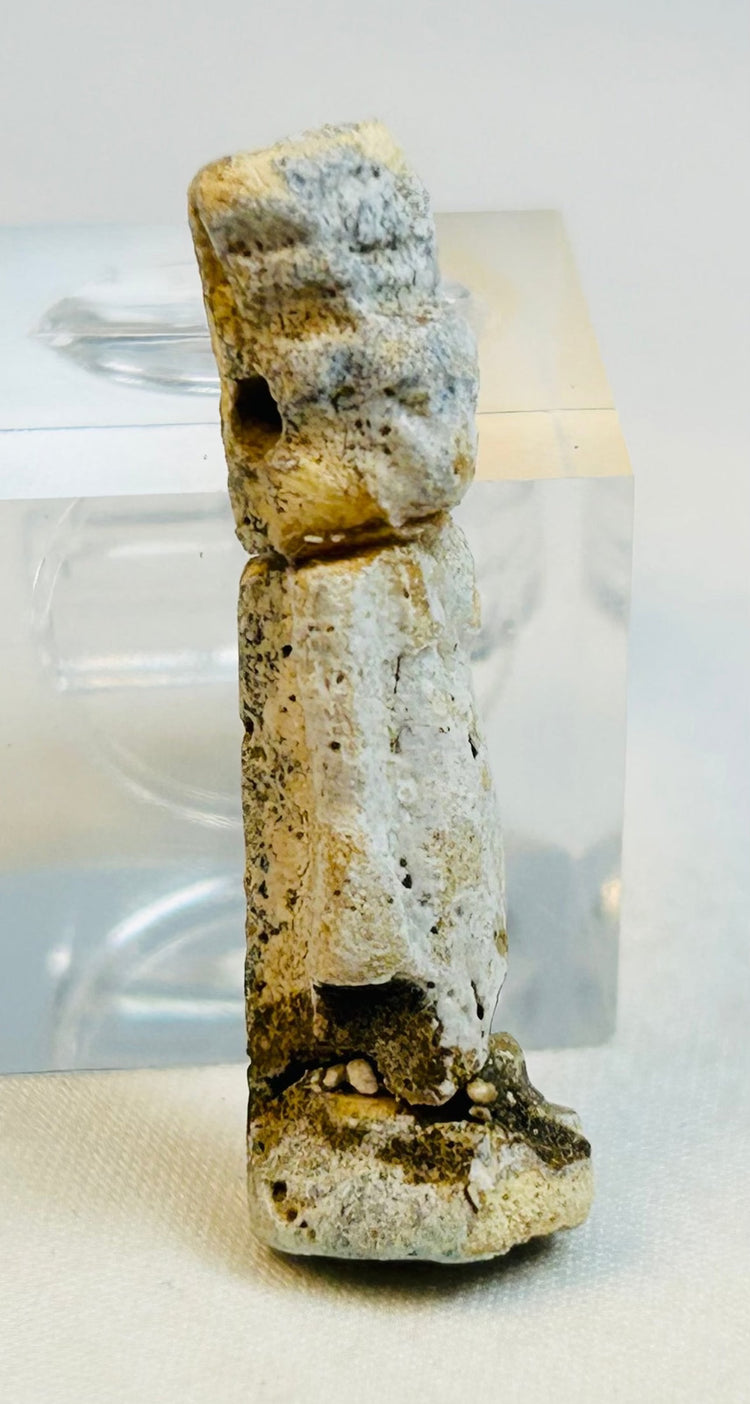
Antiguo Egipto | Figura amuleto de loza con pátina funeraria intensa | Circa 664–30 a. C.
- Precio habitual
- $175.00
- Precio de venta
- $175.00
- Precio habitual
No se pudo cargar la disponibilidad de retiro


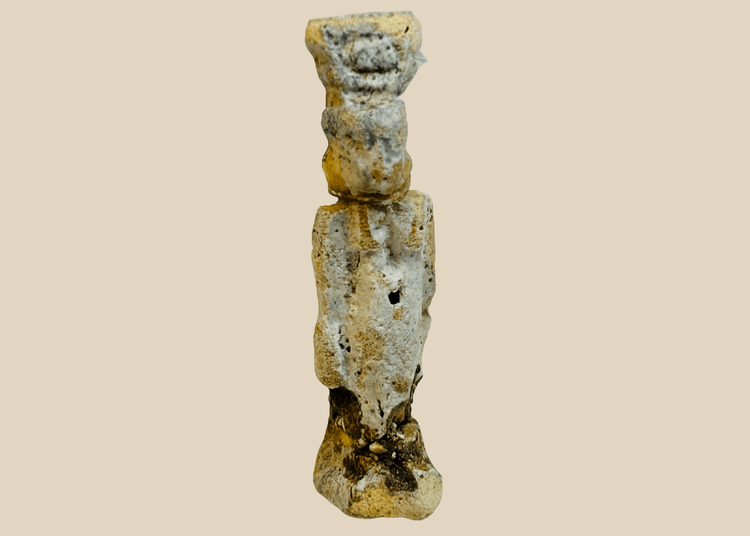
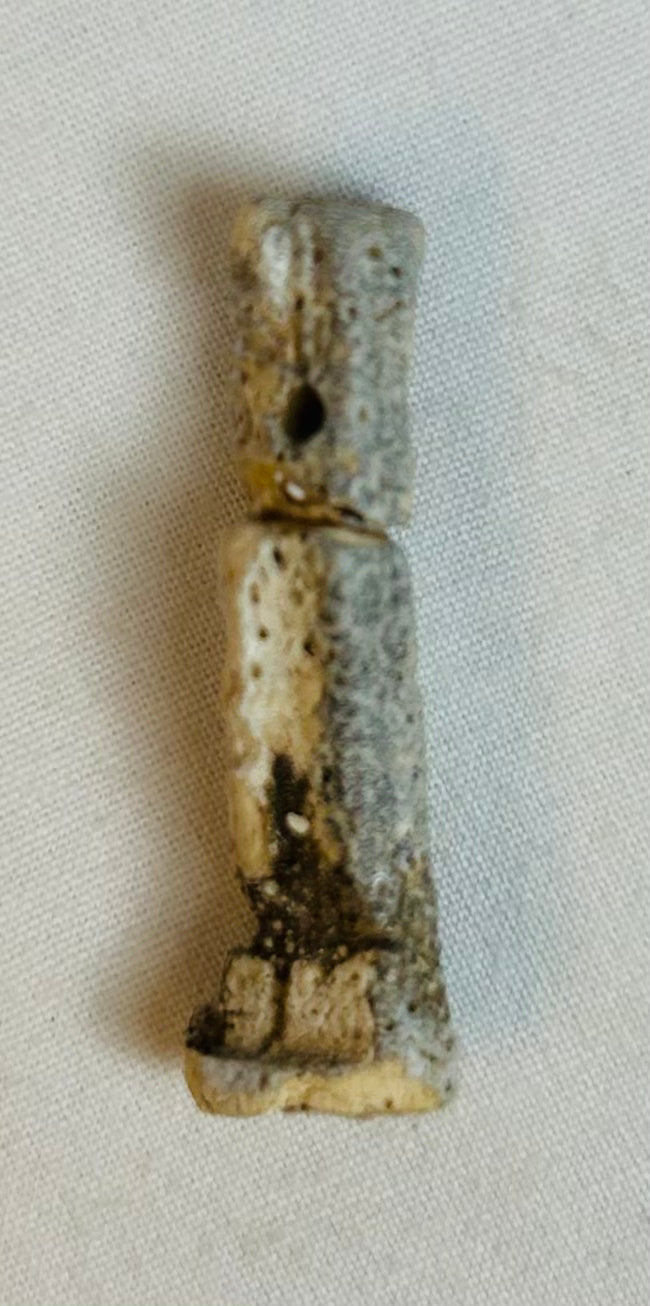
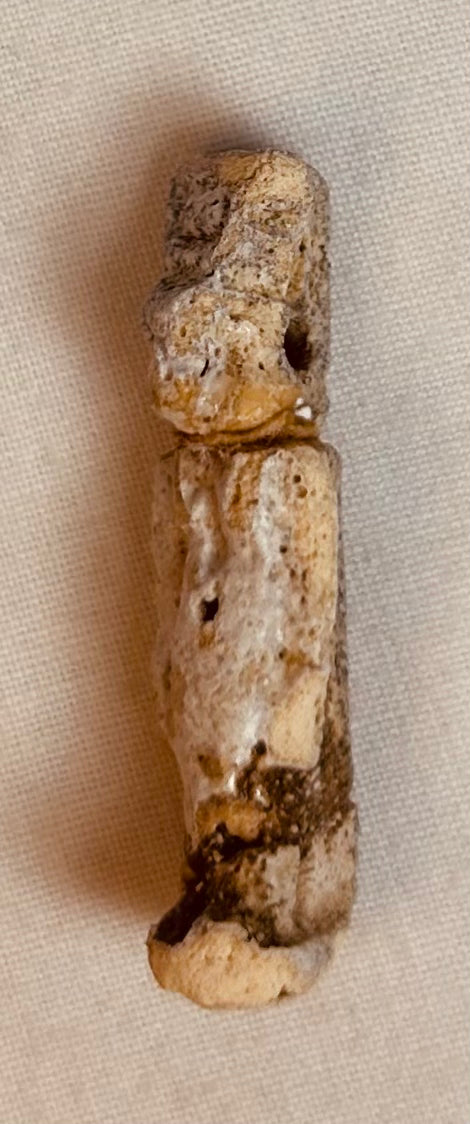
Antiguo Egipto | Figura amuleto de loza con pátina funeraria intensa | Circa 664–30 a. C.
Descripción
Más
Menos
Contexto histórico y origen
Región: Antiguo Egipto
Material: Loza egipcia (muy mineralizada con concreciones de entierro y depósitos calcificados)
Período: Probablemente Período Tardío – Período Ptolemaico, c. 664–30 a.C.
Descripción
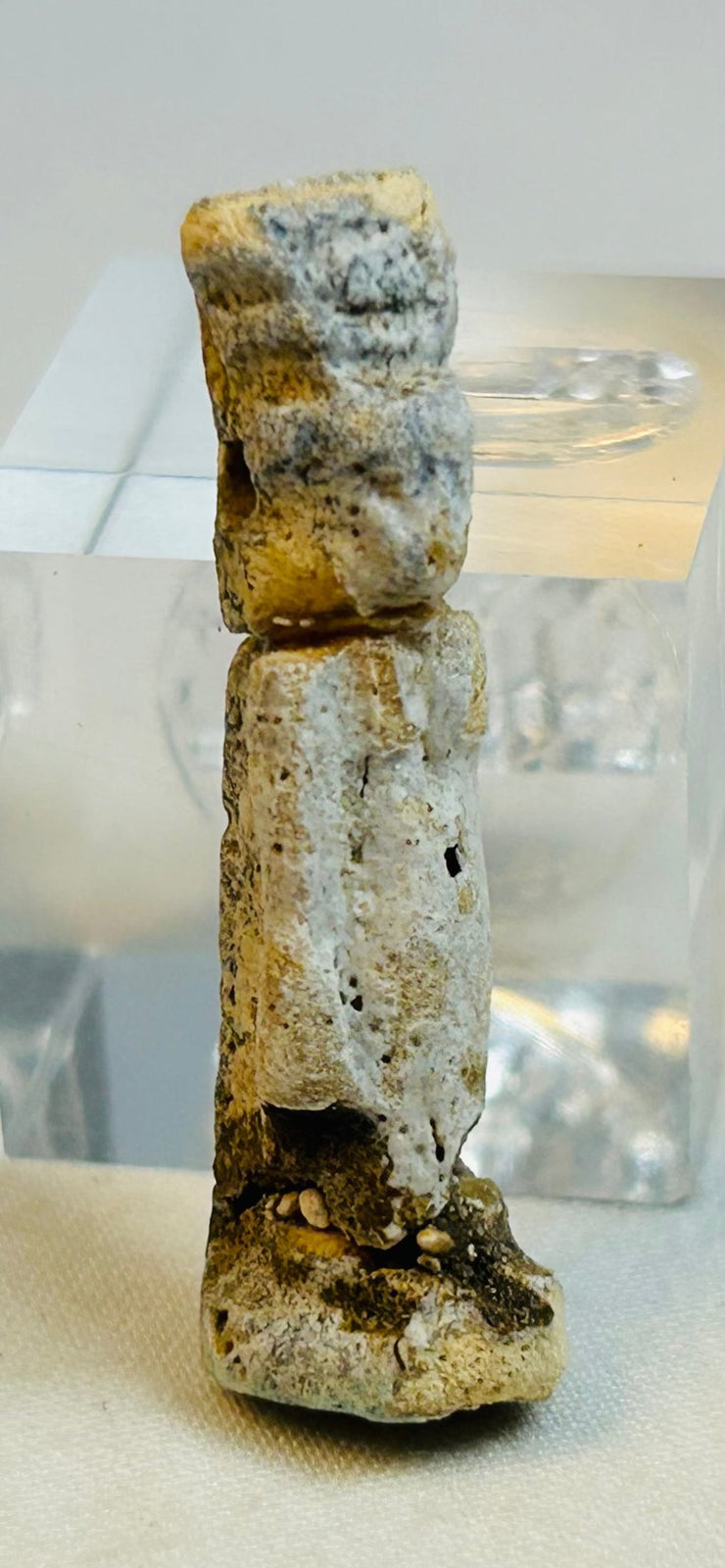
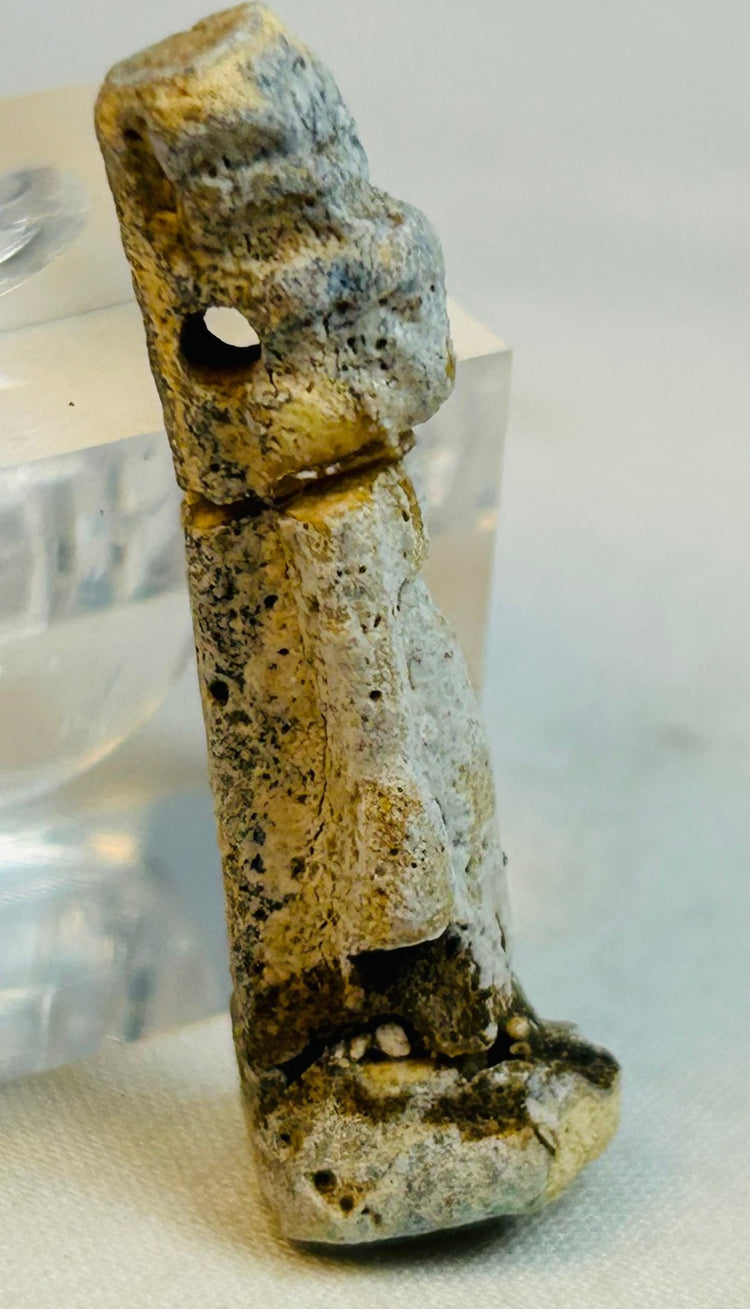
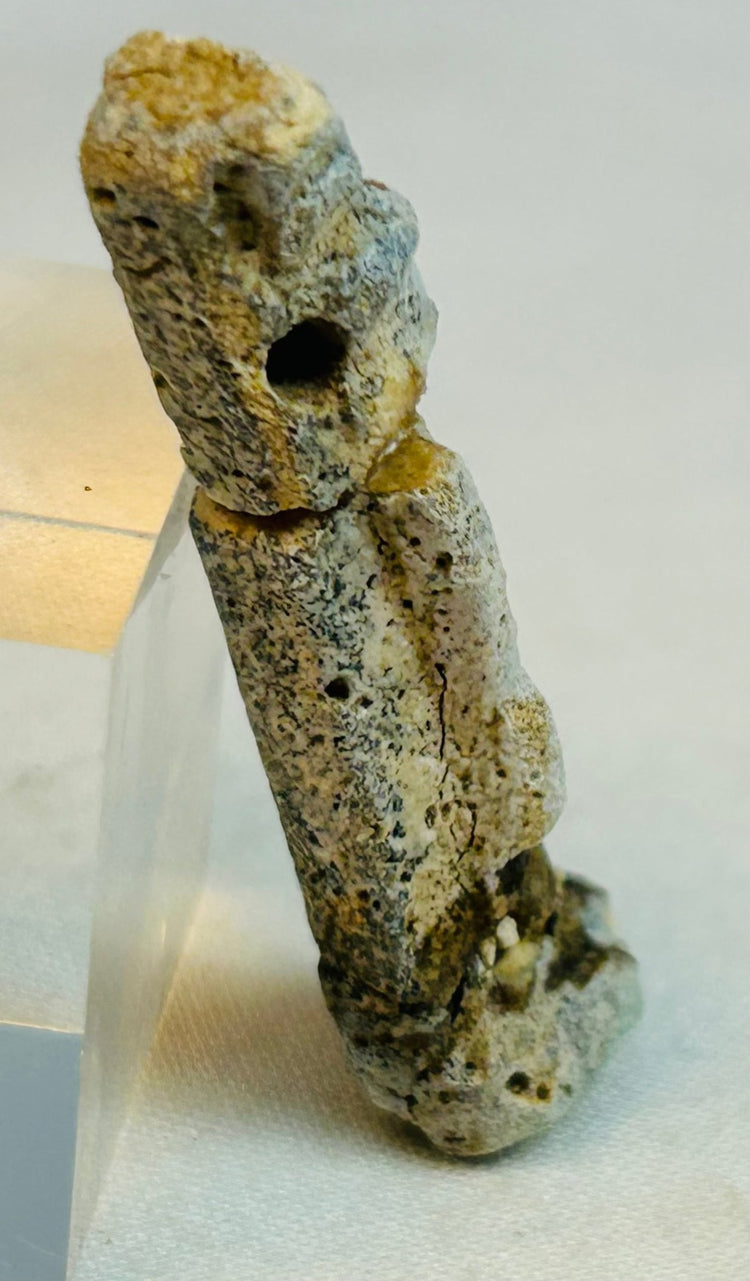
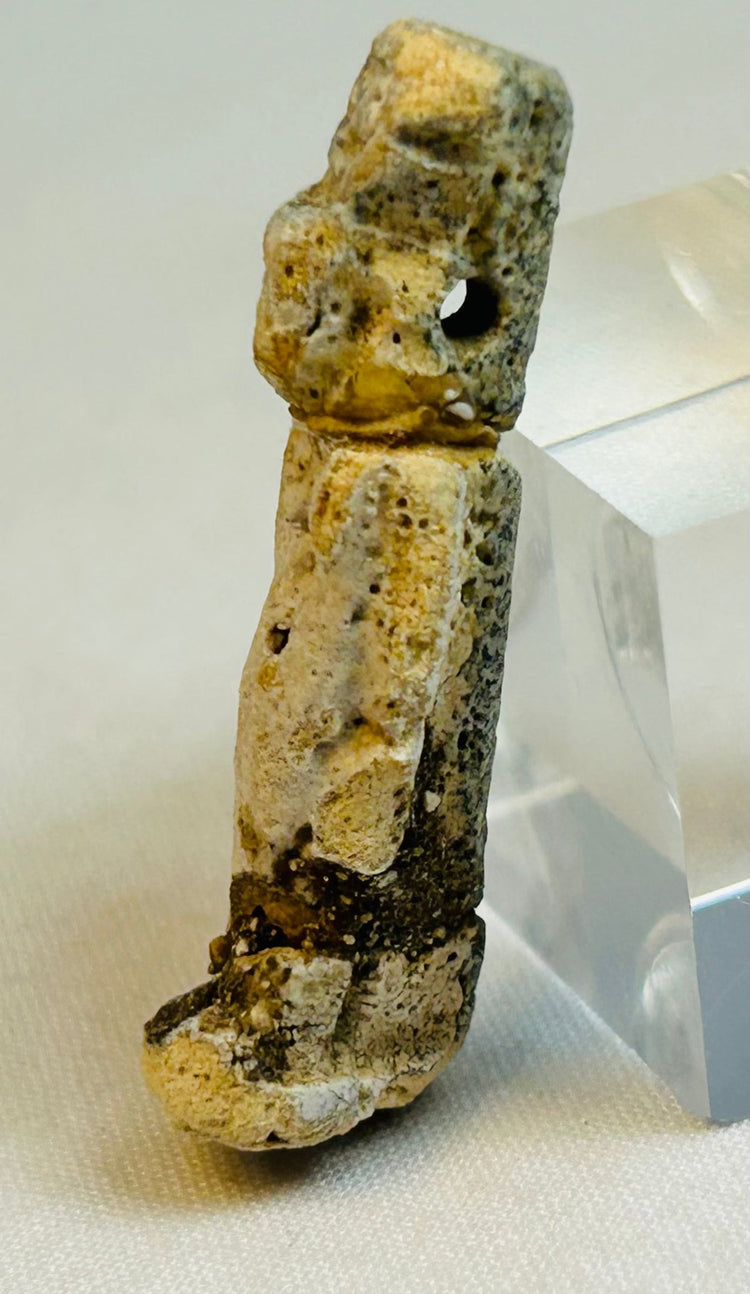
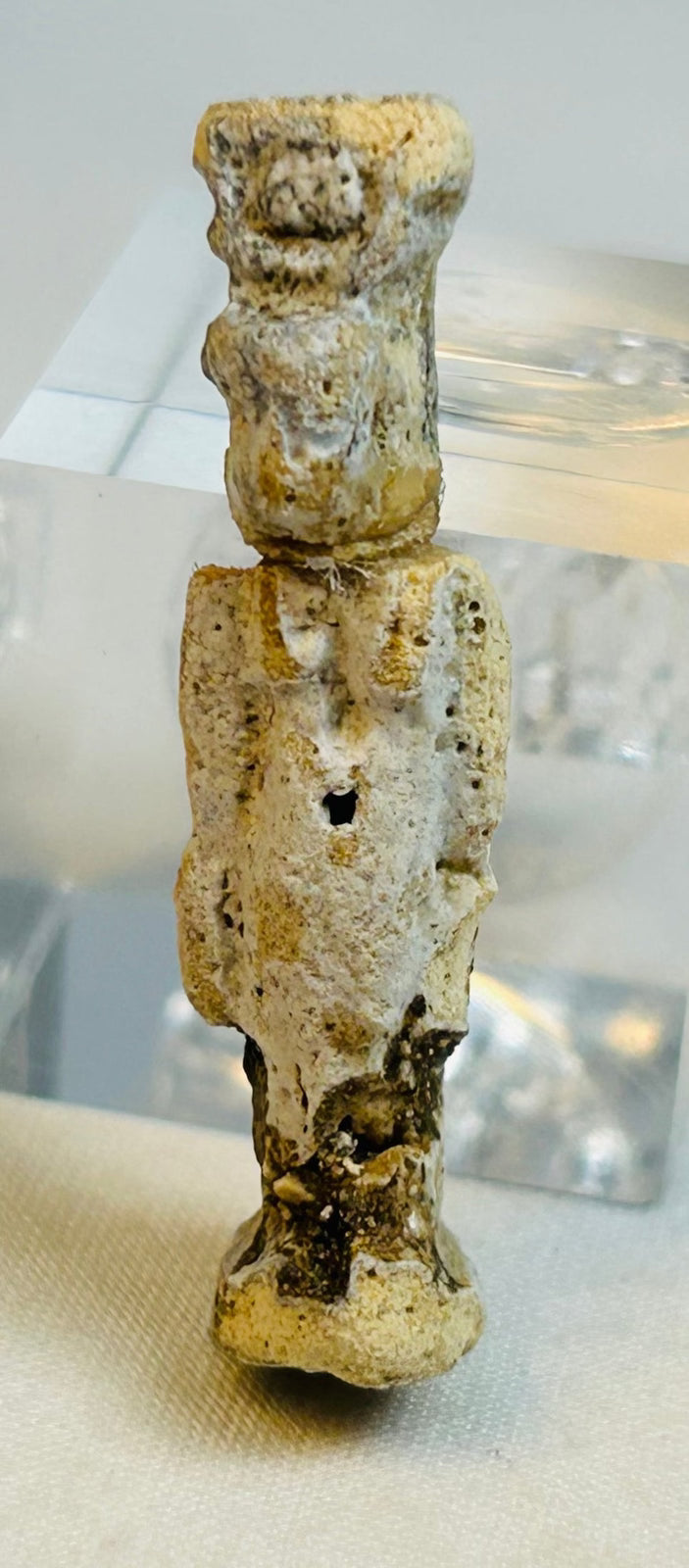
Se trata de una pequeña y evocadora figura de amuleto de loza egipcia. Aunque ahora está muy gastada por un largo entierro, la postura general erguida, los pies cuadrados y la tenue definición de cabeza/torso sugieren que fue tallada originalmente para representar una figura divina o protectora, una forma común que se usaba en vida o se colocaba en entierros como talismanes de protección, renacimiento y favor de los dioses.
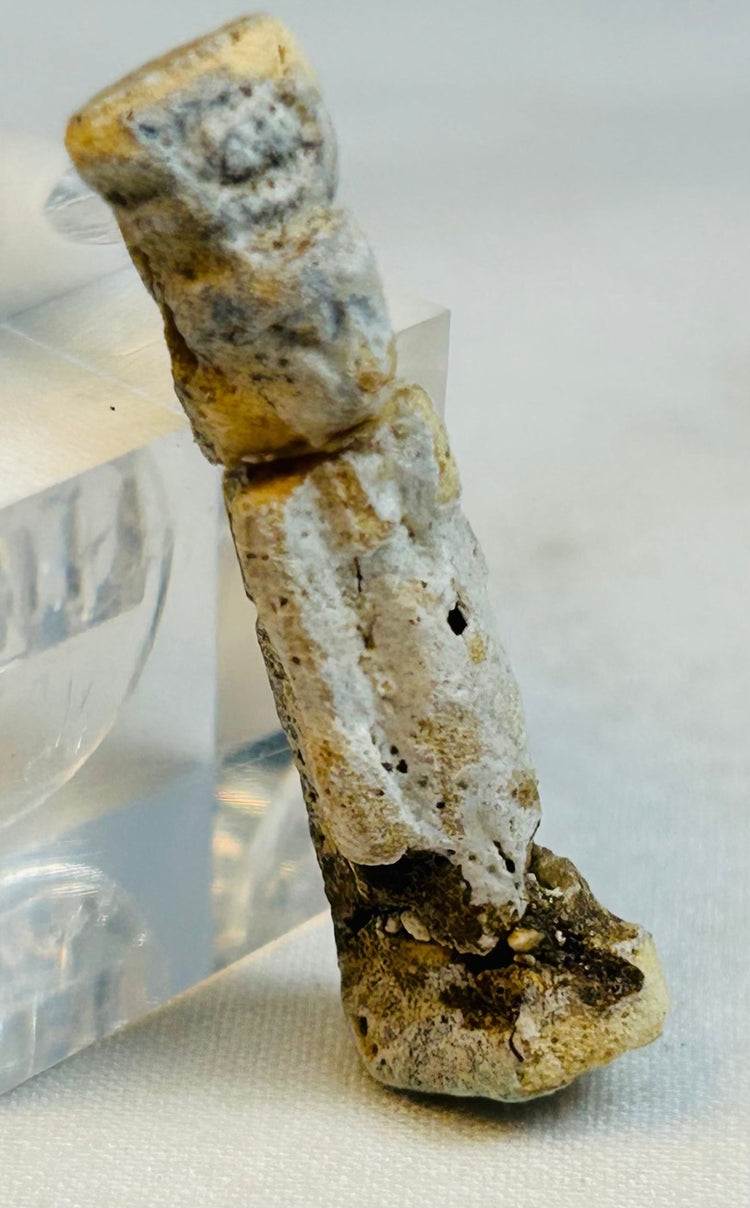
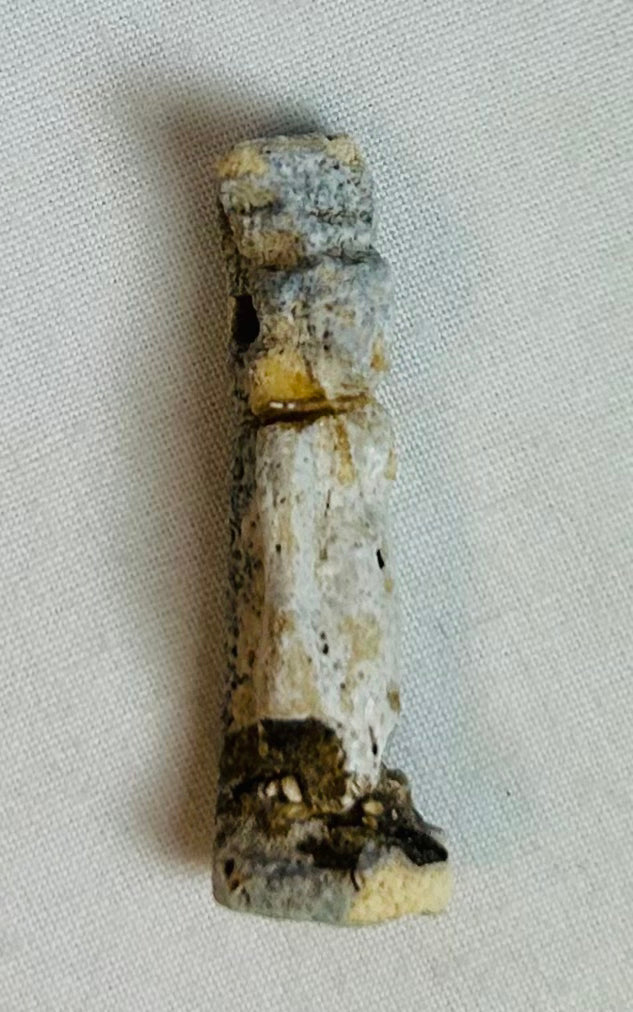
El amuleto muestra una profunda calcificación, incrustaciones terrosas y pátina de entierro por toda la superficie, con una extensa pérdida de superficie que ha suavizado la mayoría de los detalles anatómicos tallados originales. Una perforación permanece justo debajo de la cabeza, lo que indica que originalmente fue ensartado para ser usado como un objeto devocional personal. A pesar de su estado muy desgastado, la figura conserva una clara autenticidad arqueológica y la inquietante belleza de un objeto que ha sobrevivido milenios.
Características
- Figura de amuleto de loza del Antiguo Egipto
- Forma humana/deidad de pie con una tenue definición facial y de torso
- Perforación original para suspensión todavía visible
- Profunda pátina de entierro y concreciones calcificadas en toda la superficie
Significado cultural
Los amuletos como este eran objetos espirituales esenciales en la vida diaria y religiosa del Antiguo Egipto. Se usaban para protección, suerte, salud, favor divino y, más tarde, se colocaban con los difuntos para asegurar un paso seguro al más allá. Aunque el tiempo ha cambiado su superficie, este amuleto aún transmite poderosamente la continuidad de la creencia antigua y la naturaleza profundamente personal de la espiritualidad egipcia.
Estado
Estado arqueológico extremadamente deteriorado. Erosión intensa, calcificación, acreción mineral, picaduras, pérdidas de bordes y fragmentación de la superficie consistente con un entierro prolongado y una antigüedad extrema. La forma aún es identificable como una figura y el orificio de suspensión sigue presente. Estable para un manejo cuidadoso y excelente para coleccionistas que aprecian artefactos excavados intactos con una fuerte autenticidad y presencia histórica.
Dimensiones (aproximadas)
Altura: 1.25 pulgadas
Edad (aproximada)
2,050–2,700 años de antigüedad
Procedencia
Anteriormente en una colección privada en el Reino Unido durante la década de 1980. Posteriormente adquirido en Grays Antique Market, Mayfair, Londres, un reconocido centro de antigüedades cubierto que alberga a casi 100 distribuidores especializados en bellas artes, joyería, plata, cerámica, relojes y otros objetos históricos. Posteriormente, fue manejado por la Galería Palmyra Heritage en 2025.
Aprende más
Explora el simbolismo de los amuletos protectores egipcios a través de Times Ancient
Descubre nuestra Colección de Momias y Artefactos del Antiguo Egipto
Descripción
Contexto histórico y origen
Región: Antiguo Egipto
Material: Loza egipcia (muy mineralizada con concreciones de entierro y depósitos calcificados)
Período: Probablemente Período Tardío – Período Ptolemaico, c. 664–30 a.C.
Descripción
Se trata de una pequeña y evocadora figura de amuleto de loza egipcia. Aunque ahora está muy gastada por un largo entierro, la postura general erguida, los pies cuadrados y la tenue definición de cabeza/torso sugieren que fue tallada originalmente para representar una figura divina o protectora, una forma común que se usaba en vida o se colocaba en entierros como talismanes de protección, renacimiento y favor de los dioses.
El amuleto muestra una profunda calcificación, incrustaciones terrosas y pátina de entierro por toda la superficie, con una extensa pérdida de superficie que ha suavizado la mayoría de los detalles anatómicos tallados originales. Una perforación permanece justo debajo de la cabeza, lo que indica que originalmente fue ensartado para ser usado como un objeto devocional personal. A pesar de su estado muy desgastado, la figura conserva una clara autenticidad arqueológica y la inquietante belleza de un objeto que ha sobrevivido milenios.
Características
- Figura de amuleto de loza del Antiguo Egipto
- Forma humana/deidad de pie con una tenue definición facial y de torso
- Perforación original para suspensión todavía visible
- Profunda pátina de entierro y concreciones calcificadas en toda la superficie
Significado cultural
Los amuletos como este eran objetos espirituales esenciales en la vida diaria y religiosa del Antiguo Egipto. Se usaban para protección, suerte, salud, favor divino y, más tarde, se colocaban con los difuntos para asegurar un paso seguro al más allá. Aunque el tiempo ha cambiado su superficie, este amuleto aún transmite poderosamente la continuidad de la creencia antigua y la naturaleza profundamente personal de la espiritualidad egipcia.
Estado
Estado arqueológico extremadamente deteriorado. Erosión intensa, calcificación, acreción mineral, picaduras, pérdidas de bordes y fragmentación de la superficie consistente con un entierro prolongado y una antigüedad extrema. La forma aún es identificable como una figura y el orificio de suspensión sigue presente. Estable para un manejo cuidadoso y excelente para coleccionistas que aprecian artefactos excavados intactos con una fuerte autenticidad y presencia histórica.
Dimensiones (aproximadas)
Altura: 1.25 pulgadas
Edad (aproximada)
2,050–2,700 años de antigüedad
Procedencia
Anteriormente en una colección privada en el Reino Unido durante la década de 1980. Posteriormente adquirido en Grays Antique Market, Mayfair, Londres, un reconocido centro de antigüedades cubierto que alberga a casi 100 distribuidores especializados en bellas artes, joyería, plata, cerámica, relojes y otros objetos históricos. Posteriormente, fue manejado por la Galería Palmyra Heritage en 2025.
Aprende más
Explora el simbolismo de los amuletos protectores egipcios a través de Times Ancient
Descubre nuestra Colección de Momias y Artefactos del Antiguo Egipto
También te puede interesar
