

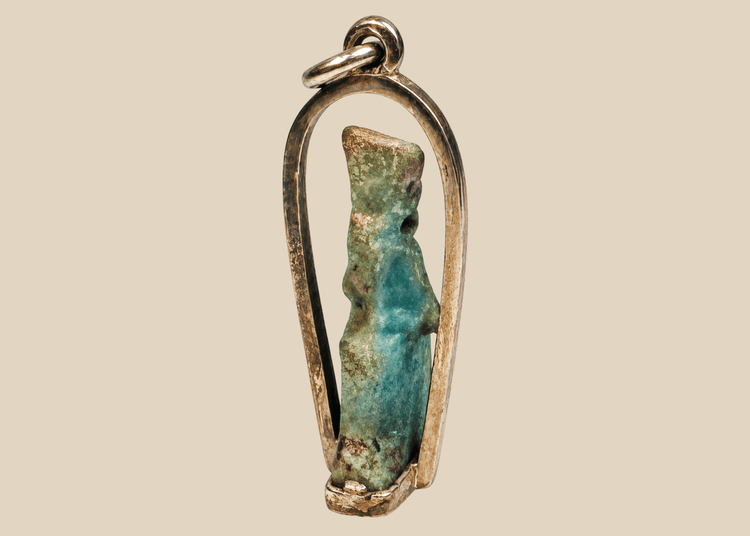
Amuleto colgante de figura divina de loza egipcia antigua | Período Tardío–Período Ptolemaico | Circa 664–30 a.C.
- Precio habitual
- $1,000.00
- Precio de venta
- $1,000.00
- Precio habitual
No se pudo cargar la disponibilidad de retiro




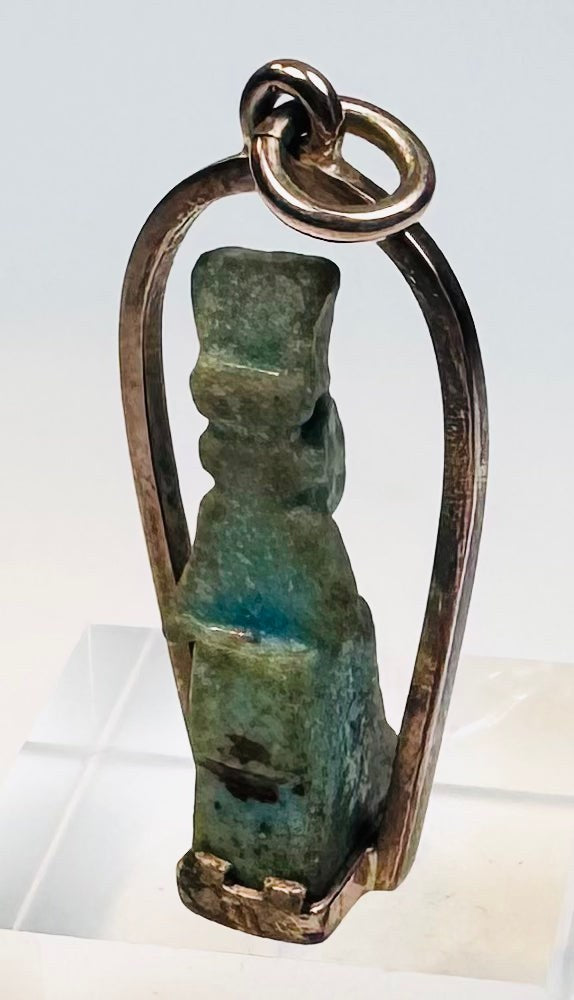
Amuleto colgante de figura divina de loza egipcia antigua | Período Tardío–Período Ptolemaico | Circa 664–30 a.C.
Descripción
Más
Menos
Contexto histórico y origen
Región: Antiguo Egipto
Material: Fayenza azul-verde montada en un colgante de oro posterior
Período: Período Tardío-Período Ptolemaico, circa 664–30 a.C.
Descripción
Este antiguo amuleto egipcio está tallado en forma de una figura divina estilizada de pie, realizada en fayenza azul-verde, un material muy apreciado en el Antiguo Egipto por su asociación simbólica con la fertilidad, el renacimiento y las aguas vivificantes del Nilo. Aunque la identidad precisa de la figura sigue siendo incierta debido a siglos de desgaste y erosión, el perfil que se conserva sugiere la representación de una deidad o una figura funeraria protectora, posiblemente asociada con el amplio corpus de amuletos divinos y momiformes producidos durante los períodos Tardío y Ptolemaico.
La figura muestra un cuerpo simplificado y columnar coronado por un distintivo tocado o corona, con brazos proyectados en bajorrelieve a los lados. Se conservan restos del esmalte turquesa original visibles en la superficie, mientras que las zonas de concreciones minerales y el desgaste por la edad atestiguan la considerable antigüedad del objeto. Una perforación que atraviesa lateralmente la cabeza probablemente sirvió como punto de suspensión original, indicando que el amuleto estaba destinado a ser usado o incorporado en ornamentos funerarios.
En algún momento de la era moderna, el antiguo amuleto fue cuidadosamente montado dentro de un marco de colgante de oro hecho a medida, transformando el objeto arqueológico en una joya ponible y preservando la integridad de la figura de fayenza original. Los amuletos de este tipo se utilizaron ampliamente tanto en la vida diaria como en contextos funerarios, sirviendo como talismanes destinados a invocar la protección divina y asegurar un paso seguro a la otra vida.
Características
- Representa una figura divina o funeraria estilizada de pie
- Tallado en fayenza esmaltada azul-verde
- Probablemente data del Período Tardío-Período Ptolemaico, circa 664–30 a.C.
- Conserva restos del esmalte turquesa original
- Perforación de suspensión original visible a través de la parte superior de la figura
- Montado en un colgante de oro posterior
- Muestra una extensa pátina por la edad y concreciones minerales
Significado cultural
Los amuletos de fayenza ocuparon un papel central en las tradiciones religiosas y funerarias del antiguo Egipto durante más de tres milenios. Producidos en formas de dioses, animales sagrados y símbolos protectores, se creía que aprovechaban el poder divino y proporcionaban protección espiritual a sus dueños. La vibrante coloración azul-verde de la fayenza egipcia simbolizaba la regeneración, la fertilidad y la vida eterna, lo que hacía que tales objetos fueran especialmente apropiados para los ajuares funerarios.
Si bien la identidad precisa de esta figura no puede establecerse definitivamente, los amuletos que representaban deidades como Horus, Osiris, Ptah, Ra-Horakhty y otras divinidades protectoras se produjeron ampliamente durante los períodos Tardío y Ptolemaico.
Estado
El amuleto permanece intacto y presenta el desgaste esperado consistente con su considerable antigüedad. La superficie exhibe pérdida de esmalte dispersa, depósitos minerales y áreas de erosión en toda su extensión. Los detalles originales se han suavizado con el tiempo, lo que dificulta una identificación precisa de la figura. El objeto ha sido montado en un marco de colgante de oro posterior, que permanece seguro.
Dimensiones (aproximadas)
Altura: 2.22 cm (0.875 pulg)
Antigüedad (aproximada)
2,000–2,700 años
Procedencia
Anteriormente parte de una colección privada de Portland, Maine, EE. UU., especializada en artefactos egipcios. La colección se formó durante muchos años con un énfasis particular en amuletos egipcios antiguos, objetos funerarios, obras de fayenza y pequeñas antigüedades.
Más información
Explore el simbolismo religioso y el papel protector de los amuletos del Antiguo Egipto en El Museo Metropolitano de Arte.
Explore nuestra Colección de momias y artefactos del Antiguo Egipto.
Descripción
Contexto histórico y origen
Región: Antiguo Egipto
Material: Fayenza azul-verde montada en un colgante de oro posterior
Período: Período Tardío-Período Ptolemaico, circa 664–30 a.C.
Descripción
Este antiguo amuleto egipcio está tallado en forma de una figura divina estilizada de pie, realizada en fayenza azul-verde, un material muy apreciado en el Antiguo Egipto por su asociación simbólica con la fertilidad, el renacimiento y las aguas vivificantes del Nilo. Aunque la identidad precisa de la figura sigue siendo incierta debido a siglos de desgaste y erosión, el perfil que se conserva sugiere la representación de una deidad o una figura funeraria protectora, posiblemente asociada con el amplio corpus de amuletos divinos y momiformes producidos durante los períodos Tardío y Ptolemaico.
La figura muestra un cuerpo simplificado y columnar coronado por un distintivo tocado o corona, con brazos proyectados en bajorrelieve a los lados. Se conservan restos del esmalte turquesa original visibles en la superficie, mientras que las zonas de concreciones minerales y el desgaste por la edad atestiguan la considerable antigüedad del objeto. Una perforación que atraviesa lateralmente la cabeza probablemente sirvió como punto de suspensión original, indicando que el amuleto estaba destinado a ser usado o incorporado en ornamentos funerarios.
En algún momento de la era moderna, el antiguo amuleto fue cuidadosamente montado dentro de un marco de colgante de oro hecho a medida, transformando el objeto arqueológico en una joya ponible y preservando la integridad de la figura de fayenza original. Los amuletos de este tipo se utilizaron ampliamente tanto en la vida diaria como en contextos funerarios, sirviendo como talismanes destinados a invocar la protección divina y asegurar un paso seguro a la otra vida.
Características
- Representa una figura divina o funeraria estilizada de pie
- Tallado en fayenza esmaltada azul-verde
- Probablemente data del Período Tardío-Período Ptolemaico, circa 664–30 a.C.
- Conserva restos del esmalte turquesa original
- Perforación de suspensión original visible a través de la parte superior de la figura
- Montado en un colgante de oro posterior
- Muestra una extensa pátina por la edad y concreciones minerales
Significado cultural
Los amuletos de fayenza ocuparon un papel central en las tradiciones religiosas y funerarias del antiguo Egipto durante más de tres milenios. Producidos en formas de dioses, animales sagrados y símbolos protectores, se creía que aprovechaban el poder divino y proporcionaban protección espiritual a sus dueños. La vibrante coloración azul-verde de la fayenza egipcia simbolizaba la regeneración, la fertilidad y la vida eterna, lo que hacía que tales objetos fueran especialmente apropiados para los ajuares funerarios.
Si bien la identidad precisa de esta figura no puede establecerse definitivamente, los amuletos que representaban deidades como Horus, Osiris, Ptah, Ra-Horakhty y otras divinidades protectoras se produjeron ampliamente durante los períodos Tardío y Ptolemaico.
Estado
El amuleto permanece intacto y presenta el desgaste esperado consistente con su considerable antigüedad. La superficie exhibe pérdida de esmalte dispersa, depósitos minerales y áreas de erosión en toda su extensión. Los detalles originales se han suavizado con el tiempo, lo que dificulta una identificación precisa de la figura. El objeto ha sido montado en un marco de colgante de oro posterior, que permanece seguro.
Dimensiones (aproximadas)
Altura: 2.22 cm (0.875 pulg)
Antigüedad (aproximada)
2,000–2,700 años
Procedencia
Anteriormente parte de una colección privada de Portland, Maine, EE. UU., especializada en artefactos egipcios. La colección se formó durante muchos años con un énfasis particular en amuletos egipcios antiguos, objetos funerarios, obras de fayenza y pequeñas antigüedades.
Más información
Explore el simbolismo religioso y el papel protector de los amuletos del Antiguo Egipto en El Museo Metropolitano de Arte.
Explore nuestra Colección de momias y artefactos del Antiguo Egipto.
También te puede interesar
