
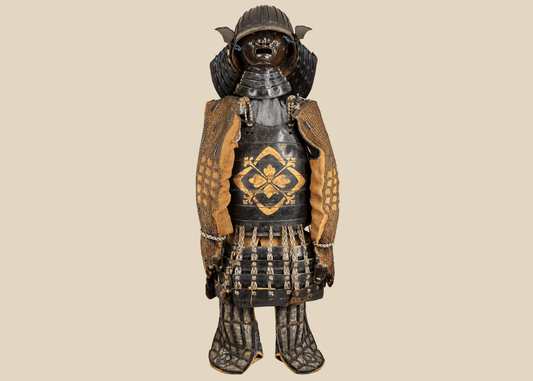


Ancient Egyptian Mummified Faience Ushabti with Linen Wrappings | 30th Dynasty | Circa 4th Century BCE
- Precio habitual
- $2,000.00
- Precio de venta
- $2,000.00
- Precio habitual
No se pudo cargar la disponibilidad de retiro


Ancient Egyptian Mummified Faience Ushabti with Linen Wrappings | 30th Dynasty | Circa 4th Century BCE
Descripción
Más
Menos
Historical Context & Origin
Region: Ancient Egypt
Material: Glazed faience with woven textile wrappings, believed to be linen
Period: Late Period, attributed to the 30th Dynasty, circa 380–343 BCE (4th Century BCE)
Description
An unusual ancient Egyptian mummified faience ushabti, attributed to the 30th Dynasty of the Late Period, distinguished by its extensive surviving textile wrappings and exposed green-blue sculpted head.
The figure exhibits an elongated, mummiform body enveloped in multiple layers of closely woven fabric, traditionally identified as linen. Its distinctive appearance reflects the relationship between ancient Egyptian funerary figurines and the practice of mummification, which played a central role in Egyptian beliefs concerning death and rebirth.
The exposed head displays a softly modelled human face with a rounded cranium, subtly defined nose, and gently contoured facial features. Its surface exhibits varying shades of pale turquoise, green, cream, and darker blue-green coloration, with visible abrasions, irregular deposits, and areas of apparent glaze deterioration.
The extensive textile covering is particularly noteworthy. Broad sections of woven fabric overlap diagonally across the upper body, forming pronounced folds and irregular layers. Additional bands continue along the elongated lower portion, where the fabric becomes more closely arranged and exhibits darker areas of discoloration.
Individual textile fibers, frayed edges, loose threads, and overlapping seams remain clearly visible. The fabric displays an irregular woven texture, with areas of accumulated granular material, localized surface deposits, and varying shades of earthy beige and brown.
Several sections retain the appearance of tightly compressed wrappings, while others exhibit more pronounced folds and partially separated textile edges. The lower extremity is enclosed within multiple layers of fabric, with folded and frayed material visible at its termination.
The contrast between the pale green-blue faience head and the heavily textured brown linen creates a particularly distinctive visual presentation. Unlike conventional ushabtis with fully exposed sculpted bodies, this example retains substantial textile coverings that obscure much of its underlying form.
The figure is accompanied by historical collection documentation, including a handwritten label identifying it as a mummified Egyptian ushabti retaining burial linen.
Features
- Exposed green-blue faience head with softly modelled facial features
- Extensive woven textile wrappings, traditionally identified as linen
- Multiple overlapping layers of fabric extending along the body
- Distinctive diagonal folds across the upper portion
- Tightly arranged textile bands surrounding the lower extremity
- Visible woven fibers, loose threads, fraying, and irregular seams
- Varied turquoise-green coloration and surface wear on the sculpted head
- Earthy beige and brown textile coloration with darker localized deposits
- Areas of granular encrustation, discoloration, and apparent burial-related deposits
- Accompanied by a handwritten Bristowe Collection identification label
Cultural Significance
Ushabtis, also known as shabtis or shawabtis, were an important component of ancient Egyptian funerary practices. These figures were placed within tombs to accompany the deceased into the afterlife, where they were believed to perform agricultural labour and other duties on behalf of their owners.
The term ushabti is commonly interpreted as meaning "answerer," reflecting the belief that the figure would respond when summoned to undertake work in the afterlife. This concept was closely associated with Chapter 6 of the ancient Egyptian Book of the Dead, which contained spells intended to activate the figures for their appointed tasks.
The earliest shabtis appeared during the Middle Kingdom, with their use continuing through the New Kingdom, Third Intermediate Period, Late Period, and subsequent eras.
By the Late Period, glazed faience had become one of the principal materials used in their manufacture. Its characteristic blue-green coloration was associated with regeneration, fertility, and renewal, concepts central to Egyptian religious beliefs surrounding eternal life.
The 30th Dynasty, circa 380–343 BCE, represented the final dynasty of native Egyptian rulers before the renewed Persian conquest. During this period, established religious traditions continued to influence funerary practices, including the production and placement of ushabti figures within tombs.
The presence of extensive textile wrappings on this example is of particular interest. Linen was closely associated with Egyptian burial traditions and was extensively employed in the preparation and preservation of the deceased.
Some funerary figurines were also wrapped or enclosed in textiles, reinforcing their symbolic relationship with the mummified body and the deceased individual's anticipated resurrection.
The arrangement of the surviving fabric on this figure provides an interesting visual connection between the sculptural tradition of ushabti production and the broader religious significance of mummification.
Condition
The figure exhibits considerable visible wear, discoloration, surface deposits, and deterioration affecting both the exposed head and the surrounding textile wrappings.
The faience head displays uneven green-blue coloration, abrasions, localized surface losses, and areas of apparent weathering. The principal facial features remain recognizable, although some sculptural details have become subdued through surface wear.
The textile wrappings remain substantially present throughout the length of the figure, exhibiting extensive fraying, loose fibers, irregular folds, localized tears, and areas of apparent deterioration.
Several sections contain embedded granular material and darker accumulations, particularly toward the lower extremity. The composition and age of these deposits have not been independently determined.
The overlapping arrangement of the textile remains clearly visible, with numerous individual threads and woven sections retaining their recognizable structure.
The lower end exhibits folded and compressed fabric, with localized separation and fraying along the edges.
Dimensions (Approximate)
Length: 6.5 in
Width: 2.5 in
Depth: 2 in
Age (Approximate)
2,370–2,405 years old
Provenance
Formerly with Clive Sawyer, Antiquities and Ancient Coins, Kemsing, Sevenoaks, Kent, England. Clive Sawyer is a documented British antiquities dealer whose name appears in international antiquities sales and provenance records dating back to at least 1990. Artifacts previously handled by Sawyer have subsequently appeared at major international auction houses, including Christie's and Bonhams.
Accompanied by a handwritten Bristowe Collection label identifying the figure as a "very rare mummified ushabti with original grave linen clothes from Egypt." The label states that the figure had been dated by experts to approximately 2600 BCE and attributes it to Egypt's Third Dynasty of the Old Kingdom, specifically associating it with the reign of King Netjerikhet, later known as Djoser. The annotation also references the historical chronology of the Old Kingdom and the king's later identification by the name Djoser.
Subsequently, private collection, Chichester, West Sussex, England.
The earlier attribution to circa 2600 BCE predates the established emergence of ushabti figures during Egypt's Middle Kingdom. The present attribution to the Late Period, 30th Dynasty (circa 380–343 BCE), reflects stylistic comparisons with documented Egyptian faience ushabtis and their historical development. The original Bristowe Collection identification is preserved as an important part of the artifact's collection history.
Learn More
Discover a comparable 30th Dynasty faience shabti at The Metropolitan Museum of Art
Explore Our Collection of Ancient Egyptian Mummies & Artifacts
Descripción
Historical Context & Origin
Region: Ancient Egypt
Material: Glazed faience with woven textile wrappings, believed to be linen
Period: Late Period, attributed to the 30th Dynasty, circa 380–343 BCE (4th Century BCE)
Description
An unusual ancient Egyptian mummified faience ushabti, attributed to the 30th Dynasty of the Late Period, distinguished by its extensive surviving textile wrappings and exposed green-blue sculpted head.
The figure exhibits an elongated, mummiform body enveloped in multiple layers of closely woven fabric, traditionally identified as linen. Its distinctive appearance reflects the relationship between ancient Egyptian funerary figurines and the practice of mummification, which played a central role in Egyptian beliefs concerning death and rebirth.
The exposed head displays a softly modelled human face with a rounded cranium, subtly defined nose, and gently contoured facial features. Its surface exhibits varying shades of pale turquoise, green, cream, and darker blue-green coloration, with visible abrasions, irregular deposits, and areas of apparent glaze deterioration.
The extensive textile covering is particularly noteworthy. Broad sections of woven fabric overlap diagonally across the upper body, forming pronounced folds and irregular layers. Additional bands continue along the elongated lower portion, where the fabric becomes more closely arranged and exhibits darker areas of discoloration.
Individual textile fibers, frayed edges, loose threads, and overlapping seams remain clearly visible. The fabric displays an irregular woven texture, with areas of accumulated granular material, localized surface deposits, and varying shades of earthy beige and brown.
Several sections retain the appearance of tightly compressed wrappings, while others exhibit more pronounced folds and partially separated textile edges. The lower extremity is enclosed within multiple layers of fabric, with folded and frayed material visible at its termination.
The contrast between the pale green-blue faience head and the heavily textured brown linen creates a particularly distinctive visual presentation. Unlike conventional ushabtis with fully exposed sculpted bodies, this example retains substantial textile coverings that obscure much of its underlying form.
The figure is accompanied by historical collection documentation, including a handwritten label identifying it as a mummified Egyptian ushabti retaining burial linen.
Features
- Exposed green-blue faience head with softly modelled facial features
- Extensive woven textile wrappings, traditionally identified as linen
- Multiple overlapping layers of fabric extending along the body
- Distinctive diagonal folds across the upper portion
- Tightly arranged textile bands surrounding the lower extremity
- Visible woven fibers, loose threads, fraying, and irregular seams
- Varied turquoise-green coloration and surface wear on the sculpted head
- Earthy beige and brown textile coloration with darker localized deposits
- Areas of granular encrustation, discoloration, and apparent burial-related deposits
- Accompanied by a handwritten Bristowe Collection identification label
Cultural Significance
Ushabtis, also known as shabtis or shawabtis, were an important component of ancient Egyptian funerary practices. These figures were placed within tombs to accompany the deceased into the afterlife, where they were believed to perform agricultural labour and other duties on behalf of their owners.
The term ushabti is commonly interpreted as meaning "answerer," reflecting the belief that the figure would respond when summoned to undertake work in the afterlife. This concept was closely associated with Chapter 6 of the ancient Egyptian Book of the Dead, which contained spells intended to activate the figures for their appointed tasks.
The earliest shabtis appeared during the Middle Kingdom, with their use continuing through the New Kingdom, Third Intermediate Period, Late Period, and subsequent eras.
By the Late Period, glazed faience had become one of the principal materials used in their manufacture. Its characteristic blue-green coloration was associated with regeneration, fertility, and renewal, concepts central to Egyptian religious beliefs surrounding eternal life.
The 30th Dynasty, circa 380–343 BCE, represented the final dynasty of native Egyptian rulers before the renewed Persian conquest. During this period, established religious traditions continued to influence funerary practices, including the production and placement of ushabti figures within tombs.
The presence of extensive textile wrappings on this example is of particular interest. Linen was closely associated with Egyptian burial traditions and was extensively employed in the preparation and preservation of the deceased.
Some funerary figurines were also wrapped or enclosed in textiles, reinforcing their symbolic relationship with the mummified body and the deceased individual's anticipated resurrection.
The arrangement of the surviving fabric on this figure provides an interesting visual connection between the sculptural tradition of ushabti production and the broader religious significance of mummification.
Condition
The figure exhibits considerable visible wear, discoloration, surface deposits, and deterioration affecting both the exposed head and the surrounding textile wrappings.
The faience head displays uneven green-blue coloration, abrasions, localized surface losses, and areas of apparent weathering. The principal facial features remain recognizable, although some sculptural details have become subdued through surface wear.
The textile wrappings remain substantially present throughout the length of the figure, exhibiting extensive fraying, loose fibers, irregular folds, localized tears, and areas of apparent deterioration.
Several sections contain embedded granular material and darker accumulations, particularly toward the lower extremity. The composition and age of these deposits have not been independently determined.
The overlapping arrangement of the textile remains clearly visible, with numerous individual threads and woven sections retaining their recognizable structure.
The lower end exhibits folded and compressed fabric, with localized separation and fraying along the edges.
Dimensions (Approximate)
Length: 6.5 in
Width: 2.5 in
Depth: 2 in
Age (Approximate)
2,370–2,405 years old
Provenance
Formerly with Clive Sawyer, Antiquities and Ancient Coins, Kemsing, Sevenoaks, Kent, England. Clive Sawyer is a documented British antiquities dealer whose name appears in international antiquities sales and provenance records dating back to at least 1990. Artifacts previously handled by Sawyer have subsequently appeared at major international auction houses, including Christie's and Bonhams.
Accompanied by a handwritten Bristowe Collection label identifying the figure as a "very rare mummified ushabti with original grave linen clothes from Egypt." The label states that the figure had been dated by experts to approximately 2600 BCE and attributes it to Egypt's Third Dynasty of the Old Kingdom, specifically associating it with the reign of King Netjerikhet, later known as Djoser. The annotation also references the historical chronology of the Old Kingdom and the king's later identification by the name Djoser.
Subsequently, private collection, Chichester, West Sussex, England.
The earlier attribution to circa 2600 BCE predates the established emergence of ushabti figures during Egypt's Middle Kingdom. The present attribution to the Late Period, 30th Dynasty (circa 380–343 BCE), reflects stylistic comparisons with documented Egyptian faience ushabtis and their historical development. The original Bristowe Collection identification is preserved as an important part of the artifact's collection history.
Learn More
Discover a comparable 30th Dynasty faience shabti at The Metropolitan Museum of Art
Explore Our Collection of Ancient Egyptian Mummies & Artifacts
También te puede interesar
