



Ancient Iron Arrowheads & Projectile Points | Three-Piece Mounted Collection | Roman to Medieval Period
- Precio habitual
- $250.00
- Precio de venta
- $250.00
- Precio habitual
No se pudo cargar la disponibilidad de retiro



Ancient Iron Arrowheads & Projectile Points | Three-Piece Mounted Collection | Roman to Medieval Period
Descripción
Más
Menos
Historical Context & Origin
Region: Europe (attributed)
Material: Hand-forged iron
Period: Roman to Medieval Period, provisionally circa 3rd–14th Century CE
Description
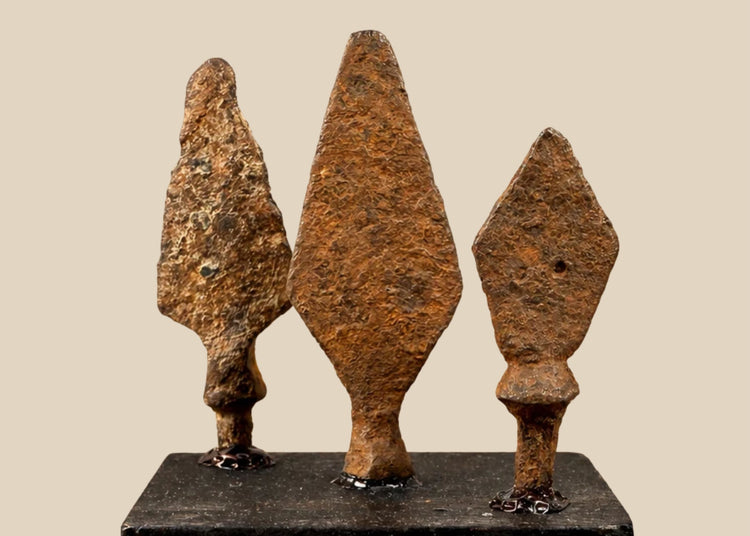
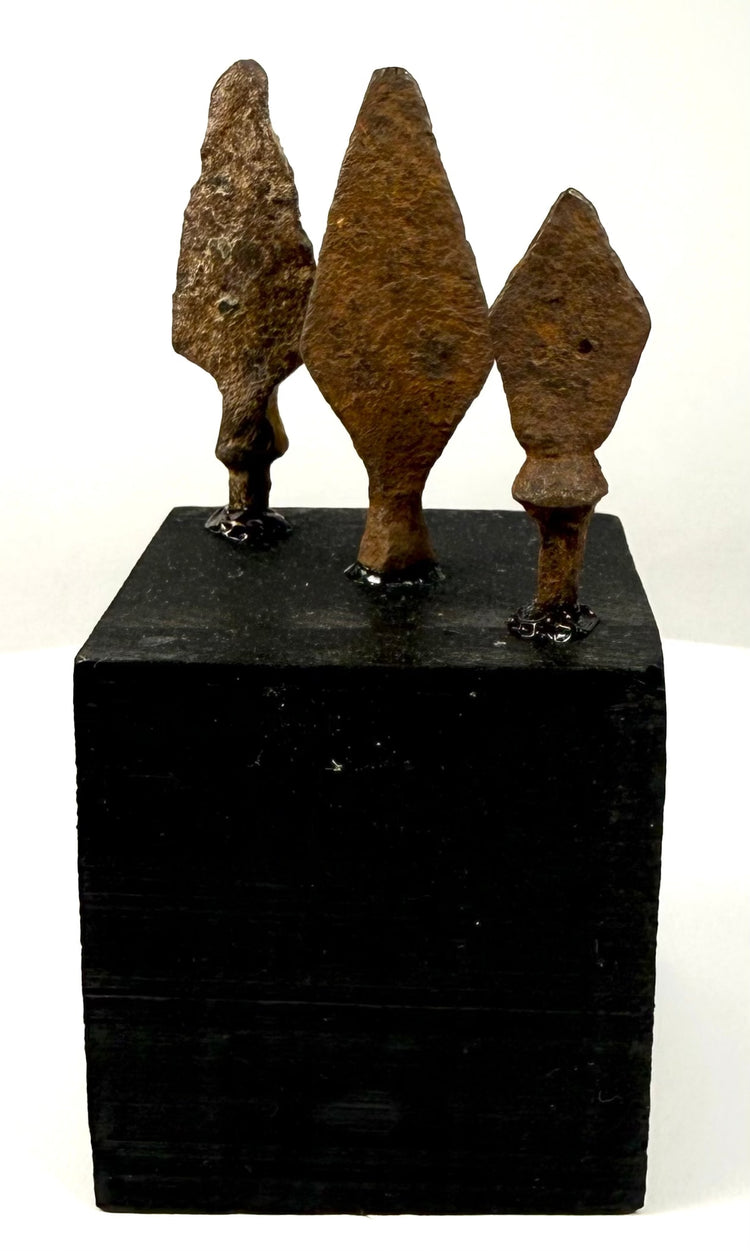
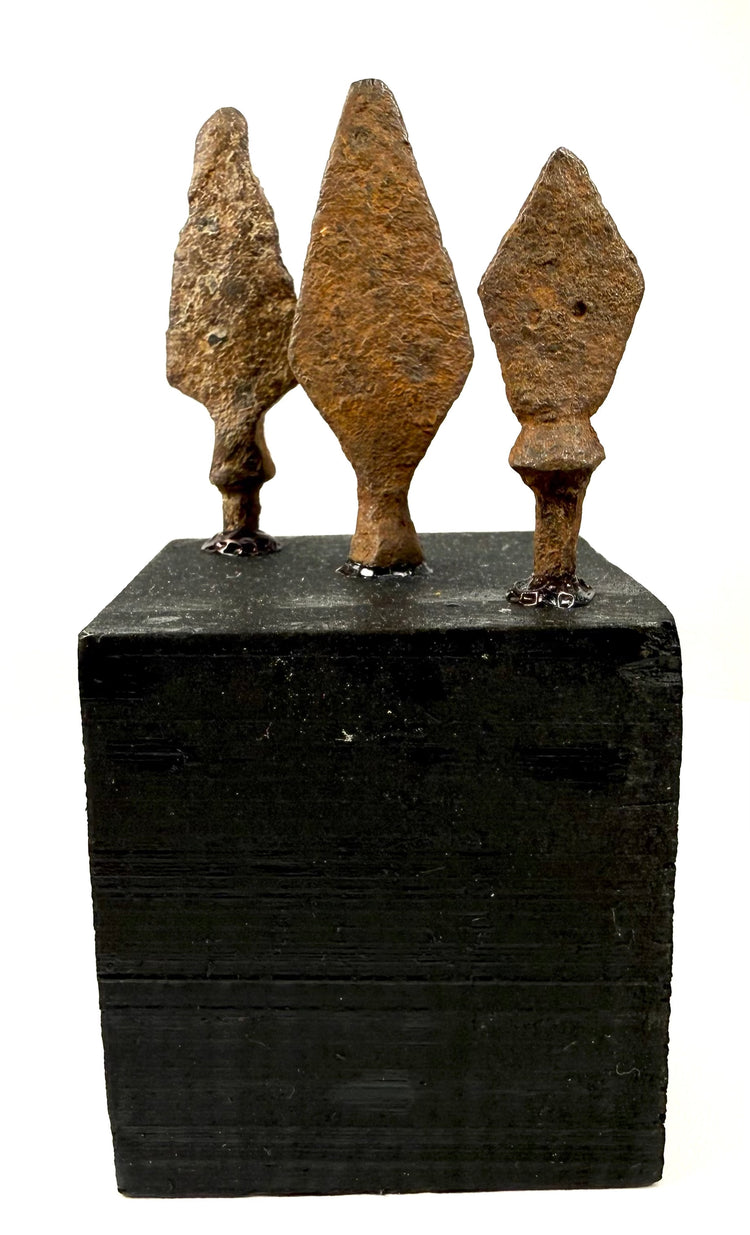
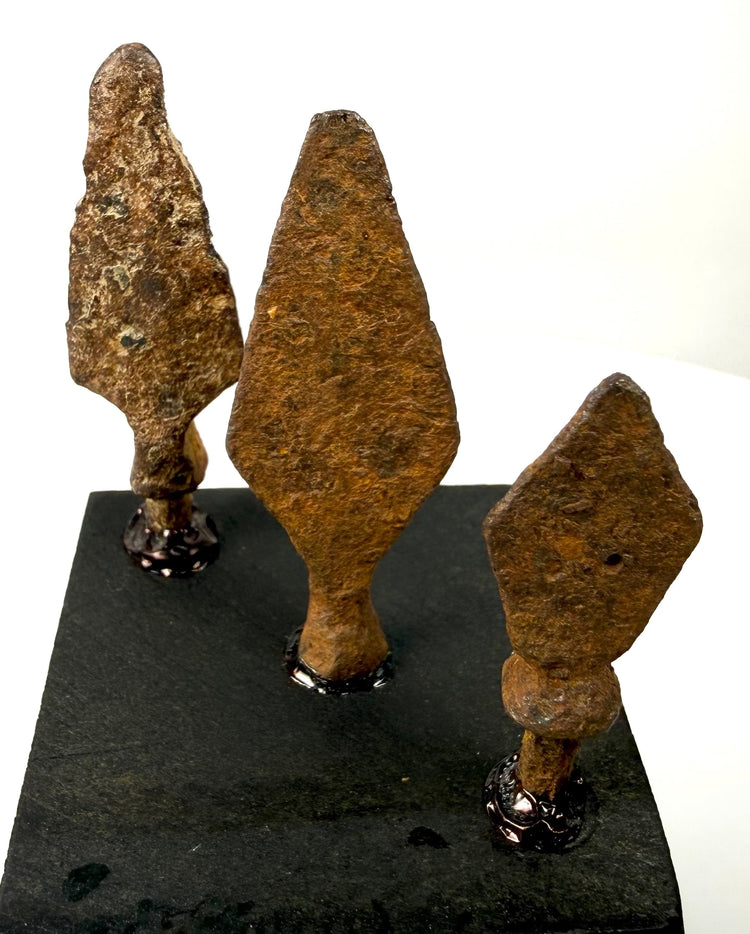
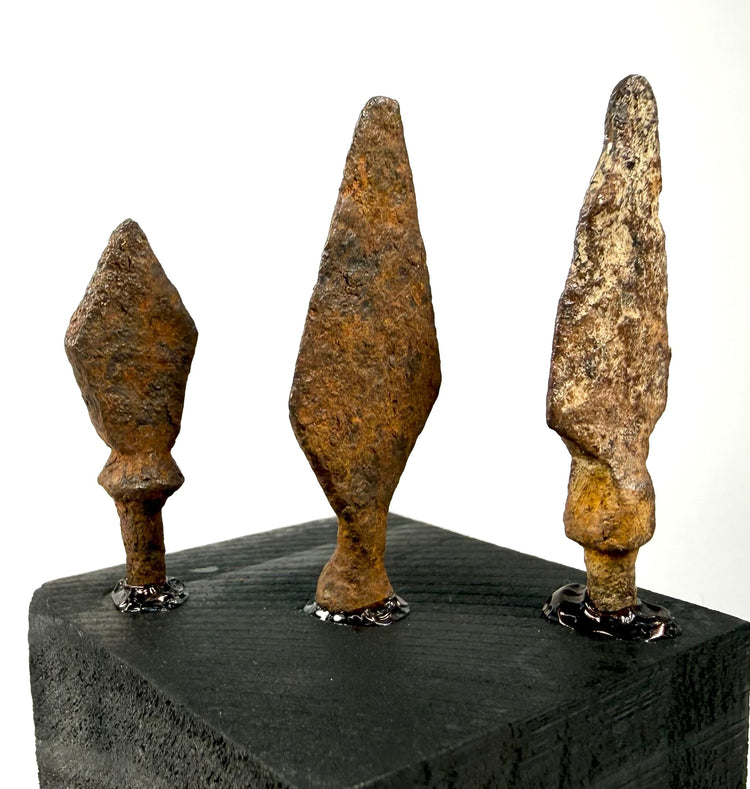
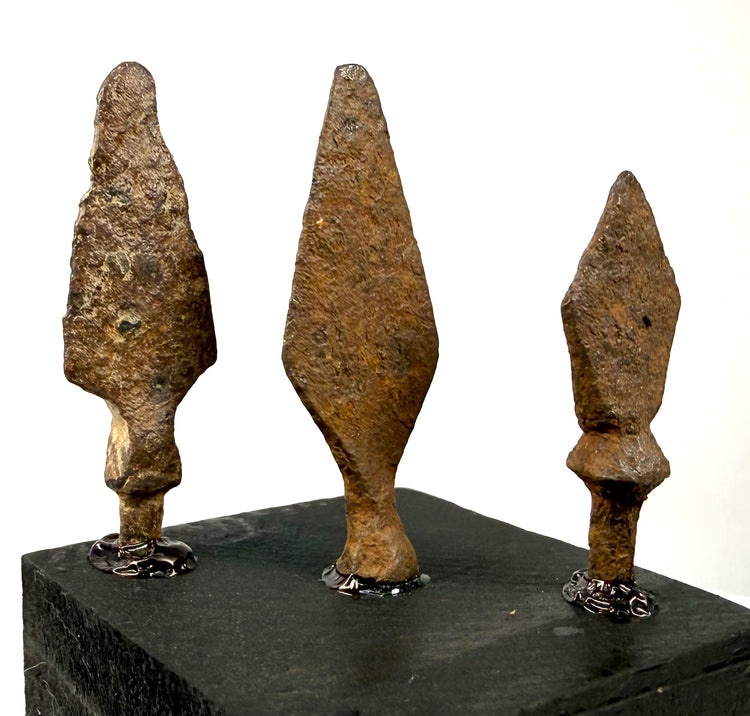
This distinctive archaeological grouping consists of three heavily oxidized iron projectile points, each displaying a different blade configuration and surviving attachment tang. Presented together on a single black wooden display pedestal, the pieces offer an engaging comparison of early iron weapon forms traditionally associated with European archery, hunting, and warfare.
Although the precise date and original geographical origin of each example remain uncertain, their general construction and profiles are consistent with broad traditions of tanged iron projectile points employed throughout the Roman and medieval periods.
Left Projectile Point – Elongated Asymmetrical Blade
The left-hand example features an elongated, relatively narrow blade with an irregular, slightly rounded tip and an asymmetrical outline. Its blade broadens through the middle before narrowing toward a pronounced shoulder and short surviving tang.
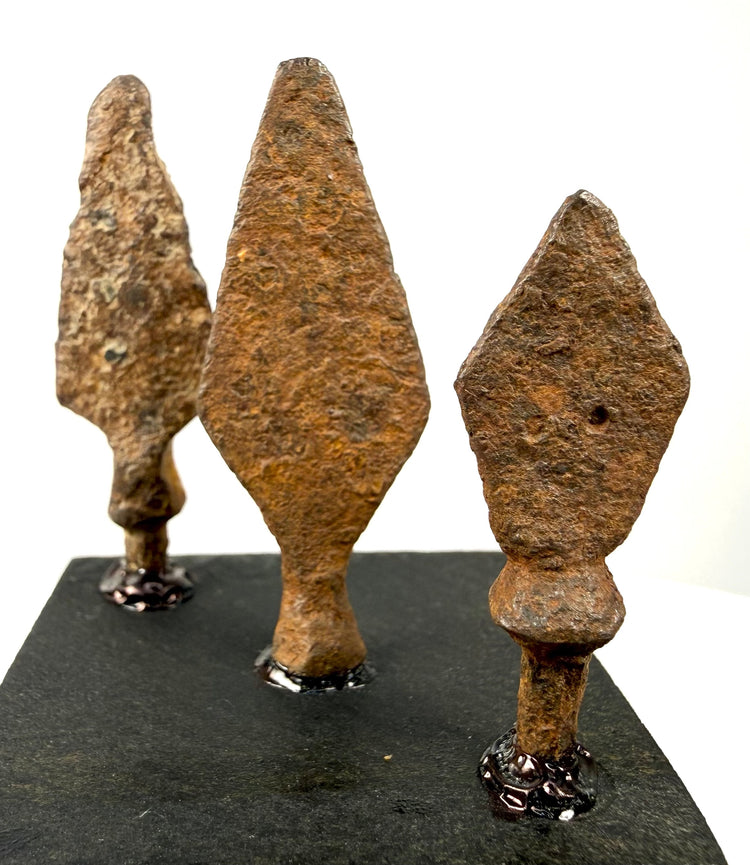
The heavily textured surface exhibits mottled brown oxidation, pale mineral deposits, localized dark inclusions, and substantial corrosion. Its uneven silhouette may reflect a combination of original hand-forging and subsequent deterioration from prolonged burial.
The narrow profile is broadly consistent with iron projectile forms intended to concentrate force toward the point of impact, although its original classification as an arrowhead, bolt head, or other light projectile cannot be determined conclusively.
Central Projectile Point – Broad Leaf-Shaped Blade
The central example is the largest and most visually prominent of the three. It possesses a broad, elongated leaf-shaped blade with a relatively flattened tip, gently expanding sides, and a tapering lower section that transitions into a surviving attachment tang.
Its substantial blade surface displays deep reddish-brown oxidation, widespread pitting, and irregular corrosion patterns. Despite the extensive weathering, the characteristic leaf-shaped profile remains clearly distinguishable.
Broad-bladed iron projectile points were historically employed in several forms of hunting and warfare. Depending on their original dimensions and shaft configuration, such points could have served as larger arrowheads, javelin points, or other light thrusting or projectile weapons.
The surviving form demonstrates the practical versatility of forged iron, which allowed weaponsmiths to produce blades with differing widths, weights, and profiles.
Right Projectile Point – Compact Diamond-Shaped Blade
The right-hand example differs considerably from the other two, displaying a shorter, wider diamond-shaped blade terminating in a distinct angular point.
The blade expands from its upper tip into pronounced lateral shoulders before narrowing toward a slightly raised, collar-like section above the surviving tang.
A small circular depression or corrosion cavity is visible on the blade surface, accompanied by extensive pitting, mineral accumulation, and uneven oxidation.
Its relatively compact proportions suggest a smaller projectile point, potentially associated with archery or another light missile weapon. The surviving collar-like feature and tang provide additional evidence of the original attachment arrangement.
Features
- Distinct elongated, broad leaf-shaped, and compact diamond-shaped blade profiles
- Traditionally hand-forged iron construction
- Surviving attachment tangs on all three examples
- Heavily oxidized surfaces with reddish-brown and dark mineral patination
- Extensive archaeological corrosion, pitting, and irregularities
- Visible differences in blade shoulders, tapering, and proportions
- Potential examples of arrowheads, bolt heads, or other light projectile weapons
Cultural Significance
The development and widespread adoption of iron weaponry transformed warfare and hunting across ancient and medieval Europe. Iron projectile points became essential components of military equipment, providing practical and relatively economical alternatives to earlier bronze weapon forms.
Throughout the Roman and medieval periods, weaponsmiths produced numerous blade configurations suited to different forms of projectile delivery, hunting practices, and battlefield requirements.
Broader leaf-shaped blades offered greater cutting surface area, while narrower profiles concentrated the force of impact into a smaller point. However, the effectiveness of any particular projectile depended on several factors, including its mass, construction, velocity, and the material it was intended to strike.
The presence of surviving tangs is particularly noteworthy. Unlike socketed examples, tanged projectile points were generally attached by inserting the projecting iron stem into a prepared wooden shaft. Depending on the construction, additional bindings or adhesive materials could reinforce the connection.
While their original wooden shafts have not survived, these three iron examples retain recognizable features that illustrate the practical techniques associated with historical projectile manufacture.
Condition
All three projectile points exhibit extensive archaeological oxidation and age-related surface deterioration. Their surfaces display heavy rusting, mineral deposits, irregular pitting, discoloration, edge loss, and areas of accumulated corrosion.
The elongated left-hand example exhibits substantial surface roughness, irregular blade edges, and localized mineral encrustation.
The larger central example retains its distinctive broad leaf-shaped profile, although its surface is heavily weathered, with widespread oxidation, softened blade edges, and a worn or blunted tip.
The smaller right-hand example displays a heavily textured surface, pronounced edge irregularities, and a small circular cavity or depression on the blade.
Dimensions (Approximate)
Overall Display Height: 4.25 in
Age (Approximate)
625–1,825 years old
Provenance
Formerly offered through the German art market during the 2000s, where the group entered the modern European antiquities trade.
Subsequently acquired from a European Union collector residing in London, England, who maintained a private collection of ancient and medieval artifacts.
Later held in the private collection of a gentleman in Surrey, United Kingdom.
Learn More
Explore a Viking-period iron arrowhead and its distinctive leaf-shaped design at the British Museum.
Browse our Collection of Arms, Armour & Historical Weaponry to discover related historical artifacts.
Descripción
Historical Context & Origin
Region: Europe (attributed)
Material: Hand-forged iron
Period: Roman to Medieval Period, provisionally circa 3rd–14th Century CE
Description
This distinctive archaeological grouping consists of three heavily oxidized iron projectile points, each displaying a different blade configuration and surviving attachment tang. Presented together on a single black wooden display pedestal, the pieces offer an engaging comparison of early iron weapon forms traditionally associated with European archery, hunting, and warfare.
Although the precise date and original geographical origin of each example remain uncertain, their general construction and profiles are consistent with broad traditions of tanged iron projectile points employed throughout the Roman and medieval periods.
Left Projectile Point – Elongated Asymmetrical Blade
The left-hand example features an elongated, relatively narrow blade with an irregular, slightly rounded tip and an asymmetrical outline. Its blade broadens through the middle before narrowing toward a pronounced shoulder and short surviving tang.
The heavily textured surface exhibits mottled brown oxidation, pale mineral deposits, localized dark inclusions, and substantial corrosion. Its uneven silhouette may reflect a combination of original hand-forging and subsequent deterioration from prolonged burial.
The narrow profile is broadly consistent with iron projectile forms intended to concentrate force toward the point of impact, although its original classification as an arrowhead, bolt head, or other light projectile cannot be determined conclusively.
Central Projectile Point – Broad Leaf-Shaped Blade
The central example is the largest and most visually prominent of the three. It possesses a broad, elongated leaf-shaped blade with a relatively flattened tip, gently expanding sides, and a tapering lower section that transitions into a surviving attachment tang.
Its substantial blade surface displays deep reddish-brown oxidation, widespread pitting, and irregular corrosion patterns. Despite the extensive weathering, the characteristic leaf-shaped profile remains clearly distinguishable.
Broad-bladed iron projectile points were historically employed in several forms of hunting and warfare. Depending on their original dimensions and shaft configuration, such points could have served as larger arrowheads, javelin points, or other light thrusting or projectile weapons.
The surviving form demonstrates the practical versatility of forged iron, which allowed weaponsmiths to produce blades with differing widths, weights, and profiles.
Right Projectile Point – Compact Diamond-Shaped Blade
The right-hand example differs considerably from the other two, displaying a shorter, wider diamond-shaped blade terminating in a distinct angular point.
The blade expands from its upper tip into pronounced lateral shoulders before narrowing toward a slightly raised, collar-like section above the surviving tang.
A small circular depression or corrosion cavity is visible on the blade surface, accompanied by extensive pitting, mineral accumulation, and uneven oxidation.
Its relatively compact proportions suggest a smaller projectile point, potentially associated with archery or another light missile weapon. The surviving collar-like feature and tang provide additional evidence of the original attachment arrangement.
Features
- Distinct elongated, broad leaf-shaped, and compact diamond-shaped blade profiles
- Traditionally hand-forged iron construction
- Surviving attachment tangs on all three examples
- Heavily oxidized surfaces with reddish-brown and dark mineral patination
- Extensive archaeological corrosion, pitting, and irregularities
- Visible differences in blade shoulders, tapering, and proportions
- Potential examples of arrowheads, bolt heads, or other light projectile weapons
Cultural Significance
The development and widespread adoption of iron weaponry transformed warfare and hunting across ancient and medieval Europe. Iron projectile points became essential components of military equipment, providing practical and relatively economical alternatives to earlier bronze weapon forms.
Throughout the Roman and medieval periods, weaponsmiths produced numerous blade configurations suited to different forms of projectile delivery, hunting practices, and battlefield requirements.
Broader leaf-shaped blades offered greater cutting surface area, while narrower profiles concentrated the force of impact into a smaller point. However, the effectiveness of any particular projectile depended on several factors, including its mass, construction, velocity, and the material it was intended to strike.
The presence of surviving tangs is particularly noteworthy. Unlike socketed examples, tanged projectile points were generally attached by inserting the projecting iron stem into a prepared wooden shaft. Depending on the construction, additional bindings or adhesive materials could reinforce the connection.
While their original wooden shafts have not survived, these three iron examples retain recognizable features that illustrate the practical techniques associated with historical projectile manufacture.
Condition
All three projectile points exhibit extensive archaeological oxidation and age-related surface deterioration. Their surfaces display heavy rusting, mineral deposits, irregular pitting, discoloration, edge loss, and areas of accumulated corrosion.
The elongated left-hand example exhibits substantial surface roughness, irregular blade edges, and localized mineral encrustation.
The larger central example retains its distinctive broad leaf-shaped profile, although its surface is heavily weathered, with widespread oxidation, softened blade edges, and a worn or blunted tip.
The smaller right-hand example displays a heavily textured surface, pronounced edge irregularities, and a small circular cavity or depression on the blade.
Dimensions (Approximate)
Overall Display Height: 4.25 in
Age (Approximate)
625–1,825 years old
Provenance
Formerly offered through the German art market during the 2000s, where the group entered the modern European antiquities trade.
Subsequently acquired from a European Union collector residing in London, England, who maintained a private collection of ancient and medieval artifacts.
Later held in the private collection of a gentleman in Surrey, United Kingdom.
Learn More
Explore a Viking-period iron arrowhead and its distinctive leaf-shaped design at the British Museum.
Browse our Collection of Arms, Armour & Historical Weaponry to discover related historical artifacts.
También te puede interesar
