



Ancient Ram-Head Spouted Vessel Fragment | Terracotta | Circa 6th–5th Century BCE
- Precio habitual
- $400.00
- Precio de venta
- $400.00
- Precio habitual
No se pudo cargar la disponibilidad de retiro





Ancient Ram-Head Spouted Vessel Fragment | Terracotta | Circa 6th–5th Century BCE
Descripción
Más
Menos
Historical Context & Origin
Region: Eastern Mediterranean (Attributed)
Material: Terracotta, buff-coloured ceramic fabric with mineral accretions
Period: Archaic–Classical Period, circa 6th–5th Century BCE
Description
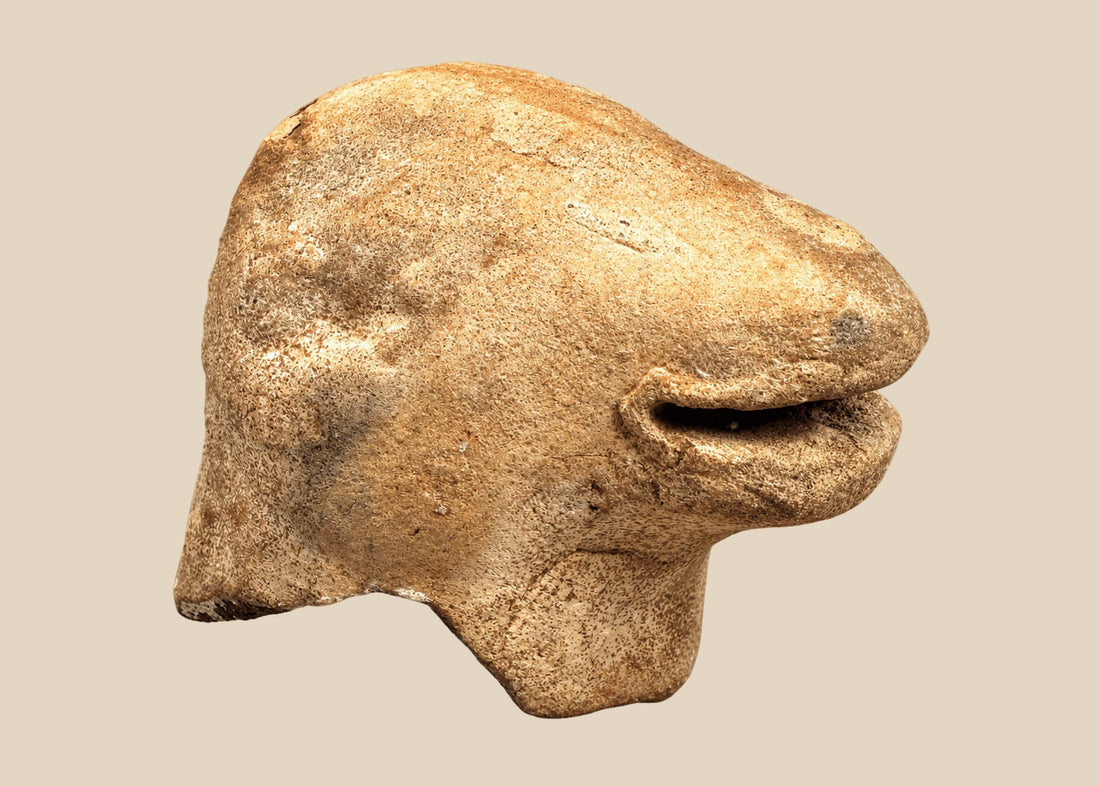
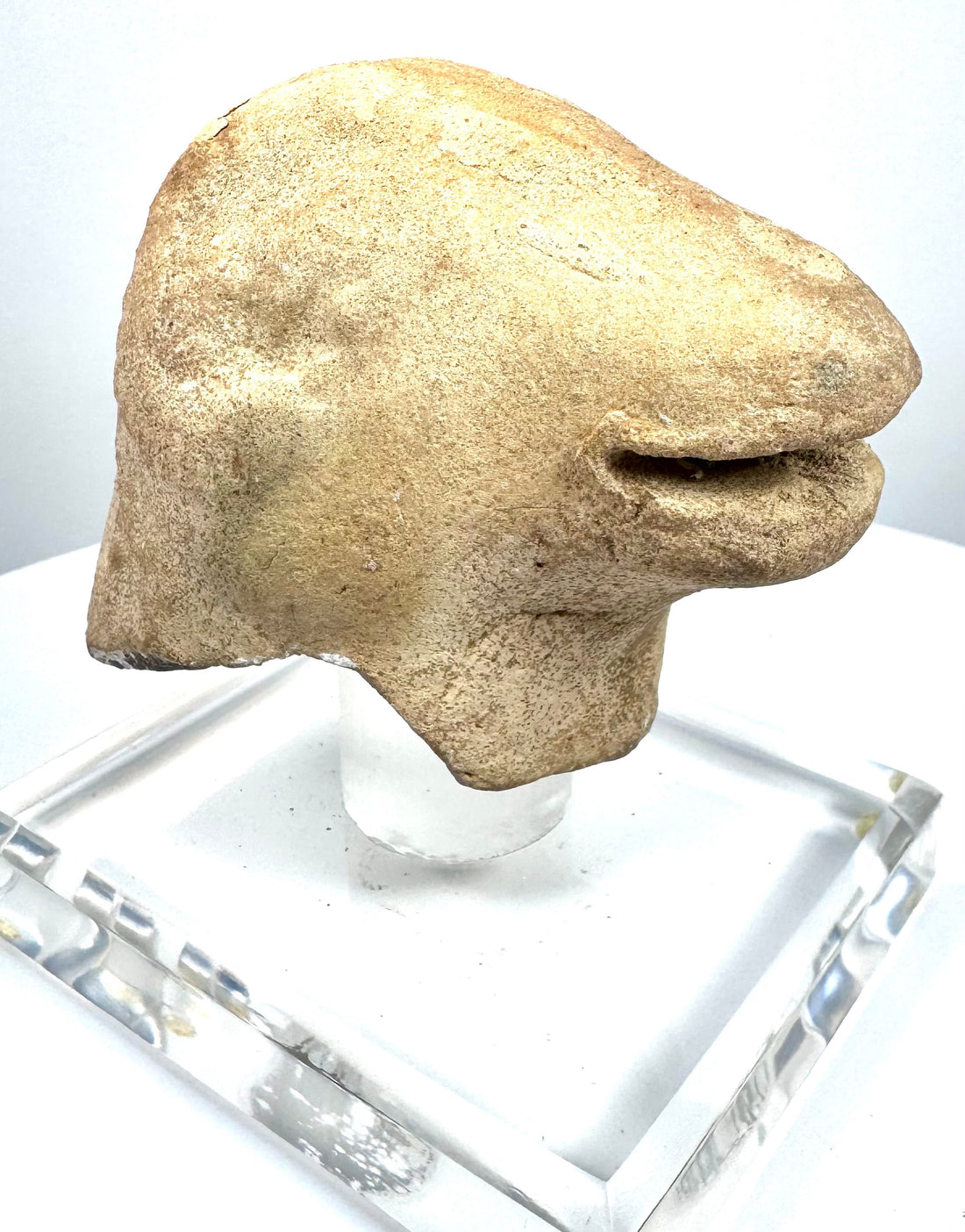
This distinctive ancient terracotta vessel fragment, sculpted in the form of a ram's head, is attributed to the 6th–5th century BCE. Probably originating from the spout of a rhyton-type pouring vessel, the fragment displays the characteristic zoomorphic modelling associated with animal-headed vessels of the ancient Mediterranean world.
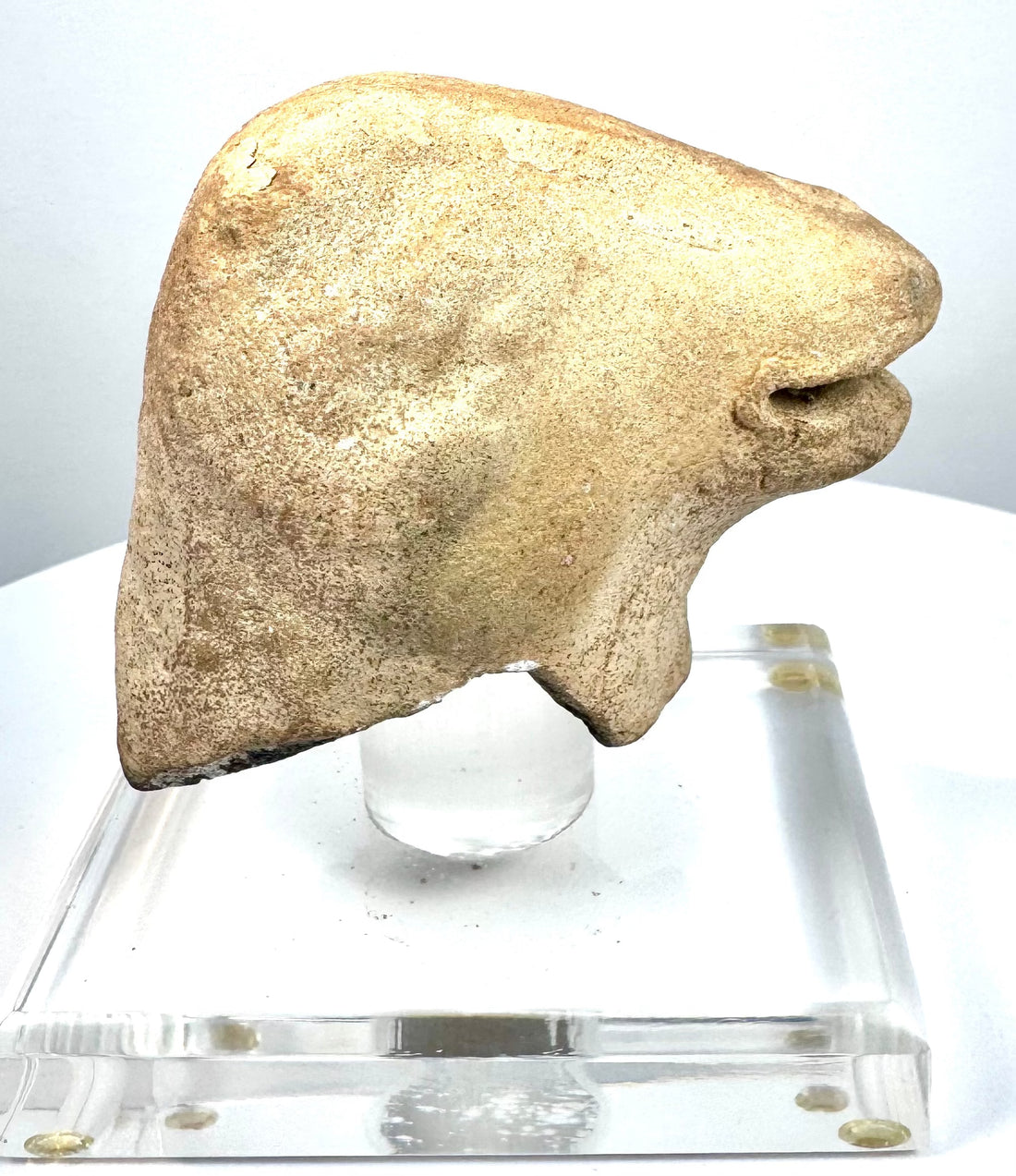
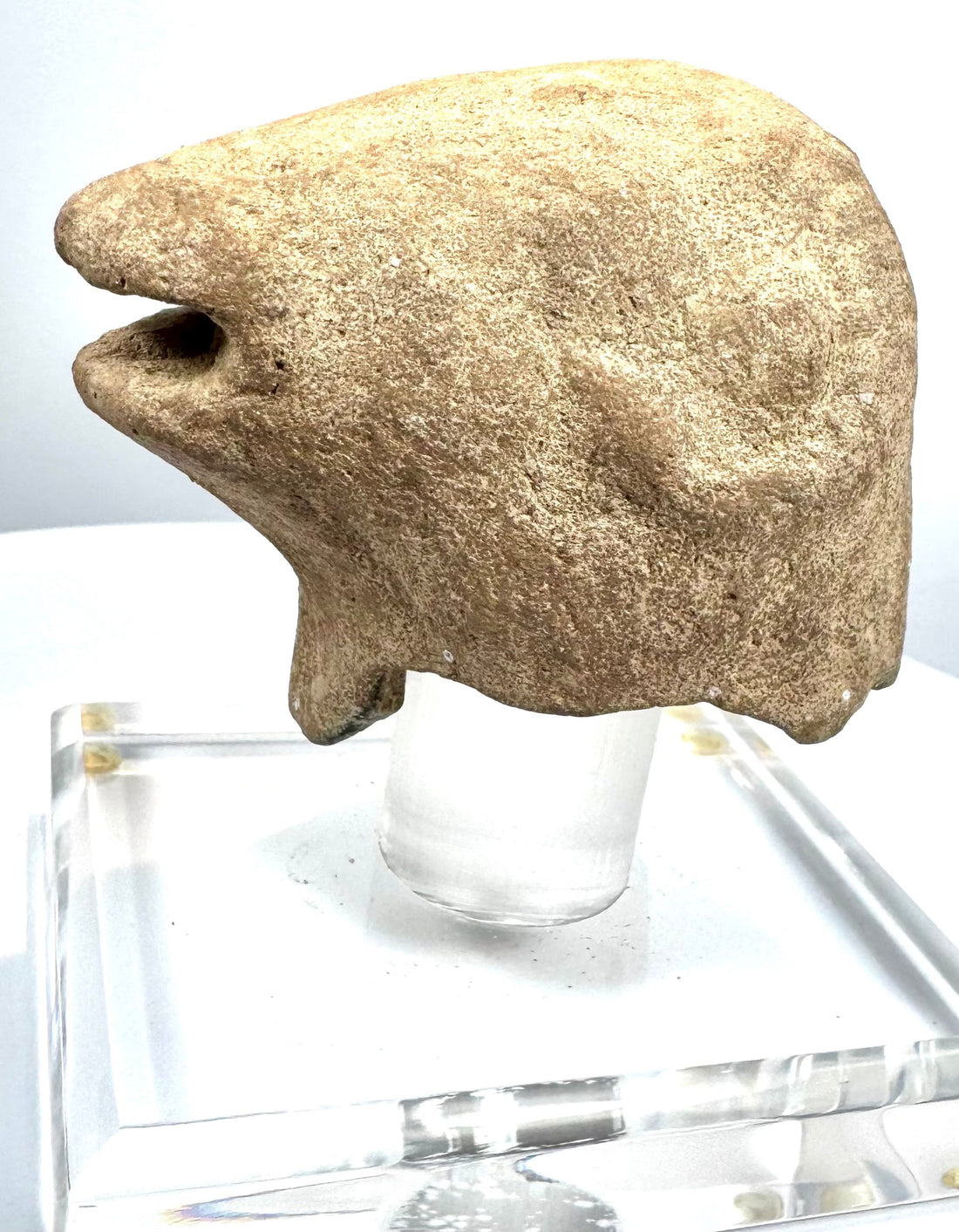
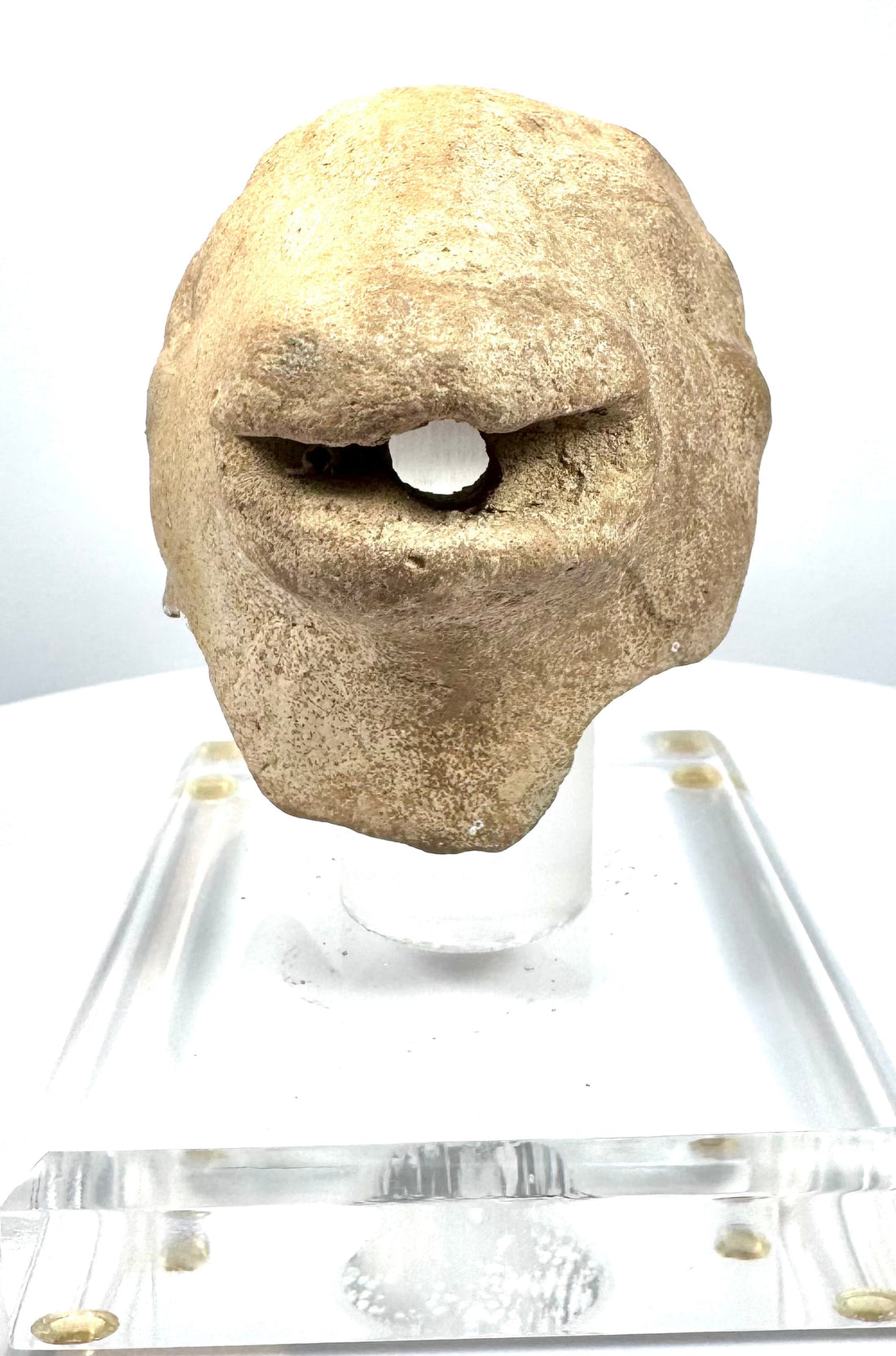
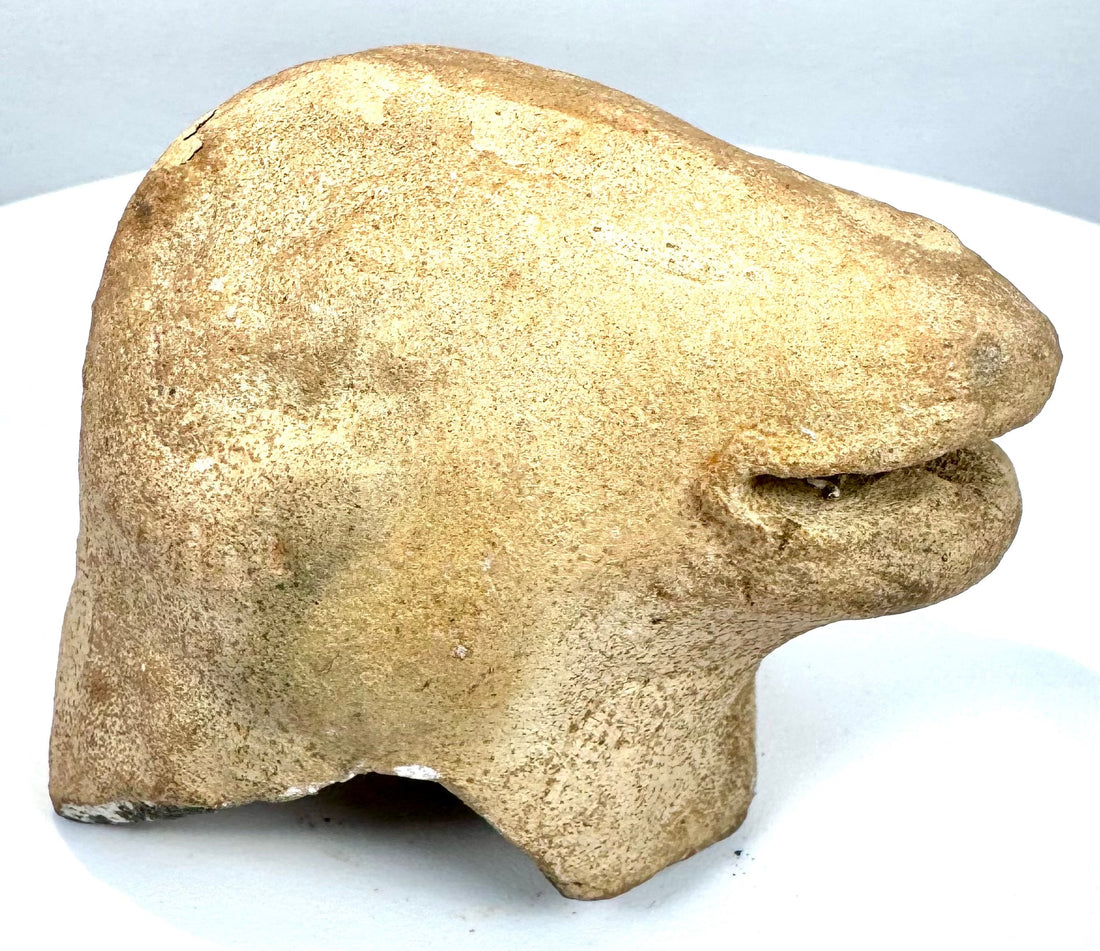
The surviving head features a broad, rounded upper profile extending into a long, projecting muzzle. A pronounced horizontal opening separates the upper and lower jaws, forming a distinctive mouth that may originally have functioned as a pouring aperture. The hollow underside further suggests that the piece formed part of a larger ceramic vessel.
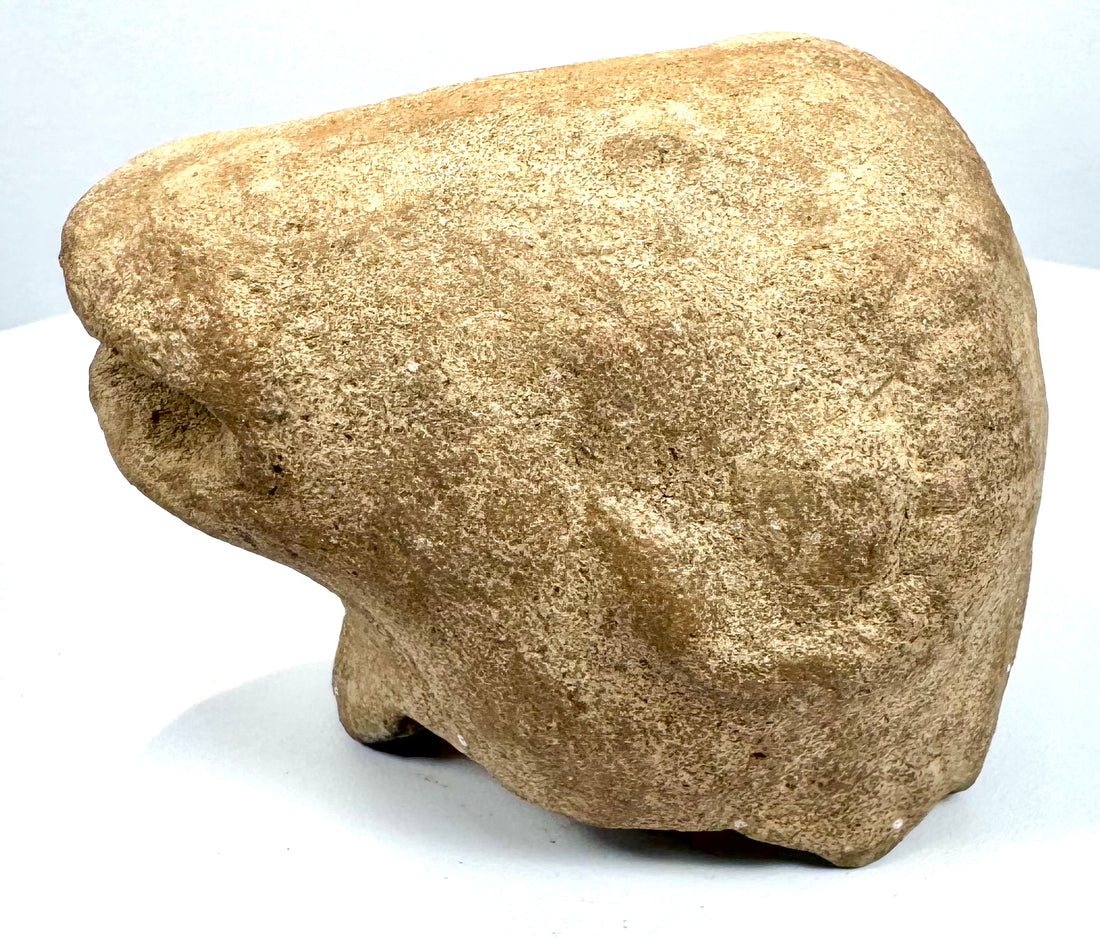
The sculptural composition is characterized by substantial, rounded modelling, with the upper portion transitioning gradually toward the elongated snout. Although the original anatomical detailing has been significantly affected by age and wear, the surviving form retains its expressive animal-like appearance.
The terracotta exhibits a predominantly buff-coloured fabric with natural variations of ochre, grey, and earthy brown. Its exterior displays a coarse, granular surface with localized pitting, uneven weathering, and areas of dark mineral accretion.
The underside reveals a hollow interior with irregular surfaces and additional deposits. The rear and lower edges are broken, indicating that the surviving head was once connected to a larger vessel or structural component.
The horns and eyes are either no longer preserved or have become heavily worn, leaving the precise anatomical characteristics partially obscured. The identification as a ram's head is consistent with the specialist's assessment, although the fragmentary condition limits further zoological interpretation.
Preserved as a substantial sculptural fragment, the piece offers an intriguing example of ancient ceramic craftsmanship and the longstanding tradition of incorporating animal imagery into functional vessel forms.
Features
- Broad, rounded head with an elongated projecting muzzle
-
Deep horizontal mouth opening separating the upper and lower jaws
-
Hollow underside suggesting attachment to a larger vessel
-
Buff-coloured terracotta with ochre, grey, and brown tonal variations
-
Coarse, granular ceramic fabric with visible surface irregularities
-
Dark mineral accretions and naturally weathered surfaces
-
Horns and eyes absent or heavily worn
-
Broken rear and lower edges consistent with its fragmentary preservation
Cultural Significance
Animal-headed vessels represent an important artistic tradition across the ancient Mediterranean and Near Eastern worlds, where ceramics and other materials were shaped into both practical and symbolic objects.
Among these forms were rhyta (singular: rhyton), vessels frequently associated with the pouring or consumption of liquids. Examples incorporating animal heads are known from several ancient cultural traditions, including those of Greece, Anatolia, and Persia.
Such vessels could serve practical purposes during drinking and feasting, while certain examples were also associated with ceremonial offerings and religious libations. Their zoomorphic decoration demonstrates the close relationship between ancient craftsmanship, animal symbolism, and the social and ritual functions of material culture.
Rams and other horned animals appeared throughout ancient Mediterranean and Near Eastern art, carrying associations that varied according to cultural context. Their representations can be found in sculpture, pottery, decorative objects, and ceremonial implements.
The present fragment is particularly interesting for its pronounced mouth opening, hollow construction, and surviving animal-head modelling. These characteristics support its interpretation as part of a spouted vessel, potentially belonging to the broader rhyton tradition.
Condition
Ancient fragmentary condition with extensive surface wear, localized pitting, weathering, and mineral accretions consistent with the object's present state of preservation.
The rear and lower edges are broken, indicating separation from the original vessel. The exterior retains its overall sculptural form, including the projecting muzzle and deep mouth opening, although finer anatomical details, including the horns and eyes, are absent or heavily worn.
The buff-coloured terracotta exhibits irregular surface texture, areas of darker mineral deposition, and variations in colour throughout. The hollow underside remains visible, with additional internal surface irregularities and accumulated deposits.
Dimensions (Approximate)
Length: 4 in
Width: 3.25 in
Height: 4.25 in
Age (Approximate)
2,300–2,700 years old
Provenance
Formerly part of a private collection in Sarasota Beach, Florida, USA. Subsequently handled by Akiba Galleries, Dania Beach, Florida, USA. Akiba Galleries is an established, family-owned auction house specializing in fine art, antiques, historical artifacts, and collectible objects from around the world. Known for its diverse and carefully curated auctions, the gallery serves an international clientele of collectors, dealers, and institutions.
Expert Assessment: Examined by Luca Salvaggio, an Italian archaeologist specializing in ancient Mediterranean material, with a Postgraduate Diploma from the Italian Archaeological School at Athens (IASA) and accreditation for preventive archaeology from the Italian Ministry of Culture (MiC). He identified the fragment as a terracotta ram-head spouted vessel fragment, probably originating from a rhyton-type pouring vessel, and attributed it to the 6th–5th century BCE. His assessment was based on its broad, rounded head, elongated projecting muzzle, pronounced horizontal mouth opening, hollow underside, and coarse buff-coloured ceramic fabric with mineral accretions.
Learn More
Discover a comparable ancient ram-head rhyton fragment from Anatolia at The Metropolitan Museum of Art
Browse Our Collection of Ancient Statues, Figures & Carvings
Descripción
Historical Context & Origin
Region: Eastern Mediterranean (Attributed)
Material: Terracotta, buff-coloured ceramic fabric with mineral accretions
Period: Archaic–Classical Period, circa 6th–5th Century BCE
Description
This distinctive ancient terracotta vessel fragment, sculpted in the form of a ram's head, is attributed to the 6th–5th century BCE. Probably originating from the spout of a rhyton-type pouring vessel, the fragment displays the characteristic zoomorphic modelling associated with animal-headed vessels of the ancient Mediterranean world.
The surviving head features a broad, rounded upper profile extending into a long, projecting muzzle. A pronounced horizontal opening separates the upper and lower jaws, forming a distinctive mouth that may originally have functioned as a pouring aperture. The hollow underside further suggests that the piece formed part of a larger ceramic vessel.
The sculptural composition is characterized by substantial, rounded modelling, with the upper portion transitioning gradually toward the elongated snout. Although the original anatomical detailing has been significantly affected by age and wear, the surviving form retains its expressive animal-like appearance.
The terracotta exhibits a predominantly buff-coloured fabric with natural variations of ochre, grey, and earthy brown. Its exterior displays a coarse, granular surface with localized pitting, uneven weathering, and areas of dark mineral accretion.
The underside reveals a hollow interior with irregular surfaces and additional deposits. The rear and lower edges are broken, indicating that the surviving head was once connected to a larger vessel or structural component.
The horns and eyes are either no longer preserved or have become heavily worn, leaving the precise anatomical characteristics partially obscured. The identification as a ram's head is consistent with the specialist's assessment, although the fragmentary condition limits further zoological interpretation.
Preserved as a substantial sculptural fragment, the piece offers an intriguing example of ancient ceramic craftsmanship and the longstanding tradition of incorporating animal imagery into functional vessel forms.
Features
- Broad, rounded head with an elongated projecting muzzle
-
Deep horizontal mouth opening separating the upper and lower jaws
-
Hollow underside suggesting attachment to a larger vessel
-
Buff-coloured terracotta with ochre, grey, and brown tonal variations
-
Coarse, granular ceramic fabric with visible surface irregularities
-
Dark mineral accretions and naturally weathered surfaces
-
Horns and eyes absent or heavily worn
-
Broken rear and lower edges consistent with its fragmentary preservation
Cultural Significance
Animal-headed vessels represent an important artistic tradition across the ancient Mediterranean and Near Eastern worlds, where ceramics and other materials were shaped into both practical and symbolic objects.
Among these forms were rhyta (singular: rhyton), vessels frequently associated with the pouring or consumption of liquids. Examples incorporating animal heads are known from several ancient cultural traditions, including those of Greece, Anatolia, and Persia.
Such vessels could serve practical purposes during drinking and feasting, while certain examples were also associated with ceremonial offerings and religious libations. Their zoomorphic decoration demonstrates the close relationship between ancient craftsmanship, animal symbolism, and the social and ritual functions of material culture.
Rams and other horned animals appeared throughout ancient Mediterranean and Near Eastern art, carrying associations that varied according to cultural context. Their representations can be found in sculpture, pottery, decorative objects, and ceremonial implements.
The present fragment is particularly interesting for its pronounced mouth opening, hollow construction, and surviving animal-head modelling. These characteristics support its interpretation as part of a spouted vessel, potentially belonging to the broader rhyton tradition.
Condition
Ancient fragmentary condition with extensive surface wear, localized pitting, weathering, and mineral accretions consistent with the object's present state of preservation.
The rear and lower edges are broken, indicating separation from the original vessel. The exterior retains its overall sculptural form, including the projecting muzzle and deep mouth opening, although finer anatomical details, including the horns and eyes, are absent or heavily worn.
The buff-coloured terracotta exhibits irregular surface texture, areas of darker mineral deposition, and variations in colour throughout. The hollow underside remains visible, with additional internal surface irregularities and accumulated deposits.
Dimensions (Approximate)
Length: 4 in
Width: 3.25 in
Height: 4.25 in
Age (Approximate)
2,300–2,700 years old
Provenance
Formerly part of a private collection in Sarasota Beach, Florida, USA. Subsequently handled by Akiba Galleries, Dania Beach, Florida, USA. Akiba Galleries is an established, family-owned auction house specializing in fine art, antiques, historical artifacts, and collectible objects from around the world. Known for its diverse and carefully curated auctions, the gallery serves an international clientele of collectors, dealers, and institutions.
Expert Assessment: Examined by Luca Salvaggio, an Italian archaeologist specializing in ancient Mediterranean material, with a Postgraduate Diploma from the Italian Archaeological School at Athens (IASA) and accreditation for preventive archaeology from the Italian Ministry of Culture (MiC). He identified the fragment as a terracotta ram-head spouted vessel fragment, probably originating from a rhyton-type pouring vessel, and attributed it to the 6th–5th century BCE. His assessment was based on its broad, rounded head, elongated projecting muzzle, pronounced horizontal mouth opening, hollow underside, and coarse buff-coloured ceramic fabric with mineral accretions.
Learn More
Discover a comparable ancient ram-head rhyton fragment from Anatolia at The Metropolitan Museum of Art
Browse Our Collection of Ancient Statues, Figures & Carvings
También te puede interesar
