



Ancient Roman Bronze Barking Dog Figurine | 1st Century BCE–3rd Century CE
- Precio habitual
- $650.00
- Precio de venta
- $650.00
- Precio habitual
No se pudo cargar la disponibilidad de retiro


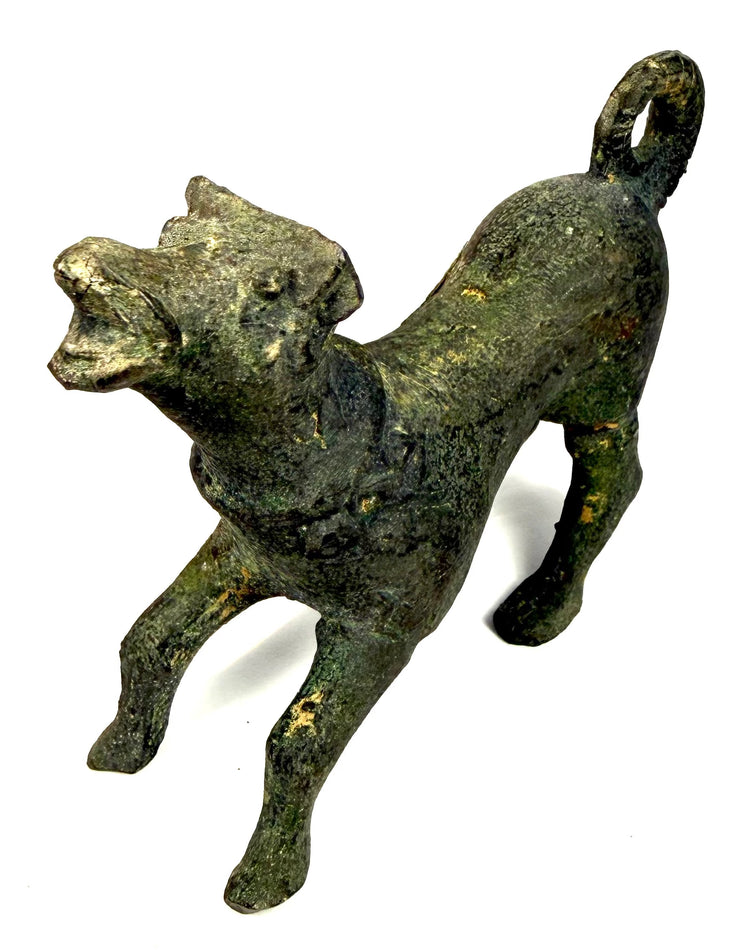
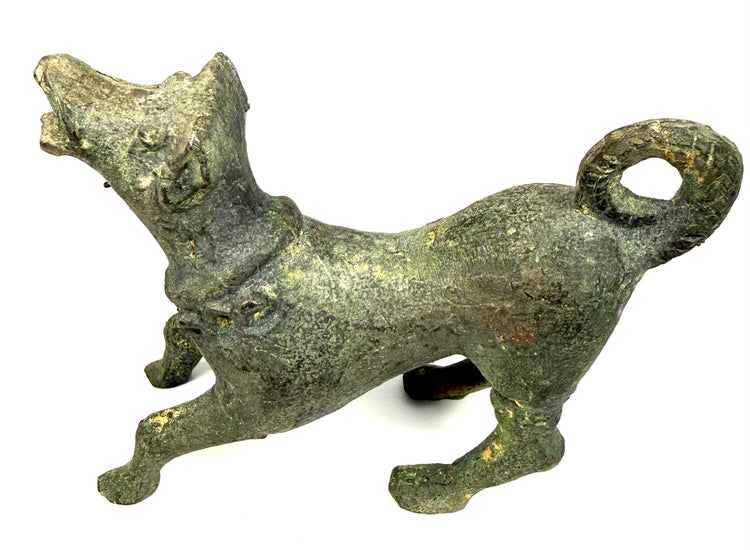
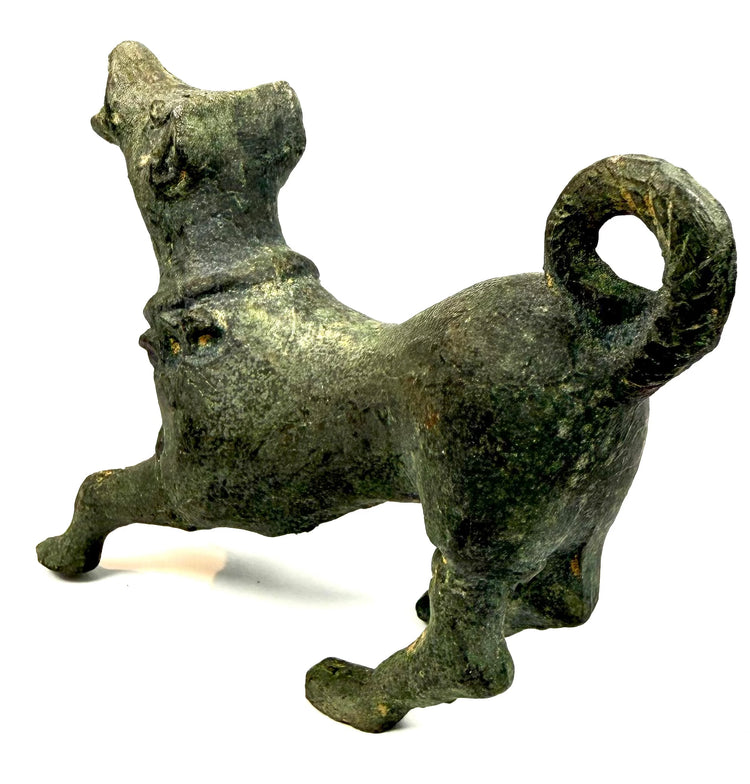
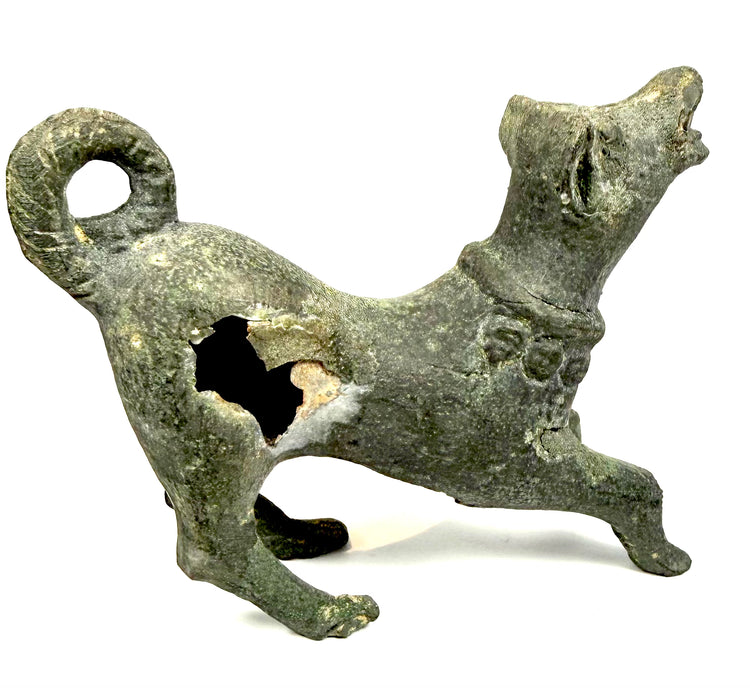
Ancient Roman Bronze Barking Dog Figurine | 1st Century BCE–3rd Century CE
Descripción
Más
Menos
Historical Context & Origin
Region: Roman Mediterranean
Material: Cast bronze or copper alloy with dark green, olive-brown, and grey-green surface patination
Period: Roman Period, circa 1st century BCE–3rd century CE
Description
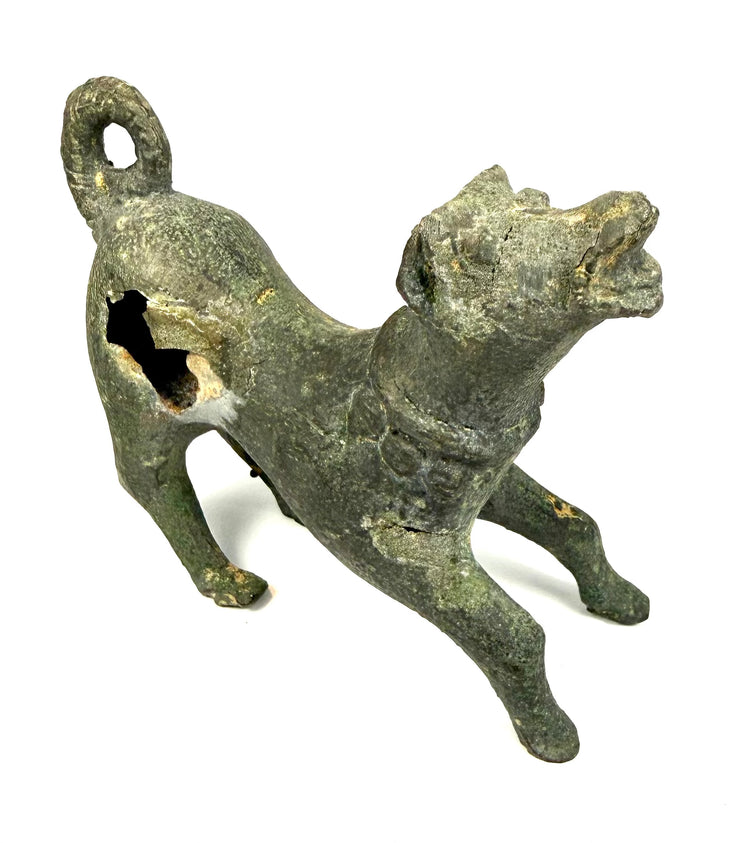
An expressive bronze figurine depicting a barking dog in an animated, forward-reaching stance, with its head raised, mouth open, and distinctive curled tail extending upward above the hindquarters. The sculpture combines naturalistic observation with stylized anatomical modelling, capturing the alertness, movement, and energetic character of a canine in a barking or guarding posture.
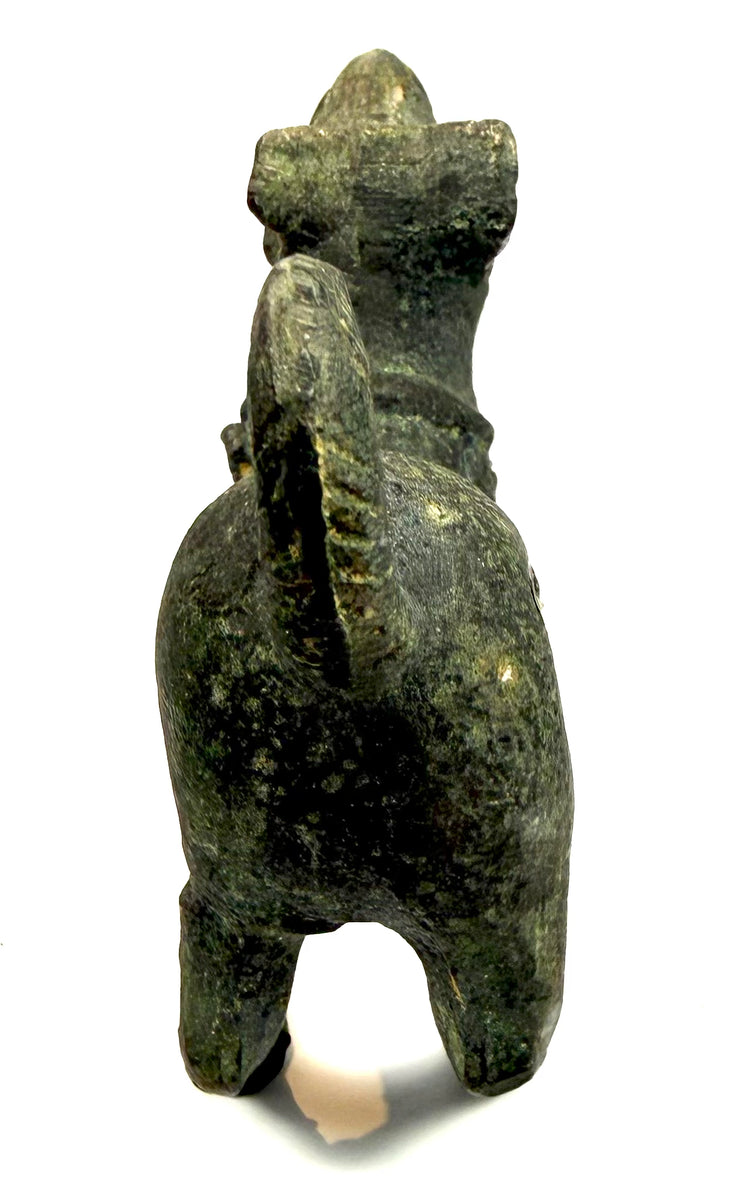
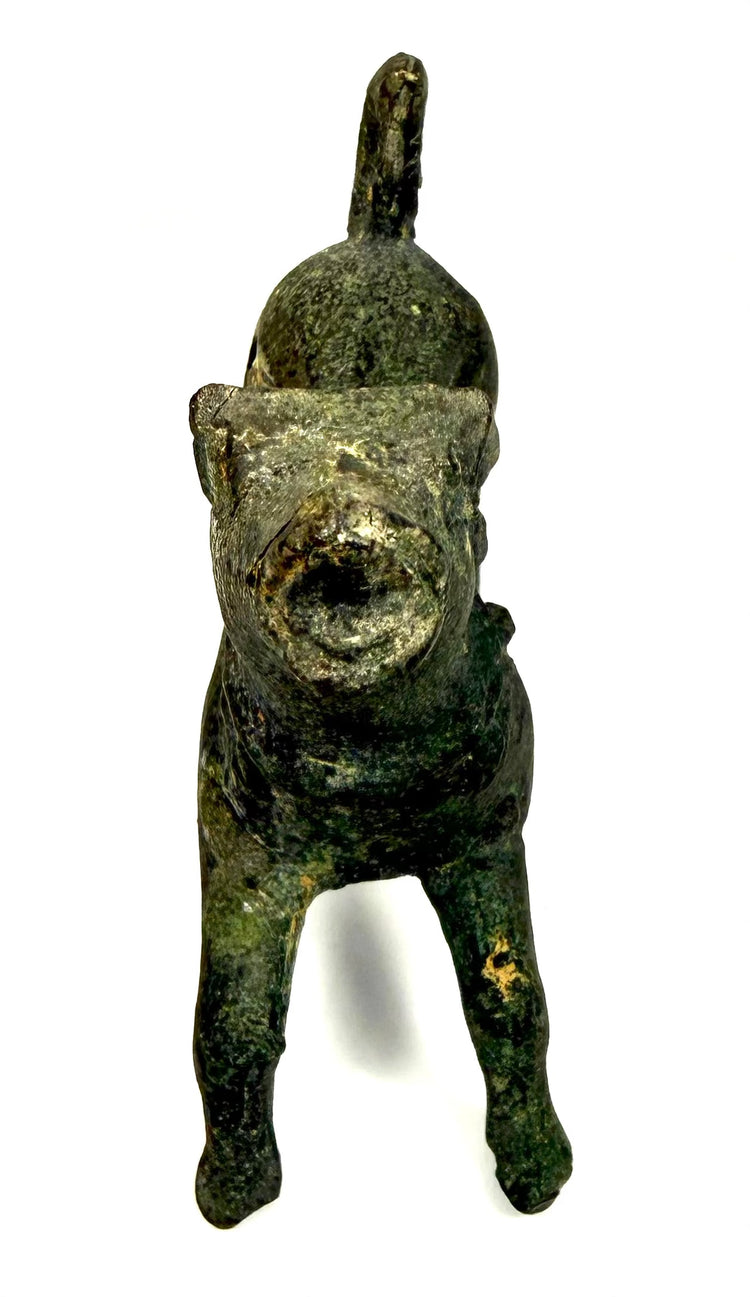
The dog's elongated body is supported by four individually modelled legs, with the forelegs extending forward and the hindquarters raised. Its head features a pronounced muzzle, parted jaws, small upright ears, and raised facial details. The elevated head and open mouth give the figure a particularly animated expression, emphasizing the animal's vigilant and protective character.
Encircling the neck is a prominent raised collar decorated with rounded ornamental elements and a distinctive central detail. The collar adds decorative emphasis to the sculpture and reflects the tradition of depicting domesticated dogs wearing collars in Roman and Mediterranean art.
One of the figure's most distinctive features is its tightly curled tail, which rises sharply above the hindquarters and forms a complete pierced loop. This unusual sculptural element complements the animal's animated stance and gives the bronze a recognizable silhouette.
The surface exhibits extensive dark olive-green, grey-green, and brown patination, with areas of oxidation, mineral-like deposits, pitting, and scattered lighter metal exposure. These varied surface characteristics emphasize the textured modelling and surviving decorative details.
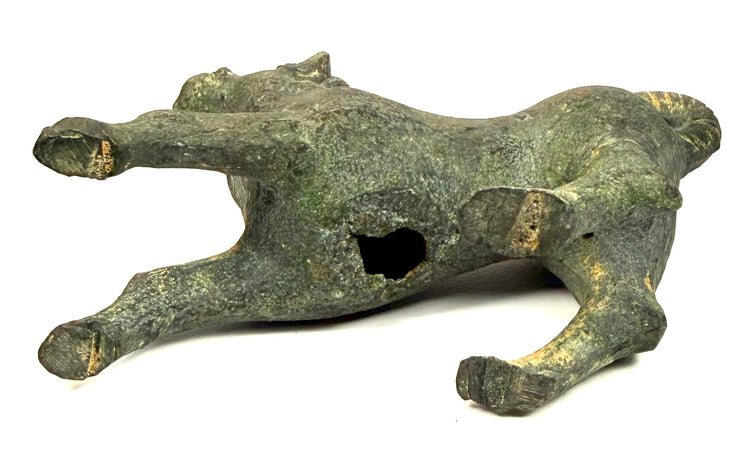
A substantial irregular opening along one rear flank exposes an interior cavity, with lighter-coloured material visible around the damaged edges. The opening reveals details of the figure's internal structure and is an important aspect of its present condition.
Small bronze canine figurines formed part of the artistic traditions of the Roman Mediterranean, where dogs were represented in sculpture, household decoration, and religious imagery. The present figure is distinguished by its expressive barking posture, ornamental collar, pierced curled tail, and richly patinated bronze surface.
Features
- Expressive barking dog with raised head, open jaws, and pronounced muzzle
- Animated forward-reaching stance with extended forelegs and elevated hindquarters
- Small upright ears and individually modelled facial features
- Prominent decorative collar with rounded raised ornamental elements
- Distinctive upward-curving tail forming a complete pierced loop
- Elongated body supported by four individually modelled legs
- Textured bronze surface with surviving incised and raised detailing
- Dark olive-green, grey-green, and brown surface patination
- Scattered lighter metal exposure, oxidation, and mineral-like deposits
- Irregular opening along the rear flank exposing an interior cavity
Cultural Significance
Dogs occupied an important position throughout the ancient Mediterranean world, serving as hunting companions, household guardians, working animals, and valued domestic pets. Their loyalty, vigilance, and protective instincts made them frequent subjects in both everyday artistic production and religious symbolism.
Within Roman society, dogs were closely associated with domestic security and faithful companionship. Their importance is reflected in numerous surviving works of art, ranging from mosaics and funerary monuments to decorative objects and small bronze statuettes. Some canine representations emphasized the animal's strength and watchfulness, while others captured playful or familiar aspects of domestic life.
Small bronze animal figures were produced for various purposes, including household decoration, personal adornment, religious dedication, and ornamental fittings. Their forms ranged from carefully naturalistic sculptures to highly stylized representations emphasizing distinctive animal characteristics and expressive movement.
The decorative collar is particularly significant within the broader tradition of Roman canine imagery. Collars distinguished domesticated dogs from wild animals and frequently appeared in representations emphasizing the animal's relationship with human society.
In Roman-period Egypt, bronze canine figures were also represented with raised heads, curved tails, and ornamental collars. These sculptures demonstrate the artistic importance of dogs throughout different regions of the Roman world and the varied ways in which their protective and domestic associations were expressed.
The present figurine captures these enduring characteristics through its animated posture, open mouth, prominent collar, and distinctive curled tail. Its expressive modelling and compact form reflect the broader artistic tradition of small-scale bronze animal sculpture in the ancient Mediterranean.
Condition
The figure exhibits extensive dark olive-green, grey-green, and brown surface patination, with areas of oxidation, mineral-like deposits, pitting, abrasions, and irregular surface texture.
A substantial irregular area of material loss is present along one rear flank, exposing an interior cavity and lighter-coloured material around the damaged edges. Additional surface irregularities, minor chips, fine lines, and localized wear are visible around the neck, body, and limbs.
The four legs, head, decorative collar, and distinctive curled tail remain present, preserving the figure's overall sculptural form. The facial features, open jaws, and ornamental details remain recognizable despite surface wear.
The rear-flank opening is the most significant area of damage. The remaining bronze surface displays varied patination and wear consistent with its present condition.
Dimensions (Approximate)
Length: 3.75 in
Age (Approximate)
1,700–2,100 years old
Provenance
Previously handled by Tremont Auctions, Sudbury, Massachusetts, United States, an established auction house specializing in fine art, antiques, decorative works, Asian antiquities, and estate collections.
Offered as Lot 86 in the Antiquities, Books & Estate Collections auction held on September 13, 2026. The auction catalogue described the object as a bronze barking dog figure, identified its antiquity as tentative, and documented damage to its rear.
Learn More
View a related bronze Prancing Dog Figurine at the Los Angeles County Museum of Art
Explore more classical antiquities in our Roman & Greek Artifacts Collection
Descripción
Historical Context & Origin
Region: Roman Mediterranean
Material: Cast bronze or copper alloy with dark green, olive-brown, and grey-green surface patination
Period: Roman Period, circa 1st century BCE–3rd century CE
Description
An expressive bronze figurine depicting a barking dog in an animated, forward-reaching stance, with its head raised, mouth open, and distinctive curled tail extending upward above the hindquarters. The sculpture combines naturalistic observation with stylized anatomical modelling, capturing the alertness, movement, and energetic character of a canine in a barking or guarding posture.
The dog's elongated body is supported by four individually modelled legs, with the forelegs extending forward and the hindquarters raised. Its head features a pronounced muzzle, parted jaws, small upright ears, and raised facial details. The elevated head and open mouth give the figure a particularly animated expression, emphasizing the animal's vigilant and protective character.
Encircling the neck is a prominent raised collar decorated with rounded ornamental elements and a distinctive central detail. The collar adds decorative emphasis to the sculpture and reflects the tradition of depicting domesticated dogs wearing collars in Roman and Mediterranean art.
One of the figure's most distinctive features is its tightly curled tail, which rises sharply above the hindquarters and forms a complete pierced loop. This unusual sculptural element complements the animal's animated stance and gives the bronze a recognizable silhouette.
The surface exhibits extensive dark olive-green, grey-green, and brown patination, with areas of oxidation, mineral-like deposits, pitting, and scattered lighter metal exposure. These varied surface characteristics emphasize the textured modelling and surviving decorative details.
A substantial irregular opening along one rear flank exposes an interior cavity, with lighter-coloured material visible around the damaged edges. The opening reveals details of the figure's internal structure and is an important aspect of its present condition.
Small bronze canine figurines formed part of the artistic traditions of the Roman Mediterranean, where dogs were represented in sculpture, household decoration, and religious imagery. The present figure is distinguished by its expressive barking posture, ornamental collar, pierced curled tail, and richly patinated bronze surface.
Features
- Expressive barking dog with raised head, open jaws, and pronounced muzzle
- Animated forward-reaching stance with extended forelegs and elevated hindquarters
- Small upright ears and individually modelled facial features
- Prominent decorative collar with rounded raised ornamental elements
- Distinctive upward-curving tail forming a complete pierced loop
- Elongated body supported by four individually modelled legs
- Textured bronze surface with surviving incised and raised detailing
- Dark olive-green, grey-green, and brown surface patination
- Scattered lighter metal exposure, oxidation, and mineral-like deposits
- Irregular opening along the rear flank exposing an interior cavity
Cultural Significance
Dogs occupied an important position throughout the ancient Mediterranean world, serving as hunting companions, household guardians, working animals, and valued domestic pets. Their loyalty, vigilance, and protective instincts made them frequent subjects in both everyday artistic production and religious symbolism.
Within Roman society, dogs were closely associated with domestic security and faithful companionship. Their importance is reflected in numerous surviving works of art, ranging from mosaics and funerary monuments to decorative objects and small bronze statuettes. Some canine representations emphasized the animal's strength and watchfulness, while others captured playful or familiar aspects of domestic life.
Small bronze animal figures were produced for various purposes, including household decoration, personal adornment, religious dedication, and ornamental fittings. Their forms ranged from carefully naturalistic sculptures to highly stylized representations emphasizing distinctive animal characteristics and expressive movement.
The decorative collar is particularly significant within the broader tradition of Roman canine imagery. Collars distinguished domesticated dogs from wild animals and frequently appeared in representations emphasizing the animal's relationship with human society.
In Roman-period Egypt, bronze canine figures were also represented with raised heads, curved tails, and ornamental collars. These sculptures demonstrate the artistic importance of dogs throughout different regions of the Roman world and the varied ways in which their protective and domestic associations were expressed.
The present figurine captures these enduring characteristics through its animated posture, open mouth, prominent collar, and distinctive curled tail. Its expressive modelling and compact form reflect the broader artistic tradition of small-scale bronze animal sculpture in the ancient Mediterranean.
Condition
The figure exhibits extensive dark olive-green, grey-green, and brown surface patination, with areas of oxidation, mineral-like deposits, pitting, abrasions, and irregular surface texture.
A substantial irregular area of material loss is present along one rear flank, exposing an interior cavity and lighter-coloured material around the damaged edges. Additional surface irregularities, minor chips, fine lines, and localized wear are visible around the neck, body, and limbs.
The four legs, head, decorative collar, and distinctive curled tail remain present, preserving the figure's overall sculptural form. The facial features, open jaws, and ornamental details remain recognizable despite surface wear.
The rear-flank opening is the most significant area of damage. The remaining bronze surface displays varied patination and wear consistent with its present condition.
Dimensions (Approximate)
Length: 3.75 in
Age (Approximate)
1,700–2,100 years old
Provenance
Previously handled by Tremont Auctions, Sudbury, Massachusetts, United States, an established auction house specializing in fine art, antiques, decorative works, Asian antiquities, and estate collections.
Offered as Lot 86 in the Antiquities, Books & Estate Collections auction held on September 13, 2026. The auction catalogue described the object as a bronze barking dog figure, identified its antiquity as tentative, and documented damage to its rear.
Learn More
View a related bronze Prancing Dog Figurine at the Los Angeles County Museum of Art
Explore more classical antiquities in our Roman & Greek Artifacts Collection
También te puede interesar
