



Ancient Roman Bronze Coin Collection (20) | Late Roman Imperial Period | Circa 3rd–4th Century CE | Uncleaned
- Precio habitual
- $200.00
- Precio de venta
- $200.00
- Precio habitual
No se pudo cargar la disponibilidad de retiro




Ancient Roman Bronze Coin Collection (20) | Late Roman Imperial Period | Circa 3rd–4th Century CE | Uncleaned
Descripción
Más
Menos
Historical Context & Origin
Region: Roman Empire, various imperial territories and mints
Material: Copper alloy (bronze), with naturally developed patination, oxidation, and surface deposits
Period: Late Roman Imperial Period, attributed circa 3rd–4th Century CE
Description
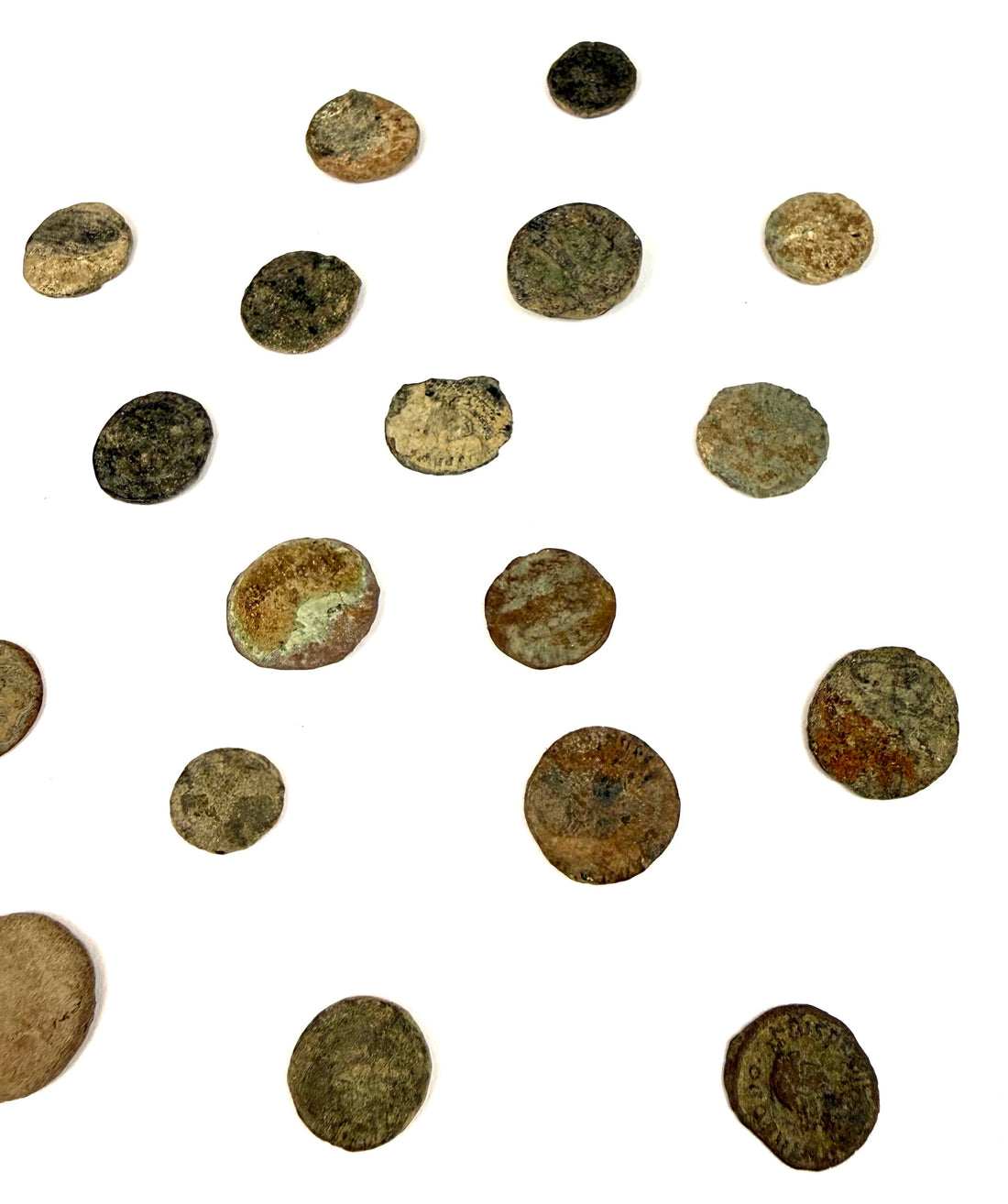
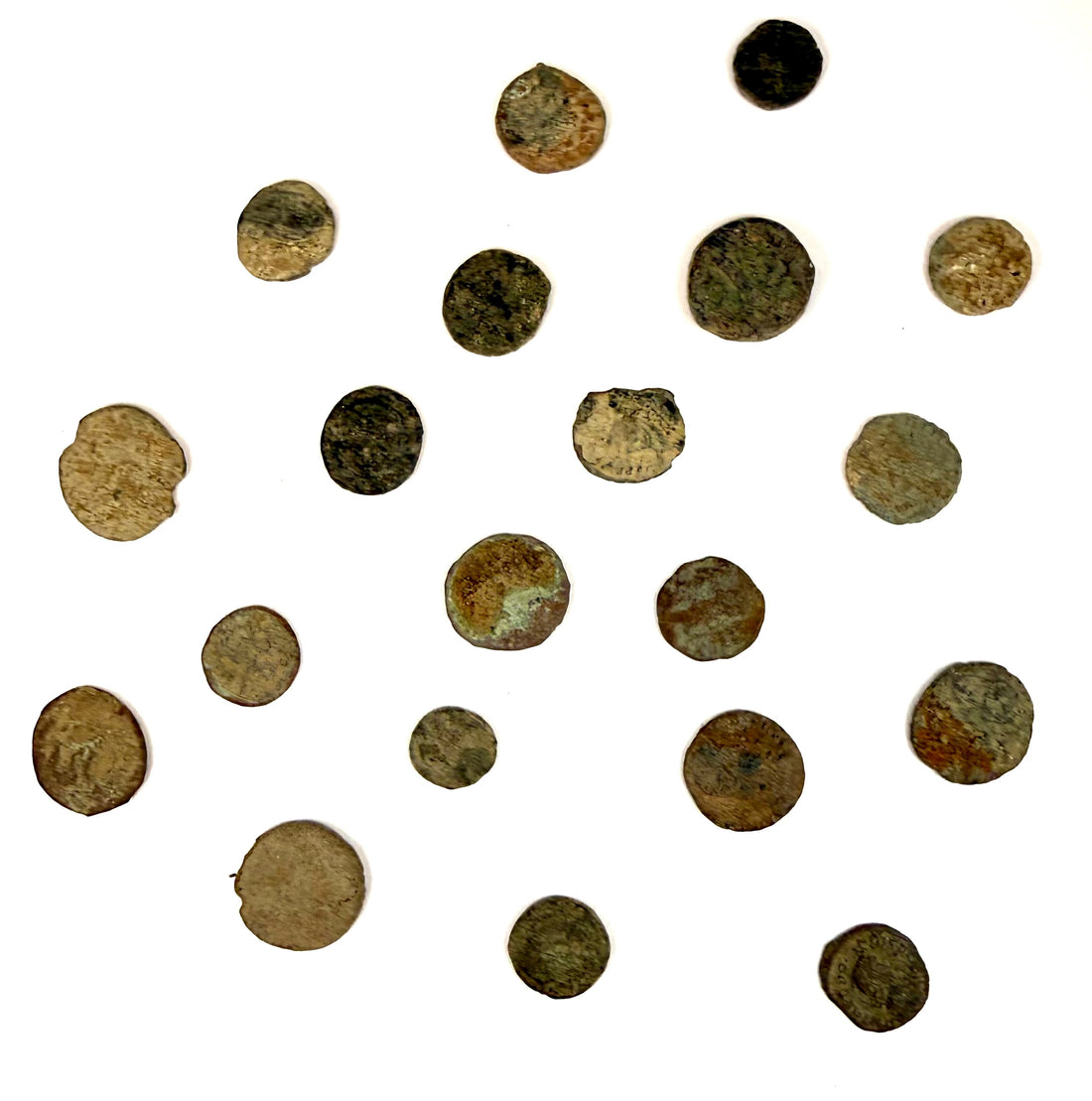
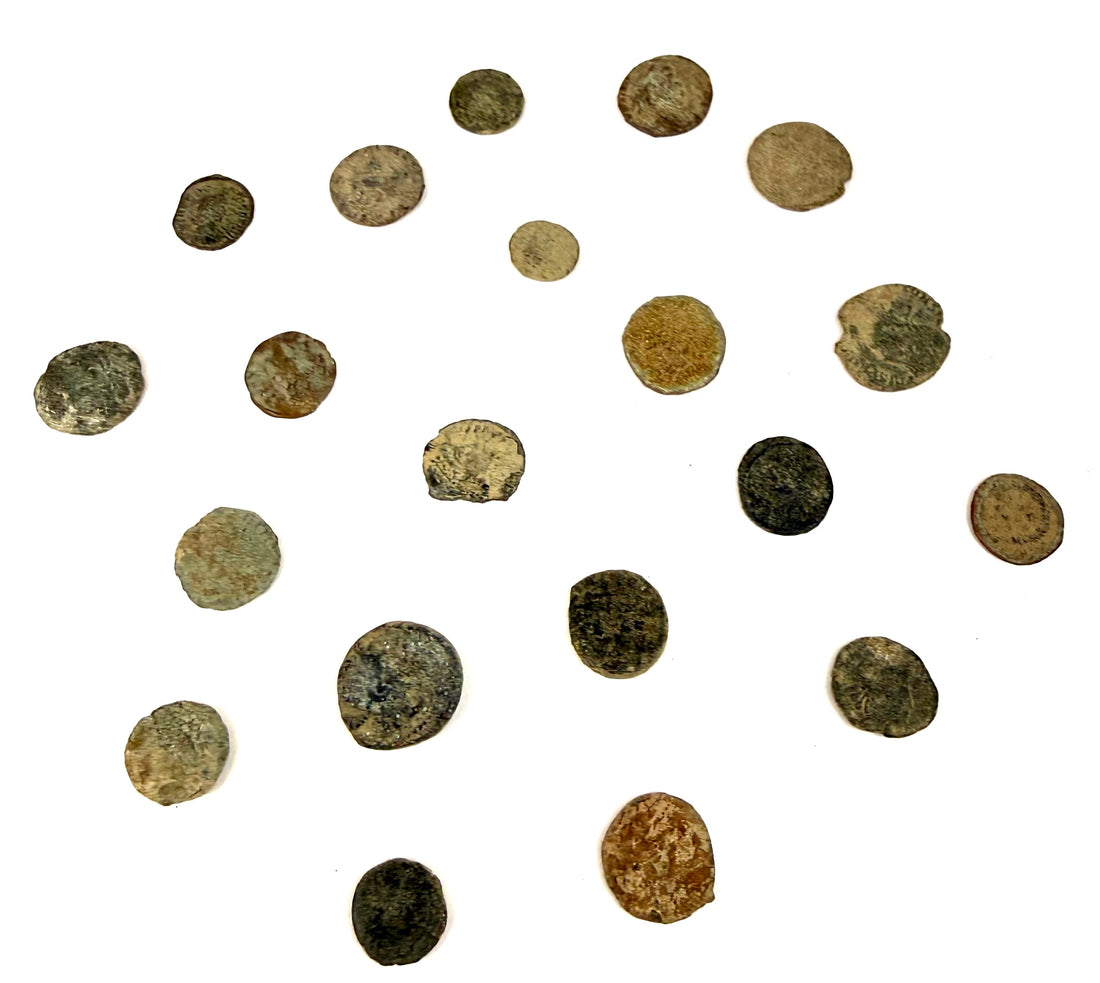
An interesting collection of twenty assorted ancient Roman bronze coins, representing the monetary traditions of the later Roman Empire. Attributed broadly to the 3rd–4th centuries CE, this group offers a tangible connection to the economic, political, and cultural history of ancient Rome during a period of significant imperial transformation.
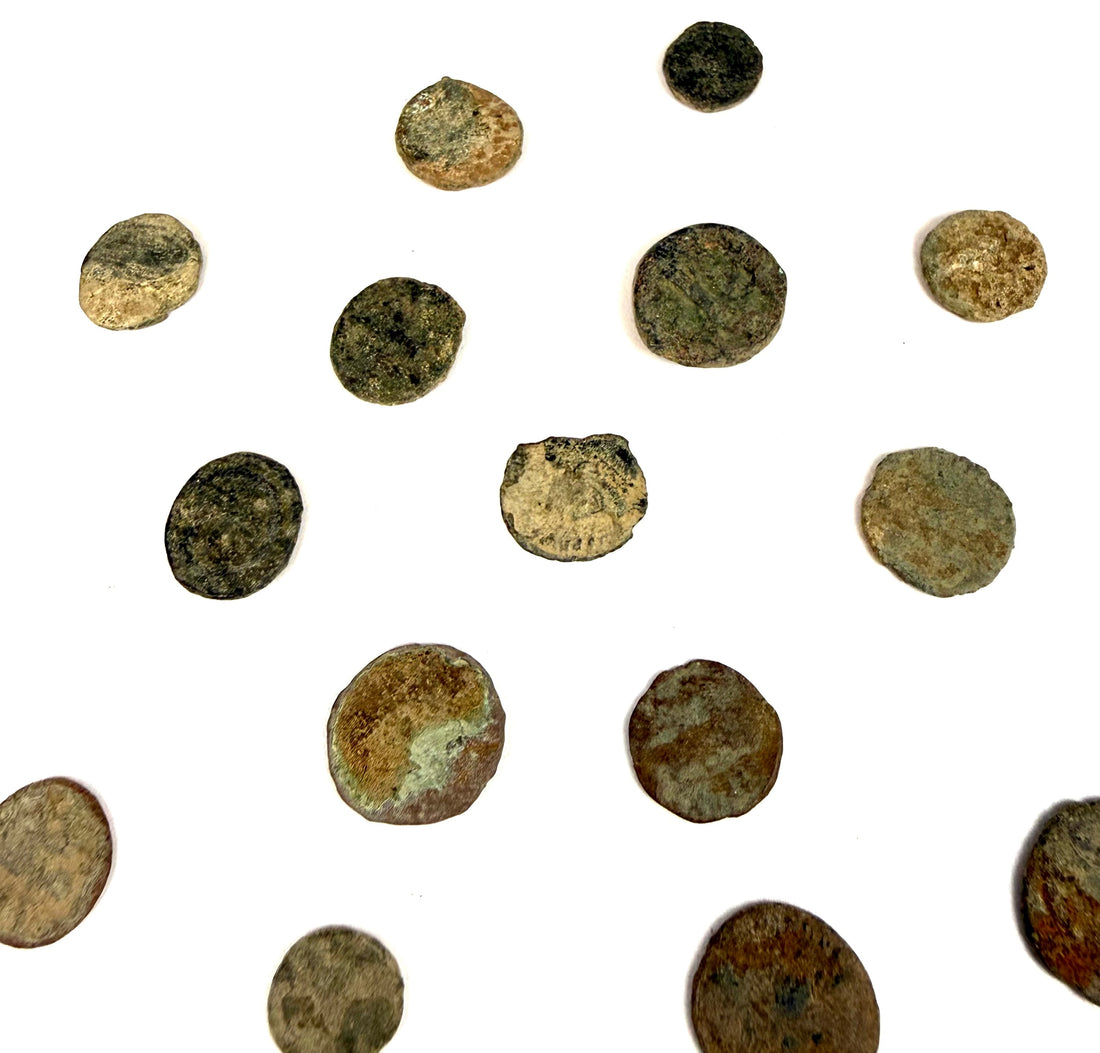
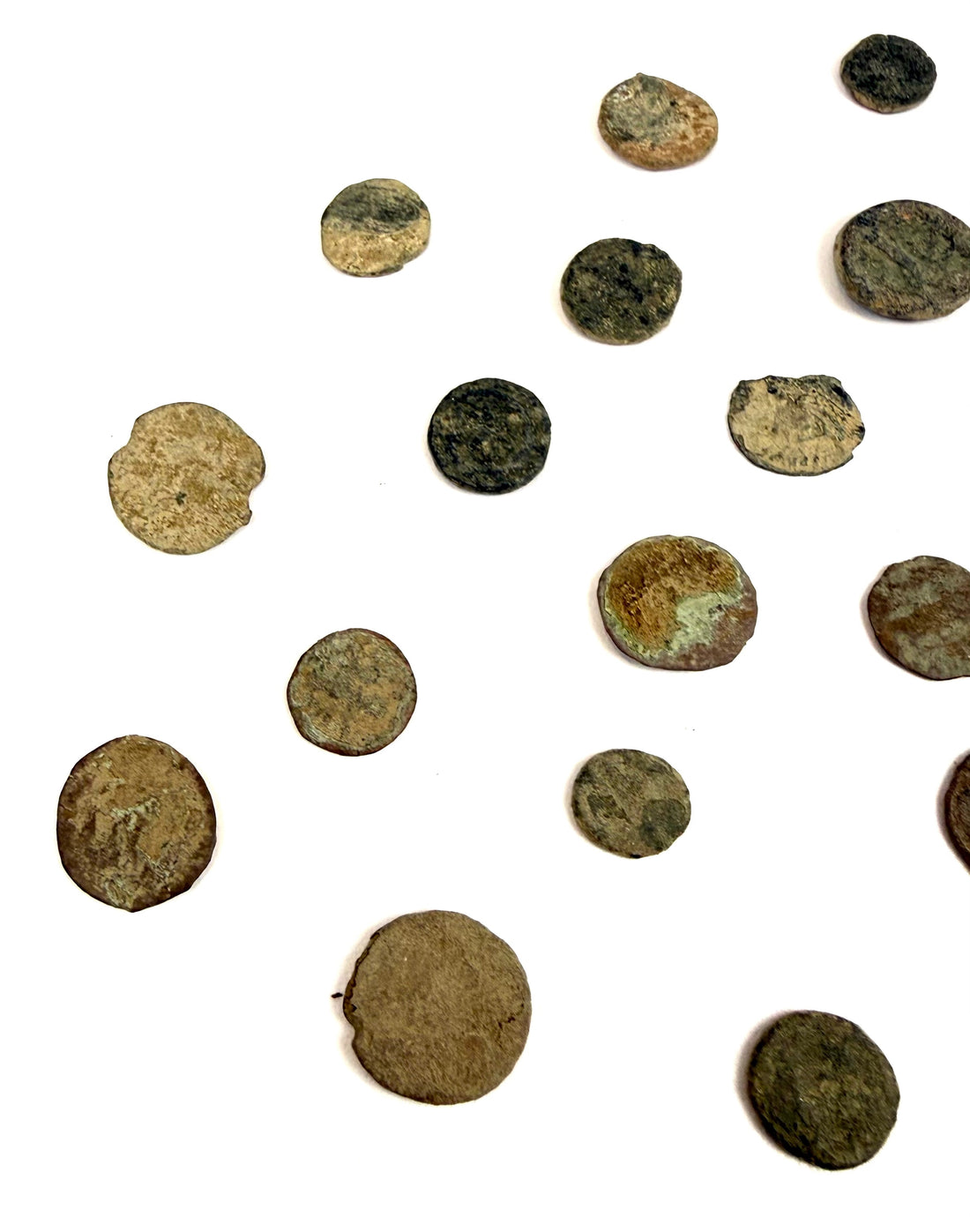
The collection comprises twenty individual copper-alloy coins of varying diameters, thicknesses, and states of preservation. Several examples retain recognizable right-facing imperial-style portraits, accompanied by fragments of Latin inscriptions and surrounding legends. Other pieces exhibit faint traces of reverse designs, symbolic imagery, and partially obscured decorative elements, while several remain heavily encrusted and difficult to identify individually.
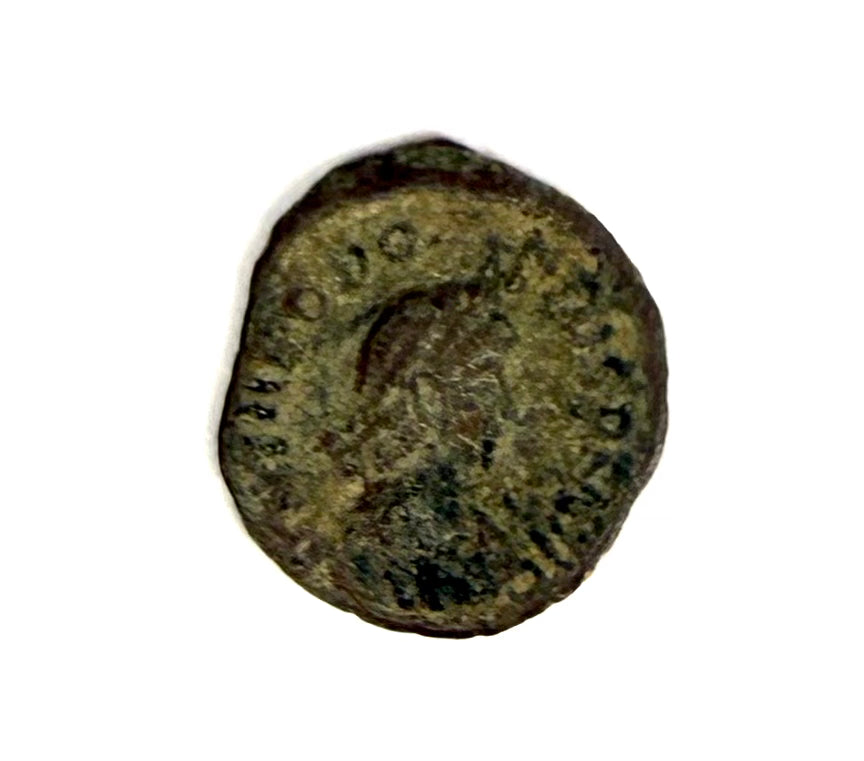
One particularly interesting example preserves a discernible imperial bust surrounded by portions of a Latin inscription, demonstrating the characteristic portraiture and lettering associated with late Roman bronze coinage. Other examples display varying degrees of surviving relief beneath accumulated deposits and patination.
The coins exhibit a diverse range of naturally developed surface colours, including earthy brown, olive-green, pale green, reddish-brown, and dark bronze. Extensive oxidation, mineral deposits, and surface encrustation contribute to the distinctive appearance of each piece, with considerable variation in preservation throughout the group.
Offered in an uncleaned and ungraded condition, the coins have not been conclusively attributed to individual emperors, denominations, or mints. The collection presents an opportunity for collectors interested in ancient Roman numismatics, archaeological material, and the study of historical coinage.
Features
- Collection of twenty assorted ancient Roman bronze coins
- Attributed to the Late Roman Imperial Period, circa 3rd–4th Century CE
- Copper-alloy construction with varying sizes, thicknesses, and irregular circular forms
- Several examples preserving recognizable Roman imperial-style portraits
- Partial Latin inscriptions and imperial legends visible on selected coins
- Traces of reverse imagery and symbolic designs on several examples
- Natural green, olive, brown, reddish-brown, and dark bronze patination
- Substantial mineral deposits, oxidation, and surface encrustation
- Several coins retaining areas of raised relief beneath accumulated deposits
- Preserved in uncleaned and ungraded condition
- Individual rulers, denominations, and minting locations remain unidentified
- Offered together as a complete twenty-piece collection
Cultural Significance
Roman coinage was fundamental to the economic organization and political administration of the Roman Empire. Bronze and other copper-alloy denominations circulated throughout imperial territories, facilitating commercial transactions, military payments, and everyday exchanges among populations connected by Roman trade networks and administrative institutions.
Beyond their monetary function, Roman coins were important instruments of imperial representation. Their obverse designs frequently featured portraits of reigning emperors, members of imperial families, and other prominent figures. Surrounding Latin inscriptions identified rulers and proclaimed their titles, reinforcing imperial legitimacy throughout territories extending across Europe, North Africa, and the Near East.
Reverse designs commonly depicted Roman deities, personifications of victory and prosperity, military imagery, architectural representations, and symbols of political stability. These images communicated official messages concerning imperial authority, military achievements, religious traditions, and the continuity of Roman civilization.
The 3rd and 4th centuries CE witnessed profound developments within the Roman monetary system. Political instability, military expenditure, inflation, and successive imperial reforms contributed to changes in coin production, denominations, and the organization of imperial mints.
During the reign of Constantine I and his successors, bronze coinage continued to be produced in substantial quantities, displaying evolving imperial portraiture, military iconography, and religious symbolism. These developments reflected the transformation of Roman political institutions and the increasing importance of Christianity within imperial society.
Ancient Roman bronze coins provide valuable historical evidence through their portraits, inscriptions, and symbolic imagery. Even heavily worn or encrusted examples contribute to the study of imperial administration, monetary circulation, and the artistic traditions of the Roman world.
Condition
Ancient condition, with extensive age-associated wear, corrosion, oxidation, surface deposits, and patination throughout.
All twenty coins are presented in an uncleaned condition, exhibiting varying degrees of mineral encrustation, earthen deposits, pitting, discoloration, and surface irregularities. Several retain distinguishable imperial-style portraits, partial inscriptions, and traces of original designs, while others exhibit heavily worn or substantially obscured surfaces.
Patination varies considerably, ranging from pale green and olive to dark brown, reddish-brown, and nearly black. Several coins exhibit irregular edges, minor peripheral losses, and areas of localized corrosion consistent with their present condition.
Individual coins have not been professionally graded or conclusively attributed to specific emperors, denominations, or minting locations.
As the coins remain substantially uncleaned, surviving deposits and patination may conceal additional details useful for future attribution. Any examination or conservation should be approached cautiously to preserve the surviving surfaces and avoid unnecessary damage.
Dimensions (Approximate)
Assorted sizes and thicknesses
Twenty individual coins of varying diameters
Age (Approximate)
1,600–1,800 years old
Provenance
Formerly held in a private numismatic collection in Brooklyn, New York, USA.
Learn More
Discover a comparable Late Roman Imperial bronze coin dating to 300 CE at The Metropolitan Museum of Art
Explore Our Collection of Roman & Greek Artifacts
Descripción
Historical Context & Origin
Region: Roman Empire, various imperial territories and mints
Material: Copper alloy (bronze), with naturally developed patination, oxidation, and surface deposits
Period: Late Roman Imperial Period, attributed circa 3rd–4th Century CE
Description
An interesting collection of twenty assorted ancient Roman bronze coins, representing the monetary traditions of the later Roman Empire. Attributed broadly to the 3rd–4th centuries CE, this group offers a tangible connection to the economic, political, and cultural history of ancient Rome during a period of significant imperial transformation.
The collection comprises twenty individual copper-alloy coins of varying diameters, thicknesses, and states of preservation. Several examples retain recognizable right-facing imperial-style portraits, accompanied by fragments of Latin inscriptions and surrounding legends. Other pieces exhibit faint traces of reverse designs, symbolic imagery, and partially obscured decorative elements, while several remain heavily encrusted and difficult to identify individually.
One particularly interesting example preserves a discernible imperial bust surrounded by portions of a Latin inscription, demonstrating the characteristic portraiture and lettering associated with late Roman bronze coinage. Other examples display varying degrees of surviving relief beneath accumulated deposits and patination.
The coins exhibit a diverse range of naturally developed surface colours, including earthy brown, olive-green, pale green, reddish-brown, and dark bronze. Extensive oxidation, mineral deposits, and surface encrustation contribute to the distinctive appearance of each piece, with considerable variation in preservation throughout the group.
Offered in an uncleaned and ungraded condition, the coins have not been conclusively attributed to individual emperors, denominations, or mints. The collection presents an opportunity for collectors interested in ancient Roman numismatics, archaeological material, and the study of historical coinage.
Features
- Collection of twenty assorted ancient Roman bronze coins
- Attributed to the Late Roman Imperial Period, circa 3rd–4th Century CE
- Copper-alloy construction with varying sizes, thicknesses, and irregular circular forms
- Several examples preserving recognizable Roman imperial-style portraits
- Partial Latin inscriptions and imperial legends visible on selected coins
- Traces of reverse imagery and symbolic designs on several examples
- Natural green, olive, brown, reddish-brown, and dark bronze patination
- Substantial mineral deposits, oxidation, and surface encrustation
- Several coins retaining areas of raised relief beneath accumulated deposits
- Preserved in uncleaned and ungraded condition
- Individual rulers, denominations, and minting locations remain unidentified
- Offered together as a complete twenty-piece collection
Cultural Significance
Roman coinage was fundamental to the economic organization and political administration of the Roman Empire. Bronze and other copper-alloy denominations circulated throughout imperial territories, facilitating commercial transactions, military payments, and everyday exchanges among populations connected by Roman trade networks and administrative institutions.
Beyond their monetary function, Roman coins were important instruments of imperial representation. Their obverse designs frequently featured portraits of reigning emperors, members of imperial families, and other prominent figures. Surrounding Latin inscriptions identified rulers and proclaimed their titles, reinforcing imperial legitimacy throughout territories extending across Europe, North Africa, and the Near East.
Reverse designs commonly depicted Roman deities, personifications of victory and prosperity, military imagery, architectural representations, and symbols of political stability. These images communicated official messages concerning imperial authority, military achievements, religious traditions, and the continuity of Roman civilization.
The 3rd and 4th centuries CE witnessed profound developments within the Roman monetary system. Political instability, military expenditure, inflation, and successive imperial reforms contributed to changes in coin production, denominations, and the organization of imperial mints.
During the reign of Constantine I and his successors, bronze coinage continued to be produced in substantial quantities, displaying evolving imperial portraiture, military iconography, and religious symbolism. These developments reflected the transformation of Roman political institutions and the increasing importance of Christianity within imperial society.
Ancient Roman bronze coins provide valuable historical evidence through their portraits, inscriptions, and symbolic imagery. Even heavily worn or encrusted examples contribute to the study of imperial administration, monetary circulation, and the artistic traditions of the Roman world.
Condition
Ancient condition, with extensive age-associated wear, corrosion, oxidation, surface deposits, and patination throughout.
All twenty coins are presented in an uncleaned condition, exhibiting varying degrees of mineral encrustation, earthen deposits, pitting, discoloration, and surface irregularities. Several retain distinguishable imperial-style portraits, partial inscriptions, and traces of original designs, while others exhibit heavily worn or substantially obscured surfaces.
Patination varies considerably, ranging from pale green and olive to dark brown, reddish-brown, and nearly black. Several coins exhibit irregular edges, minor peripheral losses, and areas of localized corrosion consistent with their present condition.
Individual coins have not been professionally graded or conclusively attributed to specific emperors, denominations, or minting locations.
As the coins remain substantially uncleaned, surviving deposits and patination may conceal additional details useful for future attribution. Any examination or conservation should be approached cautiously to preserve the surviving surfaces and avoid unnecessary damage.
Dimensions (Approximate)
Assorted sizes and thicknesses
Twenty individual coins of varying diameters
Age (Approximate)
1,600–1,800 years old
Provenance
Formerly held in a private numismatic collection in Brooklyn, New York, USA.
Learn More
Discover a comparable Late Roman Imperial bronze coin dating to 300 CE at The Metropolitan Museum of Art
Explore Our Collection of Roman & Greek Artifacts
También te puede interesar
