



Ancient Roman Bronze Ring with Engraved Diamond-Shaped Bezel | Circa 2nd–4th Century CE
- Precio habitual
- $250.00
- Precio de venta
- $250.00
- Precio habitual
No se pudo cargar la disponibilidad de retiro


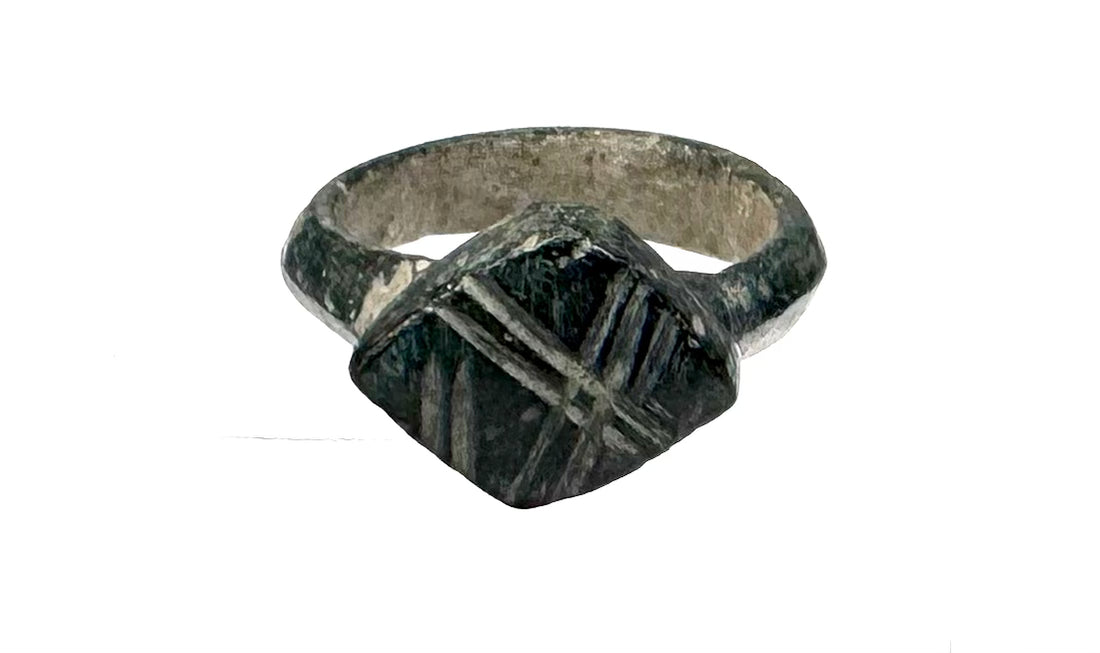


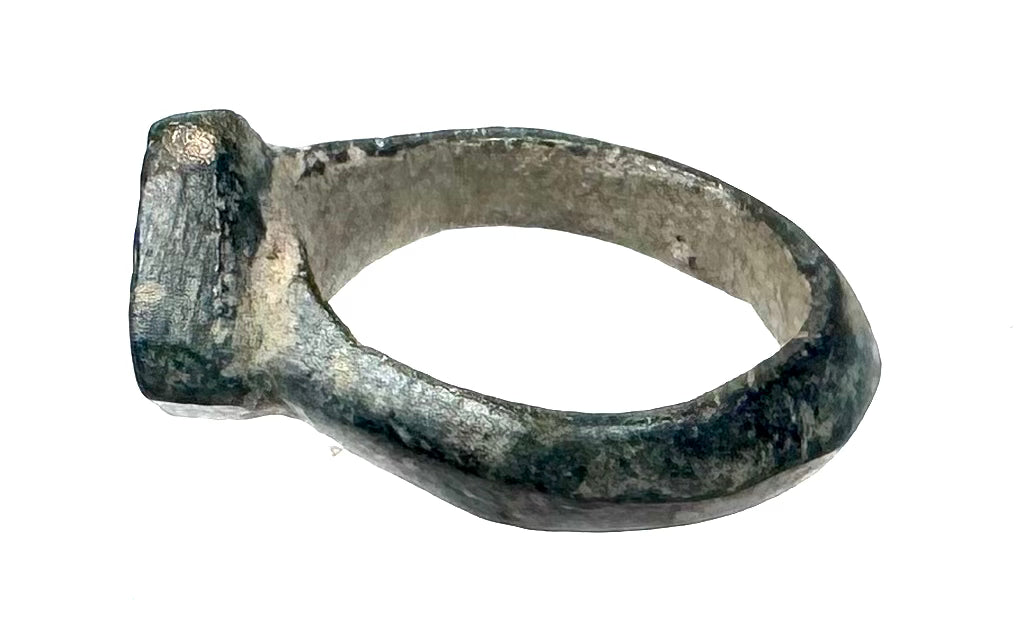


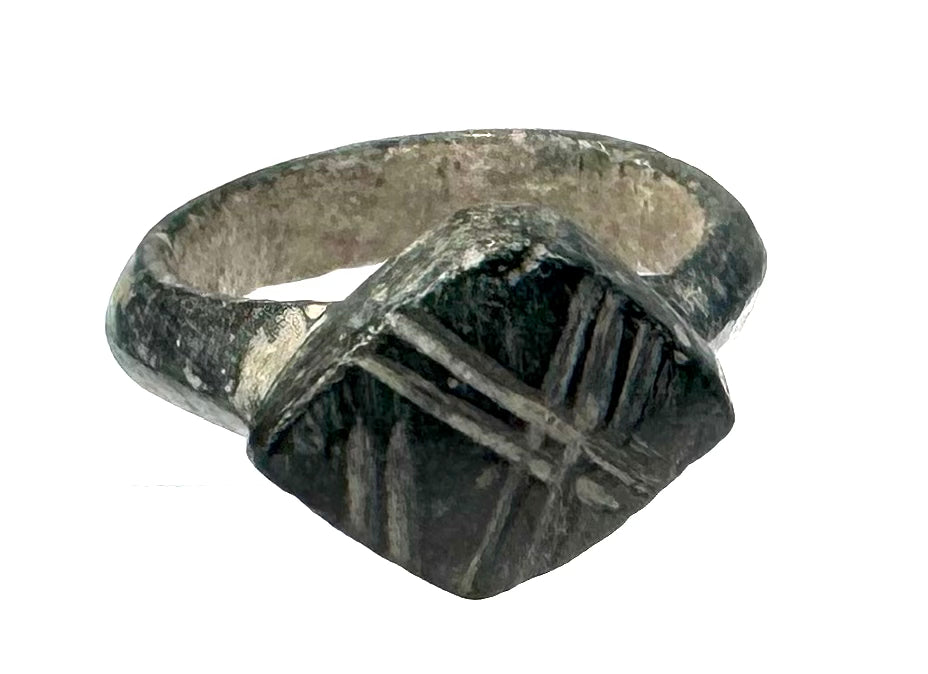
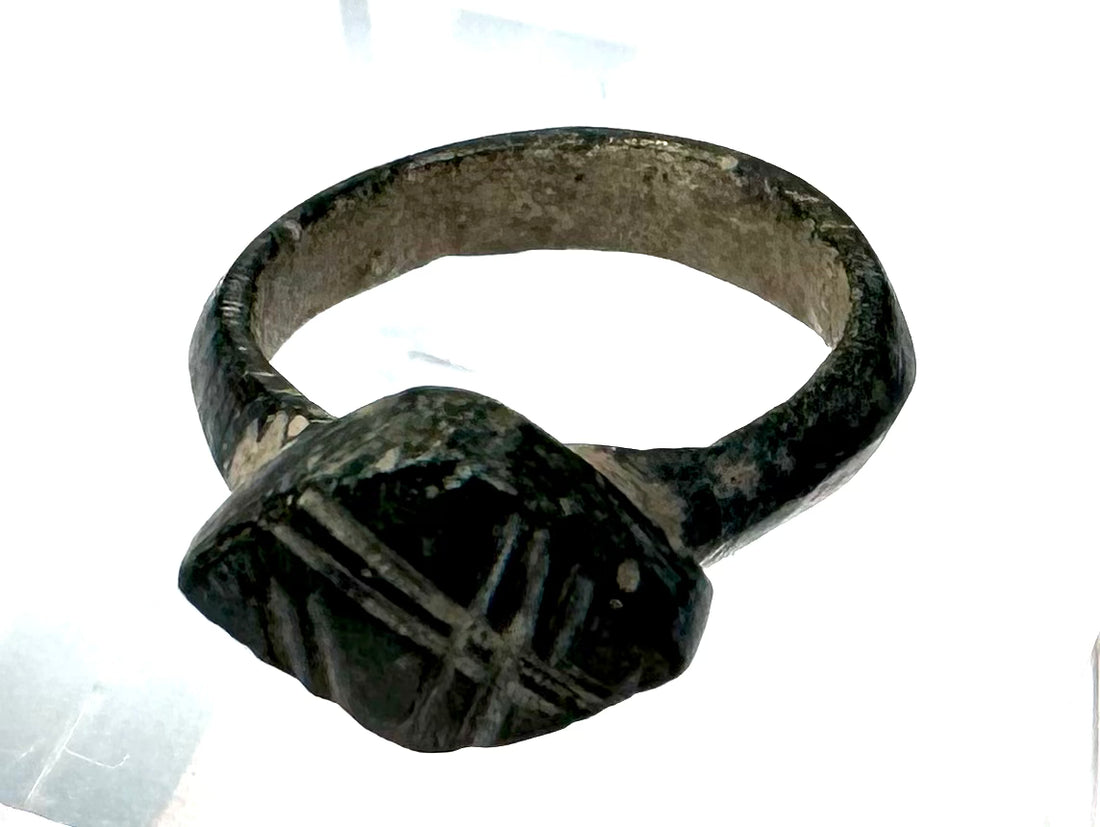

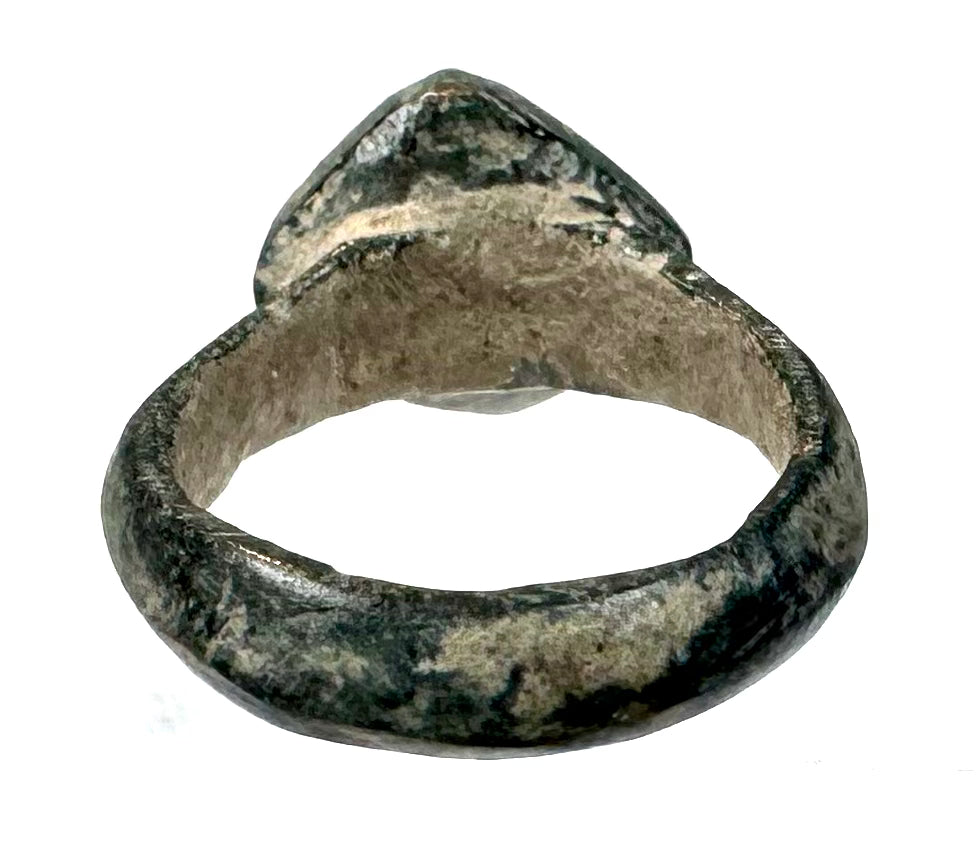
Ancient Roman Bronze Ring with Engraved Diamond-Shaped Bezel | Circa 2nd–4th Century CE
Descripción
Más
Menos
Historical Context & Origin
Region: Roman Empire
Material: Bronze (copper alloy)
Period: Roman Imperial Period, circa 2nd–4th Century CE
Description
This distinctive Roman-style bronze finger ring features a prominent raised, diamond-shaped bezel decorated with deeply engraved geometric lines, creating an intricate crosshatched composition. Traditionally attributed to the Roman Imperial Period, circa 2nd–4th century CE, the ring reflects the decorative metalworking traditions associated with personal jewellery throughout the ancient Roman world.
The ring features a substantial lozenge-shaped bezel positioned above a continuous circular hoop. Its engraved decoration consists of intersecting diagonal grooves, parallel linear incisions, and shorter angular strokes arranged across the central surface. The pronounced bezel rises above the adjoining shoulders, creating a distinctive three-dimensional profile. The shoulders broaden toward the decorative setting before tapering into a relatively narrow, rounded band with a comparatively smooth interior.
The bronze surface exhibits extensive dark charcoal, olive-green, and greyish-brown patination, with scattered lighter mineral-like deposits concentrated around the recessed engravings and outer edges. Fine scratches, localized pitting, and surface irregularities contribute to its aged appearance. The ring's raised lozenge-shaped bezel and crosshatched decoration are comparable to geometric designs documented on Roman copper-alloy jewellery, although similar ornamental traditions continued into later historical periods.
Features
- Prominent raised lozenge-shaped or diamond-shaped bezel
- Deeply engraved intersecting diagonal lines across the bezel
- Multiple parallel grooves and shorter angular incisions
- Crosshatched geometric composition with pronounced recessed detailing
- Broad shoulders tapering into a continuous circular hoop
- Relatively smooth interior with visible surface discolouration
- Rich dark charcoal, olive-green, and greyish-brown patination
Cultural Significance
Finger rings were important objects of personal adornment throughout the Roman Empire, reflecting individual taste, cultural identity, and, in certain contexts, social standing. Roman jewellery was produced using a wide variety of materials, including gold, silver, iron, bronze, and other copper alloys. Bronze rings provided a durable and relatively accessible form of personal ornamentation, ranging from simple bands to elaborate examples featuring engraved decoration, gemstones, and raised bezels.
During the Roman Imperial Period, metalworkers employed various techniques to decorate jewellery, including casting, engraving, chasing, and geometric ornamentation. Raised bezels provided a prominent surface for decorative motifs, including intersecting lines, angular patterns, inscriptions, and symbolic compositions. Lozenge-shaped bezels and crosshatched designs are documented among Roman-period copper-alloy rings, illustrating the use of carefully arranged linear decoration without elaborate gemstone settings.
Geometric patterns remained an enduring feature of European metalworking traditions, with similar decorative arrangements appearing across different regions and historical periods. The intersecting lines of this ring may have served a purely ornamental purpose, although their original meaning remains undetermined. Its distinctive raised bezel, compact proportions, and engraved decoration offer an interesting example of the broader traditions associated with historical bronze finger rings.
Condition
The ring retains its complete overall form, including the raised diamond-shaped bezel, engraved decorative face, adjoining shoulders, and continuous circular hoop. Extensive surface wear and oxidation are visible throughout, including scattered abrasions, fine scratches, localized pitting, and irregular discolouration. The bezel retains its deeply engraved geometric decoration, with intersecting diagonal and parallel lines remaining clearly distinguishable despite surface deterioration. The exterior exhibits dark charcoal, olive-green, and greyish-brown patination, with lighter mineral-like deposits concentrated around the decorative grooves and portions of the hoop. The interior retains a comparatively smooth, lighter grey surface with scattered darker patches and minor abrasions. Slight irregularities are visible along the edges of the bezel and band. No obvious major structural breaks are visible in the supplied photographs.
Dimensions (Approximate)
Ring Size: US 1
Age (Approximate)
1,625–1,925 years old
Provenance
Formerly part of the Moneta Collection, a Tucson-based numismatic dealership specializing in collectible coins. Moneta is listed among professional dealers on the VCoins marketplace and participated in the 2017 U.S. Mexican Numismatic Association convention.
Subsequently handled by Palmyra Heritage Gallery, a third-generation family business specializing in ancient coins, antiquities, and historical artifacts, with a New York gallery operating since 1995. The gallery deals in Egyptian, Greek, Roman, Byzantine, Islamic, and Pre-Columbian material and is affiliated with the American Numismatic Society and Florida Numismatic Association.
Learn More
Explore a documented copper-alloy finger ring of probable Roman date, featuring an engraved crosshatched bezel and intersecting geometric lines, recorded by the Portable Antiquities Scheme
Discover additional ancient Roman rings, historical jewellery, and decorative metalwork in our Ancient Rings & Jewelry Collection
Descripción
Historical Context & Origin
Region: Roman Empire
Material: Bronze (copper alloy)
Period: Roman Imperial Period, circa 2nd–4th Century CE
Description
This distinctive Roman-style bronze finger ring features a prominent raised, diamond-shaped bezel decorated with deeply engraved geometric lines, creating an intricate crosshatched composition. Traditionally attributed to the Roman Imperial Period, circa 2nd–4th century CE, the ring reflects the decorative metalworking traditions associated with personal jewellery throughout the ancient Roman world.
The ring features a substantial lozenge-shaped bezel positioned above a continuous circular hoop. Its engraved decoration consists of intersecting diagonal grooves, parallel linear incisions, and shorter angular strokes arranged across the central surface. The pronounced bezel rises above the adjoining shoulders, creating a distinctive three-dimensional profile. The shoulders broaden toward the decorative setting before tapering into a relatively narrow, rounded band with a comparatively smooth interior.
The bronze surface exhibits extensive dark charcoal, olive-green, and greyish-brown patination, with scattered lighter mineral-like deposits concentrated around the recessed engravings and outer edges. Fine scratches, localized pitting, and surface irregularities contribute to its aged appearance. The ring's raised lozenge-shaped bezel and crosshatched decoration are comparable to geometric designs documented on Roman copper-alloy jewellery, although similar ornamental traditions continued into later historical periods.
Features
- Prominent raised lozenge-shaped or diamond-shaped bezel
- Deeply engraved intersecting diagonal lines across the bezel
- Multiple parallel grooves and shorter angular incisions
- Crosshatched geometric composition with pronounced recessed detailing
- Broad shoulders tapering into a continuous circular hoop
- Relatively smooth interior with visible surface discolouration
- Rich dark charcoal, olive-green, and greyish-brown patination
Cultural Significance
Finger rings were important objects of personal adornment throughout the Roman Empire, reflecting individual taste, cultural identity, and, in certain contexts, social standing. Roman jewellery was produced using a wide variety of materials, including gold, silver, iron, bronze, and other copper alloys. Bronze rings provided a durable and relatively accessible form of personal ornamentation, ranging from simple bands to elaborate examples featuring engraved decoration, gemstones, and raised bezels.
During the Roman Imperial Period, metalworkers employed various techniques to decorate jewellery, including casting, engraving, chasing, and geometric ornamentation. Raised bezels provided a prominent surface for decorative motifs, including intersecting lines, angular patterns, inscriptions, and symbolic compositions. Lozenge-shaped bezels and crosshatched designs are documented among Roman-period copper-alloy rings, illustrating the use of carefully arranged linear decoration without elaborate gemstone settings.
Geometric patterns remained an enduring feature of European metalworking traditions, with similar decorative arrangements appearing across different regions and historical periods. The intersecting lines of this ring may have served a purely ornamental purpose, although their original meaning remains undetermined. Its distinctive raised bezel, compact proportions, and engraved decoration offer an interesting example of the broader traditions associated with historical bronze finger rings.
Condition
The ring retains its complete overall form, including the raised diamond-shaped bezel, engraved decorative face, adjoining shoulders, and continuous circular hoop. Extensive surface wear and oxidation are visible throughout, including scattered abrasions, fine scratches, localized pitting, and irregular discolouration. The bezel retains its deeply engraved geometric decoration, with intersecting diagonal and parallel lines remaining clearly distinguishable despite surface deterioration. The exterior exhibits dark charcoal, olive-green, and greyish-brown patination, with lighter mineral-like deposits concentrated around the decorative grooves and portions of the hoop. The interior retains a comparatively smooth, lighter grey surface with scattered darker patches and minor abrasions. Slight irregularities are visible along the edges of the bezel and band. No obvious major structural breaks are visible in the supplied photographs.
Dimensions (Approximate)
Ring Size: US 1
Age (Approximate)
1,625–1,925 years old
Provenance
Formerly part of the Moneta Collection, a Tucson-based numismatic dealership specializing in collectible coins. Moneta is listed among professional dealers on the VCoins marketplace and participated in the 2017 U.S. Mexican Numismatic Association convention.
Subsequently handled by Palmyra Heritage Gallery, a third-generation family business specializing in ancient coins, antiquities, and historical artifacts, with a New York gallery operating since 1995. The gallery deals in Egyptian, Greek, Roman, Byzantine, Islamic, and Pre-Columbian material and is affiliated with the American Numismatic Society and Florida Numismatic Association.
Learn More
Explore a documented copper-alloy finger ring of probable Roman date, featuring an engraved crosshatched bezel and intersecting geometric lines, recorded by the Portable Antiquities Scheme
Discover additional ancient Roman rings, historical jewellery, and decorative metalwork in our Ancient Rings & Jewelry Collection
También te puede interesar
