



Collar de cuentas de vidrio policromado de la Antigua Roma | Reenhebrado | Período Imperial | Circa Siglos I - IV d.C.
- Precio habitual
- $425.00
- Precio de venta
- $425.00
- Precio habitual
No se pudo cargar la disponibilidad de retiro


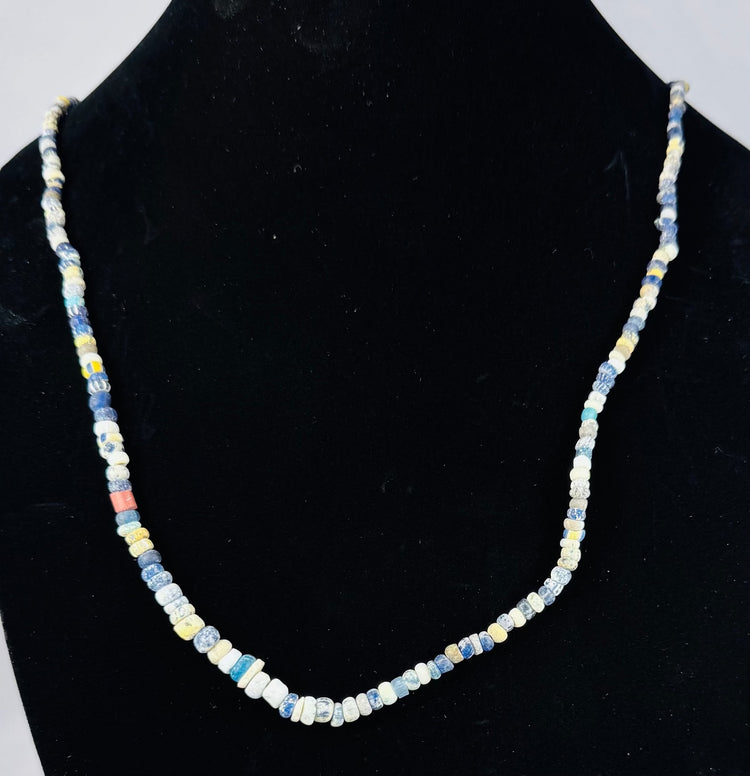
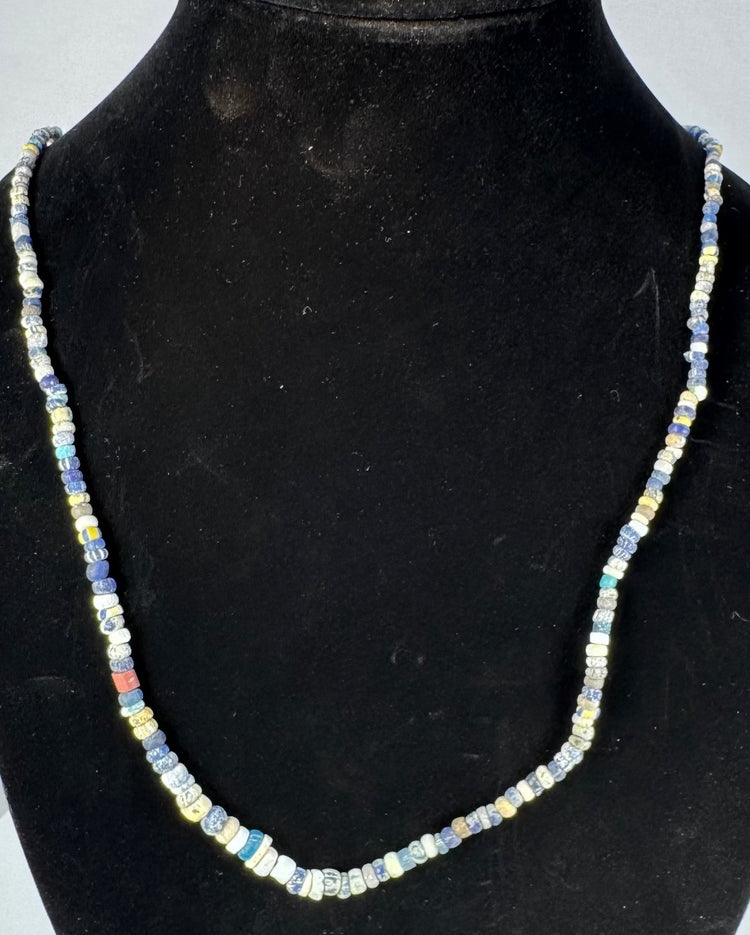
Collar de cuentas de vidrio policromado de la Antigua Roma | Reenhebrado | Período Imperial | Circa Siglos I - IV d.C.
Descripción
Más
Menos
Contexto histórico y origen
Región: Imperio Romano / Mediterráneo oriental
Material: Cuentas de vidrio policromado con material de ensartado moderno
Periodo: Periodo Imperial Romano, circa siglos I-IV d. C.; posteriormente reensartado
Descripción
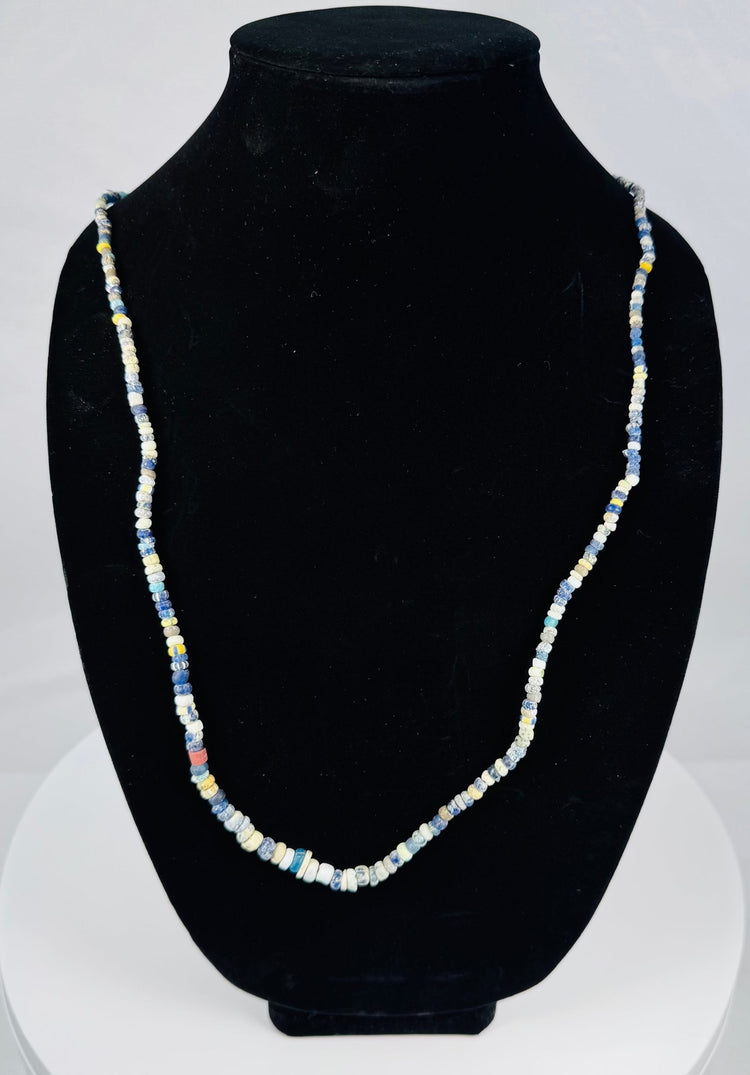
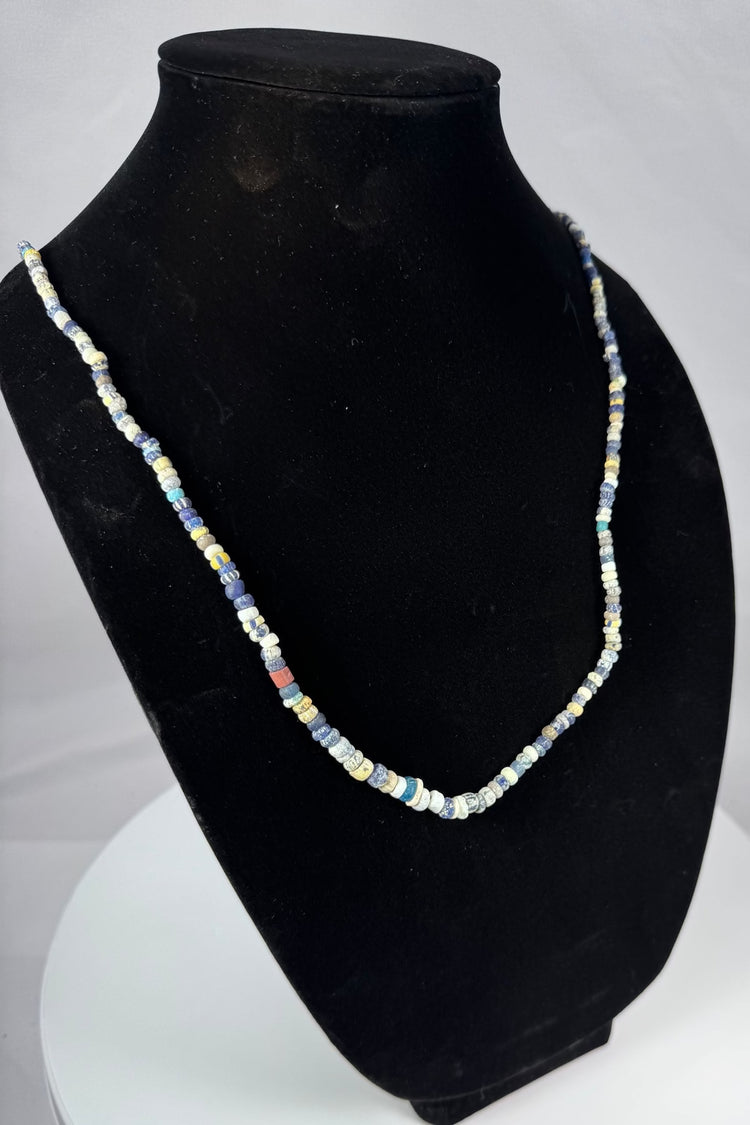
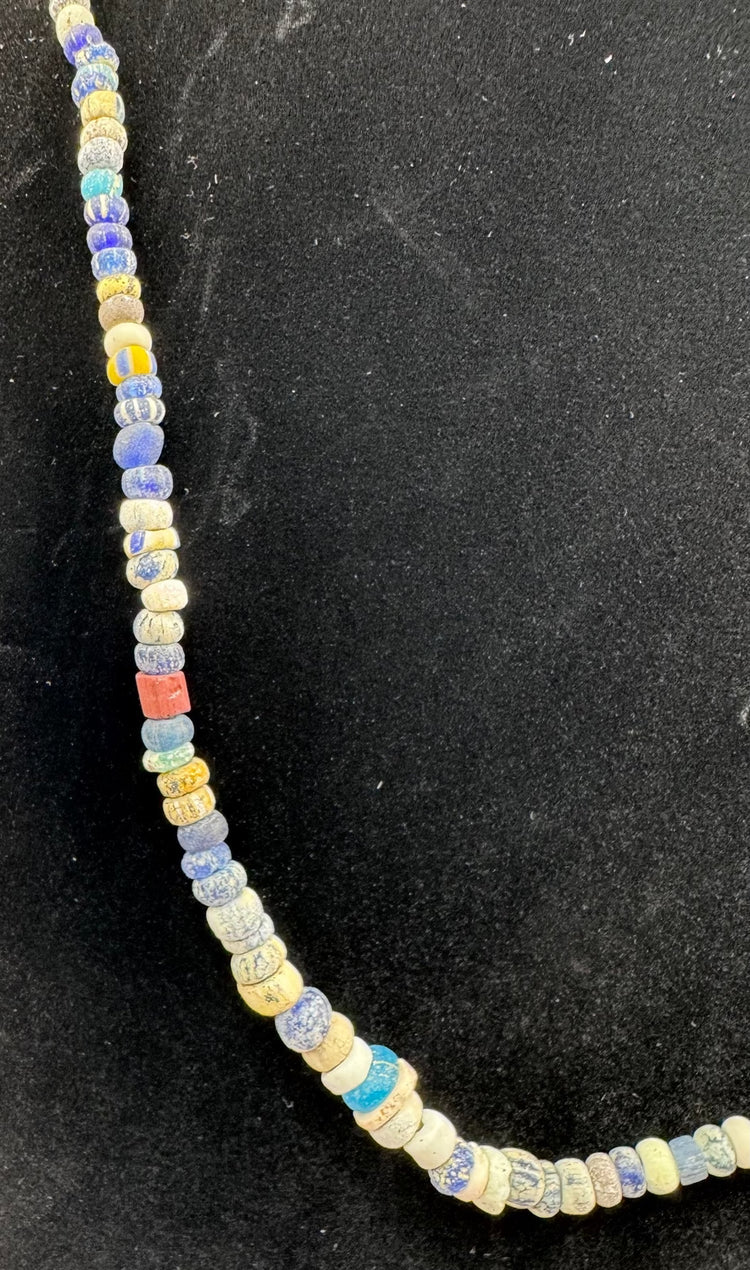
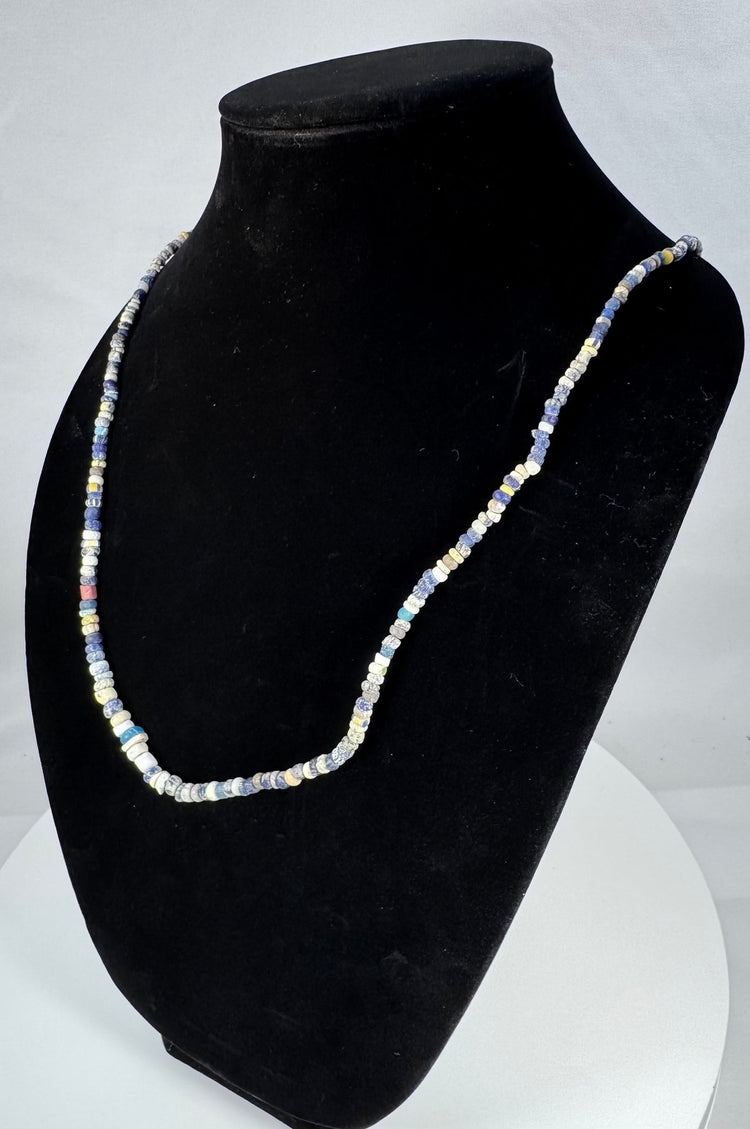
Este delicado collar de cuentas de vidrio policromado está compuesto por una variada colección de pequeñas cuentas antiguas consistentes con los tipos producidos y distribuidos por todo el Imperio Romano durante el Periodo Imperial. El hilo incorpora numerosas cuentas anulares, cilíndricas, en forma de barril y de forma irregular en tonos azul cobalto, azul pálido, turquesa, crema, blanco, amarillo, ámbar y rojo apagado.
Varias cuentas conservan decoración rayada, arrastrada o de colores contrastantes, lo que refleja la amplia gama de técnicas de trabajo del vidrio empleadas por los artesanos romanos. El surtido incluye ejemplos translúcidos, opacos y semitranslúcidos, muchos de ellos con iridiscencia superficial, depósitos minerales, bordes suavizados y desgaste asociado con el entierro a largo plazo o la preservación arqueológica.
Las cuentas de vidrio se comercializaban ampliamente por todo el mundo romano y se usaban como adornos personales, se cosían a las prendas, se intercambiaban como objetos de valor portátiles y, ocasionalmente, se depositaban en contextos funerarios. Las cuentas individuales se ensamblaron en su disposición actual para ser usadas en el periodo moderno, lo que permite exhibir los elementos antiguos mientras se preservan sus variados colores, texturas y formas.
Características
- Colección de antiguas cuentas de vidrio policromado
- Formas mixtas anulares, cilíndricas, en forma de barril e irregulares
- Colores azul cobalto, turquesa, blanco, crema, amarillo, ámbar y rojo
- Incluye cuentas decorativas rayadas, arrastradas y contrastantes
- Vidrio translúcido, opaco y semitranslúcido
- Iridiscencia superficial visible y incrustaciones minerales
- Cuentas hechas a mano individualmente con variaciones naturales
- Reensartado en el periodo moderno como un collar para usar
- Representativo de la producción y el comercio de vidrio antiguo del Mediterráneo
Significado cultural
La producción de cuentas de vidrio se expandió considerablemente durante el Periodo Imperial Romano a medida que las tecnologías mejoradas de fabricación de vidrio permitían producir ornamentos en una amplia gama de colores y formas. Las cuentas eran usadas por personas de todo el imperio y circulaban a través de extensas redes comerciales que conectaban el Mediterráneo, Europa, el Norte de África, el Cercano Oriente y regiones más allá del control político romano.
Debido a que las cuentas eran duraderas, portátiles y visualmente distintivas, servían como adornos personales, así como marcadores de gusto, identidad, estatus e intercambio cultural. Los conjuntos que contienen cuentas de diferentes colores y formas proporcionan evidencia tangible de la diversidad e interconexión del antiguo mundo romano.
Condición
Las cuentas muestran el desgaste esperado relacionado con la edad, incluyendo desgaste superficial, depósitos minerales, iridiscencia, abrasiones, bordes suavizados, pequeños astillamientos e imperfecciones dispersas. Las variaciones en tamaño, forma, color y conservación son consistentes con las cuentas de vidrio antiguas fabricadas individualmente.
Las cuentas han sido reensartadas en el periodo moderno utilizando material de ensartado moderno.
Dimensiones (aproximadas)
Longitud total: 14 pulgadas
Edad (aproximada)
1.625–2.025 años de antigüedad
Procedencia
Anteriormente parte de una colección privada de antigüedades y objetos arqueológicos de Brooklyn, Nueva York, EE. UU., reunida durante muchos años con un interés particular en la cultura material del Mediterráneo antiguo.
Más información
Ver una cuenta de vidrio romana relacionada en la colección de The Metropolitan Museum of Art
Explore nuestra Colección seleccionada de anillos antiguos, joyas y reliquias históricas
Descripción
Contexto histórico y origen
Región: Imperio Romano / Mediterráneo oriental
Material: Cuentas de vidrio policromado con material de ensartado moderno
Periodo: Periodo Imperial Romano, circa siglos I-IV d. C.; posteriormente reensartado
Descripción
Este delicado collar de cuentas de vidrio policromado está compuesto por una variada colección de pequeñas cuentas antiguas consistentes con los tipos producidos y distribuidos por todo el Imperio Romano durante el Periodo Imperial. El hilo incorpora numerosas cuentas anulares, cilíndricas, en forma de barril y de forma irregular en tonos azul cobalto, azul pálido, turquesa, crema, blanco, amarillo, ámbar y rojo apagado.
Varias cuentas conservan decoración rayada, arrastrada o de colores contrastantes, lo que refleja la amplia gama de técnicas de trabajo del vidrio empleadas por los artesanos romanos. El surtido incluye ejemplos translúcidos, opacos y semitranslúcidos, muchos de ellos con iridiscencia superficial, depósitos minerales, bordes suavizados y desgaste asociado con el entierro a largo plazo o la preservación arqueológica.
Las cuentas de vidrio se comercializaban ampliamente por todo el mundo romano y se usaban como adornos personales, se cosían a las prendas, se intercambiaban como objetos de valor portátiles y, ocasionalmente, se depositaban en contextos funerarios. Las cuentas individuales se ensamblaron en su disposición actual para ser usadas en el periodo moderno, lo que permite exhibir los elementos antiguos mientras se preservan sus variados colores, texturas y formas.
Características
- Colección de antiguas cuentas de vidrio policromado
- Formas mixtas anulares, cilíndricas, en forma de barril e irregulares
- Colores azul cobalto, turquesa, blanco, crema, amarillo, ámbar y rojo
- Incluye cuentas decorativas rayadas, arrastradas y contrastantes
- Vidrio translúcido, opaco y semitranslúcido
- Iridiscencia superficial visible y incrustaciones minerales
- Cuentas hechas a mano individualmente con variaciones naturales
- Reensartado en el periodo moderno como un collar para usar
- Representativo de la producción y el comercio de vidrio antiguo del Mediterráneo
Significado cultural
La producción de cuentas de vidrio se expandió considerablemente durante el Periodo Imperial Romano a medida que las tecnologías mejoradas de fabricación de vidrio permitían producir ornamentos en una amplia gama de colores y formas. Las cuentas eran usadas por personas de todo el imperio y circulaban a través de extensas redes comerciales que conectaban el Mediterráneo, Europa, el Norte de África, el Cercano Oriente y regiones más allá del control político romano.
Debido a que las cuentas eran duraderas, portátiles y visualmente distintivas, servían como adornos personales, así como marcadores de gusto, identidad, estatus e intercambio cultural. Los conjuntos que contienen cuentas de diferentes colores y formas proporcionan evidencia tangible de la diversidad e interconexión del antiguo mundo romano.
Condición
Las cuentas muestran el desgaste esperado relacionado con la edad, incluyendo desgaste superficial, depósitos minerales, iridiscencia, abrasiones, bordes suavizados, pequeños astillamientos e imperfecciones dispersas. Las variaciones en tamaño, forma, color y conservación son consistentes con las cuentas de vidrio antiguas fabricadas individualmente.
Las cuentas han sido reensartadas en el periodo moderno utilizando material de ensartado moderno.
Dimensiones (aproximadas)
Longitud total: 14 pulgadas
Edad (aproximada)
1.625–2.025 años de antigüedad
Procedencia
Anteriormente parte de una colección privada de antigüedades y objetos arqueológicos de Brooklyn, Nueva York, EE. UU., reunida durante muchos años con un interés particular en la cultura material del Mediterráneo antiguo.
Más información
Ver una cuenta de vidrio romana relacionada en la colección de The Metropolitan Museum of Art
Explore nuestra Colección seleccionada de anillos antiguos, joyas y reliquias históricas
También te puede interesar
