



Ancient Roman Terracotta Female Bust Roundel | 1st Century CE
- Precio habitual
- $700.00
- Precio de venta
- $700.00
- Precio habitual
No se pudo cargar la disponibilidad de retiro


Ancient Roman Terracotta Female Bust Roundel | 1st Century CE
Descripción
Más
Menos
Historical Context & Origin
Region: Roman World
Material: Mould-made terracotta
Period: Roman Period, 1st Century CE
Description
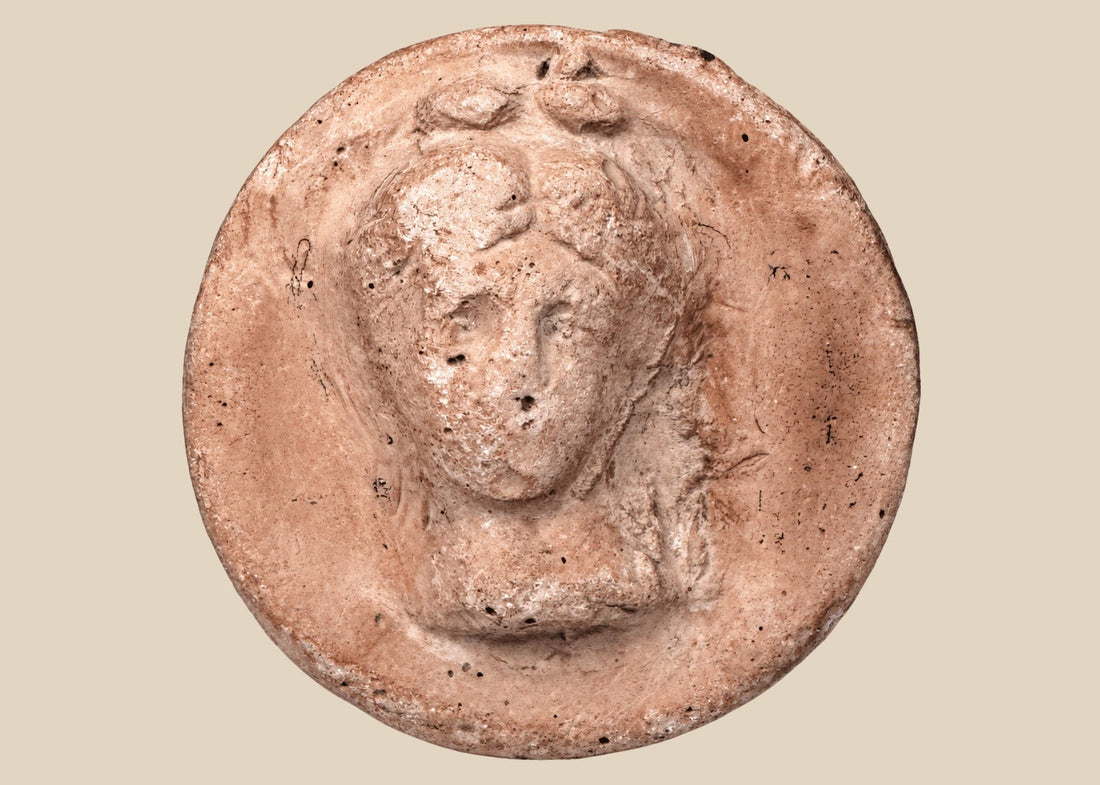
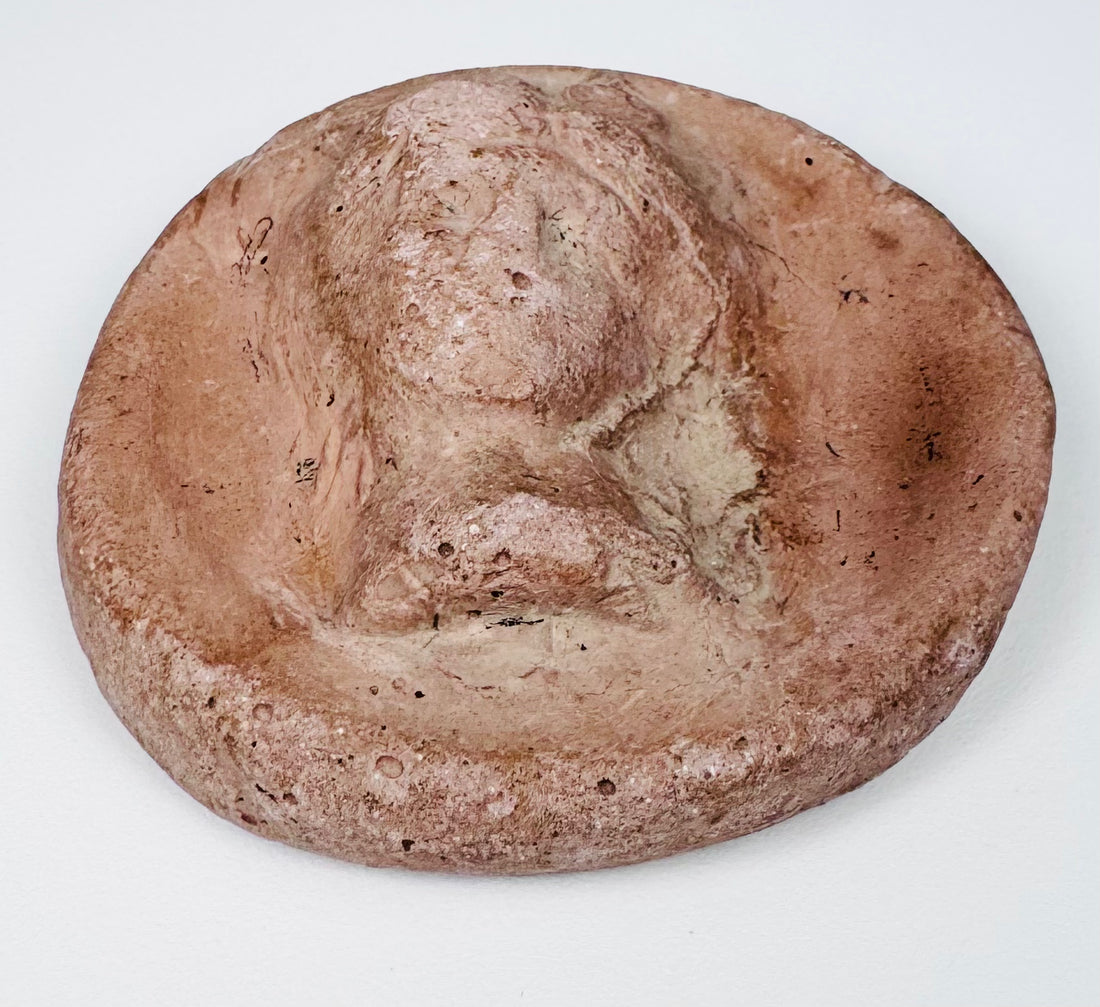
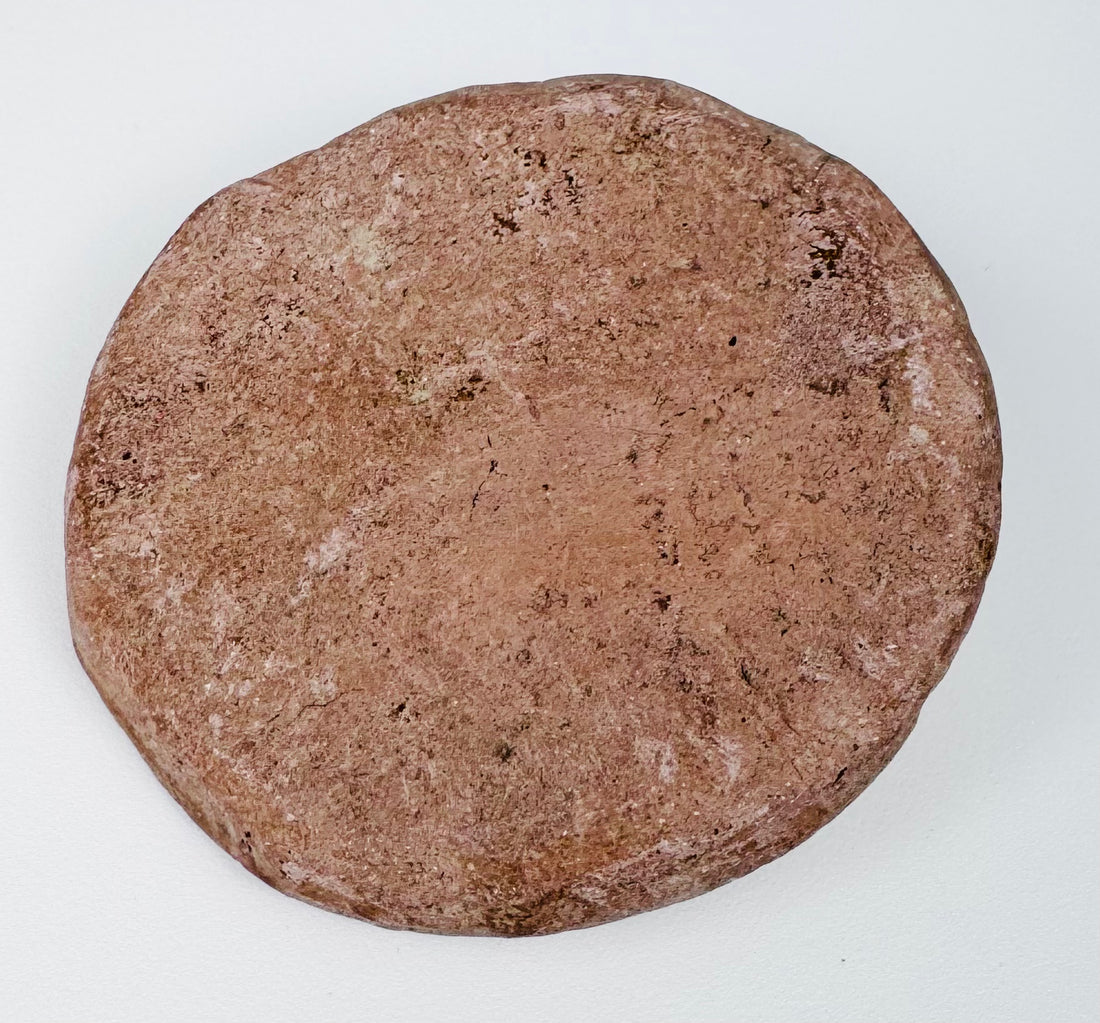
This ancient Roman terracotta roundel dates to the 1st century CE and originally formed the central decorated element of a mould-made vessel. The piece was subsequently reworked in antiquity, preserving the principal figural decoration as an independent circular fragment.
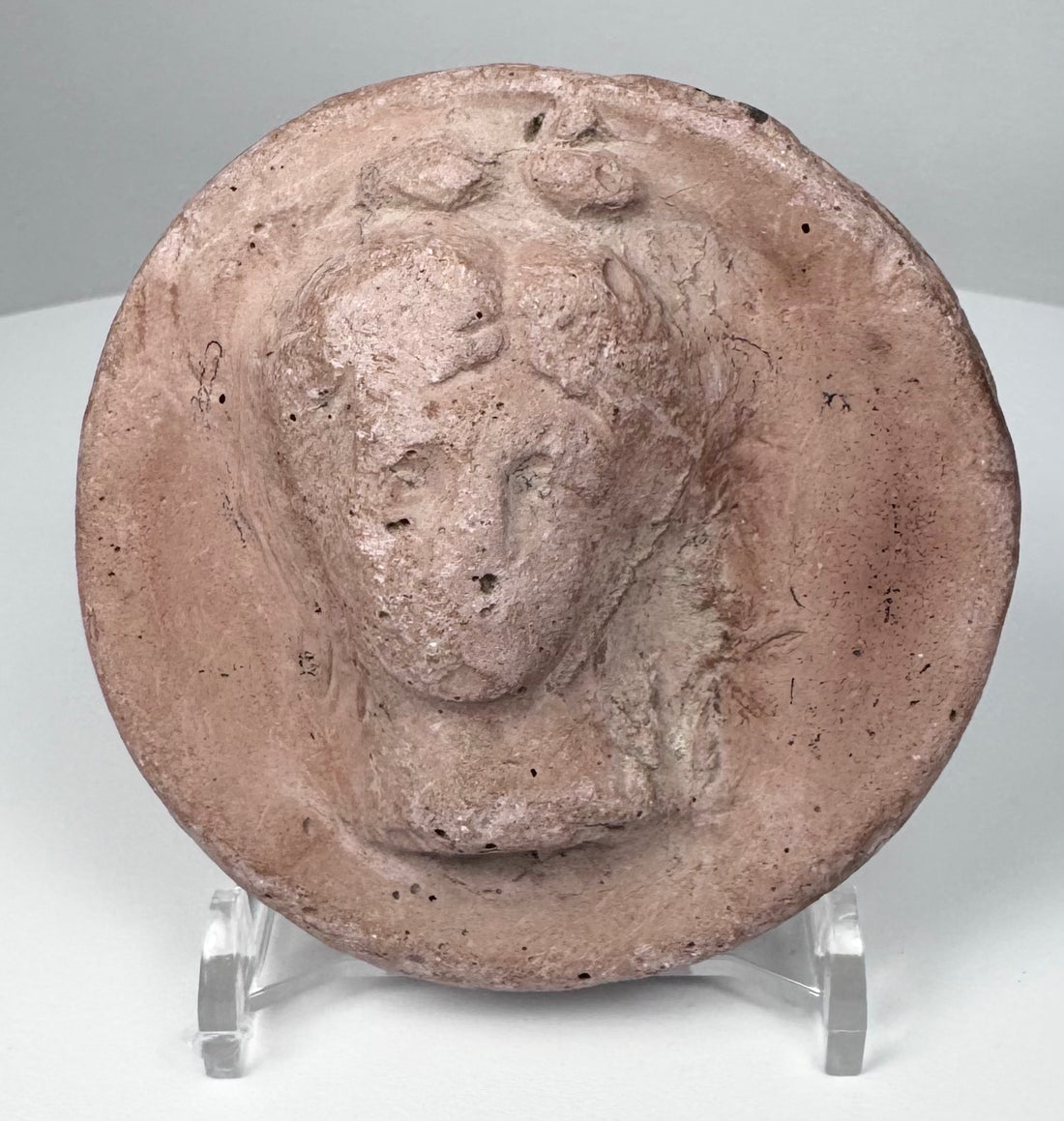
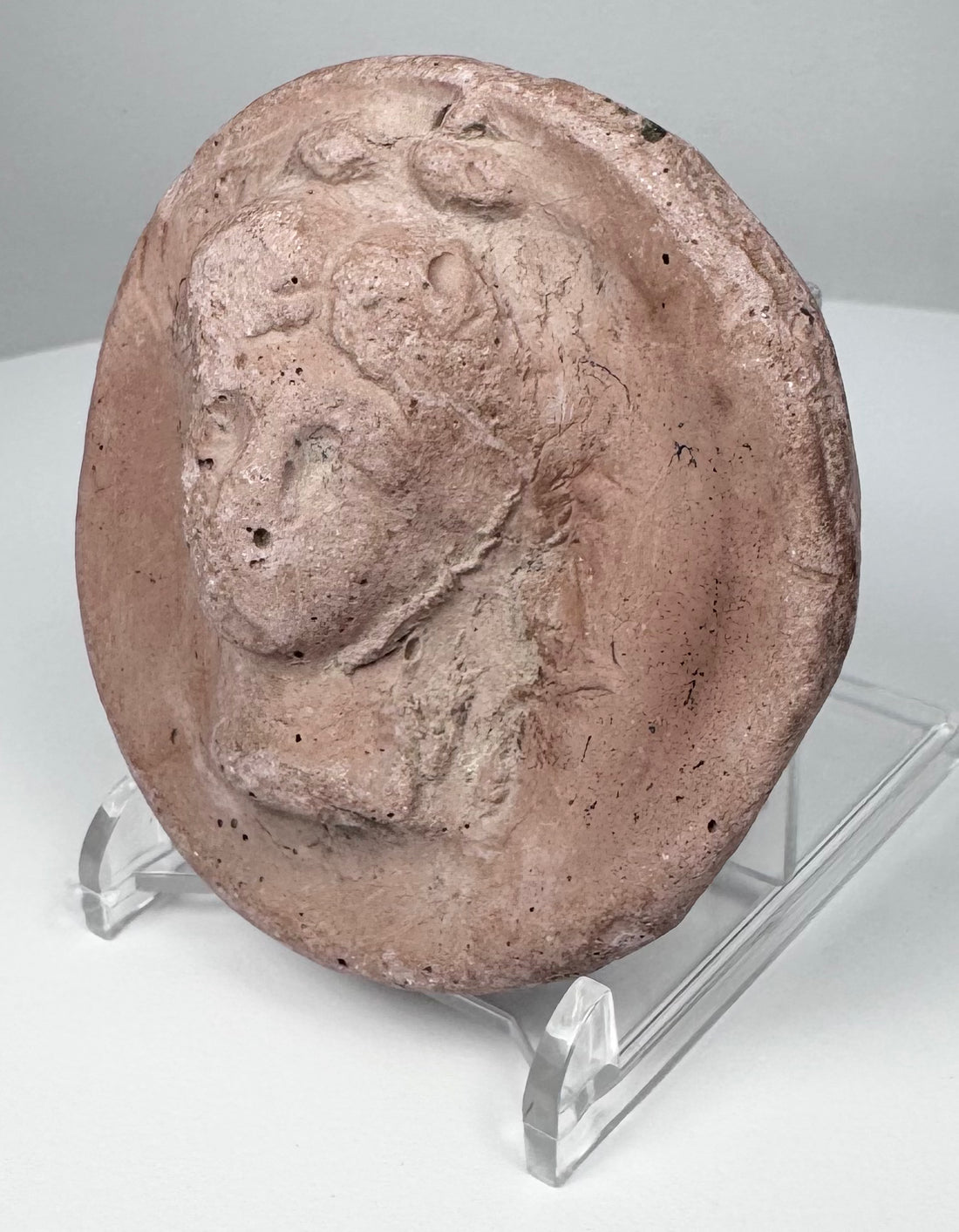
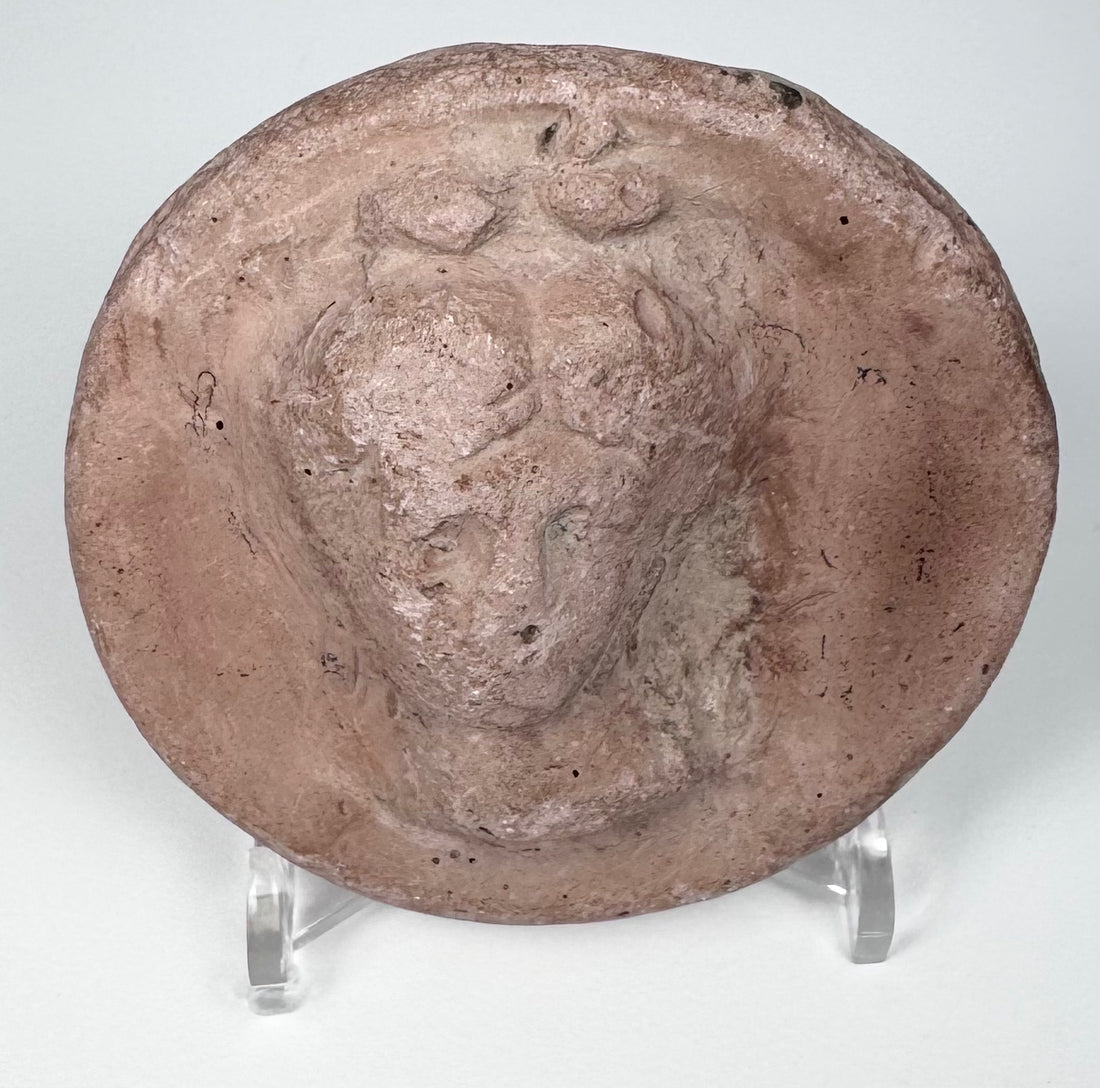
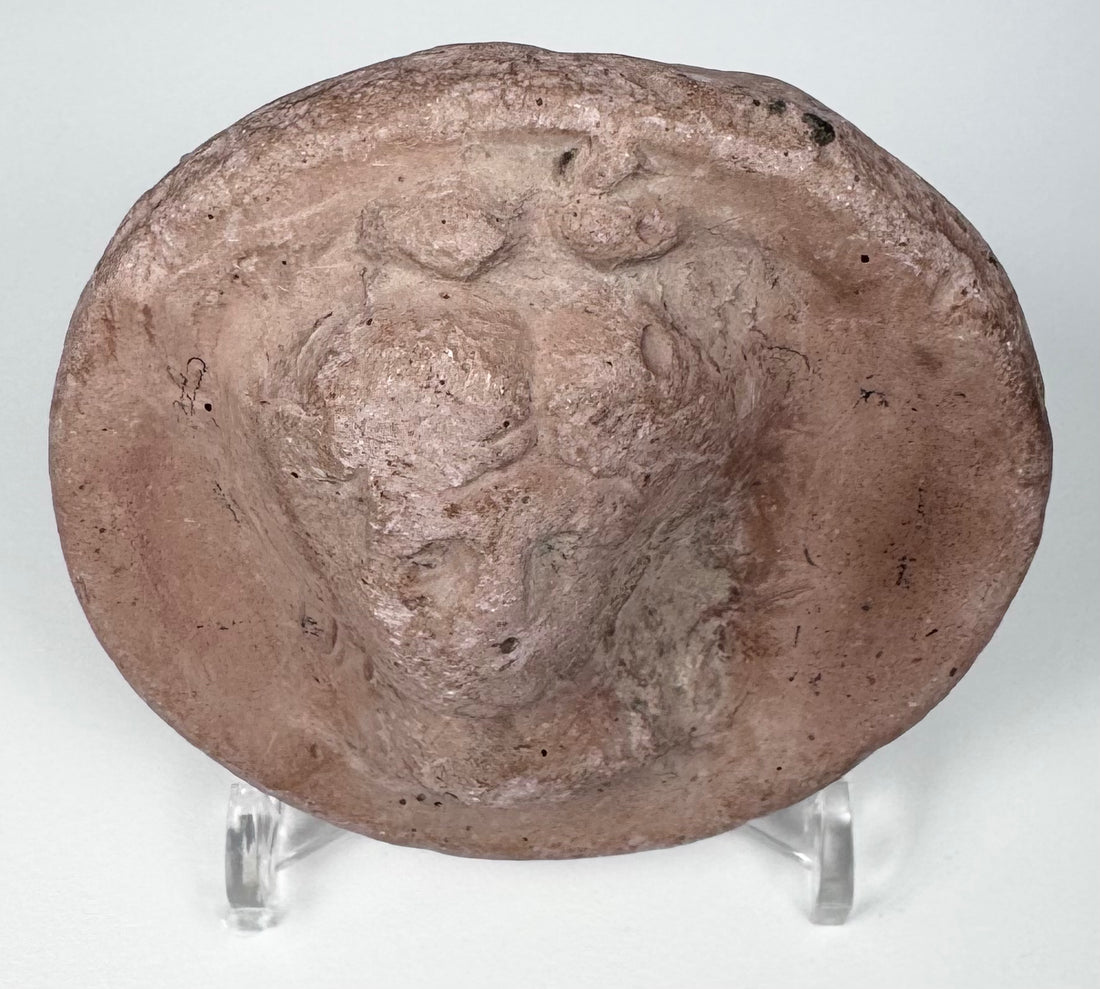
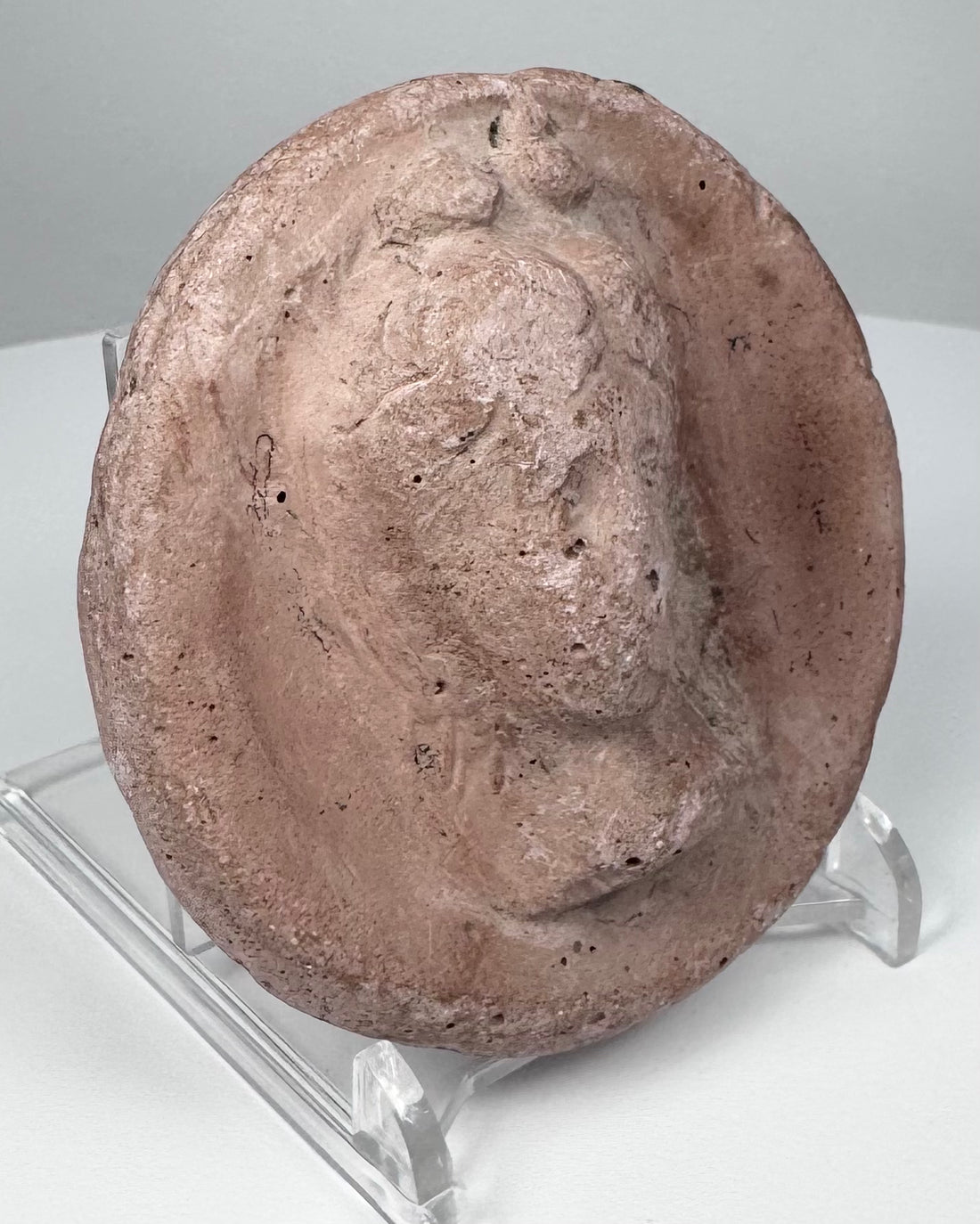
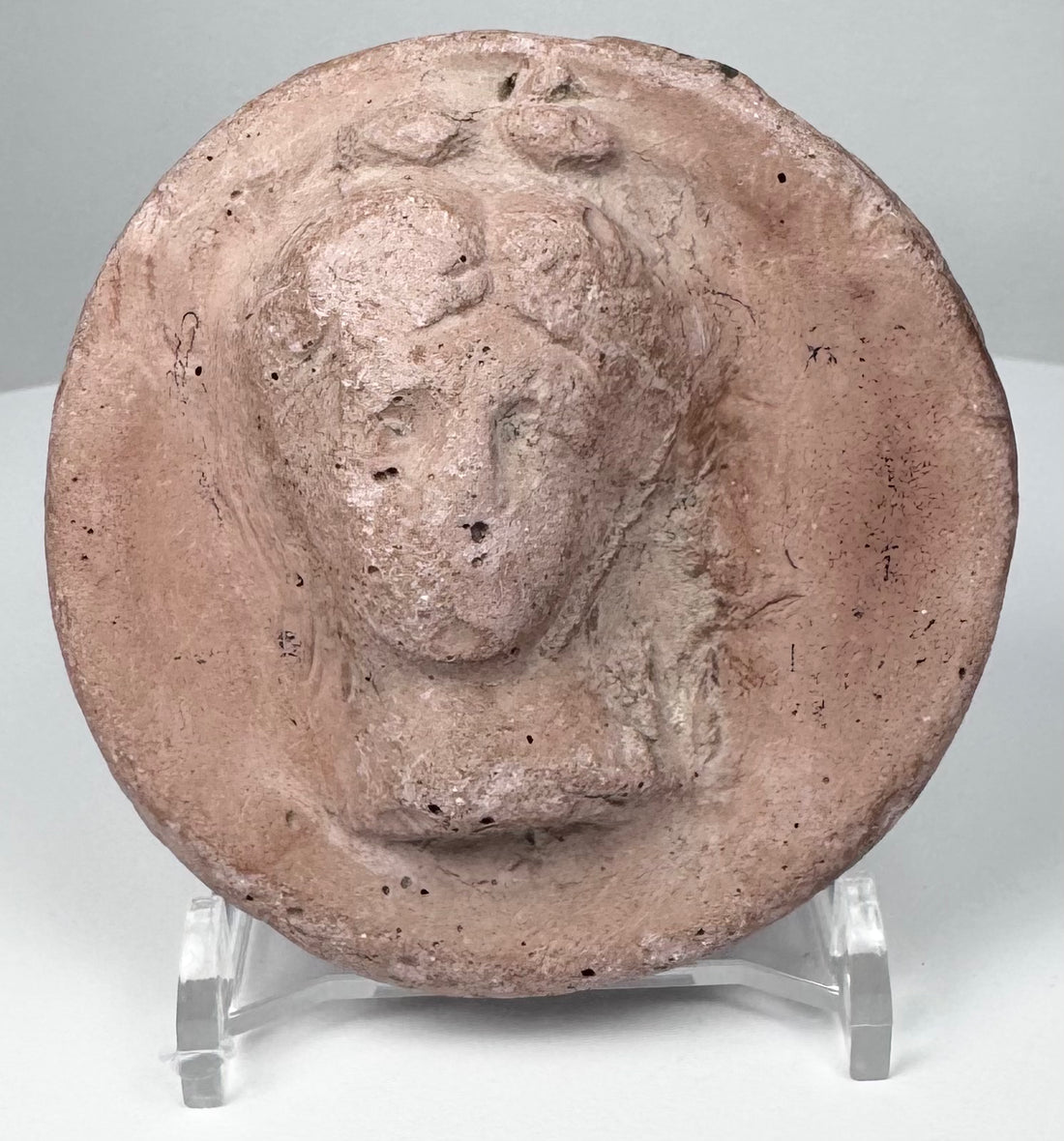
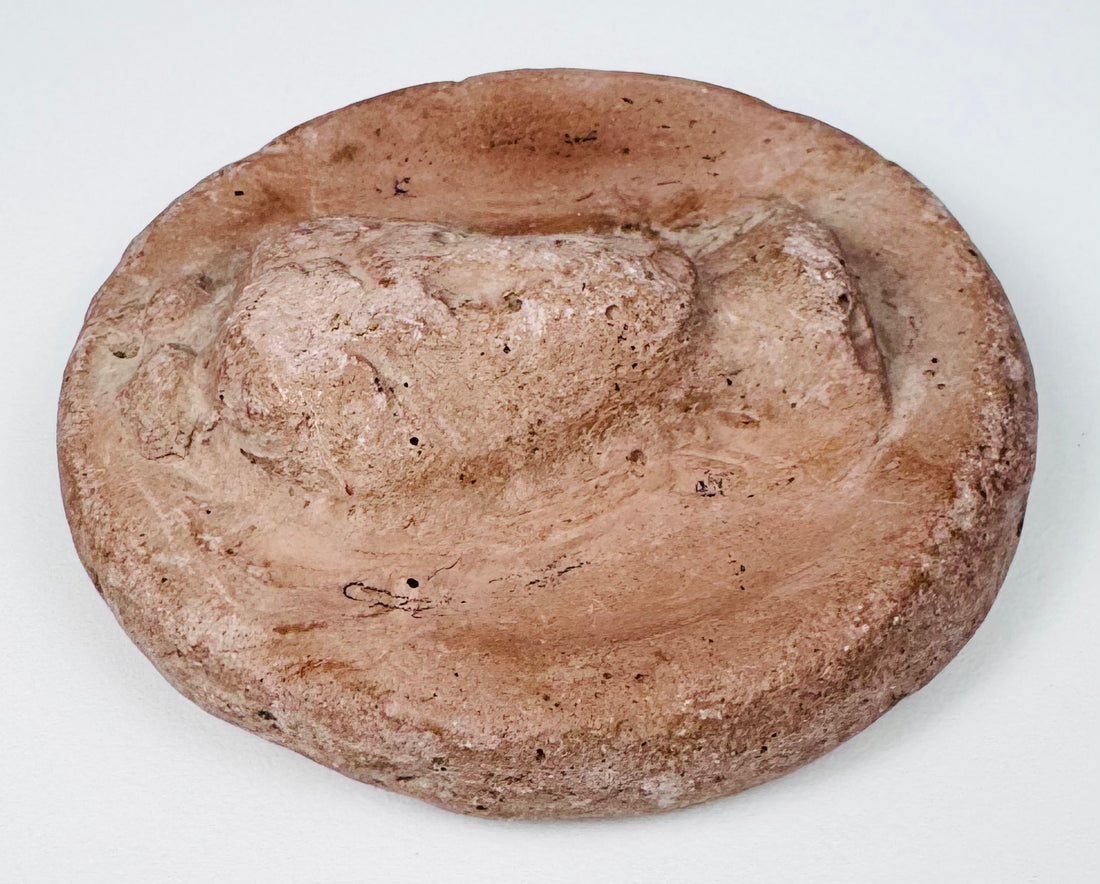
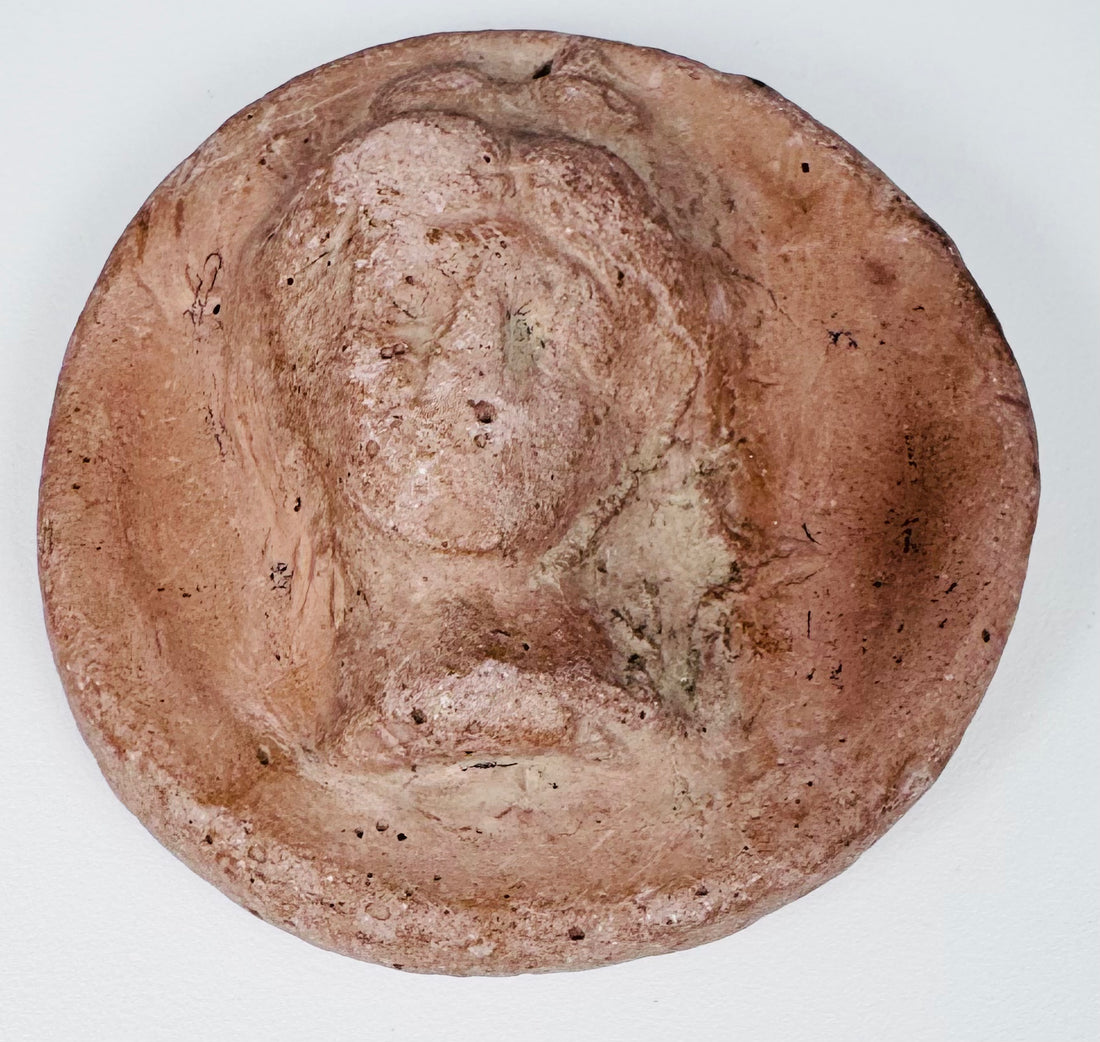
The decoration is rendered in high relief and depicts a female head and upper bust set within a circular field bordered by a raised, irregular rim. The woman has softly modelled facial features and waved hair, with what appears to be a diadem or fillet across the head. Two small ornamental projections survive at the top, while veil-like drapery frames portions of the head and upper body.
The terracotta is a pinkish-buff clay, and considerable age-related wear has softened some of the finer moulded detail. Despite this weathering, the female portrait remains clearly recognizable.
Features
- Originally formed part of a decorated vessel
- Female head and upper bust in high relief
- Waved hairstyle
- Possible diadem or fillet
- Two small surviving ornaments above the head
- Veil-like drapery
- Circular field with raised irregular rim
- Pinkish-buff terracotta fabric
- Mould-made construction
Cultural Significance
Mould-decorated pottery formed an important component of Roman ceramic production, allowing workshops to incorporate detailed figural and ornamental imagery into vessel surfaces.
The surviving roundel preserves the central decorative element of such a vessel, with the female bust serving as its principal visual focus. The combination of waved hair, possible head ornament, and veil-like drapery reflects the idealized female imagery common in Roman decorative art.
Of particular interest is the evidence that the roundel was reworked in antiquity, indicating that the decorated central portion was deliberately retained or repurposed after its original vessel context had changed.
Condition
Ancient fragmentary condition with substantial surface wear. The moulded modelling has softened through abrasion and age, with pitting, mineral deposits, and localized surface losses throughout.
The raised outer rim is irregular and exhibits areas of loss and wear. The principal female head and bust remain clearly legible despite the weathered surface. Evidence of ancient reworking is present around the perimeter.
Dimensions (Approximate)
Diameter: 2.75 in
Maximum Depth / Thickness: 1 in
Age (Approximate)
1,900–2,000 years old
Provenance
Private collection, Toronto, Ontario, Canada. Subsequently handled by A.H. Wilkens Auctions & Appraisals, Toronto, Ontario. Founded in 2009, A.H. Wilkens is a well-established Canadian auction house specializing in fine art, decorative arts, Asian antiques, and estate collections. The firm operates from its Toronto gallery and serves both Canadian and international collectors.
Expert Assessment: Examined by Luca Salvaggio, an Italian archaeologist specializing in ancient Mediterranean and Near Eastern material, with a Postgraduate Diploma from the Italian Archaeological School at Athens (IASA) and accreditation from the Italian Ministry of Culture (MiC). He identified the object as a Roman mould-decorated terracotta roundel dating to the 1st century CE, originally forming the central decorated element of a vessel and subsequently reworked in antiquity, based on its mould-made high-relief female bust, waved hair, possible diadem or fillet, veil-like drapery, pinkish-buff clay, and circular raised rim.
Learn More
Explore a related terracotta vessel medallion depicting a veiled female bust in the collection of the Louvre Museum.
Browse our collection of Roman & Greek Artifacts.
Descripción
Historical Context & Origin
Region: Roman World
Material: Mould-made terracotta
Period: Roman Period, 1st Century CE
Description
This ancient Roman terracotta roundel dates to the 1st century CE and originally formed the central decorated element of a mould-made vessel. The piece was subsequently reworked in antiquity, preserving the principal figural decoration as an independent circular fragment.
The decoration is rendered in high relief and depicts a female head and upper bust set within a circular field bordered by a raised, irregular rim. The woman has softly modelled facial features and waved hair, with what appears to be a diadem or fillet across the head. Two small ornamental projections survive at the top, while veil-like drapery frames portions of the head and upper body.
The terracotta is a pinkish-buff clay, and considerable age-related wear has softened some of the finer moulded detail. Despite this weathering, the female portrait remains clearly recognizable.
Features
- Originally formed part of a decorated vessel
- Female head and upper bust in high relief
- Waved hairstyle
- Possible diadem or fillet
- Two small surviving ornaments above the head
- Veil-like drapery
- Circular field with raised irregular rim
- Pinkish-buff terracotta fabric
- Mould-made construction
Cultural Significance
Mould-decorated pottery formed an important component of Roman ceramic production, allowing workshops to incorporate detailed figural and ornamental imagery into vessel surfaces.
The surviving roundel preserves the central decorative element of such a vessel, with the female bust serving as its principal visual focus. The combination of waved hair, possible head ornament, and veil-like drapery reflects the idealized female imagery common in Roman decorative art.
Of particular interest is the evidence that the roundel was reworked in antiquity, indicating that the decorated central portion was deliberately retained or repurposed after its original vessel context had changed.
Condition
Ancient fragmentary condition with substantial surface wear. The moulded modelling has softened through abrasion and age, with pitting, mineral deposits, and localized surface losses throughout.
The raised outer rim is irregular and exhibits areas of loss and wear. The principal female head and bust remain clearly legible despite the weathered surface. Evidence of ancient reworking is present around the perimeter.
Dimensions (Approximate)
Diameter: 2.75 in
Maximum Depth / Thickness: 1 in
Age (Approximate)
1,900–2,000 years old
Provenance
Private collection, Toronto, Ontario, Canada. Subsequently handled by A.H. Wilkens Auctions & Appraisals, Toronto, Ontario. Founded in 2009, A.H. Wilkens is a well-established Canadian auction house specializing in fine art, decorative arts, Asian antiques, and estate collections. The firm operates from its Toronto gallery and serves both Canadian and international collectors.
Expert Assessment: Examined by Luca Salvaggio, an Italian archaeologist specializing in ancient Mediterranean and Near Eastern material, with a Postgraduate Diploma from the Italian Archaeological School at Athens (IASA) and accreditation from the Italian Ministry of Culture (MiC). He identified the object as a Roman mould-decorated terracotta roundel dating to the 1st century CE, originally forming the central decorated element of a vessel and subsequently reworked in antiquity, based on its mould-made high-relief female bust, waved hair, possible diadem or fillet, veil-like drapery, pinkish-buff clay, and circular raised rim.
Learn More
Explore a related terracotta vessel medallion depicting a veiled female bust in the collection of the Louvre Museum.
Browse our collection of Roman & Greek Artifacts.
También te puede interesar
