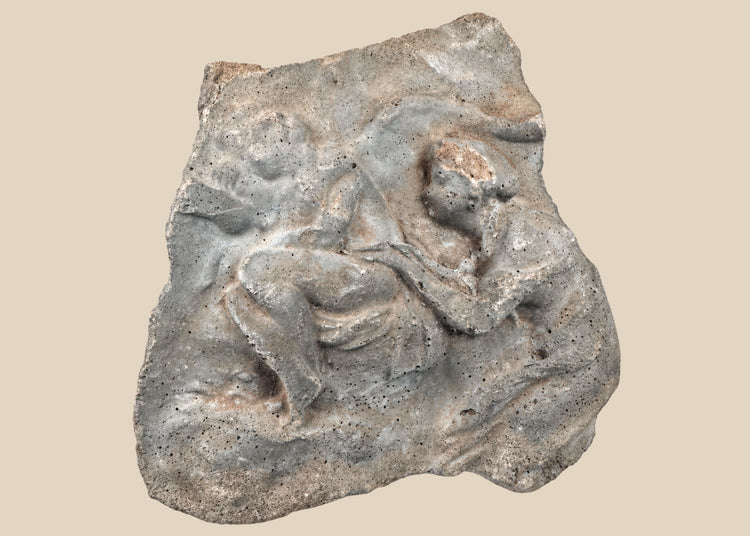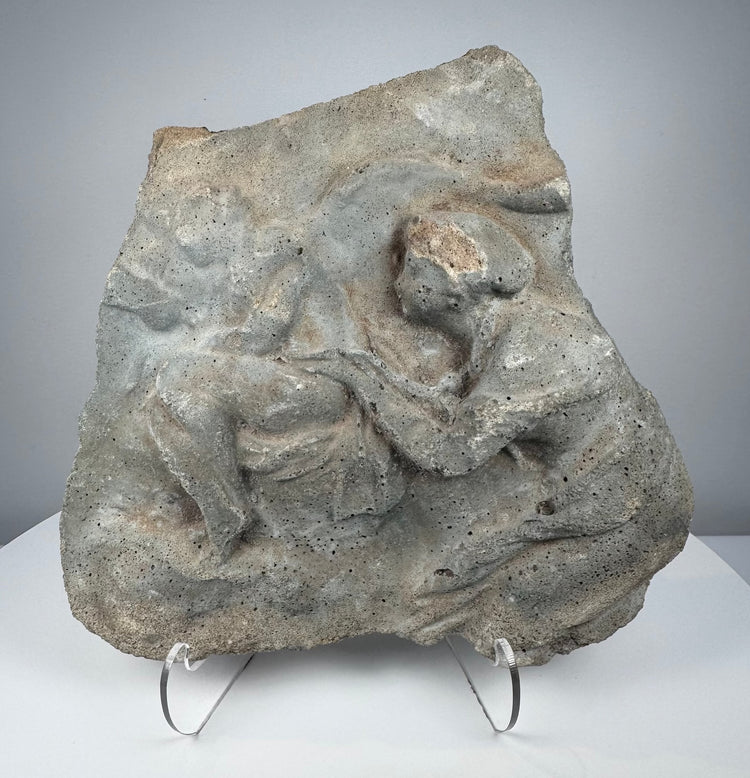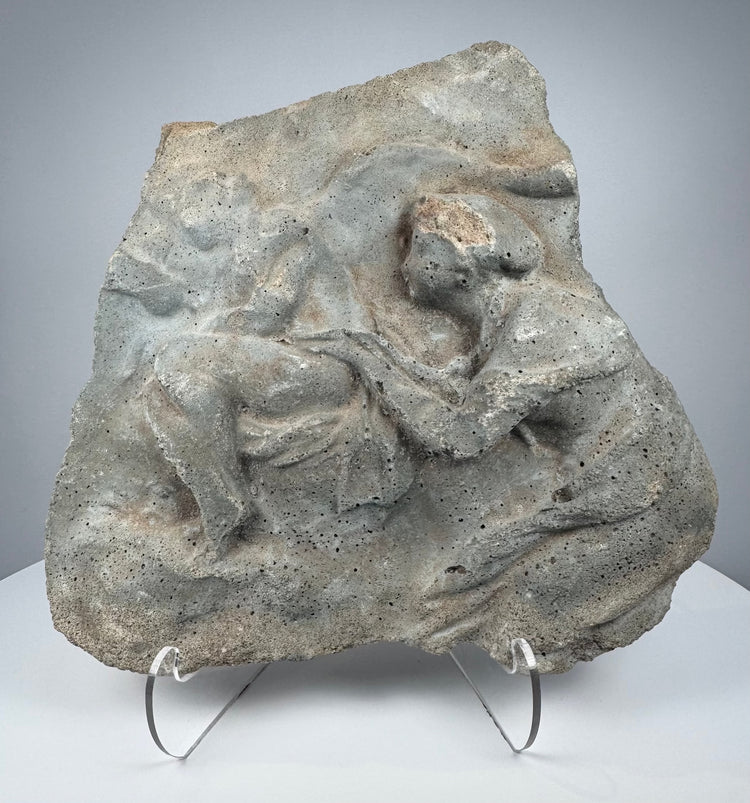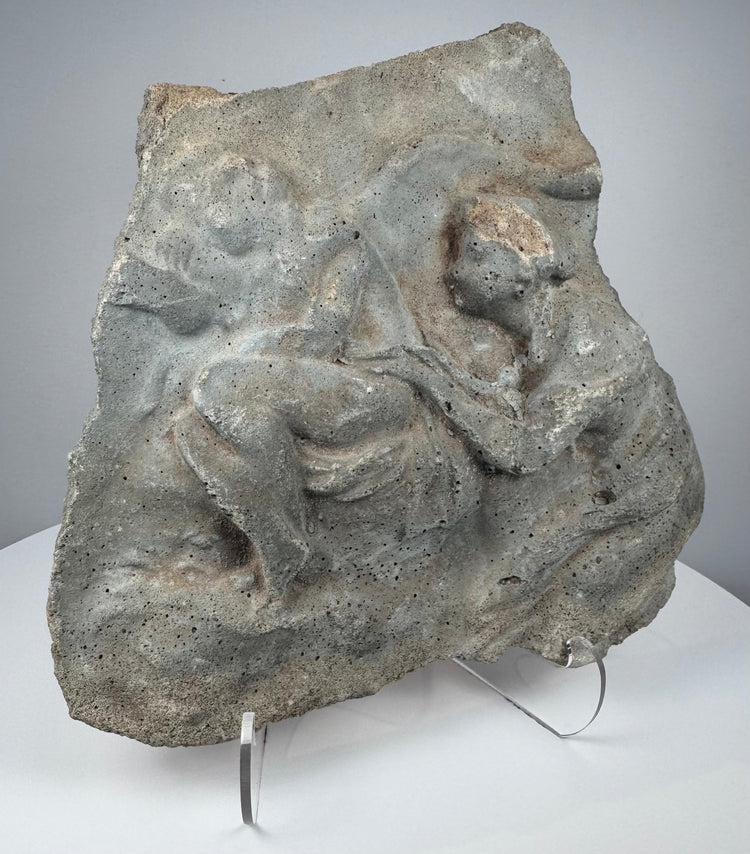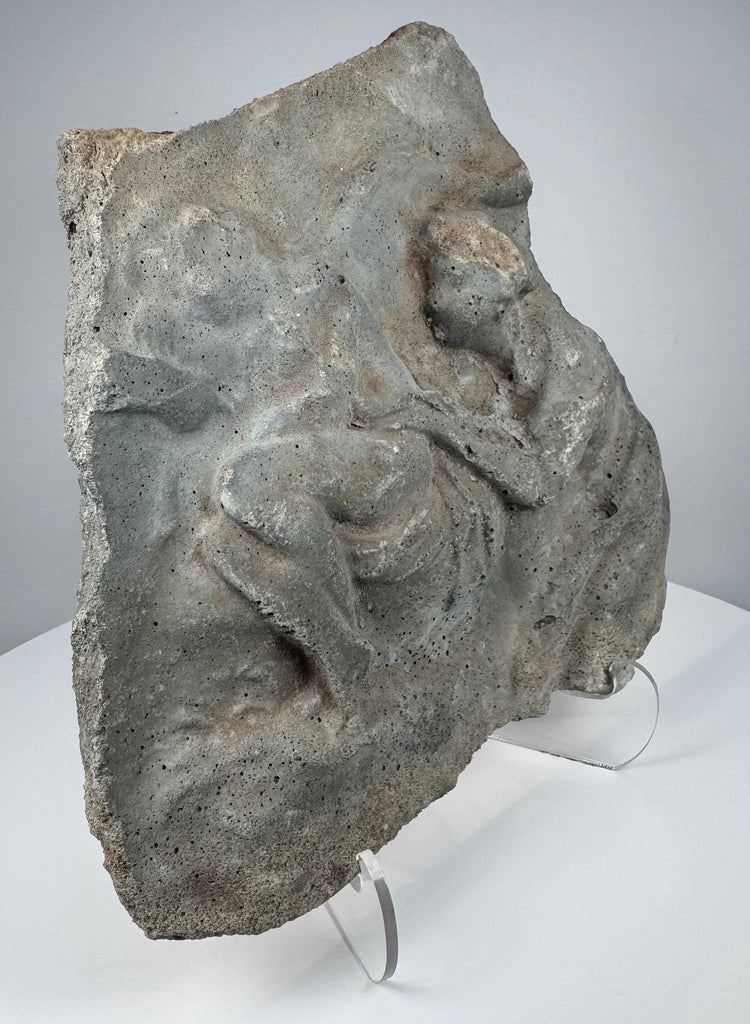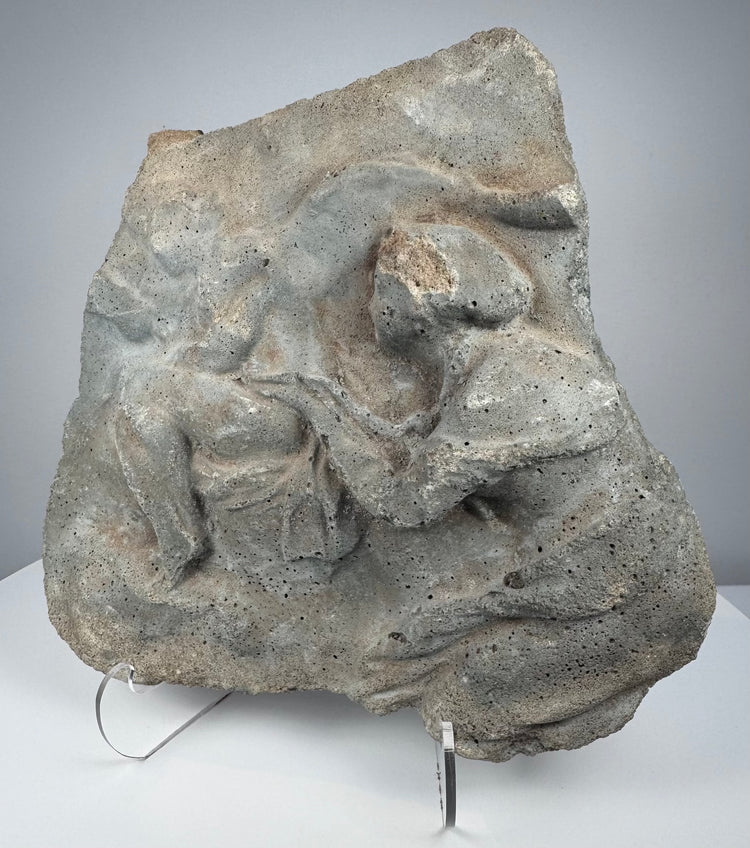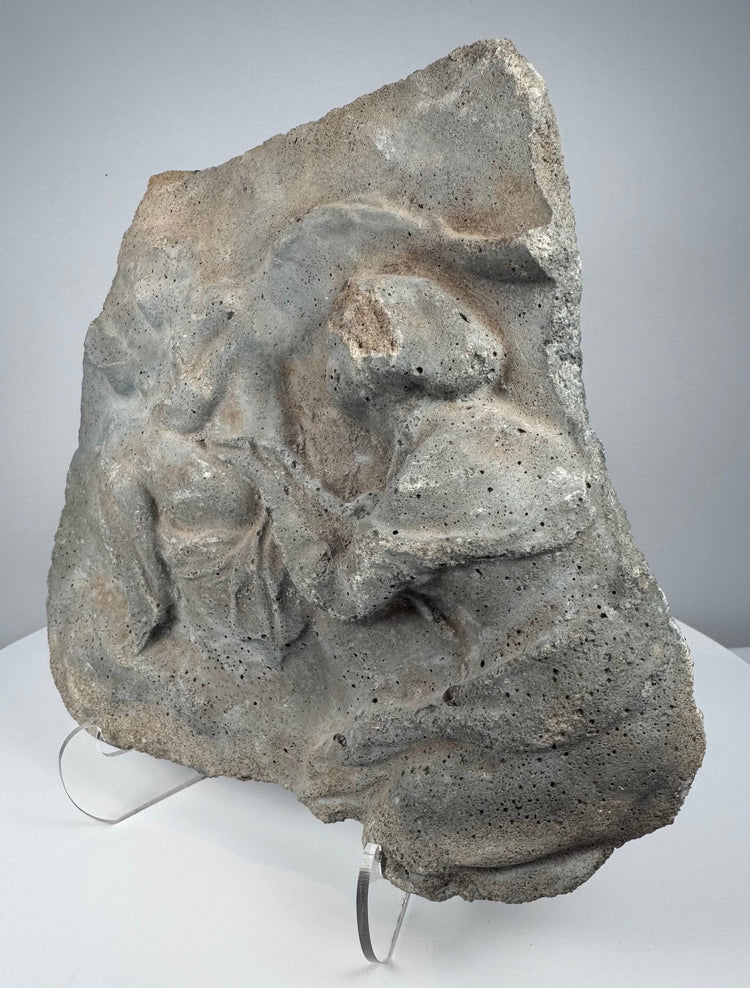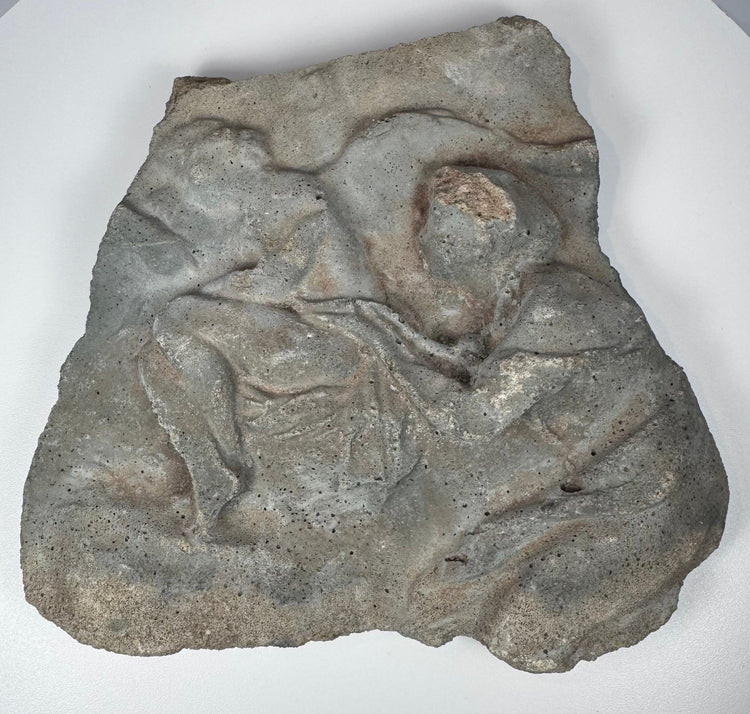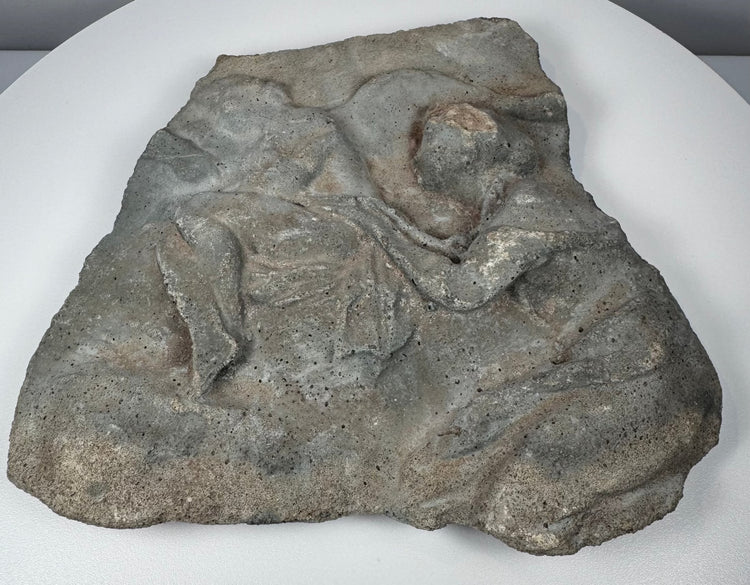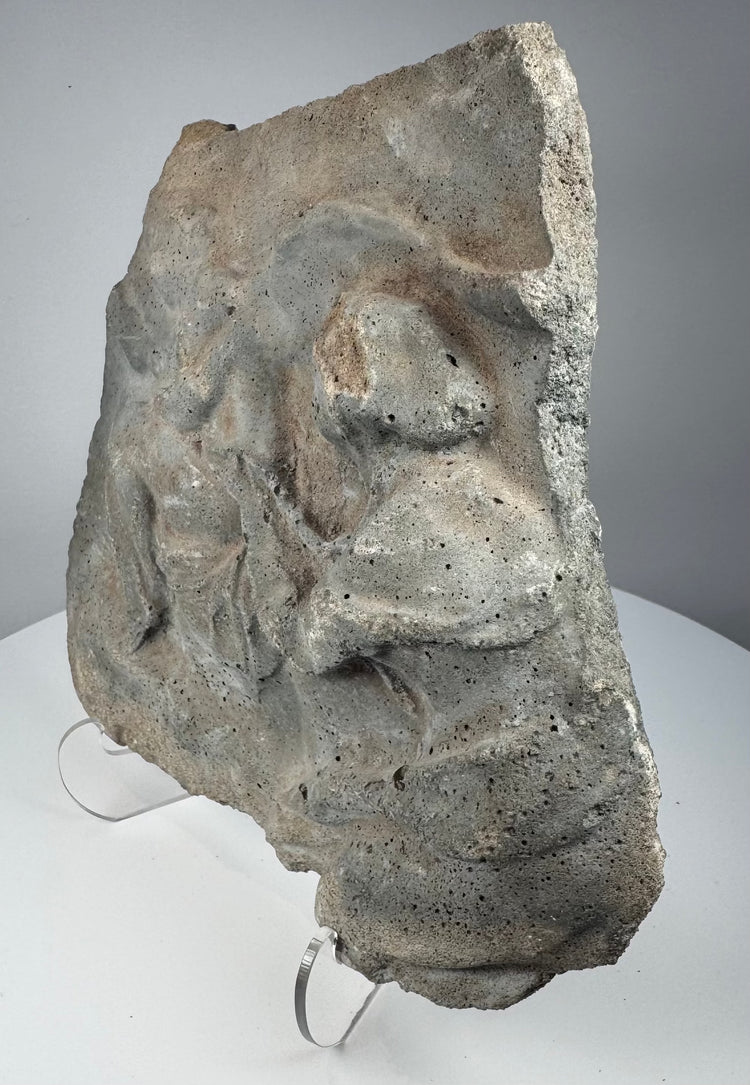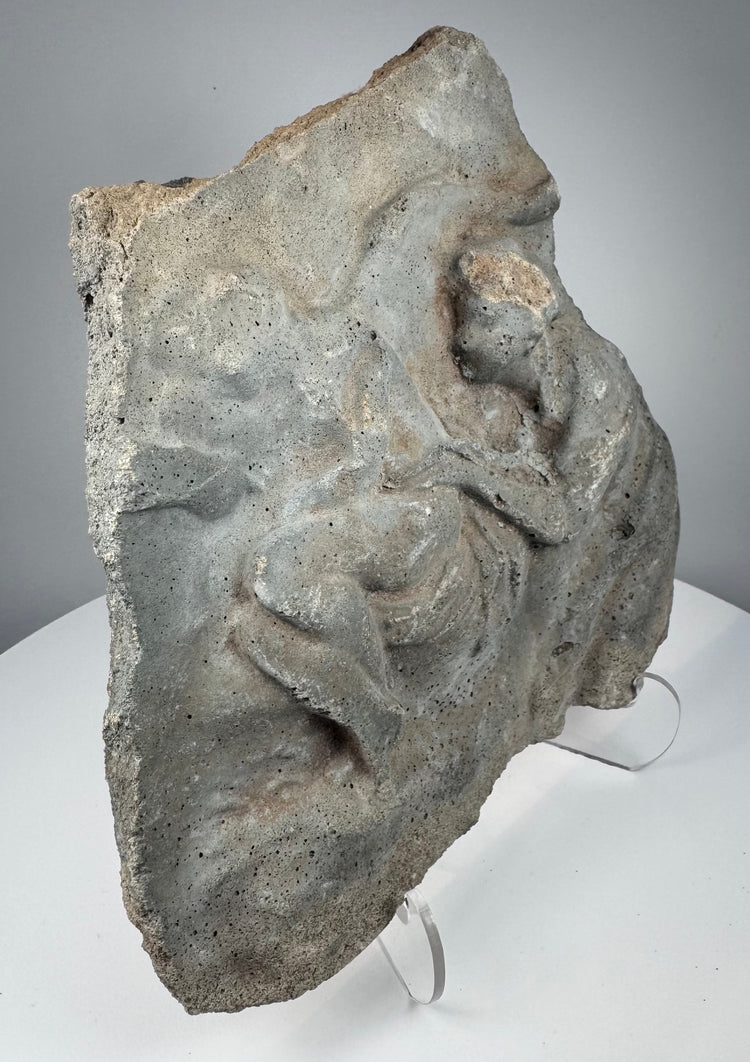


Fragmento de relieve clásico de caliza | Dos figuras humanas talladas | Mediterráneo o Cercano Oriente | Circa 500 a. C. - 500 d. C.

Historial de procedencia y propiedad

Anteriormente en una colección privada en Branford, Connecticut, EE. UU., que comprendía una colección de artefactos europeos.

Precio habitual
$1,500.00
Precio de venta
$1,500.00
Precio habitual
Envío calculado al finalizar la compra.

This is a one-of-a-kind historical object. Once sold, this exact piece will not be restocked.

Questions before acquiring? Additional photographs, condition details, documentation, shipping information or a private viewing are available upon request.
Ancient carved limestone relief fragment from the Mediterranean or Near East, Classical Period (circa 500 BCE–500 CE). Features two expressive human figures, likely part of a larger mythological or commemorative scene. Weathered surface and patina reflect centuries of age and Classical artistic traditions.
Rotating presentation of ancient Roman figural relief fragment carved in volcanic tuff, showing weathered Classical figures and porous stone texture
Roman volcanic tuff relief fragment with weathered Classical figures and ancient stone patina
Ancient Roman carved stone relief depicting two Classical figures in deeply weathered volcanic tuff
Classical Roman figural relief fragment with surviving drapery and sculptural details carved in volcanic tuff
Ancient Roman volcanic stone carving with eroded figural composition, porous surface and mineral deposits
Roman relief fragment in gray volcanic tuff showing weathered human figures and naturally pitted stone surface
Ancient Classical relief sculpture carved from porous volcanic tuff with heavily weathered figural decoration
Roman volcanic tuff fragment with raised figural carving, irregular ancient-style edges and aged surface deposits
Ancient Roman stone relief showing surviving Classical figures, carved drapery and extensive surface weathering
Carved Roman volcanic tuff relief fragment displaying porous stone grain, sculptural erosion and mineral encrustation
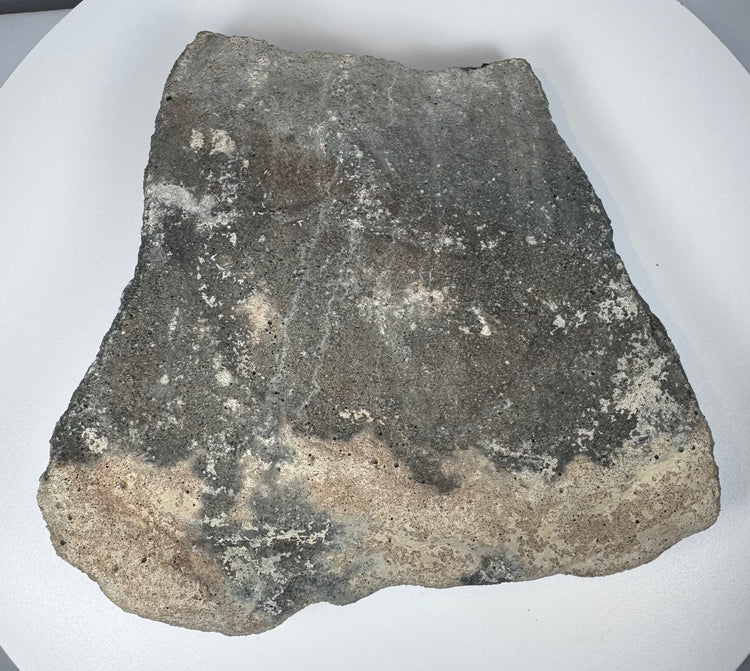
Reverse of Roman volcanic tuff relief fragment showing rough uncarved surface, porous stone texture and mineral deposits
Ancient Roman figural stone fragment with weathered relief carving and gray volcanic tuff surface, circa 1st century BCE–2nd century CE
  • Ancient carved limestone relief fragment from the Mediterranean or Near East, Classical Period (circa 500 BCE–500 CE). Features two expressive human figures, likely part of a larger mythological or commemorative scene. Weathered surface and patina reflect centuries of age and Classical artistic traditions.
  • Rotating presentation of ancient Roman figural relief fragment carved in volcanic tuff, showing weathered Classical figures and porous stone texture
  • Roman volcanic tuff relief fragment with weathered Classical figures and ancient stone patina
  • Ancient Roman carved stone relief depicting two Classical figures in deeply weathered volcanic tuff
  • Classical Roman figural relief fragment with surviving drapery and sculptural details carved in volcanic tuff
  • Ancient Roman volcanic stone carving with eroded figural composition, porous surface and mineral deposits
  • Roman relief fragment in gray volcanic tuff showing weathered human figures and naturally pitted stone surface
  • Ancient Classical relief sculpture carved from porous volcanic tuff with heavily weathered figural decoration
  • Roman volcanic tuff fragment with raised figural carving, irregular ancient-style edges and aged surface deposits
  • Ancient Roman stone relief showing surviving Classical figures, carved drapery and extensive surface weathering
  • Carved Roman volcanic tuff relief fragment displaying porous stone grain, sculptural erosion and mineral encrustation
  • Reverse of Roman volcanic tuff relief fragment showing rough uncarved surface, porous stone texture and mineral deposits
  • Ancient Roman figural stone fragment with weathered relief carving and gray volcanic tuff surface, circa 1st century BCE–2nd century CE
Ancient carved limestone relief fragment from the Mediterranean or Near East, Classical Period (circa 500 BCE–500 CE). Features two expressive human figures, likely part of a larger mythological or commemorative scene. Weathered surface and patina reflect centuries of age and Classical artistic traditions.
Rotating presentation of ancient Roman figural relief fragment carved in volcanic tuff, showing weathered Classical figures and porous stone texture
Roman volcanic tuff relief fragment with weathered Classical figures and ancient stone patina
Ancient Roman carved stone relief depicting two Classical figures in deeply weathered volcanic tuff
Classical Roman figural relief fragment with surviving drapery and sculptural details carved in volcanic tuff
Ancient Roman volcanic stone carving with eroded figural composition, porous surface and mineral deposits
Roman relief fragment in gray volcanic tuff showing weathered human figures and naturally pitted stone surface
Ancient Classical relief sculpture carved from porous volcanic tuff with heavily weathered figural decoration
Roman volcanic tuff fragment with raised figural carving, irregular ancient-style edges and aged surface deposits
Ancient Roman stone relief showing surviving Classical figures, carved drapery and extensive surface weathering
Carved Roman volcanic tuff relief fragment displaying porous stone grain, sculptural erosion and mineral encrustation
Reverse of Roman volcanic tuff relief fragment showing rough uncarved surface, porous stone texture and mineral deposits
Ancient Roman figural stone fragment with weathered relief carving and gray volcanic tuff surface, circa 1st century BCE–2nd century CE
Authenticity and secure checkout guarantee

Fragmento de relieve clásico de caliza | Dos figuras humanas talladas | Mediterráneo o Cercano Oriente | Circa 500 a. C. - 500 d. C.

Descripción

Contexto histórico y origen

Región: Mediterráneo o Cercano Oriente
Material: Caliza tallada
Periodo: Periodo Clásico, c. 500 a. C.–500 d. C.

Descripción

Este antiguo fragmento de relieve de piedra tallada presenta dos figuras humanas representadas con un detalle suave pero expresivo. Las figuras, delicadamente talladas con emoción visible, sugieren que el relieve formó parte de una escena narrativa más grande, posiblemente de naturaleza mitológica o conmemorativa. Su estilo refinado refleja las tradiciones narrativas de las civilizaciones clásicas mediterráneas y del Cercano Oriente.

Características

- Representación de dos figuras humanas talladas con detalles expresivos

- Superficie erosionada con depósitos minerales de siglos de envejecimiento

- Probablemente parte de una composición arquitectónica o narrativa más grande

- Tamaño compacto adecuado para exhibición, manteniendo el impacto histórico

Significado cultural

Los relieves de piedra fueron centrales para la identidad artística y cultural de las civilizaciones clásicas. A menudo se integraban en templos, tumbas o espacios públicos, cumpliendo funciones decorativas y simbólicas. Este fragmento se conecta directamente con las tradiciones narrativas del mundo antiguo, donde las imágenes talladas transmitían historias de dioses, héroes y eventos históricos significativos.

Estado

El relieve se encuentra en un estado antiguo estable, con erosión superficial y pátina consistentes con una exposición y edad prolongadas. Pequeños desportillados y desgaste no restan legibilidad a las figuras, sino que añaden autenticidad y carácter histórico.

Dimensiones (aproximadas)

Altura: 7.5 pulgadas
Ancho: 7 pulgadas

Edad (aproximada)

1,525–2,525 años de antigüedad

Procedencia

Anteriormente en una colección privada en Branford, Connecticut, EE. UU., que comprendía una colección de artefactos europeos.

Más información

Vea un relieve de piedra caliza relacionado en El Museo Metropolitano de Arte

Explore otros fragmentos de piedra caliza en nuestra colección: Fragmento jeroglífico de piedra caliza tallada egipcia, siglo VII a. C. y Fragmento de tapa de jarra canópica de piedra caliza de Imsety, c. 1550–1070 a. C.

Descripción

Contexto histórico y origen

Región: Mediterráneo o Cercano Oriente
Material: Caliza tallada
Periodo: Periodo Clásico, c. 500 a. C.–500 d. C.

Descripción

Este antiguo fragmento de relieve de piedra tallada presenta dos figuras humanas representadas con un detalle suave pero expresivo. Las figuras, delicadamente talladas con emoción visible, sugieren que el relieve formó parte de una escena narrativa más grande, posiblemente de naturaleza mitológica o conmemorativa. Su estilo refinado refleja las tradiciones narrativas de las civilizaciones clásicas mediterráneas y del Cercano Oriente.

Características

- Representación de dos figuras humanas talladas con detalles expresivos

- Superficie erosionada con depósitos minerales de siglos de envejecimiento

- Probablemente parte de una composición arquitectónica o narrativa más grande

- Tamaño compacto adecuado para exhibición, manteniendo el impacto histórico

Significado cultural

Los relieves de piedra fueron centrales para la identidad artística y cultural de las civilizaciones clásicas. A menudo se integraban en templos, tumbas o espacios públicos, cumpliendo funciones decorativas y simbólicas. Este fragmento se conecta directamente con las tradiciones narrativas del mundo antiguo, donde las imágenes talladas transmitían historias de dioses, héroes y eventos históricos significativos.

Estado

El relieve se encuentra en un estado antiguo estable, con erosión superficial y pátina consistentes con una exposición y edad prolongadas. Pequeños desportillados y desgaste no restan legibilidad a las figuras, sino que añaden autenticidad y carácter histórico.

Dimensiones (aproximadas)

Altura: 7.5 pulgadas
Ancho: 7 pulgadas

Edad (aproximada)

1,525–2,525 años de antigüedad

Procedencia

Anteriormente en una colección privada en Branford, Connecticut, EE. UU., que comprendía una colección de artefactos europeos.

Más información

Vea un relieve de piedra caliza relacionado en El Museo Metropolitano de Arte

Explore otros fragmentos de piedra caliza en nuestra colección: Fragmento jeroglífico de piedra caliza tallada egipcia, siglo VII a. C. y Fragmento de tapa de jarra canópica de piedra caliza de Imsety, c. 1550–1070 a. C.

También te puede interesar