


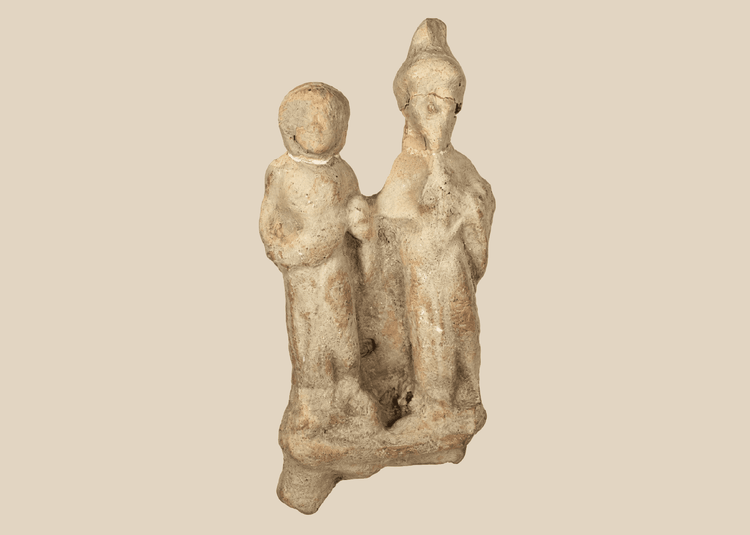
Grupo votivo figurativo de terracota siciliana antigua | Magna Grecia | Procedencia detallada | C. siglos VIII-III a. C.
- Precio habitual
- $400.00
- Precio de venta
- $400.00
- Precio habitual
No se pudo cargar la disponibilidad de retiro


Grupo votivo figurativo de terracota siciliana antigua | Magna Grecia | Procedencia detallada | C. siglos VIII-III a. C.
Descripción
Más
Menos
Contexto Histórico y Origen
Cultura: Magna Grecia / Sicilia Antigua (Período Colonial Griego)
Región: Taormina, Sicilia, Italia
Material: Terracota
Período: Circa siglo VIII-III a.C. (según la documentación adjunta de la colección)
Descripción
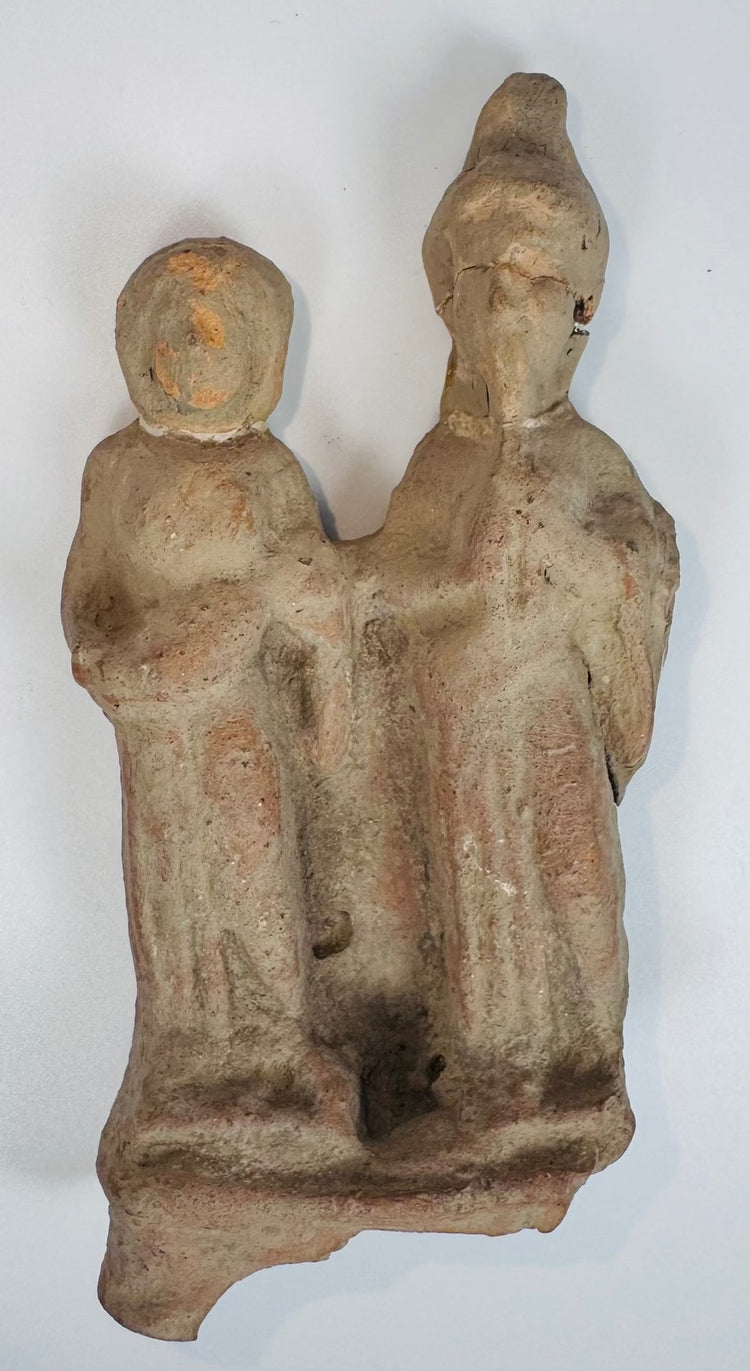
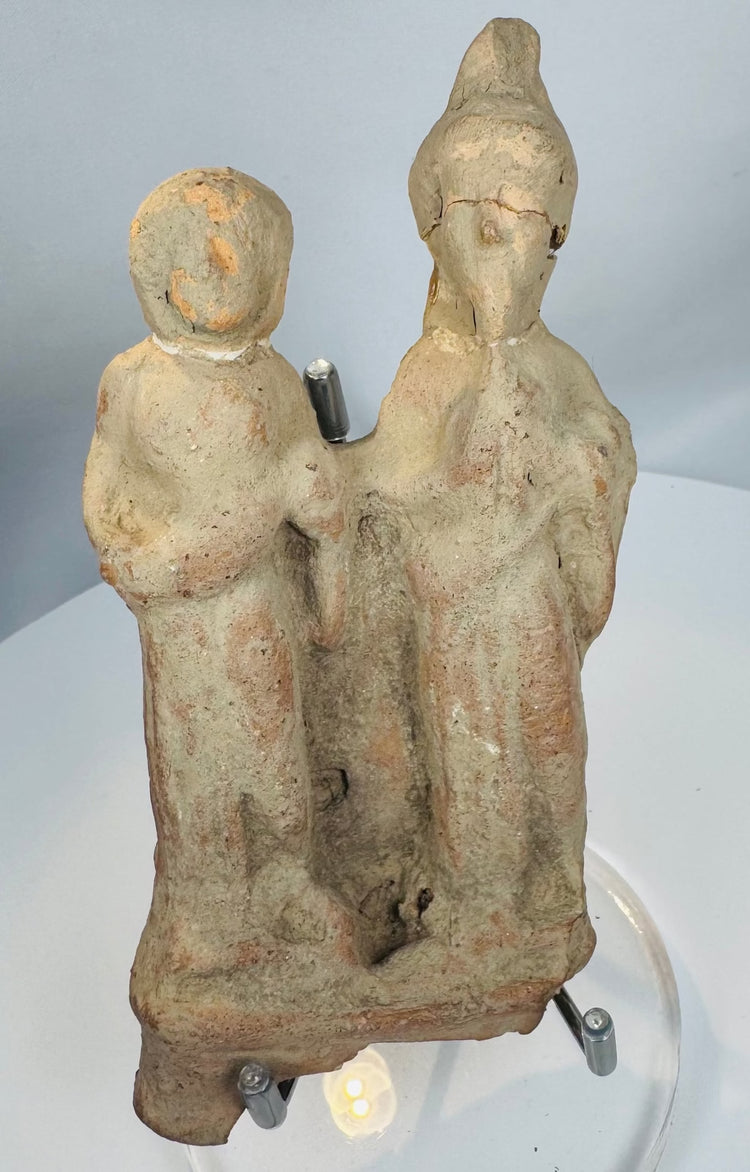
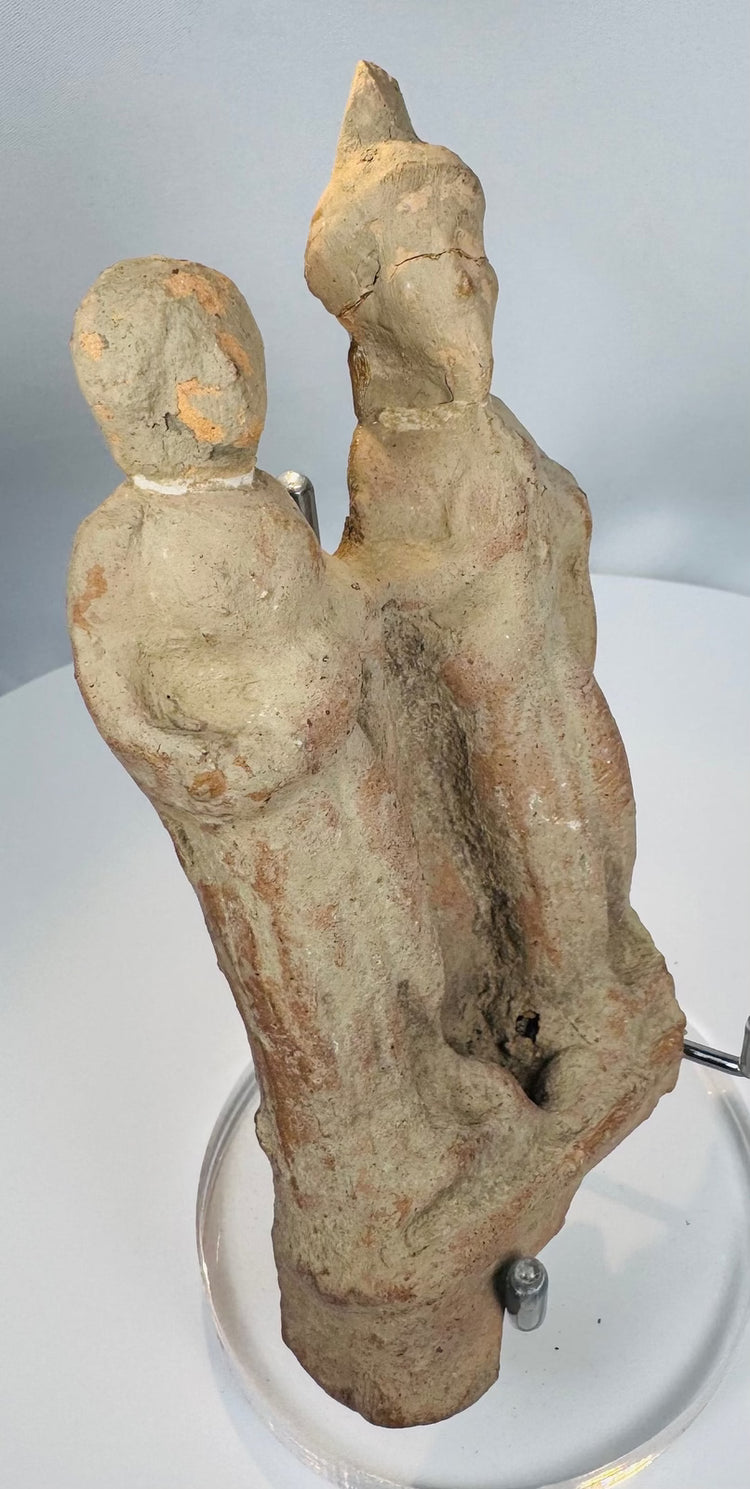
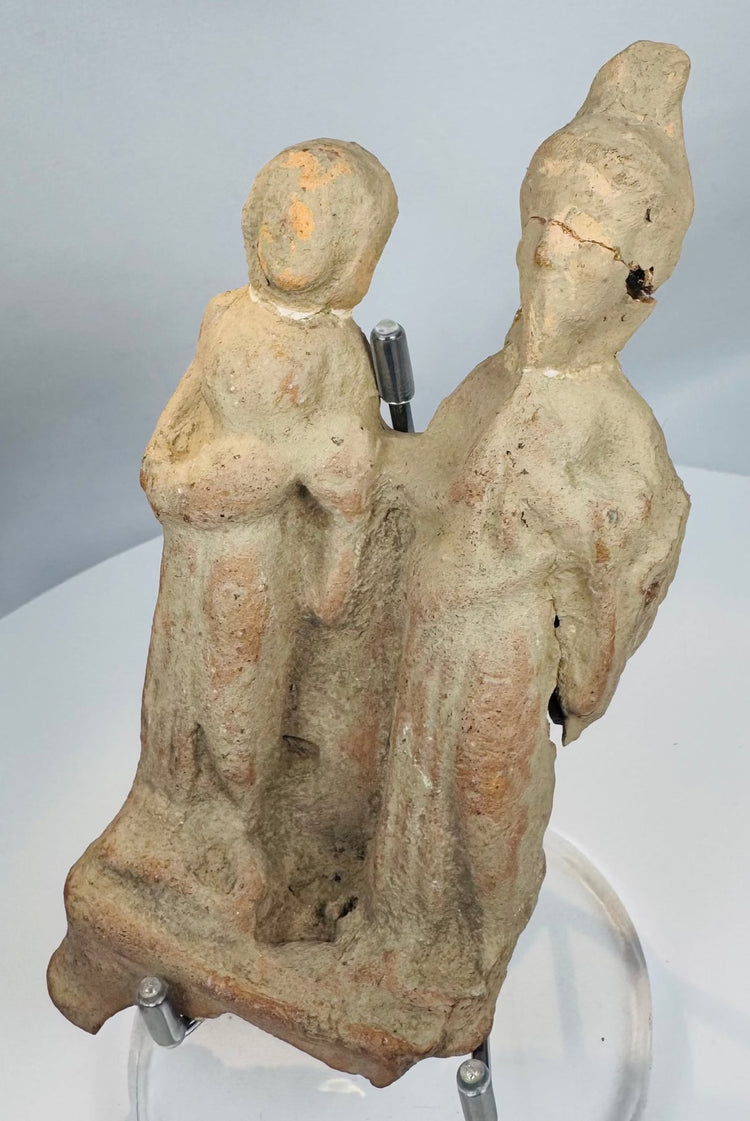
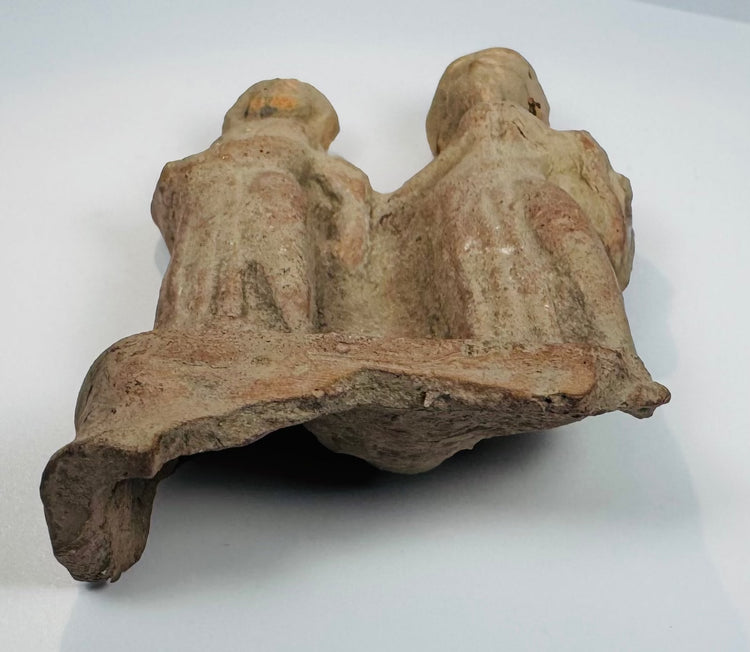
Este intrigante grupo de figuras de terracota representa a dos figuras humanas de pie, realizadas de una manera muy estilizada. Una figura parece femenina, caracterizada por senos pronunciados y un torso ancho, mientras que la segunda figura lleva un alto tocado o capucha cónico. La pareja se encuentra una al lado de la otra sobre una base integral, formando una composición escultórica unificada.
Aunque la identificación precisa de la escena sigue siendo incierta, piezas de este tipo se asocian generalmente con las ricas tradiciones votivas y religiosas de las colonias griegas del sur de Italia y Sicilia. Las figuras y grupos de figuras de terracota se depositaban comúnmente en santuarios, templos y tumbas como ofrendas a deidades o ancestros. Sus formas simplificadas a menudo enfatizan el significado simbólico y ritual más que la representación naturalista.
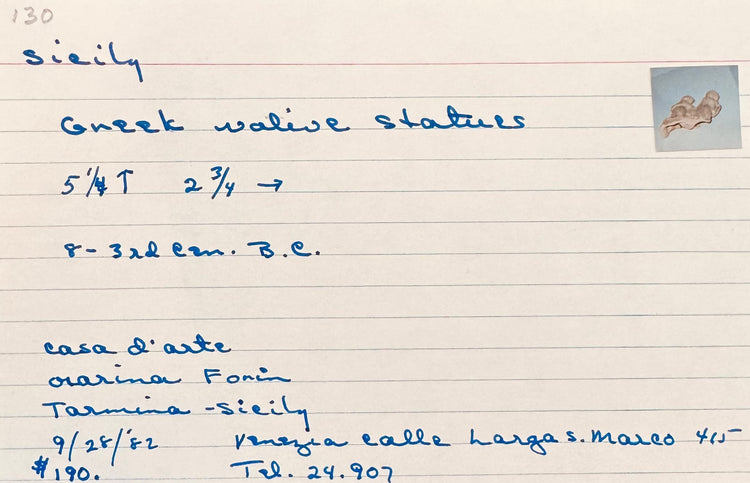
La tarjeta de procedencia adjunta identifica la pieza como un par de "estatuas votivas griegas" adquiridas en Casa d'Arte en Taormina, Sicilia, el 28 de septiembre de 1982. La tarjeta atribuye además las figuras al período del siglo VIII al III a.C., lo que refleja una atribución temprana de la colección. Si bien una datación específica no puede verificarse concluyentemente hoy, la pieza es consistente con las antiguas tradiciones votivas de terracota mediterráneas.
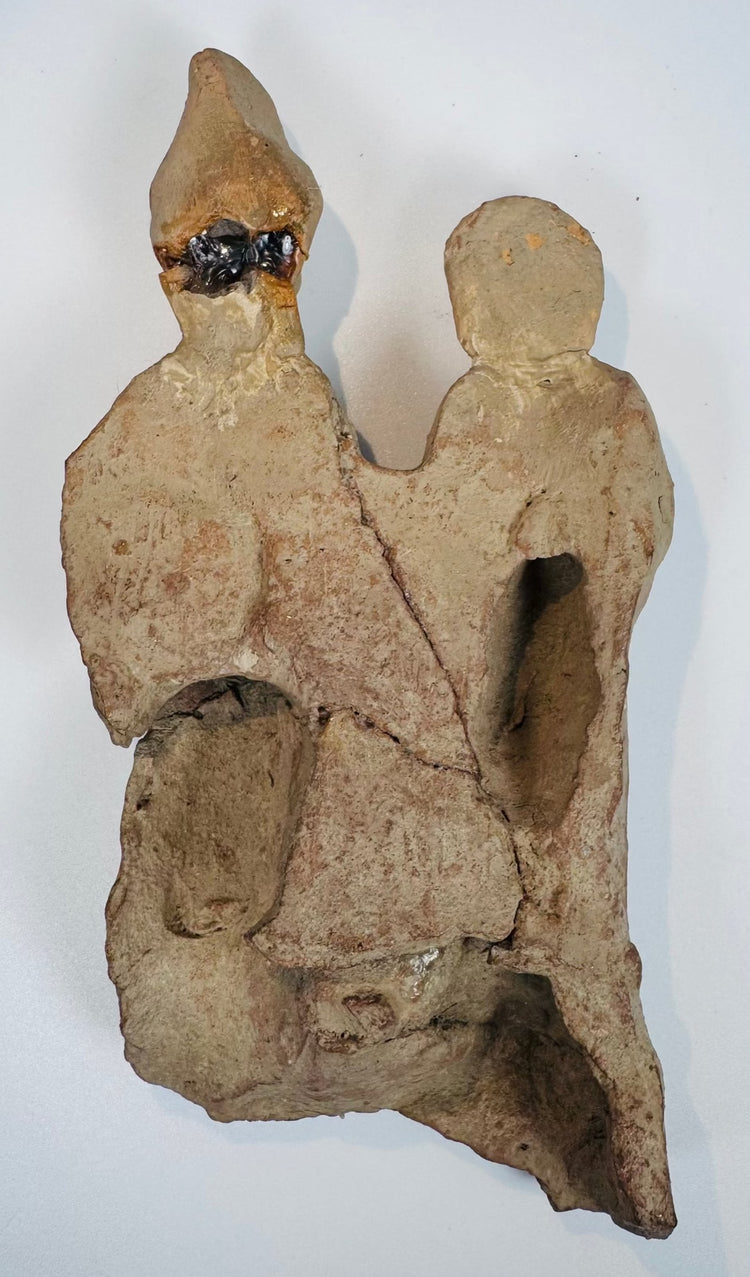
La escultura sobrevive como un fragmento arqueológico y exhibe un desgaste considerable relacionado con la edad, depósitos minerales, incrustaciones superficiales y reparaciones antiguas. A pesar de estas pérdidas, las figuras siguen siendo claramente reconocibles y conservan una fuerte presencia visual.
Características
- Fragmento de grupo de figuras de terracota antiguo
- Representa a dos figuras humanas de pie
- Una figura con un tocado o capucha prominente
- Base integral de estilo arquitectónico
- Construcción antigua modelada a mano
- Acompañado de la tarjeta de colección original de 1982 y una fotografía
- Ex-Casa d'Arte, Taormina, Sicilia
Significado Cultural
Las figuras votivas de terracota constituyeron un componente importante de la vida religiosa en las colonias griegas de Sicilia y el sur de Italia. Tales objetos se ofrecían en santuarios dedicados a deidades locales y panhelénicas, sirviendo como expresiones de devoción, gratitud, protección o conmemoración. Los ejemplos que representan figuras emparejadas a menudo se asocian con la familia, la fertilidad, el compañerismo divino o la participación ritual. Incluso los ejemplos fragmentarios proporcionan información valiosa sobre las tradiciones artísticas y religiosas del Mediterráneo antiguo.
Condición
Condición arqueológica con pérdidas, desgaste superficial, incrustaciones, picaduras, reparaciones antiguas, grietas y restauraciones visibles en todas partes. Una figura presenta una rotura reparada antigua a través de la cabeza. Depósitos superficiales y áreas de pérdida consistentes con la edad y la excavación. Estable y apto para exhibición.
Dimensiones (Aproximadas)
Altura: 6 in
Ancho: 2.75 in
Profundidad: 1 in
Antigüedad (Aproximada)
2,300–2,800 años de antigüedad (basado en la atribución de la colección adjunta)
Procedencia
Anteriormente parte de la Colección McMillan, una extensa colección privada reunida durante varias décadas con un enfoque particular en material antiguo mediterráneo, clásico y arqueológico. La colección incluía antigüedades adquiridas de distribuidores y galerías europeas establecidas durante mediados y finales del siglo XX y estaba acompañada de tarjetas de catálogo manuscritas, fotografías y registros de adquisición que documentaban muchas de las piezas.
Adquirido de Casa d'Arte, Taormina, Sicilia, Italia, el 28 de septiembre de 1982, acompañado de la tarjeta de colección original y una fotografía que identificaba la pieza como "estatuas votivas griegas" que datan del siglo VIII al III a.C. Posteriormente se mantuvo en una colección privada en Saint Paul, Minnesota.
Nota: La tarjeta de colección original de McMillan y la fotografía de época acompañan al artefacto y forman parte de su historial de colección documentado.
Más Información
Aprenda sobre la historia y el legado de Magna Grecia y las colonias griegas del sur de Italia
Explore Nuestra Colección de Artefactos Romanos y Griegos Antiguos
Descripción
Contexto Histórico y Origen
Cultura: Magna Grecia / Sicilia Antigua (Período Colonial Griego)
Región: Taormina, Sicilia, Italia
Material: Terracota
Período: Circa siglo VIII-III a.C. (según la documentación adjunta de la colección)
Descripción
Este intrigante grupo de figuras de terracota representa a dos figuras humanas de pie, realizadas de una manera muy estilizada. Una figura parece femenina, caracterizada por senos pronunciados y un torso ancho, mientras que la segunda figura lleva un alto tocado o capucha cónico. La pareja se encuentra una al lado de la otra sobre una base integral, formando una composición escultórica unificada.
Aunque la identificación precisa de la escena sigue siendo incierta, piezas de este tipo se asocian generalmente con las ricas tradiciones votivas y religiosas de las colonias griegas del sur de Italia y Sicilia. Las figuras y grupos de figuras de terracota se depositaban comúnmente en santuarios, templos y tumbas como ofrendas a deidades o ancestros. Sus formas simplificadas a menudo enfatizan el significado simbólico y ritual más que la representación naturalista.
La tarjeta de procedencia adjunta identifica la pieza como un par de "estatuas votivas griegas" adquiridas en Casa d'Arte en Taormina, Sicilia, el 28 de septiembre de 1982. La tarjeta atribuye además las figuras al período del siglo VIII al III a.C., lo que refleja una atribución temprana de la colección. Si bien una datación específica no puede verificarse concluyentemente hoy, la pieza es consistente con las antiguas tradiciones votivas de terracota mediterráneas.
La escultura sobrevive como un fragmento arqueológico y exhibe un desgaste considerable relacionado con la edad, depósitos minerales, incrustaciones superficiales y reparaciones antiguas. A pesar de estas pérdidas, las figuras siguen siendo claramente reconocibles y conservan una fuerte presencia visual.
Características
- Fragmento de grupo de figuras de terracota antiguo
- Representa a dos figuras humanas de pie
- Una figura con un tocado o capucha prominente
- Base integral de estilo arquitectónico
- Construcción antigua modelada a mano
- Acompañado de la tarjeta de colección original de 1982 y una fotografía
- Ex-Casa d'Arte, Taormina, Sicilia
Significado Cultural
Las figuras votivas de terracota constituyeron un componente importante de la vida religiosa en las colonias griegas de Sicilia y el sur de Italia. Tales objetos se ofrecían en santuarios dedicados a deidades locales y panhelénicas, sirviendo como expresiones de devoción, gratitud, protección o conmemoración. Los ejemplos que representan figuras emparejadas a menudo se asocian con la familia, la fertilidad, el compañerismo divino o la participación ritual. Incluso los ejemplos fragmentarios proporcionan información valiosa sobre las tradiciones artísticas y religiosas del Mediterráneo antiguo.
Condición
Condición arqueológica con pérdidas, desgaste superficial, incrustaciones, picaduras, reparaciones antiguas, grietas y restauraciones visibles en todas partes. Una figura presenta una rotura reparada antigua a través de la cabeza. Depósitos superficiales y áreas de pérdida consistentes con la edad y la excavación. Estable y apto para exhibición.
Dimensiones (Aproximadas)
Altura: 6 in
Ancho: 2.75 in
Profundidad: 1 in
Antigüedad (Aproximada)
2,300–2,800 años de antigüedad (basado en la atribución de la colección adjunta)
Procedencia
Anteriormente parte de la Colección McMillan, una extensa colección privada reunida durante varias décadas con un enfoque particular en material antiguo mediterráneo, clásico y arqueológico. La colección incluía antigüedades adquiridas de distribuidores y galerías europeas establecidas durante mediados y finales del siglo XX y estaba acompañada de tarjetas de catálogo manuscritas, fotografías y registros de adquisición que documentaban muchas de las piezas.
Adquirido de Casa d'Arte, Taormina, Sicilia, Italia, el 28 de septiembre de 1982, acompañado de la tarjeta de colección original y una fotografía que identificaba la pieza como "estatuas votivas griegas" que datan del siglo VIII al III a.C. Posteriormente se mantuvo en una colección privada en Saint Paul, Minnesota.
Nota: La tarjeta de colección original de McMillan y la fotografía de época acompañan al artefacto y forman parte de su historial de colección documentado.
Más Información
Aprenda sobre la historia y el legado de Magna Grecia y las colonias griegas del sur de Italia
Explore Nuestra Colección de Artefactos Romanos y Griegos Antiguos
También te puede interesar
