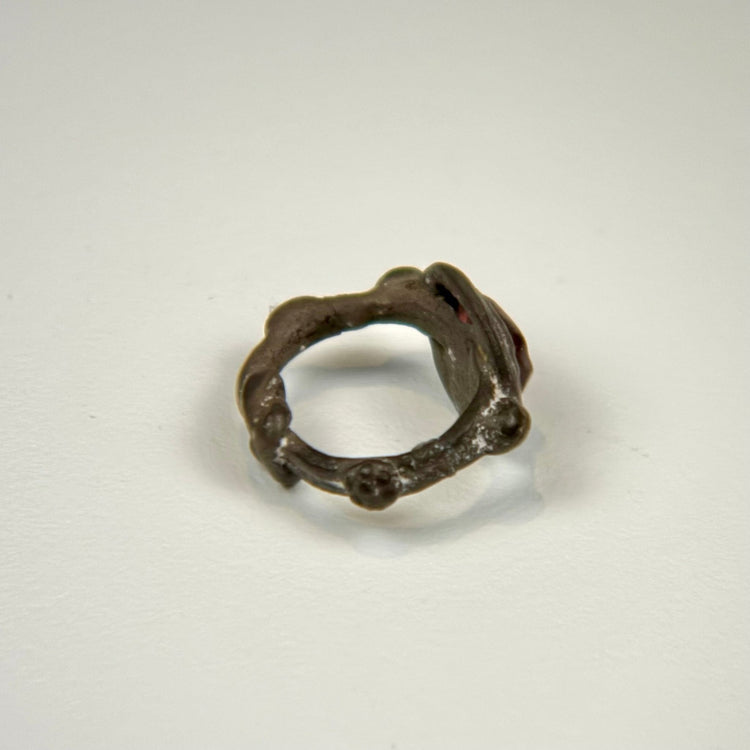
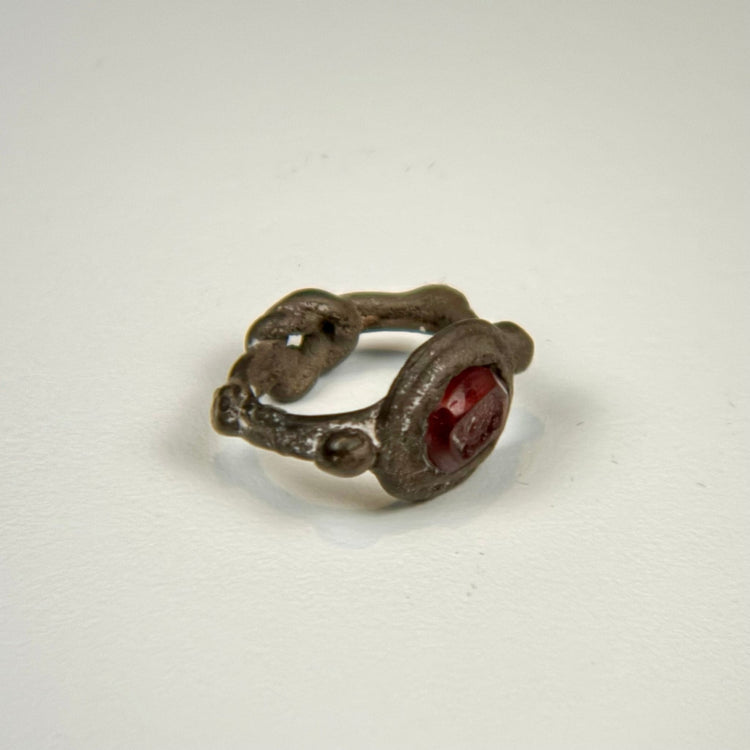
Plata antigua y granate | Anillo de intaglio | Circa 300–600 d. C.

Historial de procedencia y propiedad

Anteriormente parte de la Colección BC Galleries, Melbourne, Australia. Fundada en 1976, BC Galleries fue un destacado distribuidor australiano independiente especializado en arte y antigüedades antiguas, arte tribal, etnografía y objetos históricos de una amplia gama de culturas. Posteriormente se conservó en una colección privada en Armadale, Victoria, Australia.

Precio habitual
$900.00
Precio de venta
$900.00
Precio habitual
Envío calculado al finalizar la compra.

This is a one-of-a-kind historical object. Once sold, this exact piece will not be restocked.

Questions before acquiring? Additional photographs, condition details, documentation, shipping information or a private viewing are available upon request.
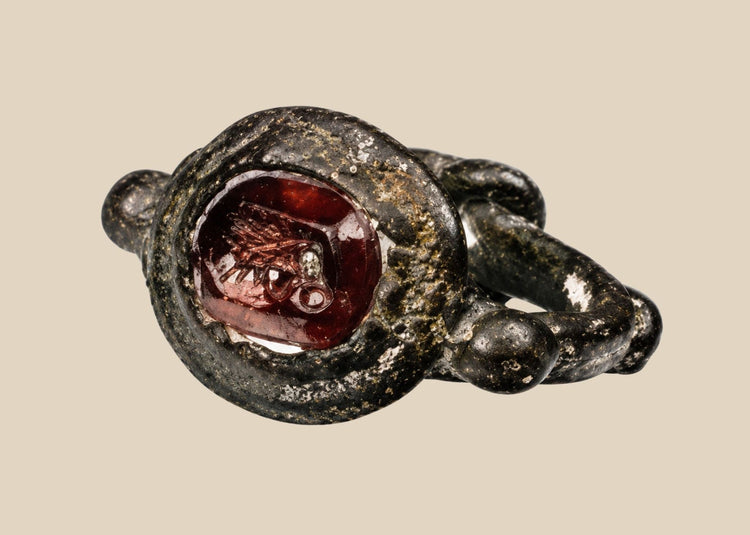
Ancient silver ring with garnet intaglio bird engraving
360-degree video of an ancient Roman–Byzantine silver and garnet intaglio ring, circa 300–600 CE, rotating on a clear display stand.
Ancient silver and garnet intaglio ring from the Late Roman to Early Byzantine period, circa 300–600 CE
Late Roman silver ring with deep red garnet intaglio and decorative raised bezel, circa 300–600 CE
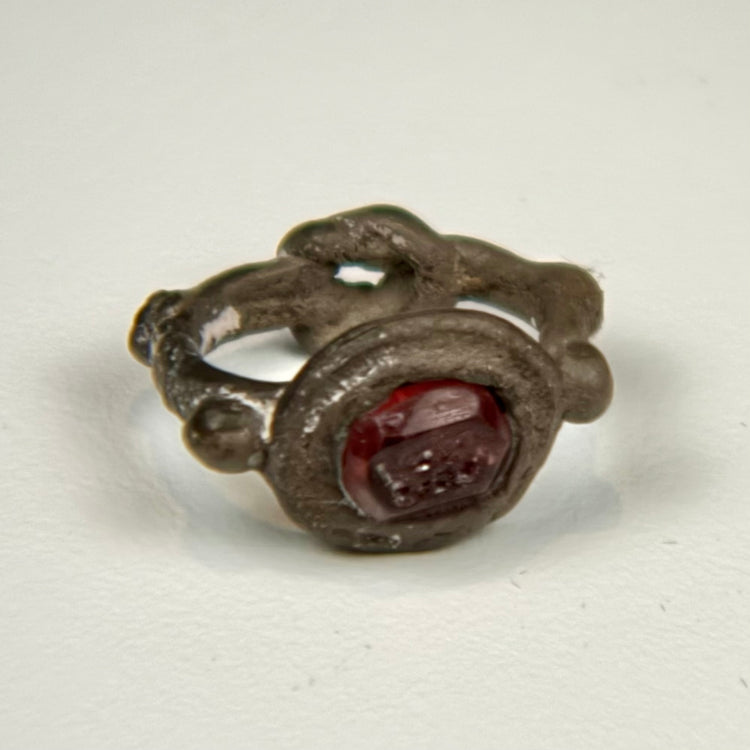
Ancient silver signet ring featuring an engraved red garnet intaglio and ornamental side nodes
Early Byzantine silver and garnet ring showing the engraved intaglio set within a raised circular bezel
Ancient Roman silver ring with polished red garnet intaglio and naturally aged silver patina
Close-up of Late Roman silver intaglio ring highlighting the engraved garnet and decorative bezel setting
Ancient silver garnet ring showing the sculptural bezel and symmetrical decorative elements along the shoulders
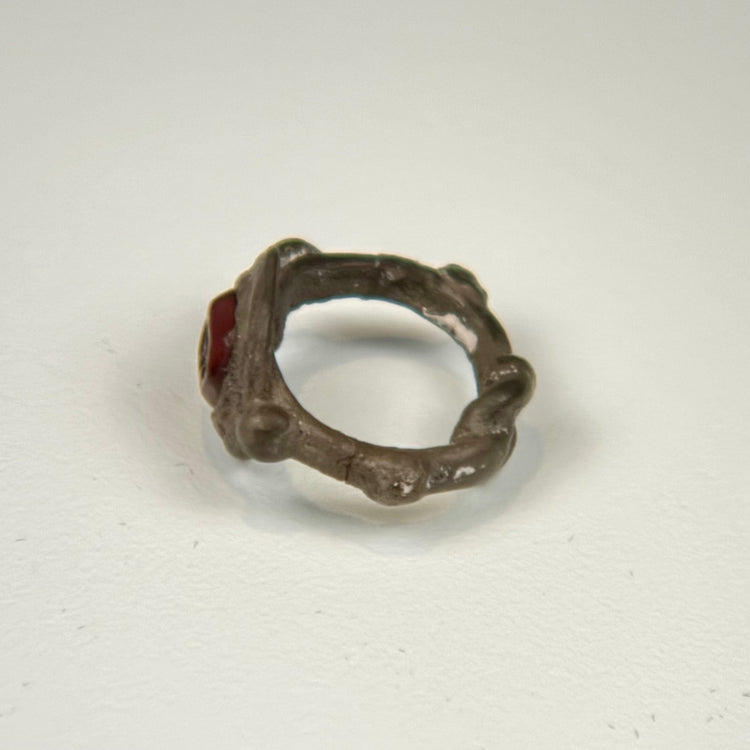
Side angle of Late Roman to Early Byzantine silver ring showing the raised garnet intaglio setting and band
Ancient silver intaglio ring showing the circular band, aged patina, and elevated garnet bezel
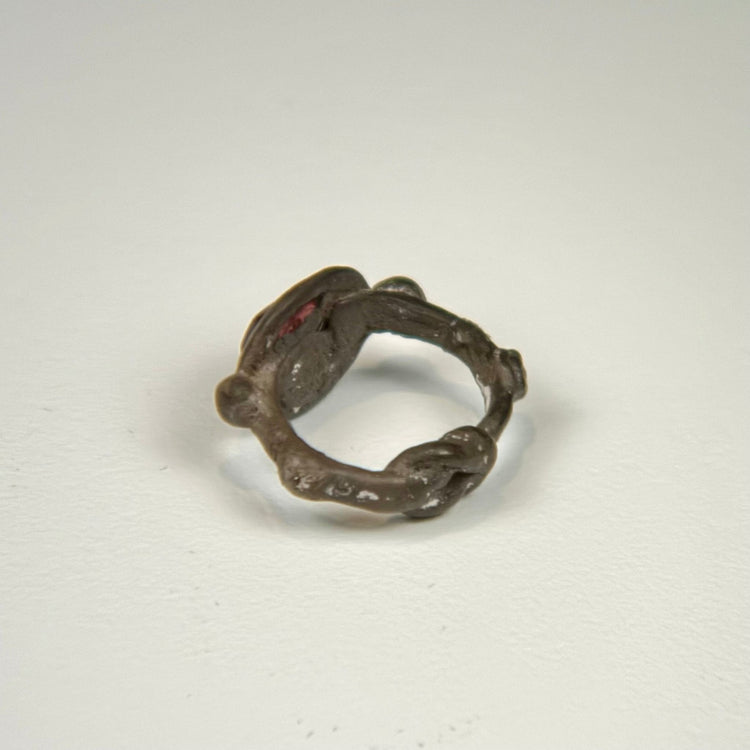
Reverse angle of ancient silver and garnet ring displaying the historic band construction and natural surface wear
Profile of Early Byzantine silver ring showing the depth of the red garnet intaglio and raised bezel
Ancient garnet intaglio signet ring with decorative silver shoulders and preserved dark red gemstone
Late Roman to Early Byzantine silver ring displaying the engraved garnet intaglio, aged patina, and ornamental bezel design
  • Ancient silver ring with garnet intaglio bird engraving
  • 360-degree video of an ancient Roman–Byzantine silver and garnet intaglio ring, circa 300–600 CE, rotating on a clear display stand.
  • Ancient silver and garnet intaglio ring from the Late Roman to Early Byzantine period, circa 300–600 CE
  • Late Roman silver ring with deep red garnet intaglio and decorative raised bezel, circa 300–600 CE
  • Ancient silver signet ring featuring an engraved red garnet intaglio and ornamental side nodes
  • Early Byzantine silver and garnet ring showing the engraved intaglio set within a raised circular bezel
  • Ancient Roman silver ring with polished red garnet intaglio and naturally aged silver patina
  • Close-up of Late Roman silver intaglio ring highlighting the engraved garnet and decorative bezel setting
  • Ancient silver garnet ring showing the sculptural bezel and symmetrical decorative elements along the shoulders
  • Side angle of Late Roman to Early Byzantine silver ring showing the raised garnet intaglio setting and band
  • Ancient silver intaglio ring showing the circular band, aged patina, and elevated garnet bezel
  • Reverse angle of ancient silver and garnet ring displaying the historic band construction and natural surface wear
  • Profile of Early Byzantine silver ring showing the depth of the red garnet intaglio and raised bezel
  • Ancient garnet intaglio signet ring with decorative silver shoulders and preserved dark red gemstone
  • Late Roman to Early Byzantine silver ring displaying the engraved garnet intaglio, aged patina, and ornamental bezel design
Ancient silver ring with garnet intaglio bird engraving
360-degree video of an ancient Roman–Byzantine silver and garnet intaglio ring, circa 300–600 CE, rotating on a clear display stand.
Ancient silver and garnet intaglio ring from the Late Roman to Early Byzantine period, circa 300–600 CE
Late Roman silver ring with deep red garnet intaglio and decorative raised bezel, circa 300–600 CE
Ancient silver signet ring featuring an engraved red garnet intaglio and ornamental side nodes
Early Byzantine silver and garnet ring showing the engraved intaglio set within a raised circular bezel
Ancient Roman silver ring with polished red garnet intaglio and naturally aged silver patina
Close-up of Late Roman silver intaglio ring highlighting the engraved garnet and decorative bezel setting
Ancient silver garnet ring showing the sculptural bezel and symmetrical decorative elements along the shoulders
Side angle of Late Roman to Early Byzantine silver ring showing the raised garnet intaglio setting and band
Ancient silver intaglio ring showing the circular band, aged patina, and elevated garnet bezel
Reverse angle of ancient silver and garnet ring displaying the historic band construction and natural surface wear
Profile of Early Byzantine silver ring showing the depth of the red garnet intaglio and raised bezel
Ancient garnet intaglio signet ring with decorative silver shoulders and preserved dark red gemstone
Late Roman to Early Byzantine silver ring displaying the engraved garnet intaglio, aged patina, and ornamental bezel design
Authenticity and secure checkout guarantee

Plata antigua y granate | Anillo de intaglio | Circa 300–600 d. C.

Descripción

Contexto histórico y origen

Región: Mediterráneo oriental o Cercano Oriente
Material: Plata con intaglio de granate
Período: Romano tardío a Bizantino temprano, c. 300–600 d. C.

Descripción

Este extraordinario anillo de plata antiguo ejemplifica el arte y la artesanía de la antigüedad. Engastado con un intaglio de granate rojo intenso, el bisel está finamente grabado con un diseño intrincado, probablemente de naturaleza simbólica o personal. Los anillos de este tipo se usaban con frecuencia tanto como adorno como sellos funcionales, lo que reflejaba los roles duales de identidad, autoridad y prestigio en la sociedad romana tardía y bizantina.

Características

• Intaglio de granate rojo intenso grabado con imágenes simbólicas o personales

• Nodos de plata decorativos flanqueando el bisel elevado, realzando la elegancia del anillo

• El granate conserva su brillo y superficie pulida a pesar de su gran antigüedad

• Elaborado como sello personal y como adorno de alto estatus social

Significado cultural

Los granates eran gemas muy apreciadas en la antigüedad y a menudo se asociaban con la protección, la vitalidad y la fuerza. Los anillos de intaglio desempeñaron un papel importante como sellos personales utilizados para estampar cera en documentos oficiales, al mismo tiempo que actuaban como símbolos de identidad, rango y creencias. Las piezas de esta naturaleza solían ser propiedad de individuos de estatus dentro de la sociedad romana y bizantina.

Estado

Muy buen estado con una atractiva pátina natural de plata y desgaste superficial menor en la gema, consistente con siglos de uso. El intaglio grabado permanece claramente visible y bien conservado.

Dimensiones (aproximadas)

Tamaño del anillo: 1 US

Antigüedad (aproximada)

1.425–1.725 años de antigüedad

Procedencia 

Anteriormente parte de la Colección BC Galleries, Melbourne, Australia. Establecida en 1976, BC Galleries fue un prominente distribuidor independiente australiano especializado en arte y antigüedades antiguas, arte tribal, etnografía y objetos históricos de una amplia gama de culturas. Posteriormente se mantuvo en una colección privada en Armadale, Victoria, Australia.

Más información

Explore joyas antiguas con intaglio en la colección de El Museo Metropolitano de Arte

Explore nuestra Colección de anillos antiguos y joyas históricas

Descripción

Contexto histórico y origen

Región: Mediterráneo oriental o Cercano Oriente
Material: Plata con intaglio de granate
Período: Romano tardío a Bizantino temprano, c. 300–600 d. C.

Descripción

Este extraordinario anillo de plata antiguo ejemplifica el arte y la artesanía de la antigüedad. Engastado con un intaglio de granate rojo intenso, el bisel está finamente grabado con un diseño intrincado, probablemente de naturaleza simbólica o personal. Los anillos de este tipo se usaban con frecuencia tanto como adorno como sellos funcionales, lo que reflejaba los roles duales de identidad, autoridad y prestigio en la sociedad romana tardía y bizantina.

Características

• Intaglio de granate rojo intenso grabado con imágenes simbólicas o personales

• Nodos de plata decorativos flanqueando el bisel elevado, realzando la elegancia del anillo

• El granate conserva su brillo y superficie pulida a pesar de su gran antigüedad

• Elaborado como sello personal y como adorno de alto estatus social

Significado cultural

Los granates eran gemas muy apreciadas en la antigüedad y a menudo se asociaban con la protección, la vitalidad y la fuerza. Los anillos de intaglio desempeñaron un papel importante como sellos personales utilizados para estampar cera en documentos oficiales, al mismo tiempo que actuaban como símbolos de identidad, rango y creencias. Las piezas de esta naturaleza solían ser propiedad de individuos de estatus dentro de la sociedad romana y bizantina.

Estado

Muy buen estado con una atractiva pátina natural de plata y desgaste superficial menor en la gema, consistente con siglos de uso. El intaglio grabado permanece claramente visible y bien conservado.

Dimensiones (aproximadas)

Tamaño del anillo: 1 US

Antigüedad (aproximada)

1.425–1.725 años de antigüedad

Procedencia 

Anteriormente parte de la Colección BC Galleries, Melbourne, Australia. Establecida en 1976, BC Galleries fue un prominente distribuidor independiente australiano especializado en arte y antigüedades antiguas, arte tribal, etnografía y objetos históricos de una amplia gama de culturas. Posteriormente se mantuvo en una colección privada en Armadale, Victoria, Australia.

Más información

Explore joyas antiguas con intaglio en la colección de El Museo Metropolitano de Arte

Explore nuestra Colección de anillos antiguos y joyas históricas

También te puede interesar