



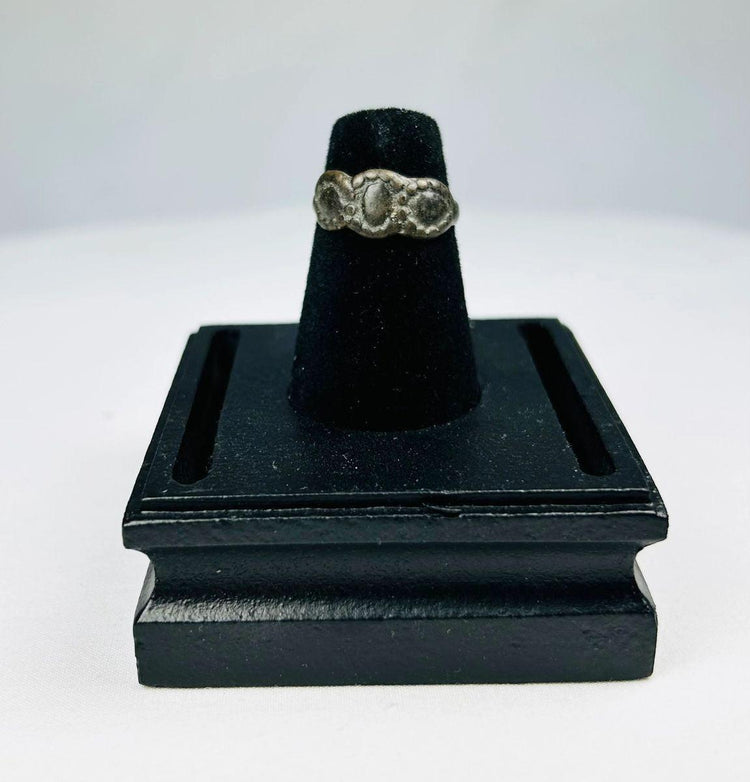
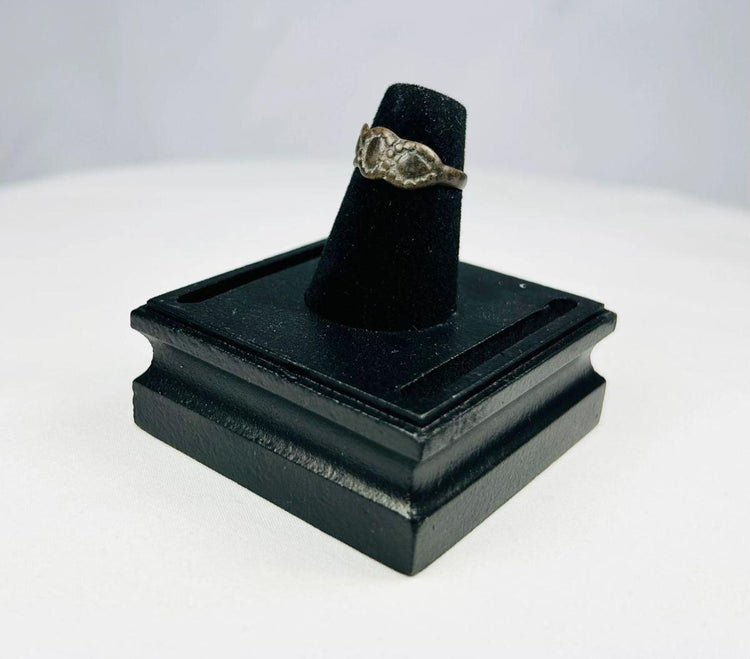
Anillo antiguo de plata en racimo con motivo ovalado | Circa 300-600 d. C.
- Precio habitual
- $500.00
- Precio de venta
- $500.00
- Precio habitual
No se pudo cargar la disponibilidad de retiro


Anillo antiguo de plata en racimo con motivo ovalado | Circa 300-600 d. C.
Descripción
Más
Menos
Contexto histórico y origen
Región: Mediterráneo oriental o Cercano Oriente
Material: Plata
Período: Del romano tardío al bizantino temprano, circa 300–600 EC
Descripción
Este fascinante anillo de plata antiguo presenta un diseño de racimo de tres motivos ovalados, un estilo profundamente ligado al arte y simbolismo de los períodos romano tardío y bizantino temprano. La disposición de los óvalos puede haber representado unidad, continuidad o armonía, conceptos centrales para la cosmovisión cultural y espiritual de la época. Con su elegancia sencilla y profundidad simbólica, este anillo refleja tanto la identidad personal como los valores culturales de su portador.
Características
- Tres motivos ovalados agrupados, equilibrados y armoniosos en diseño
- Banda de plata hecha a mano con pátina natural y superficie desgastada
- Durabilidad estructural conservada a pesar de la edad, destacando la antigua artesanía
- Un buen ejemplo tanto de adorno personal como de simbolismo cultural
Significado cultural
En las sociedades romanas tardías y bizantinas tempranas, las joyas a menudo tenían un significado más allá de la decoración. Motivos como óvalos agrupados simbolizaban la interconexión y la naturaleza cíclica de la vida. Esta pieza también pudo haber servido como sello o símbolo de estatus, representando la autoridad o las creencias de su propietario. El uso de plata subraya su valor, ya que los metales preciosos estaban reservados para adornos de alto estatus y uso ceremonial.
Condición
El anillo muestra una pátina natural y un desgaste relacionado con la edad, consistente con siglos de uso. A pesar del desgaste, el diseño de engaste agrupado permanece bien definido y la banda está estructuralmente intacta. Estas características realzan su autenticidad y encanto histórico.
Dimensiones (aproximadas)
Tamaño del anillo: 7 EE. UU.
Edad (aproximada)
1.425–1.725 años de antigüedad
Procedencia
Anteriormente parte de la Colección BC Galleries, Melbourne, Australia. Establecida en 1976, BC Galleries fue un destacado marchante independiente australiano especializado en arte y antigüedades antiguas, arte tribal, etnografía y objetos históricos de una amplia gama de culturas. Posteriormente se conservó en una colección privada en Armadale, Victoria, Australia.
Más información
Explore Joyería y ornamentación bizantina
Examine nuestra Colección de anillos antiguos y joyas históricas
Descripción
Contexto histórico y origen
Región: Mediterráneo oriental o Cercano Oriente
Material: Plata
Período: Del romano tardío al bizantino temprano, circa 300–600 EC
Descripción
Este fascinante anillo de plata antiguo presenta un diseño de racimo de tres motivos ovalados, un estilo profundamente ligado al arte y simbolismo de los períodos romano tardío y bizantino temprano. La disposición de los óvalos puede haber representado unidad, continuidad o armonía, conceptos centrales para la cosmovisión cultural y espiritual de la época. Con su elegancia sencilla y profundidad simbólica, este anillo refleja tanto la identidad personal como los valores culturales de su portador.
Características
- Tres motivos ovalados agrupados, equilibrados y armoniosos en diseño
- Banda de plata hecha a mano con pátina natural y superficie desgastada
- Durabilidad estructural conservada a pesar de la edad, destacando la antigua artesanía
- Un buen ejemplo tanto de adorno personal como de simbolismo cultural
Significado cultural
En las sociedades romanas tardías y bizantinas tempranas, las joyas a menudo tenían un significado más allá de la decoración. Motivos como óvalos agrupados simbolizaban la interconexión y la naturaleza cíclica de la vida. Esta pieza también pudo haber servido como sello o símbolo de estatus, representando la autoridad o las creencias de su propietario. El uso de plata subraya su valor, ya que los metales preciosos estaban reservados para adornos de alto estatus y uso ceremonial.
Condición
El anillo muestra una pátina natural y un desgaste relacionado con la edad, consistente con siglos de uso. A pesar del desgaste, el diseño de engaste agrupado permanece bien definido y la banda está estructuralmente intacta. Estas características realzan su autenticidad y encanto histórico.
Dimensiones (aproximadas)
Tamaño del anillo: 7 EE. UU.
Edad (aproximada)
1.425–1.725 años de antigüedad
Procedencia
Anteriormente parte de la Colección BC Galleries, Melbourne, Australia. Establecida en 1976, BC Galleries fue un destacado marchante independiente australiano especializado en arte y antigüedades antiguas, arte tribal, etnografía y objetos históricos de una amplia gama de culturas. Posteriormente se conservó en una colección privada en Armadale, Victoria, Australia.
Más información
Explore Joyería y ornamentación bizantina
Examine nuestra Colección de anillos antiguos y joyas históricas
También te puede interesar
