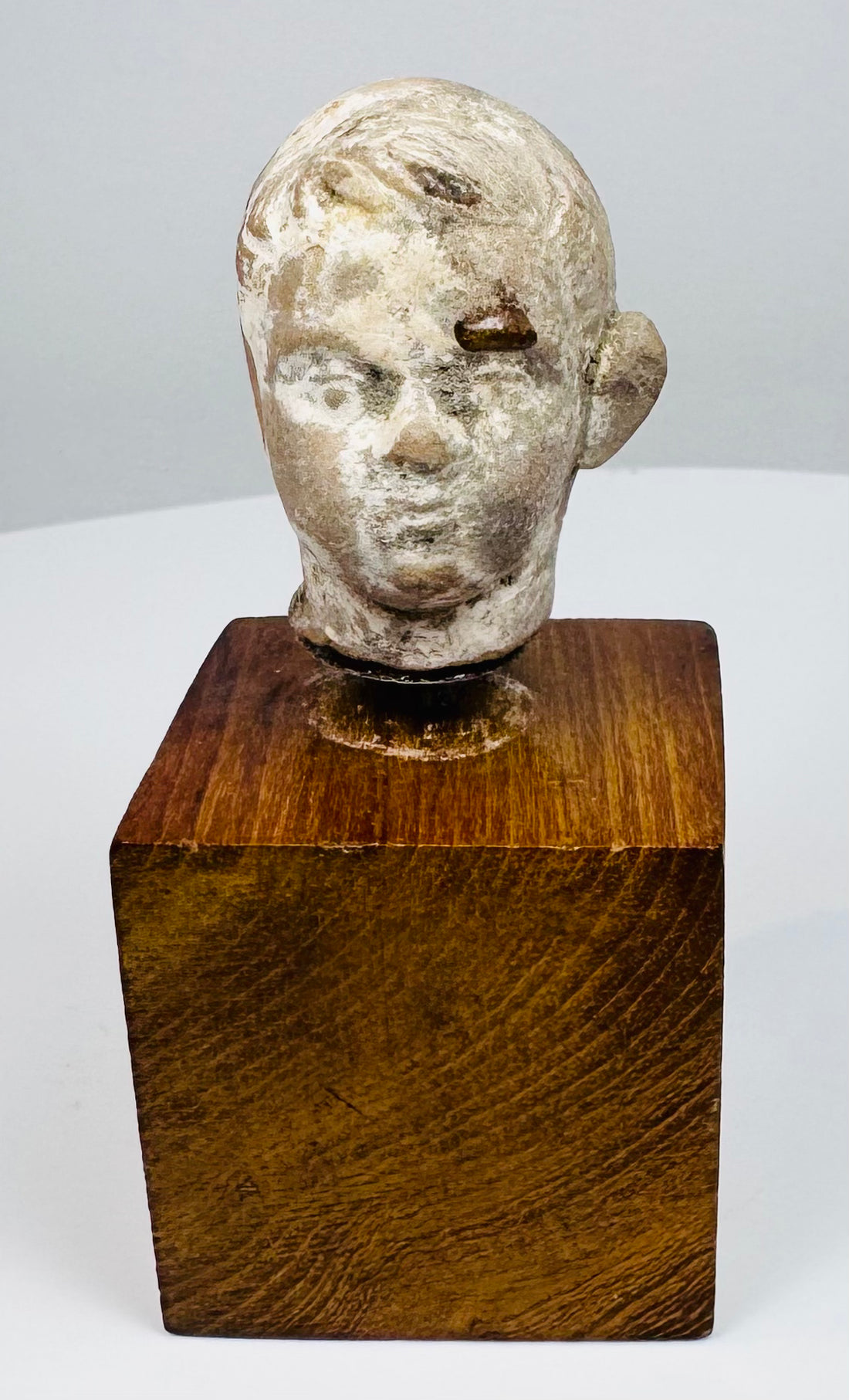
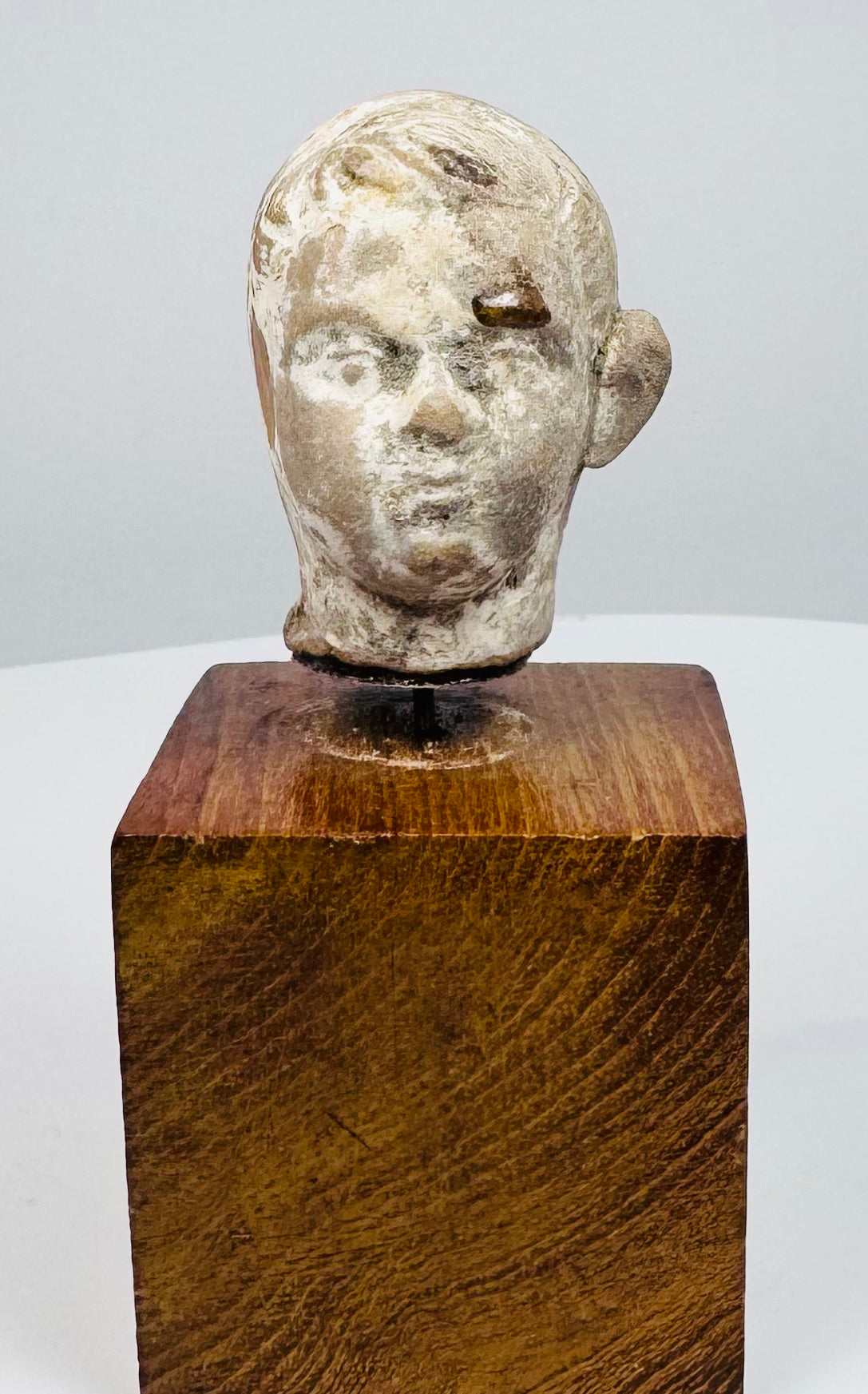
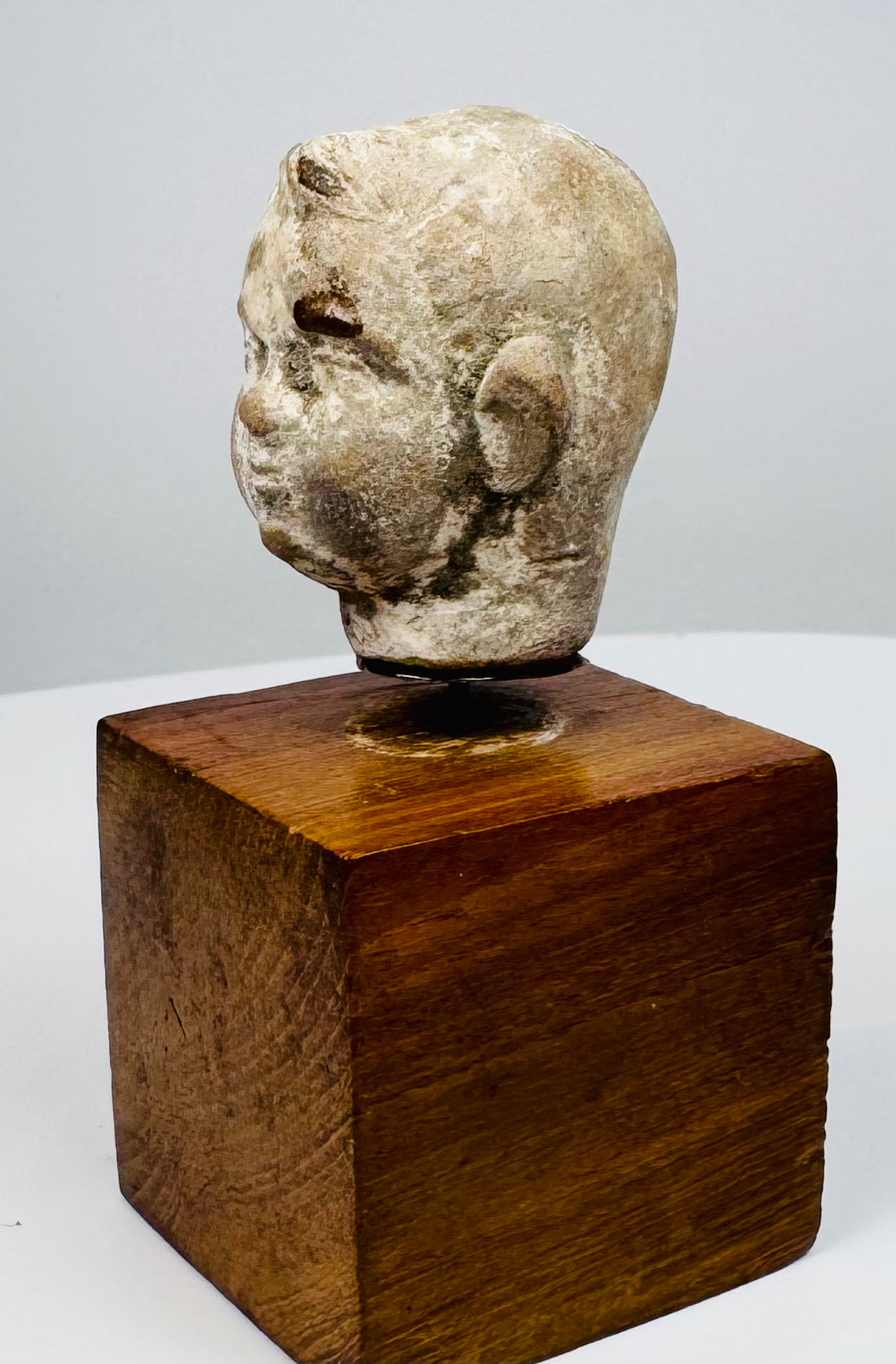
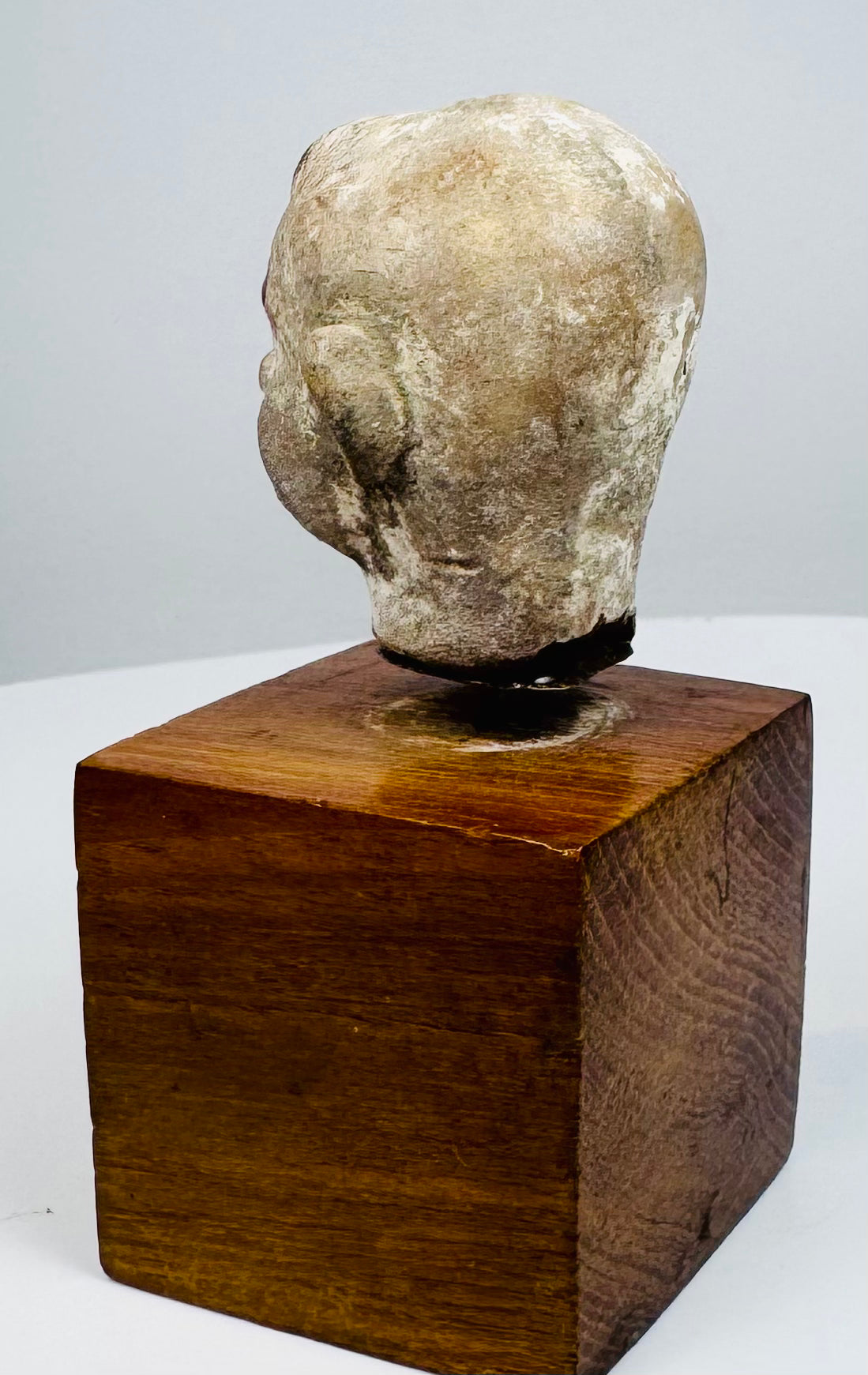
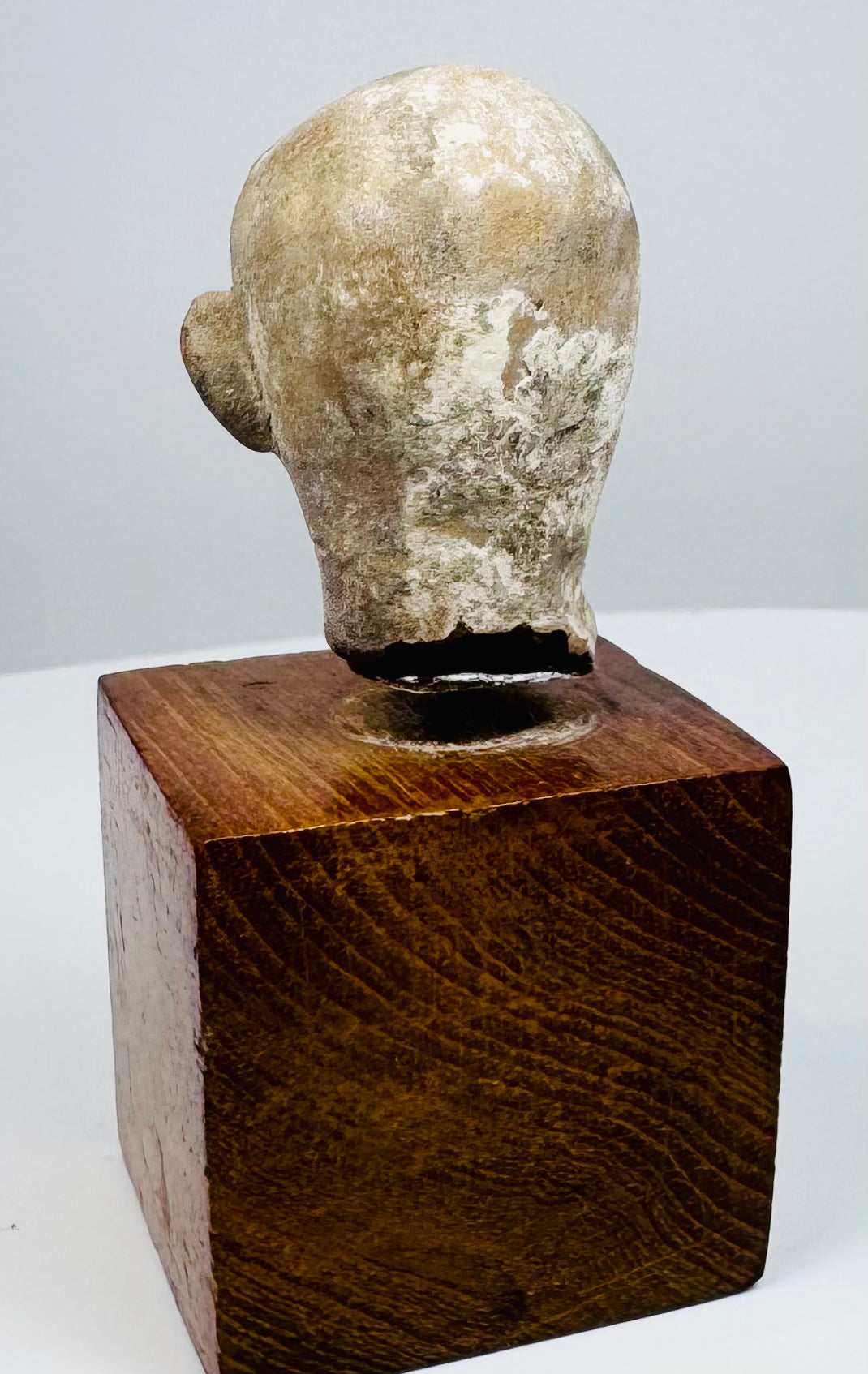
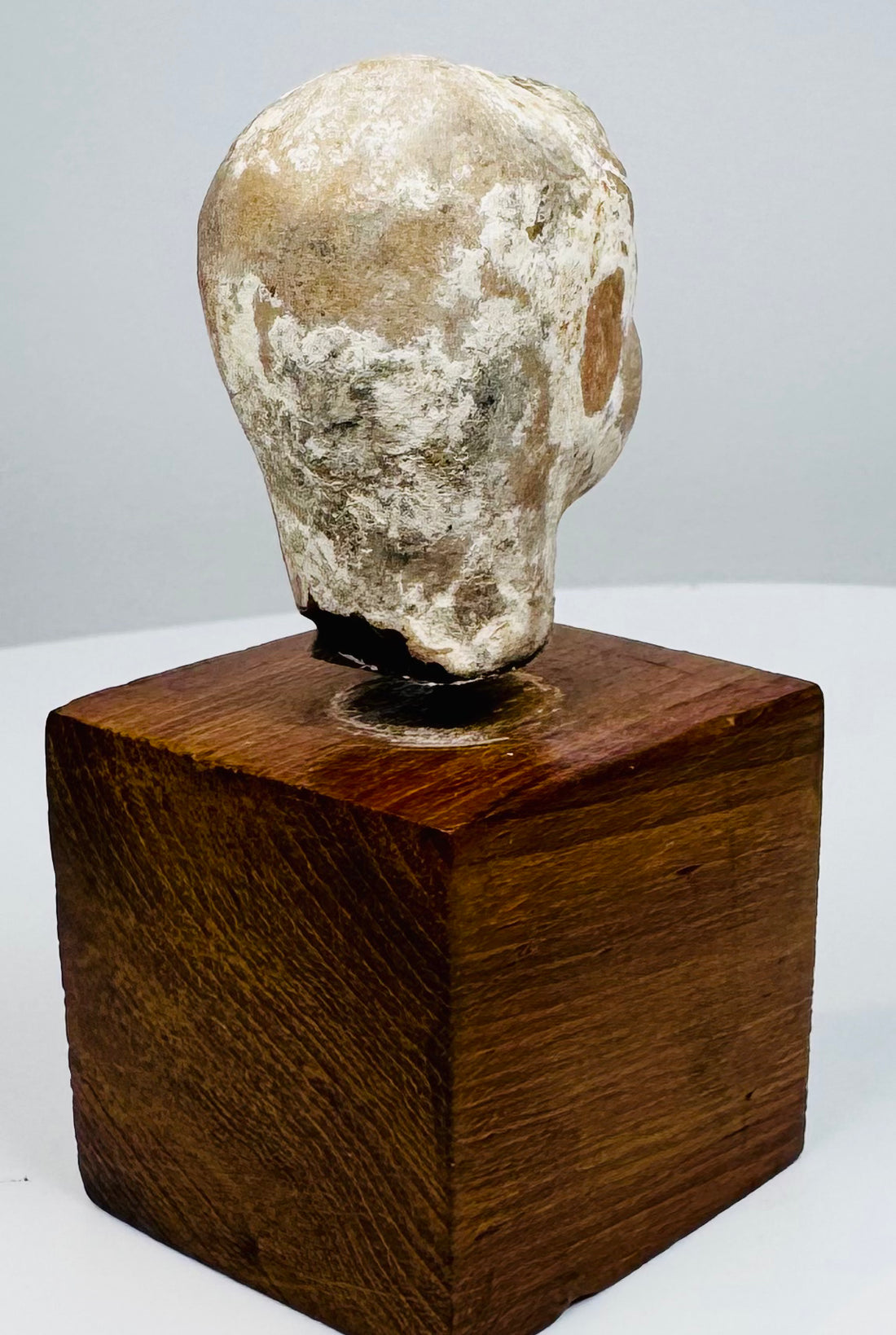
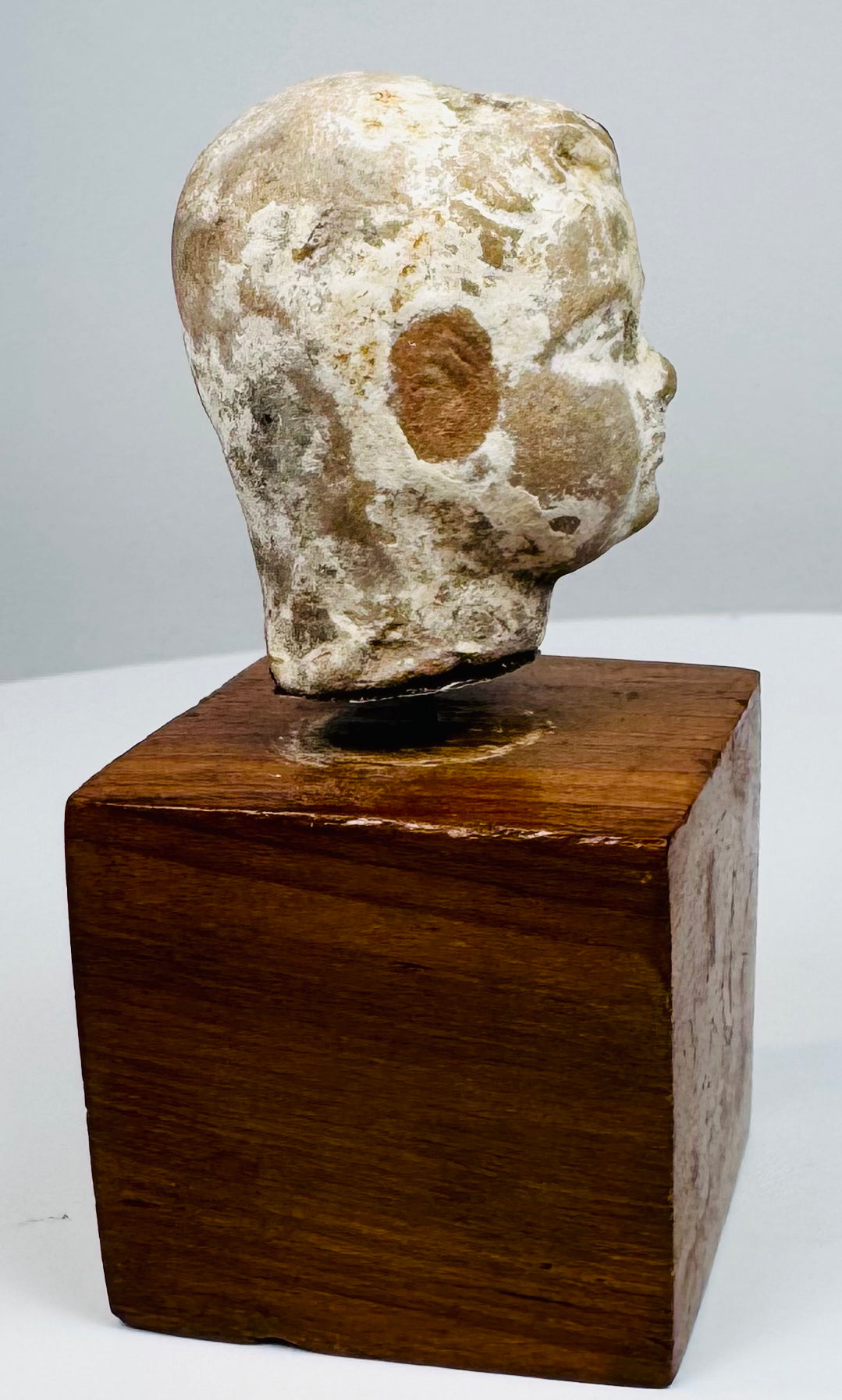
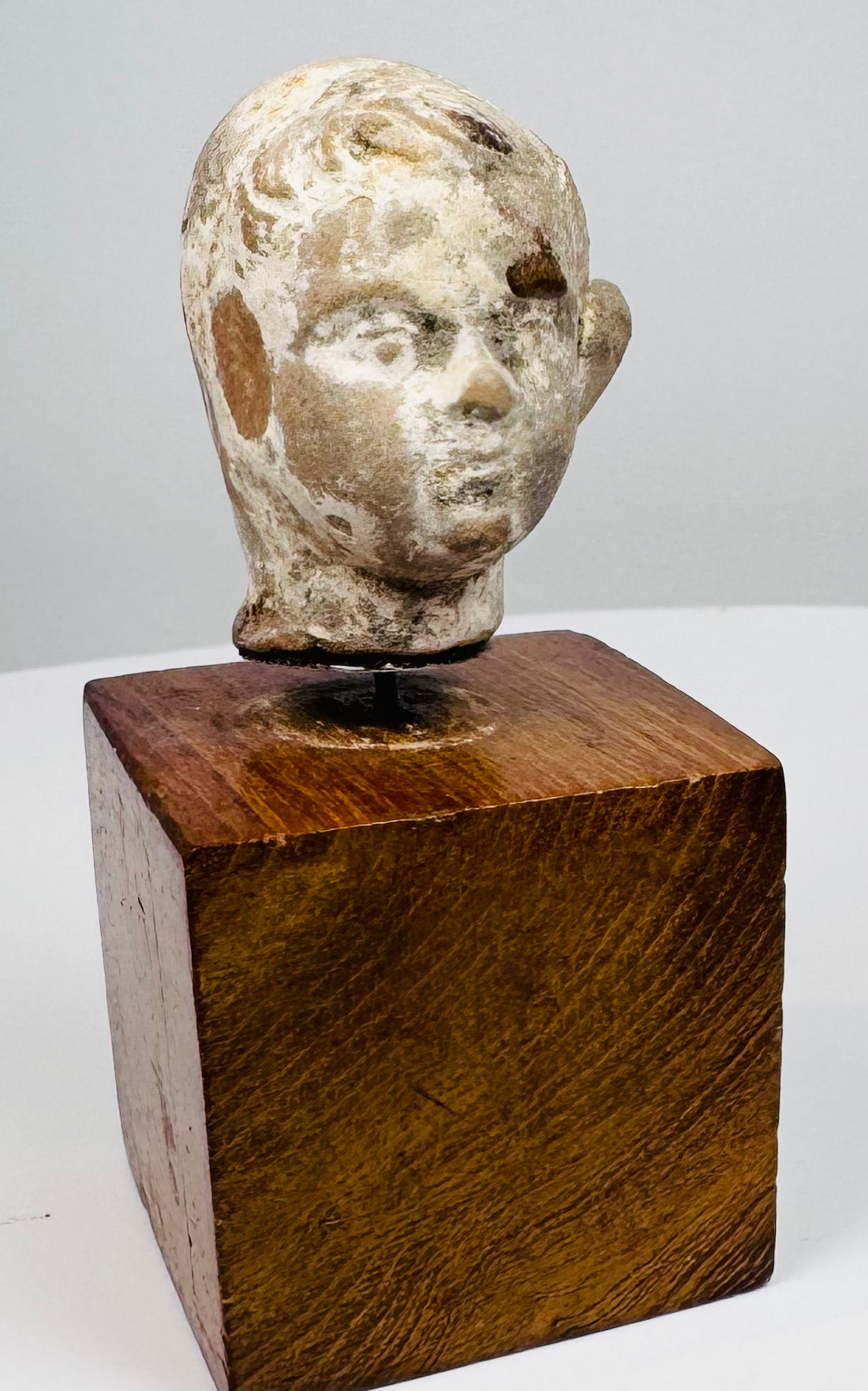
Cabeza de niño en cerámica grecorromana | Siglo II a. C. | Siglo I d. C.

Historial de procedencia y propiedad

Anteriormente en una colección privada en Columbia, Maryland, EE. UU. Posteriormente gestionado por Montgomery Auction en 2024, una casa de subastas con sede en Columbia que atiende el área metropolitana de Washington D.C. y se especializa en bellas artes, antigüedades y colecciones de fincas.

Precio habitual
$400.00
Precio de venta
$400.00
Precio habitual
Envío calculado al finalizar la compra.

This is a one-of-a-kind historical object. Once sold, this exact piece will not be restocked.

Questions before acquiring? Additional photographs, condition details, documentation, shipping information or a private viewing are available upon request.
Ancient Greco-Roman terracotta head of a faun with softly modelled facial features, mineral deposits, and archaeological surface wear.
Rotating presentation of an ancient Greco-Roman terracotta head of a faun, 1st century BCE–1st century CE, featuring a prominent ear, almond-shaped eyes, swept-groove hair, surviving white slip, reddish-brown pigment, and archaeological surface wear.
Late Hellenistic to Early Roman terracotta faun head fragment with swept-groove hair and weathered facial modelling.
Ancient terracotta faun head with rounded cheeks, almond-shaped eyes, and a prominent surviving ear.
Greco-Roman terracotta faun fragment featuring a short projecting nose, softly modelled jawline, and prominent ear.
Ancient terracotta head of a faun with rounded skull, archaeological surface wear, and irregular break at the neck.
Ancient Greco-Roman faun head fragment with surviving terracotta surface texture and traces of ancient mineral deposits.
Late Hellenistic terracotta faun head with mottled surface wear, surviving white slip, and fragmentary neck.
Ancient Greco-Roman terracotta faun head with reddish-brown pigment near the ear and weathered facial details.
Terracotta head of a mythological faun with almond-shaped eyes, subtly smiling mouth, and ancient surface abrasion.
Late Hellenistic to Early Roman faun head fragment with distinctive swept hair grooves and surviving pale white slip.
Ancient Greco-Roman terracotta faun head with stylized hair, almond-shaped eyes, small mouth, and archaeological deposits.
Video exploring the history and artistry of an ancient Greco-Roman terracotta head of a faun, dating to the Late Hellenistic–Early Roman period, circa 1st century BCE–1st century CE. Features delicately sculpted facial details, a pointed ear, textured hair, and surviving traces of original white slip and reddish-brown pigment, reflecting ancient Mediterranean mythology and craftsmanship.
  • Ancient Greco-Roman terracotta head of a faun with softly modelled facial features, mineral deposits, and archaeological surface wear.
  • Rotating presentation of an ancient Greco-Roman terracotta head of a faun, 1st century BCE–1st century CE, featuring a prominent ear, almond-shaped eyes, swept-groove hair, surviving white slip, reddish-brown pigment, and archaeological surface wear.
  • Late Hellenistic to Early Roman terracotta faun head fragment with swept-groove hair and weathered facial modelling.
  • Ancient terracotta faun head with rounded cheeks, almond-shaped eyes, and a prominent surviving ear.
  • Greco-Roman terracotta faun fragment featuring a short projecting nose, softly modelled jawline, and prominent ear.
  • Ancient terracotta head of a faun with rounded skull, archaeological surface wear, and irregular break at the neck.
  • Ancient Greco-Roman faun head fragment with surviving terracotta surface texture and traces of ancient mineral deposits.
  • Late Hellenistic terracotta faun head with mottled surface wear, surviving white slip, and fragmentary neck.
  • Ancient Greco-Roman terracotta faun head with reddish-brown pigment near the ear and weathered facial details.
  • Terracotta head of a mythological faun with almond-shaped eyes, subtly smiling mouth, and ancient surface abrasion.
  • Late Hellenistic to Early Roman faun head fragment with distinctive swept hair grooves and surviving pale white slip.
  • Ancient Greco-Roman terracotta faun head with stylized hair, almond-shaped eyes, small mouth, and archaeological deposits.
  • Video exploring the history and artistry of an ancient Greco-Roman terracotta head of a faun, dating to the Late Hellenistic–Early Roman period, circa 1st century BCE–1st century CE. Features delicately sculpted facial details, a pointed ear, textured hair, and surviving traces of original white slip and reddish-brown pigment, reflecting ancient Mediterranean mythology and craftsmanship.
Ancient Greco-Roman terracotta head of a faun with softly modelled facial features, mineral deposits, and archaeological surface wear.
Rotating presentation of an ancient Greco-Roman terracotta head of a faun, 1st century BCE–1st century CE, featuring a prominent ear, almond-shaped eyes, swept-groove hair, surviving white slip, reddish-brown pigment, and archaeological surface wear.
Late Hellenistic to Early Roman terracotta faun head fragment with swept-groove hair and weathered facial modelling.
Ancient terracotta faun head with rounded cheeks, almond-shaped eyes, and a prominent surviving ear.
Greco-Roman terracotta faun fragment featuring a short projecting nose, softly modelled jawline, and prominent ear.
Ancient terracotta head of a faun with rounded skull, archaeological surface wear, and irregular break at the neck.
Ancient Greco-Roman faun head fragment with surviving terracotta surface texture and traces of ancient mineral deposits.
Late Hellenistic terracotta faun head with mottled surface wear, surviving white slip, and fragmentary neck.
Ancient Greco-Roman terracotta faun head with reddish-brown pigment near the ear and weathered facial details.
Terracotta head of a mythological faun with almond-shaped eyes, subtly smiling mouth, and ancient surface abrasion.
Late Hellenistic to Early Roman faun head fragment with distinctive swept hair grooves and surviving pale white slip.
Ancient Greco-Roman terracotta faun head with stylized hair, almond-shaped eyes, small mouth, and archaeological deposits.
Video exploring the history and artistry of an ancient Greco-Roman terracotta head of a faun, dating to the Late Hellenistic–Early Roman period, circa 1st century BCE–1st century CE. Features delicately sculpted facial details, a pointed ear, textured hair, and surviving traces of original white slip and reddish-brown pigment, reflecting ancient Mediterranean mythology and craftsmanship.
Authenticity and secure checkout guarantee

Cabeza de niño en cerámica grecorromana | Siglo II a. C. | Siglo I d. C.

Descripción

Contexto histórico y origen

Región: Mediterráneo Oriental (mundo helenístico o romano)
Material: Terracota
Período: Siglo I a.C. – Siglo II d.C.

Descripción

Este exquisito fragmento de cabeza de terracota, que data aproximadamente del siglo I a.C. al siglo II d.C., refleja el refinado arte de los períodos helenístico y romano temprano. Mide de forma fragmentaria pero expresiva, capturando la transición estilística de la época, donde las proporciones clásicas idealizadas se fusionaron con detalles naturalistas. El rostro juvenil, con rasgos delicados y una sutil sonrisa, sugiere la representación de un joven, posiblemente una deidad, una figura mitológica o un joven idealizado, ejemplificando el énfasis cultural en la inocencia, la belleza y los ideales simbólicos. Montado sobre una base de madera moderna, el fragmento conserva tanto la elegancia como la seriedad como pieza de exhibición coleccionable.

Características

- Rostro juvenil con rasgos delicados y expresión serena

- Sutil sonrisa que refleja naturalismo e individualidad

- Transición estilística que combina la idealización helenística con el realismo romano

- Pátina de superficie natural consistente con la edad

- Montado sobre un soporte de madera moderno para exhibición

Importancia cultural

El período helenístico marcó un cambio hacia la representación realista, la individualidad y el detalle expresivo en el arte. Figuras juveniles como Eros o niños idealizados eran frecuentemente representadas en terracota, apareciendo en santuarios domésticos, templos y contextos funerarios. En la era romana temprana, estas tradiciones se fusionaron con los gustos romanos, enfatizando tanto las funciones simbólicas como las decorativas. Dichos fragmentos proporcionan información valiosa sobre cómo las sociedades antiguas concebían la juventud, la divinidad y la forma humana, al mismo tiempo que ilustran la fusión transcultural más amplia del arte mediterráneo.

Estado

Fragmento bien conservado con pátina y desgaste superficial consistente con la antigüedad. Forma estable, montado de forma segura para exhibición moderna.

Dimensiones (aproximadas)

Altura: 1.7 pulgadas (cabeza)
Ancho: 1.2 pulgadas (cabeza)

Edad (aproximada)

1,825–2,125 años de antigüedad

Procedencia 

Anteriormente en una colección privada en Columbia, Maryland, EE. UU. Posteriormente manejado por Montgomery Auction en 2024, una casa de subastas con sede en Columbia que sirve al área metropolitana de Washington, D.C. y se especializa en bellas artes, antigüedades y colecciones de bienes.

Aprende más

Explore el Mundo de la Cerámica Greco-Romana

Explore nuestra Colección de Artefactos y Antigüedades Griegas y Romanas

Descripción

Contexto histórico y origen

Región: Mediterráneo Oriental (mundo helenístico o romano)
Material: Terracota
Período: Siglo I a.C. – Siglo II d.C.

Descripción

Este exquisito fragmento de cabeza de terracota, que data aproximadamente del siglo I a.C. al siglo II d.C., refleja el refinado arte de los períodos helenístico y romano temprano. Mide de forma fragmentaria pero expresiva, capturando la transición estilística de la época, donde las proporciones clásicas idealizadas se fusionaron con detalles naturalistas. El rostro juvenil, con rasgos delicados y una sutil sonrisa, sugiere la representación de un joven, posiblemente una deidad, una figura mitológica o un joven idealizado, ejemplificando el énfasis cultural en la inocencia, la belleza y los ideales simbólicos. Montado sobre una base de madera moderna, el fragmento conserva tanto la elegancia como la seriedad como pieza de exhibición coleccionable.

Características

- Rostro juvenil con rasgos delicados y expresión serena

- Sutil sonrisa que refleja naturalismo e individualidad

- Transición estilística que combina la idealización helenística con el realismo romano

- Pátina de superficie natural consistente con la edad

- Montado sobre un soporte de madera moderno para exhibición

Importancia cultural

El período helenístico marcó un cambio hacia la representación realista, la individualidad y el detalle expresivo en el arte. Figuras juveniles como Eros o niños idealizados eran frecuentemente representadas en terracota, apareciendo en santuarios domésticos, templos y contextos funerarios. En la era romana temprana, estas tradiciones se fusionaron con los gustos romanos, enfatizando tanto las funciones simbólicas como las decorativas. Dichos fragmentos proporcionan información valiosa sobre cómo las sociedades antiguas concebían la juventud, la divinidad y la forma humana, al mismo tiempo que ilustran la fusión transcultural más amplia del arte mediterráneo.

Estado

Fragmento bien conservado con pátina y desgaste superficial consistente con la antigüedad. Forma estable, montado de forma segura para exhibición moderna.

Dimensiones (aproximadas)

Altura: 1.7 pulgadas (cabeza)
Ancho: 1.2 pulgadas (cabeza)

Edad (aproximada)

1,825–2,125 años de antigüedad

Procedencia 

Anteriormente en una colección privada en Columbia, Maryland, EE. UU. Posteriormente manejado por Montgomery Auction en 2024, una casa de subastas con sede en Columbia que sirve al área metropolitana de Washington, D.C. y se especializa en bellas artes, antigüedades y colecciones de bienes.

Aprende más

Explore el Mundo de la Cerámica Greco-Romana

Explore nuestra Colección de Artefactos y Antigüedades Griegas y Romanas

También te puede interesar