Cabeza clásica mediterránea de terracota | Fragmento griego o romano con tocado | Circa I milenio a. C.-I milenio d. C.

Historial de procedencia y propiedad

Anteriormente en una colección privada en Columbia, Maryland, EE. UU. Posteriormente gestionado por Montgomery Auction en 2024, una casa de subastas con sede en Columbia que atiende el área metropolitana de Washington D.C. y se especializa en bellas artes, antigüedades y colecciones patrimoniales a través de subastas en línea y en vivo.

Precio habitual
$450.00
Precio de venta
$450.00
Precio habitual
Envío calculado al finalizar la compra.

This is a one-of-a-kind historical object. Once sold, this exact piece will not be restocked.

Questions before acquiring? Additional photographs, condition details, documentation, shipping information or a private viewing are available upon request.
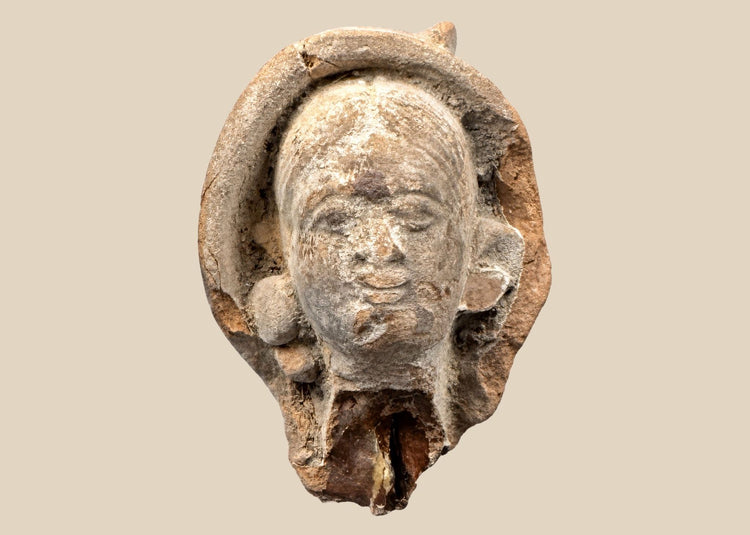
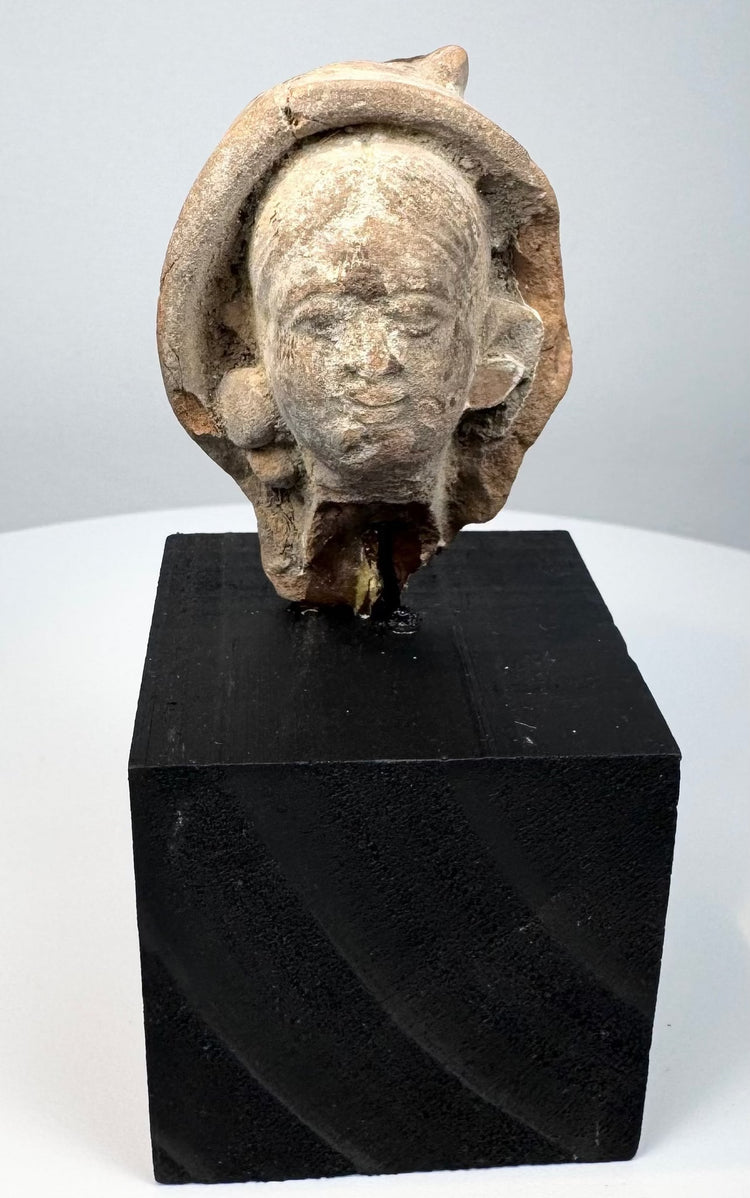
Terracotta head fragment from Classical Mediterranean, likely Greek or Roman, 1st Millennium BCE–CE. Features serene facial expression, partially preserved headdress, and natural weathered patina. Mounted on a custom stand, reflecting classical ideals of beauty, spirituality, and symbolic status in ancient art.
Rotating 360-degree presentation of an ancient Greek or Roman terracotta head fragment, showing its classical facial features, headdress, weathered patina, and sculptural form.
Ancient Greek or Roman terracotta head fragment from the Mediterranean, featuring a serene classical face and weathered surface.
Classical antiquity terracotta head with softly modeled facial features and traces of an ancient headdress or head covering.
Ancient Mediterranean terracotta sculpture fragment showing a calm expression, aged patina, and partially preserved head covering.
Greek or Roman terracotta head fragment from classical antiquity with stylized facial features and centuries-old surface wear.
Antique terracotta figure head from the ancient Mediterranean world, possibly representing a deity, noble figure, or ritual subject.
Classical Greek or Roman terracotta sculpture fragment with preserved face, prominent headdress, and natural archaeological patina.
Ancient terracotta head fragment displaying delicate facial modeling and characteristic artistic traditions of the Greek and Roman world.
Mediterranean terracotta head from classical antiquity with weathered features, sculpted hair or head covering, and aged earthen surface.
Historic Greek or Roman terracotta figure fragment showing its rounded sculptural form, facial details, and ancient surface texture.
Ancient classical terracotta head fragment, circa 1st millennium BCE to 1st millennium CE, with serene expression and preserved sculptural details.
  • Terracotta head fragment from Classical Mediterranean, likely Greek or Roman, 1st Millennium BCE–CE. Features serene facial expression, partially preserved headdress, and natural weathered patina. Mounted on a custom stand, reflecting classical ideals of beauty, spirituality, and symbolic status in ancient art.
  • Rotating 360-degree presentation of an ancient Greek or Roman terracotta head fragment, showing its classical facial features, headdress, weathered patina, and sculptural form.
  • Ancient Greek or Roman terracotta head fragment from the Mediterranean, featuring a serene classical face and weathered surface.
  • Classical antiquity terracotta head with softly modeled facial features and traces of an ancient headdress or head covering.
  • Ancient Mediterranean terracotta sculpture fragment showing a calm expression, aged patina, and partially preserved head covering.
  • Greek or Roman terracotta head fragment from classical antiquity with stylized facial features and centuries-old surface wear.
  • Antique terracotta figure head from the ancient Mediterranean world, possibly representing a deity, noble figure, or ritual subject.
  • Classical Greek or Roman terracotta sculpture fragment with preserved face, prominent headdress, and natural archaeological patina.
  • Ancient terracotta head fragment displaying delicate facial modeling and characteristic artistic traditions of the Greek and Roman world.
  • Mediterranean terracotta head from classical antiquity with weathered features, sculpted hair or head covering, and aged earthen surface.
  • Historic Greek or Roman terracotta figure fragment showing its rounded sculptural form, facial details, and ancient surface texture.
  • Ancient classical terracotta head fragment, circa 1st millennium BCE to 1st millennium CE, with serene expression and preserved sculptural details.
Terracotta head fragment from Classical Mediterranean, likely Greek or Roman, 1st Millennium BCE–CE. Features serene facial expression, partially preserved headdress, and natural weathered patina. Mounted on a custom stand, reflecting classical ideals of beauty, spirituality, and symbolic status in ancient art.
Rotating 360-degree presentation of an ancient Greek or Roman terracotta head fragment, showing its classical facial features, headdress, weathered patina, and sculptural form.
Ancient Greek or Roman terracotta head fragment from the Mediterranean, featuring a serene classical face and weathered surface.
Classical antiquity terracotta head with softly modeled facial features and traces of an ancient headdress or head covering.
Ancient Mediterranean terracotta sculpture fragment showing a calm expression, aged patina, and partially preserved head covering.
Greek or Roman terracotta head fragment from classical antiquity with stylized facial features and centuries-old surface wear.
Antique terracotta figure head from the ancient Mediterranean world, possibly representing a deity, noble figure, or ritual subject.
Classical Greek or Roman terracotta sculpture fragment with preserved face, prominent headdress, and natural archaeological patina.
Ancient terracotta head fragment displaying delicate facial modeling and characteristic artistic traditions of the Greek and Roman world.
Mediterranean terracotta head from classical antiquity with weathered features, sculpted hair or head covering, and aged earthen surface.
Historic Greek or Roman terracotta figure fragment showing its rounded sculptural form, facial details, and ancient surface texture.
Ancient classical terracotta head fragment, circa 1st millennium BCE to 1st millennium CE, with serene expression and preserved sculptural details.
Authenticity and secure checkout guarantee

Cabeza clásica mediterránea de terracota | Fragmento griego o romano con tocado | Circa I milenio a. C.-I milenio d. C.

Descripción

Contexto histórico y origen

Región: Mediterráneo (probablemente griego o romano)
Material: Terracota
Período: Antigüedad Clásica, circa 1er milenio AEC-1er milenio EC

Descripción

Este fragmento de cabeza de terracota captura la expresión serena y la elegancia del arte clásico mediterráneo. Los rasgos suavemente esculpidos, enmarcados por restos de un tocado o cubierta para la cabeza, sugieren un significado cultural y simbólico, posiblemente representando una deidad, una figura noble o un participante en una práctica ritual. A pesar de su estado fragmentado, el rostro conserva una sensación de aplomo y serenidad, reflejando los ideales de belleza y espiritualidad encontrados en el arte griego y romano.

Características

- Rasgos faciales estilizados con expresión tranquila y serena

- Tocado o cubierta para la cabeza sutilmente esculpido, parcialmente conservado

- Pátina desgastada que realza la autenticidad y la antigüedad

- Montado en un soporte negro personalizado para exhibición

Significado cultural

En los mundos griego y romano, las figuras esculpidas a menudo cumplían funciones tanto decorativas como espirituales, adornando templos, hogares y espacios públicos. El énfasis en la serenidad facial simbolizaba el equilibrio, la belleza y el orden divino, mientras que las cubiertas para la cabeza o los tocados con frecuencia denotaban estatus, ritual o identidad sagrada. Fragmentos como este siguen siendo poderosas conexiones con las tradiciones estéticas y simbólicas de la antigüedad clásica.

Estado

Excelente conservación para su edad, con rasgos claramente visibles y una pátina natural desgastada. Montado en un soporte de exhibición personalizado para resaltar sus detalles y asegurar la estabilidad.

Dimensiones (aproximadas)

Alto: 5 pulgadas
Ancho: 3 pulgadas
Profundidad: 2 pulgadas

Edad (aproximada)

1,025–3,025 años de antigüedad

Procedencia

Anteriormente en una colección privada en Columbia, Maryland, EE. UU. Posteriormente manejado por Montgomery Auction en 2024, una casa de subastas con sede en Columbia que atiende el área metropolitana de Washington, D.C. y se especializa en bellas artes, antigüedades y colecciones de bienes a través de subastas en línea y en vivo.

Aprender más

Estudie la tradición artística y la producción de Terracota en el mundo mediterráneo antiguo

Explore nuestra Colección de artefactos griegos y romanos

Descripción

Contexto histórico y origen

Región: Mediterráneo (probablemente griego o romano)
Material: Terracota
Período: Antigüedad Clásica, circa 1er milenio AEC-1er milenio EC

Descripción

Este fragmento de cabeza de terracota captura la expresión serena y la elegancia del arte clásico mediterráneo. Los rasgos suavemente esculpidos, enmarcados por restos de un tocado o cubierta para la cabeza, sugieren un significado cultural y simbólico, posiblemente representando una deidad, una figura noble o un participante en una práctica ritual. A pesar de su estado fragmentado, el rostro conserva una sensación de aplomo y serenidad, reflejando los ideales de belleza y espiritualidad encontrados en el arte griego y romano.

Características

- Rasgos faciales estilizados con expresión tranquila y serena

- Tocado o cubierta para la cabeza sutilmente esculpido, parcialmente conservado

- Pátina desgastada que realza la autenticidad y la antigüedad

- Montado en un soporte negro personalizado para exhibición

Significado cultural

En los mundos griego y romano, las figuras esculpidas a menudo cumplían funciones tanto decorativas como espirituales, adornando templos, hogares y espacios públicos. El énfasis en la serenidad facial simbolizaba el equilibrio, la belleza y el orden divino, mientras que las cubiertas para la cabeza o los tocados con frecuencia denotaban estatus, ritual o identidad sagrada. Fragmentos como este siguen siendo poderosas conexiones con las tradiciones estéticas y simbólicas de la antigüedad clásica.

Estado

Excelente conservación para su edad, con rasgos claramente visibles y una pátina natural desgastada. Montado en un soporte de exhibición personalizado para resaltar sus detalles y asegurar la estabilidad.

Dimensiones (aproximadas)

Alto: 5 pulgadas
Ancho: 3 pulgadas
Profundidad: 2 pulgadas

Edad (aproximada)

1,025–3,025 años de antigüedad

Procedencia

Anteriormente en una colección privada en Columbia, Maryland, EE. UU. Posteriormente manejado por Montgomery Auction en 2024, una casa de subastas con sede en Columbia que atiende el área metropolitana de Washington, D.C. y se especializa en bellas artes, antigüedades y colecciones de bienes a través de subastas en línea y en vivo.

Aprender más

Estudie la tradición artística y la producción de Terracota en el mundo mediterráneo antiguo

Explore nuestra Colección de artefactos griegos y romanos

También te puede interesar