


Brazalete antiguo chino de bambú con monturas florales de aleación de plata aplicadas | Dinastía Qing, siglo XIX
- Precio habitual
- $400.00
- Precio de venta
- $400.00
- Precio habitual
No se pudo cargar la disponibilidad de retiro


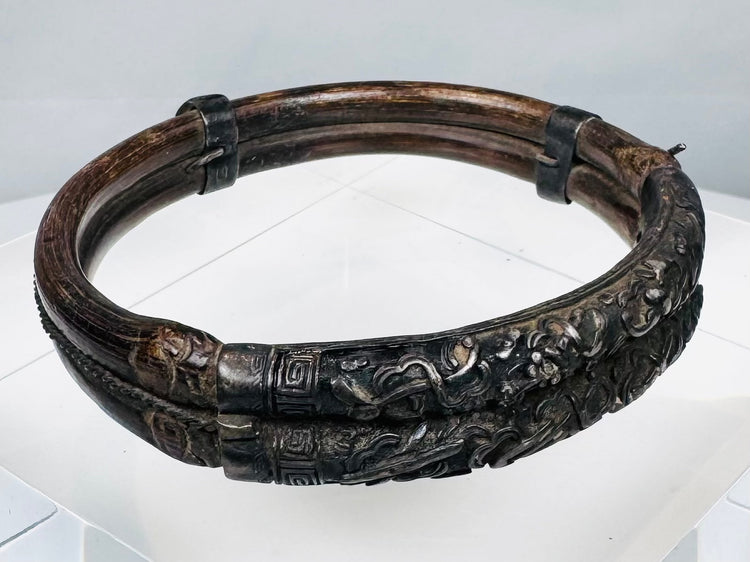
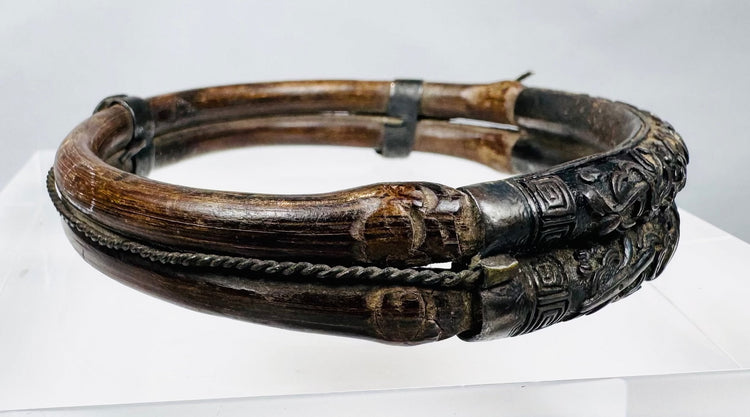
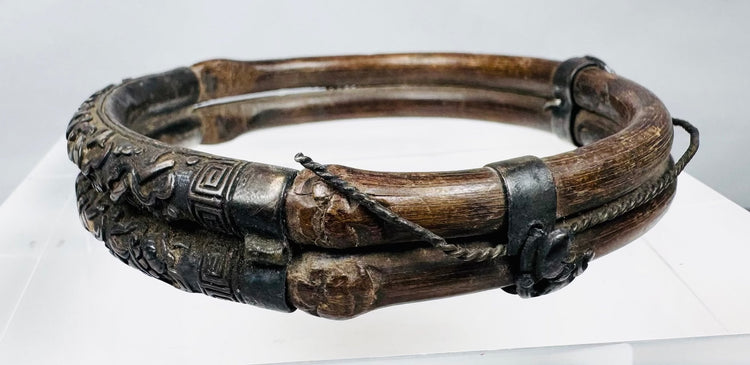
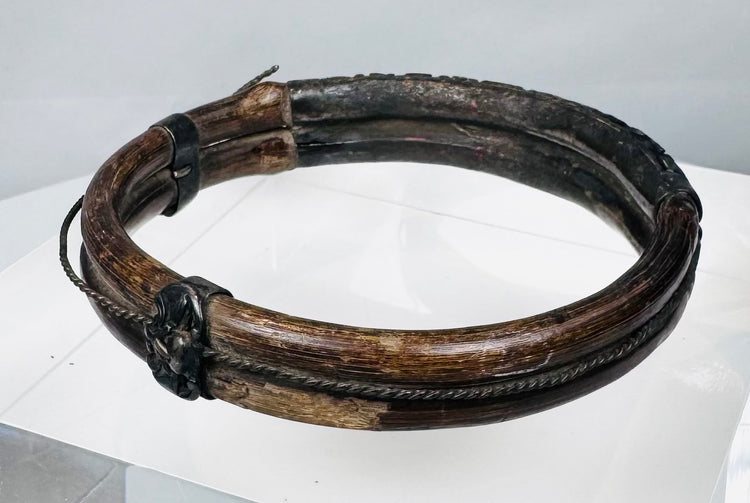
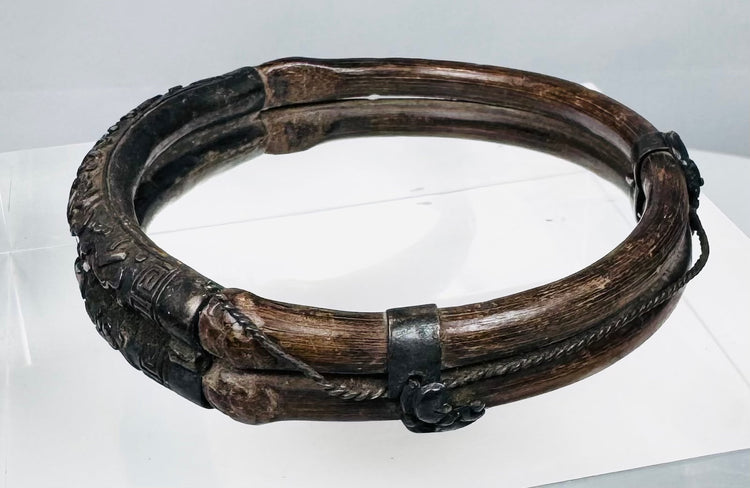
Brazalete antiguo chino de bambú con monturas florales de aleación de plata aplicadas | Dinastía Qing, siglo XIX
Descripción
Más
Menos
Contexto histórico y origen
Región: China
Material: Bambú con decoración de plata o aleación de plata aplicada y accesorios de metal
Período: Dinastía Qing, probablemente del siglo XIX d.C.
Descripción
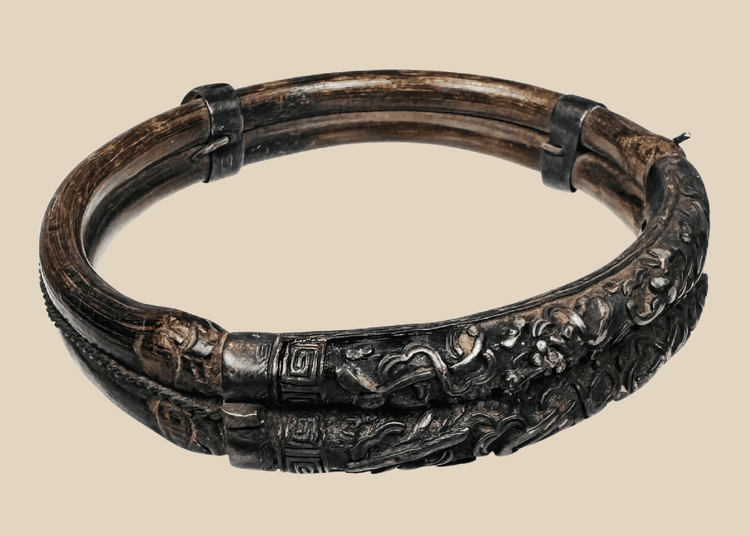
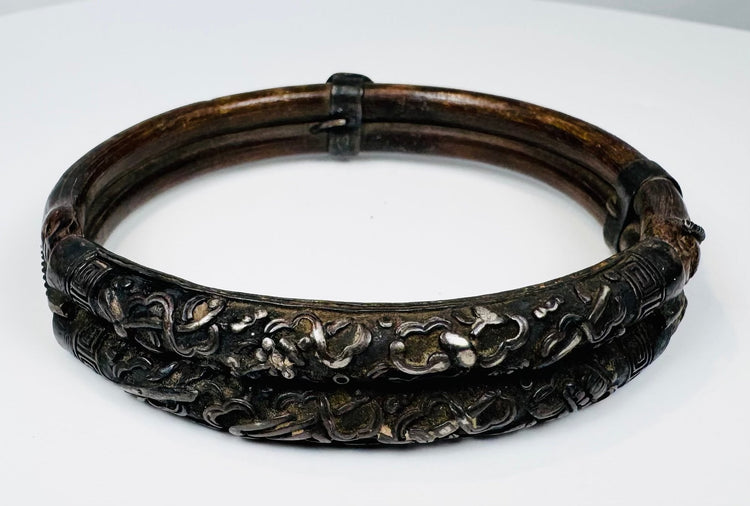
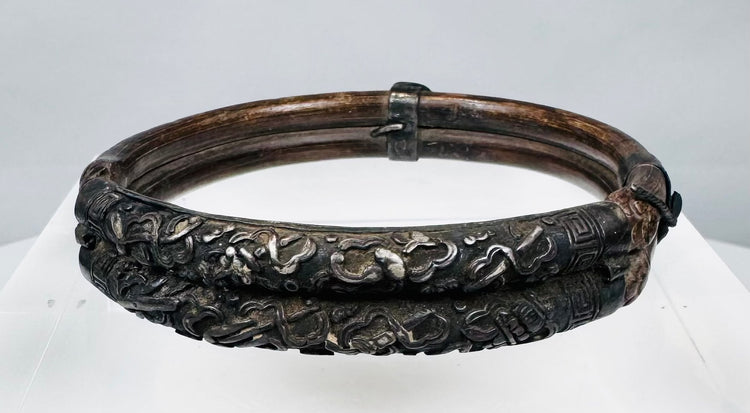
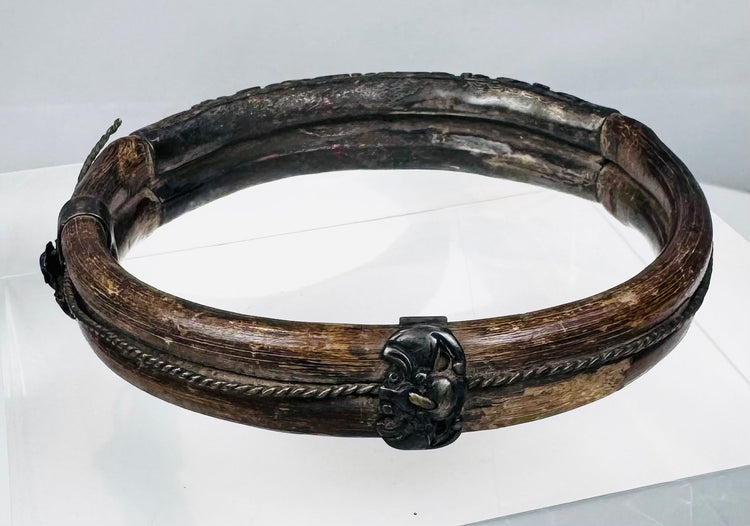
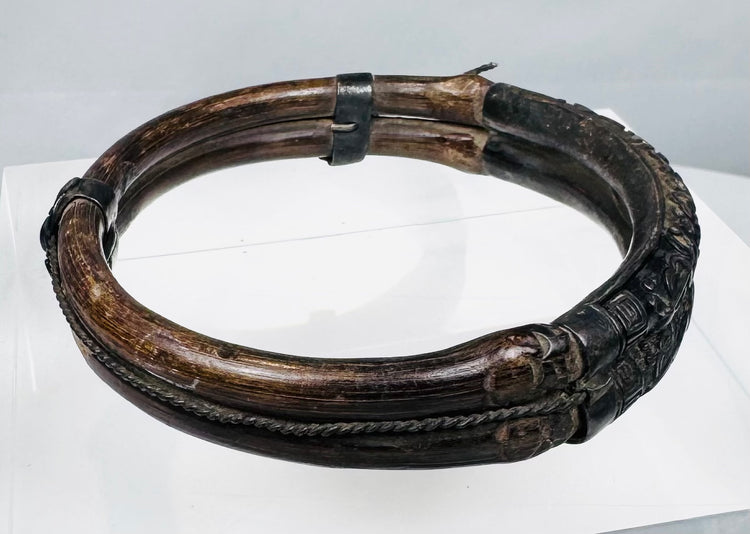
Esta distintiva pulsera china antigua está construida a partir de dos secciones paralelas de bambú unidas por accesorios de metal y adornada en la parte delantera con una elaborada decoración aplicada de plata o aleación de plata. Su sustancial forma circular, la construcción de doble bambú y la superficie ricamente ornamentada corresponden estrechamente con las pulseras chinas producidas durante la dinastía Qing, particularmente durante el siglo XIX.
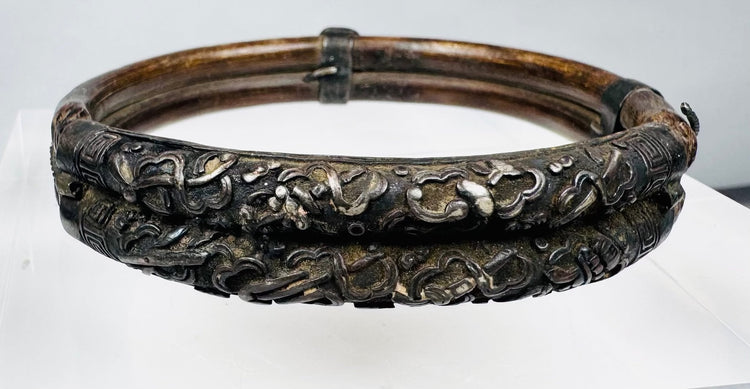
El exterior está decorado con motivos florales y foliados en espiral modelados en relieve y dispuestos sobre paneles de metal oscurecido. Tallos curvos, hojas, flores y formas ornamentales abstractas crean una densa composición decorativa que contrasta atractivamente con los cálidos tonos naturales y el grano visible del bambú. El trabajo de metal en relieve muestra áreas de pulido, pátina oscurecida y variación superficial desarrolladas con la edad y el manejo.
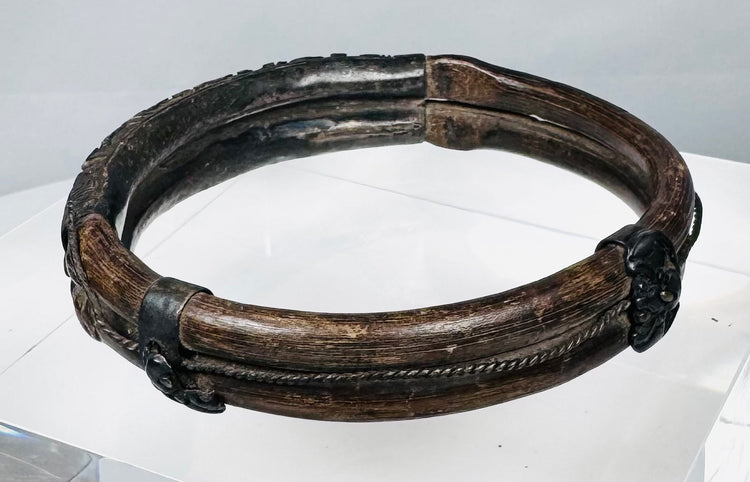
La pulsera está formada por secciones de bambú cuidadosamente curvadas aseguradas por collares, ataduras y accesorios terminales de metal oscuro. Pequeños elementos de alambre y componentes de unión permanecen visibles alrededor del frente decorado, lo que ilustra la construcción ensamblada a mano de la pieza. La configuración de doble anillo proporciona tanto resistencia estructural como un perfil visualmente distintivo.
Los joyeros y metalistas chinos con frecuencia combinaban metales preciosos o decorativos con materiales orgánicos como bambú, madera, marfil, jade y cuerno. El bambú era especialmente valorado en la cultura china por sus asociaciones con la resiliencia, la integridad, la longevidad y el refinamiento académico. La combinación de bambú con metal intrincadamente trabajado transformó un material naturalmente modesto en un elaborado adorno personal.
Características
- Pulsera antigua china de doble bambú
- Probablemente data de la dinastía Qing, siglo XIX
- Construida a partir de dos secciones paralelas de bambú doblado
- Paneles decorativos aplicados de plata o aleación de plata
- Adornada con motivos florales y foliados en espiral
- Conserva los collares, ataduras y accesorios de metal originales
- Rica pátina desarrollada con la edad y el manejo
- Forma circular sustancial con una presencia escultórica distintiva
Significado cultural
El bambú ha ocupado un lugar importante en el arte y el simbolismo chinos durante siglos. Su capacidad de doblarse sin romperse lo convirtió en un emblema de resiliencia, fuerza moral, humildad y perseverancia, mientras que su apariencia siempre verde lo asociaba con la longevidad y la renovación. El bambú se representaba con frecuencia en pintura, poesía, arte decorativo y objetos personales asociados con el gusto académico y refinado.
Durante la dinastía Qing, los artesanos chinos produjeron una amplia variedad de pulseras que combinaban bambú o madera con plata, metal dorado, jade, esmalte y otros materiales decorativos. Estos objetos reflejaban la habilidad técnica de los metalistas chinos y la larga tradición de elevar los materiales naturales a través de una ornamentación detallada. Las pulseras de este tipo se usaban como adornos personales y también pueden haber transmitido prosperidad, longevidad y refinamiento cultural.
Estado
La pulsera sigue siendo estructuralmente sólida y presenta el desgaste esperado relacionado con la edad en toda su extensión. El bambú exhibe abrasiones superficiales, variación natural del grano, oscurecimiento y separaciones menores alrededor de varias uniones. La decoración de metal aplicada muestra deslustre, oxidación, frotamiento, pequeñas pérdidas y áreas de irregularidad superficial consistentes con la edad y el uso. Los collares, ataduras y elementos de unión de metal originales permanecen presentes.
Dimensiones (aproximadas)
Diámetro: 3.25 pulgadas
Edad (aproximada)
125-225 años de antigüedad
Procedencia
Anteriormente formó parte de una colección privada en Brooklyn, Nueva York, EE. UU., reunida por un dedicado coleccionista de arte etnográfico, objetos decorativos asiáticos y material tribal.
Aprende más
Descubra el simbolismo del bambú en el arte chino y sus asociaciones con la resiliencia, la integridad y la virtud académica a través del Museo Nacional de Arte Asiático
Explore nuestra Colección de artefactos chinos antiguos y reliquias imperiales
Descripción
Contexto histórico y origen
Región: China
Material: Bambú con decoración de plata o aleación de plata aplicada y accesorios de metal
Período: Dinastía Qing, probablemente del siglo XIX d.C.
Descripción
Esta distintiva pulsera china antigua está construida a partir de dos secciones paralelas de bambú unidas por accesorios de metal y adornada en la parte delantera con una elaborada decoración aplicada de plata o aleación de plata. Su sustancial forma circular, la construcción de doble bambú y la superficie ricamente ornamentada corresponden estrechamente con las pulseras chinas producidas durante la dinastía Qing, particularmente durante el siglo XIX.
El exterior está decorado con motivos florales y foliados en espiral modelados en relieve y dispuestos sobre paneles de metal oscurecido. Tallos curvos, hojas, flores y formas ornamentales abstractas crean una densa composición decorativa que contrasta atractivamente con los cálidos tonos naturales y el grano visible del bambú. El trabajo de metal en relieve muestra áreas de pulido, pátina oscurecida y variación superficial desarrolladas con la edad y el manejo.
La pulsera está formada por secciones de bambú cuidadosamente curvadas aseguradas por collares, ataduras y accesorios terminales de metal oscuro. Pequeños elementos de alambre y componentes de unión permanecen visibles alrededor del frente decorado, lo que ilustra la construcción ensamblada a mano de la pieza. La configuración de doble anillo proporciona tanto resistencia estructural como un perfil visualmente distintivo.
Los joyeros y metalistas chinos con frecuencia combinaban metales preciosos o decorativos con materiales orgánicos como bambú, madera, marfil, jade y cuerno. El bambú era especialmente valorado en la cultura china por sus asociaciones con la resiliencia, la integridad, la longevidad y el refinamiento académico. La combinación de bambú con metal intrincadamente trabajado transformó un material naturalmente modesto en un elaborado adorno personal.
Características
- Pulsera antigua china de doble bambú
- Probablemente data de la dinastía Qing, siglo XIX
- Construida a partir de dos secciones paralelas de bambú doblado
- Paneles decorativos aplicados de plata o aleación de plata
- Adornada con motivos florales y foliados en espiral
- Conserva los collares, ataduras y accesorios de metal originales
- Rica pátina desarrollada con la edad y el manejo
- Forma circular sustancial con una presencia escultórica distintiva
Significado cultural
El bambú ha ocupado un lugar importante en el arte y el simbolismo chinos durante siglos. Su capacidad de doblarse sin romperse lo convirtió en un emblema de resiliencia, fuerza moral, humildad y perseverancia, mientras que su apariencia siempre verde lo asociaba con la longevidad y la renovación. El bambú se representaba con frecuencia en pintura, poesía, arte decorativo y objetos personales asociados con el gusto académico y refinado.
Durante la dinastía Qing, los artesanos chinos produjeron una amplia variedad de pulseras que combinaban bambú o madera con plata, metal dorado, jade, esmalte y otros materiales decorativos. Estos objetos reflejaban la habilidad técnica de los metalistas chinos y la larga tradición de elevar los materiales naturales a través de una ornamentación detallada. Las pulseras de este tipo se usaban como adornos personales y también pueden haber transmitido prosperidad, longevidad y refinamiento cultural.
Estado
La pulsera sigue siendo estructuralmente sólida y presenta el desgaste esperado relacionado con la edad en toda su extensión. El bambú exhibe abrasiones superficiales, variación natural del grano, oscurecimiento y separaciones menores alrededor de varias uniones. La decoración de metal aplicada muestra deslustre, oxidación, frotamiento, pequeñas pérdidas y áreas de irregularidad superficial consistentes con la edad y el uso. Los collares, ataduras y elementos de unión de metal originales permanecen presentes.
Dimensiones (aproximadas)
Diámetro: 3.25 pulgadas
Edad (aproximada)
125-225 años de antigüedad
Procedencia
Anteriormente formó parte de una colección privada en Brooklyn, Nueva York, EE. UU., reunida por un dedicado coleccionista de arte etnográfico, objetos decorativos asiáticos y material tribal.
Aprende más
Descubra el simbolismo del bambú en el arte chino y sus asociaciones con la resiliencia, la integridad y la virtud académica a través del Museo Nacional de Arte Asiático
Explore nuestra Colección de artefactos chinos antiguos y reliquias imperiales
También te puede interesar
