



Figura antigua de madera tallada a mano, arte popular europeo | Siglos XVIII-XIX
- Precio habitual
- $300.00
- Precio de venta
- $300.00
- Precio habitual
No se pudo cargar la disponibilidad de retiro


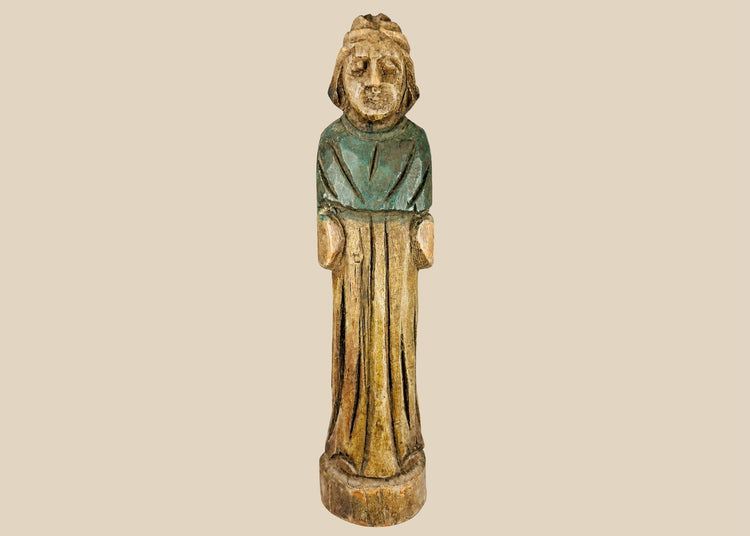
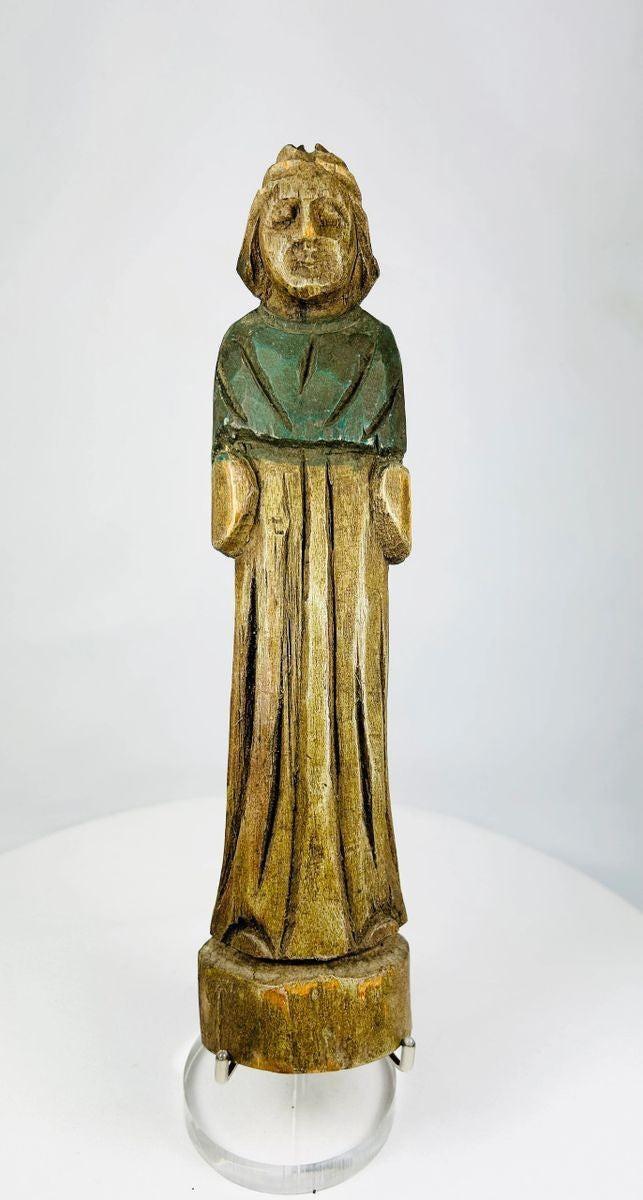


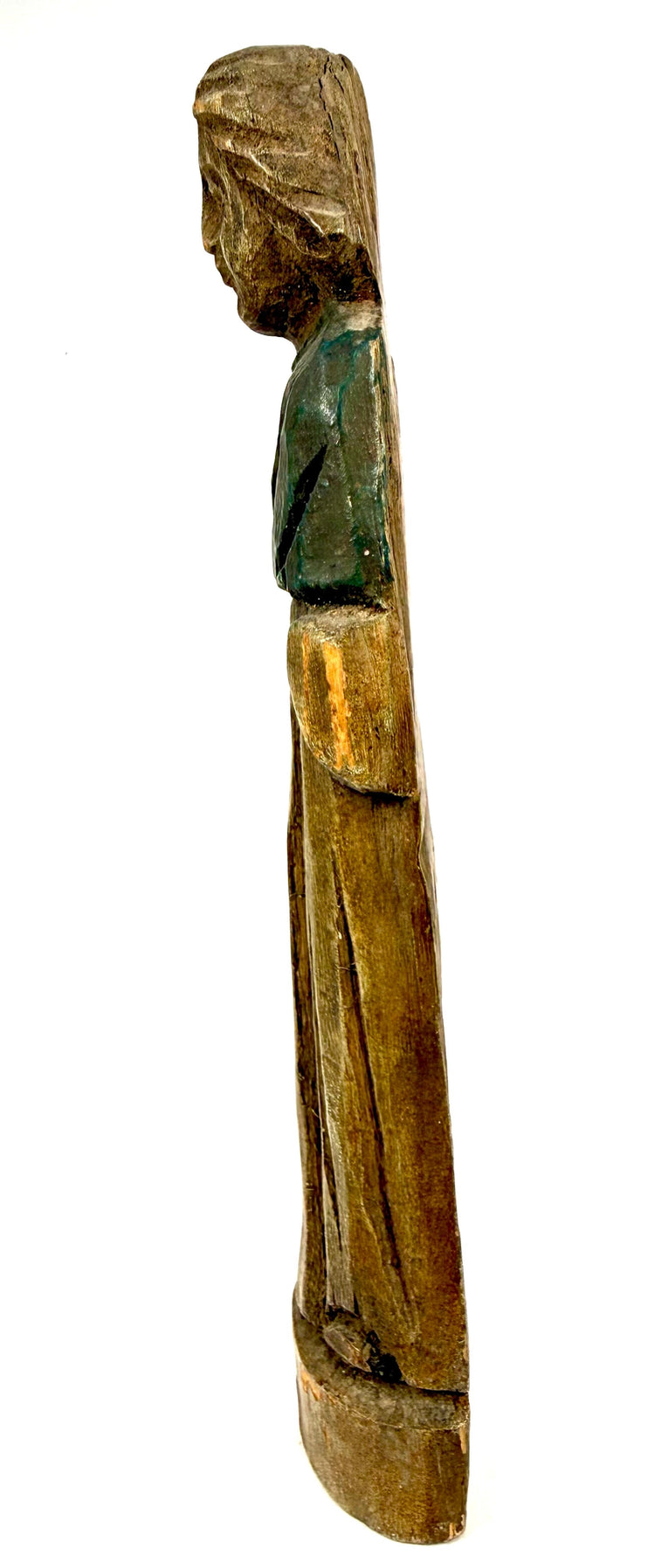


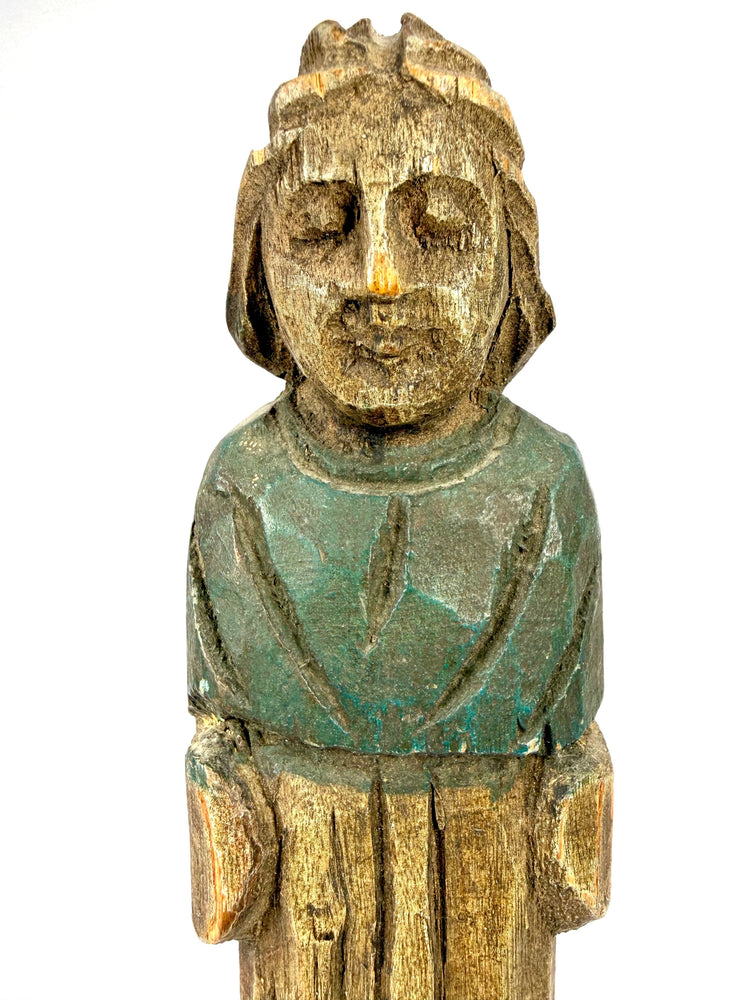

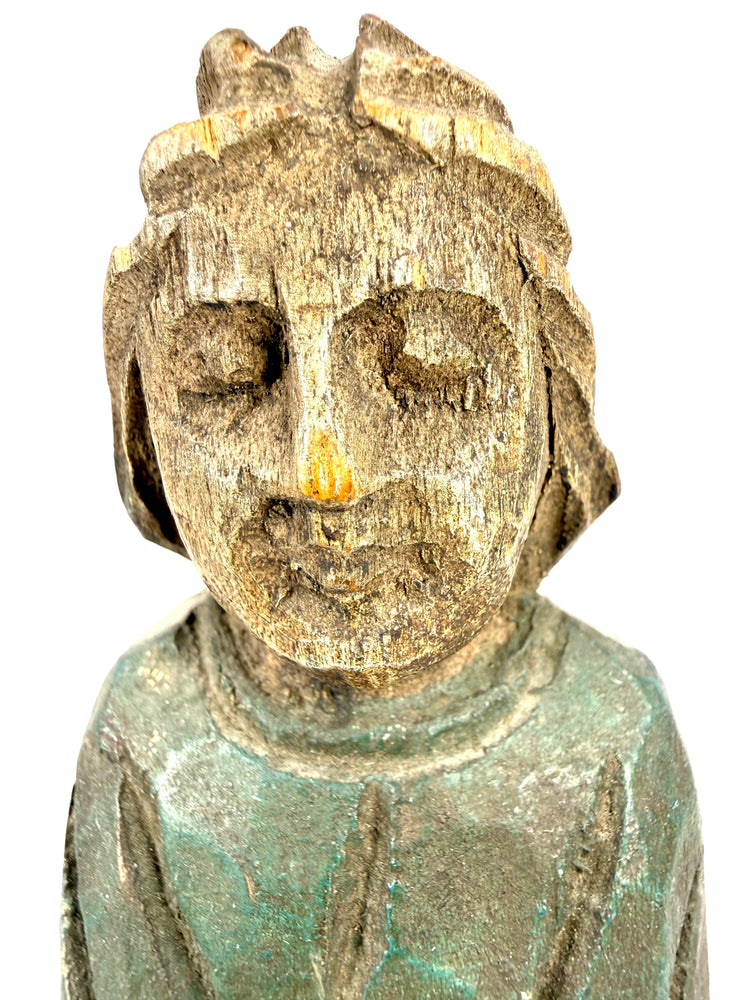
Figura antigua de madera tallada a mano, arte popular europeo | Siglos XVIII-XIX
Descripción
Más
Menos
Contexto histórico y origen
Región: Europa
Material: Madera tallada a mano con restos de pigmento original
Periodo: Siglos XVIII-XIX
Descripción
Esta figurilla de madera finamente tallada a mano es un ejemplo conmovedor del arte popular europeo, creado por artesanos rurales durante los siglos XVIII y XIX. Probablemente utilizada como objeto devocional, representa una figura de pie vestida con una túnica fluida, con las manos juntas en oración o reflexión. Restos de pigmento verde original permanecen en la vestimenta, ofreciendo una visión de la decoración una vez vívida que animaba estas tallas religiosas populares. Las figurillas de este tipo a menudo se exhibían en hogares privados, capillas o pequeños santuarios, sirviendo como símbolos humildes pero poderosos de fe y devoción.
Características
- Figura tallada de pie en postura de oración
- Drapeado fluido con pliegues detallados de la túnica
- Restos de pigmento verde original en la parte superior de la vestimenta
- Expresión sencilla pero evocadora que refleja la artesanía popular rural
- Forma compacta adecuada para la devoción personal o pequeñas capillas
Significado cultural
Esta figurilla refleja las fuertes tradiciones espirituales de la Europa rural, donde el arte devocional hecho a mano era central en la vida diaria. Las figuras de arte popular como esta encarnaban la sinceridad y la fe, ofreciendo consuelo e inspiración a familias y comunidades. Aunque modestas en comparación con las grandes estatuas eclesiásticas, tales piezas tenían un profundo significado personal, conectando al individuo con tradiciones culturales y espirituales más amplias.
Condición
La figurilla conserva una pátina bellamente envejecida, con pequeñas grietas, astillas y desgaste natural consistente con siglos de antigüedad. Los rastros de pigmento descoloridos resaltan su decoración original, mientras que la superficie desgastada subraya su autenticidad y su largo uso devocional. A pesar de su antigüedad, la pieza permanece estable y estructuralmente sólida, lo que la convierte en un artefacto valioso tanto histórica como estéticamente.
Dimensiones (aproximadas)
Altura: 11 pulgadas
Antigüedad (aproximada)
200-300 años
Procedencia
Anteriormente en una colección privada en Peterborough, Ontario, Canadá.
Saber más
Explore el desarrollo y las tradiciones del arte popular europeo en Encyclopedia Britannica
Explore nuestra colección de reliquias talladas antiguas
Descripción
Contexto histórico y origen
Región: Europa
Material: Madera tallada a mano con restos de pigmento original
Periodo: Siglos XVIII-XIX
Descripción
Esta figurilla de madera finamente tallada a mano es un ejemplo conmovedor del arte popular europeo, creado por artesanos rurales durante los siglos XVIII y XIX. Probablemente utilizada como objeto devocional, representa una figura de pie vestida con una túnica fluida, con las manos juntas en oración o reflexión. Restos de pigmento verde original permanecen en la vestimenta, ofreciendo una visión de la decoración una vez vívida que animaba estas tallas religiosas populares. Las figurillas de este tipo a menudo se exhibían en hogares privados, capillas o pequeños santuarios, sirviendo como símbolos humildes pero poderosos de fe y devoción.
Características
- Figura tallada de pie en postura de oración
- Drapeado fluido con pliegues detallados de la túnica
- Restos de pigmento verde original en la parte superior de la vestimenta
- Expresión sencilla pero evocadora que refleja la artesanía popular rural
- Forma compacta adecuada para la devoción personal o pequeñas capillas
Significado cultural
Esta figurilla refleja las fuertes tradiciones espirituales de la Europa rural, donde el arte devocional hecho a mano era central en la vida diaria. Las figuras de arte popular como esta encarnaban la sinceridad y la fe, ofreciendo consuelo e inspiración a familias y comunidades. Aunque modestas en comparación con las grandes estatuas eclesiásticas, tales piezas tenían un profundo significado personal, conectando al individuo con tradiciones culturales y espirituales más amplias.
Condición
La figurilla conserva una pátina bellamente envejecida, con pequeñas grietas, astillas y desgaste natural consistente con siglos de antigüedad. Los rastros de pigmento descoloridos resaltan su decoración original, mientras que la superficie desgastada subraya su autenticidad y su largo uso devocional. A pesar de su antigüedad, la pieza permanece estable y estructuralmente sólida, lo que la convierte en un artefacto valioso tanto histórica como estéticamente.
Dimensiones (aproximadas)
Altura: 11 pulgadas
Antigüedad (aproximada)
200-300 años
Procedencia
Anteriormente en una colección privada en Peterborough, Ontario, Canadá.
Saber más
Explore el desarrollo y las tradiciones del arte popular europeo en Encyclopedia Britannica
Explore nuestra colección de reliquias talladas antiguas
También te puede interesar
