
Antique Himalayan | Painted Hide-Covered Lidded Storage Basket with Deity Figure | Late 19th–Early 20th Century
- Precio habitual
- $800.00
- Precio de venta
- $800.00
- Precio habitual
No se pudo cargar la disponibilidad de retiro


Antique Himalayan | Painted Hide-Covered Lidded Storage Basket with Deity Figure | Late 19th–Early 20th Century
Descripción
Más
Menos
Historical Context & Origin
Region: Himalayan Region / Tibet or Nepal
Material: Woven reed or cane, hide/leather covering, painted decoration, and forged iron hardware
Period: Late 19th–Early 20th Century
Description
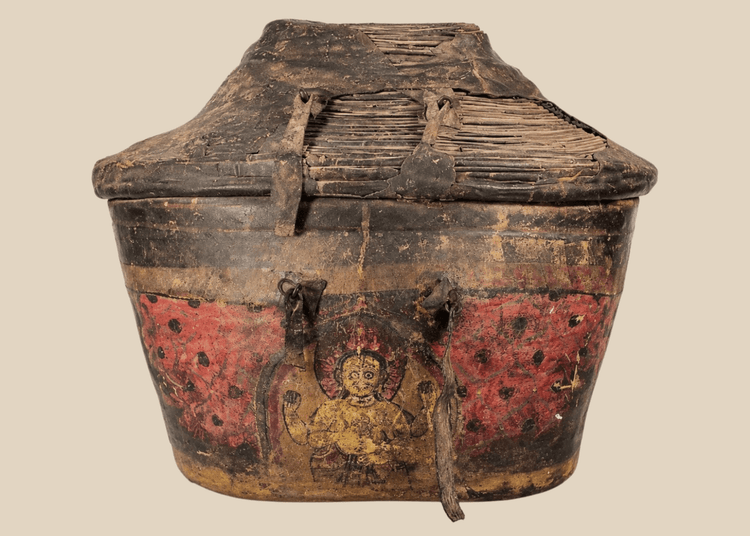
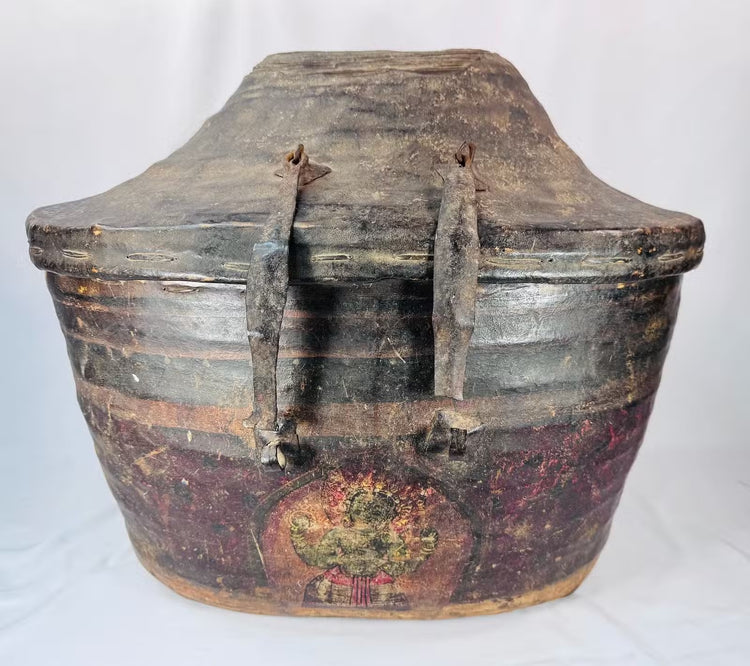
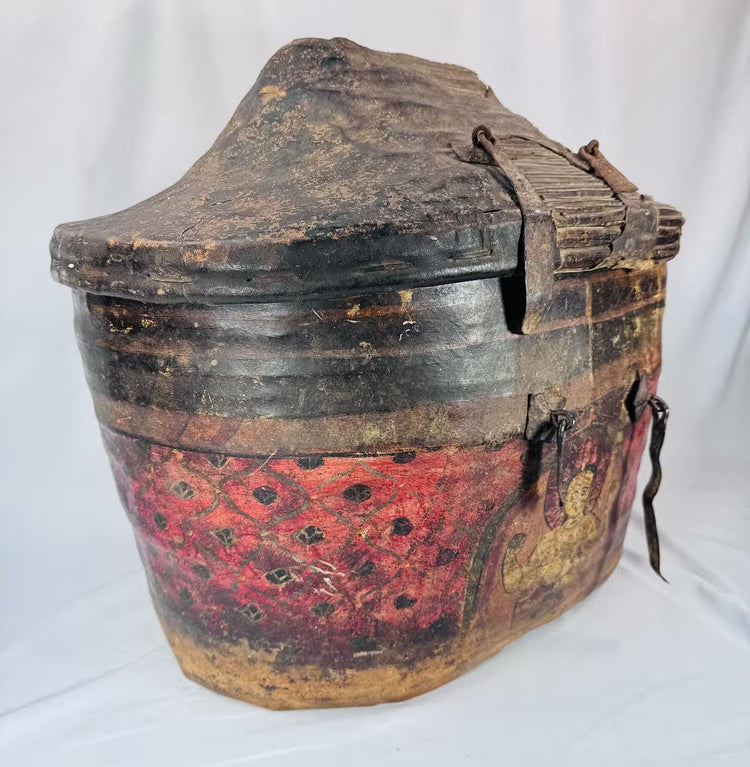
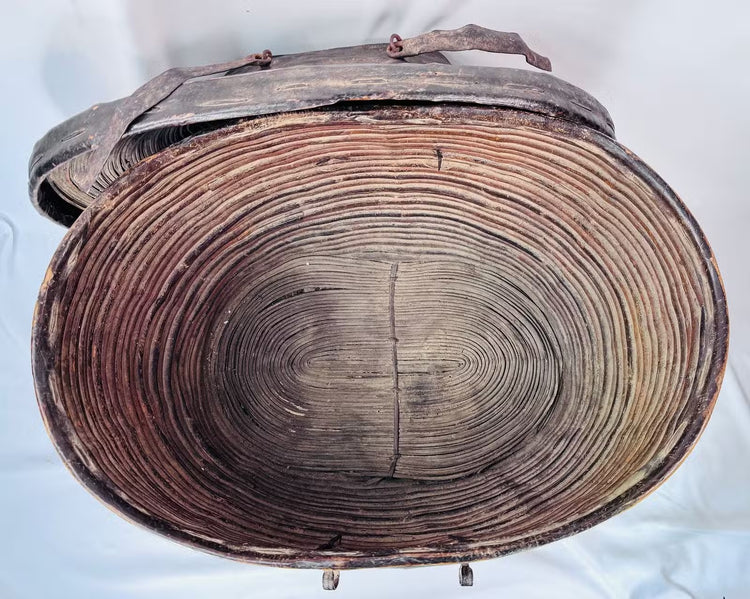
This large and visually striking Himalayan storage container or traveling provisions basket is an exceptional example of traditional mountain craftsmanship, combining tightly woven reed or cane construction with a hide or leather covering, forged iron hardware, and hand-painted decoration. Containers of this type were historically used throughout Tibet, Nepal, and neighboring Himalayan regions for the secure storage and transport of foodstuffs, butter, tea, grains, textiles, ritual items, and valuable household belongings during travel across rugged terrain.
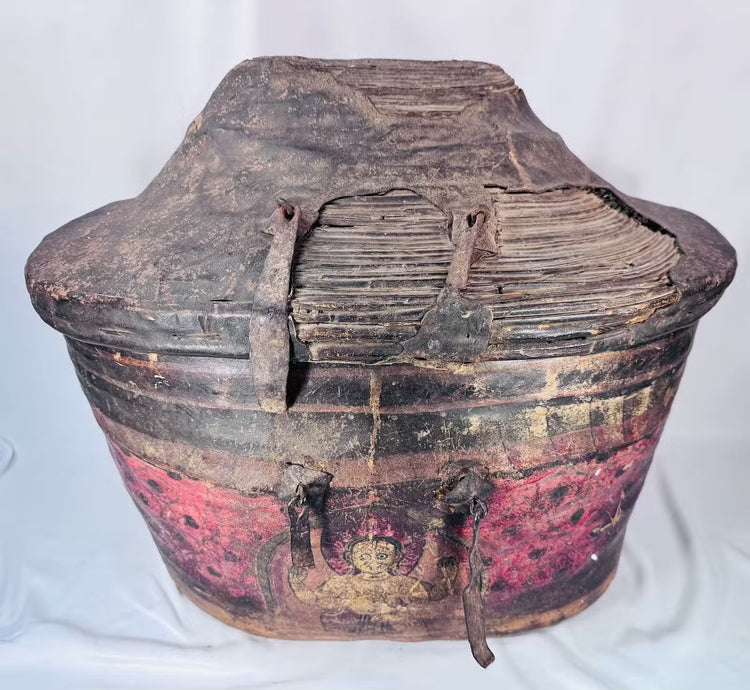
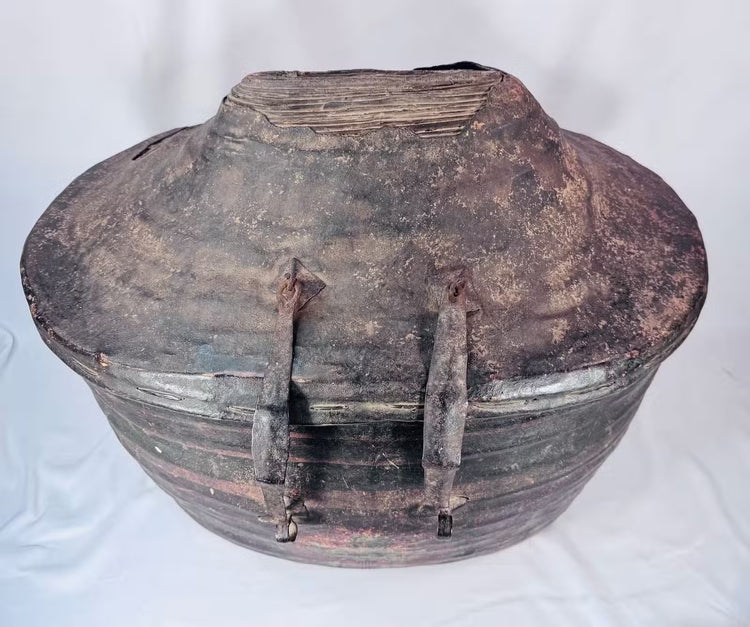
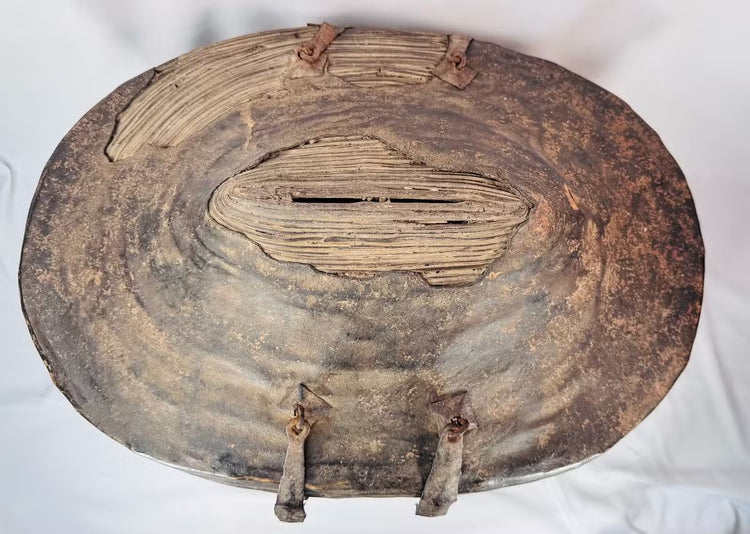
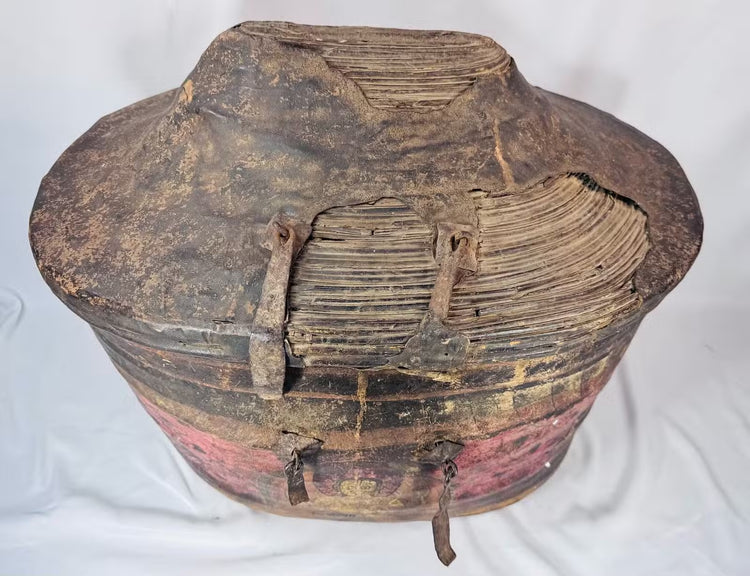
The basket features a substantial coiled and woven body with a fitted domed lid, both constructed using traditional basket-making techniques. Its exterior is clad in aged hide or leather and fitted with iron hardware and surviving leather fastening straps, creating a durable container intended to withstand prolonged practical use.
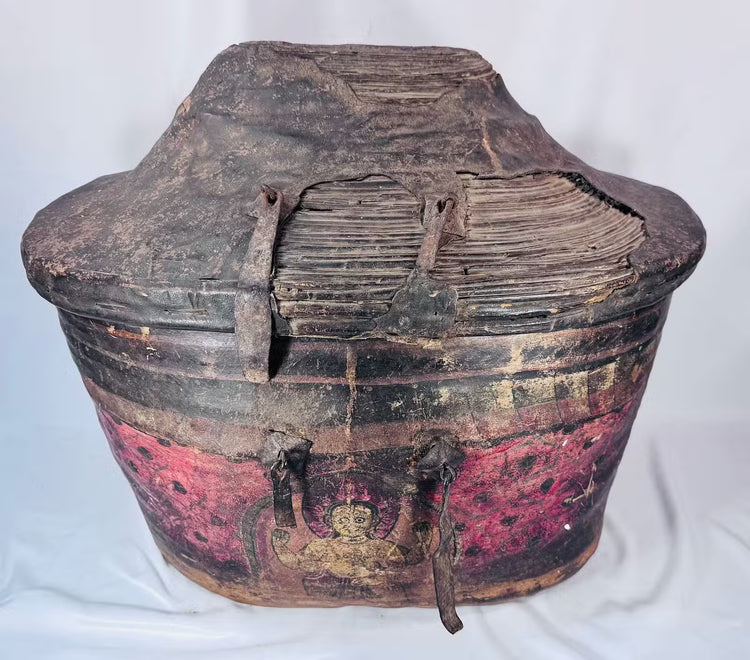
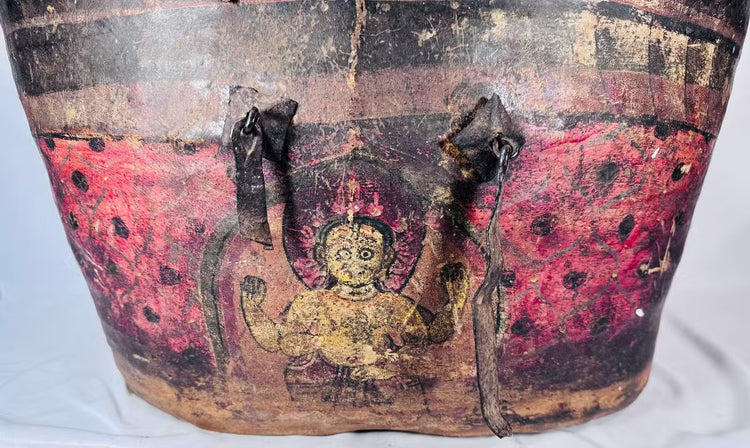
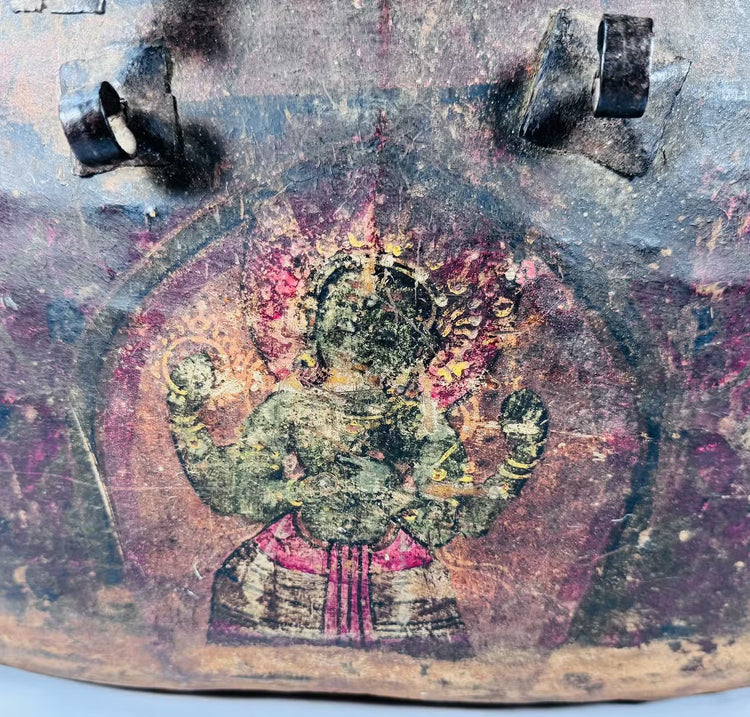
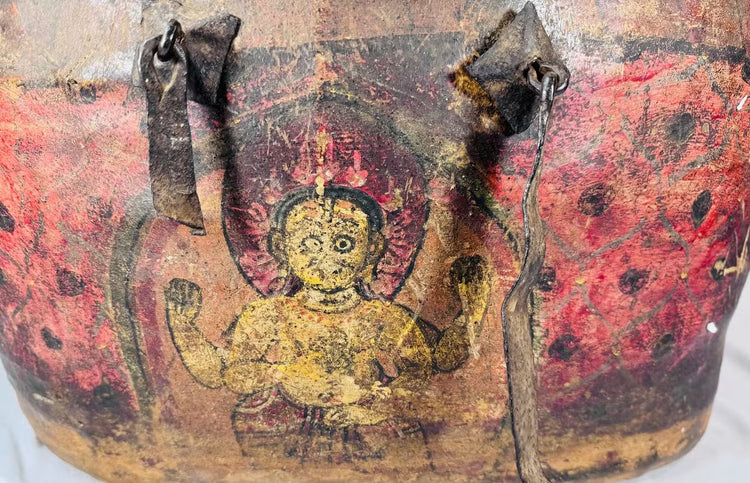
The exterior retains remnants of richly coloured painted decoration, most notably a prominent central figure framed within an arched motif. Depicted with raised arms and surrounding halo-like details, the figure appears to represent a Himalayan deity or protective religious being, possibly associated with Tibetan Buddhist iconography. Additional geometric and lattice-style patterns remain visible across the lower body in deep red, black, and ochre tones.
The combination of practical construction and devotional imagery distinguishes this basket from more purely utilitarian examples. Its substantial scale, heavily worn surfaces, exposed woven structure, and richly patinated hide give the piece an exceptional sculptural and ethnographic presence.
Features
- Large Himalayan storage or traveling provisions basket
- Traditional coiled and woven reed or cane construction
- Fitted domed lid with surviving fastening elements
- Thick hide or leather exterior covering
- Forged iron hardware and leather straps
- Hand-painted central deity or protective figure
- Geometric and lattice-style painted decoration
- Rich aged patina and extensive period wear
- Strong sculptural and ethnographic display presence
- Rare decorated survival of traditional Himalayan craftsmanship
Cultural Significance
Storage and transport vessels of this type played an important role in Himalayan domestic, traveling, and nomadic life, particularly in remote mountain communities where durable handcrafted containers were essential for preserving and carrying provisions and valuable belongings.
The combination of basketry, leatherwork, iron hardware, and painted decoration reflects the practical ingenuity and artistic traditions of Himalayan craftspeople. The surviving figural imagery may have carried religious, symbolic, or protective meaning, potentially transforming an everyday storage vessel into an object connected with regional identity and spiritual belief. Surviving examples provide valuable insight into traditional craft practices and everyday life throughout Tibet, Nepal, and neighboring Himalayan cultures.
Condition
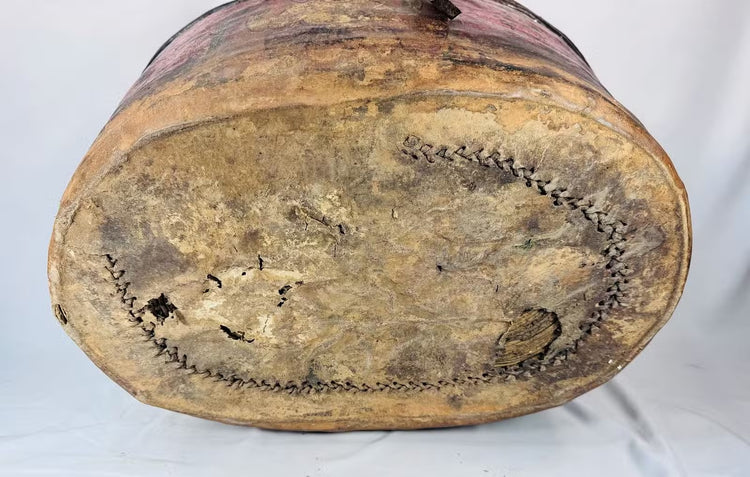
Displays substantial age-related wear and evidence of prolonged traditional use, including losses and separation to the hide or leather covering, surface abrasions, fading and losses to the painted decoration, structural cracking, scattered holes, oxidation to the iron hardware, and areas of exposed woven construction. Despite these condition issues, the basket retains strong structural and visual character, significant portions of its painted decoration, and impressive ethnographic display appeal.
Dimensions (Approximate)
Width: 23.5 in
Depth: 17 in
Height: 14.5 in
Age (Approximate)
100–140 years old
Provenance
From a private collection in Philadelphia, Pennsylvania, USA. The collector was a lifelong traveler throughout the Himalayan and Tibetan regions, assembling a carefully curated collection of ethnographic, religious, and cultural objects acquired during his extensive journeys.
Learn More
Gain insight into the traditional craftsmanship and culture of Himalayan mountain communities through Himalayan Art Resources
Descripción
Historical Context & Origin
Region: Himalayan Region / Tibet or Nepal
Material: Woven reed or cane, hide/leather covering, painted decoration, and forged iron hardware
Period: Late 19th–Early 20th Century
Description
This large and visually striking Himalayan storage container or traveling provisions basket is an exceptional example of traditional mountain craftsmanship, combining tightly woven reed or cane construction with a hide or leather covering, forged iron hardware, and hand-painted decoration. Containers of this type were historically used throughout Tibet, Nepal, and neighboring Himalayan regions for the secure storage and transport of foodstuffs, butter, tea, grains, textiles, ritual items, and valuable household belongings during travel across rugged terrain.
The basket features a substantial coiled and woven body with a fitted domed lid, both constructed using traditional basket-making techniques. Its exterior is clad in aged hide or leather and fitted with iron hardware and surviving leather fastening straps, creating a durable container intended to withstand prolonged practical use.
The exterior retains remnants of richly coloured painted decoration, most notably a prominent central figure framed within an arched motif. Depicted with raised arms and surrounding halo-like details, the figure appears to represent a Himalayan deity or protective religious being, possibly associated with Tibetan Buddhist iconography. Additional geometric and lattice-style patterns remain visible across the lower body in deep red, black, and ochre tones.
The combination of practical construction and devotional imagery distinguishes this basket from more purely utilitarian examples. Its substantial scale, heavily worn surfaces, exposed woven structure, and richly patinated hide give the piece an exceptional sculptural and ethnographic presence.
Features
- Large Himalayan storage or traveling provisions basket
- Traditional coiled and woven reed or cane construction
- Fitted domed lid with surviving fastening elements
- Thick hide or leather exterior covering
- Forged iron hardware and leather straps
- Hand-painted central deity or protective figure
- Geometric and lattice-style painted decoration
- Rich aged patina and extensive period wear
- Strong sculptural and ethnographic display presence
- Rare decorated survival of traditional Himalayan craftsmanship
Cultural Significance
Storage and transport vessels of this type played an important role in Himalayan domestic, traveling, and nomadic life, particularly in remote mountain communities where durable handcrafted containers were essential for preserving and carrying provisions and valuable belongings.
The combination of basketry, leatherwork, iron hardware, and painted decoration reflects the practical ingenuity and artistic traditions of Himalayan craftspeople. The surviving figural imagery may have carried religious, symbolic, or protective meaning, potentially transforming an everyday storage vessel into an object connected with regional identity and spiritual belief. Surviving examples provide valuable insight into traditional craft practices and everyday life throughout Tibet, Nepal, and neighboring Himalayan cultures.
Condition
Displays substantial age-related wear and evidence of prolonged traditional use, including losses and separation to the hide or leather covering, surface abrasions, fading and losses to the painted decoration, structural cracking, scattered holes, oxidation to the iron hardware, and areas of exposed woven construction. Despite these condition issues, the basket retains strong structural and visual character, significant portions of its painted decoration, and impressive ethnographic display appeal.
Dimensions (Approximate)
Width: 23.5 in
Depth: 17 in
Height: 14.5 in
Age (Approximate)
100–140 years old
Provenance
From a private collection in Philadelphia, Pennsylvania, USA. The collector was a lifelong traveler throughout the Himalayan and Tibetan regions, assembling a carefully curated collection of ethnographic, religious, and cultural objects acquired during his extensive journeys.
Learn More
Gain insight into the traditional craftsmanship and culture of Himalayan mountain communities through Himalayan Art Resources
También te puede interesar
