

Figura drapeada neoclásica de bronce sobre pedestal | Circa 1880–1920
- Precio habitual
- $750.00
- Precio de venta
- $750.00
- Precio habitual
No se pudo cargar la disponibilidad de retiro


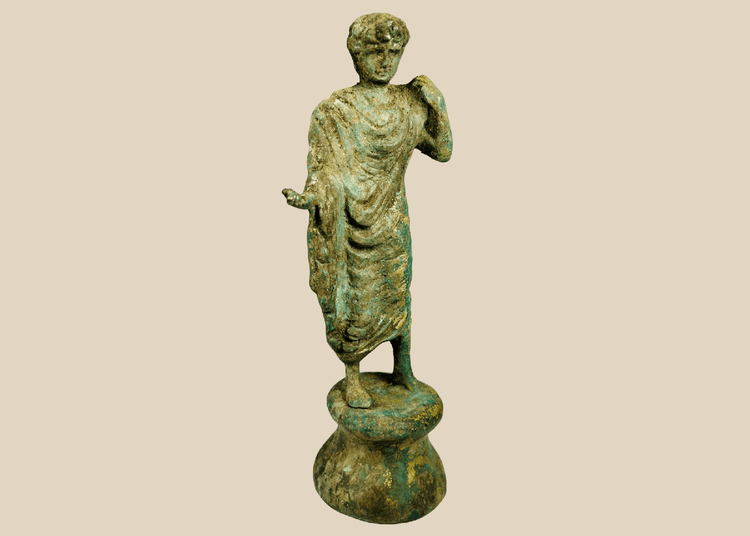
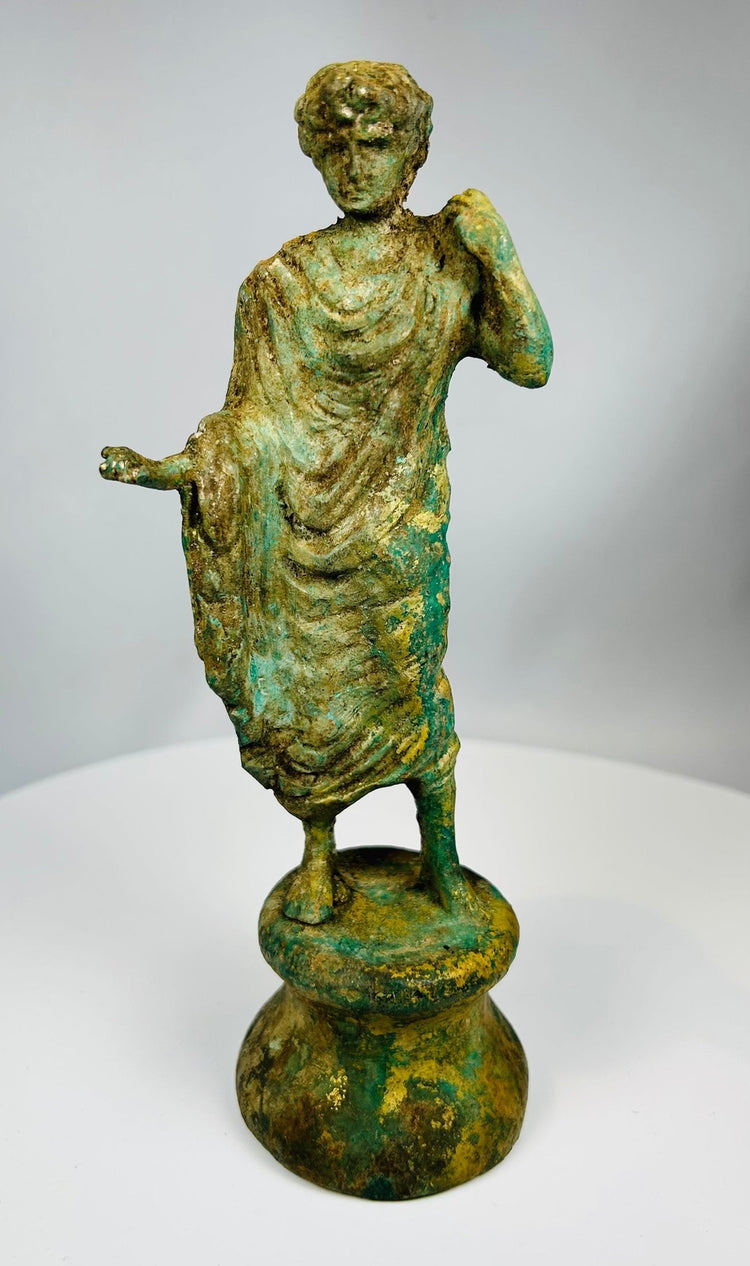
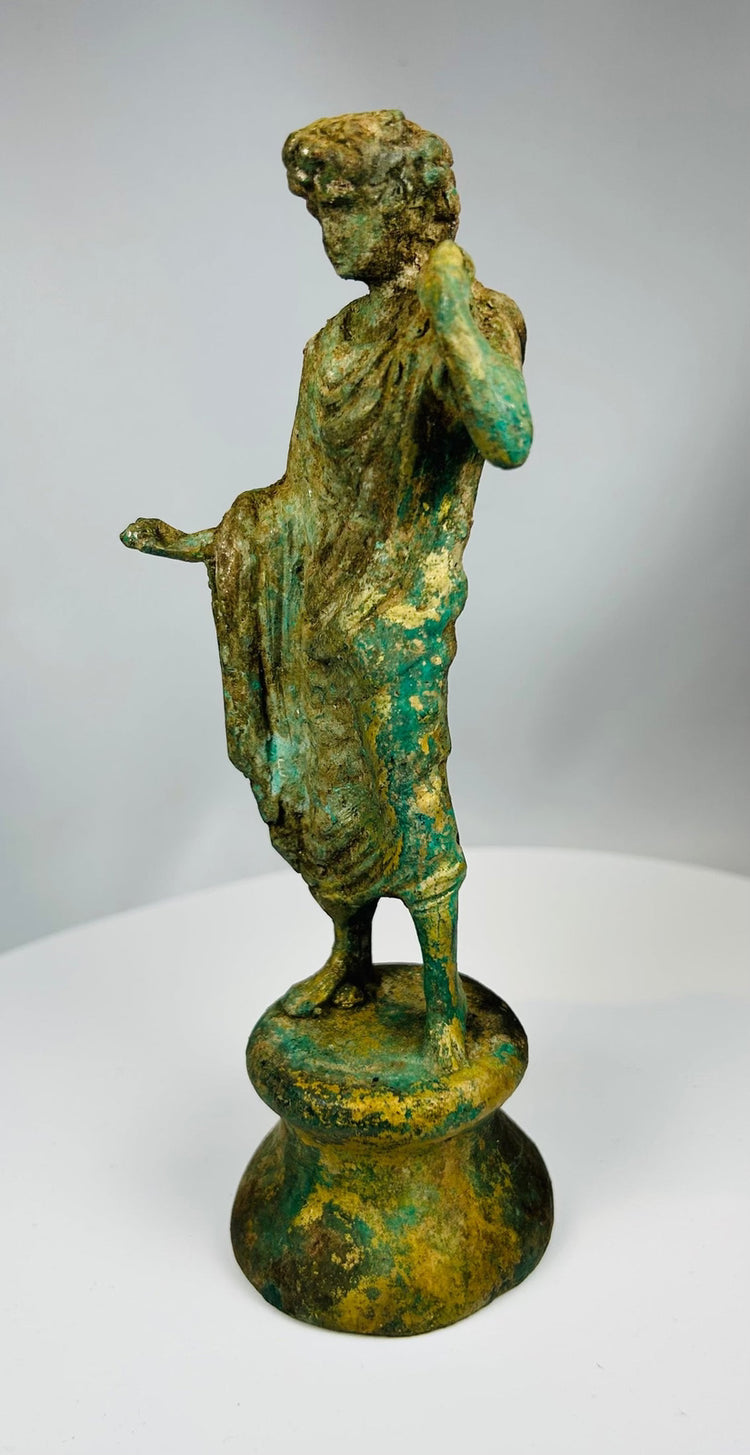
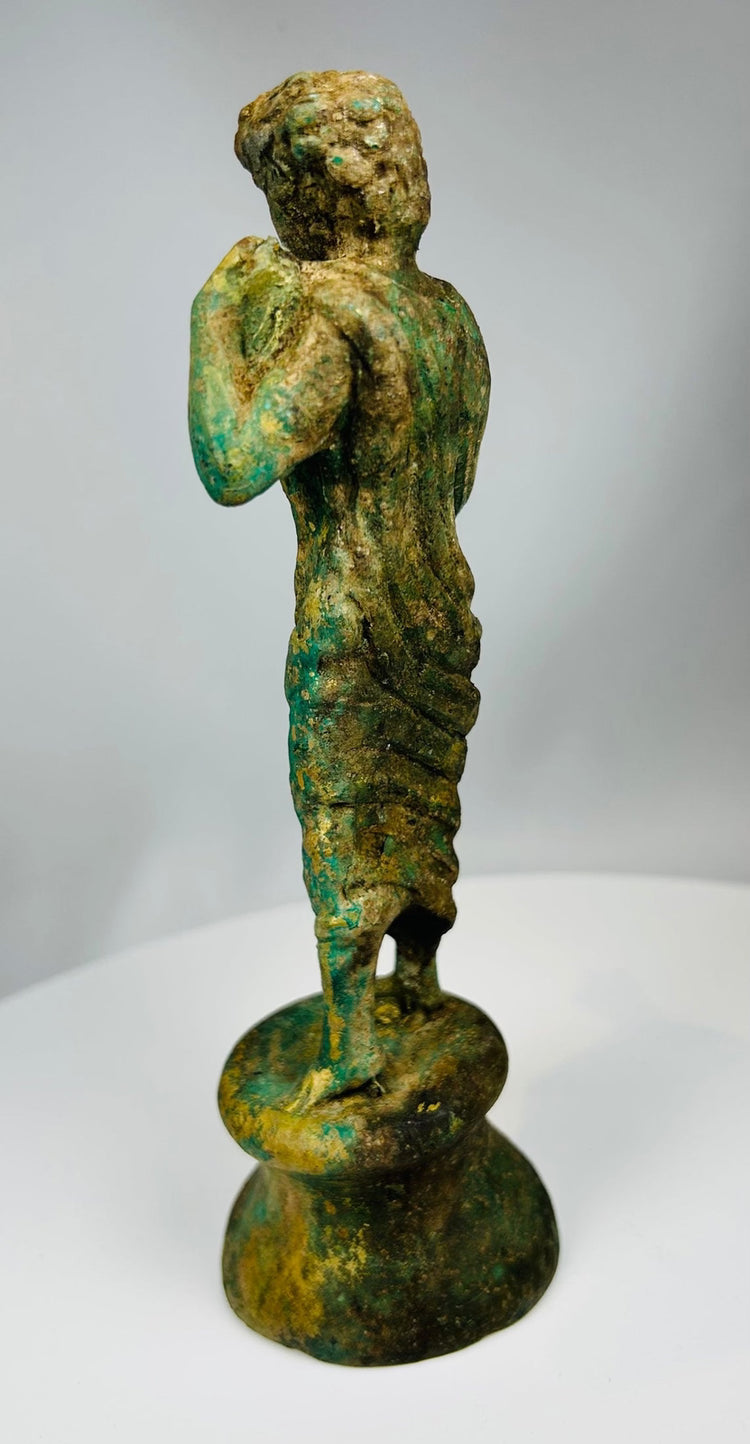
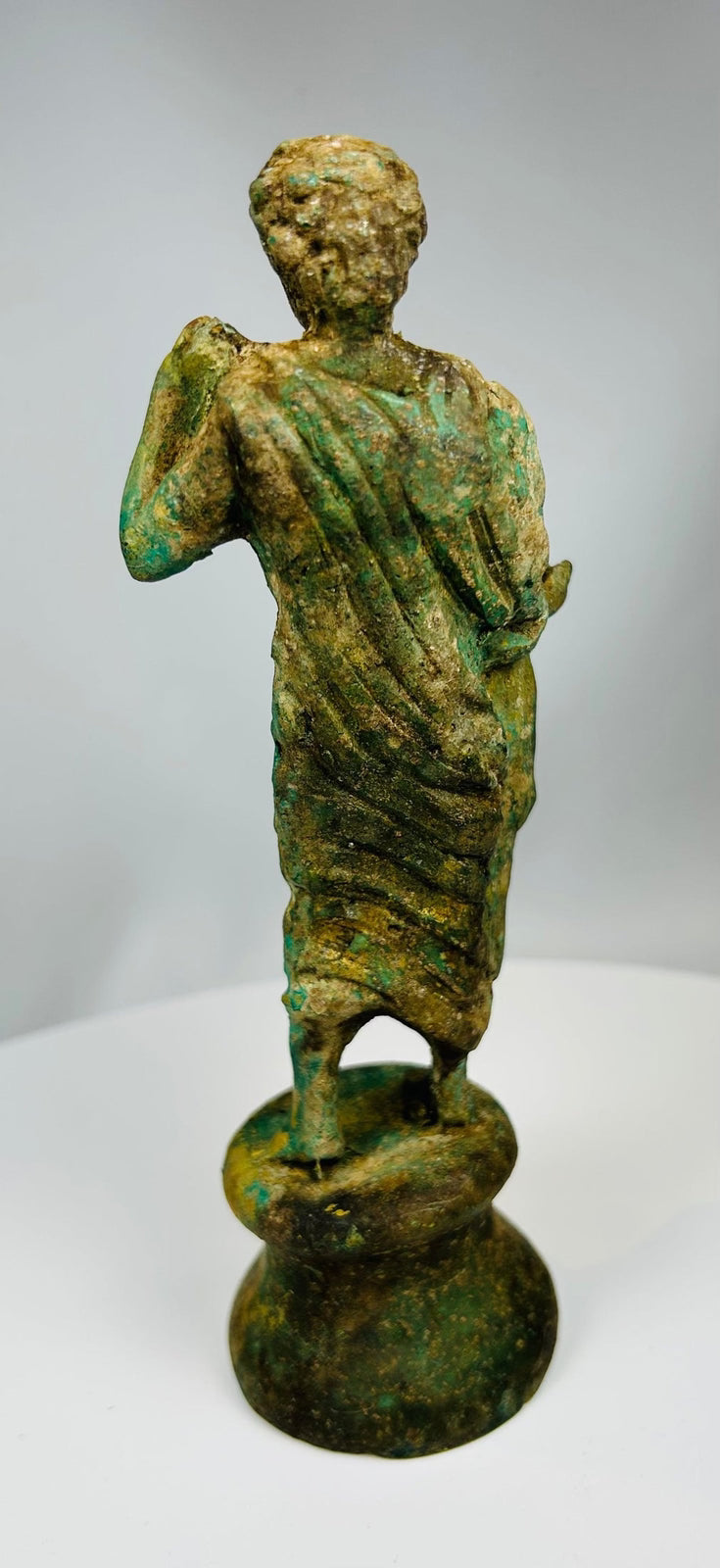
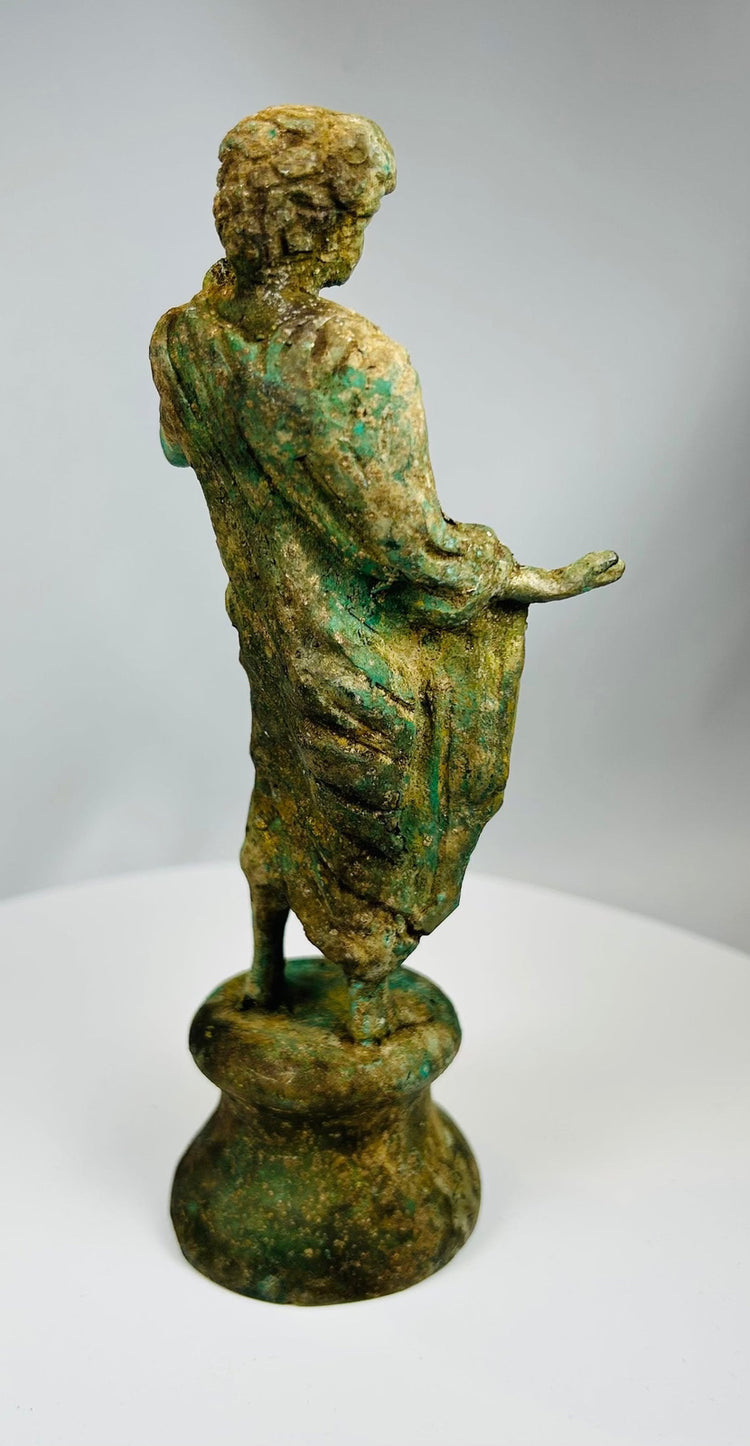
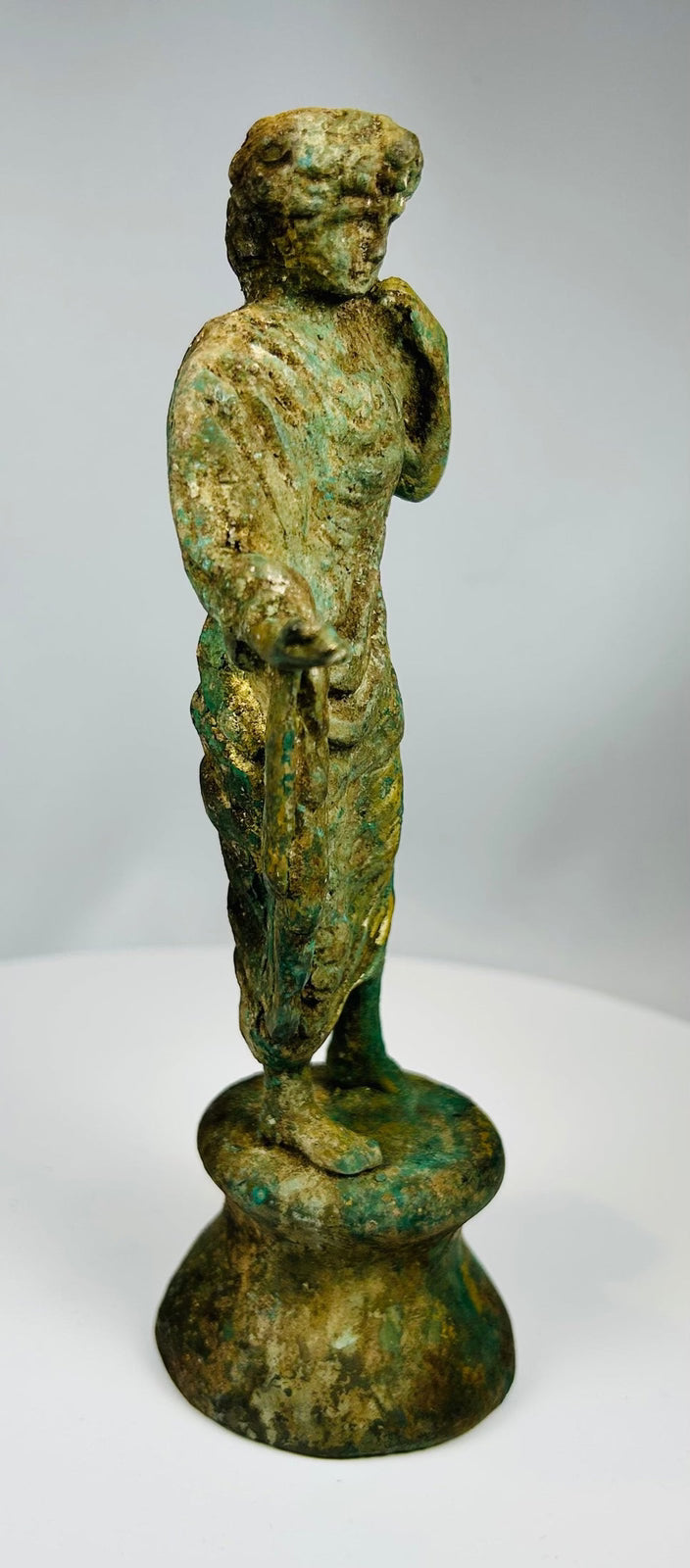
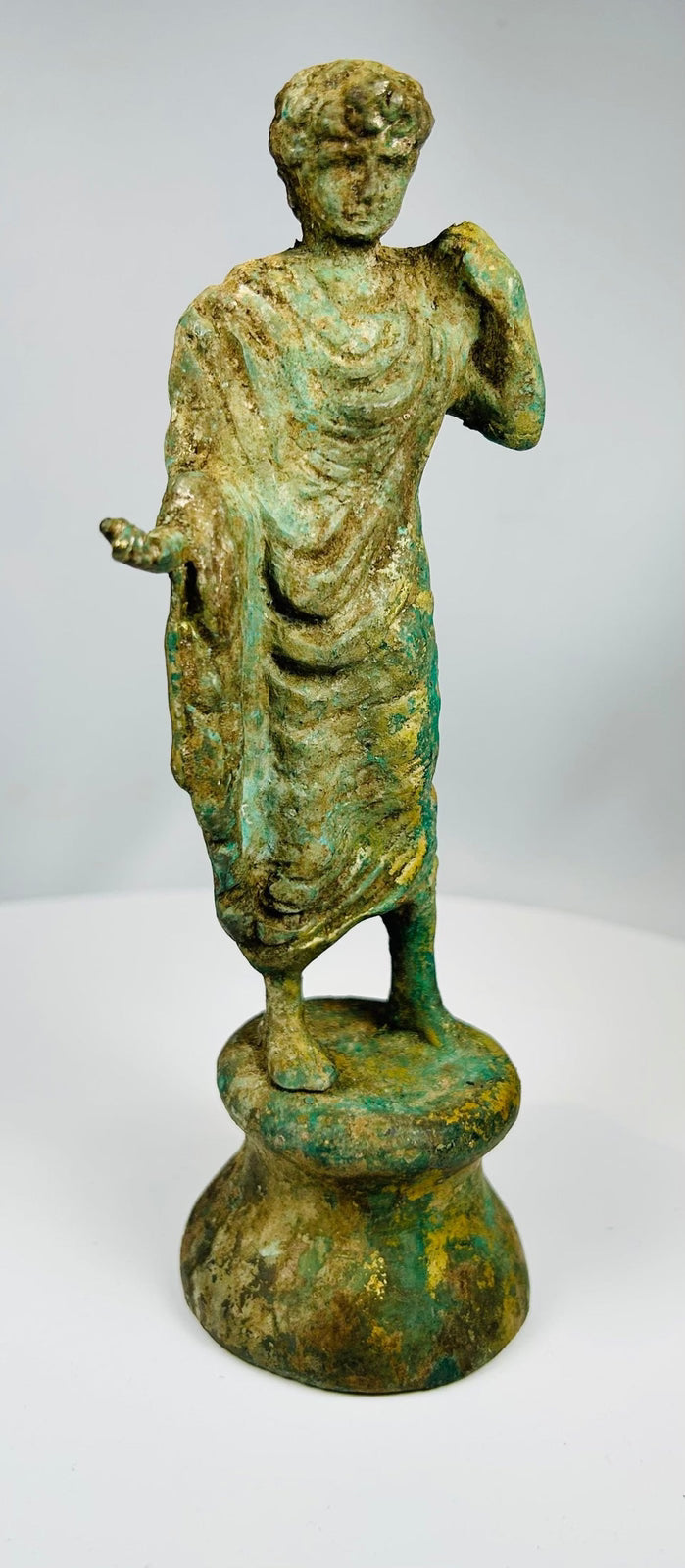
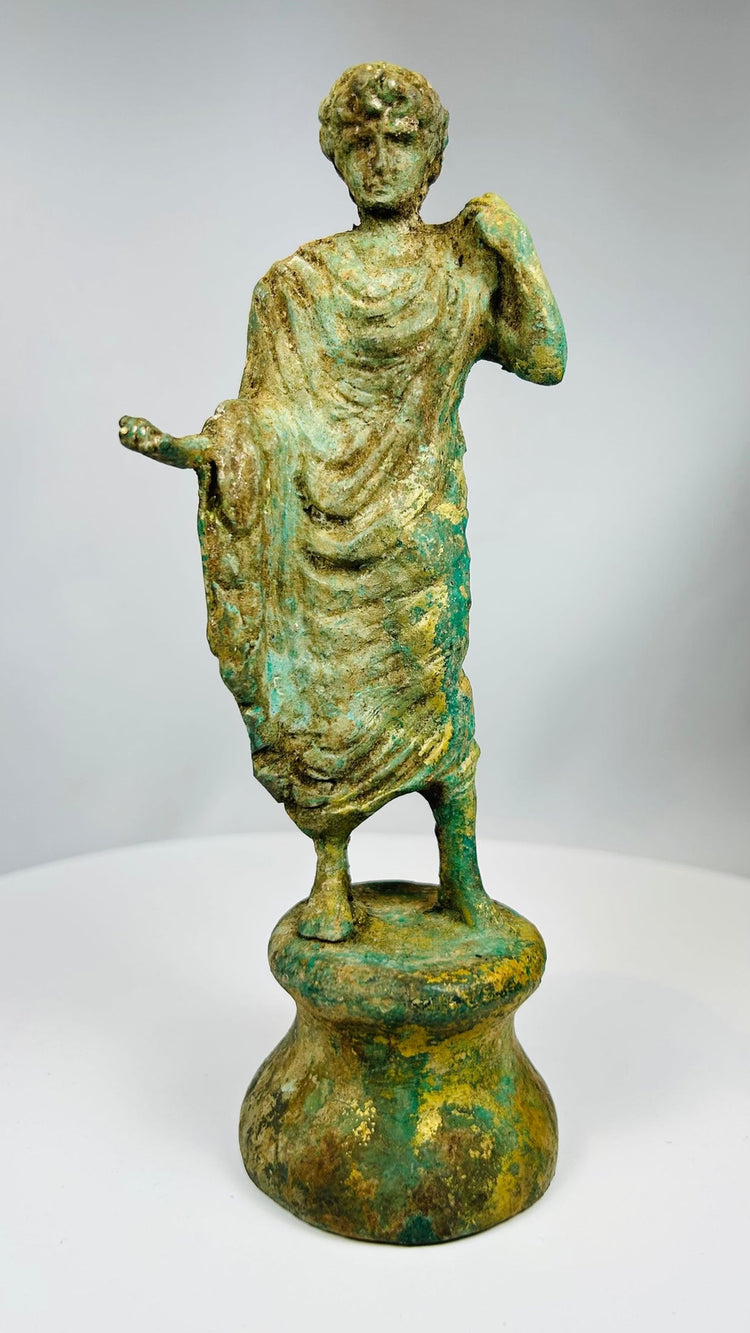
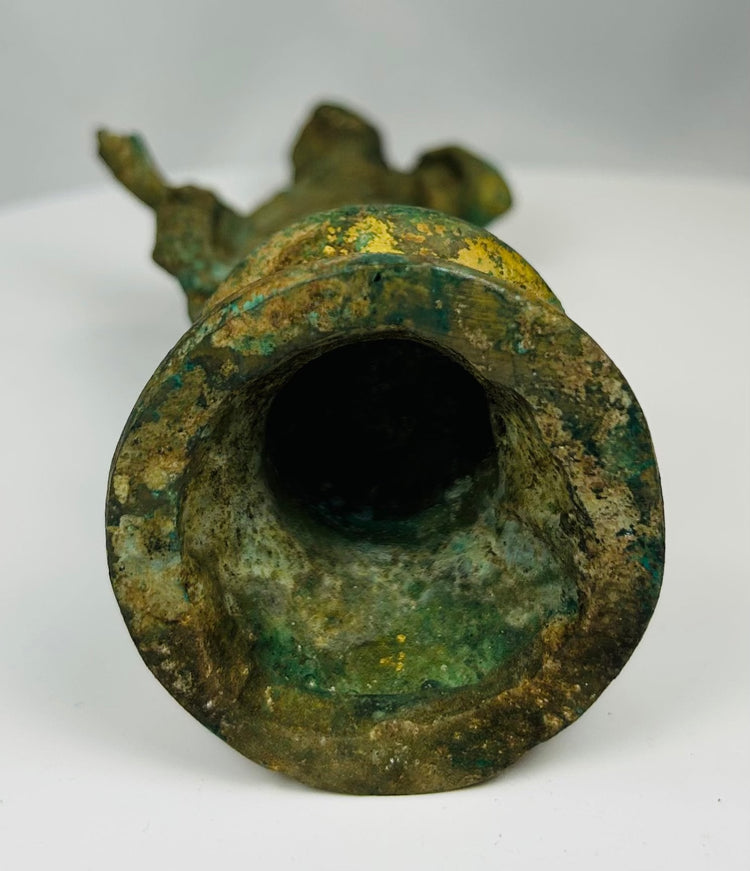
Figura drapeada neoclásica de bronce sobre pedestal | Circa 1880–1920
Descripción
Más
Menos
Contexto histórico y origen
Región: Europa
Material: Bronce fundido
Período: Circa 1880–1920
Descripción
Esta escultura figurativa de estilo neoclásico, finamente fundida, representa una figura de pie vestida con el gusto grecorromano, representada con túnicas fluidas, rasgos suavemente modelados y una elegante pose de contrapposto. Un brazo está levantado hacia el hombro mientras el otro se extiende hacia afuera, recogiendo un pliegue del drapeado en un gesto que recuerda a la estatuaria romana antigua y helenística. La figura se alza sobre una plataforma circular integral sobre un pedestal hueco acampanado, lo que sugiere que originalmente fue hecha como un remate, montura o elemento decorativo arquitectónico.
La escultura presenta una superficie ricamente envejecida con llamativa oxidación verde, turquesa, ocre y marrón en todo el metal. Esta pátina desarrollada naturalmente le da a la pieza una fuerte presencia escultórica y realza el carácter clásico de la figura. La forma y el acabado generales son consistentes con las artes decorativas del estilo neoclásico de finales del siglo XIX y principios del XX, cuando se producían adornos figurativos de bronce inspirados en la antigüedad para interiores refinados, muebles y objetos coleccionados en la tradición del Grand Tour.
Características
- Escultura figurativa de estilo neoclásico fundida
- Figura de pie con drapeado de estilo grecorromano
- Base de pedestal hueco, probablemente destinada como remate o montura
- Atractivo verdigrís envejecido y superficie oxidada
- Fuerte carácter decorativo de finales del siglo XIX y principios del XX
- Distintiva forma escultórica neoclásica
Importancia cultural
Durante los siglos XIX y principios del XX, el diseño neoclásico se basó en gran medida en el lenguaje visual de la antigua Grecia y Roma. Figuras como esta fueron creadas para evocar el refinamiento de la antigüedad y a menudo se incorporaron a las artes decorativas, muebles, elementos arquitectónicos y objetos coleccionados del Grand Tour. Piezas de este tipo reflejan la fascinación europea perdurable por la escultura clásica y el gusto arqueológico.
Estado
Buen estado antiguo con desgaste, oxidación, incrustaciones e irregularidades superficiales relacionadas con la edad en toda la pieza. Se presentan pérdidas y ablandamiento de los detalles, coherentes con la edad y el uso. La parte inferior hueca indica que probablemente fue montada originalmente. En general, estructuralmente estable y visualmente impresionante.
Dimensiones (aproximadas)
Altura: 7.25 pulgadas
Edad (aproximada)
100–140 años
Procedencia
Anteriormente formó parte de la colección de un coleccionista de antigüedades de toda la vida en South Paris, Maine, Estados Unidos. El coleccionista reunió un amplio y variado grupo de objetos históricos y decorativos durante muchas décadas. Tras el fallecimiento del coleccionista, la colección del patrimonio fue dispersada en su totalidad, y esta pieza entró posteriormente en el mercado del arte.
Más información
Estudie una figura clásica drapeada de la antigüedad en la colección del Penn Museum
Explore nuestra Colección de Estatuas, Figuras y Tallados
Descripción
Contexto histórico y origen
Región: Europa
Material: Bronce fundido
Período: Circa 1880–1920
Descripción
Esta escultura figurativa de estilo neoclásico, finamente fundida, representa una figura de pie vestida con el gusto grecorromano, representada con túnicas fluidas, rasgos suavemente modelados y una elegante pose de contrapposto. Un brazo está levantado hacia el hombro mientras el otro se extiende hacia afuera, recogiendo un pliegue del drapeado en un gesto que recuerda a la estatuaria romana antigua y helenística. La figura se alza sobre una plataforma circular integral sobre un pedestal hueco acampanado, lo que sugiere que originalmente fue hecha como un remate, montura o elemento decorativo arquitectónico.
La escultura presenta una superficie ricamente envejecida con llamativa oxidación verde, turquesa, ocre y marrón en todo el metal. Esta pátina desarrollada naturalmente le da a la pieza una fuerte presencia escultórica y realza el carácter clásico de la figura. La forma y el acabado generales son consistentes con las artes decorativas del estilo neoclásico de finales del siglo XIX y principios del XX, cuando se producían adornos figurativos de bronce inspirados en la antigüedad para interiores refinados, muebles y objetos coleccionados en la tradición del Grand Tour.
Características
- Escultura figurativa de estilo neoclásico fundida
- Figura de pie con drapeado de estilo grecorromano
- Base de pedestal hueco, probablemente destinada como remate o montura
- Atractivo verdigrís envejecido y superficie oxidada
- Fuerte carácter decorativo de finales del siglo XIX y principios del XX
- Distintiva forma escultórica neoclásica
Importancia cultural
Durante los siglos XIX y principios del XX, el diseño neoclásico se basó en gran medida en el lenguaje visual de la antigua Grecia y Roma. Figuras como esta fueron creadas para evocar el refinamiento de la antigüedad y a menudo se incorporaron a las artes decorativas, muebles, elementos arquitectónicos y objetos coleccionados del Grand Tour. Piezas de este tipo reflejan la fascinación europea perdurable por la escultura clásica y el gusto arqueológico.
Estado
Buen estado antiguo con desgaste, oxidación, incrustaciones e irregularidades superficiales relacionadas con la edad en toda la pieza. Se presentan pérdidas y ablandamiento de los detalles, coherentes con la edad y el uso. La parte inferior hueca indica que probablemente fue montada originalmente. En general, estructuralmente estable y visualmente impresionante.
Dimensiones (aproximadas)
Altura: 7.25 pulgadas
Edad (aproximada)
100–140 años
Procedencia
Anteriormente formó parte de la colección de un coleccionista de antigüedades de toda la vida en South Paris, Maine, Estados Unidos. El coleccionista reunió un amplio y variado grupo de objetos históricos y decorativos durante muchas décadas. Tras el fallecimiento del coleccionista, la colección del patrimonio fue dispersada en su totalidad, y esta pieza entró posteriormente en el mercado del arte.
Más información
Estudie una figura clásica drapeada de la antigüedad en la colección del Penn Museum
Explore nuestra Colección de Estatuas, Figuras y Tallados
También te puede interesar
