


Antique Southeast Asian Carved Stone Buddha Head with Gilded Details | Circa Late 19th–Early 20th Century
- Precio habitual
- $2,500.00
- Precio de venta
- $2,500.00
- Precio habitual
No se pudo cargar la disponibilidad de retiro


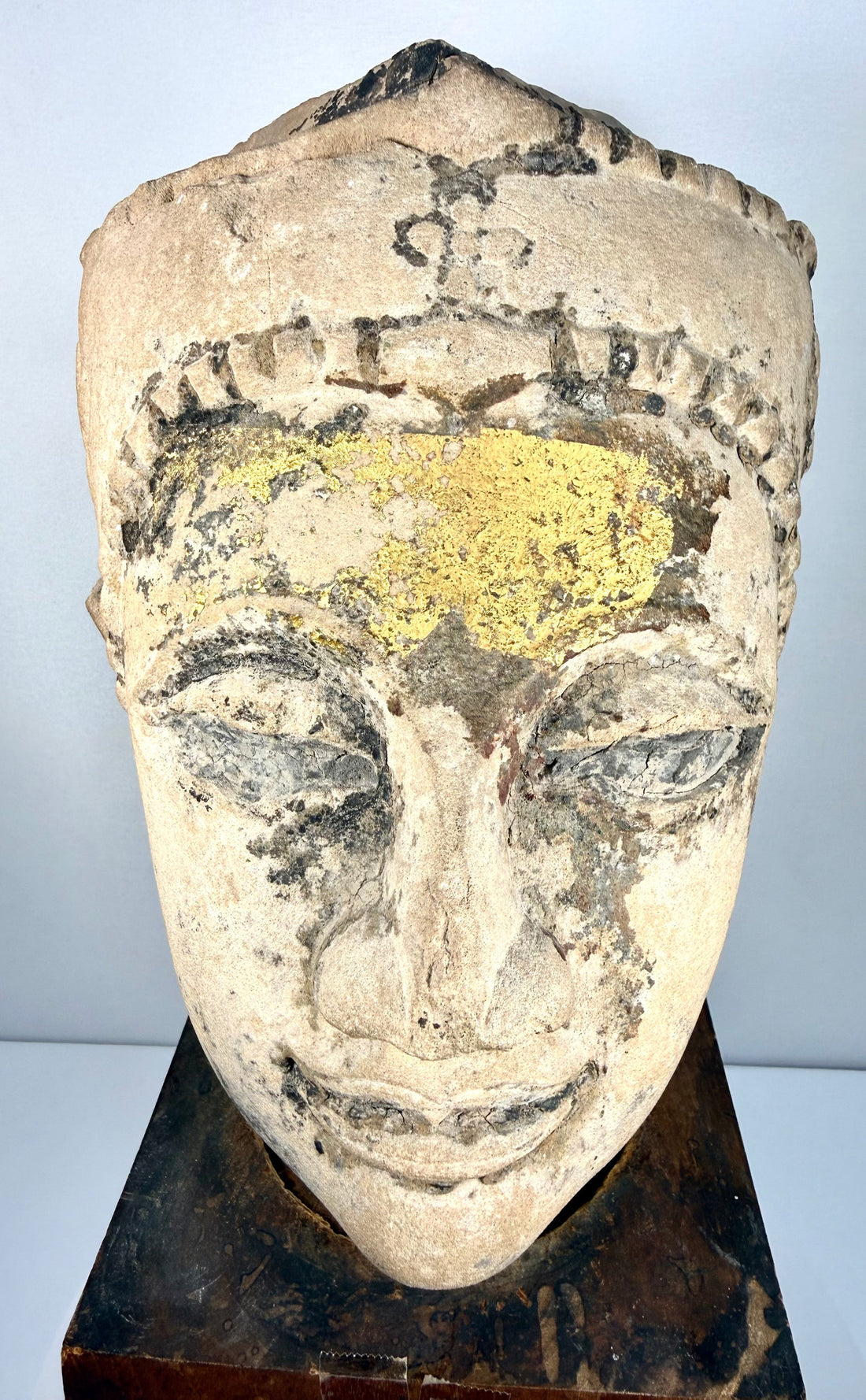

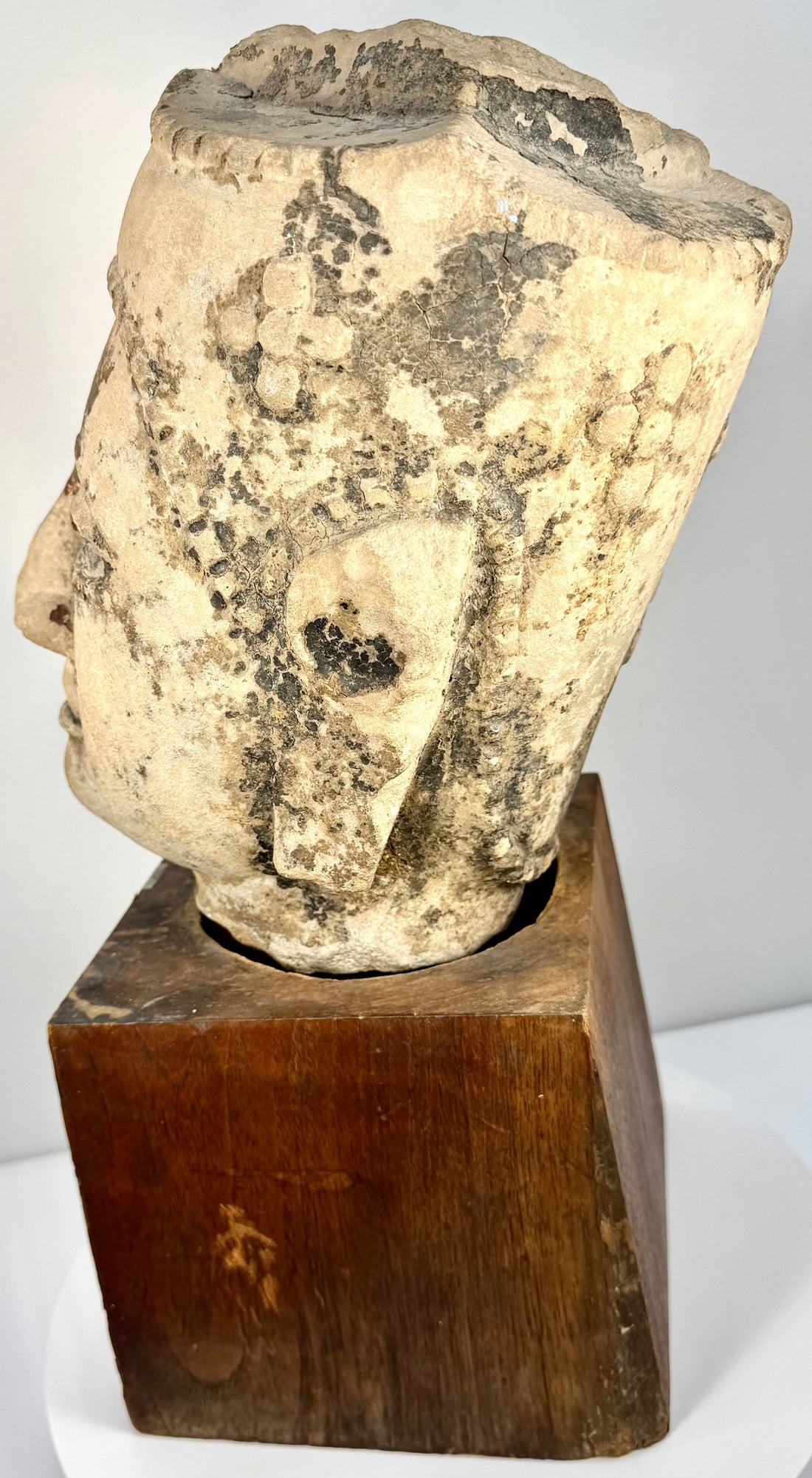

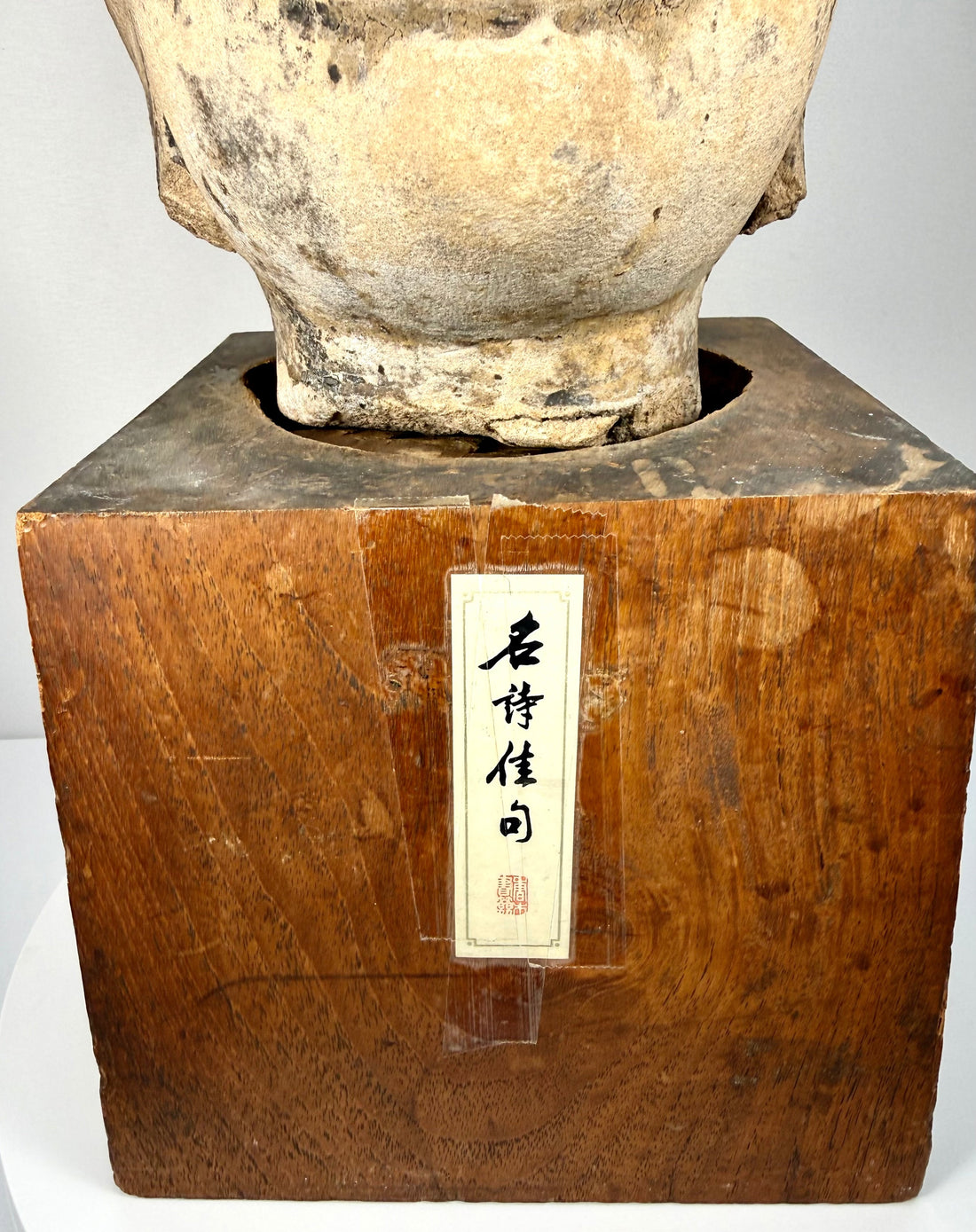





Antique Southeast Asian Carved Stone Buddha Head with Gilded Details | Circa Late 19th–Early 20th Century
Descripción
Más
Menos
Historical Context & Origin
Region: Southeast Asia
Material: Stone-like sculptural material with remnants of gold-toned gilding and dark surface pigment; mounted on a wooden display base
Period: Late 19th–Early 20th Century, circa 1880–1925 CE
Description
An impressive antique Southeast Asian-style sculptural head of Buddha, displaying a serene meditative expression, finely modelled facial features, and surviving traces of golden gilding. This substantial sculpture reflects the traditional artistic conventions of Southeast Asian Buddhist imagery and the region's longstanding tradition of religious sculpture.
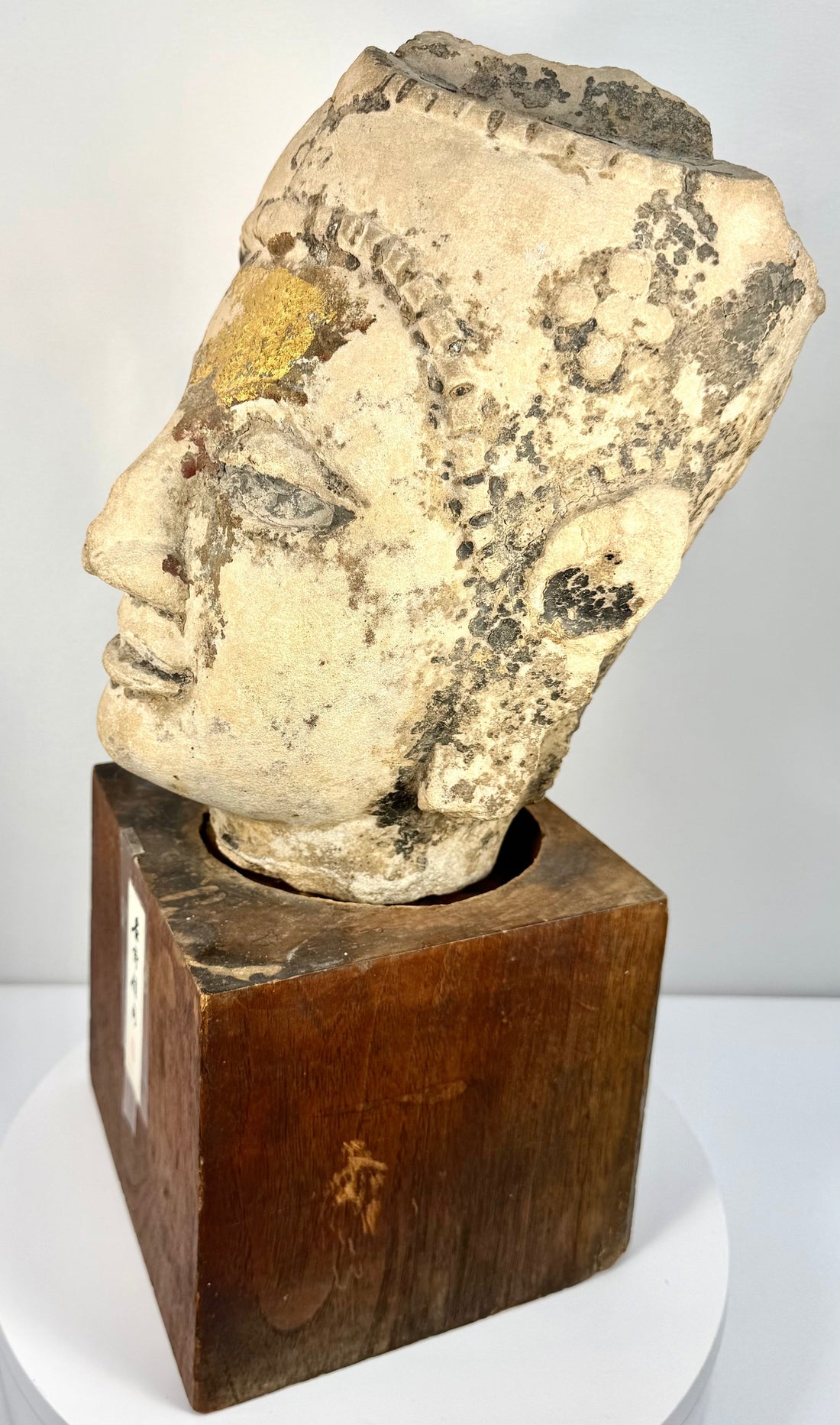
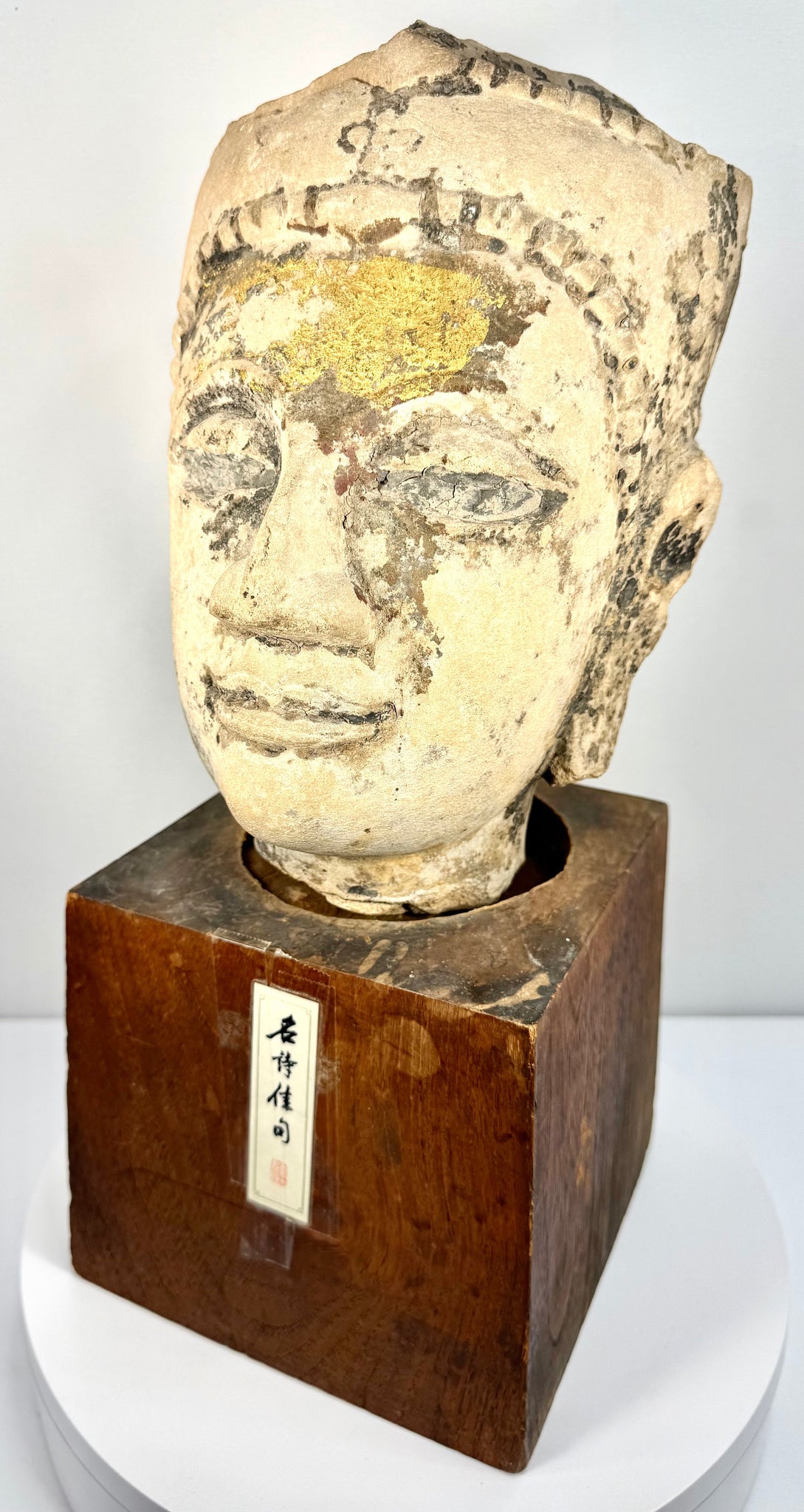
The Buddha is depicted with gently downcast almond-shaped eyes, delicately arched eyebrows, a prominent straight nose, softly defined lips, and an expression of profound tranquillity. Elongated earlobes frame the face, while the upper head features a raised, tapering cranial form with worn hairline detailing associated with traditional Buddhist iconography.
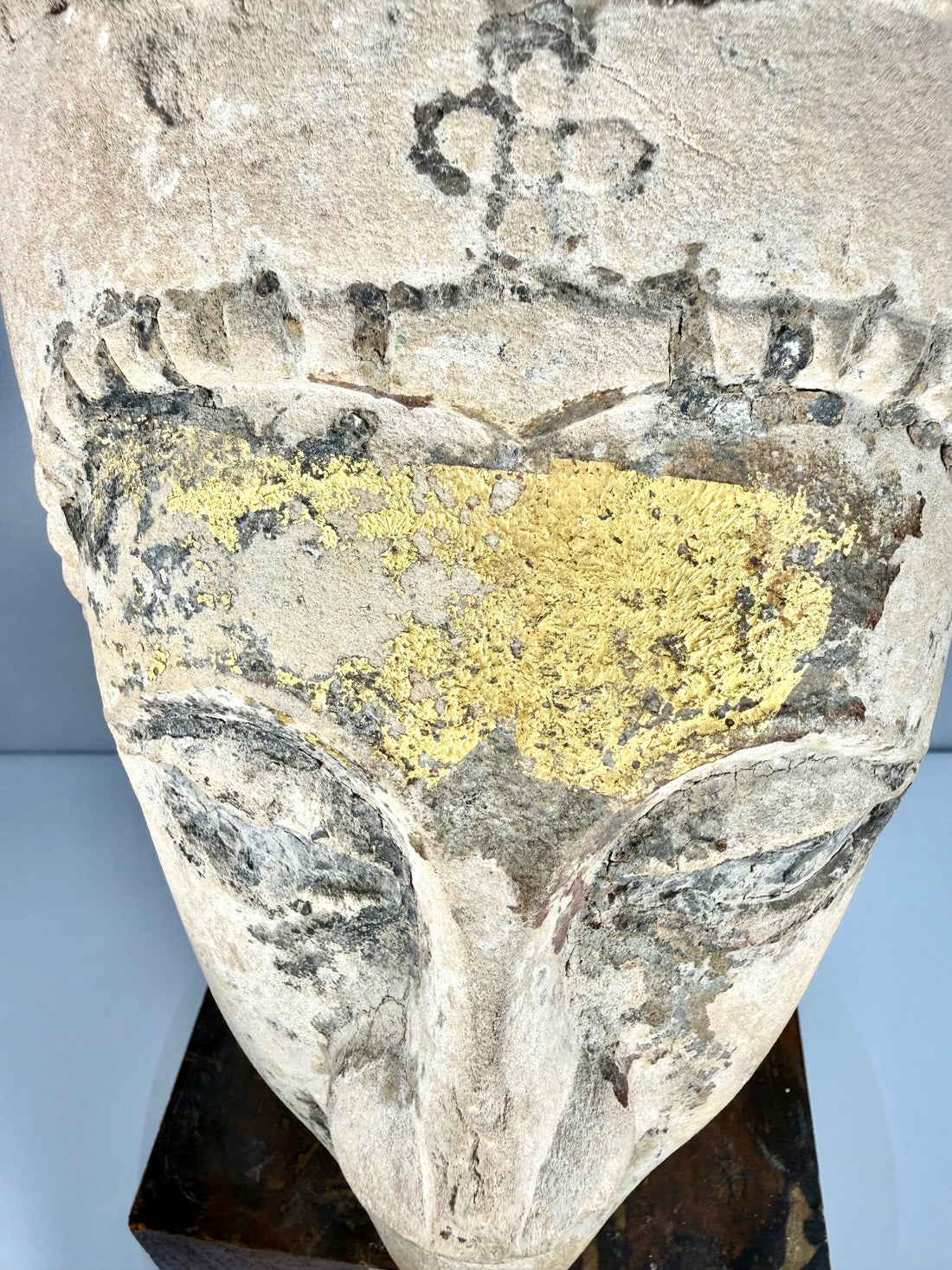
Particularly noteworthy are the surviving areas of gold-toned decoration extending across the forehead, contrasting with the sculpture's naturally weathered, pale surface. Dark remnants of earlier surface decoration remain visible around the eyes, hairline, ears, and upper head, lending additional character and visual depth.
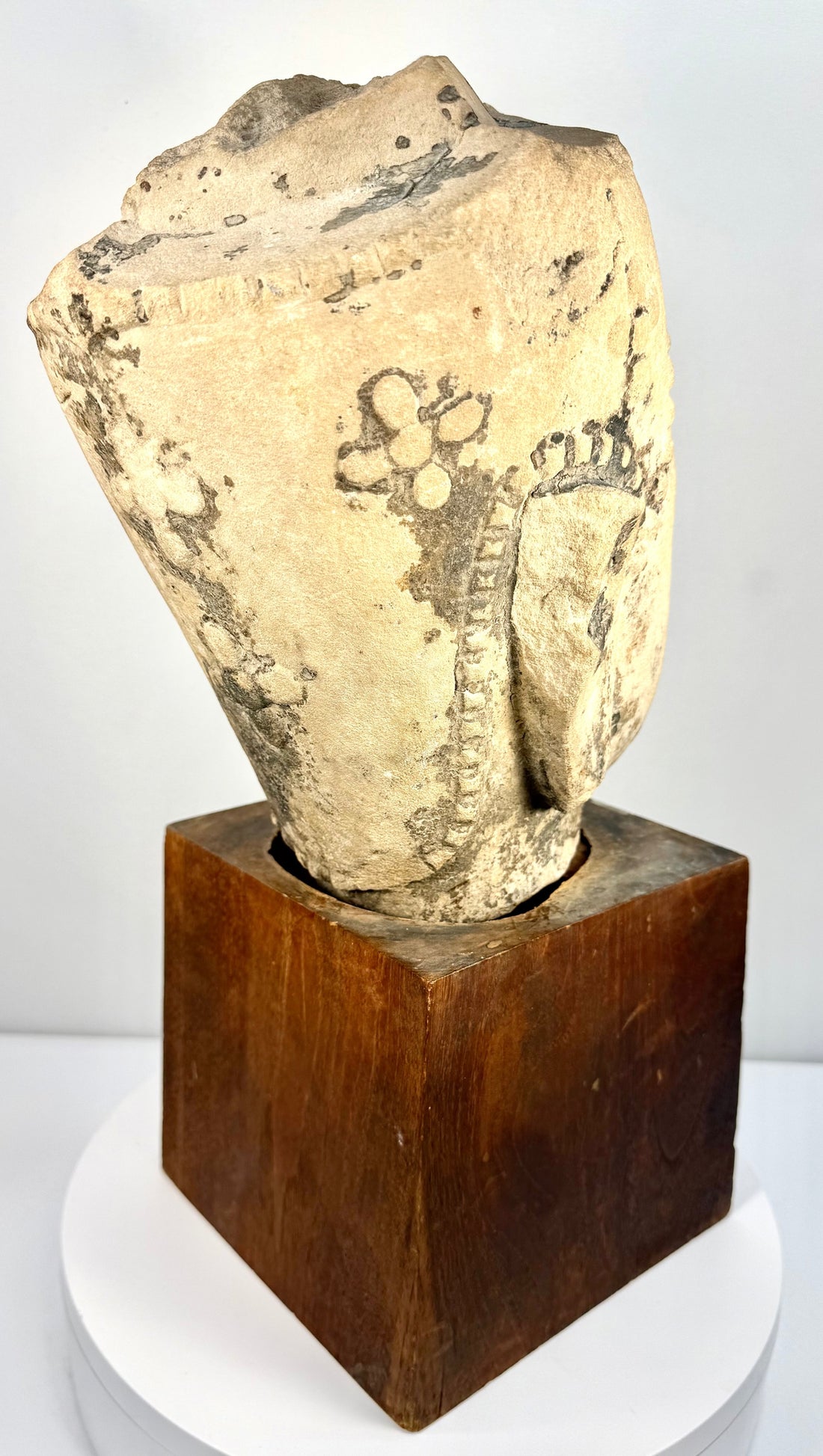
The upper cranial section exhibits pronounced surface wear, with areas of dark pigmentation, irregular deposits, and softened carved details. The surviving contours suggest a traditional Buddhist cranial arrangement, although the precise form of the original upper ornamentation is partially obscured by wear.
The sculpture is presented on a substantial aged wooden display plinth, featuring an affixed vertical Japanese calligraphic label accompanied by a small red seal. The characters may represent a Japanese personal name, although their precise reading has not been independently verified.
The presence of this Japanese inscription is particularly interesting given the sculpture's Southeast Asian stylistic characteristics. As the label is attached to the separate wooden display base rather than inscribed directly onto the sculpture, it may relate to a previous Japanese collector, art dealer, or individual involved in the object's later presentation or cataloguing. Such labels can provide clues to an object's collecting or display history, but this inscription does not establish Japanese manufacture or confirm a particular ownership history. Its original purpose and association with the sculpture remain undetermined.
The combination of restrained facial modelling, surviving gold-toned decoration, and weathered sculptural surfaces reflects characteristics associated with Southeast Asian Buddhist artistic traditions.
Features
- Substantial Southeast Asian-style sculptural head depicting Buddha
- Serene meditative expression with gently downcast almond-shaped eyes
- Delicately arched eyebrows and prominent straight nose
- Softly modelled lips and balanced facial proportions
- Elongated earlobes associated with traditional representations of Buddha
- Raised cranial form with weathered hairline detailing recalling traditional Buddhist iconography
- Surviving gold-toned decoration across the forehead
- Remnants of dark pigment or surface coating highlighting the facial features and upper head
- Pale beige sculptural surface with extensive weathering, abrasions, and localized material loss
- Aged wooden display plinth with visible surface wear
- Affixed Japanese calligraphic paper label with a red seal, possibly associated with the sculpture's later collecting or display history
Cultural Significance
Images of Buddha have occupied a central position in the religious and artistic traditions of Southeast Asia for centuries. Across regions including Thailand, Cambodia, Myanmar, and neighbouring cultures, Buddhist sculptors developed distinctive artistic styles while preserving recognizable symbolic features representing enlightenment, compassion, and spiritual tranquillity.
The Buddha's downcast eyes convey a contemplative state, while the elongated earlobes traditionally recall Siddhartha Gautama's former princely status and his renunciation of worldly attachment.
The raised cranial feature commonly found in Buddhist sculpture, known as the ushnisha, symbolizes the Buddha's transcendent wisdom and spiritual attainment. Its representation varies across regional artistic traditions, appearing in a range of rounded, tapering, and stylized forms.
Gilding has also played an important role in Southeast Asian Buddhist devotional art, with gold symbolizing reverence, purity, and the exalted nature of enlightenment. Buddhist sculptures were frequently embellished with gilded surfaces, lacquer, and painted decoration to emphasize their sacred significance.
Surviving traces of gold-toned decoration and dark surface pigment on historical Buddhist sculptures provide valuable insight into the original visual appearance of these devotional objects, many of which have experienced considerable surface alteration over time.
The present Buddha head reflects these broader artistic traditions through its serene expression, elongated earlobes, raised cranial form, and surviving decorative surfaces.
Condition
Antique condition with extensive visible surface wear, discoloration, minor chips, abrasions, and areas of material loss, particularly around the upper head and carved edges.
The pale sculptural surface exhibits localized cracking, granular irregularities, and variations in texture. Substantial wear is present across the surviving gold-toned decoration and darker pigmented areas.
The facial features remain recognizable, including the downcast eyes, pronounced eyebrows, projecting nose, softly defined lips, and elongated earlobes. Localized abrasions and softened modelling are visible around the eyes, nose, mouth, and upper cranial section.
The wooden display base exhibits scratches, marks, discoloration, and surface wear consistent with age and handling. The affixed Japanese calligraphic label displays age-related discoloration and visible adhesive.
Despite the extensive surface wear, the sculpture retains its distinctive facial composition and recognizable Buddhist iconography.
Dimensions (Approximate)
Height: 16.5 in
Length: 7 in
Depth: 7 in
Age (Approximate)
101–146 years old
Provenance
Previously offered by Akiba Galleries, Dania Beach, Florida, United States. Akiba Galleries is an established Florida auction house handling fine art, antiques, decorative objects, and estate collections from various collecting categories
Learn More
Explore a comparable Thai sandstone Buddha head retaining traces of gilding, black lacquer, and painted decoration, dated to the 14th–15th century, at the Walters Art Museum
Discover more historical Buddhist sculptures and devotional objects in our Buddhist & Hindu Relics Collection
Descripción
Historical Context & Origin
Region: Southeast Asia
Material: Stone-like sculptural material with remnants of gold-toned gilding and dark surface pigment; mounted on a wooden display base
Period: Late 19th–Early 20th Century, circa 1880–1925 CE
Description
An impressive antique Southeast Asian-style sculptural head of Buddha, displaying a serene meditative expression, finely modelled facial features, and surviving traces of golden gilding. This substantial sculpture reflects the traditional artistic conventions of Southeast Asian Buddhist imagery and the region's longstanding tradition of religious sculpture.
The Buddha is depicted with gently downcast almond-shaped eyes, delicately arched eyebrows, a prominent straight nose, softly defined lips, and an expression of profound tranquillity. Elongated earlobes frame the face, while the upper head features a raised, tapering cranial form with worn hairline detailing associated with traditional Buddhist iconography.
Particularly noteworthy are the surviving areas of gold-toned decoration extending across the forehead, contrasting with the sculpture's naturally weathered, pale surface. Dark remnants of earlier surface decoration remain visible around the eyes, hairline, ears, and upper head, lending additional character and visual depth.
The upper cranial section exhibits pronounced surface wear, with areas of dark pigmentation, irregular deposits, and softened carved details. The surviving contours suggest a traditional Buddhist cranial arrangement, although the precise form of the original upper ornamentation is partially obscured by wear.
The sculpture is presented on a substantial aged wooden display plinth, featuring an affixed vertical Japanese calligraphic label accompanied by a small red seal. The characters may represent a Japanese personal name, although their precise reading has not been independently verified.
The presence of this Japanese inscription is particularly interesting given the sculpture's Southeast Asian stylistic characteristics. As the label is attached to the separate wooden display base rather than inscribed directly onto the sculpture, it may relate to a previous Japanese collector, art dealer, or individual involved in the object's later presentation or cataloguing. Such labels can provide clues to an object's collecting or display history, but this inscription does not establish Japanese manufacture or confirm a particular ownership history. Its original purpose and association with the sculpture remain undetermined.
The combination of restrained facial modelling, surviving gold-toned decoration, and weathered sculptural surfaces reflects characteristics associated with Southeast Asian Buddhist artistic traditions.
Features
- Substantial Southeast Asian-style sculptural head depicting Buddha
- Serene meditative expression with gently downcast almond-shaped eyes
- Delicately arched eyebrows and prominent straight nose
- Softly modelled lips and balanced facial proportions
- Elongated earlobes associated with traditional representations of Buddha
- Raised cranial form with weathered hairline detailing recalling traditional Buddhist iconography
- Surviving gold-toned decoration across the forehead
- Remnants of dark pigment or surface coating highlighting the facial features and upper head
- Pale beige sculptural surface with extensive weathering, abrasions, and localized material loss
- Aged wooden display plinth with visible surface wear
- Affixed Japanese calligraphic paper label with a red seal, possibly associated with the sculpture's later collecting or display history
Cultural Significance
Images of Buddha have occupied a central position in the religious and artistic traditions of Southeast Asia for centuries. Across regions including Thailand, Cambodia, Myanmar, and neighbouring cultures, Buddhist sculptors developed distinctive artistic styles while preserving recognizable symbolic features representing enlightenment, compassion, and spiritual tranquillity.
The Buddha's downcast eyes convey a contemplative state, while the elongated earlobes traditionally recall Siddhartha Gautama's former princely status and his renunciation of worldly attachment.
The raised cranial feature commonly found in Buddhist sculpture, known as the ushnisha, symbolizes the Buddha's transcendent wisdom and spiritual attainment. Its representation varies across regional artistic traditions, appearing in a range of rounded, tapering, and stylized forms.
Gilding has also played an important role in Southeast Asian Buddhist devotional art, with gold symbolizing reverence, purity, and the exalted nature of enlightenment. Buddhist sculptures were frequently embellished with gilded surfaces, lacquer, and painted decoration to emphasize their sacred significance.
Surviving traces of gold-toned decoration and dark surface pigment on historical Buddhist sculptures provide valuable insight into the original visual appearance of these devotional objects, many of which have experienced considerable surface alteration over time.
The present Buddha head reflects these broader artistic traditions through its serene expression, elongated earlobes, raised cranial form, and surviving decorative surfaces.
Condition
Antique condition with extensive visible surface wear, discoloration, minor chips, abrasions, and areas of material loss, particularly around the upper head and carved edges.
The pale sculptural surface exhibits localized cracking, granular irregularities, and variations in texture. Substantial wear is present across the surviving gold-toned decoration and darker pigmented areas.
The facial features remain recognizable, including the downcast eyes, pronounced eyebrows, projecting nose, softly defined lips, and elongated earlobes. Localized abrasions and softened modelling are visible around the eyes, nose, mouth, and upper cranial section.
The wooden display base exhibits scratches, marks, discoloration, and surface wear consistent with age and handling. The affixed Japanese calligraphic label displays age-related discoloration and visible adhesive.
Despite the extensive surface wear, the sculpture retains its distinctive facial composition and recognizable Buddhist iconography.
Dimensions (Approximate)
Height: 16.5 in
Length: 7 in
Depth: 7 in
Age (Approximate)
101–146 years old
Provenance
Previously offered by Akiba Galleries, Dania Beach, Florida, United States. Akiba Galleries is an established Florida auction house handling fine art, antiques, decorative objects, and estate collections from various collecting categories
Learn More
Explore a comparable Thai sandstone Buddha head retaining traces of gilding, black lacquer, and painted decoration, dated to the 14th–15th century, at the Walters Art Museum
Discover more historical Buddhist sculptures and devotional objects in our Buddhist & Hindu Relics Collection
También te puede interesar
