



Antique Thai Gilt Bronze Phra Phrom Four-Faced Brahma with Sacred Yantra Markings | Circa 1850–1920
- Precio habitual
- $2,000.00
- Precio de venta
- $2,000.00
- Precio habitual
No se pudo cargar la disponibilidad de retiro


Antique Thai Gilt Bronze Phra Phrom Four-Faced Brahma with Sacred Yantra Markings | Circa 1850–1920
Descripción
Más
Menos
Historical Context & Origin
Region: Thailand, Southeast Asia
Material: Cast bronze or copper alloy with applied gold leaf, natural oxidation, and verdigris patina; sealed underside with hand-drawn ritual markings
Period: Late Rattanakosin Period, circa 1850–1920
Description
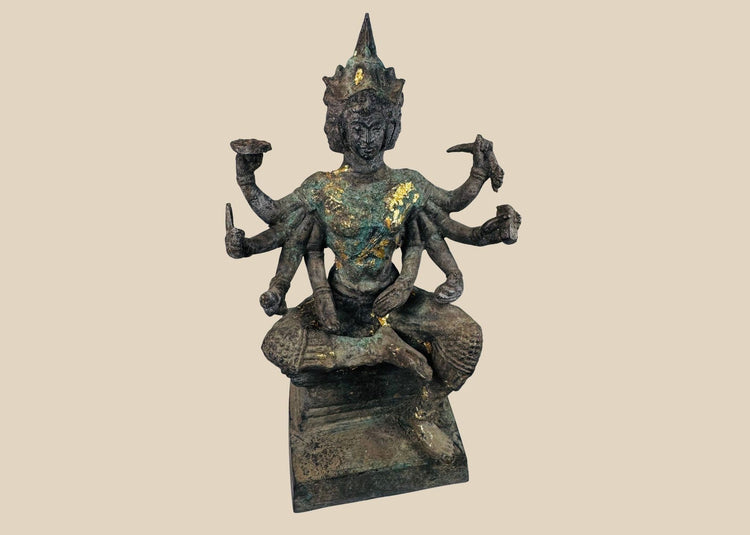
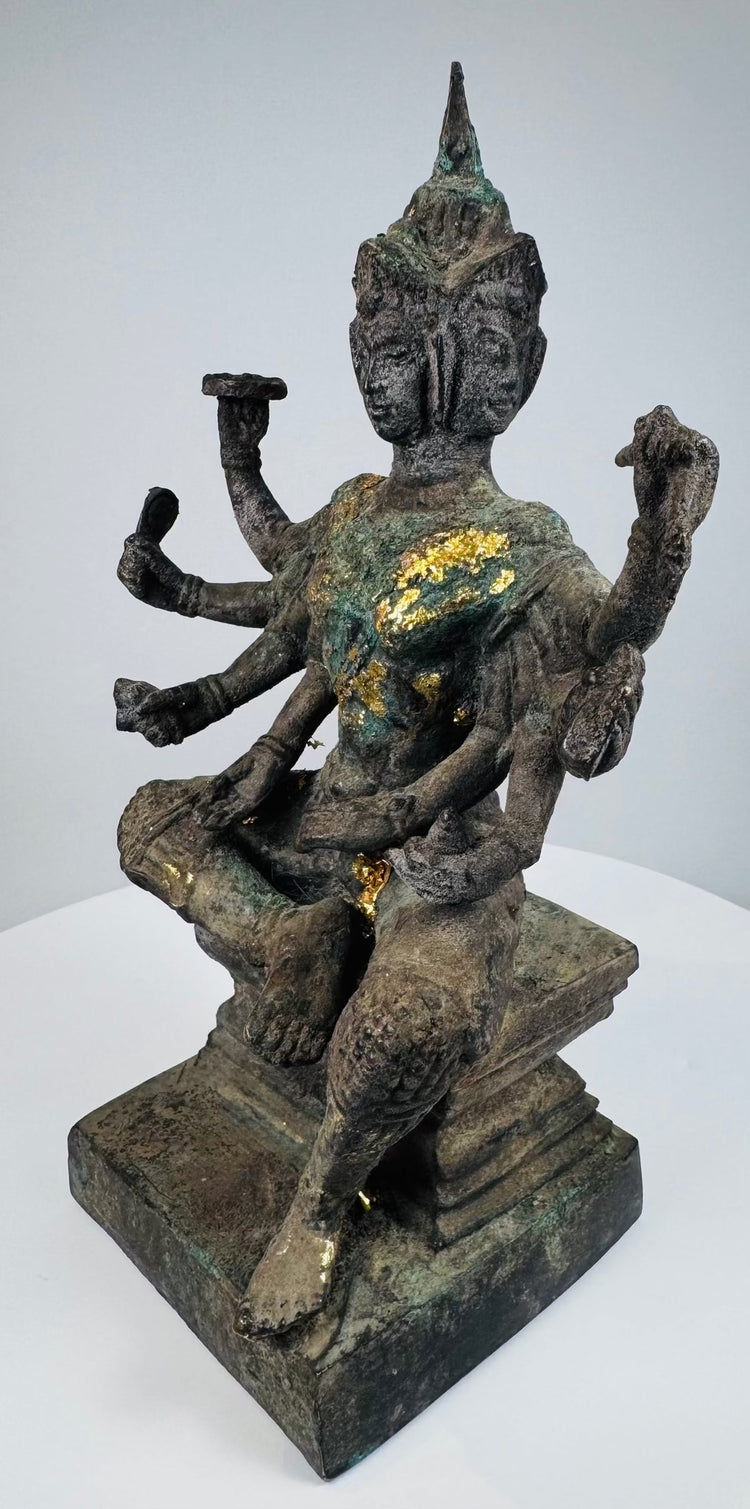
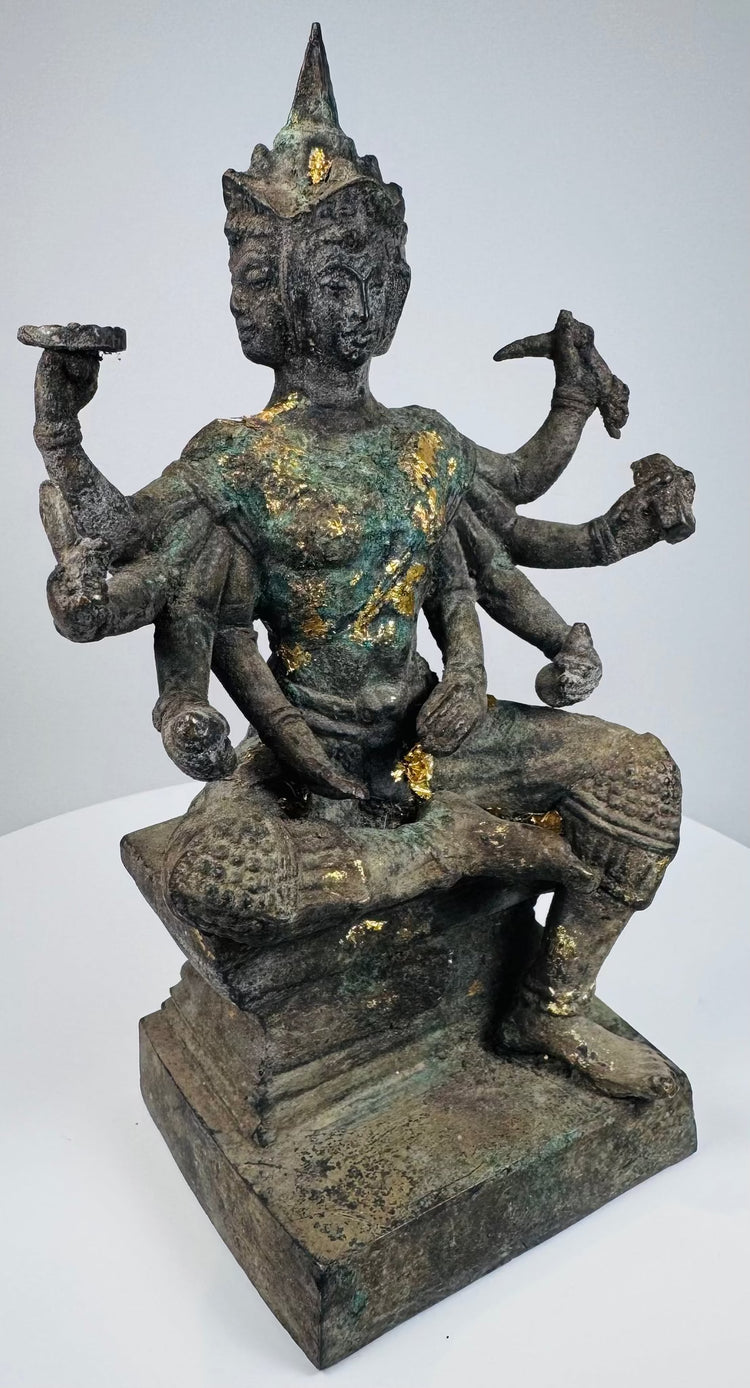
This striking Thai bronze sculpture represents Phra Phrom, the Thai manifestation of Brahma, the Hindu deity associated with creation, knowledge, and cosmic order. Although sometimes popularly called the Four-Faced Buddha, Phra Phrom is not a representation of the historical Buddha. Instead, the deity reflects the centuries-long integration of Hindu beliefs into Thai Buddhist and devotional culture.
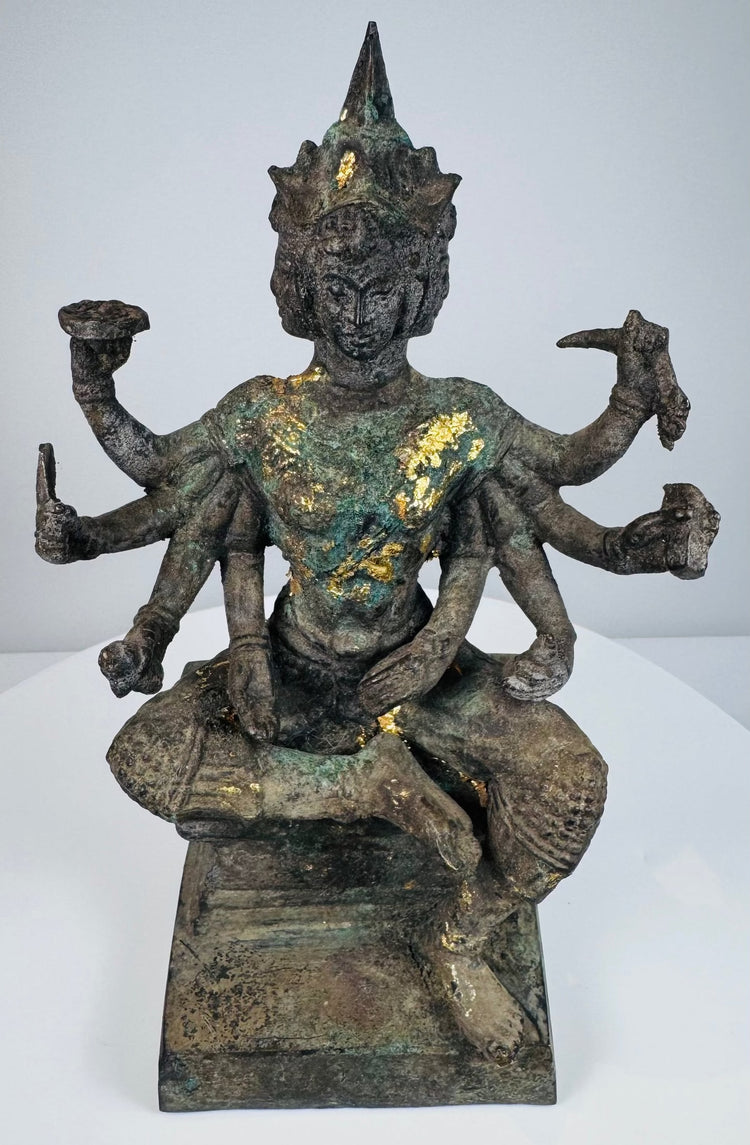
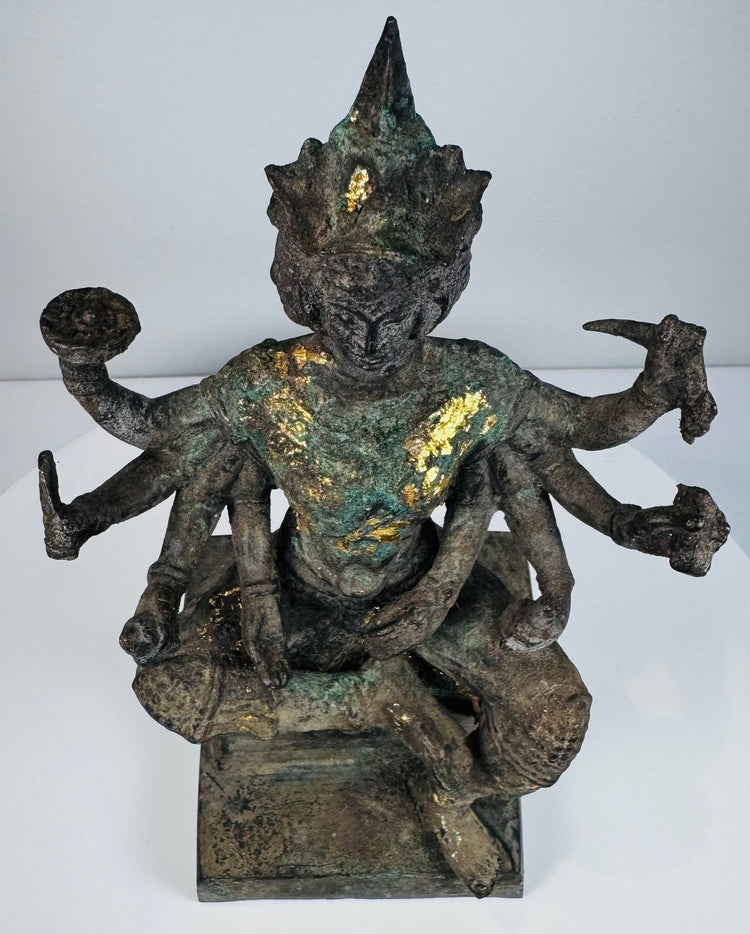
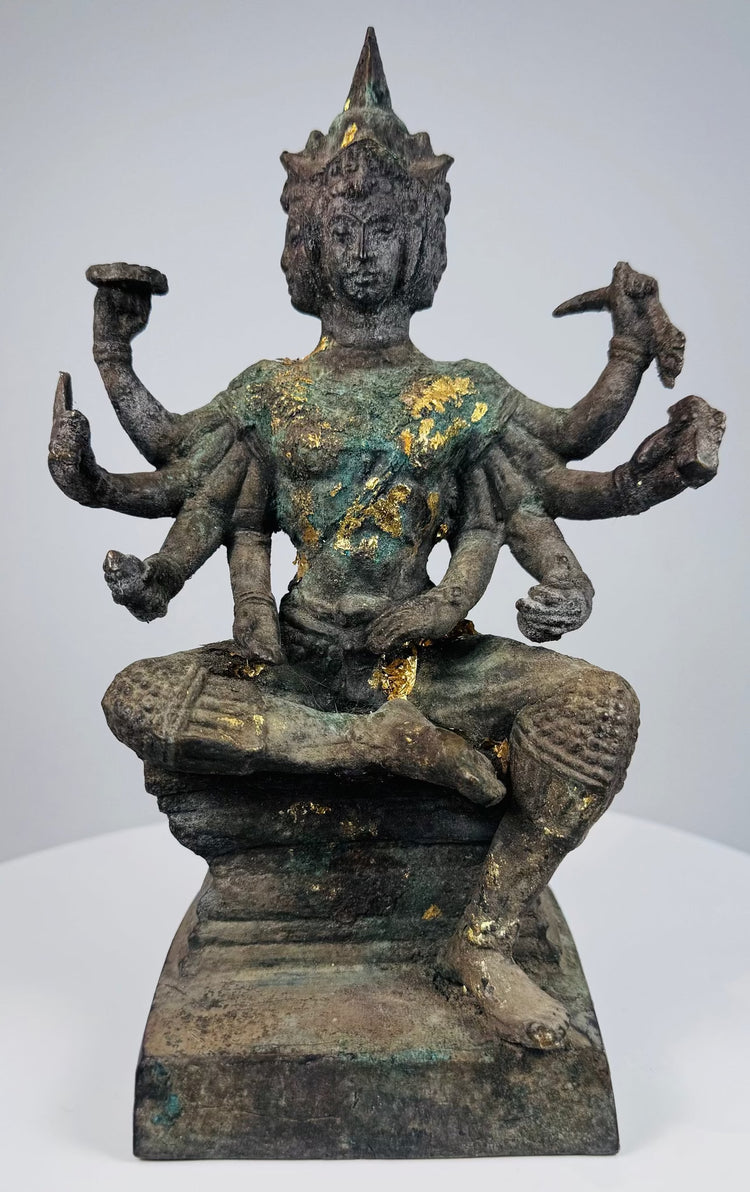
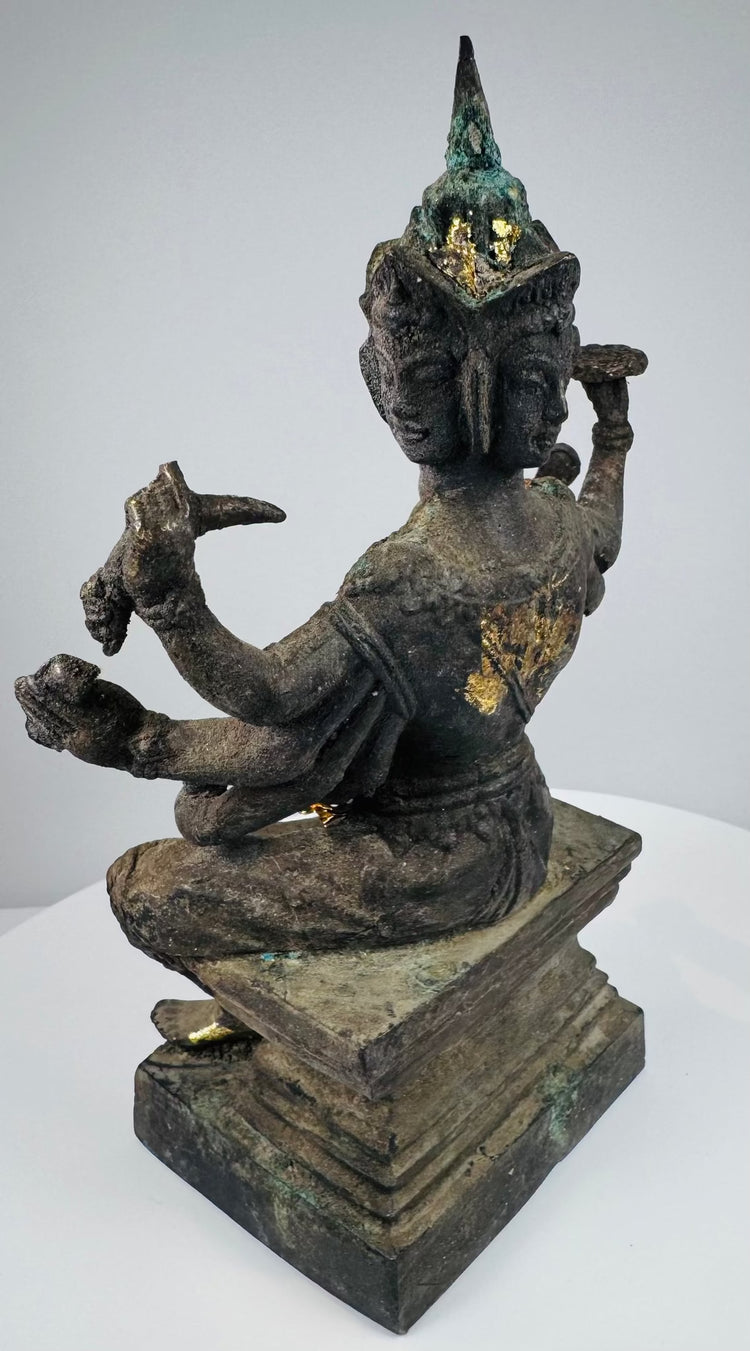
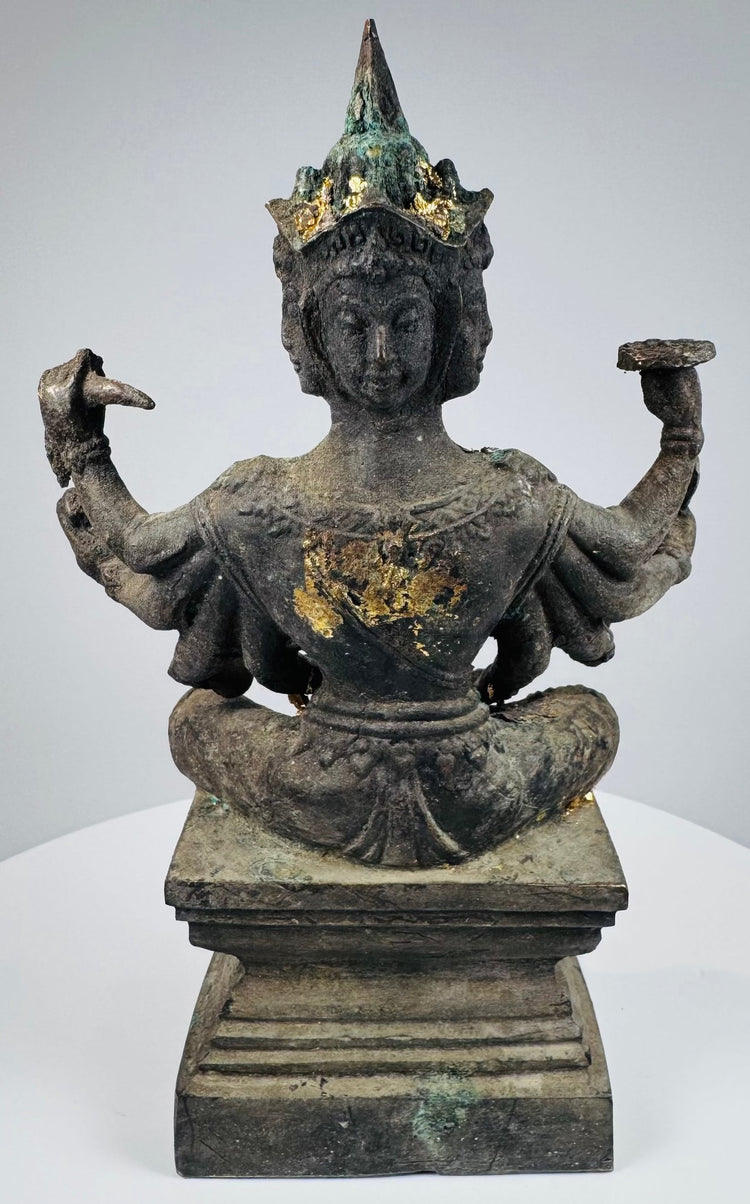
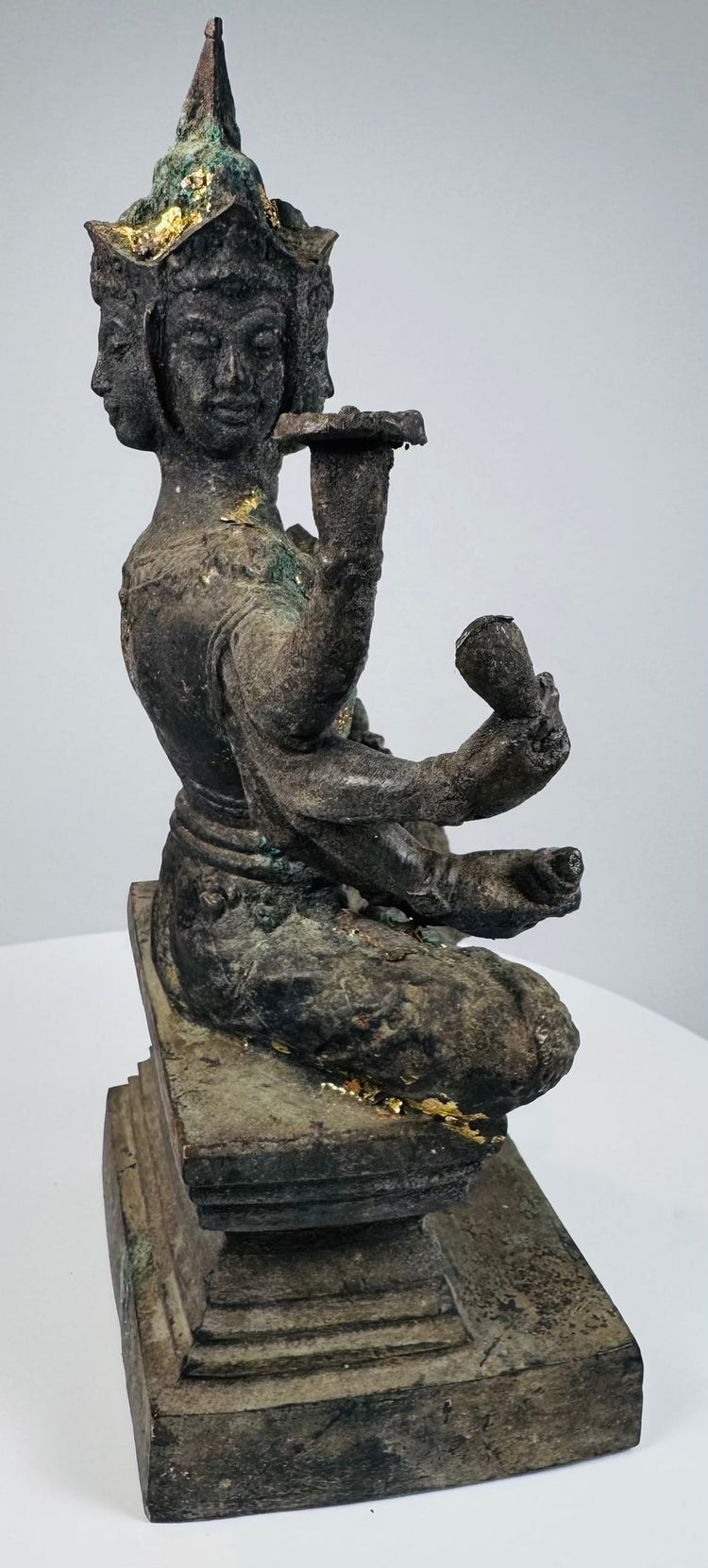
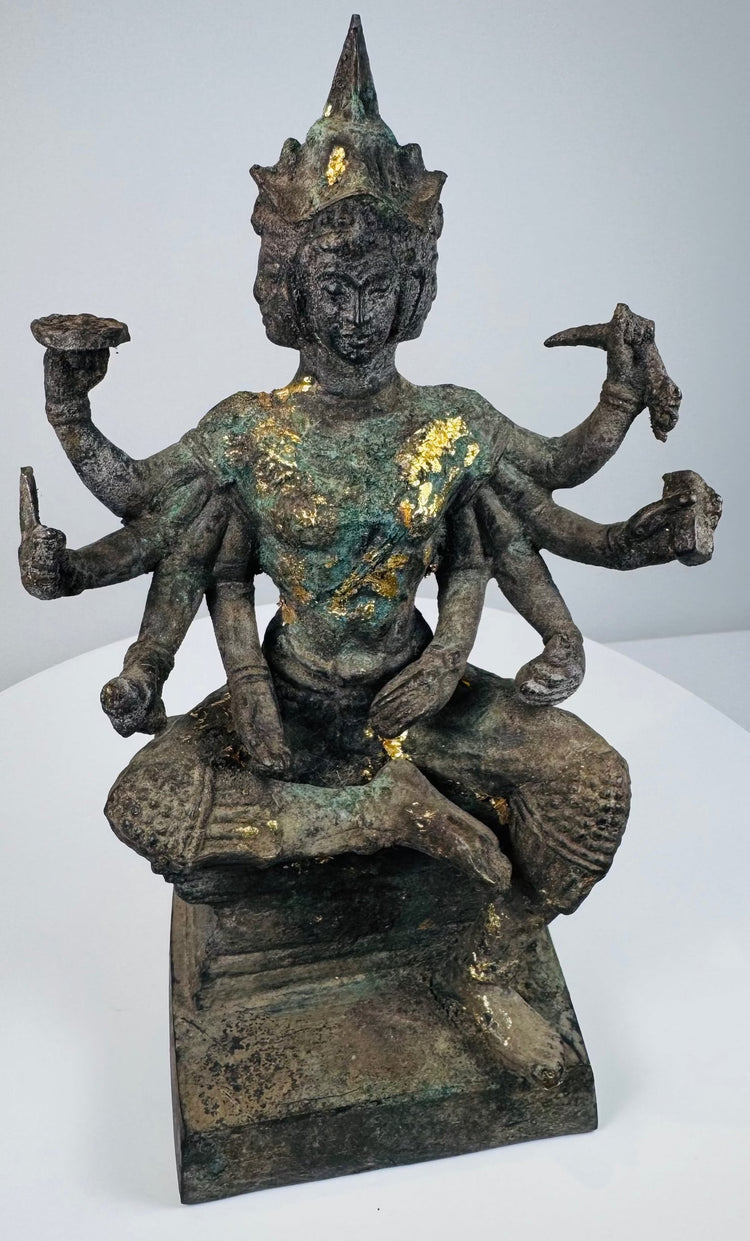
The deity is portrayed with four serene faces oriented toward the cardinal directions, each framed by an elaborate tiered headdress rising to a tall pointed finial. Eight arms extend around the body, creating an elaborate and visually commanding composition. The surviving hands retain several symbolic implements, including a disc-like object, a rounded vessel, and additional ritual attributes, although some are now incomplete or obscured by age.
Phra Phrom sits in a posture of royal ease upon a raised platform supported by a substantial tiered rectangular pedestal. One leg is folded across the seat while the opposite leg descends toward the base, giving the sculpture a sense of relaxed authority and divine presence. Carefully rendered garments, patterned textile borders, facial features, and ornamental details remain visible beneath the accumulated patina.
Scattered remnants of applied gold leaf survive across the headdress, chest, shoulders, garments, and base. These irregular gilded areas were likely renewed during the figure’s devotional life as acts of reverence and merit-making. The underlying bronze has developed a deep brown-black surface with areas of green oxidation, contributing considerable visual depth and evidence of age.
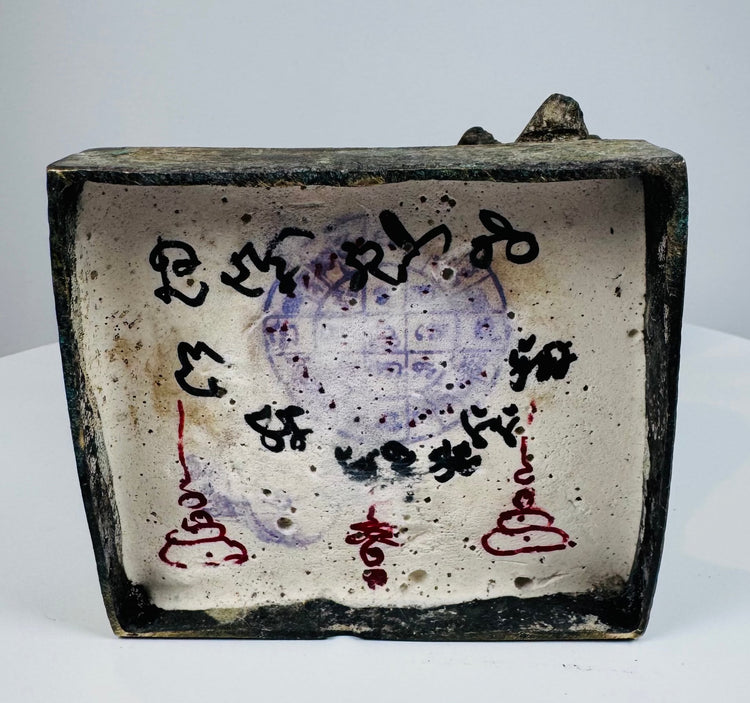
The hollow underside has been sealed with a pale plaster or composition material bearing hand-drawn characters, symbols, and a circular yantra-like diagram in black, red, and violet pigment. Such markings are traditionally associated with consecration, protection, astrology, or the ritual activation of sacred images. Their precise meaning has not been translated, but they provide compelling evidence that this sculpture was intended for spiritual use rather than functioning solely as decoration.
Features
- Four-faced representation of Phra Phrom, the Thai form of Brahma
- Eight individually positioned arms holding symbolic ritual attributes
- Elaborate tiered headdress with tall pointed finial
- Seated in a posture of royal ease upon a stepped pedestal
- Cast bronze or copper-alloy construction
- Surviving patches of devotional gold leaf
- Naturally aged brown, black, and green verdigris patina
- Sealed underside with hand-drawn sacred characters and yantra-style markings
Cultural Significance
Phra Phrom occupies an important position within Thai religious culture, combining the Hindu Brahma with Buddhist cosmology and local devotional practice. His four faces look outward in every direction, expressing his unrestricted awareness and ability to extend blessings throughout the world.
The four faces are also commonly associated with the four Brahmavihāras, or sublime states: loving-kindness, compassion, sympathetic joy, and equanimity. The eight arms reinforce the deity’s far-reaching spiritual power, while the objects held in the hands represent aspects of knowledge, authority, protection, and creation.
Images of Phra Phrom are traditionally installed in temples, household shrines, businesses, and outdoor sanctuaries. Worshippers present incense, flowers, gold leaf, and other offerings while seeking protection, prosperity, wisdom, success, and harmony.
Condition
Good antique condition with extensive wear consistent with age and devotional use. The surface displays oxidation, verdigris, accumulated deposits, abrasions, casting irregularities, and losses to the original gilding. Scattered gold leaf remains visible throughout.
Several hand-held attributes and small extremities are incomplete, worn, or truncated, with additional minor losses around the headdress and ornamental details. The figure remains structurally intact, stands securely on its pedestal, and displays impressively from all sides. The sealed and inscribed underside remains preserved.
Dimensions (Approximate)
Height: 8.2 in
Width: 5.25 in
Depth: 3.25 in
Age (Approximate)
105–175 years old
Provenance
Property from the Preiser Collection.
The collection is associated with Dr. Franklin M. Preiser (1937–2022) of Arizona, a long-standing collector of Asian art. Works from the collection subsequently passed by descent before its later dispersal.
Subsequently handled by Andrew Jones Auctions of Los Angeles, a full-service auction and appraisal firm specializing in fine art, antiques, and Asian works of art. The auction house is supported by specialists with extensive international experience and regularly presents diverse collections and estates spanning several centuries.
Learn More
View a related four-faced bronze Brahma from Southeast Asia in the collection of the Smithsonian’s National Museum of Asian Art
Explore our Collection of Buddhist & Hindu Relics and Sacred Statues
Descripción
Historical Context & Origin
Region: Thailand, Southeast Asia
Material: Cast bronze or copper alloy with applied gold leaf, natural oxidation, and verdigris patina; sealed underside with hand-drawn ritual markings
Period: Late Rattanakosin Period, circa 1850–1920
Description
This striking Thai bronze sculpture represents Phra Phrom, the Thai manifestation of Brahma, the Hindu deity associated with creation, knowledge, and cosmic order. Although sometimes popularly called the Four-Faced Buddha, Phra Phrom is not a representation of the historical Buddha. Instead, the deity reflects the centuries-long integration of Hindu beliefs into Thai Buddhist and devotional culture.
The deity is portrayed with four serene faces oriented toward the cardinal directions, each framed by an elaborate tiered headdress rising to a tall pointed finial. Eight arms extend around the body, creating an elaborate and visually commanding composition. The surviving hands retain several symbolic implements, including a disc-like object, a rounded vessel, and additional ritual attributes, although some are now incomplete or obscured by age.
Phra Phrom sits in a posture of royal ease upon a raised platform supported by a substantial tiered rectangular pedestal. One leg is folded across the seat while the opposite leg descends toward the base, giving the sculpture a sense of relaxed authority and divine presence. Carefully rendered garments, patterned textile borders, facial features, and ornamental details remain visible beneath the accumulated patina.
Scattered remnants of applied gold leaf survive across the headdress, chest, shoulders, garments, and base. These irregular gilded areas were likely renewed during the figure’s devotional life as acts of reverence and merit-making. The underlying bronze has developed a deep brown-black surface with areas of green oxidation, contributing considerable visual depth and evidence of age.
The hollow underside has been sealed with a pale plaster or composition material bearing hand-drawn characters, symbols, and a circular yantra-like diagram in black, red, and violet pigment. Such markings are traditionally associated with consecration, protection, astrology, or the ritual activation of sacred images. Their precise meaning has not been translated, but they provide compelling evidence that this sculpture was intended for spiritual use rather than functioning solely as decoration.
Features
- Four-faced representation of Phra Phrom, the Thai form of Brahma
- Eight individually positioned arms holding symbolic ritual attributes
- Elaborate tiered headdress with tall pointed finial
- Seated in a posture of royal ease upon a stepped pedestal
- Cast bronze or copper-alloy construction
- Surviving patches of devotional gold leaf
- Naturally aged brown, black, and green verdigris patina
- Sealed underside with hand-drawn sacred characters and yantra-style markings
Cultural Significance
Phra Phrom occupies an important position within Thai religious culture, combining the Hindu Brahma with Buddhist cosmology and local devotional practice. His four faces look outward in every direction, expressing his unrestricted awareness and ability to extend blessings throughout the world.
The four faces are also commonly associated with the four Brahmavihāras, or sublime states: loving-kindness, compassion, sympathetic joy, and equanimity. The eight arms reinforce the deity’s far-reaching spiritual power, while the objects held in the hands represent aspects of knowledge, authority, protection, and creation.
Images of Phra Phrom are traditionally installed in temples, household shrines, businesses, and outdoor sanctuaries. Worshippers present incense, flowers, gold leaf, and other offerings while seeking protection, prosperity, wisdom, success, and harmony.
Condition
Good antique condition with extensive wear consistent with age and devotional use. The surface displays oxidation, verdigris, accumulated deposits, abrasions, casting irregularities, and losses to the original gilding. Scattered gold leaf remains visible throughout.
Several hand-held attributes and small extremities are incomplete, worn, or truncated, with additional minor losses around the headdress and ornamental details. The figure remains structurally intact, stands securely on its pedestal, and displays impressively from all sides. The sealed and inscribed underside remains preserved.
Dimensions (Approximate)
Height: 8.2 in
Width: 5.25 in
Depth: 3.25 in
Age (Approximate)
105–175 years old
Provenance
Property from the Preiser Collection.
The collection is associated with Dr. Franklin M. Preiser (1937–2022) of Arizona, a long-standing collector of Asian art. Works from the collection subsequently passed by descent before its later dispersal.
Subsequently handled by Andrew Jones Auctions of Los Angeles, a full-service auction and appraisal firm specializing in fine art, antiques, and Asian works of art. The auction house is supported by specialists with extensive international experience and regularly presents diverse collections and estates spanning several centuries.
Learn More
View a related four-faced bronze Brahma from Southeast Asia in the collection of the Smithsonian’s National Museum of Asian Art
Explore our Collection of Buddhist & Hindu Relics and Sacred Statues
También te puede interesar
