

Cinturón tibetano antiguo con aplique bordado y daga marcial | Región del Himalaya | Alrededor de 1870-1900
- Precio habitual
- $1,000.00
- Precio de venta
- $1,000.00
- Precio habitual
No se pudo cargar la disponibilidad de retiro


Cinturón tibetano antiguo con aplique bordado y daga marcial | Región del Himalaya | Alrededor de 1870-1900
Descripción
Más
Menos
Contexto histórico y origen
Región: Tíbet / Región del Himalaya
Material: Acero forjado, cuerno, madera, cuero, metal plateado, algodón y bordado de seda
Período: Finales del siglo XIX d. C., circa 1870-1900
Descripción
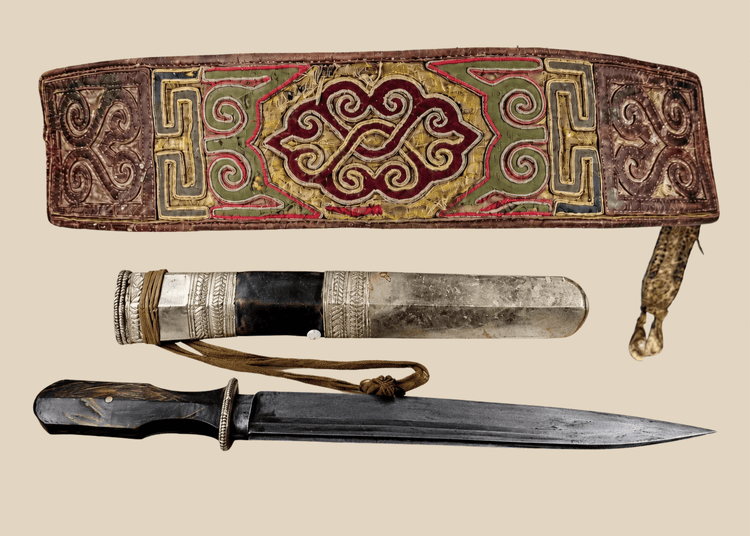
Este notable conjunto de cinturón tibetano comprende un cinturón utilitario o de guerrero tradicional junto con una sustancial daga de un solo filo alojada en su vaina original a medida.
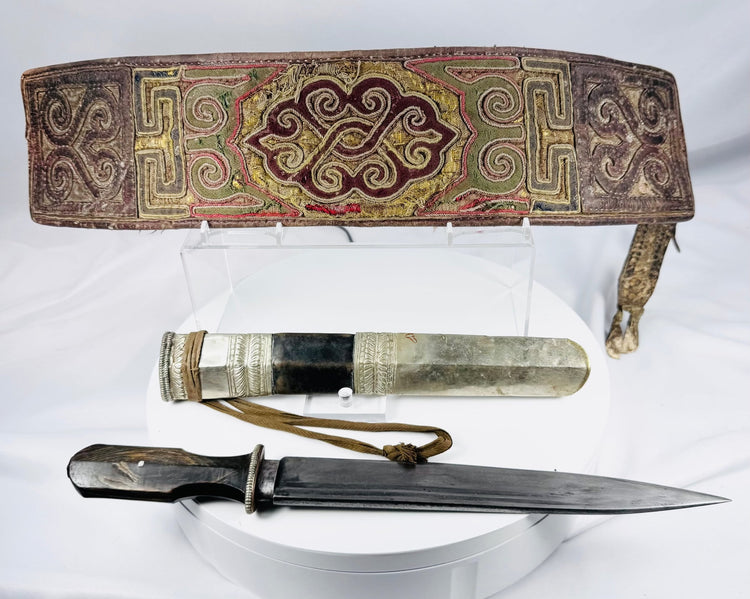
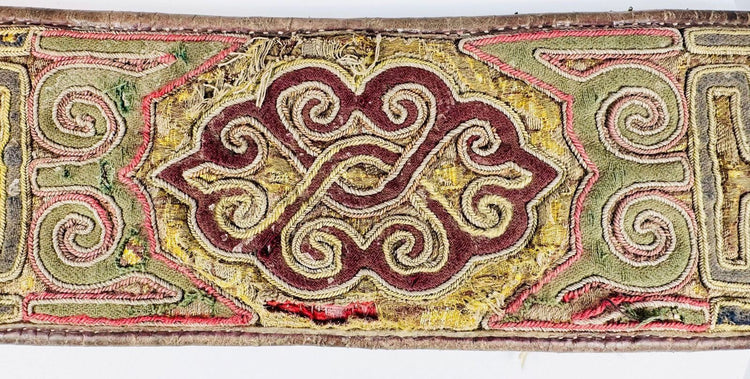
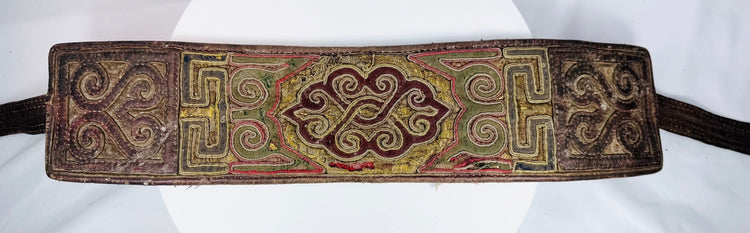
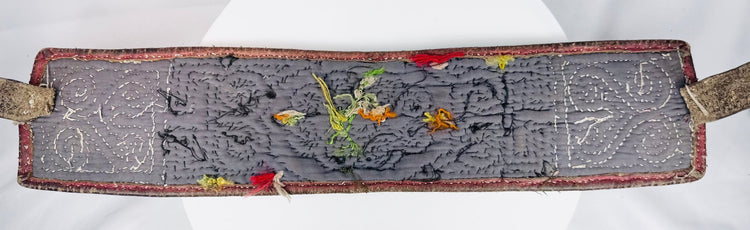
El ancho cinturón está confeccionado en algodón acolchado y cubierto con paneles textiles de ricos colores embellecidos con cordones aplicados, apliques calados y pergaminos geométricos bordados. Su campo central está dominado por un elaborado motivo simétrico ejecutado en burdeos, crema, amarillo, verde y rosa, rodeado de bordes angulares con diseño de llave y diseños espirales repetitivos. Los paneles terminales están reforzados con cuero y decorados con motivos de pergaminos en relieve. El reverso revela la construcción cosida a mano, el respaldo textil y las correas de sujeción supervivientes. La hebilla original del cinturón ya no está presente.
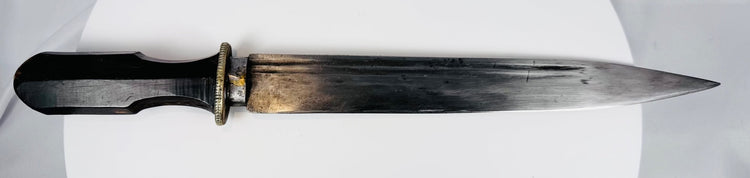
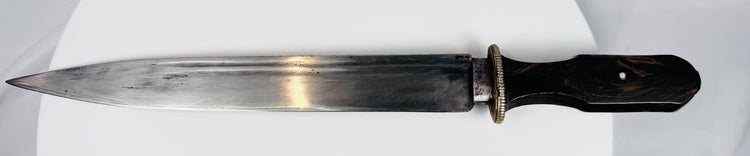
La daga que la acompaña es una forma tibetana característica que presenta una robusta hoja de acero forjado con un solo filo, lomo recto y punta afilada. Sus sustanciales proporciones indican que estaba destinada a ser un cuchillo práctico de trabajo y defensa, más que un objeto puramente ceremonial. El mango de cuerno oscuro facetado tiene una empuñadura estrecha y un terminal ligeramente expandido, mientras que un pequeño inserto pálido proporciona un acento decorativo contrastante. Un guardamano de metal plateado con un borde finamente trabajado con diseño de cuerda separa el mango de la hoja.
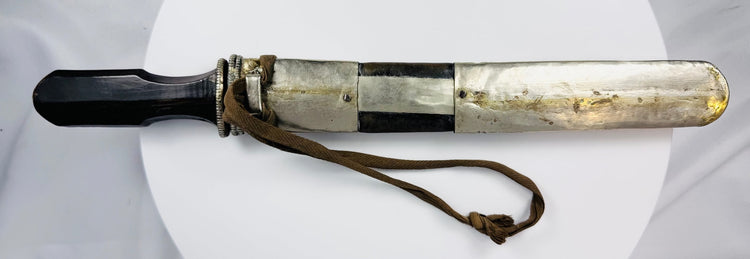
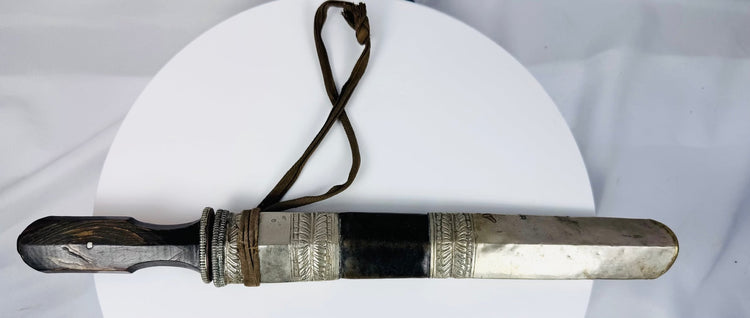
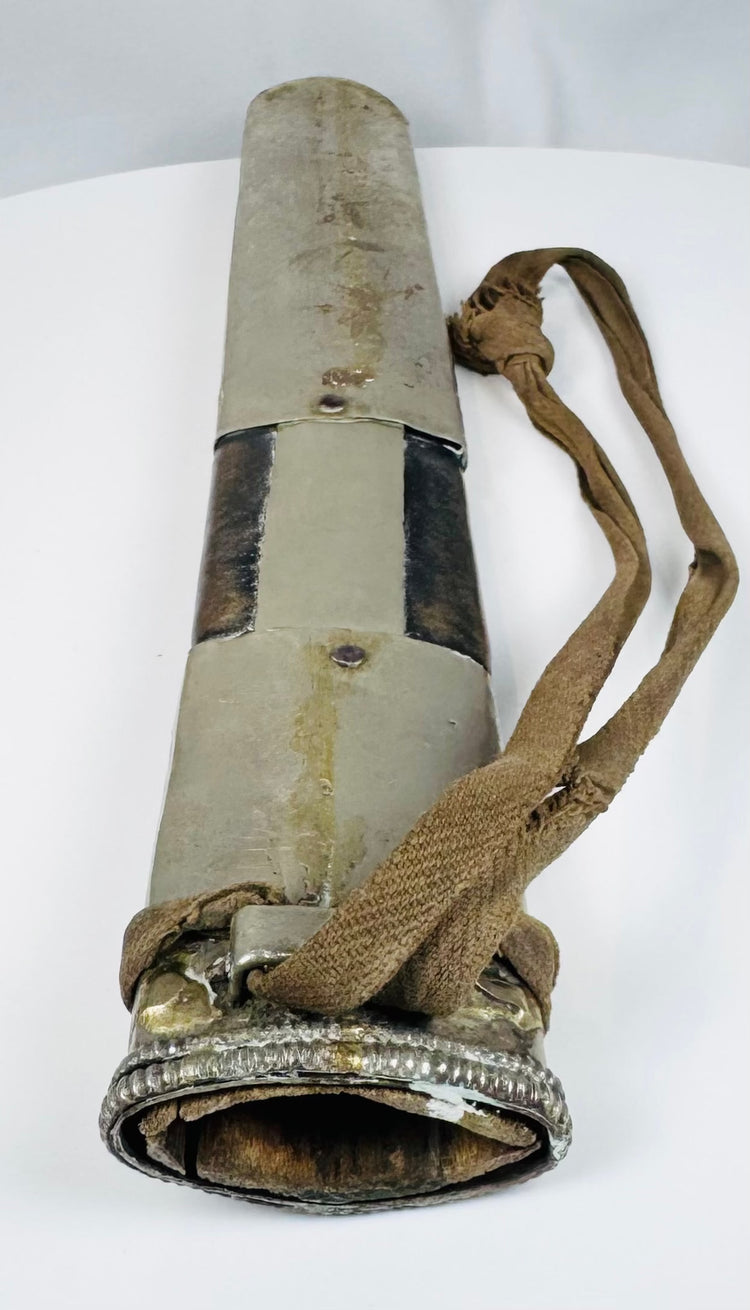
La daga conserva su vaina original de madera cubierta de cuero, ampliamente revestida con grandes monturas de metal plateado. La vaina está decorada con bandas foliadas repujadas y cinceladas, paneles oscuros alternos y un terminal redondeado. Un cordón de suspensión tejido superviviente permitía asegurar la daga al cinturón y llevarla en la cintura.
Características
- Embellecido con apliques calados, cordones aplicados y decoración bordada
- Motivos geométricos de pergaminos, espirales y diseños de llave
- Daga tibetana característica con robusta hoja de acero de un solo filo
- Mango de cuerno oscuro facetado con incrustación contrastante
- Guardamano de metal plateado con borde con diseño de cuerda
- Vaina original de madera cubierta de cuero
- Grandes monturas de vaina plateadas con decoración foliada repujada
- Conserva su cordón de suspensión tejido original
- Ejemplo completo y visualmente impresionante de atuendos masculinos tibetanos
Importancia cultural
Las dagas formaban un componente importante de la vestimenta masculina tradicional tibetana y se llevaban como herramientas prácticas, armas defensivas e indicadores de estatus social. Los cuchillos tibetanos se usaban en la vida diaria para cortar alimentos, preparar materiales, manejar ganado y realizar numerosas tareas mientras se viajaba por la meseta. Ejemplos más elaborados estaban montados con plata, latón, cuerno, coral u otros materiales valiosos y reflejaban tanto el estatus del usuario como las habilidades de los metalúrgicos regionales.
El cinturón ricamente decorado habría asegurado estos objetos en la cintura, funcionando también como una expresión visible de las tradiciones textiles regionales. Más que representar un uniforme militar estandarizado, el conjunto se entiende mejor como el equipo personal de un hombre tibetano que pudo haber sido un guerrero, viajero armado, cazador, pastor o individuo de estatus social.
Condición
El conjunto se mantiene en buen estado antiguo y presenta el desgaste esperado debido a la edad. La hoja de acero exhibe oxidación superficial dispersa, patinado oscurecido, arañazos y evidencia de limpieza histórica. La hoja sigue siendo sustancial y conserva su perfil puntiagudo. El mango de cuerno presenta desgaste superficial, arañazos, variaciones naturales e imperfecciones menores acordes con la edad y el uso.
La vaina permanece intacta y exhibe abolladuras, arañazos, deslustre, rozaduras, decoloración y áreas de separación o irregularidad en el revestimiento de metal plateado. El cuero, el núcleo de madera, el cordón de suspensión y las monturas decorativas muestran desgaste acorde con el uso prolongado y la conservación.
El cinturón textil presenta un desgaste considerable, descolorido, deshilachado, pérdida de hilo, manchas, tela de base expuesta y pérdidas localizadas en la decoración bordada y aplicada. El reverso exhibe extensas costuras a mano, hilos sueltos, reparaciones antiguas y desgaste superficial. Falta la hebilla original del cinturón.
Dimensiones (aproximadas)
Longitud del cinturón: 32 pulgadas
Longitud de la daga: 15 pulgadas
Antigüedad (aproximada)
126–156 años de antigüedad
Procedencia
Anteriormente parte de una colección privada de Cheyenne, Wyoming, EE. UU., especializada en armas antiguas, armaduras y militaria. La colección se formó durante muchos años con un énfasis particular en armas históricas, accesorios de pólvora, armaduras y objetos marciales.
Saber más
Ver una daga y vaina tibetanas relacionadas en la colección de El Museo Metropolitano de Arte
Explora nuestra colección curada de Armas, Armaduras y Armamento Histórico
Descripción
Contexto histórico y origen
Región: Tíbet / Región del Himalaya
Material: Acero forjado, cuerno, madera, cuero, metal plateado, algodón y bordado de seda
Período: Finales del siglo XIX d. C., circa 1870-1900
Descripción
Este notable conjunto de cinturón tibetano comprende un cinturón utilitario o de guerrero tradicional junto con una sustancial daga de un solo filo alojada en su vaina original a medida.
El ancho cinturón está confeccionado en algodón acolchado y cubierto con paneles textiles de ricos colores embellecidos con cordones aplicados, apliques calados y pergaminos geométricos bordados. Su campo central está dominado por un elaborado motivo simétrico ejecutado en burdeos, crema, amarillo, verde y rosa, rodeado de bordes angulares con diseño de llave y diseños espirales repetitivos. Los paneles terminales están reforzados con cuero y decorados con motivos de pergaminos en relieve. El reverso revela la construcción cosida a mano, el respaldo textil y las correas de sujeción supervivientes. La hebilla original del cinturón ya no está presente.
La daga que la acompaña es una forma tibetana característica que presenta una robusta hoja de acero forjado con un solo filo, lomo recto y punta afilada. Sus sustanciales proporciones indican que estaba destinada a ser un cuchillo práctico de trabajo y defensa, más que un objeto puramente ceremonial. El mango de cuerno oscuro facetado tiene una empuñadura estrecha y un terminal ligeramente expandido, mientras que un pequeño inserto pálido proporciona un acento decorativo contrastante. Un guardamano de metal plateado con un borde finamente trabajado con diseño de cuerda separa el mango de la hoja.
La daga conserva su vaina original de madera cubierta de cuero, ampliamente revestida con grandes monturas de metal plateado. La vaina está decorada con bandas foliadas repujadas y cinceladas, paneles oscuros alternos y un terminal redondeado. Un cordón de suspensión tejido superviviente permitía asegurar la daga al cinturón y llevarla en la cintura.
Características
- Embellecido con apliques calados, cordones aplicados y decoración bordada
- Motivos geométricos de pergaminos, espirales y diseños de llave
- Daga tibetana característica con robusta hoja de acero de un solo filo
- Mango de cuerno oscuro facetado con incrustación contrastante
- Guardamano de metal plateado con borde con diseño de cuerda
- Vaina original de madera cubierta de cuero
- Grandes monturas de vaina plateadas con decoración foliada repujada
- Conserva su cordón de suspensión tejido original
- Ejemplo completo y visualmente impresionante de atuendos masculinos tibetanos
Importancia cultural
Las dagas formaban un componente importante de la vestimenta masculina tradicional tibetana y se llevaban como herramientas prácticas, armas defensivas e indicadores de estatus social. Los cuchillos tibetanos se usaban en la vida diaria para cortar alimentos, preparar materiales, manejar ganado y realizar numerosas tareas mientras se viajaba por la meseta. Ejemplos más elaborados estaban montados con plata, latón, cuerno, coral u otros materiales valiosos y reflejaban tanto el estatus del usuario como las habilidades de los metalúrgicos regionales.
El cinturón ricamente decorado habría asegurado estos objetos en la cintura, funcionando también como una expresión visible de las tradiciones textiles regionales. Más que representar un uniforme militar estandarizado, el conjunto se entiende mejor como el equipo personal de un hombre tibetano que pudo haber sido un guerrero, viajero armado, cazador, pastor o individuo de estatus social.
Condición
El conjunto se mantiene en buen estado antiguo y presenta el desgaste esperado debido a la edad. La hoja de acero exhibe oxidación superficial dispersa, patinado oscurecido, arañazos y evidencia de limpieza histórica. La hoja sigue siendo sustancial y conserva su perfil puntiagudo. El mango de cuerno presenta desgaste superficial, arañazos, variaciones naturales e imperfecciones menores acordes con la edad y el uso.
La vaina permanece intacta y exhibe abolladuras, arañazos, deslustre, rozaduras, decoloración y áreas de separación o irregularidad en el revestimiento de metal plateado. El cuero, el núcleo de madera, el cordón de suspensión y las monturas decorativas muestran desgaste acorde con el uso prolongado y la conservación.
El cinturón textil presenta un desgaste considerable, descolorido, deshilachado, pérdida de hilo, manchas, tela de base expuesta y pérdidas localizadas en la decoración bordada y aplicada. El reverso exhibe extensas costuras a mano, hilos sueltos, reparaciones antiguas y desgaste superficial. Falta la hebilla original del cinturón.
Dimensiones (aproximadas)
Longitud del cinturón: 32 pulgadas
Longitud de la daga: 15 pulgadas
Antigüedad (aproximada)
126–156 años de antigüedad
Procedencia
Anteriormente parte de una colección privada de Cheyenne, Wyoming, EE. UU., especializada en armas antiguas, armaduras y militaria. La colección se formó durante muchos años con un énfasis particular en armas históricas, accesorios de pólvora, armaduras y objetos marciales.
Saber más
Ver una daga y vaina tibetanas relacionadas en la colección de El Museo Metropolitano de Arte
Explora nuestra colección curada de Armas, Armaduras y Armamento Histórico
También te puede interesar
