
Antiguo grupo chino de terracota pintada de Madame Tang y su suegra | Dinastía Yuan-Ming | Circa siglo XIV-XVII
- Precio habitual
- $2,000.00
- Precio de venta
- $2,000.00
- Precio habitual
No se pudo cargar la disponibilidad de retiro


Antiguo grupo chino de terracota pintada de Madame Tang y su suegra | Dinastía Yuan-Ming | Circa siglo XIV-XVII
Descripción
Más
Menos
Contexto histórico y origen
Región: Norte de China
Material: Cerámica o terracota modelada a mano con pigmentos polícromos, respaldo de yeso o mortero, y un soporte de exhibición de acrílico moderno
Período: Probablemente dinastías Yuan-Ming, circa siglo XIV-XVII d.C.
Descripción
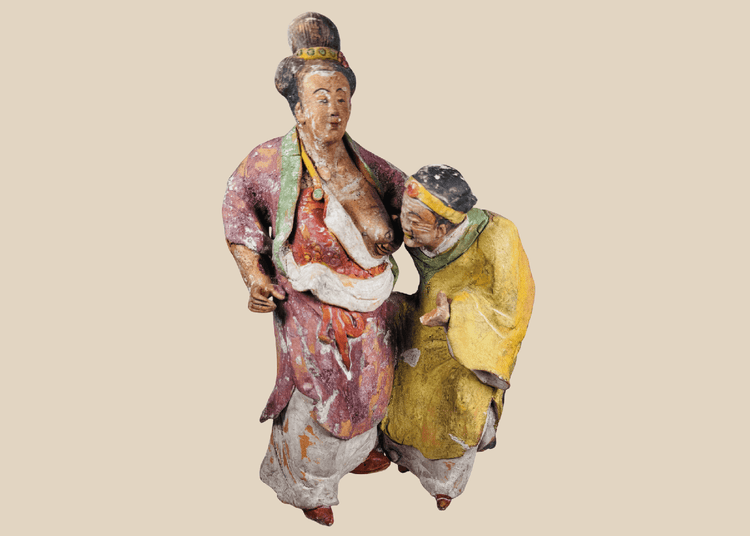
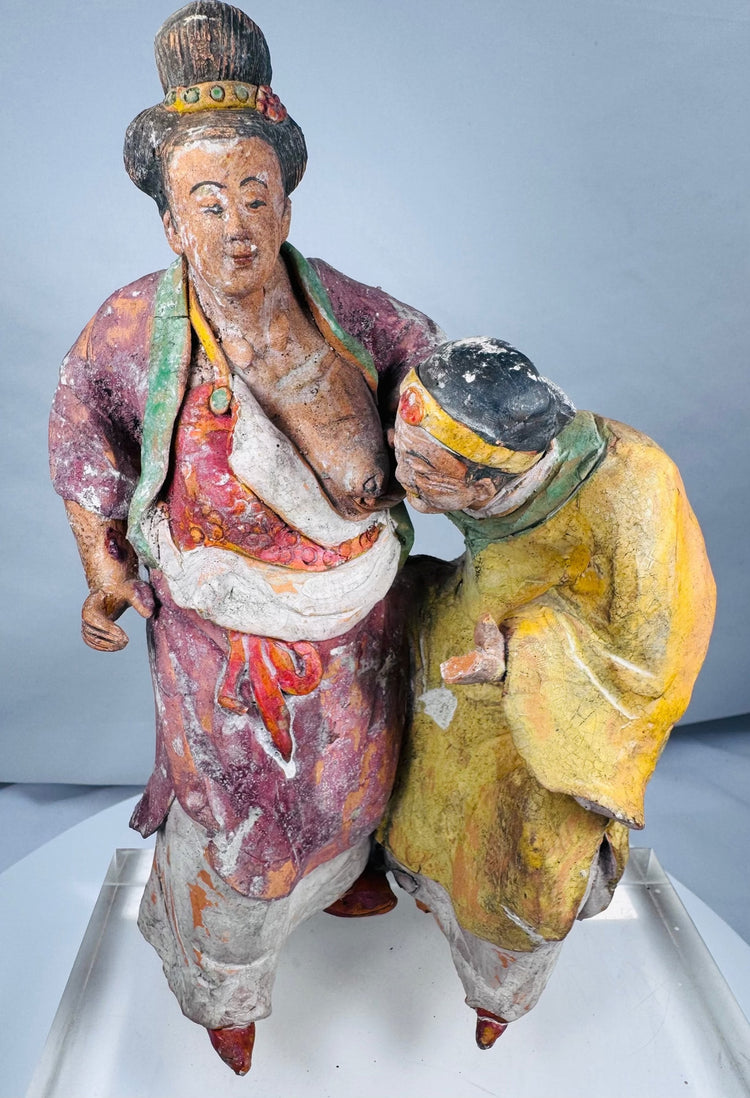
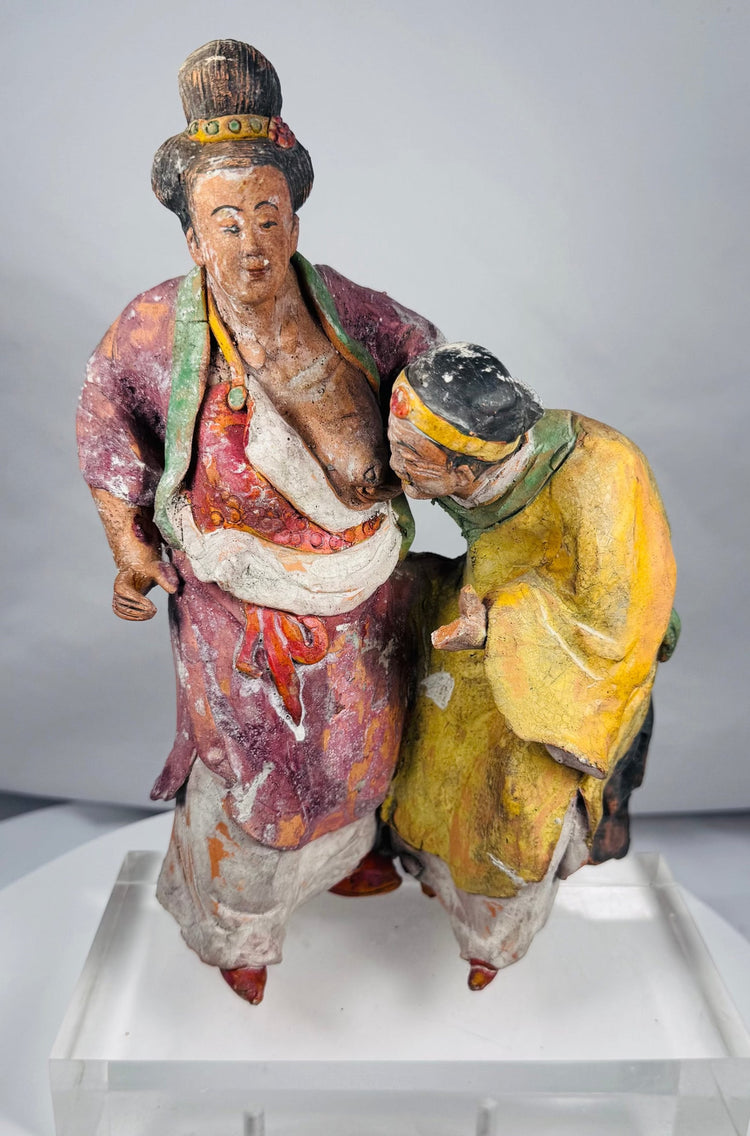
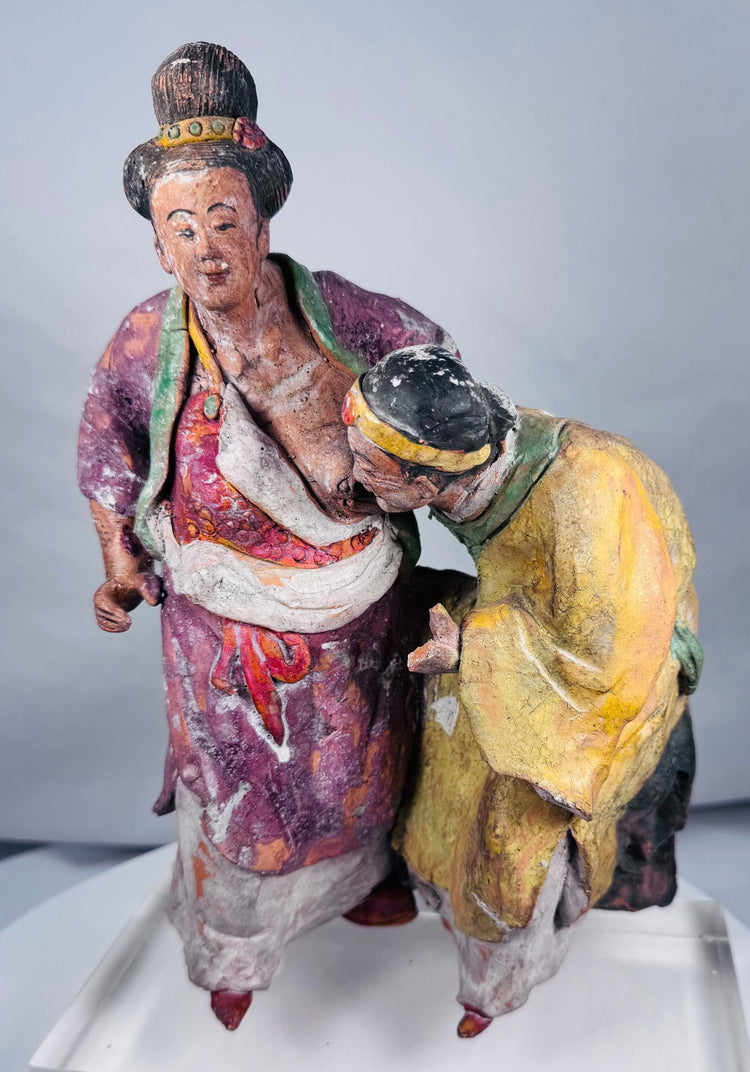
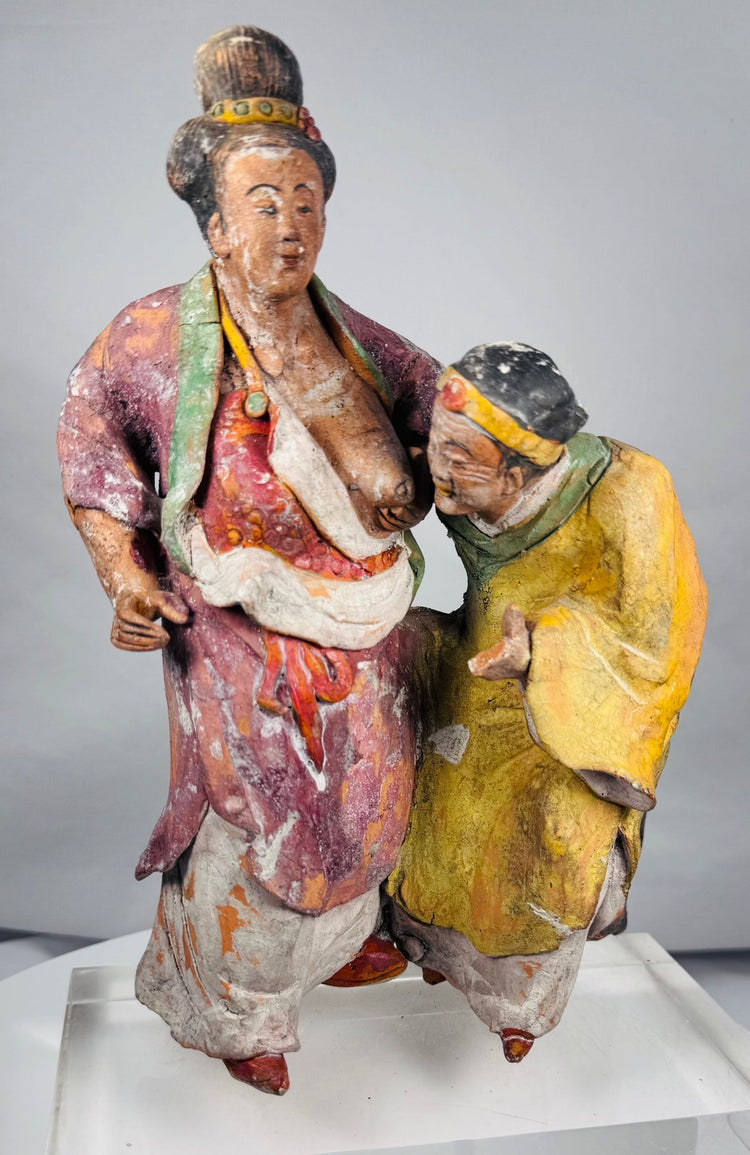
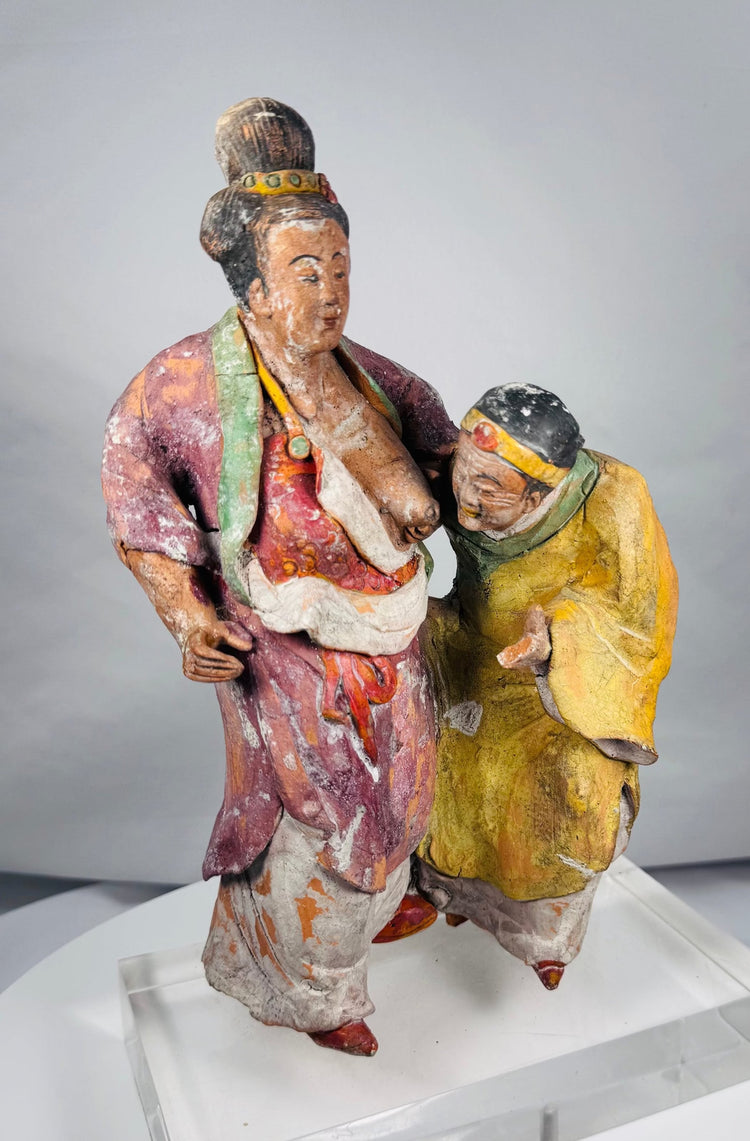
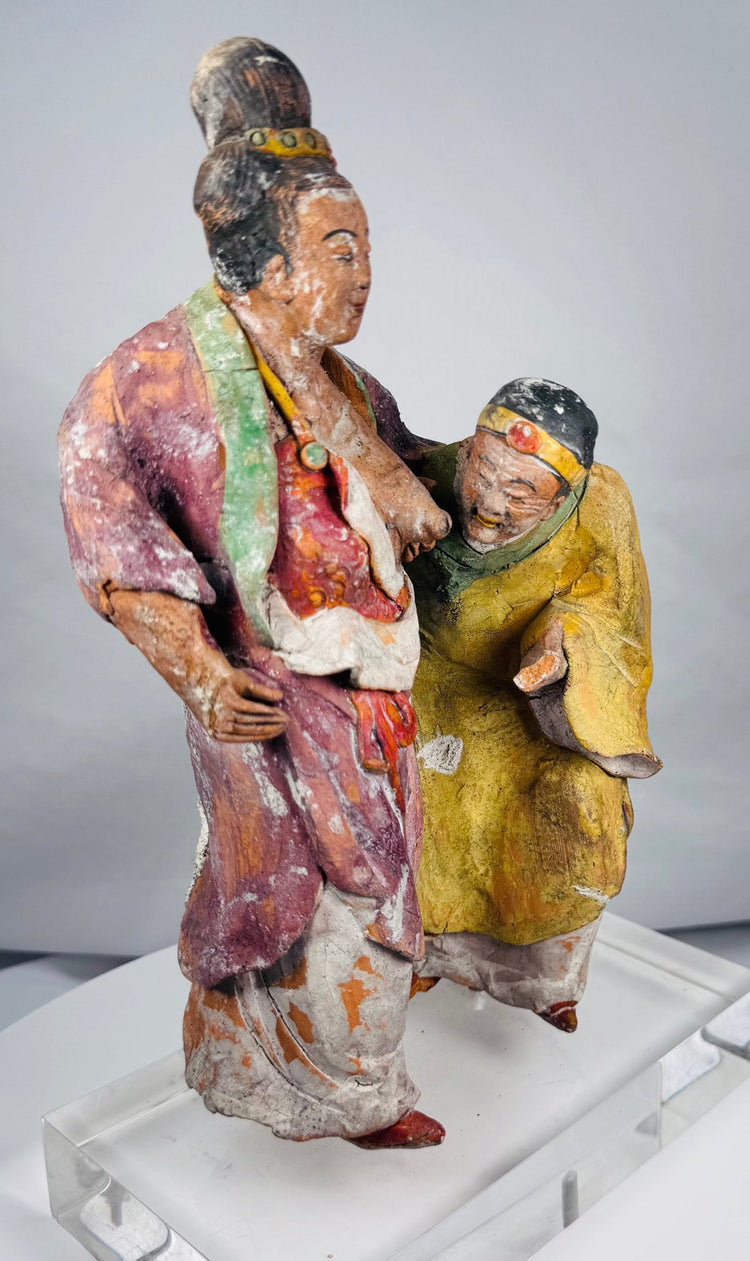
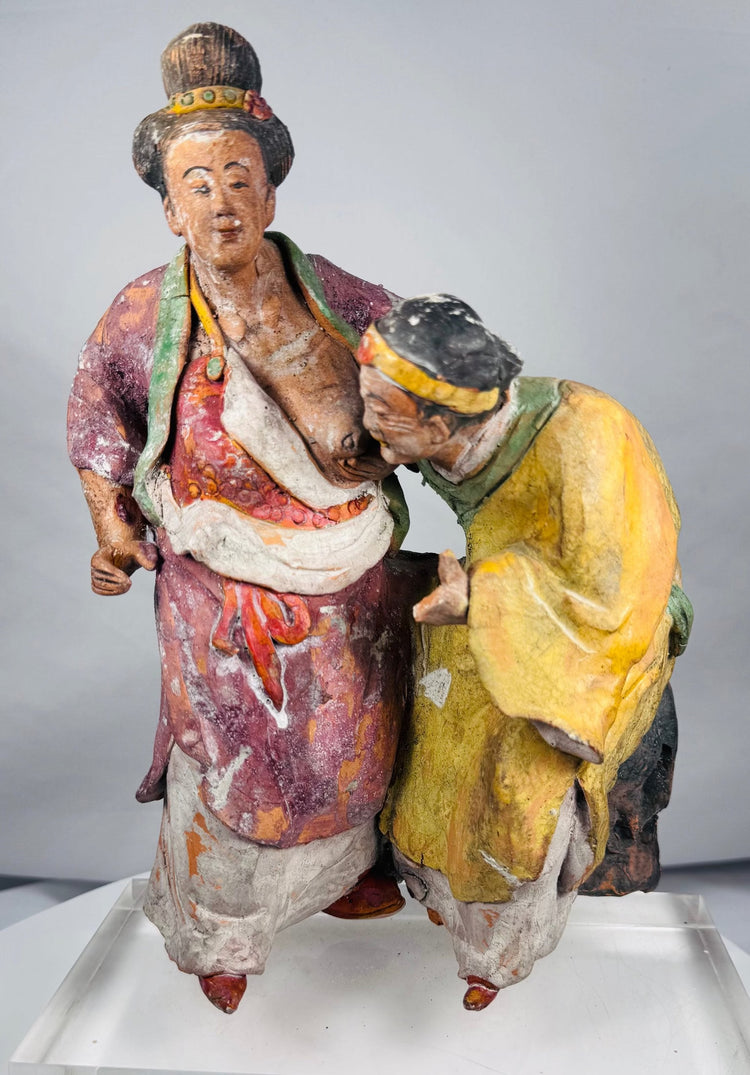
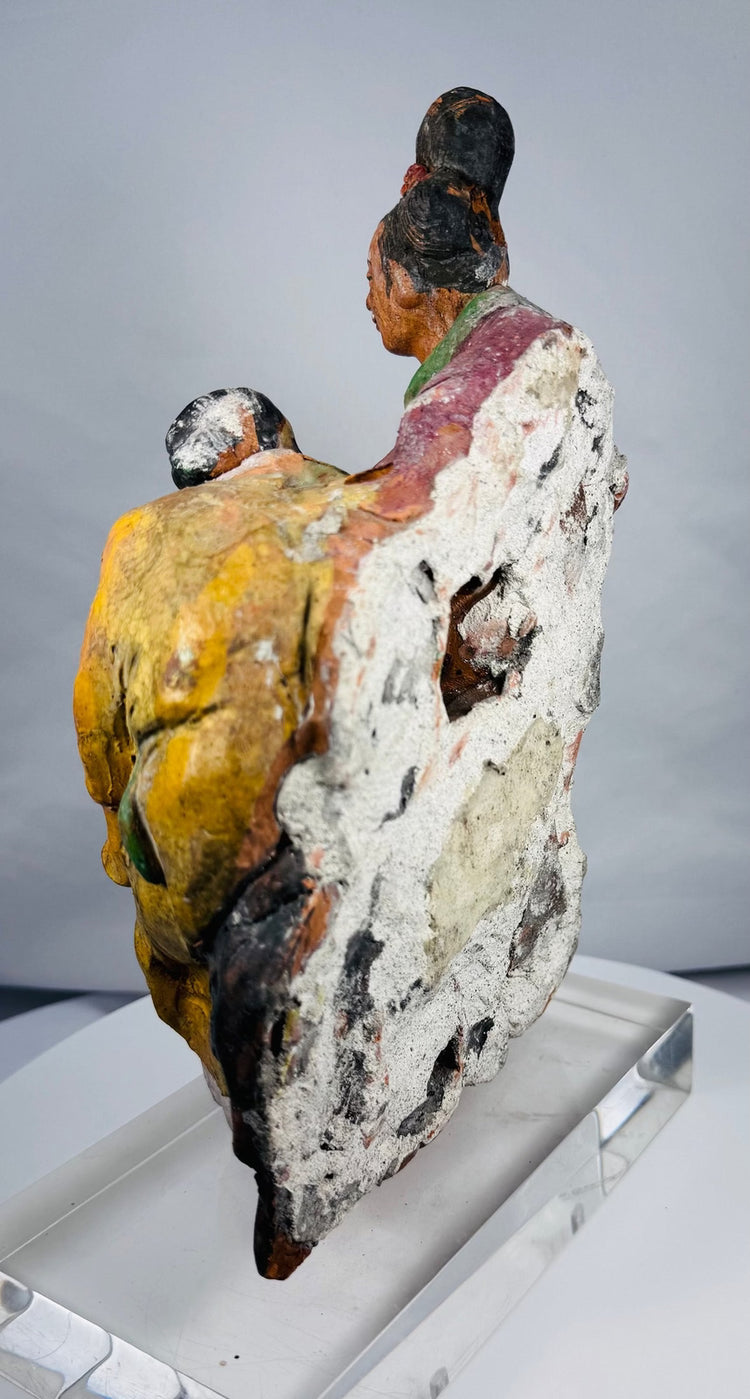
Este sustancial grupo escultórico chino de terracota pintada representa a la Sra. Tang amamantando a su anciana suegra, una de las historias celebradas tradicionalmente entre los Veinticuatro Ejemplos Filiales. La composición altamente expresiva ilustra un extraordinario acto de devoción en el que la Sra. Tang nutrió a su suegra anciana y desdentada después de que ya no pudiera consumir alimentos ordinarios.
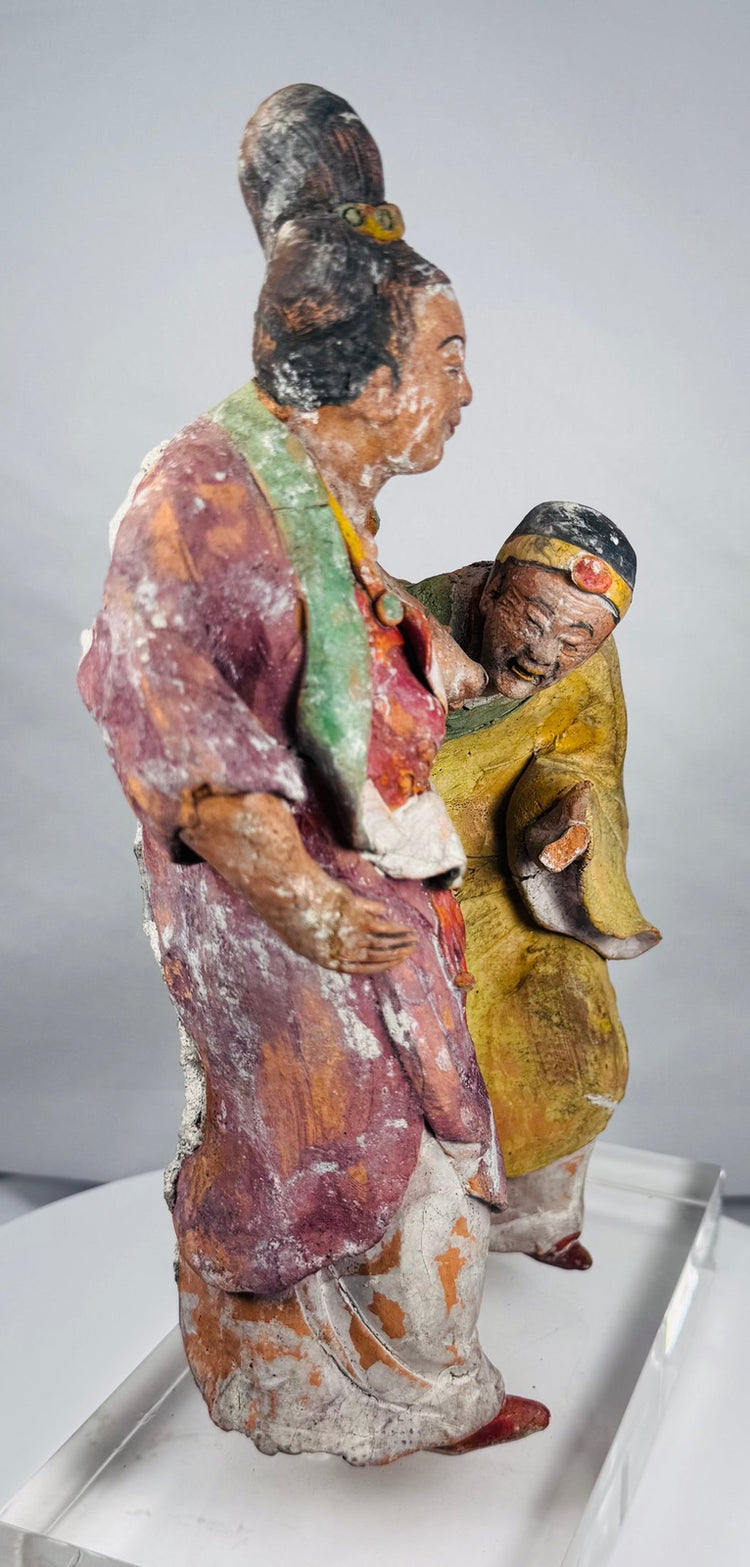
La Sra. Tang permanece erguida vistiendo túnicas superpuestas pintadas en tonos tenues de rojo, púrpura, verde, blanco y naranja. Su cabello está recogido en un peinado formal alto asegurado con una banda decorada, mientras que un lado de su vestimenta ha sido abierto para exponer su pecho. Su postura serena y su elaborada vestimenta enfatizan su papel como la nuera más joven realizando un acto de deber familiar desinteresado.
A su lado, la anciana suegra se muestra inclinada hacia el pecho expuesto. Viste una túnica amarilla y un tocado oscuro, mientras que su rostro profundamente surcado, su postura encorvada y su mano extendida transmiten edad avanzada, fragilidad y dependencia. La estrecha interacción física entre las dos figuras comunica claramente la narrativa central de nutrición, compasión y devoción filial.
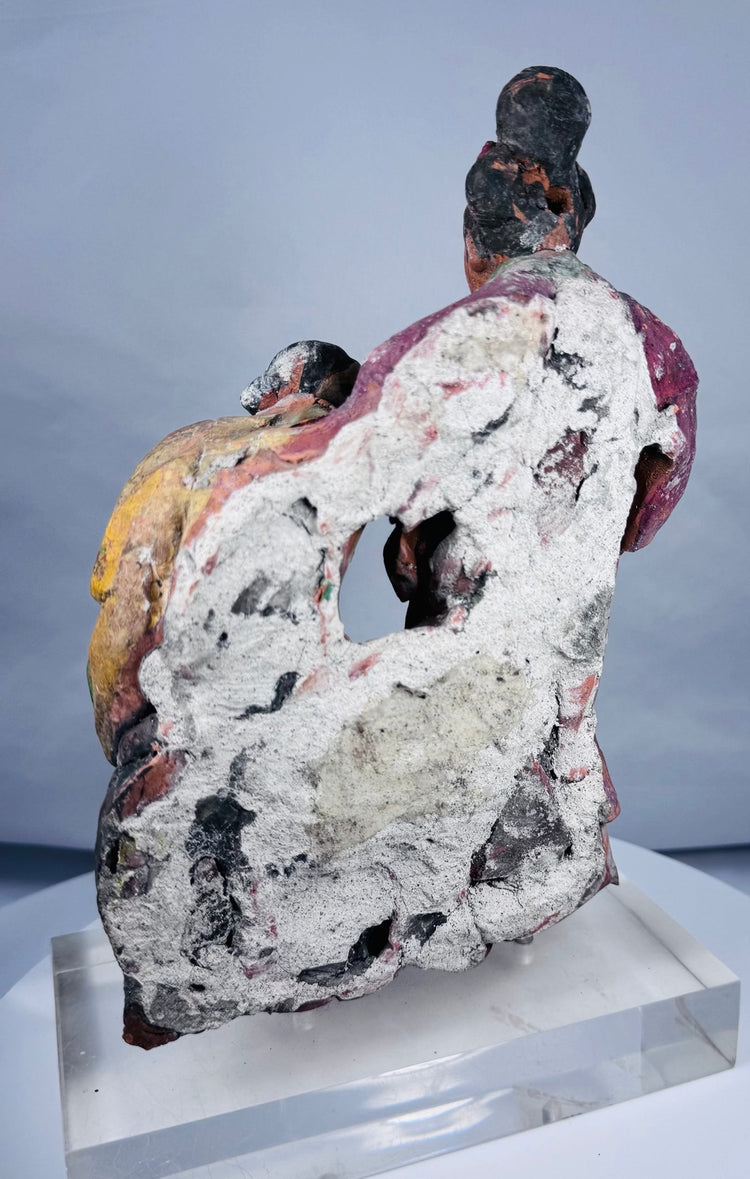
Ambas figuras están modeladas en un relieve inusualmente profundo, con sus cabezas, brazos, vestimentas y partes inferiores del cuerpo proyectándose sustancialmente desde el fondo. Los pigmentos polícromos supervivientes conservan una fuerte presencia decorativa a pesar del extenso desgaste relacionado con la edad, conservando importantes detalles de las túnicas, rasgos faciales, peinado y tocado.
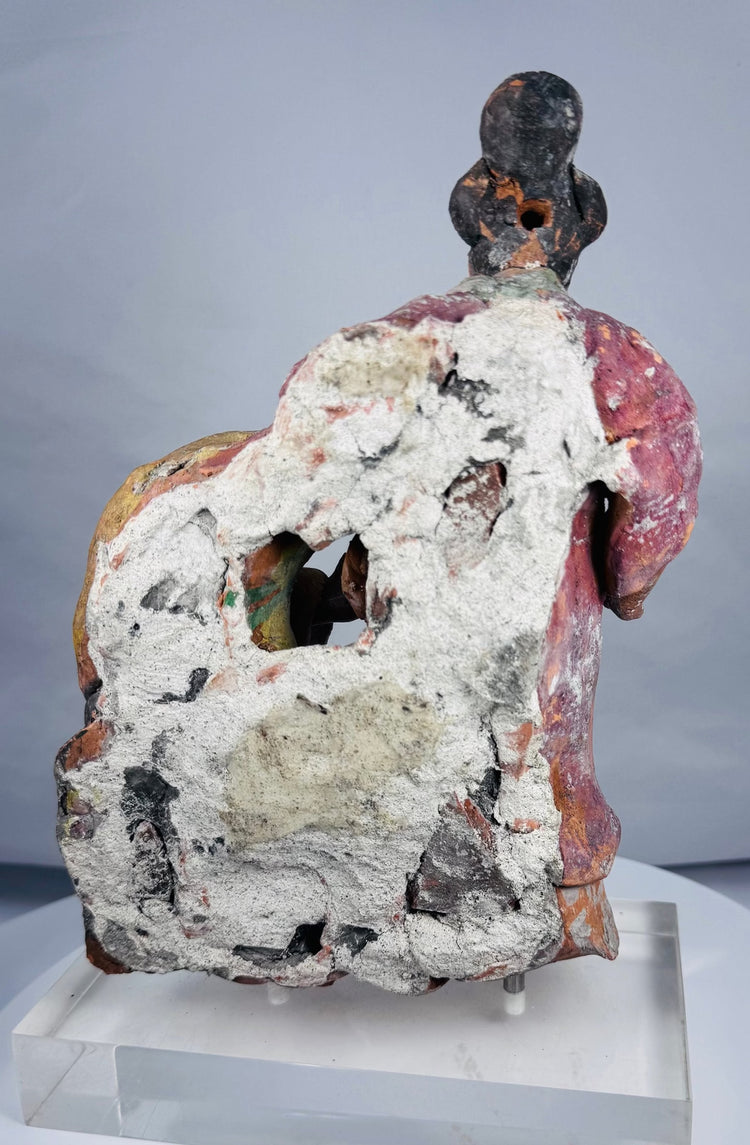
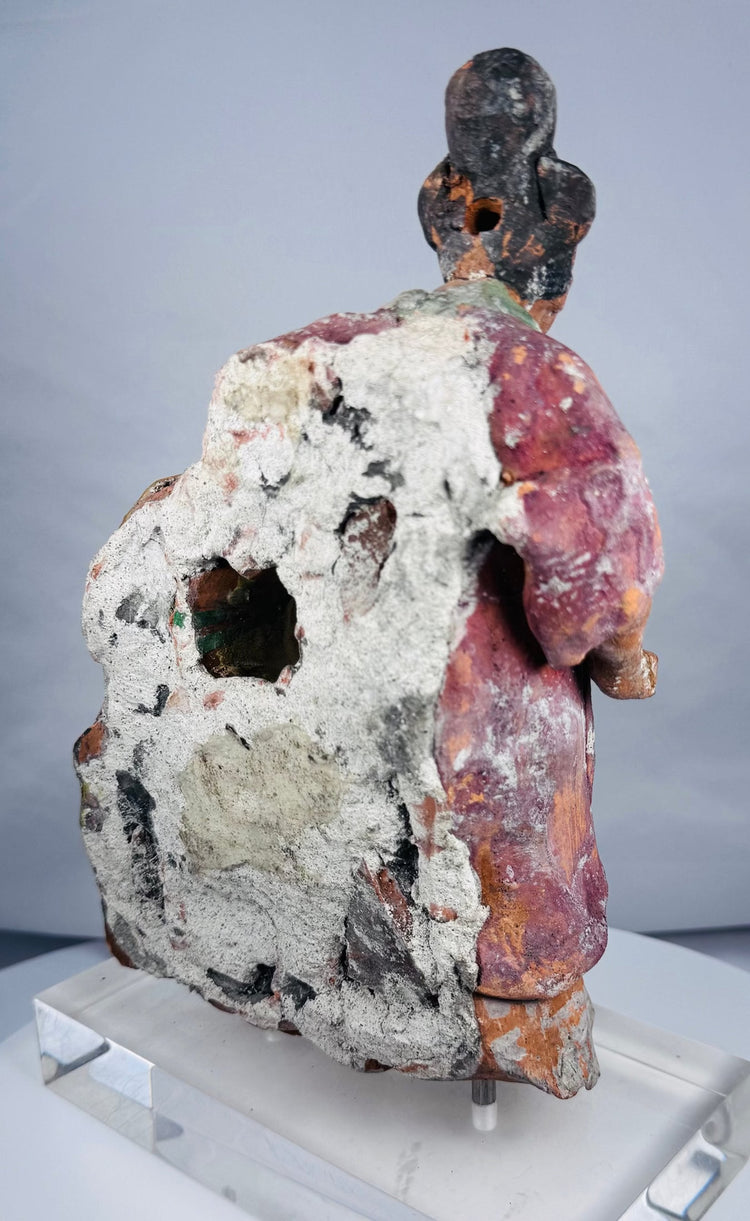
El reverso sin terminar conserva áreas sustanciales de yeso o mortero grueso, junto con cavidades y superficies de fijación irregulares. Estas características sugieren que el grupo pudo haber formado parte originalmente de un templo, santuario, pared de tumba o programa decorativo arquitectónico más grande, en lugar de haber sido creado como una escultura independiente. El fragmento ahora está montado en un soporte de exhibición acrílico transparente posterior para una presentación segura.
Características
- Grupo escultórico chino de terracota pintada en alto relieve
- Representa a la Sra. Tang amamantando a su anciana suegra
- Representa una historia de los Veinticuatro Ejemplos Filiales
- Composición expresiva que ilustra la devoción filial y el sacrificio personal
- Caras, manos, vestimentas y peinados formales profundamente modelados
- Conserva pigmentos rojos, morados, amarillos, verdes, blancos, naranjas y negros
- Reverso arquitectónico sin terminar con respaldo de yeso o mortero
- Probablemente asociado con un templo, santuario, tumba o entorno arquitectónico
- Montado en un soporte de exhibición de acrílico transparente posterior
Significado cultural
Los Veinticuatro Ejemplos Filiales se convirtieron en una de las colecciones de narrativas morales más ampliamente difundidas en la cultura china. Tradicionalmente asociadas con el erudito Guo Jujing del período Yuan, las historias presentaban demostraciones excepcionales de devoción hacia los padres y miembros mayores de la familia. Se utilizaron para reforzar los valores confucianos de jerarquía familiar, gratitud, obediencia, deber, compasión y sacrificio personal.
La historia aquí representada narra cómo la Sra. Tang cuidó a su anciana suegra después de que la anciana perdiera sus dientes y ya no pudiera comer alimentos ordinarios. Se dice que la Sra. Tang la amamantaba diariamente, sosteniéndola a través de un acto íntimo y extremo de cuidado filial. La narrativa fue recordada como una demostración ejemplar de devoción y se convirtió en un tema recurrente en la pintura, el grabado, la escultura, la decoración arquitectónica y el arte religioso popular chino.
Las narrativas de piedad filial también se incorporaron en programas funerarios y arquitectónicos en todo el norte de China. Escenas pintadas, talladas y moldeadas que representaban ejemplos filiales aparecían en tumbas, santuarios, templos y entornos domésticos, donde servían como recordatorios morales y expresiones de orden social. El reverso de yeso rugoso de esta escultura es consistente con su posible instalación anterior como parte de un ciclo narrativo más grande montado en la pared.
Condición
El grupo escultórico muestra un extenso desgaste relacionado con la edad y deterioro histórico en todas sus partes. Presenta un frotado, desvanecimiento, descamación y pérdida generalizados de la superficie pintada original, junto con astillas dispersas, abrasiones, grietas, terracota expuesta y áreas de incrustación superficial.
El reverso conserva un extenso yeso o mortero grueso con varias cavidades, roturas irregulares, pérdidas y áreas de relleno o estabilización antiguos. Estos materiales pueden incluir restos de la instalación arquitectónica original, restauración posterior o una combinación de ambos. Porciones de la composición original circundante ya no están presentes, aunque ambas figuras y la narrativa central permanecen visualmente coherentes.
El soporte de exhibición de acrílico transparente y los herrajes de montaje son adiciones posteriores y no son originales de la escultura.
Dimensiones (aproximadas)
Altura: 11.5 pulgadas
Ancho: 7.5 pulgadas
Profundidad: 4 pulgadas
Antigüedad (aproximada)
400–700 años
Procedencia
Anteriormente parte de una importante colección privada en Montreal, Quebec, Canadá, reunida por un coleccionista de antigüedades y obras de arte asiáticas durante más de cuarenta años.
Más información
Lea el relato tradicional de la Sra. Tang y su extraordinario acto de devoción filial a través de la Universidad de California en San Diego
Explore nuestra Colección de Artefactos Chinos Antiguos y Reliquias Imperiales
Descripción
Contexto histórico y origen
Región: Norte de China
Material: Cerámica o terracota modelada a mano con pigmentos polícromos, respaldo de yeso o mortero, y un soporte de exhibición de acrílico moderno
Período: Probablemente dinastías Yuan-Ming, circa siglo XIV-XVII d.C.
Descripción
Este sustancial grupo escultórico chino de terracota pintada representa a la Sra. Tang amamantando a su anciana suegra, una de las historias celebradas tradicionalmente entre los Veinticuatro Ejemplos Filiales. La composición altamente expresiva ilustra un extraordinario acto de devoción en el que la Sra. Tang nutrió a su suegra anciana y desdentada después de que ya no pudiera consumir alimentos ordinarios.
La Sra. Tang permanece erguida vistiendo túnicas superpuestas pintadas en tonos tenues de rojo, púrpura, verde, blanco y naranja. Su cabello está recogido en un peinado formal alto asegurado con una banda decorada, mientras que un lado de su vestimenta ha sido abierto para exponer su pecho. Su postura serena y su elaborada vestimenta enfatizan su papel como la nuera más joven realizando un acto de deber familiar desinteresado.
A su lado, la anciana suegra se muestra inclinada hacia el pecho expuesto. Viste una túnica amarilla y un tocado oscuro, mientras que su rostro profundamente surcado, su postura encorvada y su mano extendida transmiten edad avanzada, fragilidad y dependencia. La estrecha interacción física entre las dos figuras comunica claramente la narrativa central de nutrición, compasión y devoción filial.
Ambas figuras están modeladas en un relieve inusualmente profundo, con sus cabezas, brazos, vestimentas y partes inferiores del cuerpo proyectándose sustancialmente desde el fondo. Los pigmentos polícromos supervivientes conservan una fuerte presencia decorativa a pesar del extenso desgaste relacionado con la edad, conservando importantes detalles de las túnicas, rasgos faciales, peinado y tocado.
El reverso sin terminar conserva áreas sustanciales de yeso o mortero grueso, junto con cavidades y superficies de fijación irregulares. Estas características sugieren que el grupo pudo haber formado parte originalmente de un templo, santuario, pared de tumba o programa decorativo arquitectónico más grande, en lugar de haber sido creado como una escultura independiente. El fragmento ahora está montado en un soporte de exhibición acrílico transparente posterior para una presentación segura.
Características
- Grupo escultórico chino de terracota pintada en alto relieve
- Representa a la Sra. Tang amamantando a su anciana suegra
- Representa una historia de los Veinticuatro Ejemplos Filiales
- Composición expresiva que ilustra la devoción filial y el sacrificio personal
- Caras, manos, vestimentas y peinados formales profundamente modelados
- Conserva pigmentos rojos, morados, amarillos, verdes, blancos, naranjas y negros
- Reverso arquitectónico sin terminar con respaldo de yeso o mortero
- Probablemente asociado con un templo, santuario, tumba o entorno arquitectónico
- Montado en un soporte de exhibición de acrílico transparente posterior
Significado cultural
Los Veinticuatro Ejemplos Filiales se convirtieron en una de las colecciones de narrativas morales más ampliamente difundidas en la cultura china. Tradicionalmente asociadas con el erudito Guo Jujing del período Yuan, las historias presentaban demostraciones excepcionales de devoción hacia los padres y miembros mayores de la familia. Se utilizaron para reforzar los valores confucianos de jerarquía familiar, gratitud, obediencia, deber, compasión y sacrificio personal.
La historia aquí representada narra cómo la Sra. Tang cuidó a su anciana suegra después de que la anciana perdiera sus dientes y ya no pudiera comer alimentos ordinarios. Se dice que la Sra. Tang la amamantaba diariamente, sosteniéndola a través de un acto íntimo y extremo de cuidado filial. La narrativa fue recordada como una demostración ejemplar de devoción y se convirtió en un tema recurrente en la pintura, el grabado, la escultura, la decoración arquitectónica y el arte religioso popular chino.
Las narrativas de piedad filial también se incorporaron en programas funerarios y arquitectónicos en todo el norte de China. Escenas pintadas, talladas y moldeadas que representaban ejemplos filiales aparecían en tumbas, santuarios, templos y entornos domésticos, donde servían como recordatorios morales y expresiones de orden social. El reverso de yeso rugoso de esta escultura es consistente con su posible instalación anterior como parte de un ciclo narrativo más grande montado en la pared.
Condición
El grupo escultórico muestra un extenso desgaste relacionado con la edad y deterioro histórico en todas sus partes. Presenta un frotado, desvanecimiento, descamación y pérdida generalizados de la superficie pintada original, junto con astillas dispersas, abrasiones, grietas, terracota expuesta y áreas de incrustación superficial.
El reverso conserva un extenso yeso o mortero grueso con varias cavidades, roturas irregulares, pérdidas y áreas de relleno o estabilización antiguos. Estos materiales pueden incluir restos de la instalación arquitectónica original, restauración posterior o una combinación de ambos. Porciones de la composición original circundante ya no están presentes, aunque ambas figuras y la narrativa central permanecen visualmente coherentes.
El soporte de exhibición de acrílico transparente y los herrajes de montaje son adiciones posteriores y no son originales de la escultura.
Dimensiones (aproximadas)
Altura: 11.5 pulgadas
Ancho: 7.5 pulgadas
Profundidad: 4 pulgadas
Antigüedad (aproximada)
400–700 años
Procedencia
Anteriormente parte de una importante colección privada en Montreal, Quebec, Canadá, reunida por un coleccionista de antigüedades y obras de arte asiáticas durante más de cuarenta años.
Más información
Lea el relato tradicional de la Sra. Tang y su extraordinario acto de devoción filial a través de la Universidad de California en San Diego
Explore nuestra Colección de Artefactos Chinos Antiguos y Reliquias Imperiales
También te puede interesar
