

Estatua china antigua de madera policromada de Guan Yu con barba de crin de caballo | Periodo Qing-Republicano
- Precio habitual
- $800.00
- Precio de venta
- $800.00
- Precio habitual
No se pudo cargar la disponibilidad de retiro


Estatua china antigua de madera policromada de Guan Yu con barba de crin de caballo | Periodo Qing-Republicano
Descripción
Más
Menos
Contexto histórico y origen
Región: China
Material: Madera tallada con laca policromada, decoración dorada y barba de fibra natural o crin de caballo aplicada
Período: Finales de la dinastía Qing hasta el período republicano, probablemente finales del siglo XIX o principios del XX
Descripción
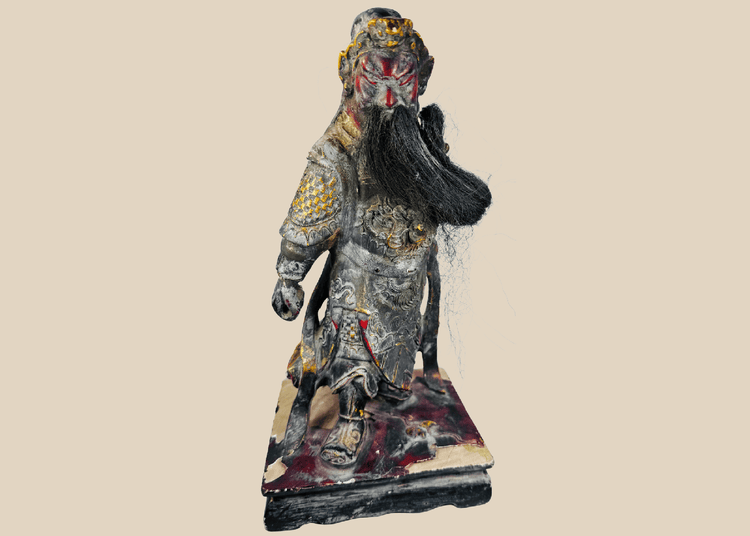
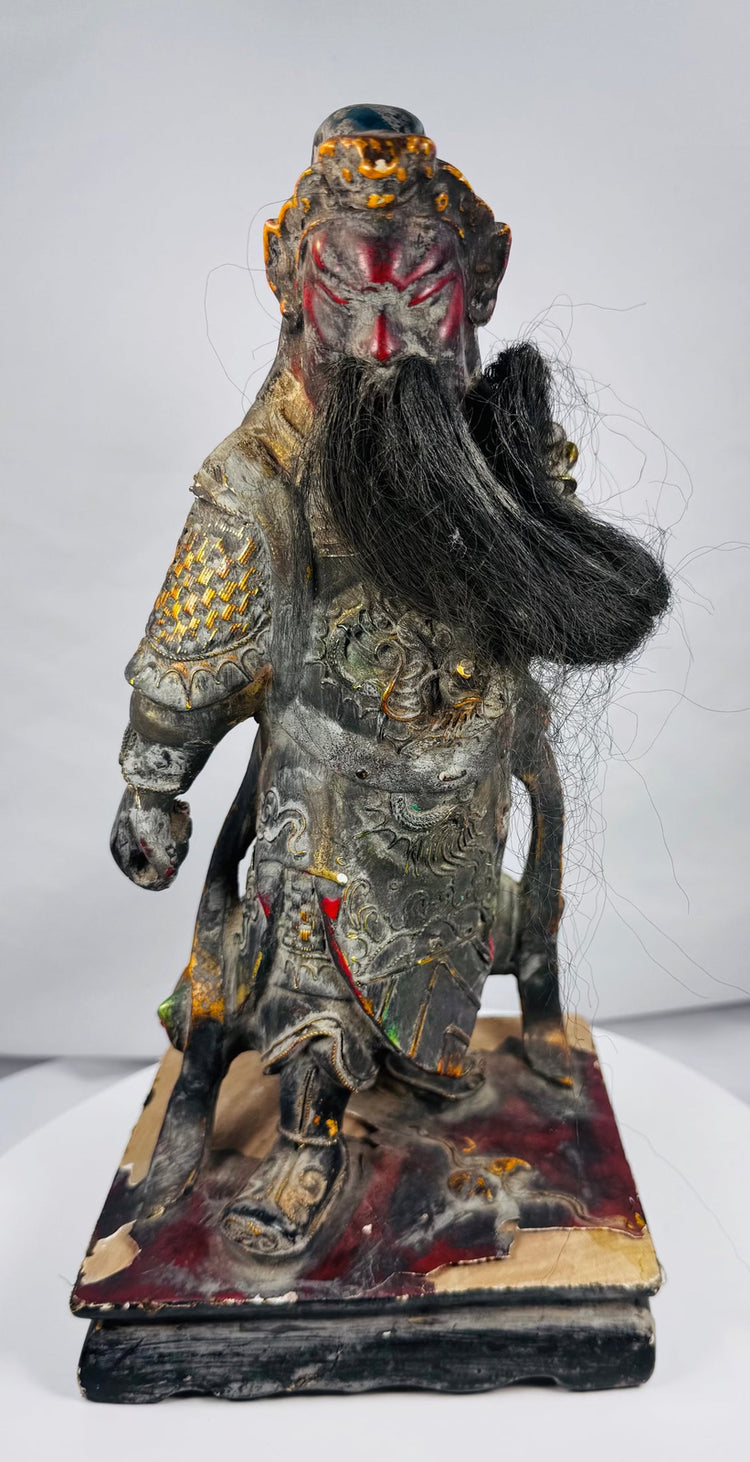
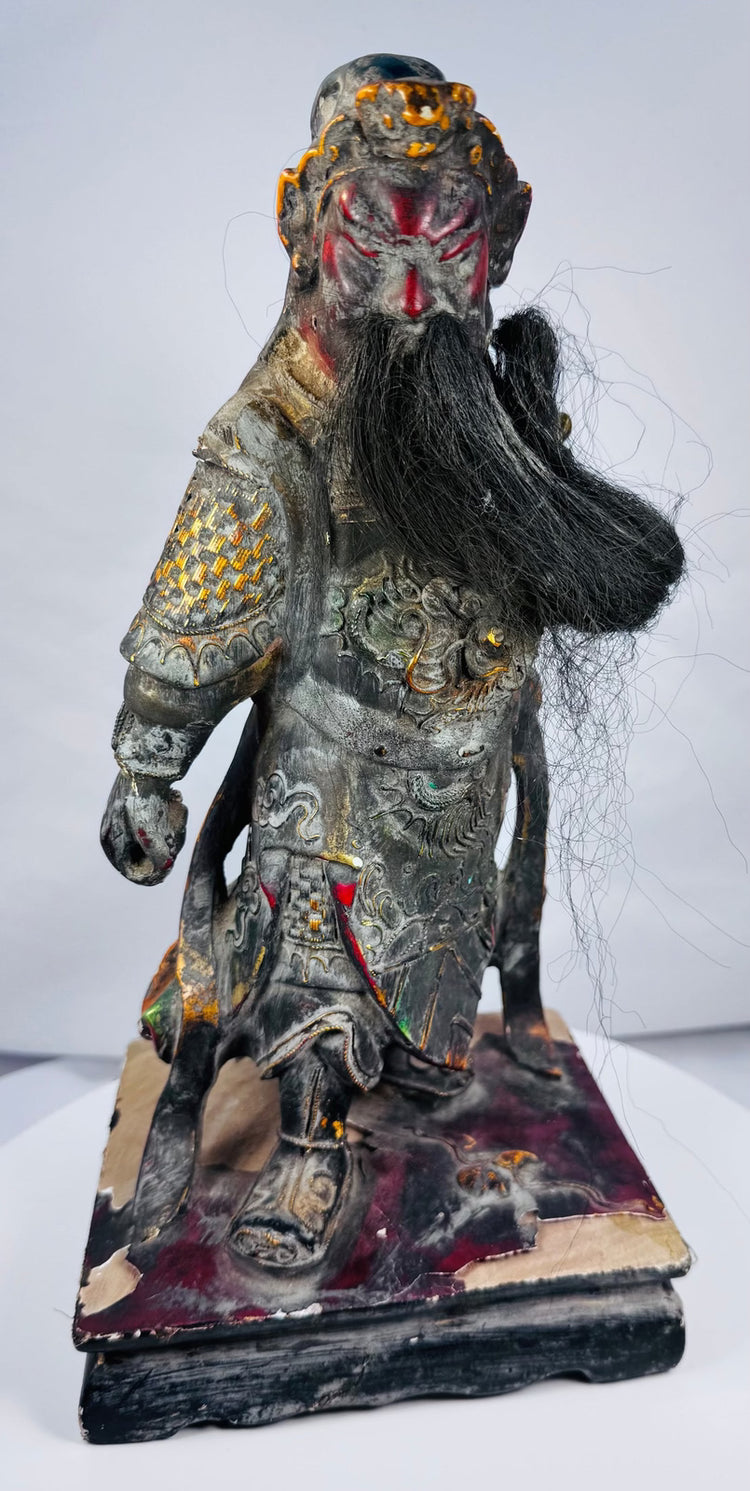
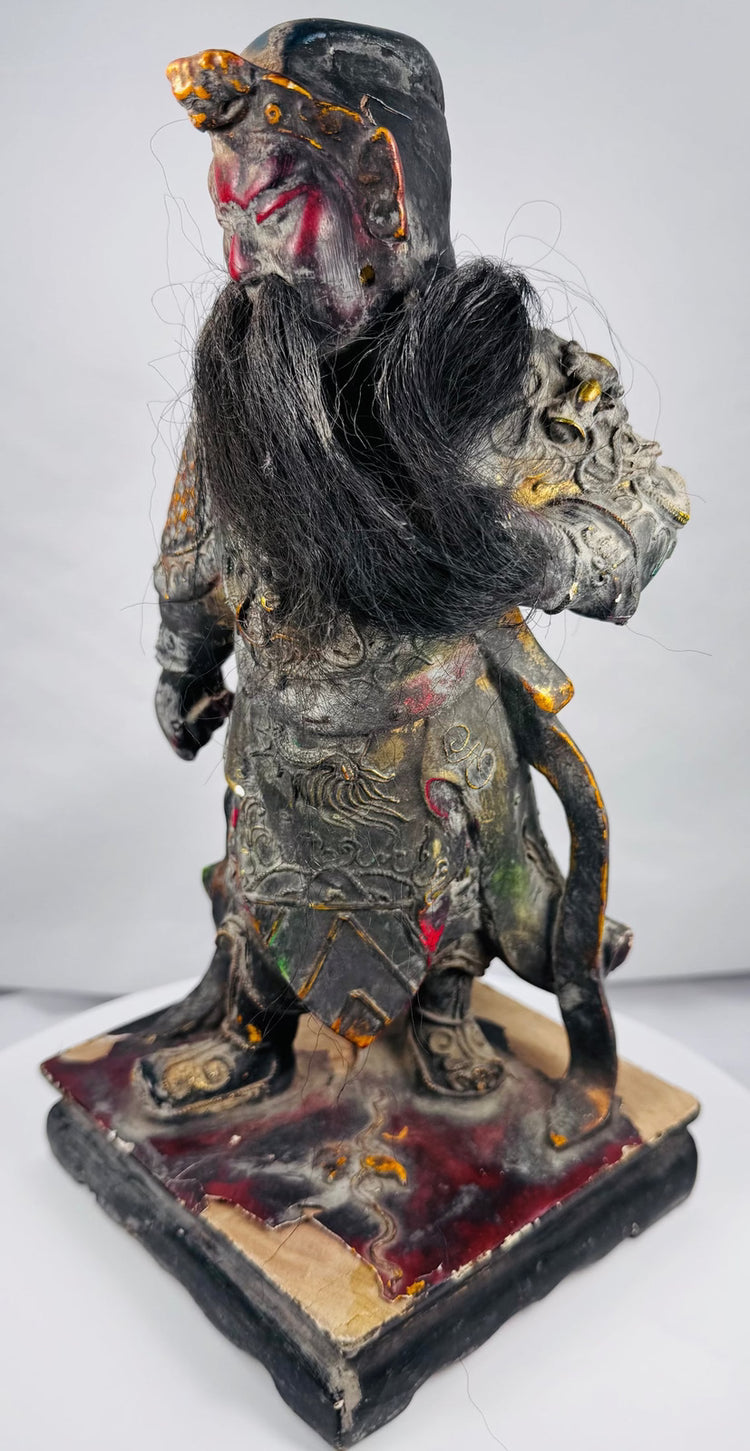
Esta sustancial figura de templo china de laca policromada representa a Guan Yu, también conocido como Guan Gong o Guandi, el célebre comandante militar de finales de la dinastía Han Oriental que más tarde fue deificado como una deidad marcial protectora. La identificación se basa en el rostro distintivo pintado de rojo de la figura, su imponente barba negra, su expresión severa, su elaborada armadura y su autoritaria postura de guerrero. Guan Yu es tradicionalmente representado con una tez roja y una barba excepcionalmente larga, atributos estrechamente asociados con la lealtad, la rectitud, el coraje y la autoridad marcial.
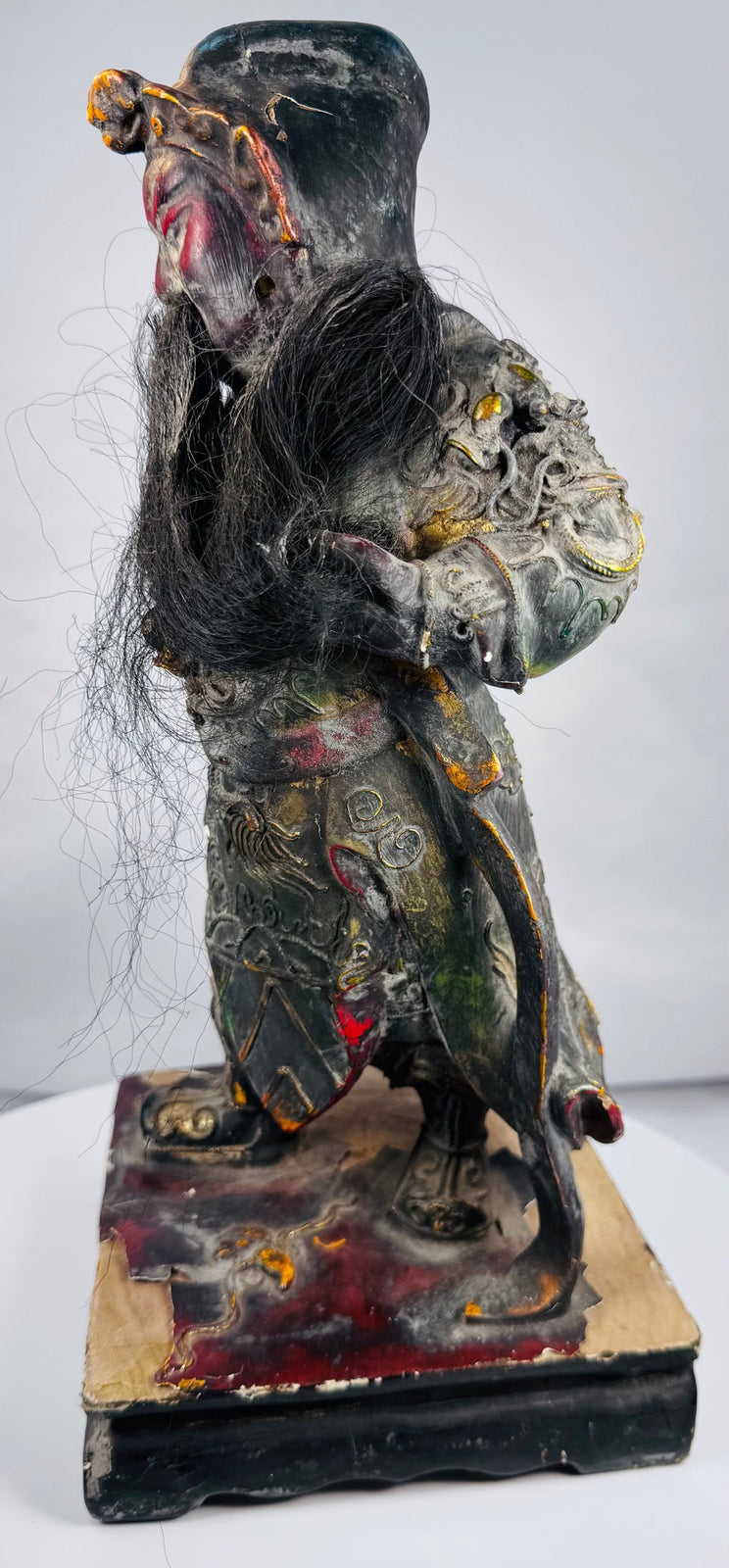
Tallada en redondo, la deidad se alza firmemente sobre un zócalo rectangular integral con una pierna adelantada, creando una postura poderosa y animada. Su rostro está modelado con cejas afiladas, ojos entrecerrados, una nariz prominente y pigmento rojo restante concentrado alrededor de la frente, las mejillas y la nariz. Una larga barba de fibra natural negra o crin de caballo aplicada desciende por el pecho, reforzando dramáticamente la identidad reconocible de la figura.
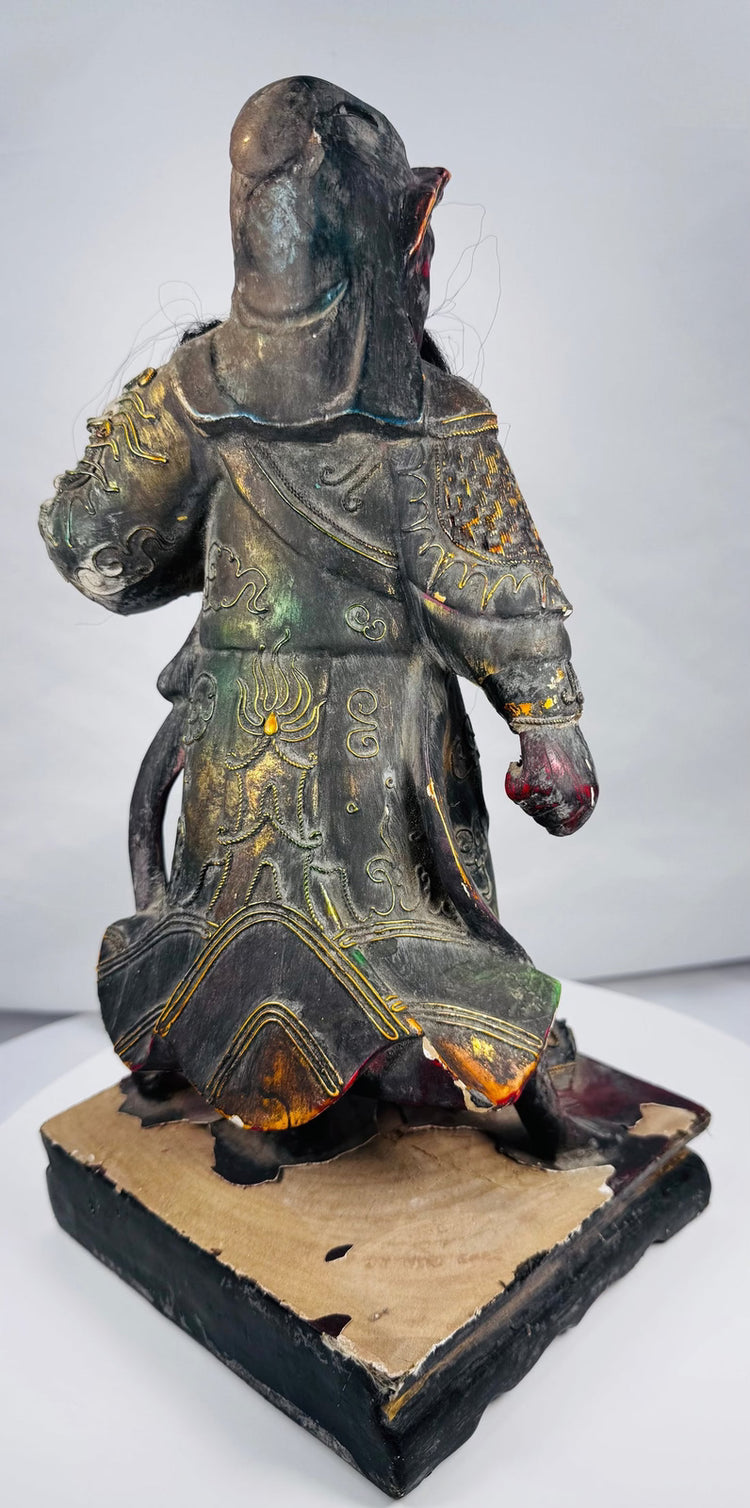
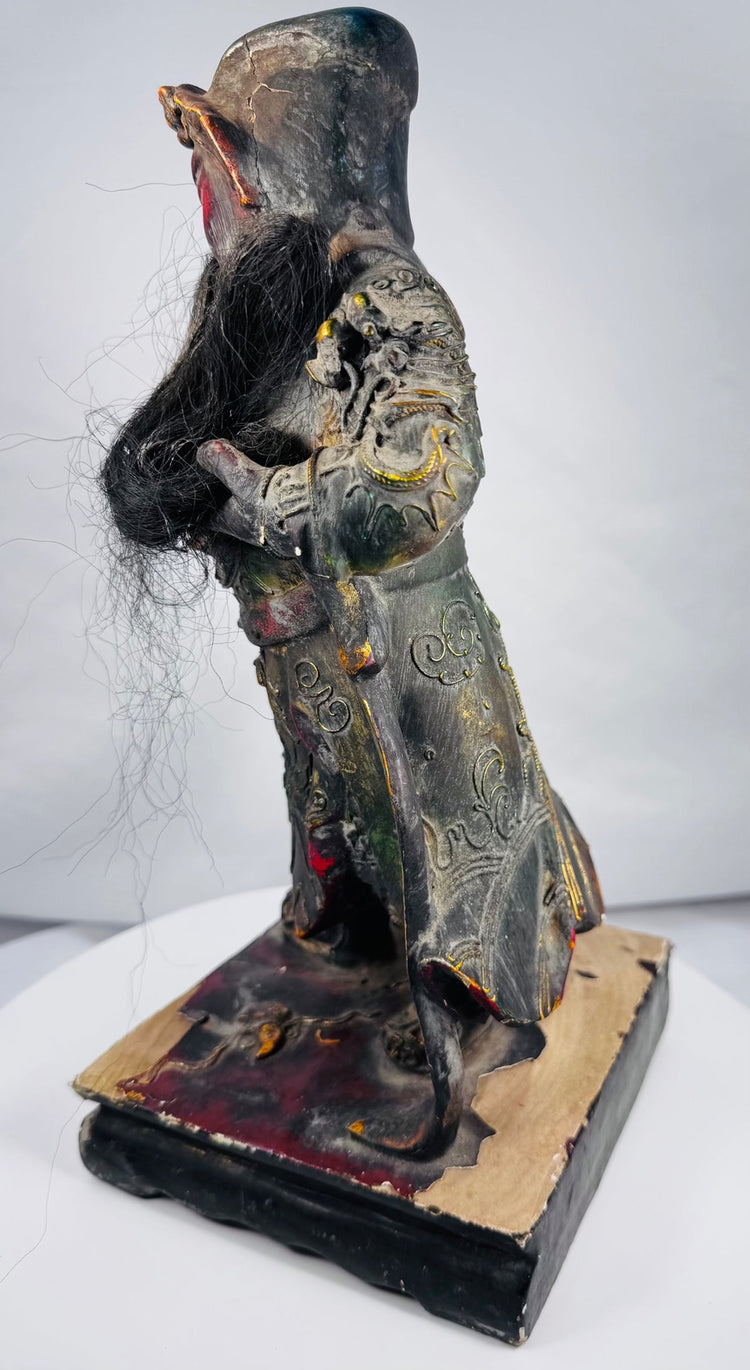
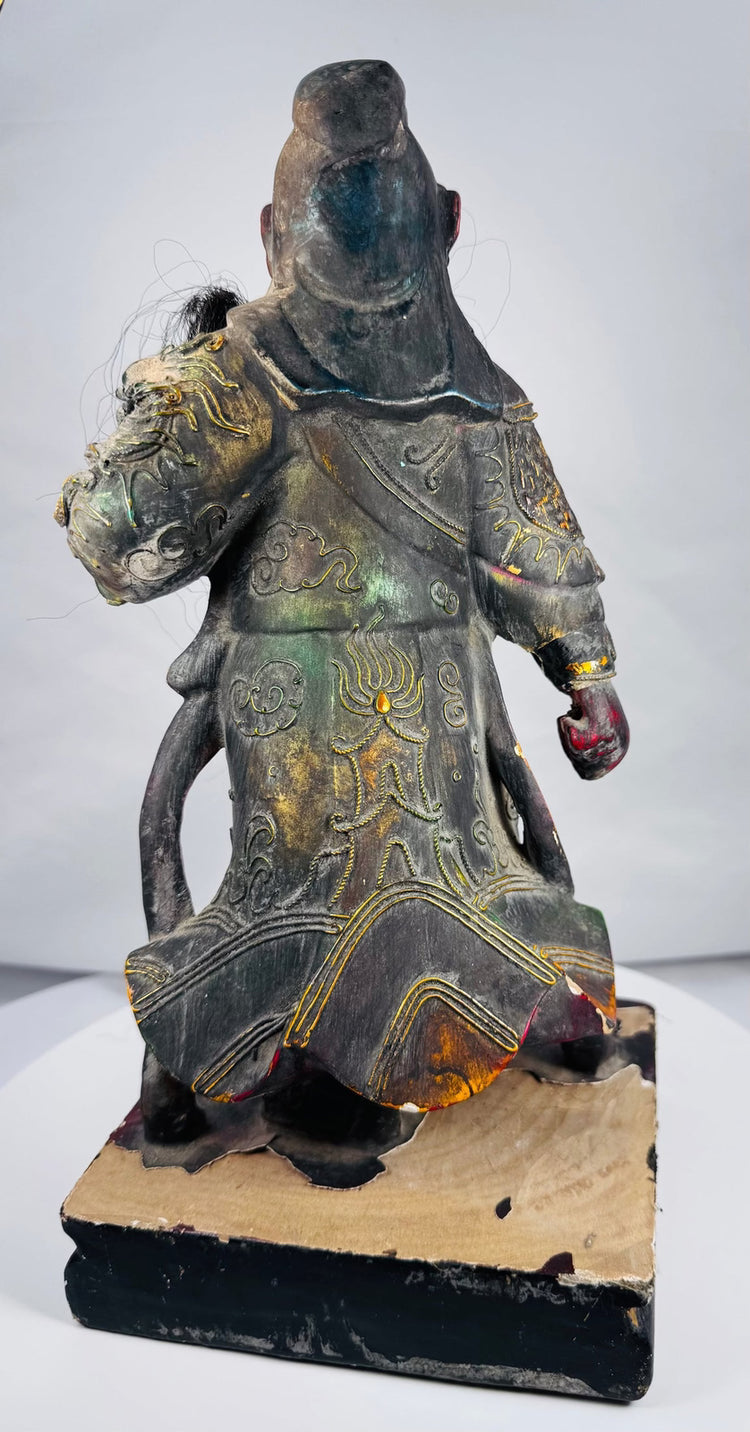
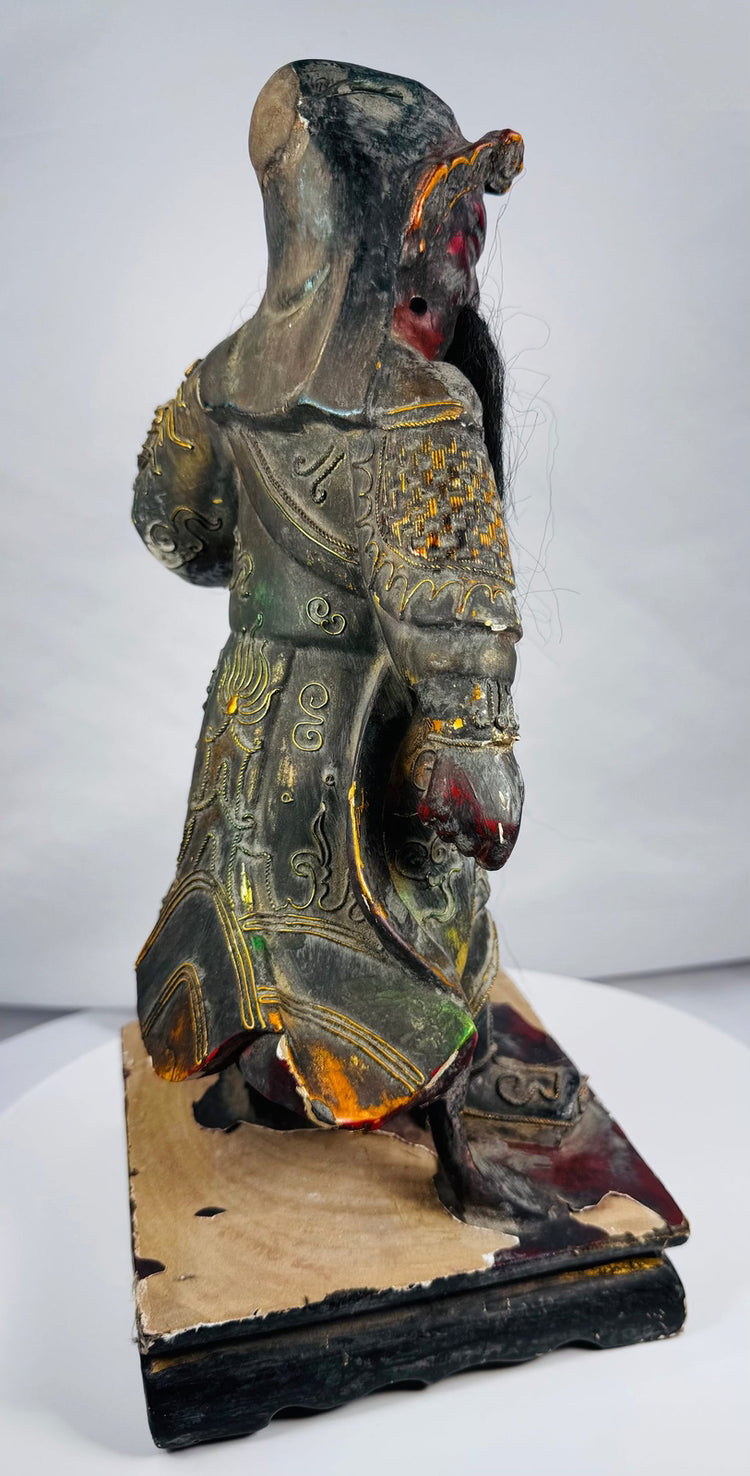
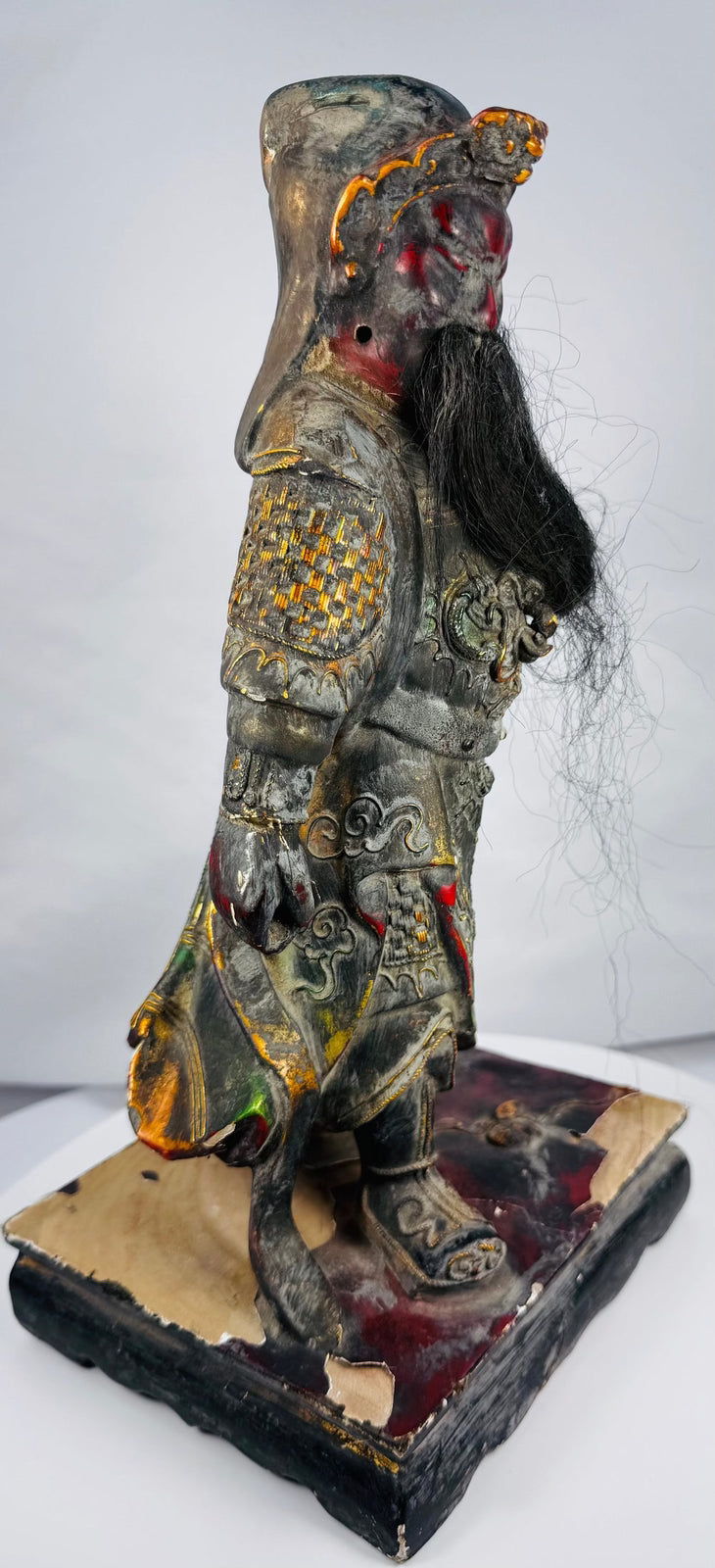
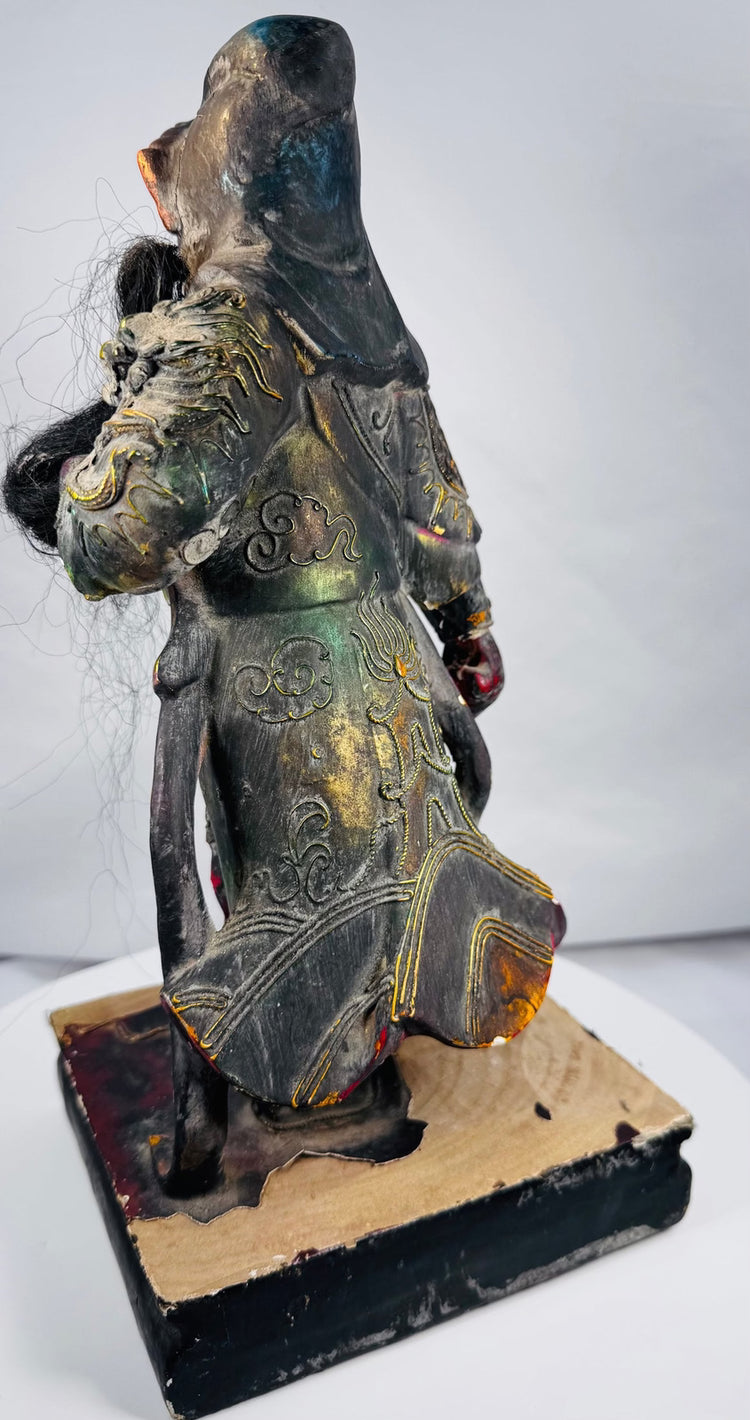
El guerrero viste una elaborada armadura ceremonial decorada con volutas de nubes en relieve, paneles de hombros en forma de escamas, imágenes estilizadas de animales y dragones, y detalles lineales incisos. Restos de pigmento dorado, rojo, verde, naranja y amarillo permanecen por toda la superficie, por lo demás oscurecida. Un elemento esculpido en forma de dragón emerge prominentemente de un hombro, mientras que motivos adicionales en forma de nubes y llamas adornan la coraza, la falda, las botas y la parte trasera de la túnica.
Una mano está colocada cerca del cuerpo mientras que la otra está formada para sostener un atributo. El implemento original ahora está ausente, pero pudo haber sido un arma o bastón removible, posiblemente representando el guandao tradicionalmente asociado con Guan Yu. La figura probablemente estaba destinada a ser colocada en un altar doméstico o de templo, dentro de un santuario devocional, o como parte de una exhibición religiosa más grande.
Características
- Rasgos faciales tradicionales pintados de rojo
- Barba aplicada de fibra natural negra o crin de caballo
- Armadura ceremonial elaboradamente modelada
- Ornamento de hombro en forma de dragón en relieve
- Motivos decorativos de nubes, llamas, escamas y marciales
- Postura de guerrero de pie sobre un pedestal integral
- Mano originalmente diseñada para sostener un atributo removible
- Fuerte carácter de templo popular conservado
- Probable mano de obra de finales de la dinastía Qing a la época republicana
Significado cultural
Guan Yu fue un comandante militar histórico que sirvió durante las turbulentas últimas décadas de la dinastía Han Oriental y se convirtió en una figura importante en el establecimiento del estado de Shu Han. Su reputación se amplió enormemente a través de historias posteriores, narraciones populares, teatro y el Romance de los Tres Reinos. A lo largo de los siglos, se transformó de un general venerado en una de las deidades protectoras más ampliamente reconocidas en la religión popular china y el culto taoísta.
Como Guandi, llegó a encarnar la lealtad, la justicia, el coraje, la disciplina y la integridad moral. Las imágenes de Guan Yu se colocaban tradicionalmente en templos, negocios, hogares, gremios y entornos militares, donde se le invocaba como guardián contra la deshonestidad, el desorden y las influencias dañinas. Su rostro rojo y su larga barba se convirtieron en elementos centrales de su identidad visual, mientras que su atuendo marcial enfatizaba tanto su papel histórico como comandante como su autoridad sobrenatural como protector divino.
Esta figura es particularmente evocadora porque conserva los materiales en capas y las cualidades expresivas asociadas con la escultura vernácula de los templos chinos, incluida su barba aplicada, la superficie de laca oscurecida, los detalles dorados conservados y la armadura audazmente modelada.
Estado
La figura permanece sustancialmente intacta y muestra un extenso desgaste superficial relacionado con la edad, consistente con el uso devocional y la conservación a largo plazo. Hay pérdidas generalizadas, descamación, rozaduras y decoloración de la laca policromada original y la decoración dorada, con madera expuesta visible en varias áreas.
La barba aplicada de fibra natural o crin de caballo permanece presente, pero está enredada, suelta y desigual, con hebras dispersas desprendidas o proyectadas. El atributo o arma original de mano está ausente. Se observan pequeñas astillas, abrasiones, grietas de edad, pequeñas pérdidas y posibles reparaciones antiguas en todo el tallado.
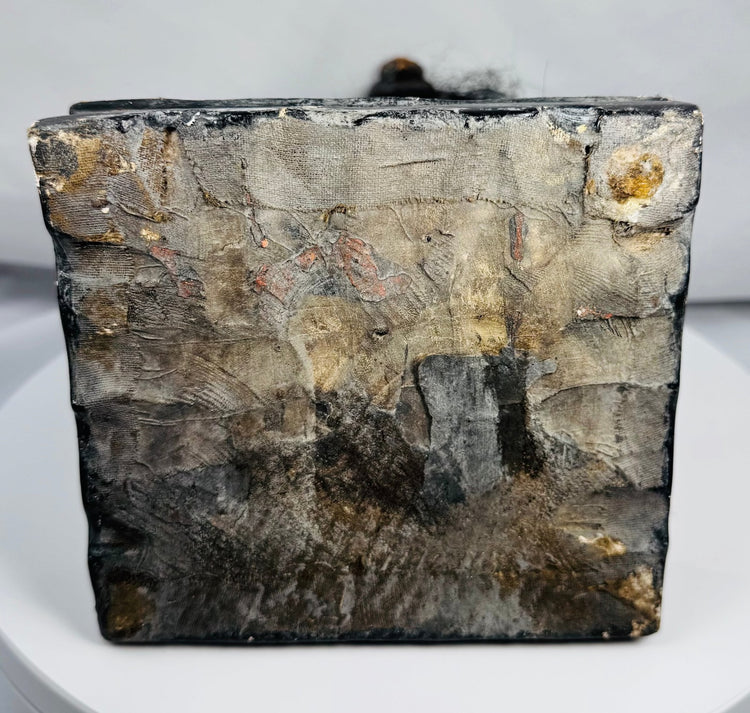
La base rectangular conserva restos de una cubierta decorativa de papel o tela envejecida, ahora muy desgastada, despegada, rasgada y parcialmente ausente. La parte inferior parece haber sido cubierta o estabilizada con tela y material adhesivo viejos. A pesar de estos problemas de estado, la figura sigue siendo estructuralmente apta para exhibición y conserva una poderosa presencia escultórica.
Dimensiones (aproximadas)
Altura: 12 pulgadas
Ancho: 6 pulgadas
Antigüedad (aproximada)
100-150 años
Procedencia
Anteriormente parte de una importante colección privada en Montreal, Quebec, Canadá, reunida por un coleccionista de antigüedades y obras de arte asiáticas durante más de cuarenta años.
Saber más
Compare esta figura con una representación policromada relacionada de Guan Yu en la colección del Museo de Buda
Explore nuestra Colección de Artefactos Chinos Antiguos y Reliquias Imperiales
Descripción
Contexto histórico y origen
Región: China
Material: Madera tallada con laca policromada, decoración dorada y barba de fibra natural o crin de caballo aplicada
Período: Finales de la dinastía Qing hasta el período republicano, probablemente finales del siglo XIX o principios del XX
Descripción
Esta sustancial figura de templo china de laca policromada representa a Guan Yu, también conocido como Guan Gong o Guandi, el célebre comandante militar de finales de la dinastía Han Oriental que más tarde fue deificado como una deidad marcial protectora. La identificación se basa en el rostro distintivo pintado de rojo de la figura, su imponente barba negra, su expresión severa, su elaborada armadura y su autoritaria postura de guerrero. Guan Yu es tradicionalmente representado con una tez roja y una barba excepcionalmente larga, atributos estrechamente asociados con la lealtad, la rectitud, el coraje y la autoridad marcial.
Tallada en redondo, la deidad se alza firmemente sobre un zócalo rectangular integral con una pierna adelantada, creando una postura poderosa y animada. Su rostro está modelado con cejas afiladas, ojos entrecerrados, una nariz prominente y pigmento rojo restante concentrado alrededor de la frente, las mejillas y la nariz. Una larga barba de fibra natural negra o crin de caballo aplicada desciende por el pecho, reforzando dramáticamente la identidad reconocible de la figura.
El guerrero viste una elaborada armadura ceremonial decorada con volutas de nubes en relieve, paneles de hombros en forma de escamas, imágenes estilizadas de animales y dragones, y detalles lineales incisos. Restos de pigmento dorado, rojo, verde, naranja y amarillo permanecen por toda la superficie, por lo demás oscurecida. Un elemento esculpido en forma de dragón emerge prominentemente de un hombro, mientras que motivos adicionales en forma de nubes y llamas adornan la coraza, la falda, las botas y la parte trasera de la túnica.
Una mano está colocada cerca del cuerpo mientras que la otra está formada para sostener un atributo. El implemento original ahora está ausente, pero pudo haber sido un arma o bastón removible, posiblemente representando el guandao tradicionalmente asociado con Guan Yu. La figura probablemente estaba destinada a ser colocada en un altar doméstico o de templo, dentro de un santuario devocional, o como parte de una exhibición religiosa más grande.
Características
- Rasgos faciales tradicionales pintados de rojo
- Barba aplicada de fibra natural negra o crin de caballo
- Armadura ceremonial elaboradamente modelada
- Ornamento de hombro en forma de dragón en relieve
- Motivos decorativos de nubes, llamas, escamas y marciales
- Postura de guerrero de pie sobre un pedestal integral
- Mano originalmente diseñada para sostener un atributo removible
- Fuerte carácter de templo popular conservado
- Probable mano de obra de finales de la dinastía Qing a la época republicana
Significado cultural
Guan Yu fue un comandante militar histórico que sirvió durante las turbulentas últimas décadas de la dinastía Han Oriental y se convirtió en una figura importante en el establecimiento del estado de Shu Han. Su reputación se amplió enormemente a través de historias posteriores, narraciones populares, teatro y el Romance de los Tres Reinos. A lo largo de los siglos, se transformó de un general venerado en una de las deidades protectoras más ampliamente reconocidas en la religión popular china y el culto taoísta.
Como Guandi, llegó a encarnar la lealtad, la justicia, el coraje, la disciplina y la integridad moral. Las imágenes de Guan Yu se colocaban tradicionalmente en templos, negocios, hogares, gremios y entornos militares, donde se le invocaba como guardián contra la deshonestidad, el desorden y las influencias dañinas. Su rostro rojo y su larga barba se convirtieron en elementos centrales de su identidad visual, mientras que su atuendo marcial enfatizaba tanto su papel histórico como comandante como su autoridad sobrenatural como protector divino.
Esta figura es particularmente evocadora porque conserva los materiales en capas y las cualidades expresivas asociadas con la escultura vernácula de los templos chinos, incluida su barba aplicada, la superficie de laca oscurecida, los detalles dorados conservados y la armadura audazmente modelada.
Estado
La figura permanece sustancialmente intacta y muestra un extenso desgaste superficial relacionado con la edad, consistente con el uso devocional y la conservación a largo plazo. Hay pérdidas generalizadas, descamación, rozaduras y decoloración de la laca policromada original y la decoración dorada, con madera expuesta visible en varias áreas.
La barba aplicada de fibra natural o crin de caballo permanece presente, pero está enredada, suelta y desigual, con hebras dispersas desprendidas o proyectadas. El atributo o arma original de mano está ausente. Se observan pequeñas astillas, abrasiones, grietas de edad, pequeñas pérdidas y posibles reparaciones antiguas en todo el tallado.
La base rectangular conserva restos de una cubierta decorativa de papel o tela envejecida, ahora muy desgastada, despegada, rasgada y parcialmente ausente. La parte inferior parece haber sido cubierta o estabilizada con tela y material adhesivo viejos. A pesar de estos problemas de estado, la figura sigue siendo estructuralmente apta para exhibición y conserva una poderosa presencia escultórica.
Dimensiones (aproximadas)
Altura: 12 pulgadas
Ancho: 6 pulgadas
Antigüedad (aproximada)
100-150 años
Procedencia
Anteriormente parte de una importante colección privada en Montreal, Quebec, Canadá, reunida por un coleccionista de antigüedades y obras de arte asiáticas durante más de cuarenta años.
Saber más
Compare esta figura con una representación policromada relacionada de Guan Yu en la colección del Museo de Buda
Explore nuestra Colección de Artefactos Chinos Antiguos y Reliquias Imperiales
También te puede interesar
