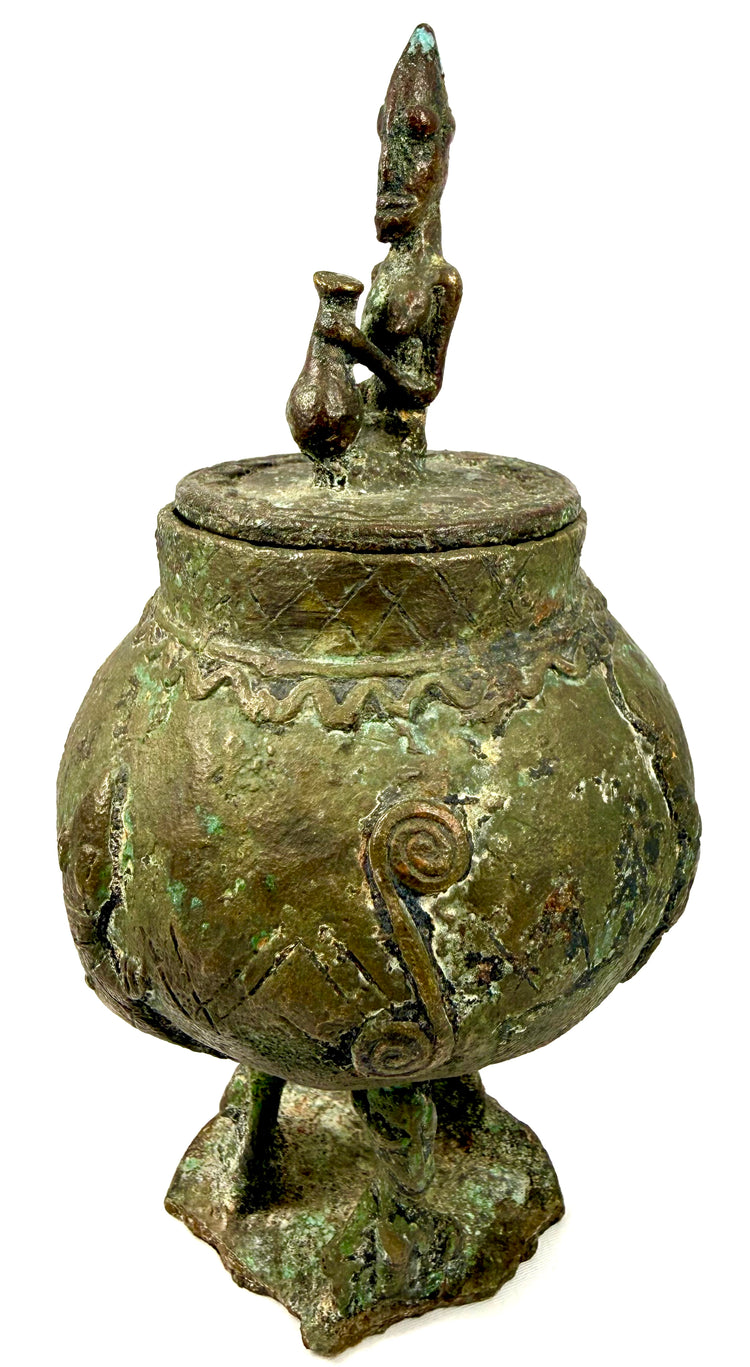
Recipiente ritual de bronce dogón | Vasija antropomórfica con tapa con figura | Siglo XIX d. C.

Historial de procedencia y propiedad

Posteriormente en posesión de B.C. Galleries, Armadale, Victoria, Australia, una galería y comercio de Melbourne de larga trayectoria, especializado en arte antiguo, antigüedades, arte tribal y objetos etnográficos. Establecida al menos desde 2006, la galería operaba desde 1069 High Street, Armadale, y estaba asociada con el comerciante Frank Bottaro.

Precio habitual
$450.00
Precio de venta
$450.00
Precio habitual
Envío calculado al finalizar la compra.

This is a one-of-a-kind historical object. Once sold, this exact piece will not be restocked.

Questions before acquiring? Additional photographs, condition details, documentation, shipping information or a private viewing are available upon request.
19th century Dogon bronze ritual container with anthropomorphic figure lid and embossed spiral motifs
360-degree rotating video of an antique Dogon bronze ritual container from Mali, West Africa, circa 19th century, featuring a rounded vessel with engraved spiral and geometric motifs, three stylized anthropomorphic legs, and a sculpted human figure crowning the lid. The ceremonial vessel displays rich green verdigris patina, traditional Dogon metalworking craftsmanship, and age-related surface wear, shown from multiple angles.
Dogon-attributed bronze vessel from Mali featuring a rounded body, figurative lid, and sculptural supports, circa 19th–early 20th century.
West African bronze container with a stylized standing human figure crowning its circular lid.
Antique Dogon bronze vessel displaying geometric ornamentation and rich green and brown patination.
Traditional Malian bronze vessel featuring a bulbous body decorated with raised motifs and zigzag patterns.
Dogon-attributed bronze container with a sculptural human finial and distinctive circular lid.
West African bronze artifact showcasing stylized anthropomorphic supports and traditional metalworking details.
Antique African bronze vessel with extensive verdigris, weathered surfaces, and decorative geometric patterns.
Dogon bronze container featuring a rounded body, raised ornamental detailing, and sculptural human imagery.
Historic Malian bronze vessel with a standing figurative lid ornament and naturally oxidized surface.
Dogon-attributed bronze artifact displaying intricate geometric bands along the upper section of its rounded body.
Antique West African bronze container with anthropomorphic decorative elements and aged olive-green patination.
Traditional Dogon-style bronze vessel featuring figurative sculpture, raised decorative motifs, and irregular surface textures.
African bronze container attributed to Mali, displaying sculptural supports, surface oxidation, and preserved geometric ornamentation.
Dogon-attributed bronze vessel measuring approximately 7.5 inches tall, featuring a human-shaped lid finial and rounded decorated body.
  • 19th century Dogon bronze ritual container with anthropomorphic figure lid and embossed spiral motifs
  • 360-degree rotating video of an antique Dogon bronze ritual container from Mali, West Africa, circa 19th century, featuring a rounded vessel with engraved spiral and geometric motifs, three stylized anthropomorphic legs, and a sculpted human figure crowning the lid. The ceremonial vessel displays rich green verdigris patina, traditional Dogon metalworking craftsmanship, and age-related surface wear, shown from multiple angles.
  • Dogon-attributed bronze vessel from Mali featuring a rounded body, figurative lid, and sculptural supports, circa 19th–early 20th century.
  • West African bronze container with a stylized standing human figure crowning its circular lid.
  • Antique Dogon bronze vessel displaying geometric ornamentation and rich green and brown patination.
  • Traditional Malian bronze vessel featuring a bulbous body decorated with raised motifs and zigzag patterns.
  • Dogon-attributed bronze container with a sculptural human finial and distinctive circular lid.
  • West African bronze artifact showcasing stylized anthropomorphic supports and traditional metalworking details.
  • Antique African bronze vessel with extensive verdigris, weathered surfaces, and decorative geometric patterns.
  • Dogon bronze container featuring a rounded body, raised ornamental detailing, and sculptural human imagery.
  • Historic Malian bronze vessel with a standing figurative lid ornament and naturally oxidized surface.
  • Dogon-attributed bronze artifact displaying intricate geometric bands along the upper section of its rounded body.
  • Antique West African bronze container with anthropomorphic decorative elements and aged olive-green patination.
  • Traditional Dogon-style bronze vessel featuring figurative sculpture, raised decorative motifs, and irregular surface textures.
  • African bronze container attributed to Mali, displaying sculptural supports, surface oxidation, and preserved geometric ornamentation.
  • Dogon-attributed bronze vessel measuring approximately 7.5 inches tall, featuring a human-shaped lid finial and rounded decorated body.
19th century Dogon bronze ritual container with anthropomorphic figure lid and embossed spiral motifs
360-degree rotating video of an antique Dogon bronze ritual container from Mali, West Africa, circa 19th century, featuring a rounded vessel with engraved spiral and geometric motifs, three stylized anthropomorphic legs, and a sculpted human figure crowning the lid. The ceremonial vessel displays rich green verdigris patina, traditional Dogon metalworking craftsmanship, and age-related surface wear, shown from multiple angles.
Dogon-attributed bronze vessel from Mali featuring a rounded body, figurative lid, and sculptural supports, circa 19th–early 20th century.
West African bronze container with a stylized standing human figure crowning its circular lid.
Antique Dogon bronze vessel displaying geometric ornamentation and rich green and brown patination.
Traditional Malian bronze vessel featuring a bulbous body decorated with raised motifs and zigzag patterns.
Dogon-attributed bronze container with a sculptural human finial and distinctive circular lid.
West African bronze artifact showcasing stylized anthropomorphic supports and traditional metalworking details.
Antique African bronze vessel with extensive verdigris, weathered surfaces, and decorative geometric patterns.
Dogon bronze container featuring a rounded body, raised ornamental detailing, and sculptural human imagery.
Historic Malian bronze vessel with a standing figurative lid ornament and naturally oxidized surface.
Dogon-attributed bronze artifact displaying intricate geometric bands along the upper section of its rounded body.
Antique West African bronze container with anthropomorphic decorative elements and aged olive-green patination.
Traditional Dogon-style bronze vessel featuring figurative sculpture, raised decorative motifs, and irregular surface textures.
African bronze container attributed to Mali, displaying sculptural supports, surface oxidation, and preserved geometric ornamentation.
Dogon-attributed bronze vessel measuring approximately 7.5 inches tall, featuring a human-shaped lid finial and rounded decorated body.
Authenticity and secure checkout guarantee

Recipiente ritual de bronce dogón | Vasija antropomórfica con tapa con figura | Siglo XIX d. C.

Descripción

Contexto histórico y origen

Región: Malí, África Occidental
Material: Bronce
Período: Siglo XIX d. C.

Descripción

Este excepcional recipiente de bronce representa un notable ejemplo de la artesanía y la tradición espiritual Dogon. El pueblo Dogon de la Escarpa de Bandiagara en Malí es conocido por su rica herencia cultural, expresión artística y compleja cosmología. Utilizados en contextos rituales y de curación, recipientes como este contenían hierbas sagradas, medicinas o materiales ceremoniales. Su forma distintiva, que presenta un cuerpo redondeado, patas antropomorfas y una figura humana que corona la tapa, refleja tanto su función ritual como su significado artístico.

Características

- Cuerpo bulboso decorado con motivos espirales y geométricos grabados

- Figura humana escultórica en la tapa que simboliza un curandero o guía espiritual

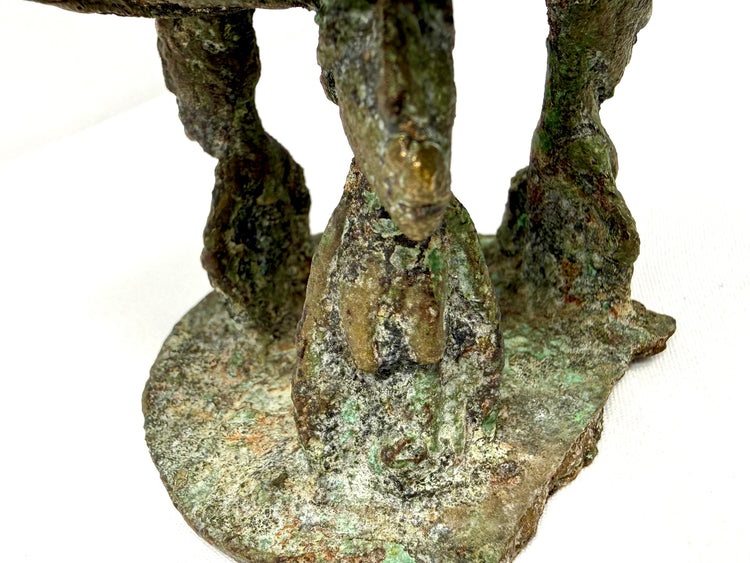
- Tres patas antropomorfas estilizadas que enfatizan la conexión humana simbólica

- Pátina de verdigris en toda la superficie que realza la autenticidad y la antigüedad

- Forma compacta pero dinámica diseñada para uso sagrado y práctico

Importancia cultural

Los recipientes de bronce Dogon se usaban tradicionalmente para almacenar hierbas sagradas, polvos o medicinas durante las ceremonias rituales, conectando la vida cotidiana con las creencias espirituales y cosmológicas. Los motivos grabados simbolizan la interconexión y la energía espiritual, mientras que los elementos antropomórficos resaltan el papel humano en la unión de los mundos terrenal y espiritual. Este recipiente encarna la cosmovisión Dogon, donde el arte, el ritual y las prácticas curativas se fusionan en una tradición cultural unificada.

Estado

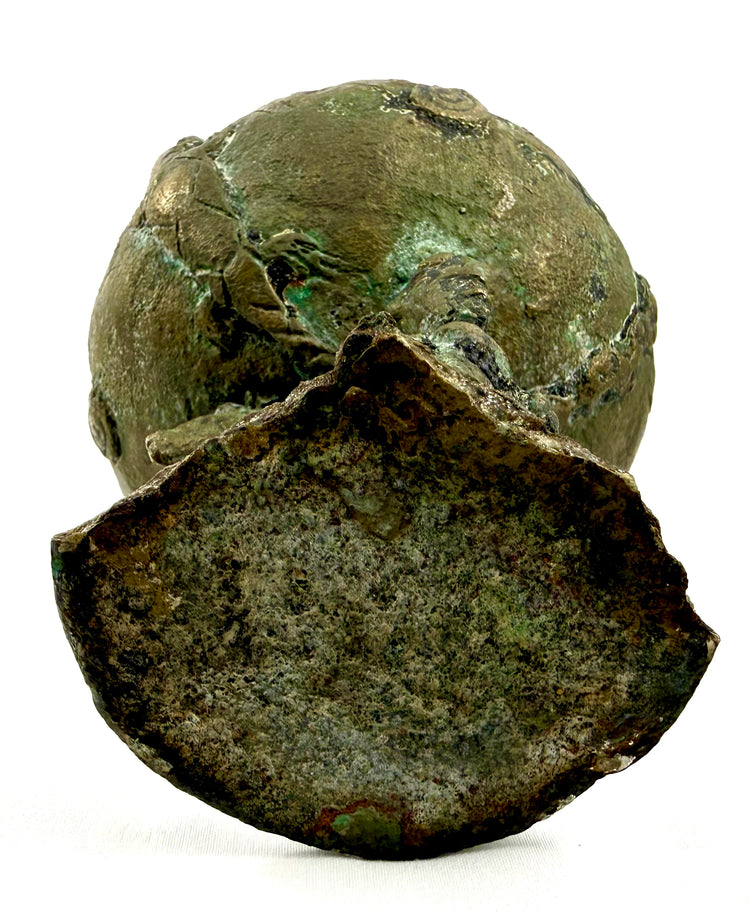
El recipiente se conserva bien, con una estructura estable y una pátina de verdigris ricamente desarrollada. El desgaste superficial y la oxidación son consistentes con la edad y el uso ritual, lo que confirma aún más su autenticidad histórica.

Dimensiones (aproximadas)

Altura: 7,5 pulgadas

Edad (aproximada)

125–225 años

Procedencia

Posteriormente en posesión de B.C. Galleries, Armadale, Victoria, Australia, una galería y distribuidora de Melbourne con una larga trayectoria, especializada en arte antiguo, antigüedades, arte tribal y objetos etnográficos. Establecida al menos en 2006, la galería operaba desde 1069 High Street, Armadale, y estaba asociada con el marchante Frank Bottaro.

Más información

Descubra la historia y cultura del pueblo Dogon

Explore nuestra colección de artefactos etnográficos

Descripción

Contexto histórico y origen

Región: Malí, África Occidental
Material: Bronce
Período: Siglo XIX d. C.

Descripción

Este excepcional recipiente de bronce representa un notable ejemplo de la artesanía y la tradición espiritual Dogon. El pueblo Dogon de la Escarpa de Bandiagara en Malí es conocido por su rica herencia cultural, expresión artística y compleja cosmología. Utilizados en contextos rituales y de curación, recipientes como este contenían hierbas sagradas, medicinas o materiales ceremoniales. Su forma distintiva, que presenta un cuerpo redondeado, patas antropomorfas y una figura humana que corona la tapa, refleja tanto su función ritual como su significado artístico.

Características

- Cuerpo bulboso decorado con motivos espirales y geométricos grabados

- Figura humana escultórica en la tapa que simboliza un curandero o guía espiritual

- Tres patas antropomorfas estilizadas que enfatizan la conexión humana simbólica

- Pátina de verdigris en toda la superficie que realza la autenticidad y la antigüedad

- Forma compacta pero dinámica diseñada para uso sagrado y práctico

Importancia cultural

Los recipientes de bronce Dogon se usaban tradicionalmente para almacenar hierbas sagradas, polvos o medicinas durante las ceremonias rituales, conectando la vida cotidiana con las creencias espirituales y cosmológicas. Los motivos grabados simbolizan la interconexión y la energía espiritual, mientras que los elementos antropomórficos resaltan el papel humano en la unión de los mundos terrenal y espiritual. Este recipiente encarna la cosmovisión Dogon, donde el arte, el ritual y las prácticas curativas se fusionan en una tradición cultural unificada.

Estado

El recipiente se conserva bien, con una estructura estable y una pátina de verdigris ricamente desarrollada. El desgaste superficial y la oxidación son consistentes con la edad y el uso ritual, lo que confirma aún más su autenticidad histórica.

Dimensiones (aproximadas)

Altura: 7,5 pulgadas

Edad (aproximada)

125–225 años

Procedencia

Posteriormente en posesión de B.C. Galleries, Armadale, Victoria, Australia, una galería y distribuidora de Melbourne con una larga trayectoria, especializada en arte antiguo, antigüedades, arte tribal y objetos etnográficos. Establecida al menos en 2006, la galería operaba desde 1069 High Street, Armadale, y estaba asociada con el marchante Frank Bottaro.

Más información

Descubra la historia y cultura del pueblo Dogon

Explore nuestra colección de artefactos etnográficos

También te puede interesar