



Ancient Eastern Mediterranean Terracotta Unguentarium | 1st–2nd Century CE
- Precio habitual
- $600.00
- Precio de venta
- $600.00
- Precio habitual
No se pudo cargar la disponibilidad de retiro





Ancient Eastern Mediterranean Terracotta Unguentarium | 1st–2nd Century CE
Descripción
Más
Menos
Historical Context & Origin
Region: Eastern Mediterranean, Roman Imperial Period
Material: Terracotta (Fired Clay)
Period: Circa 1st–2nd Century CE
Description
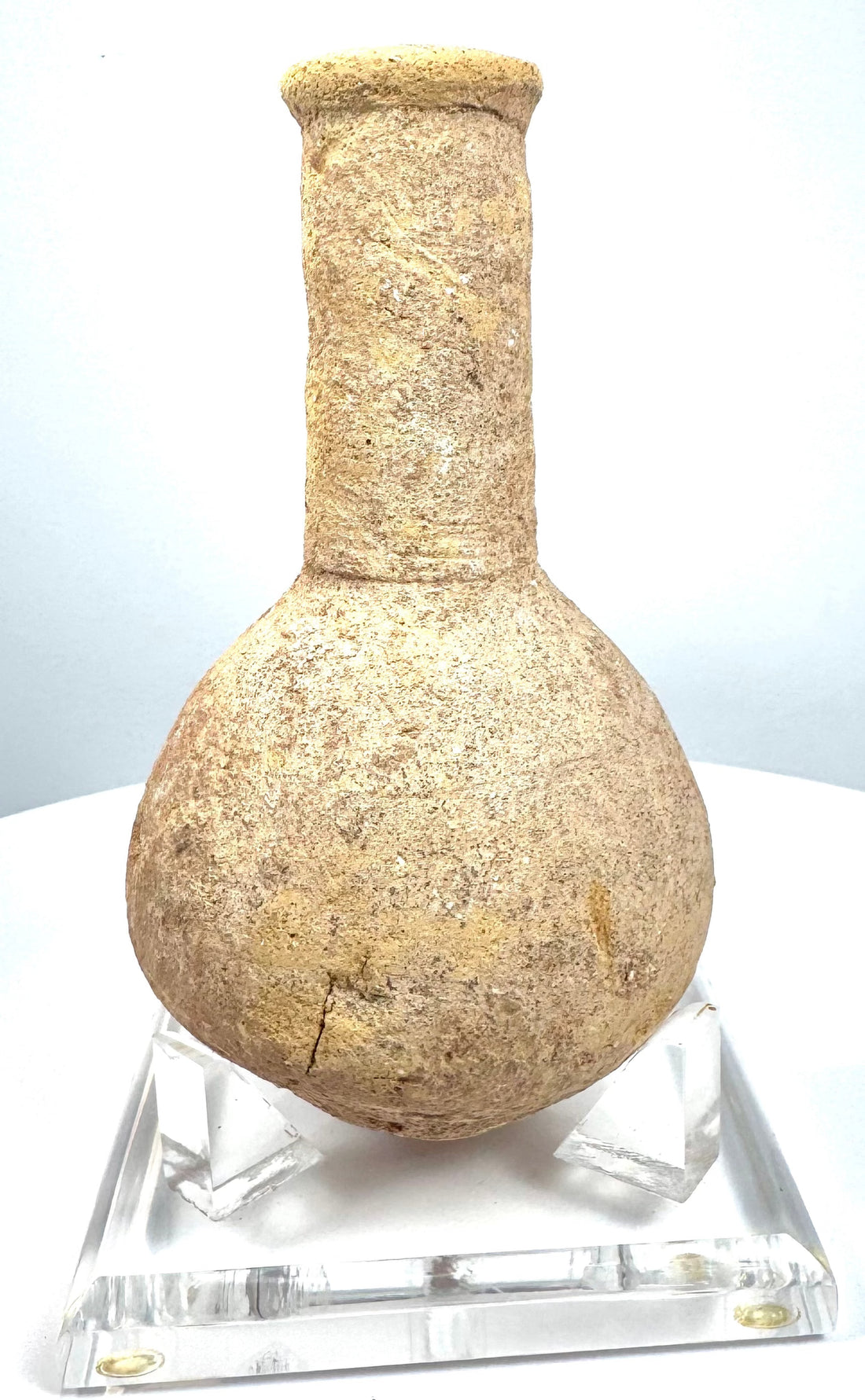
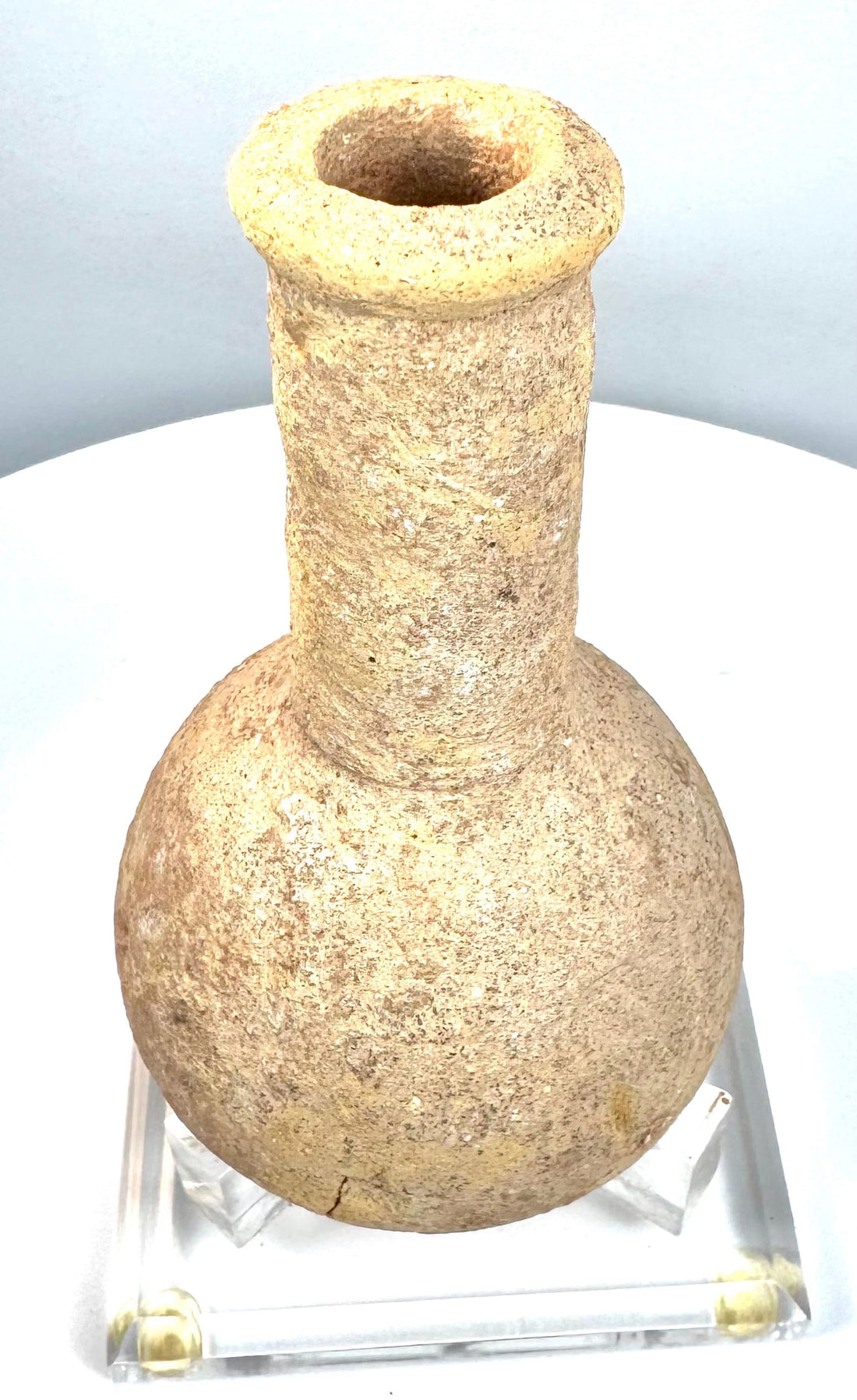
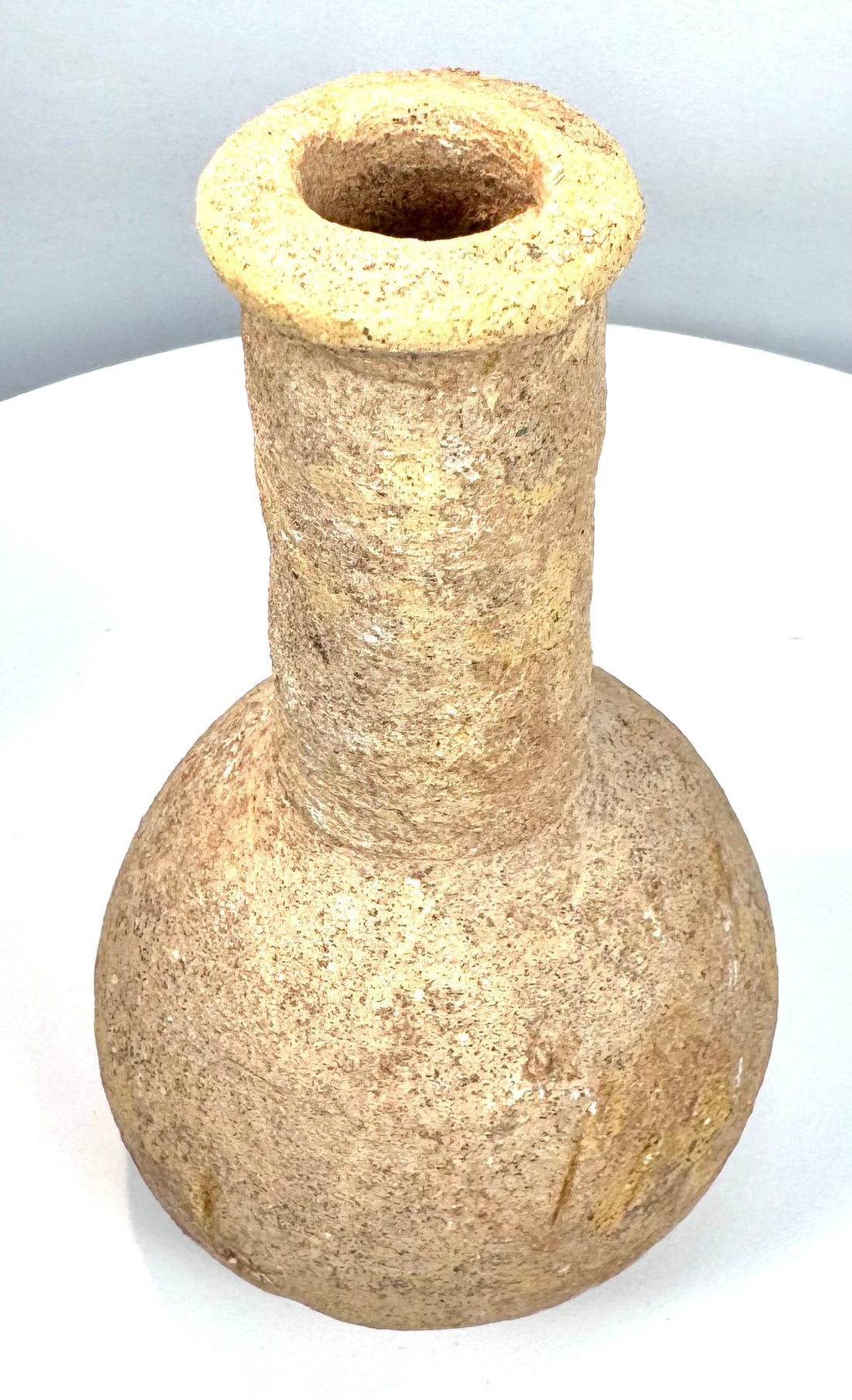
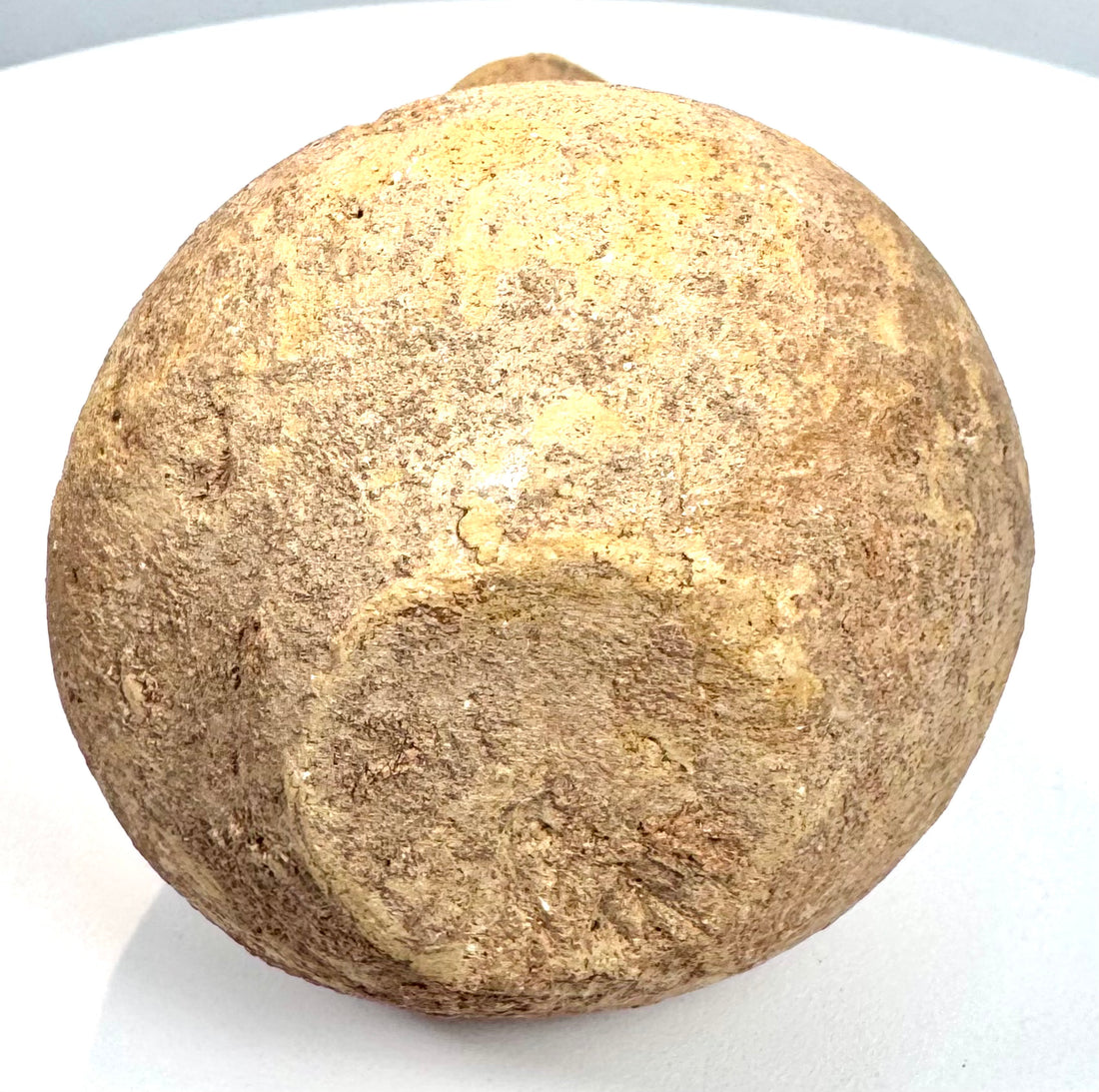
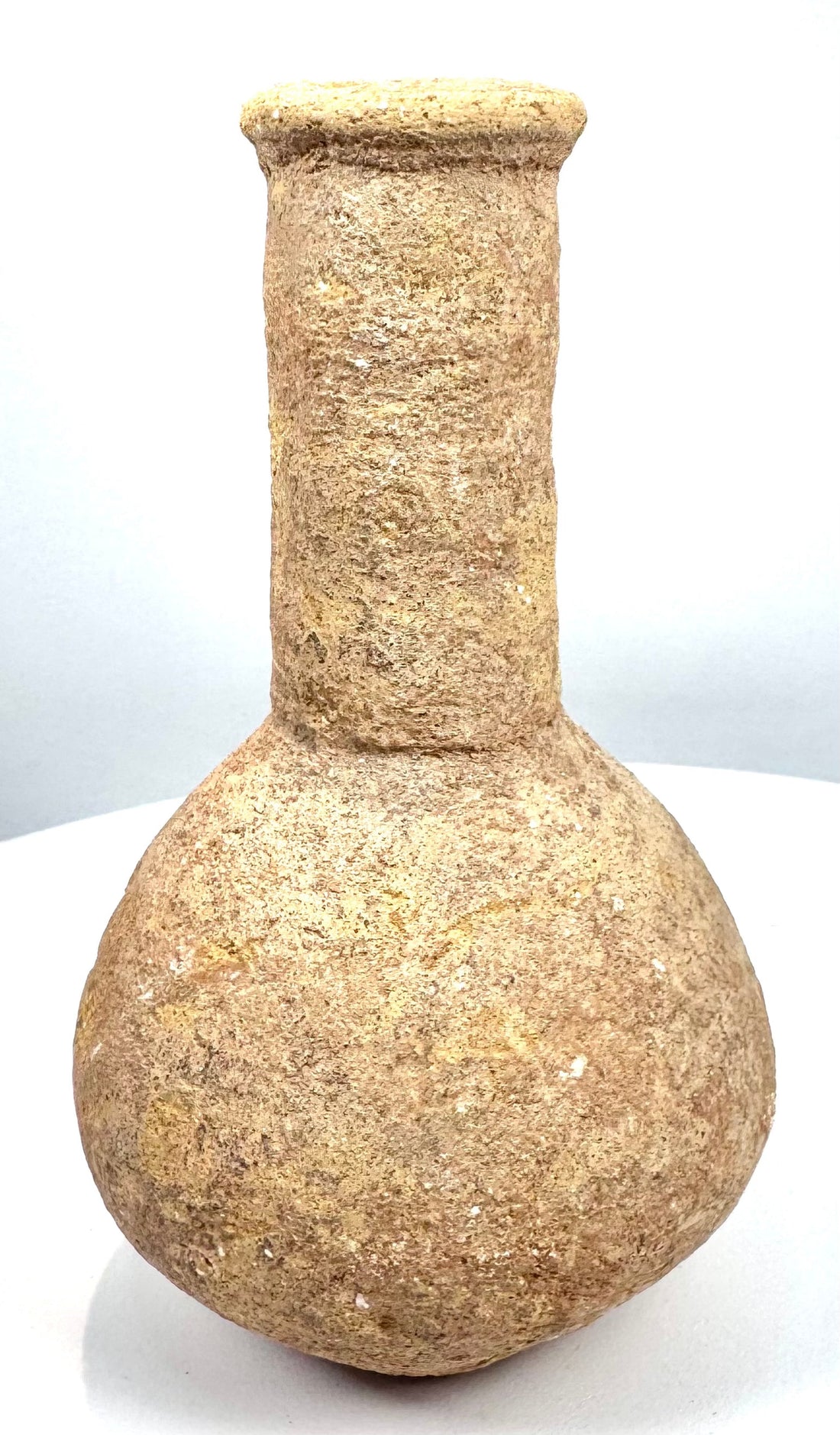
This ancient Eastern Mediterranean terracotta unguentarium features a generously rounded, nearly spherical body rising into an elongated cylindrical neck, crowned by a thick, outward-projecting rim. Its distinctive proportions reflect vessel-making traditions associated with the Roman Imperial period, when small containers of this form were widely used for perfumes, aromatic oils, and other valued preparations.
The rounded lower chamber transitions into a substantial upright neck, with a narrow recessed band defining the junction between the neck and shoulder. The slightly flared circular mouth provides a pronounced finishing detail, contributing to the vessel's balanced and recognizable silhouette.
Fashioned from pale beige to sandy-brown terracotta, the exterior exhibits a coarse, granular surface with scattered mineral deposits, subtle variations in coloration, and extensive age-related weathering. The undecorated surface emphasizes the vessel's simple architectural form, reflecting the functional character of Roman-period ceramic containers.
The substantial rounded body and elongated neck are characteristic of unguentarium forms encountered throughout the ancient Mediterranean. Its surviving condition, textured ceramic fabric, and restrained design provide an intriguing example of Eastern Mediterranean ceramic craftsmanship during the early Roman Imperial centuries.
Features
-
Rounded, nearly spherical terracotta body with an elongated cylindrical neck
-
Thick, outward-projecting rim surrounding a slightly flared circular mouth
-
Narrow recessed band separating the neck from the rounded shoulder
-
Pale beige to sandy-brown ceramic fabric with natural tonal variations
-
Coarse, granular exterior exhibiting mineral deposits and surface weathering
-
Undecorated design reflecting Roman Imperial ceramic vessel traditions
-
Distinctive proportions characteristic of ancient Mediterranean unguentaria
-
Extensive surface wear, minor abrasions, and a visible fissure along the lower body
Cultural Significance
During the Roman Imperial period, perfumes, aromatic oils, cosmetics, and medicinal preparations played important roles in everyday life throughout the Mediterranean world. These substances were associated with personal grooming, bathing practices, religious observances, and funerary customs.
Small vessels known as unguentaria were commonly used to store and dispense such preparations. Their distinctive rounded bodies, elongated necks, and relatively narrow openings made them suitable for containing and distributing small quantities of valuable liquids.
Terracotta unguentaria were produced across the Mediterranean, with considerable regional variation in their proportions, ceramic fabrics, and manufacturing techniques. Archaeological discoveries have documented their use in domestic, commercial, religious, and funerary settings, demonstrating their widespread presence in Roman-period material culture.
The Eastern Mediterranean was an important centre of ceramic production and exchange during the Roman Imperial period. Established pottery traditions continued to evolve under Roman influence, producing a wide variety of practical vessels for everyday and specialized purposes.
Condition
The vessel displays extensive surface weathering, a coarse granular texture, scattered mineral deposits, and areas of discoloration consistent with its present condition.
Minor surface abrasions and irregularities are visible throughout, together with a fissure along the lower portion of the rounded body.
The thick projecting rim and cylindrical neck retain their overall form, while the undecorated terracotta exterior exhibits natural tonal variations and accumulated surface wear.
Dimensions (Approximate)
Height: 5.75 in
Width: 3.325 in
Depth: 3.325 in
Age (Approximate)
1,700–2,000 years old
Provenance
Formerly part of a private collection in Sarasota Beach, Florida, USA. Subsequently handled by Akiba Galleries, Dania Beach, Florida, USA. Akiba Galleries is an established, family-owned auction house specializing in fine art, antiques, historical artifacts, and collectible objects from around the world. Known for its diverse and carefully curated auctions, the gallery serves an international clientele of collectors, dealers, and institutions.
Expert Assessment: Examined by Luca Salvaggio, an Italian archaeologist specializing in ancient Mediterranean material, with a Postgraduate Diploma from the Italian Archaeological School at Athens (IASA) and accreditation for preventive archaeology from the Italian Ministry of Culture (MiC). He identified the vessel as an Eastern Mediterranean terracotta unguentarium, dating to the 1st–2nd century CE. His assessment was based on its rounded, nearly spherical body, elongated cylindrical neck, narrow recessed band at the shoulder, thick outward-projecting rim, and coarse, pale beige to sandy-brown ceramic fabric with mineral deposits and extensive surface weathering.
Learn More
Discover a comparable Roman unguentarium featuring a bulbous body and elongated neck at the Acropolis Museum
Browse Our Collection of Roman & Greek Artifacts
Descripción
Historical Context & Origin
Region: Eastern Mediterranean, Roman Imperial Period
Material: Terracotta (Fired Clay)
Period: Circa 1st–2nd Century CE
Description
This ancient Eastern Mediterranean terracotta unguentarium features a generously rounded, nearly spherical body rising into an elongated cylindrical neck, crowned by a thick, outward-projecting rim. Its distinctive proportions reflect vessel-making traditions associated with the Roman Imperial period, when small containers of this form were widely used for perfumes, aromatic oils, and other valued preparations.
The rounded lower chamber transitions into a substantial upright neck, with a narrow recessed band defining the junction between the neck and shoulder. The slightly flared circular mouth provides a pronounced finishing detail, contributing to the vessel's balanced and recognizable silhouette.
Fashioned from pale beige to sandy-brown terracotta, the exterior exhibits a coarse, granular surface with scattered mineral deposits, subtle variations in coloration, and extensive age-related weathering. The undecorated surface emphasizes the vessel's simple architectural form, reflecting the functional character of Roman-period ceramic containers.
The substantial rounded body and elongated neck are characteristic of unguentarium forms encountered throughout the ancient Mediterranean. Its surviving condition, textured ceramic fabric, and restrained design provide an intriguing example of Eastern Mediterranean ceramic craftsmanship during the early Roman Imperial centuries.
Features
-
Rounded, nearly spherical terracotta body with an elongated cylindrical neck
-
Thick, outward-projecting rim surrounding a slightly flared circular mouth
-
Narrow recessed band separating the neck from the rounded shoulder
-
Pale beige to sandy-brown ceramic fabric with natural tonal variations
-
Coarse, granular exterior exhibiting mineral deposits and surface weathering
-
Undecorated design reflecting Roman Imperial ceramic vessel traditions
-
Distinctive proportions characteristic of ancient Mediterranean unguentaria
-
Extensive surface wear, minor abrasions, and a visible fissure along the lower body
Cultural Significance
During the Roman Imperial period, perfumes, aromatic oils, cosmetics, and medicinal preparations played important roles in everyday life throughout the Mediterranean world. These substances were associated with personal grooming, bathing practices, religious observances, and funerary customs.
Small vessels known as unguentaria were commonly used to store and dispense such preparations. Their distinctive rounded bodies, elongated necks, and relatively narrow openings made them suitable for containing and distributing small quantities of valuable liquids.
Terracotta unguentaria were produced across the Mediterranean, with considerable regional variation in their proportions, ceramic fabrics, and manufacturing techniques. Archaeological discoveries have documented their use in domestic, commercial, religious, and funerary settings, demonstrating their widespread presence in Roman-period material culture.
The Eastern Mediterranean was an important centre of ceramic production and exchange during the Roman Imperial period. Established pottery traditions continued to evolve under Roman influence, producing a wide variety of practical vessels for everyday and specialized purposes.
Condition
The vessel displays extensive surface weathering, a coarse granular texture, scattered mineral deposits, and areas of discoloration consistent with its present condition.
Minor surface abrasions and irregularities are visible throughout, together with a fissure along the lower portion of the rounded body.
The thick projecting rim and cylindrical neck retain their overall form, while the undecorated terracotta exterior exhibits natural tonal variations and accumulated surface wear.
Dimensions (Approximate)
Height: 5.75 in
Width: 3.325 in
Depth: 3.325 in
Age (Approximate)
1,700–2,000 years old
Provenance
Formerly part of a private collection in Sarasota Beach, Florida, USA. Subsequently handled by Akiba Galleries, Dania Beach, Florida, USA. Akiba Galleries is an established, family-owned auction house specializing in fine art, antiques, historical artifacts, and collectible objects from around the world. Known for its diverse and carefully curated auctions, the gallery serves an international clientele of collectors, dealers, and institutions.
Expert Assessment: Examined by Luca Salvaggio, an Italian archaeologist specializing in ancient Mediterranean material, with a Postgraduate Diploma from the Italian Archaeological School at Athens (IASA) and accreditation for preventive archaeology from the Italian Ministry of Culture (MiC). He identified the vessel as an Eastern Mediterranean terracotta unguentarium, dating to the 1st–2nd century CE. His assessment was based on its rounded, nearly spherical body, elongated cylindrical neck, narrow recessed band at the shoulder, thick outward-projecting rim, and coarse, pale beige to sandy-brown ceramic fabric with mineral deposits and extensive surface weathering.
Learn More
Discover a comparable Roman unguentarium featuring a bulbous body and elongated neck at the Acropolis Museum
Browse Our Collection of Roman & Greek Artifacts
También te puede interesar
