

Cuenco de cerámica esgrafiada del Imperio Romano de Oriente | Esgrafiado con depósitos marinos | C. 1000–1400 d.C.
- Precio habitual
- $500.00
- Precio de venta
- $500.00
- Precio habitual
No se pudo cargar la disponibilidad de retiro


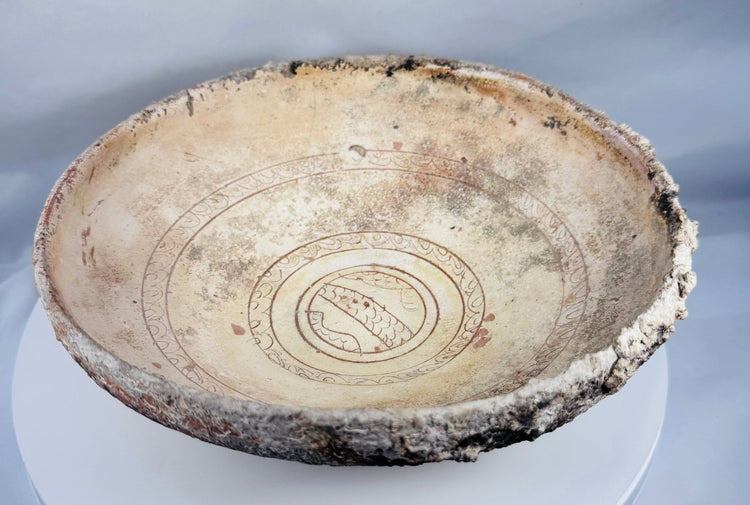

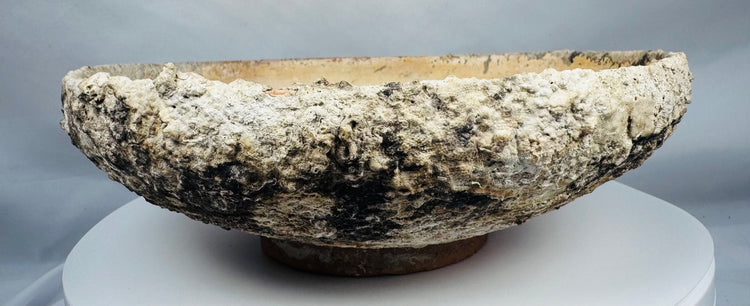


Cuenco de cerámica esgrafiada del Imperio Romano de Oriente | Esgrafiado con depósitos marinos | C. 1000–1400 d.C.
Descripción
Más
Menos
Contexto histórico y origen
Región: Mediterráneo Oriental / Imperio Bizantino
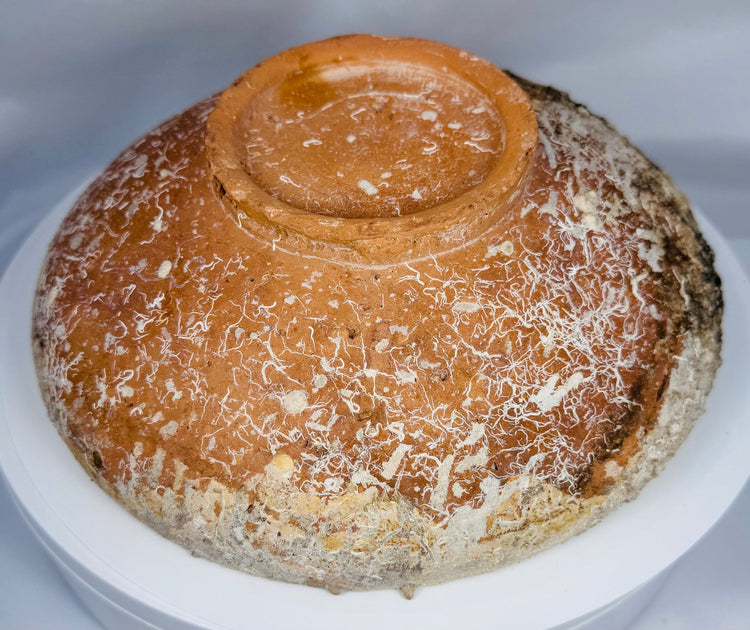
Material: Loza con engobe color crema sobre arcilla roja
Período: Período bizantino, circa 1000–1400 d.C.
Descripción
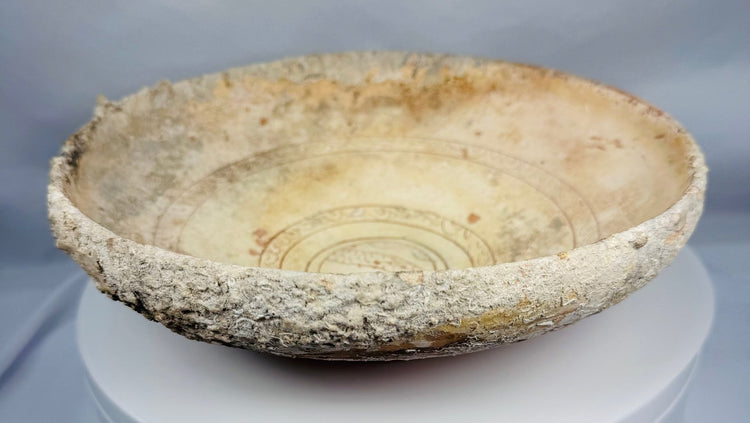
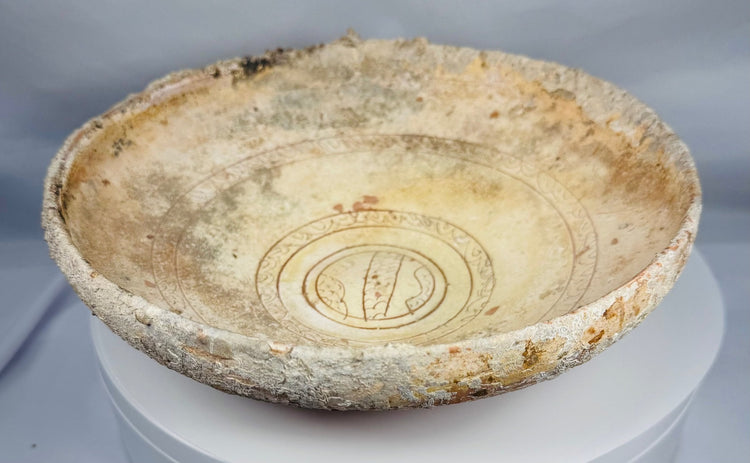
Este antiguo cuenco bizantino de cerámica esgrafiada representa un excelente ejemplo de la producción de cerámica medieval del Mediterráneo Oriental. Formado a partir de loza roja y recubierto con un engobe color crema pálido, la vasija está decorada con bandas concéntricas de ornamentos esgrafiados finamente incisos que rodean un motivo de medallón central. El esquema decorativo consiste en patrones repetidos festoneados y sinuosos ejecutados bajo un vidriado de plomo transparente, lo que refleja las tradiciones artísticas de la vajilla bizantina durante la Edad Media.
La cerámica esgrafiada surgió como una de las formas cerámicas más populares en todo el mundo bizantino, donde los artesanos tallaban motivos decorativos a través de una fina capa de engobe antes de vidriar y cocer. Dichas vasijas se utilizaban ampliamente para servir alimentos y se comercializaban extensamente por toda la cuenca del Mediterráneo.
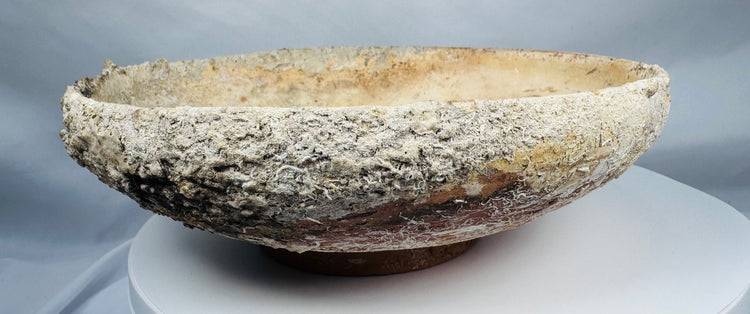
El cuenco presenta extensas incrustaciones marinas y minerales que cubren gran parte de la superficie exterior. Estos depósitos probablemente se acumularon durante un prolongado enterramiento o exposición en un ambiente costero o marino, creando una apariencia arqueológica visualmente impactante y preservando la evidencia de la larga historia de la vasija.
Características
- Auténtico cuenco bizantino de cerámica esgrafiada
- Decoración de engobe crema sobre cuerpo de loza roja
- Bandas decorativas incisas concéntricas
- Motivo de medallón central
- Interior vidriado con plomo transparente
- Extensas incrustaciones marinas y minerales
- Atractiva superficie arqueológica en toda la pieza
Significado cultural
La cerámica esgrafiada bizantina fue una de las formas de cerámica medieval más distribuidas en el Mediterráneo oriental. Producidas tanto para uso doméstico como comercial, estas vasijas demuestran la sofisticación técnica de los alfareros bizantinos y las amplias redes comerciales que conectaban las regiones del imperio. Los motivos decorativos incisos reflejan tradiciones artísticas que combinaban influencias clásicas, cristianas y regionales.
Los ejemplos que conservan importantes concreciones marinas son particularmente evocadores del viaje arqueológico de la vasija, preservando la evidencia de siglos pasados bajo tierra o dentro de un ambiente marítimo antes de su recuperación.
Condición
Condición antigua con el desgaste esperado por la edad y la recuperación arqueológica. Pérdidas superficiales, desgaste del vidriado, depósitos minerales, incrustaciones marinas e imperfecciones dispersas en toda la pieza. Estable y adecuado para exhibición.
Dimensiones (aproximadas)
Altura: 3.5 pulgadas
Diámetro: 10 pulgadas
Edad (aproximada)
600–1,000 años de antigüedad
Procedencia
De una colección privada de Saint Paul, Minnesota, EE. UU., reunida durante varias décadas con un enfoque en artefactos antiguos del Mediterráneo, clásicos y arqueológicos. La colección incluía material romano, bizantino, del Cercano Oriente y precolombino adquirido a través de galerías, comerciantes y colecciones privadas establecidas a finales del siglo XX y principios del XXI. El cuenco permaneció en la colección durante muchos años.
Saber más
Ver un cuenco esgrafiado comparable en la colección de El Museo Metropolitano de Arte
Explore nuestra colección de artefactos romanos y griegos antiguos
Descripción
Contexto histórico y origen
Región: Mediterráneo Oriental / Imperio Bizantino
Material: Loza con engobe color crema sobre arcilla roja
Período: Período bizantino, circa 1000–1400 d.C.
Descripción
Este antiguo cuenco bizantino de cerámica esgrafiada representa un excelente ejemplo de la producción de cerámica medieval del Mediterráneo Oriental. Formado a partir de loza roja y recubierto con un engobe color crema pálido, la vasija está decorada con bandas concéntricas de ornamentos esgrafiados finamente incisos que rodean un motivo de medallón central. El esquema decorativo consiste en patrones repetidos festoneados y sinuosos ejecutados bajo un vidriado de plomo transparente, lo que refleja las tradiciones artísticas de la vajilla bizantina durante la Edad Media.
La cerámica esgrafiada surgió como una de las formas cerámicas más populares en todo el mundo bizantino, donde los artesanos tallaban motivos decorativos a través de una fina capa de engobe antes de vidriar y cocer. Dichas vasijas se utilizaban ampliamente para servir alimentos y se comercializaban extensamente por toda la cuenca del Mediterráneo.
El cuenco presenta extensas incrustaciones marinas y minerales que cubren gran parte de la superficie exterior. Estos depósitos probablemente se acumularon durante un prolongado enterramiento o exposición en un ambiente costero o marino, creando una apariencia arqueológica visualmente impactante y preservando la evidencia de la larga historia de la vasija.
Características
- Auténtico cuenco bizantino de cerámica esgrafiada
- Decoración de engobe crema sobre cuerpo de loza roja
- Bandas decorativas incisas concéntricas
- Motivo de medallón central
- Interior vidriado con plomo transparente
- Extensas incrustaciones marinas y minerales
- Atractiva superficie arqueológica en toda la pieza
Significado cultural
La cerámica esgrafiada bizantina fue una de las formas de cerámica medieval más distribuidas en el Mediterráneo oriental. Producidas tanto para uso doméstico como comercial, estas vasijas demuestran la sofisticación técnica de los alfareros bizantinos y las amplias redes comerciales que conectaban las regiones del imperio. Los motivos decorativos incisos reflejan tradiciones artísticas que combinaban influencias clásicas, cristianas y regionales.
Los ejemplos que conservan importantes concreciones marinas son particularmente evocadores del viaje arqueológico de la vasija, preservando la evidencia de siglos pasados bajo tierra o dentro de un ambiente marítimo antes de su recuperación.
Condición
Condición antigua con el desgaste esperado por la edad y la recuperación arqueológica. Pérdidas superficiales, desgaste del vidriado, depósitos minerales, incrustaciones marinas e imperfecciones dispersas en toda la pieza. Estable y adecuado para exhibición.
Dimensiones (aproximadas)
Altura: 3.5 pulgadas
Diámetro: 10 pulgadas
Edad (aproximada)
600–1,000 años de antigüedad
Procedencia
De una colección privada de Saint Paul, Minnesota, EE. UU., reunida durante varias décadas con un enfoque en artefactos antiguos del Mediterráneo, clásicos y arqueológicos. La colección incluía material romano, bizantino, del Cercano Oriente y precolombino adquirido a través de galerías, comerciantes y colecciones privadas establecidas a finales del siglo XX y principios del XXI. El cuenco permaneció en la colección durante muchos años.
Saber más
Ver un cuenco esgrafiado comparable en la colección de El Museo Metropolitano de Arte
Explore nuestra colección de artefactos romanos y griegos antiguos
También te puede interesar
