



Ancient Egyptian Ushabti Funerary Figure | Late Period Style | Circa 664–332 BCE
- Precio habitual
- $400.00
- Precio de venta
- $400.00
- Precio habitual
No se pudo cargar la disponibilidad de retiro







Ancient Egyptian Ushabti Funerary Figure | Late Period Style | Circa 664–332 BCE
Descripción
Más
Menos
Historical Context & Origin
Region: Egyptian funerary tradition
Material: Weathered stone-like material with pale surface deposits; precise composition undetermined
Period: Late Period style, circa 664–332 BCE (26th–31st Dynasties; stylistic attribution)
Description
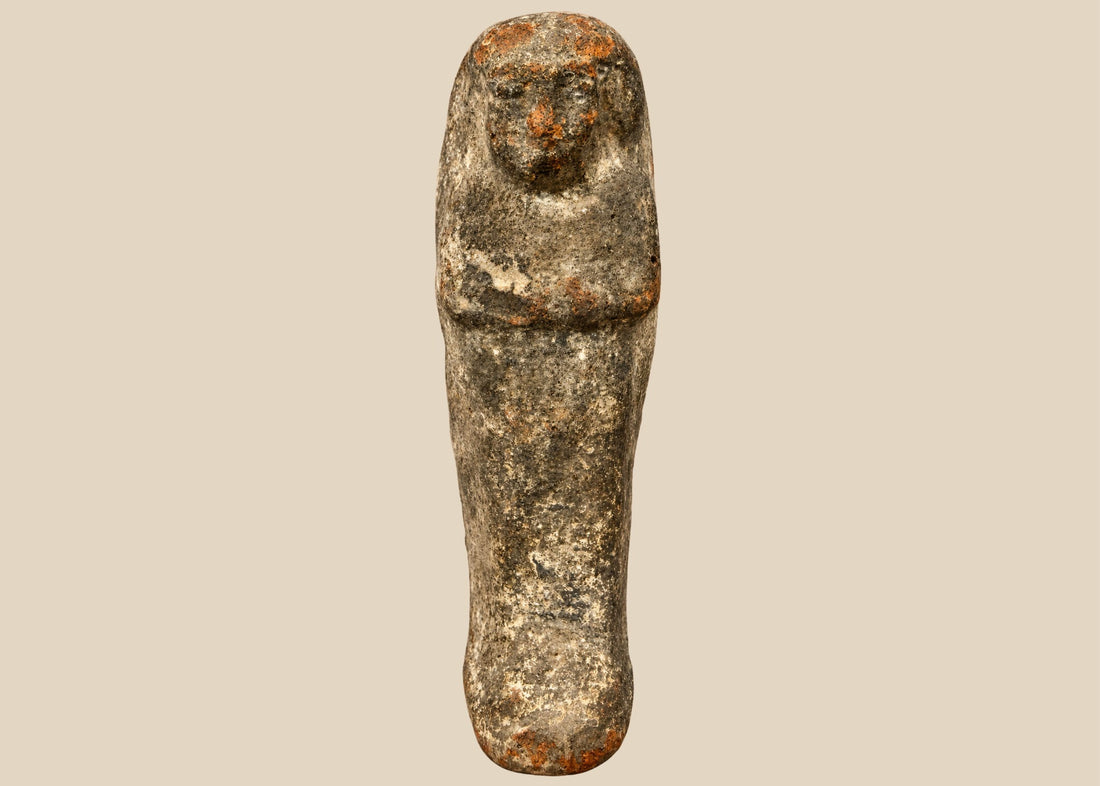
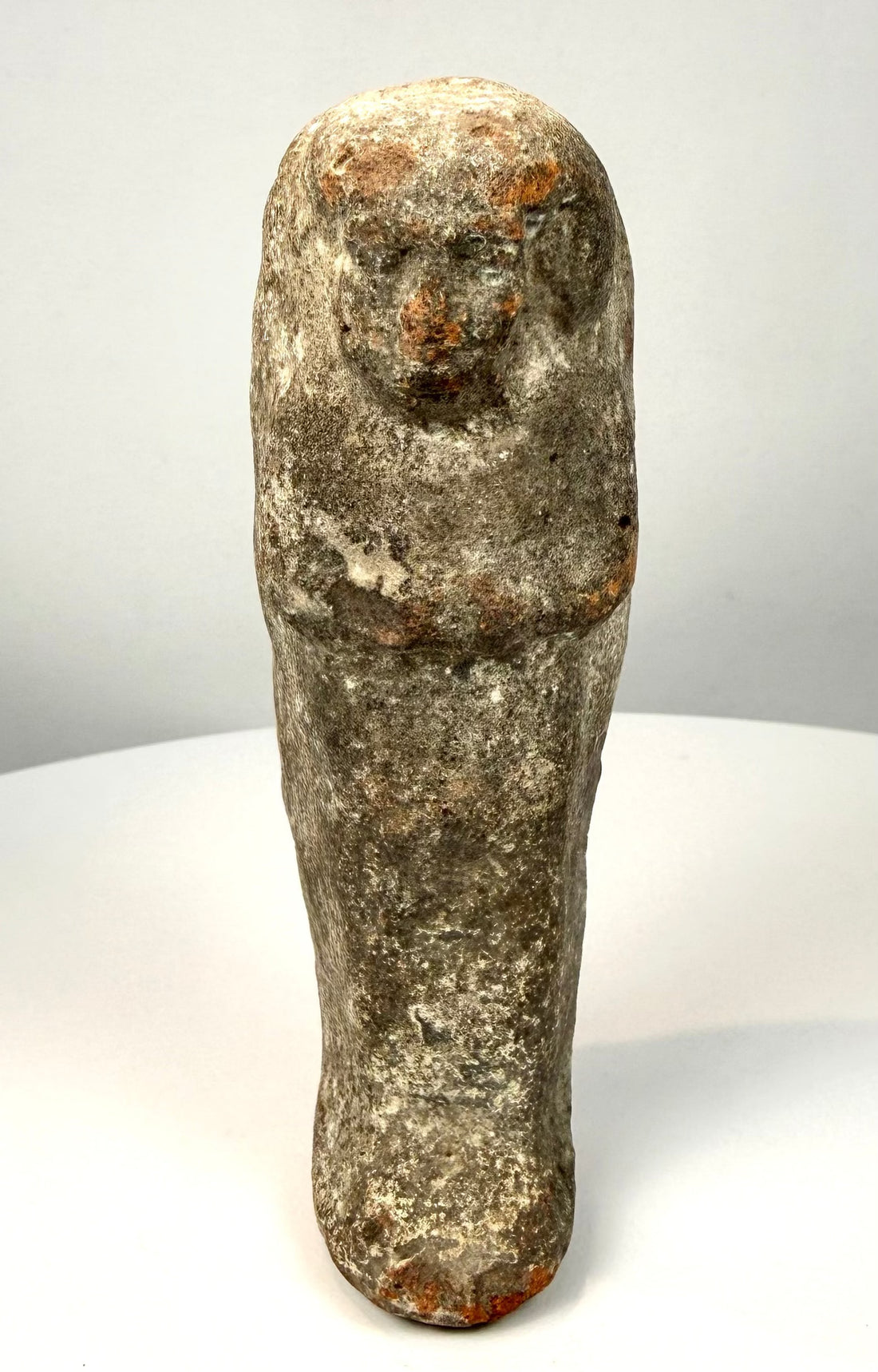
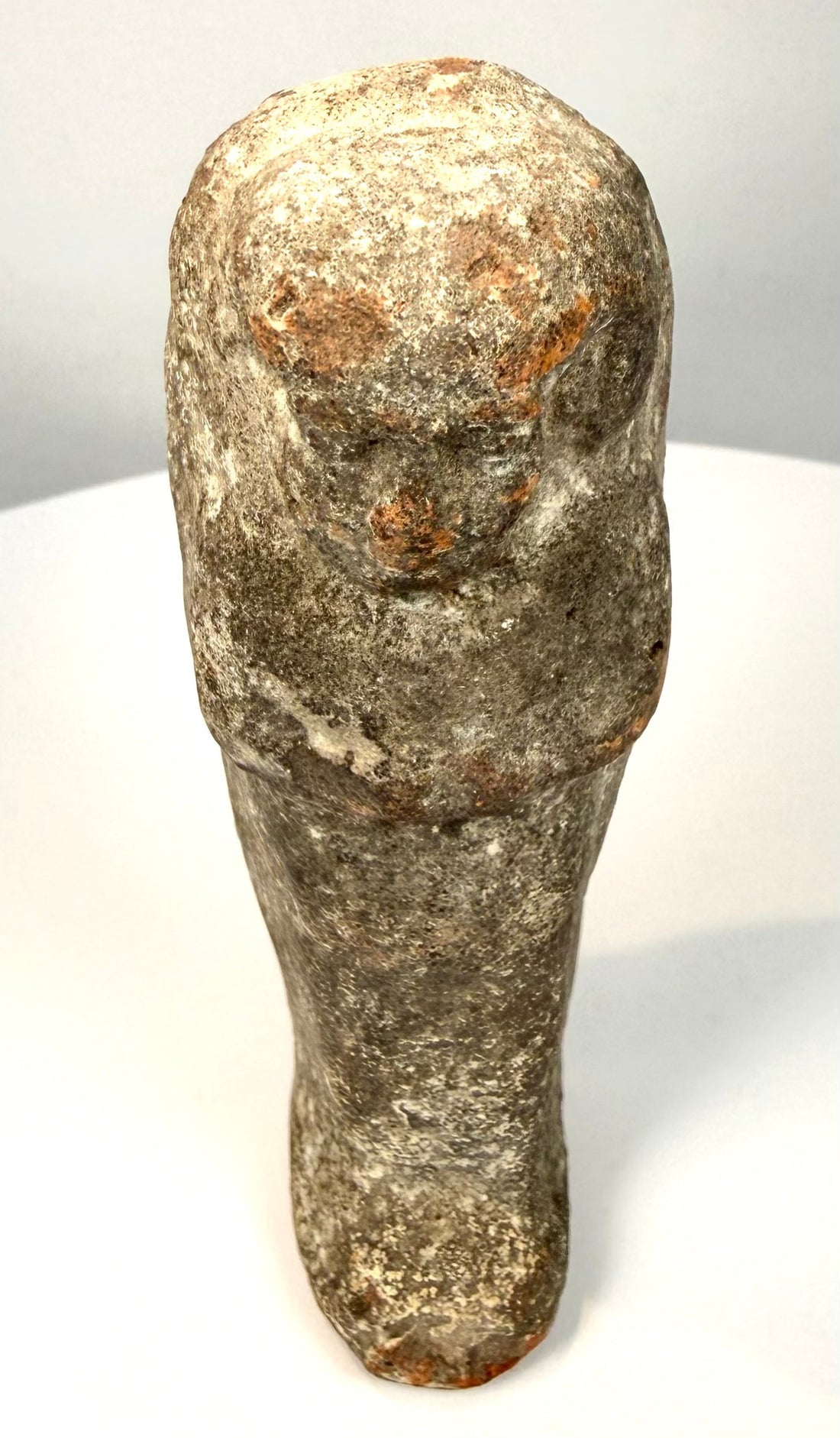
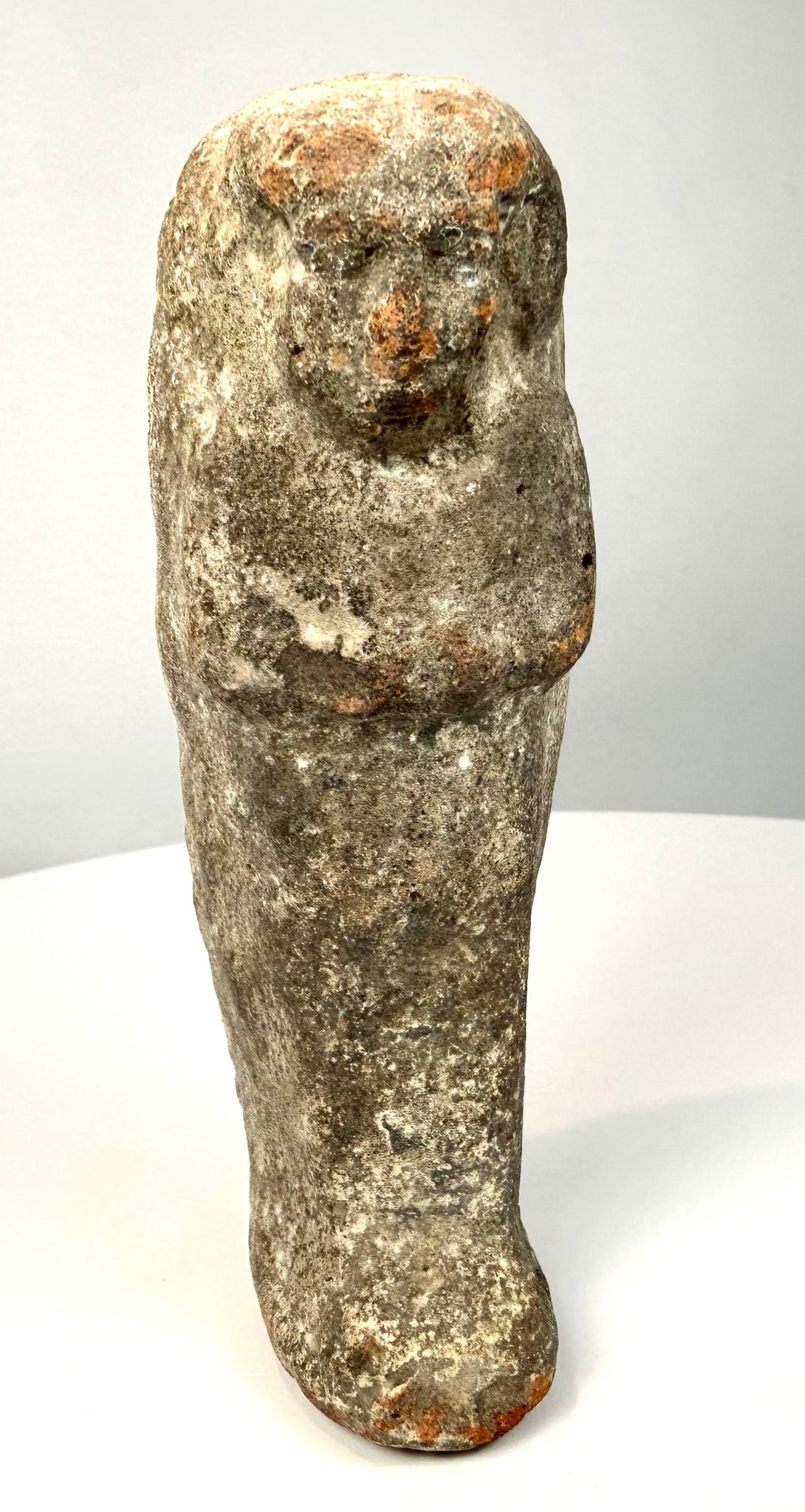
This distinctive funerary statuette exhibits the characteristic form of an Egyptian ushabti, also known as a shabti, a mummiform figure traditionally associated with ancient Egyptian burial customs and beliefs concerning the afterlife. Measuring approximately 4 inches in height, the figure displays simplified sculptural characteristics broadly comparable to Egyptian funerary statuettes of the Late Period.
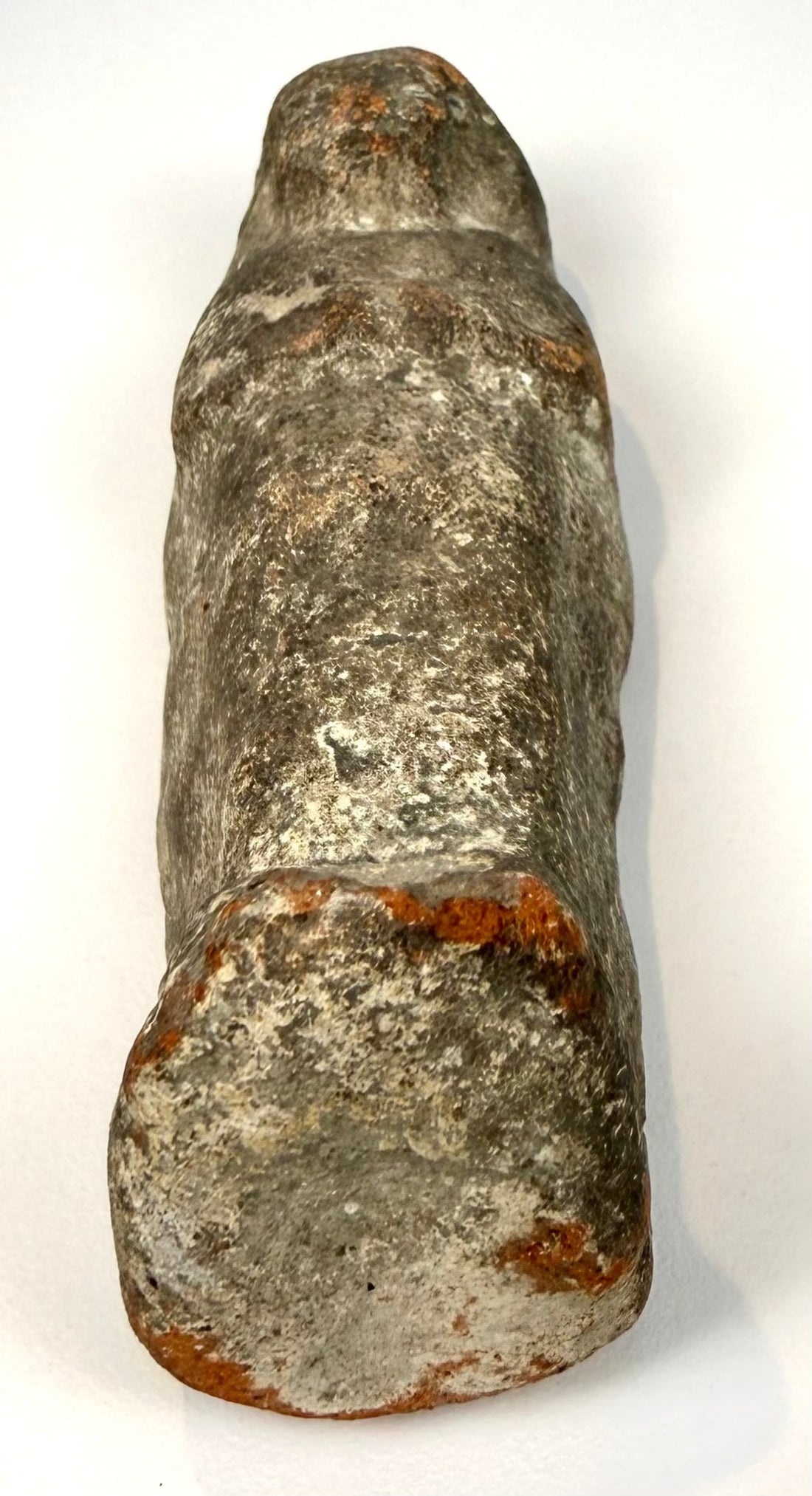
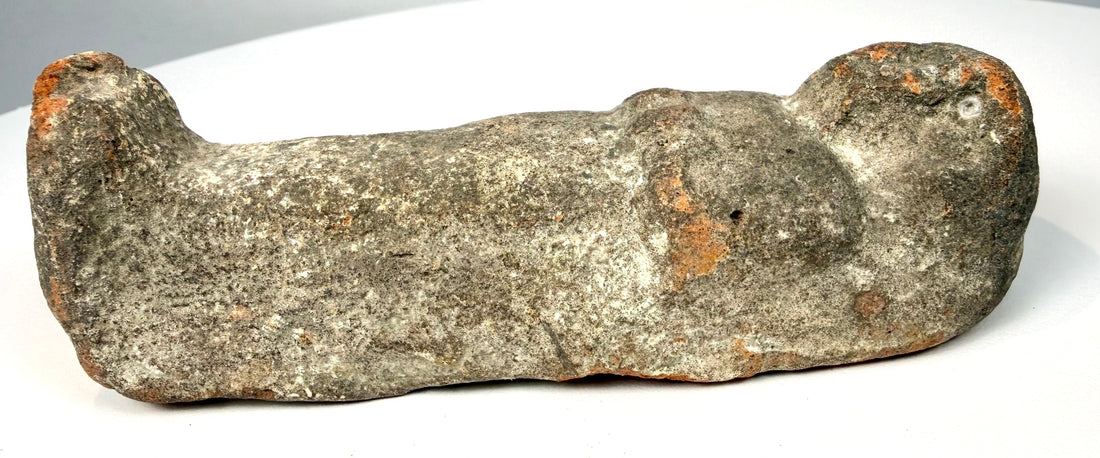
The rounded head is framed by broad contours resembling a traditional Egyptian wig, with partially preserved facial features, including recessed eyes, a broad nose, and a softened mouth. Subtle raised modelling across the upper torso suggests the customary crossed-arm arrangement, while the elongated body gradually tapers toward a rounded base, emphasizing its distinctive mummiform appearance.
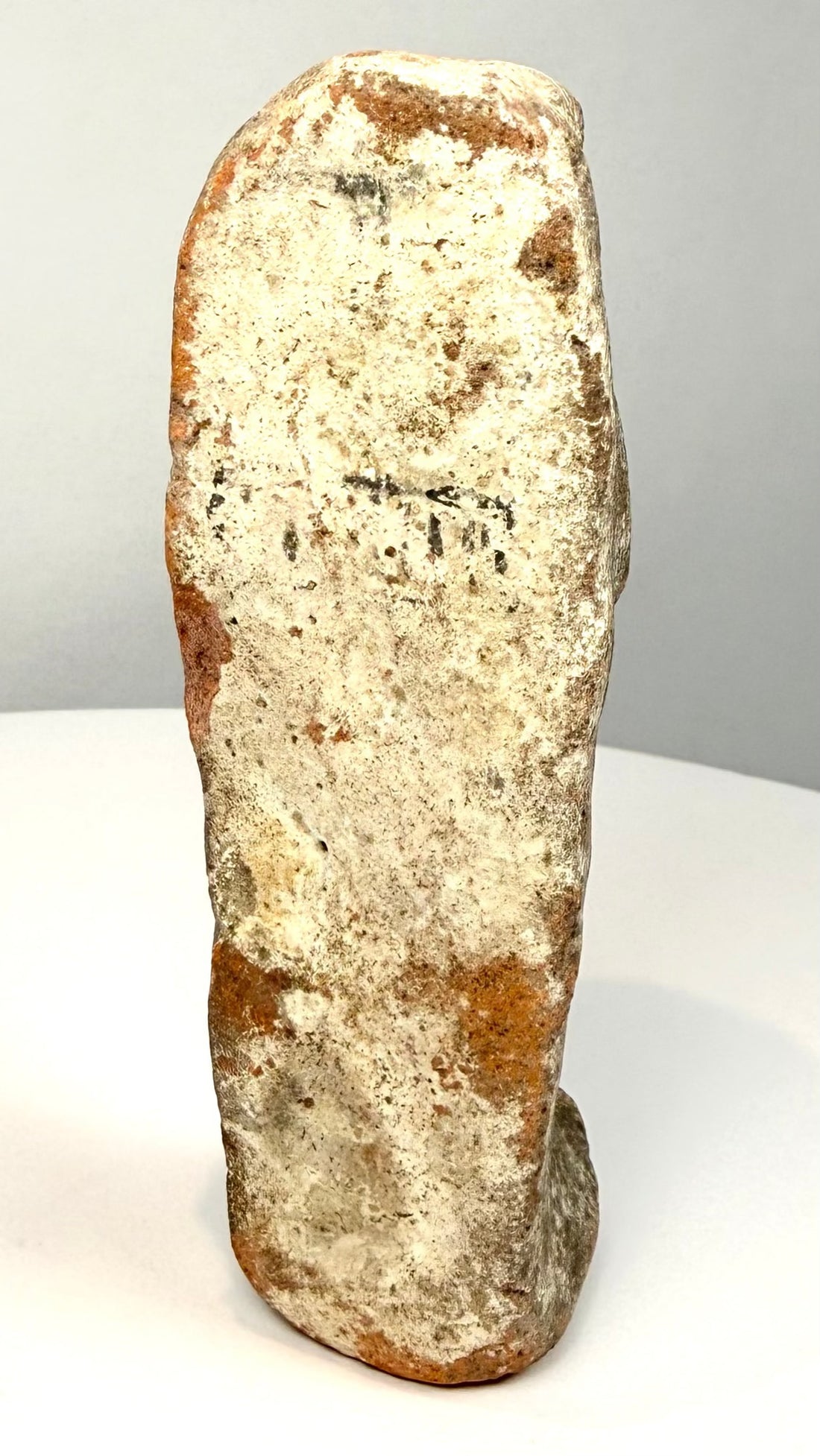
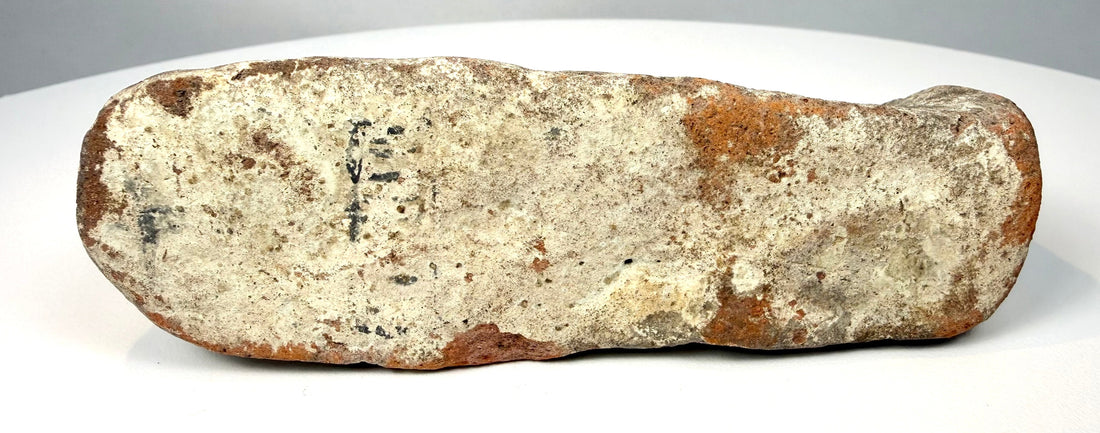
The surface exhibits contrasting dark grey, charcoal, earthy brown, and pale beige coloration, with localized reddish-orange discoloration around the face and lower extremity. Extensive pale deposits and irregular surface textures contribute to its distinctive appearance. The reverse is comparatively plain, with no clearly legible hieroglyphic inscription. The figure's material composition, antiquity, and precise dating remain unconfirmed.
Features
- Traditional mummiform profile consistent with Egyptian ushabti figures
- Rounded head framed by a stylized wig with partially preserved facial features
- Subtle upper-body modelling suggestive of crossed arms
- Elongated, tapering body with a rounded base
- Contrasting dark grey, charcoal, earthy brown, and reddish-orange coloration
- Extensive pale surface deposits and distinctive weathered textures
- No clearly legible hieroglyphic inscription
Cultural Significance
Ushabtis were an important component of ancient Egyptian funerary traditions, reflecting deeply established beliefs in resurrection and the continuation of life after death. Commonly interpreted as meaning "answerer," the term ushabti refers to the figure's symbolic responsibility to undertake agricultural labour and other obligations on behalf of the deceased, a religious function closely associated with Chapter 6 of the Book of the Dead.
The tradition developed during the Middle Kingdom and continued throughout successive periods of Egyptian history. By the Late Period, ushabtis had become an established component of funerary equipment, frequently displaying mummiform bodies, crossed arms, stylized wigs, and agricultural implements. Their appearance was closely associated with Osiris, the Egyptian deity of resurrection and the afterlife.
Egyptian ushabtis were produced in various materials, including stone, wood, terracotta, and faience, with considerable variation in size, craftsmanship, and decoration. While many examples carried hieroglyphic inscriptions identifying the deceased, uninscribed figures were also produced. These distinctive statuettes illustrate the enduring importance of funerary preparation and religious symbolism within Egyptian artistic traditions.
Condition
The figure exhibits extensive surface wear, scattered abrasions, small pits, localized losses, discoloration, and irregular pale deposits throughout. The facial features and upper-body modelling are considerably softened, although the overall mummiform profile remains recognizable. Individual hands and associated funerary implements are not clearly distinguishable. Contrasting dark grey, earthy brown, pale cream, and reddish-orange areas remain visible across the exterior. The lower extremity displays localized chipping and irregular edges. No clearly legible hieroglyphic inscription is visible.
Dimensions (Approximate)
Height: 4 in
Width: 1 in
Age (Approximate)
Potentially 2,350–2,700 years old, based on stylistic attribution; precise age undetermined.
Provenance
Previously held in a private collection in New York, New York, USA.
Subsequently handled by Terri Peters & Associates, New York, USA, an established auction and estate marketing firm founded by Terri Peters-McGraw, specializing in fine art, antiques, historical artifacts, and private collections.
Learn More
Examine a comparable Egyptian shabti exhibiting brown surface coloration and obscured inscription details through the archaeological collections of the Penn Museum
Explore additional Egyptian funerary figures, amulets, and objects associated with ancient religious traditions in our Ancient Egyptian Mummies & Artifacts Collection
Descripción
Historical Context & Origin
Region: Egyptian funerary tradition
Material: Weathered stone-like material with pale surface deposits; precise composition undetermined
Period: Late Period style, circa 664–332 BCE (26th–31st Dynasties; stylistic attribution)
Description
This distinctive funerary statuette exhibits the characteristic form of an Egyptian ushabti, also known as a shabti, a mummiform figure traditionally associated with ancient Egyptian burial customs and beliefs concerning the afterlife. Measuring approximately 4 inches in height, the figure displays simplified sculptural characteristics broadly comparable to Egyptian funerary statuettes of the Late Period.
The rounded head is framed by broad contours resembling a traditional Egyptian wig, with partially preserved facial features, including recessed eyes, a broad nose, and a softened mouth. Subtle raised modelling across the upper torso suggests the customary crossed-arm arrangement, while the elongated body gradually tapers toward a rounded base, emphasizing its distinctive mummiform appearance.
The surface exhibits contrasting dark grey, charcoal, earthy brown, and pale beige coloration, with localized reddish-orange discoloration around the face and lower extremity. Extensive pale deposits and irregular surface textures contribute to its distinctive appearance. The reverse is comparatively plain, with no clearly legible hieroglyphic inscription. The figure's material composition, antiquity, and precise dating remain unconfirmed.
Features
- Traditional mummiform profile consistent with Egyptian ushabti figures
- Rounded head framed by a stylized wig with partially preserved facial features
- Subtle upper-body modelling suggestive of crossed arms
- Elongated, tapering body with a rounded base
- Contrasting dark grey, charcoal, earthy brown, and reddish-orange coloration
- Extensive pale surface deposits and distinctive weathered textures
- No clearly legible hieroglyphic inscription
Cultural Significance
Ushabtis were an important component of ancient Egyptian funerary traditions, reflecting deeply established beliefs in resurrection and the continuation of life after death. Commonly interpreted as meaning "answerer," the term ushabti refers to the figure's symbolic responsibility to undertake agricultural labour and other obligations on behalf of the deceased, a religious function closely associated with Chapter 6 of the Book of the Dead.
The tradition developed during the Middle Kingdom and continued throughout successive periods of Egyptian history. By the Late Period, ushabtis had become an established component of funerary equipment, frequently displaying mummiform bodies, crossed arms, stylized wigs, and agricultural implements. Their appearance was closely associated with Osiris, the Egyptian deity of resurrection and the afterlife.
Egyptian ushabtis were produced in various materials, including stone, wood, terracotta, and faience, with considerable variation in size, craftsmanship, and decoration. While many examples carried hieroglyphic inscriptions identifying the deceased, uninscribed figures were also produced. These distinctive statuettes illustrate the enduring importance of funerary preparation and religious symbolism within Egyptian artistic traditions.
Condition
The figure exhibits extensive surface wear, scattered abrasions, small pits, localized losses, discoloration, and irregular pale deposits throughout. The facial features and upper-body modelling are considerably softened, although the overall mummiform profile remains recognizable. Individual hands and associated funerary implements are not clearly distinguishable. Contrasting dark grey, earthy brown, pale cream, and reddish-orange areas remain visible across the exterior. The lower extremity displays localized chipping and irregular edges. No clearly legible hieroglyphic inscription is visible.
Dimensions (Approximate)
Height: 4 in
Width: 1 in
Age (Approximate)
Potentially 2,350–2,700 years old, based on stylistic attribution; precise age undetermined.
Provenance
Previously held in a private collection in New York, New York, USA.
Subsequently handled by Terri Peters & Associates, New York, USA, an established auction and estate marketing firm founded by Terri Peters-McGraw, specializing in fine art, antiques, historical artifacts, and private collections.
Learn More
Examine a comparable Egyptian shabti exhibiting brown surface coloration and obscured inscription details through the archaeological collections of the Penn Museum
Explore additional Egyptian funerary figures, amulets, and objects associated with ancient religious traditions in our Ancient Egyptian Mummies & Artifacts Collection
También te puede interesar
