



European Gilt-Bronze Corpus Christi Crucifix Figure | Cristo Morto | Circa 16th–17th Century
- Precio habitual
- $1,500.00
- Precio de venta
- $1,500.00
- Precio habitual
No se pudo cargar la disponibilidad de retiro


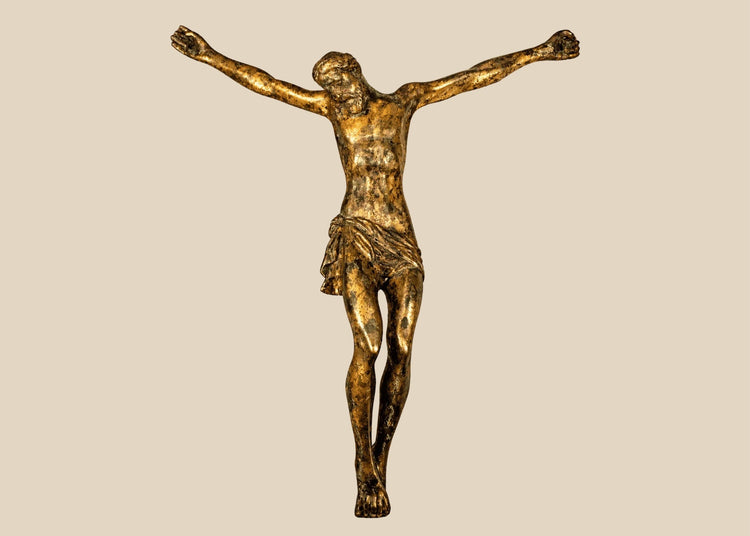
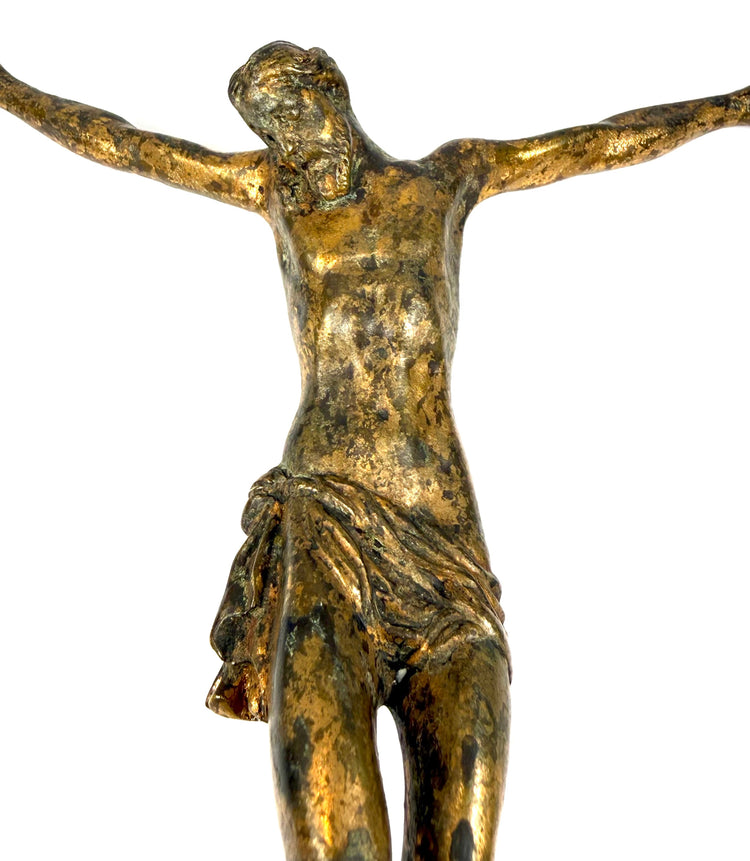
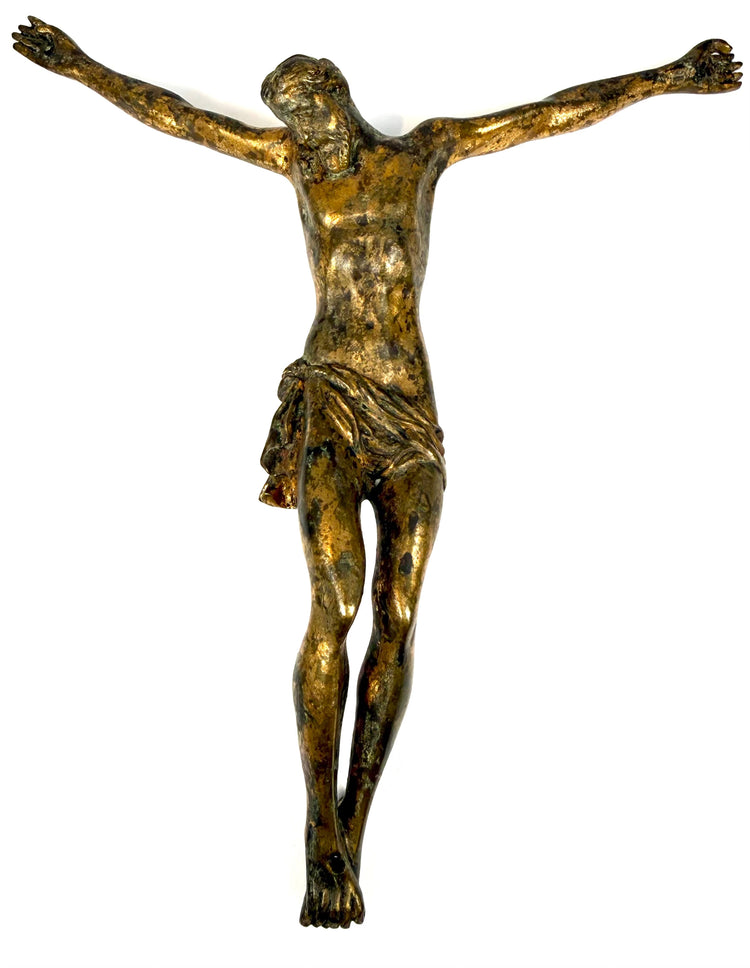
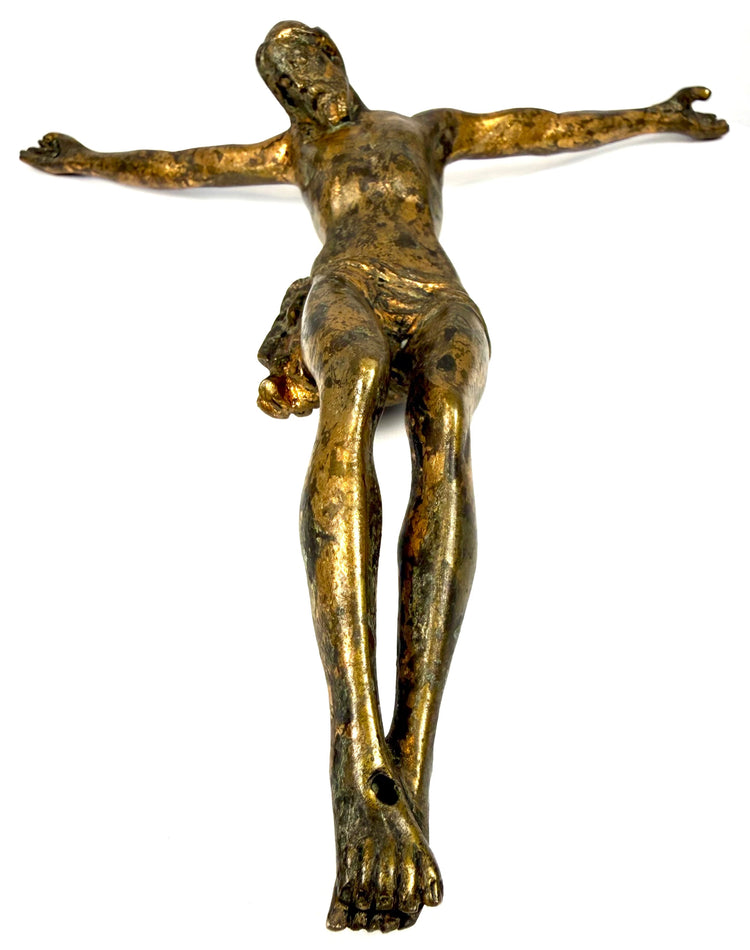
European Gilt-Bronze Corpus Christi Crucifix Figure | Cristo Morto | Circa 16th–17th Century
Descripción
Más
Menos
Historical Context & Origin
Region: Continental Europe, likely Germany or Italy
Material: Cast bronze with surviving gilded surface and naturally developed patina
Period: Late Renaissance to Early Baroque, 16th–17th century (circa 1500–1700 CE)
Description
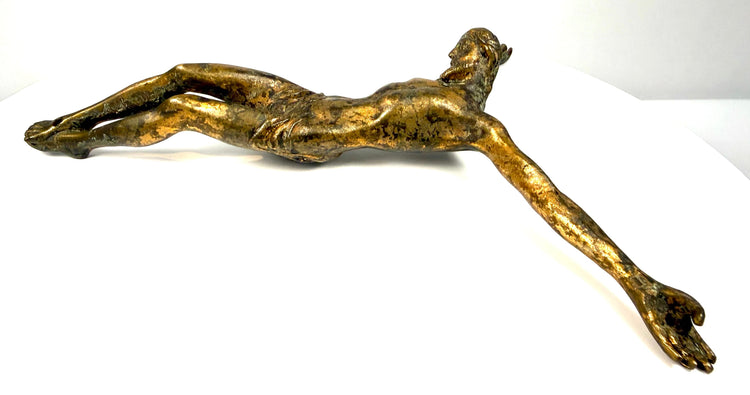
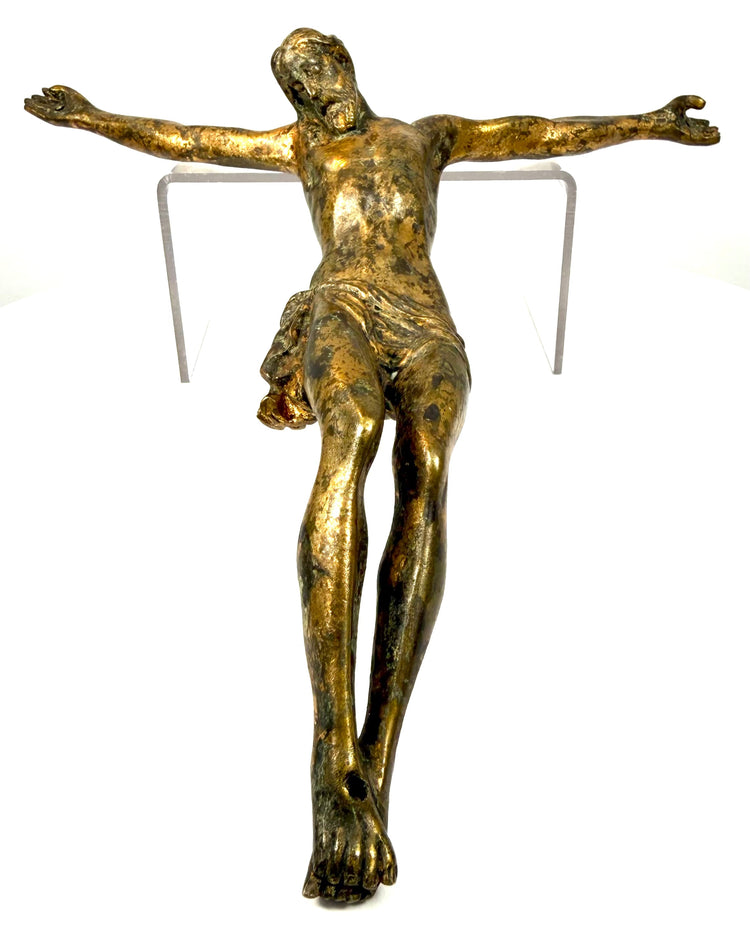
An expressive European gilt-bronze Corpus Christi depicting the crucified Jesus Christ in the Cristo Morto (Dead Christ) tradition. Dating to the 16th–17th century, this sculptural figure reflects the religious artistry of Renaissance and early Baroque Europe, particularly the bronze-working traditions of Germany and Italy.
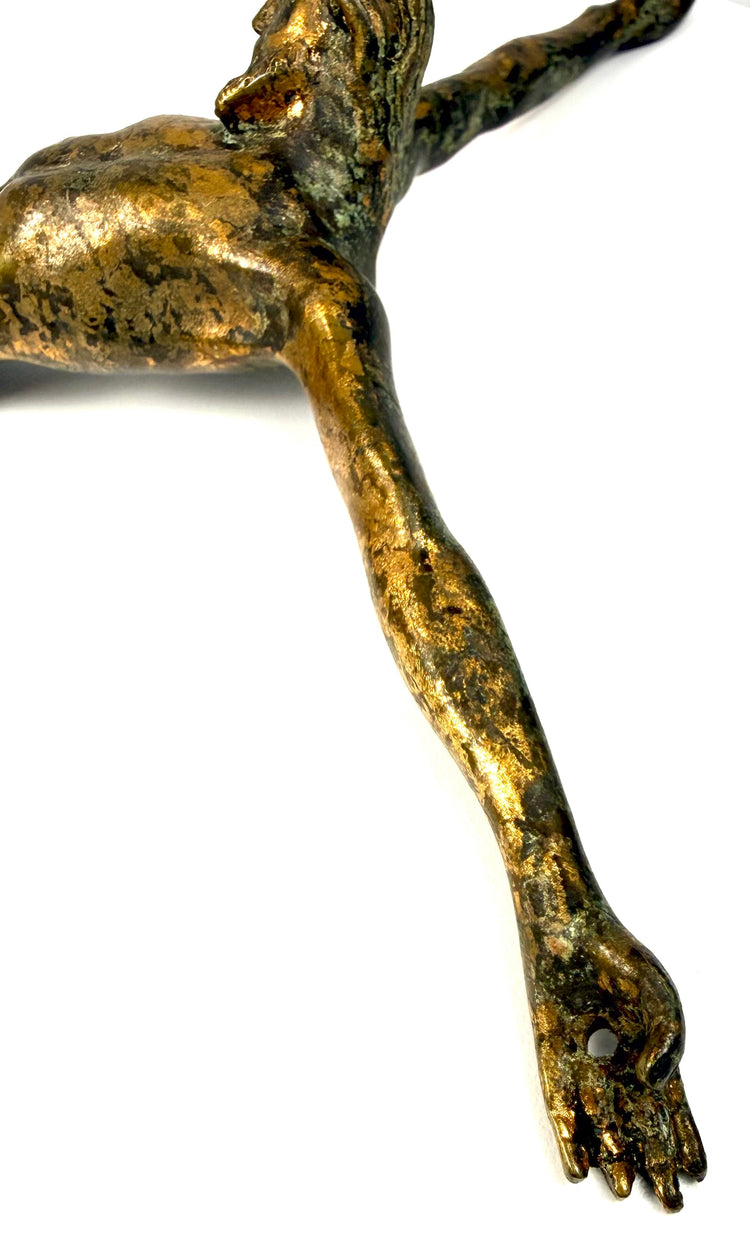
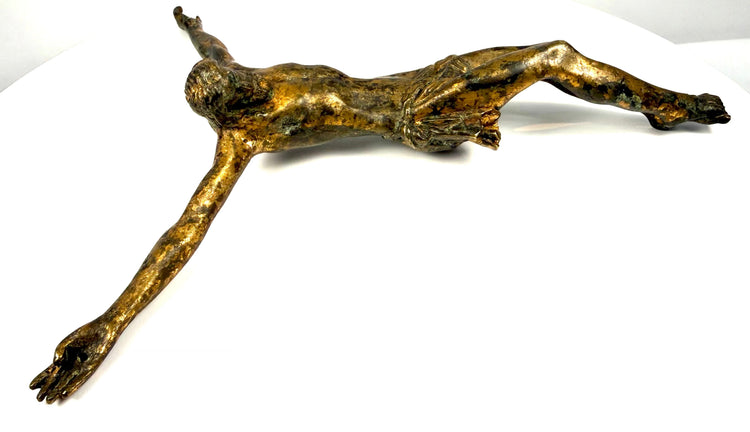
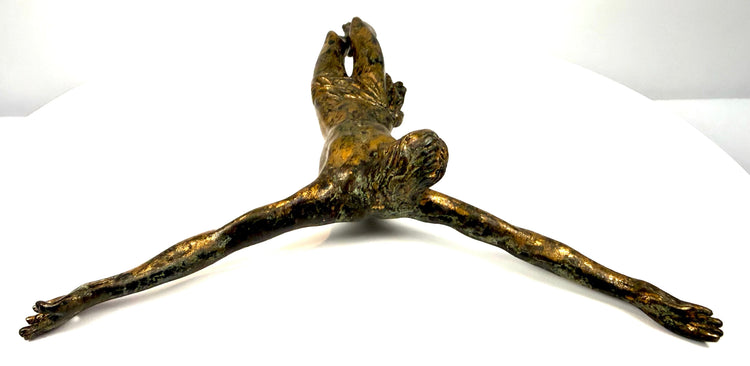
The figure presents Christ following the Crucifixion, with His head bowed toward His right shoulder, eyes lowered, and arms extended outward in the traditional cruciform position. His elongated anatomy, subtly defined musculature, and restrained yet deeply expressive facial features convey the physical suffering and spiritual solemnity associated with Christ's sacrifice.
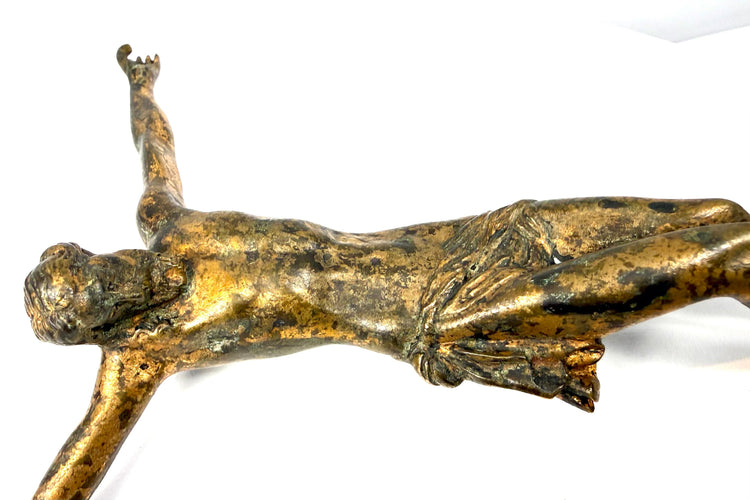
The torso exhibits carefully modelled anatomical details, including a slender waist, defined ribcage, and gently articulated musculature. The sculptor emphasized the natural contours of the human body while maintaining the elongated proportions characteristic of European devotional sculptures of this period.
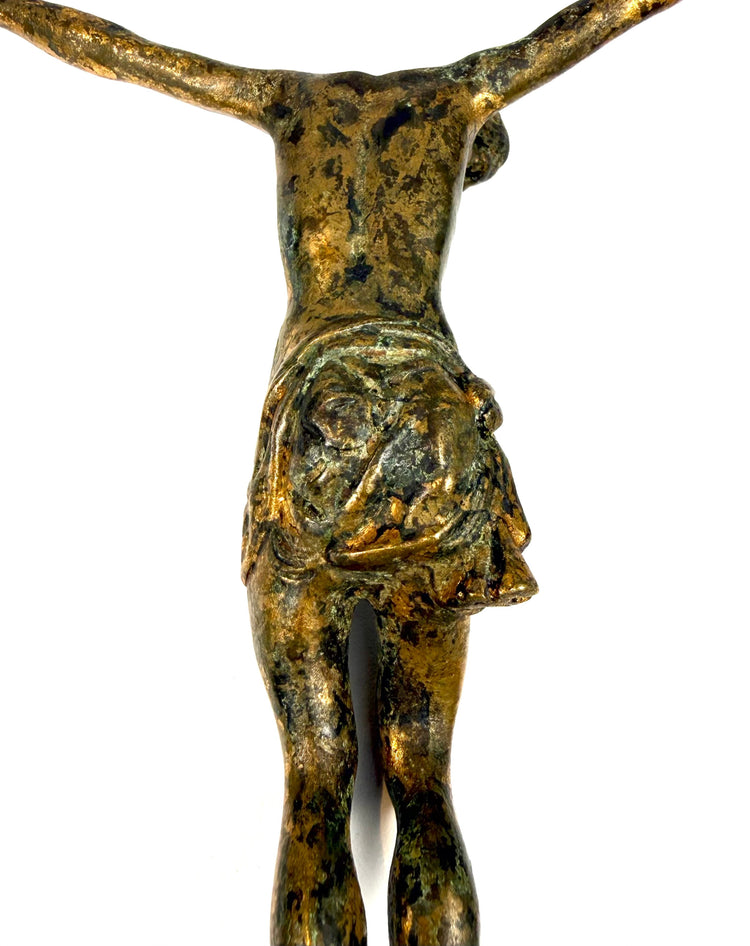
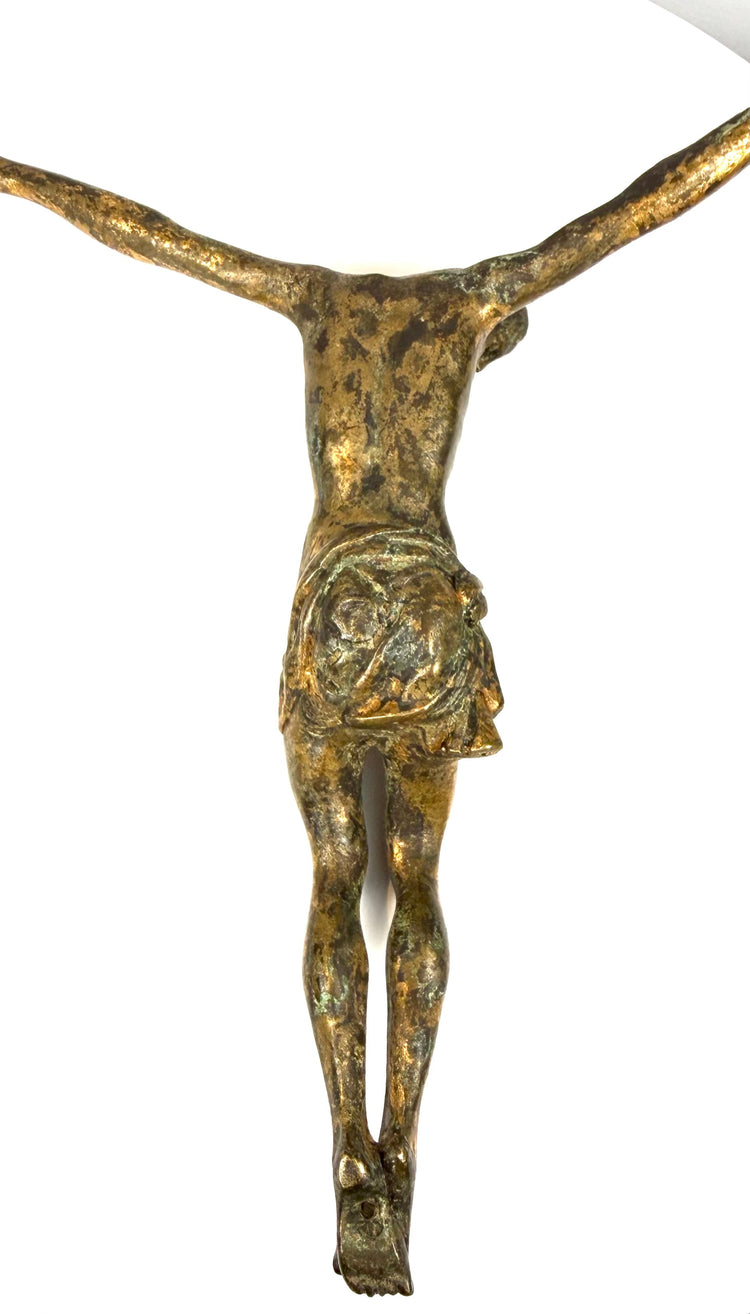
Around the hips, Christ wears a finely sculpted perizonium, or loincloth, gathered and knotted at His right hip. Its deeply worked folds create a sense of movement and contrast with the smoother modelling of the torso and limbs. The legs extend downward with the feet crossed, following traditional Western Christian Crucifixion iconography.
Particularly noteworthy is the survival of substantial areas of historic gilding across the bronze surface. Centuries of handling, exposure, and natural oxidation have produced a richly varied appearance, combining warm golden highlights with deep brown, dark green, and almost black patinated areas. This contrast accentuates the anatomical modelling and sculptural details while preserving the object's historic character.
Originally intended to be attached to a crucifix, the figure survives independently of its original cross. Its proportions, expressive modelling, and surviving gilding make it a compelling example of European religious metalwork associated with the transition from Renaissance artistic traditions to the increasingly emotional devotional imagery of the Baroque period.
Features
- Traditional Cristo Morto representation showing Christ following His death
- Cast bronze construction with substantial surviving areas of historic gilding
- Elongated anatomical proportions characteristic of Renaissance and early Baroque religious sculpture
- Expressively bowed head with delicately modelled facial features, hair, and beard
- Carefully sculpted torso with visible ribcage and anatomical definition
- Draped perizonium with deeply articulated folds and gathered fabric at the hip
- Crossed feet reflecting traditional Western Christian Crucifixion iconography
- Naturally aged bronze surface displaying contrasting gold, brown, and green patination
Cultural Significance
During the 16th and 17th centuries, religious sculpture played a central role in European Christian worship, serving both liturgical and private devotional purposes. Representations of the Crucifixion were particularly important within the Catholic traditions of Italy and southern Germany, where artists developed increasingly naturalistic and emotionally expressive depictions of Christ's suffering.
The Cristo Morto iconographic tradition presents Christ after death, emphasizing His humanity, physical sacrifice, and the theological importance of the Crucifixion. Unlike representations emphasizing Christ's divine triumph, these sculptures frequently depict a bowed head, relaxed facial features, and the physical exhaustion of the crucified body. Such images were intended to inspire contemplation, compassion, and spiritual reflection.
The Renaissance encouraged greater anatomical observation and naturalism in religious art, while the emerging Baroque movement placed increasing emphasis on emotional engagement and dramatic expression. Bronze was particularly valued for its durability, sculptural versatility, and ability to preserve finely modelled details. Gilding further enhanced the sacred presentation of devotional images through its luminous golden surface.
Corpus Christi figures of this type were commonly mounted on wooden or metal crosses and displayed in churches, chapels, religious institutions, and private devotional settings. The precise original setting of this particular figure is unknown.
Surviving European gilt-bronze crucifix figures from the Renaissance and Baroque periods provide valuable evidence of the artistic techniques, religious traditions, and devotional practices of early modern Europe. This example is especially appealing for its elongated anatomical modelling, solemn facial expression, intricately worked loincloth, and surviving gilded surface.
Condition
Antique condition consistent with age, showing extensive historic surface wear and naturally developed patination. Substantial areas of gold-coloured gilding remain visible throughout the sculpture, particularly across the torso, arms, and legs. The surface displays scattered areas of dark oxidation, localized greenish patination, rubbing, minor pitting, and irregular wear, creating an attractive contrast between exposed and gilded metal.
The facial features, anatomical modelling, fingers, crossed feet, and sculpted folds of the loincloth remain identifiable. Small surface irregularities and wear are visible, particularly along raised details and extremities. The original crucifix cross is no longer present, and the figure retains evidence of its former attachment. The overall sculptural form remains well preserved, with the historic surface and surviving gilding contributing to its visual appeal.
Dimensions (Approximate)
Height: 8 in
Width: 7.5 in (across the outstretched arms)
Depth: 1.75 in
Age (Approximate)
325–525 years old
Provenance
Formerly held in a private collection in Richmond, Virginia, United States.
Subsequently handled by Quinn’s Auction Galleries, Falls Church, Virginia, United States, an established family-operated auction house founded in 1995 and specializing in fine art, antiques, decorative arts, furniture, rare books, and significant estate and private collections.
Learn More
Discover a related 17th-century gilt-bronze Corpus Christi in the collection of The Metropolitan Museum of Art
Explore our Collection of Religious & Spiritual Relics
Descripción
Historical Context & Origin
Region: Continental Europe, likely Germany or Italy
Material: Cast bronze with surviving gilded surface and naturally developed patina
Period: Late Renaissance to Early Baroque, 16th–17th century (circa 1500–1700 CE)
Description
An expressive European gilt-bronze Corpus Christi depicting the crucified Jesus Christ in the Cristo Morto (Dead Christ) tradition. Dating to the 16th–17th century, this sculptural figure reflects the religious artistry of Renaissance and early Baroque Europe, particularly the bronze-working traditions of Germany and Italy.
The figure presents Christ following the Crucifixion, with His head bowed toward His right shoulder, eyes lowered, and arms extended outward in the traditional cruciform position. His elongated anatomy, subtly defined musculature, and restrained yet deeply expressive facial features convey the physical suffering and spiritual solemnity associated with Christ's sacrifice.
The torso exhibits carefully modelled anatomical details, including a slender waist, defined ribcage, and gently articulated musculature. The sculptor emphasized the natural contours of the human body while maintaining the elongated proportions characteristic of European devotional sculptures of this period.
Around the hips, Christ wears a finely sculpted perizonium, or loincloth, gathered and knotted at His right hip. Its deeply worked folds create a sense of movement and contrast with the smoother modelling of the torso and limbs. The legs extend downward with the feet crossed, following traditional Western Christian Crucifixion iconography.
Particularly noteworthy is the survival of substantial areas of historic gilding across the bronze surface. Centuries of handling, exposure, and natural oxidation have produced a richly varied appearance, combining warm golden highlights with deep brown, dark green, and almost black patinated areas. This contrast accentuates the anatomical modelling and sculptural details while preserving the object's historic character.
Originally intended to be attached to a crucifix, the figure survives independently of its original cross. Its proportions, expressive modelling, and surviving gilding make it a compelling example of European religious metalwork associated with the transition from Renaissance artistic traditions to the increasingly emotional devotional imagery of the Baroque period.
Features
- Traditional Cristo Morto representation showing Christ following His death
- Cast bronze construction with substantial surviving areas of historic gilding
- Elongated anatomical proportions characteristic of Renaissance and early Baroque religious sculpture
- Expressively bowed head with delicately modelled facial features, hair, and beard
- Carefully sculpted torso with visible ribcage and anatomical definition
- Draped perizonium with deeply articulated folds and gathered fabric at the hip
- Crossed feet reflecting traditional Western Christian Crucifixion iconography
- Naturally aged bronze surface displaying contrasting gold, brown, and green patination
Cultural Significance
During the 16th and 17th centuries, religious sculpture played a central role in European Christian worship, serving both liturgical and private devotional purposes. Representations of the Crucifixion were particularly important within the Catholic traditions of Italy and southern Germany, where artists developed increasingly naturalistic and emotionally expressive depictions of Christ's suffering.
The Cristo Morto iconographic tradition presents Christ after death, emphasizing His humanity, physical sacrifice, and the theological importance of the Crucifixion. Unlike representations emphasizing Christ's divine triumph, these sculptures frequently depict a bowed head, relaxed facial features, and the physical exhaustion of the crucified body. Such images were intended to inspire contemplation, compassion, and spiritual reflection.
The Renaissance encouraged greater anatomical observation and naturalism in religious art, while the emerging Baroque movement placed increasing emphasis on emotional engagement and dramatic expression. Bronze was particularly valued for its durability, sculptural versatility, and ability to preserve finely modelled details. Gilding further enhanced the sacred presentation of devotional images through its luminous golden surface.
Corpus Christi figures of this type were commonly mounted on wooden or metal crosses and displayed in churches, chapels, religious institutions, and private devotional settings. The precise original setting of this particular figure is unknown.
Surviving European gilt-bronze crucifix figures from the Renaissance and Baroque periods provide valuable evidence of the artistic techniques, religious traditions, and devotional practices of early modern Europe. This example is especially appealing for its elongated anatomical modelling, solemn facial expression, intricately worked loincloth, and surviving gilded surface.
Condition
Antique condition consistent with age, showing extensive historic surface wear and naturally developed patination. Substantial areas of gold-coloured gilding remain visible throughout the sculpture, particularly across the torso, arms, and legs. The surface displays scattered areas of dark oxidation, localized greenish patination, rubbing, minor pitting, and irregular wear, creating an attractive contrast between exposed and gilded metal.
The facial features, anatomical modelling, fingers, crossed feet, and sculpted folds of the loincloth remain identifiable. Small surface irregularities and wear are visible, particularly along raised details and extremities. The original crucifix cross is no longer present, and the figure retains evidence of its former attachment. The overall sculptural form remains well preserved, with the historic surface and surviving gilding contributing to its visual appeal.
Dimensions (Approximate)
Height: 8 in
Width: 7.5 in (across the outstretched arms)
Depth: 1.75 in
Age (Approximate)
325–525 years old
Provenance
Formerly held in a private collection in Richmond, Virginia, United States.
Subsequently handled by Quinn’s Auction Galleries, Falls Church, Virginia, United States, an established family-operated auction house founded in 1995 and specializing in fine art, antiques, decorative arts, furniture, rare books, and significant estate and private collections.
Learn More
Discover a related 17th-century gilt-bronze Corpus Christi in the collection of The Metropolitan Museum of Art
Explore our Collection of Religious & Spiritual Relics
También te puede interesar
