



Hoplita Griego | Estatuilla de Bronce de Guerrero con Escudo | Siglo XVIII-XIX
- Precio habitual
- $250.00
- Precio de venta
- $250.00
- Precio habitual
No se pudo cargar la disponibilidad de retiro


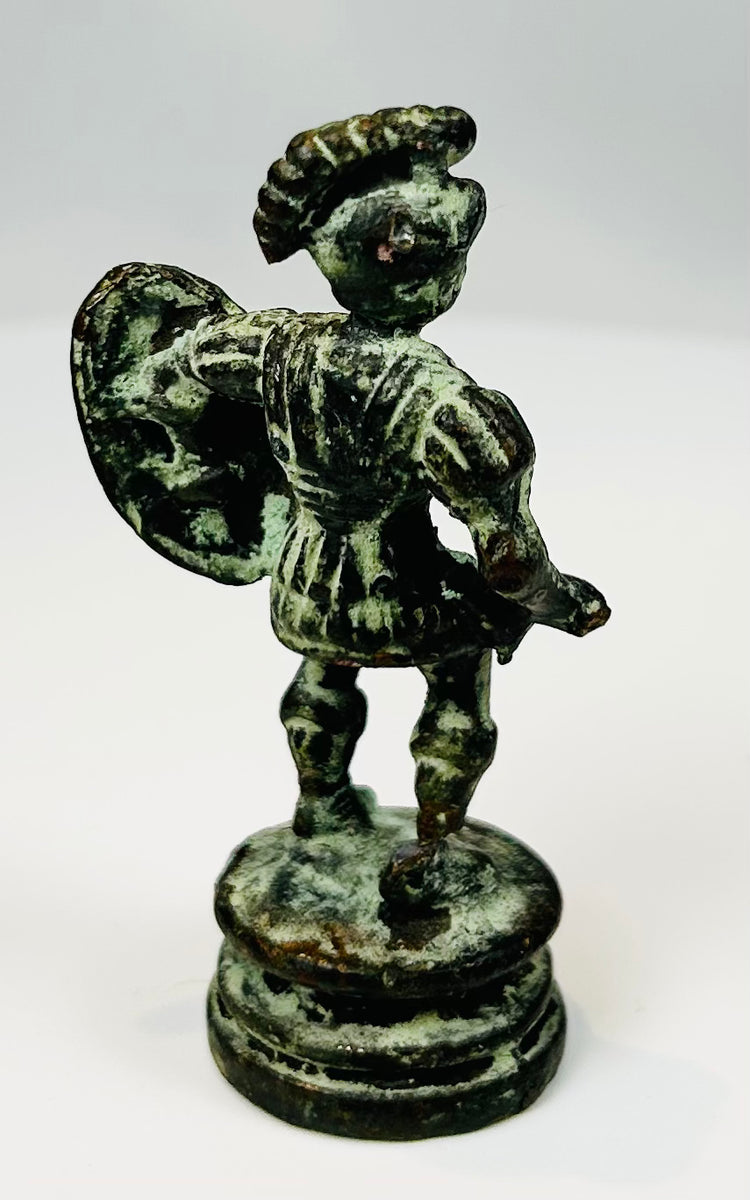
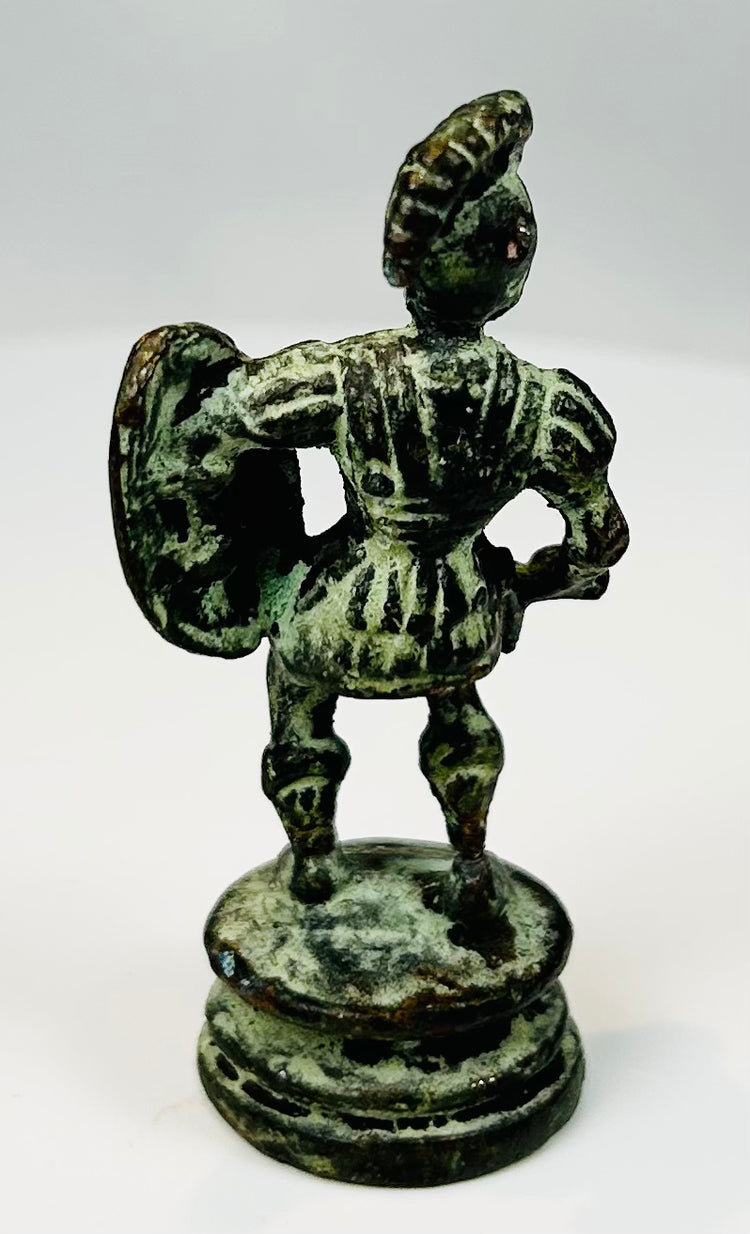
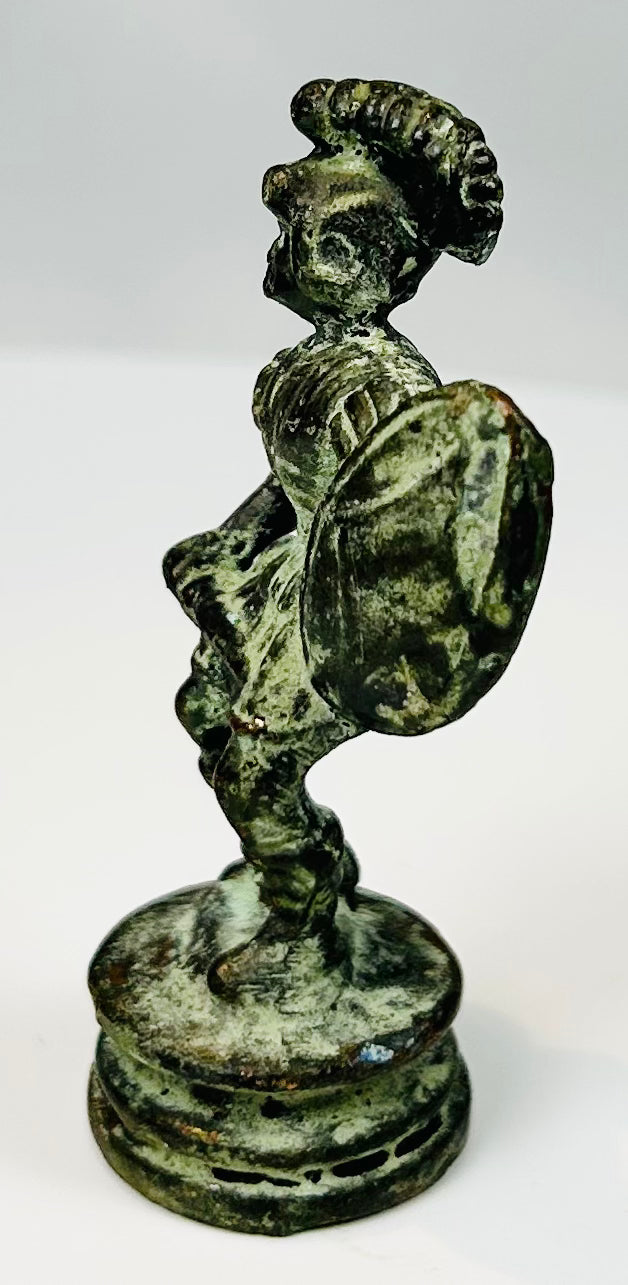
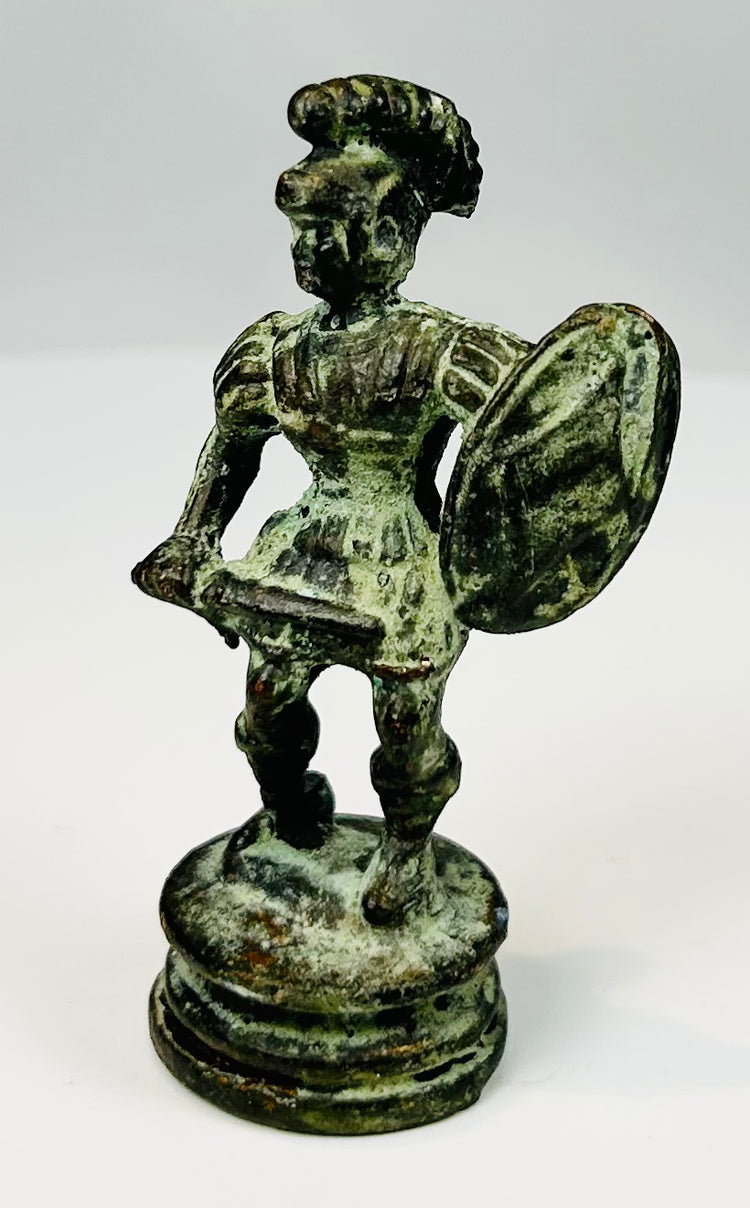
Hoplita Griego | Estatuilla de Bronce de Guerrero con Escudo | Siglo XVIII-XIX
Descripción
Más
Menos
Contexto histórico y origen
Región: Mundo mediterráneo (Tradición griega clásica)
Material: Bronce fundido con pátina verde envejecida
Período: Probablemente siglo XVIII-XIX, inspirado en figuras de guerreros de la antigua Grecia y Roma
Descripción
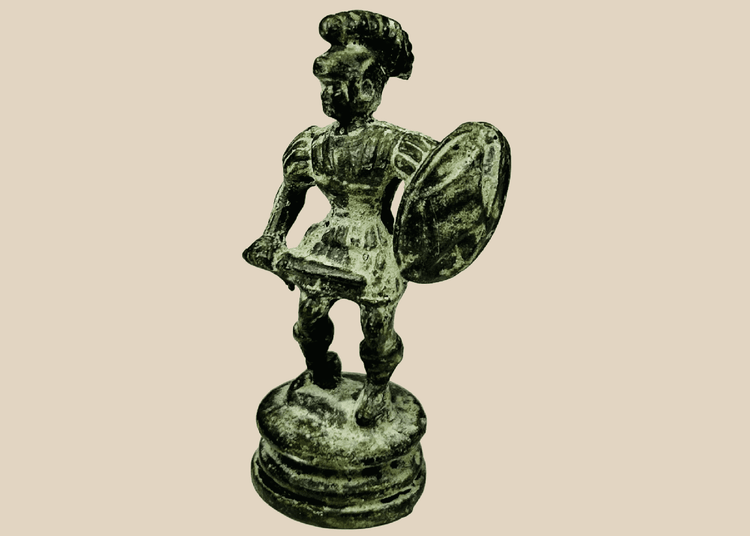
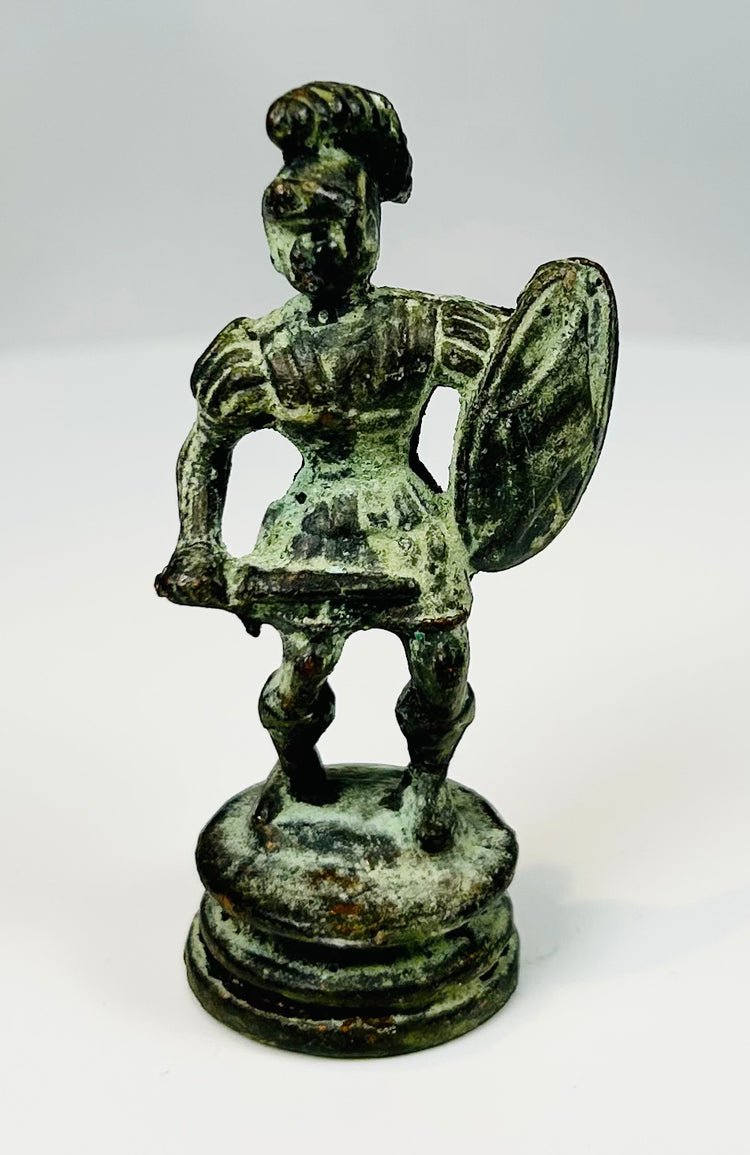
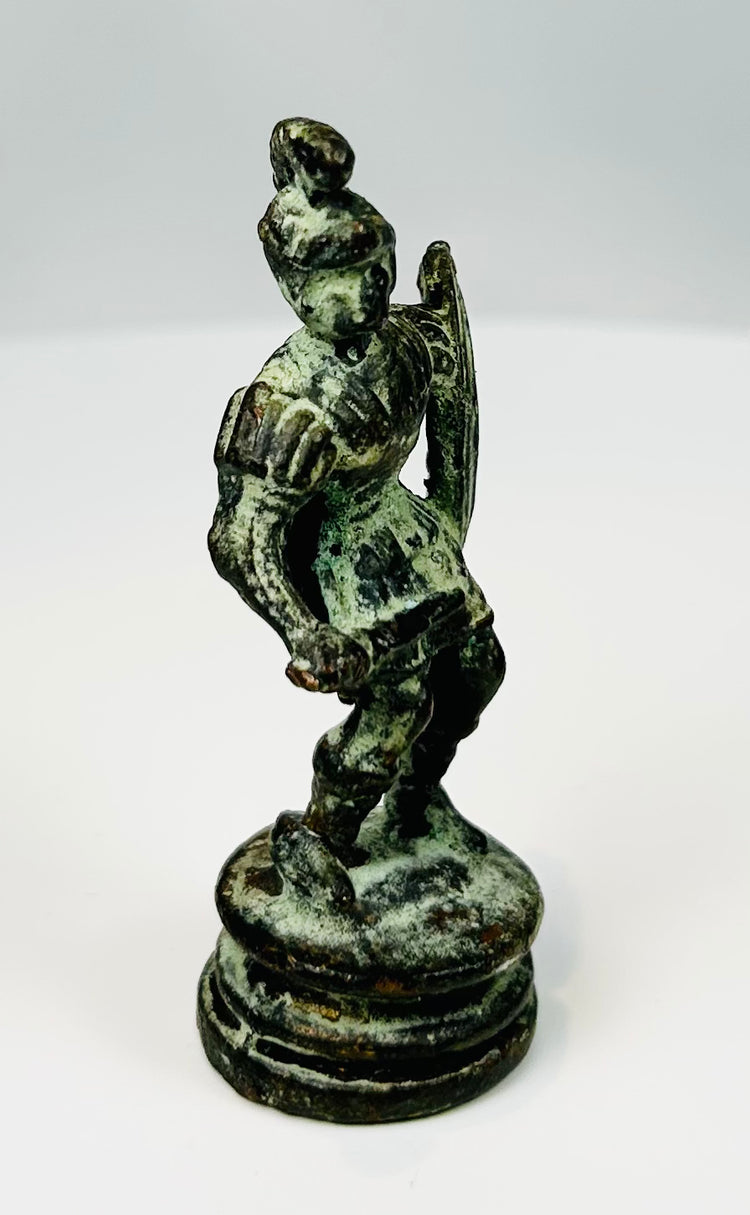
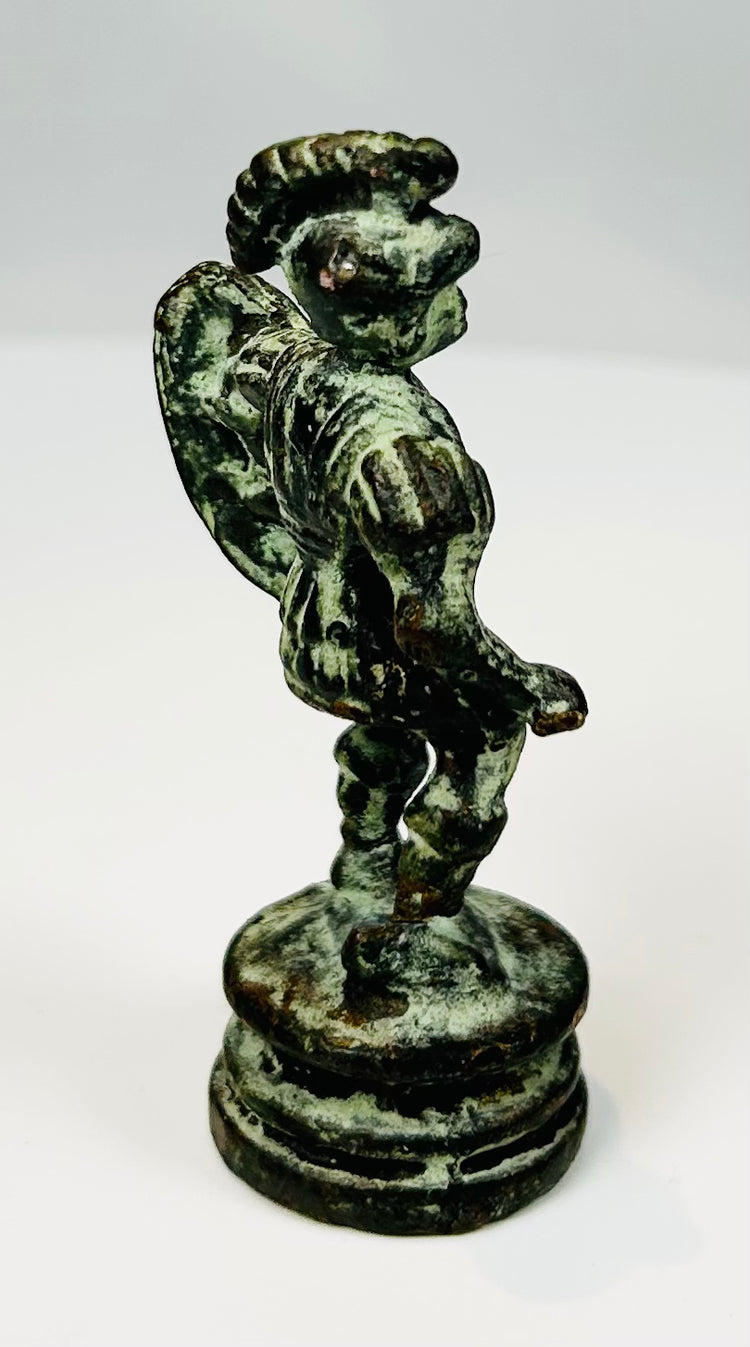
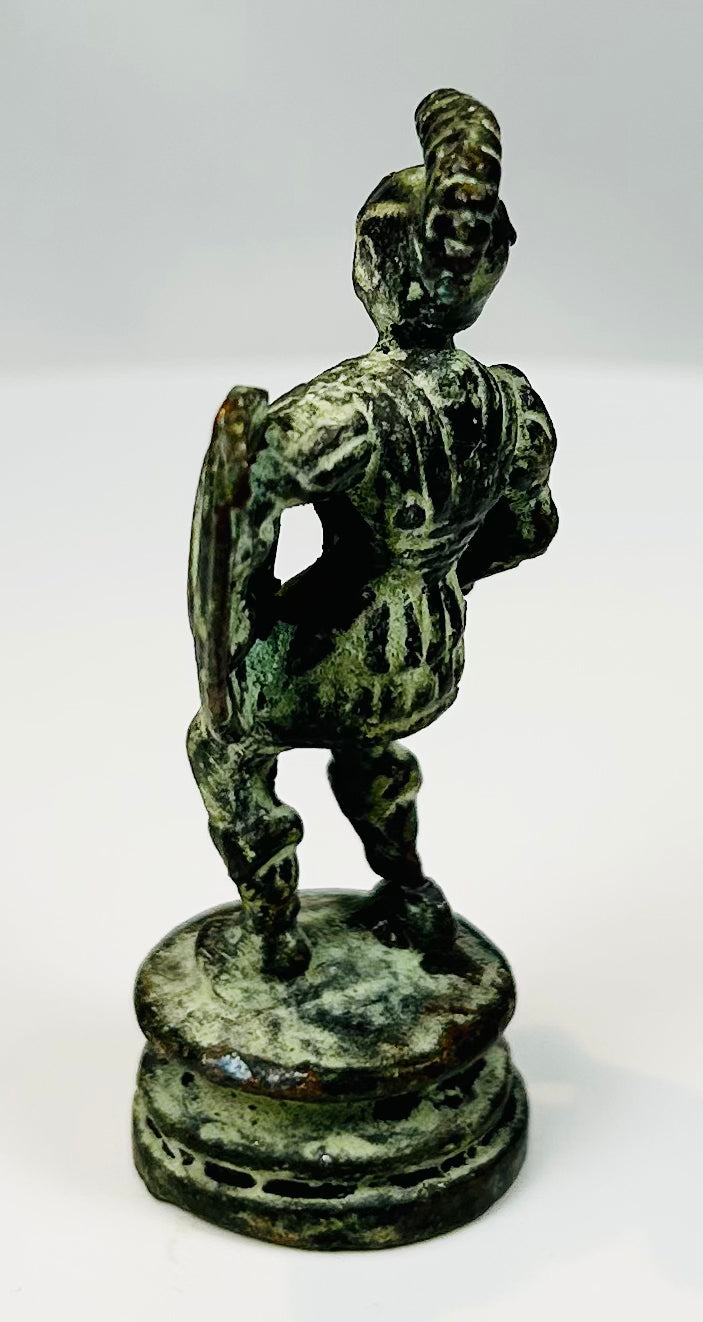
Esta figura de bronce finamente fundida representa a un guerrero clásico, realizado al estilo de los antiguos soldados hoplitas griegos. La figura se encuentra en una pose dinámica, vistiendo un casco con cresta y una túnica corta, sosteniendo un escudo redondo y una espada. Las proporciones estilizadas y la forma escultórica compacta reflejan la duradera influencia de la antigüedad clásica en las artes decorativas posteriores.
El guerrero se alza sobre una base circular escalonada, lo que refuerza la apariencia de una escultura clásica en miniatura. Las figuras de este tipo se producían comúnmente durante los siglos XVIII y XIX como parte del resurgimiento neoclásico europeo, cuando artistas y fundiciones creaban pequeñas obras de bronce inspiradas en la imaginería militar de la antigua Grecia y Roma.
La detallada cresta del casco, la forma del escudo y la postura marcial evocan los ideales heroicos asociados con los guerreros antiguos, simbolizando el coraje, la fuerza y la virtud cívica. Su escala compacta sugiere que pudo haber servido como objeto decorativo de vitrina, adorno de escritorio o escultura coleccionable, reflejando la estética clásica preferida por los coleccionistas del Grand Tour.
Características
- Figura de bronce fundido de un guerrero clásico con casco con cresta
- Escudo redondo y espada corta representados de forma estilizada
- Túnica corta y postura de armadura que recuerdan a los antiguos soldados hoplitas
- Base circular escalonada que sostiene la figura
- Pátina verde envejecida con oxidación natural y desgaste superficial
Significado cultural
Los guerreros griegos y romanos clásicos siguieron siendo poderosos símbolos de heroísmo y virtud marcial en el arte europeo. Durante el renacimiento neoclásico de los siglos XVIII y XIX, los artistas producían con frecuencia esculturas en miniatura inspiradas en figuras militares antiguas, celebrando los ideales de la antigüedad.
Tales obras reflejan una fascinación continua por la historia y la estética clásicas, a menudo coleccionadas como objetos decorativos que transmitían educación, gusto y admiración por el mundo antiguo.
Condición
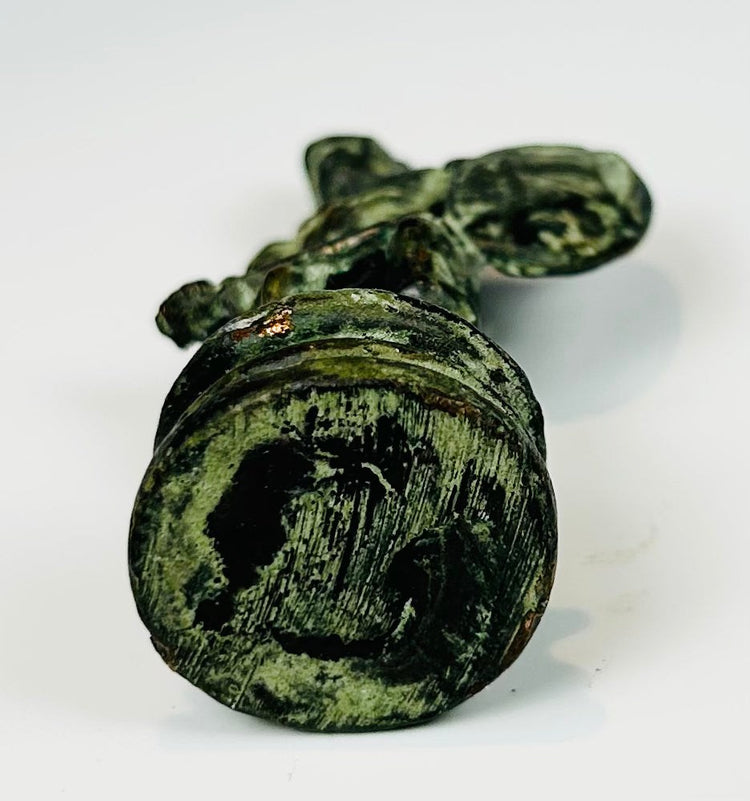
Buen estado antiguo en general. La superficie presenta pátina natural, oxidación e irregularidades menores de fundición, consistentes con la antigüedad. La pátina verde realza el detalle escultórico y el carácter histórico de la pieza.
Dimensiones (Aproximadas)
Altura: 3 pulgadas
Ancho: 1.5 pulgadas
Antigüedad (Aproximada)
150-250 años
Procedencia
Anteriormente parte de la colección de un coleccionista de antigüedades de toda la vida en South Paris, Maine, Estados Unidos. El coleccionista reunió una amplia y variada colección de objetos históricos y decorativos durante muchas décadas. Tras el fallecimiento del coleccionista, la colección de la herencia se dispersó en su totalidad, y esta pieza entró posteriormente en el mercado del arte.
Más información
Estudie una figura comparable de guerrero clásico en la colección de El Museo Metropolitano de Arte
Explore nuestra Colección seleccionada de Estatuas, Figuras y Tallas
Descripción
Contexto histórico y origen
Región: Mundo mediterráneo (Tradición griega clásica)
Material: Bronce fundido con pátina verde envejecida
Período: Probablemente siglo XVIII-XIX, inspirado en figuras de guerreros de la antigua Grecia y Roma
Descripción
Esta figura de bronce finamente fundida representa a un guerrero clásico, realizado al estilo de los antiguos soldados hoplitas griegos. La figura se encuentra en una pose dinámica, vistiendo un casco con cresta y una túnica corta, sosteniendo un escudo redondo y una espada. Las proporciones estilizadas y la forma escultórica compacta reflejan la duradera influencia de la antigüedad clásica en las artes decorativas posteriores.
El guerrero se alza sobre una base circular escalonada, lo que refuerza la apariencia de una escultura clásica en miniatura. Las figuras de este tipo se producían comúnmente durante los siglos XVIII y XIX como parte del resurgimiento neoclásico europeo, cuando artistas y fundiciones creaban pequeñas obras de bronce inspiradas en la imaginería militar de la antigua Grecia y Roma.
La detallada cresta del casco, la forma del escudo y la postura marcial evocan los ideales heroicos asociados con los guerreros antiguos, simbolizando el coraje, la fuerza y la virtud cívica. Su escala compacta sugiere que pudo haber servido como objeto decorativo de vitrina, adorno de escritorio o escultura coleccionable, reflejando la estética clásica preferida por los coleccionistas del Grand Tour.
Características
- Figura de bronce fundido de un guerrero clásico con casco con cresta
- Escudo redondo y espada corta representados de forma estilizada
- Túnica corta y postura de armadura que recuerdan a los antiguos soldados hoplitas
- Base circular escalonada que sostiene la figura
- Pátina verde envejecida con oxidación natural y desgaste superficial
Significado cultural
Los guerreros griegos y romanos clásicos siguieron siendo poderosos símbolos de heroísmo y virtud marcial en el arte europeo. Durante el renacimiento neoclásico de los siglos XVIII y XIX, los artistas producían con frecuencia esculturas en miniatura inspiradas en figuras militares antiguas, celebrando los ideales de la antigüedad.
Tales obras reflejan una fascinación continua por la historia y la estética clásicas, a menudo coleccionadas como objetos decorativos que transmitían educación, gusto y admiración por el mundo antiguo.
Condición
Buen estado antiguo en general. La superficie presenta pátina natural, oxidación e irregularidades menores de fundición, consistentes con la antigüedad. La pátina verde realza el detalle escultórico y el carácter histórico de la pieza.
Dimensiones (Aproximadas)
Altura: 3 pulgadas
Ancho: 1.5 pulgadas
Antigüedad (Aproximada)
150-250 años
Procedencia
Anteriormente parte de la colección de un coleccionista de antigüedades de toda la vida en South Paris, Maine, Estados Unidos. El coleccionista reunió una amplia y variada colección de objetos históricos y decorativos durante muchas décadas. Tras el fallecimiento del coleccionista, la colección de la herencia se dispersó en su totalidad, y esta pieza entró posteriormente en el mercado del arte.
Más información
Estudie una figura comparable de guerrero clásico en la colección de El Museo Metropolitano de Arte
Explore nuestra Colección seleccionada de Estatuas, Figuras y Tallas
También te puede interesar
