
Indo-Persian Dhal Shield | Polychrome Floral Decoration & Four Bronze-Tone Bosses | Circa 19th-Century
- Precio habitual
- $606.00
- Precio de venta
- $606.00
- Precio habitual
No se pudo cargar la disponibilidad de retiro





Indo-Persian Dhal Shield | Polychrome Floral Decoration & Four Bronze-Tone Bosses | Circa 19th-Century
Descripción
Más
Menos
Historical Context & Origin
Region: Indian Subcontinent, Indo-Persian tradition
Material: Brass-toned metal, painted and lacquered polychrome decoration, metal bosses and fittings, and red textile padding
Period: 19th Century CE, circa 1800–1900 CE
Description
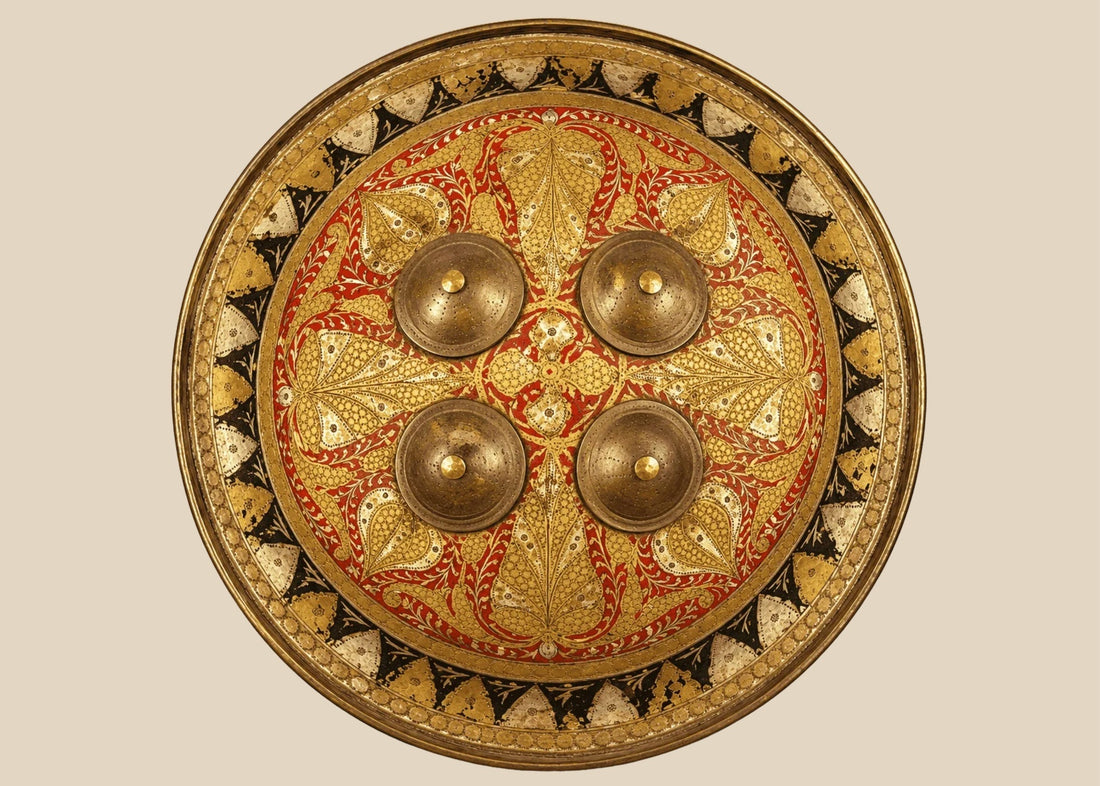
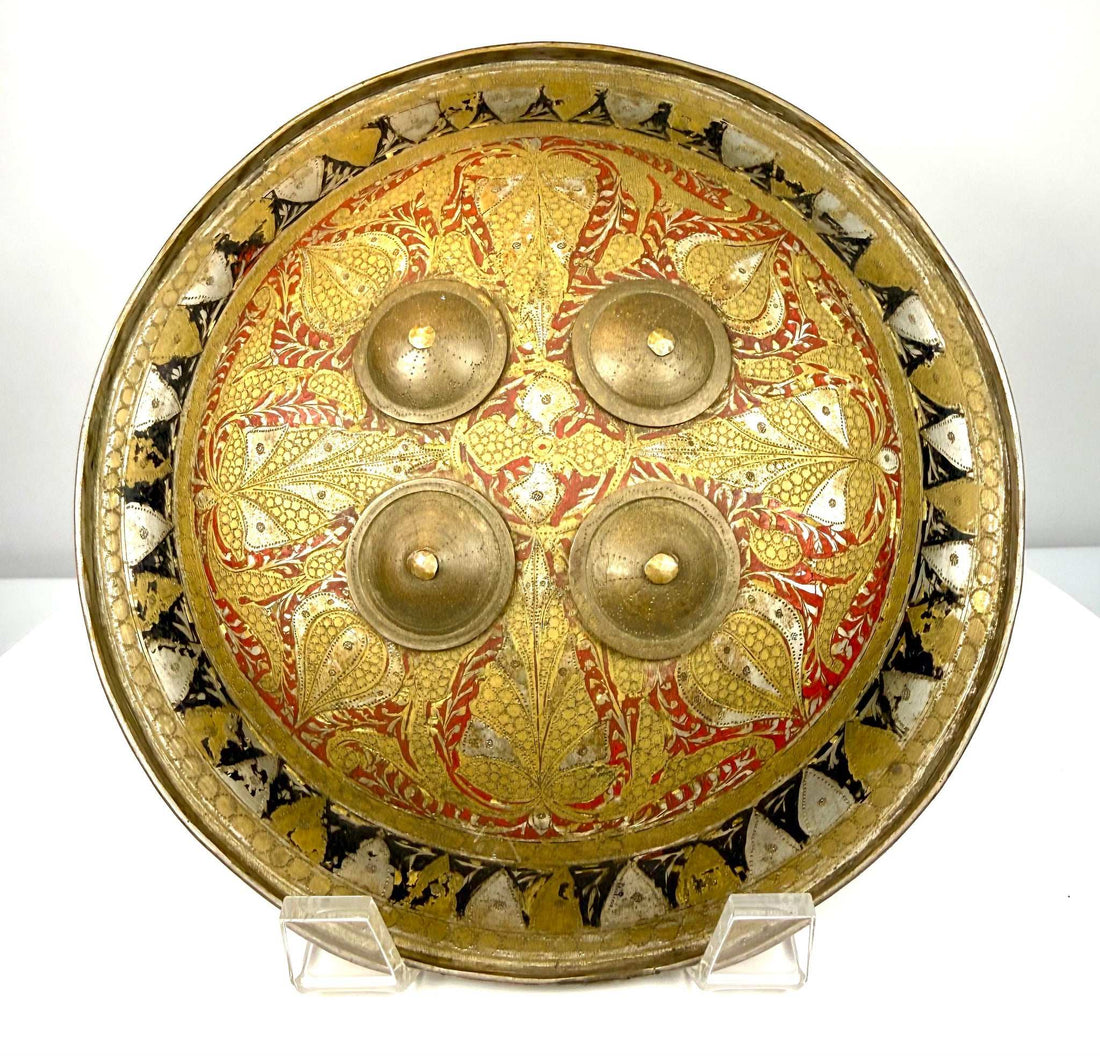
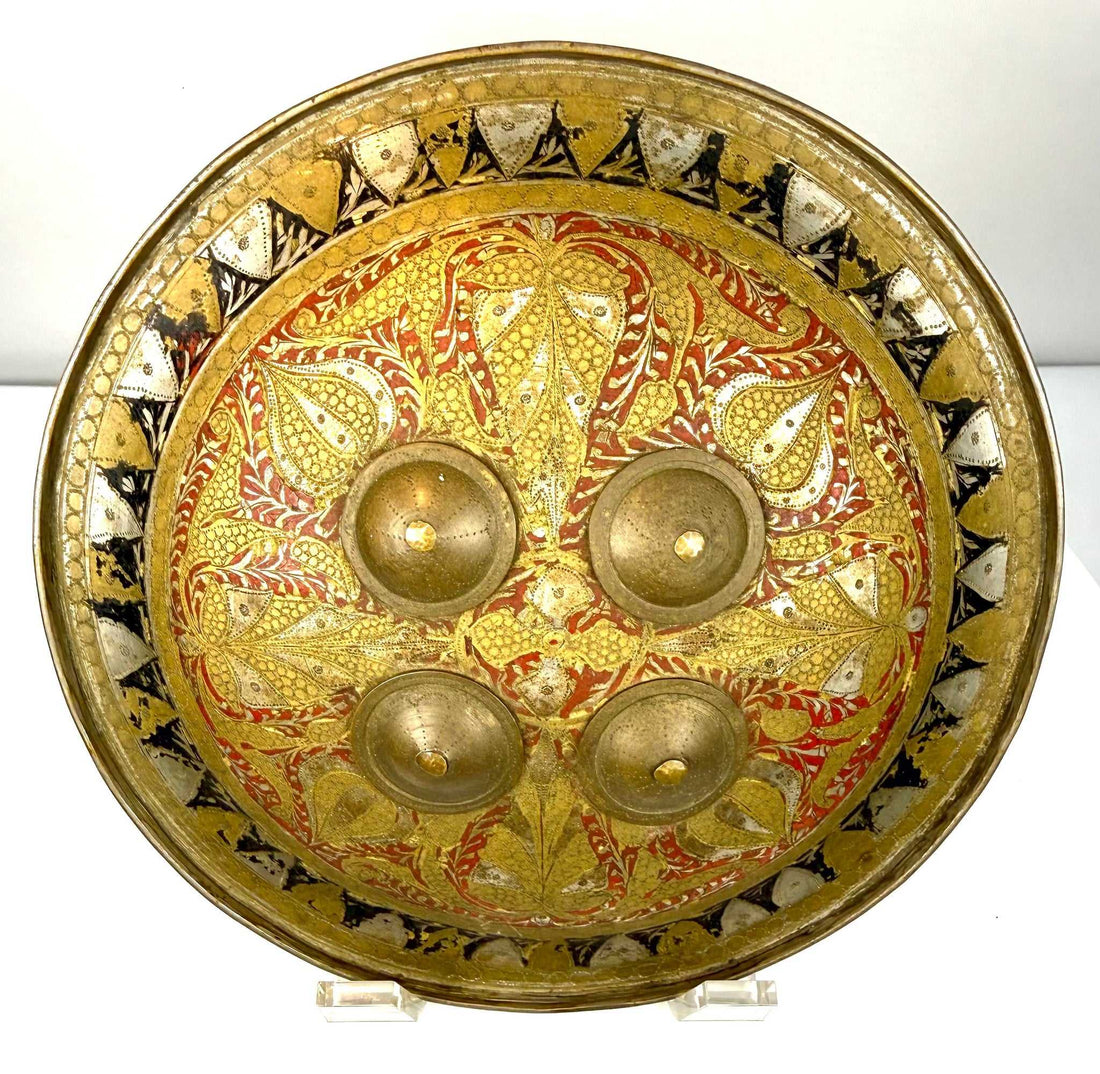
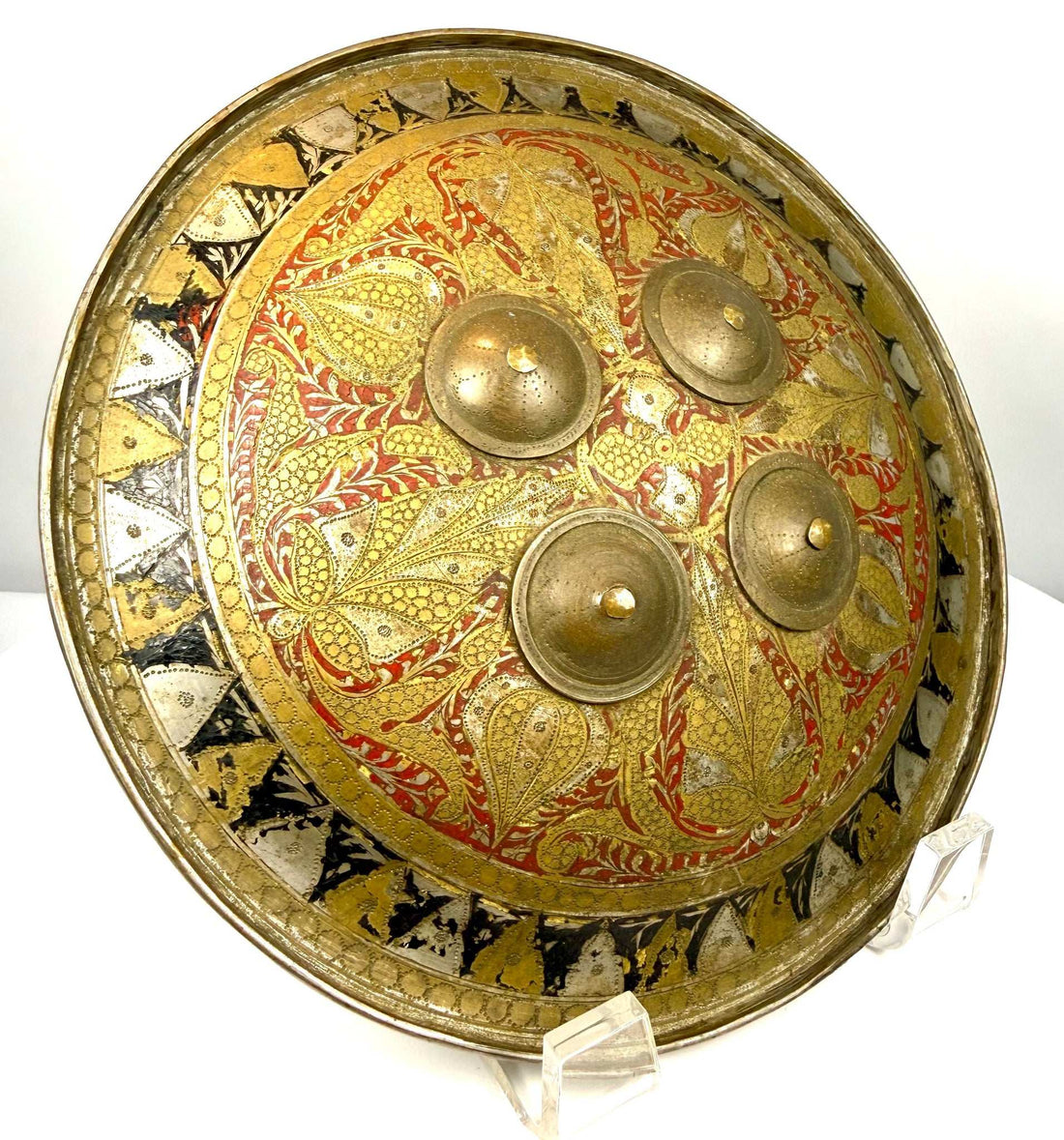
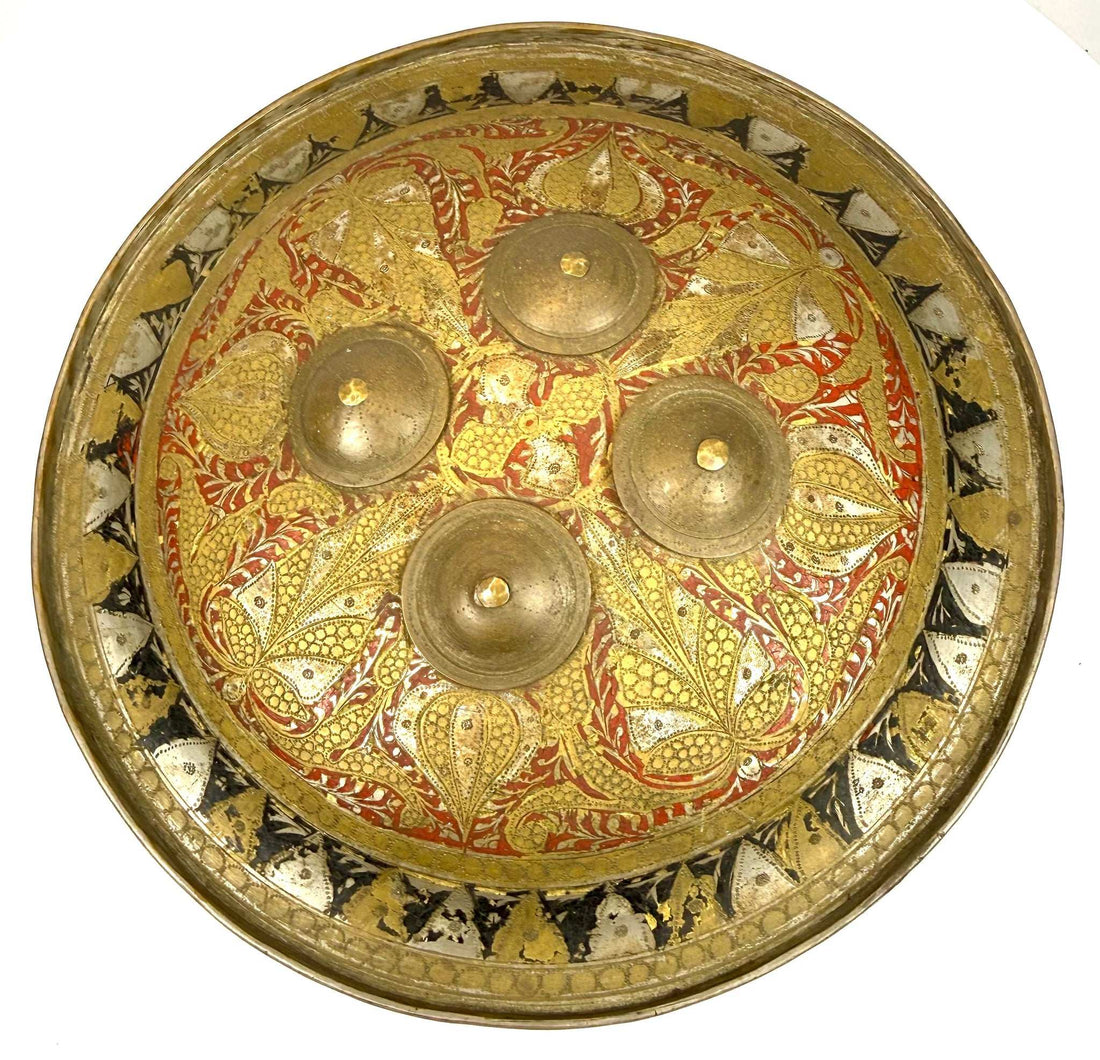
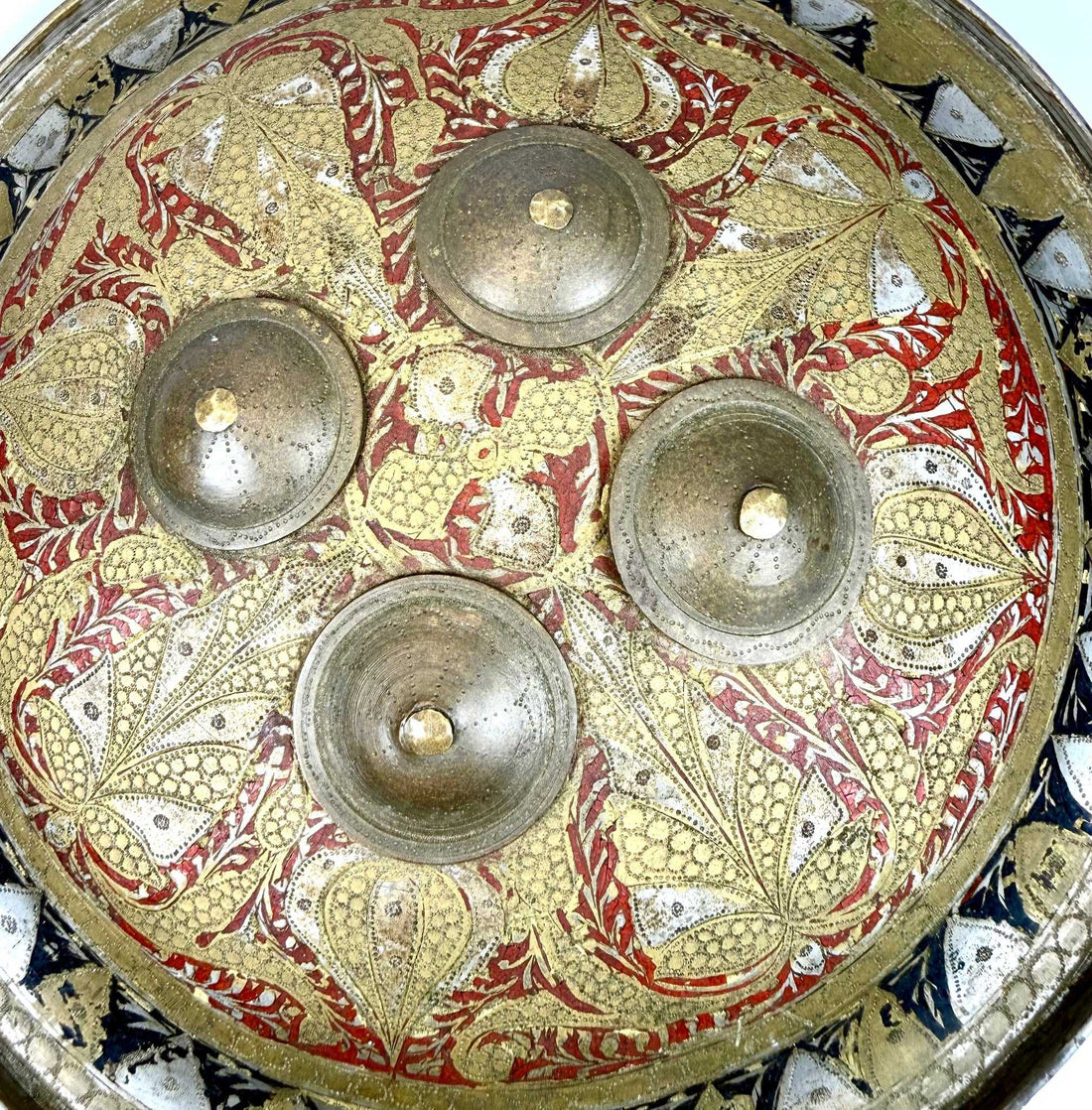
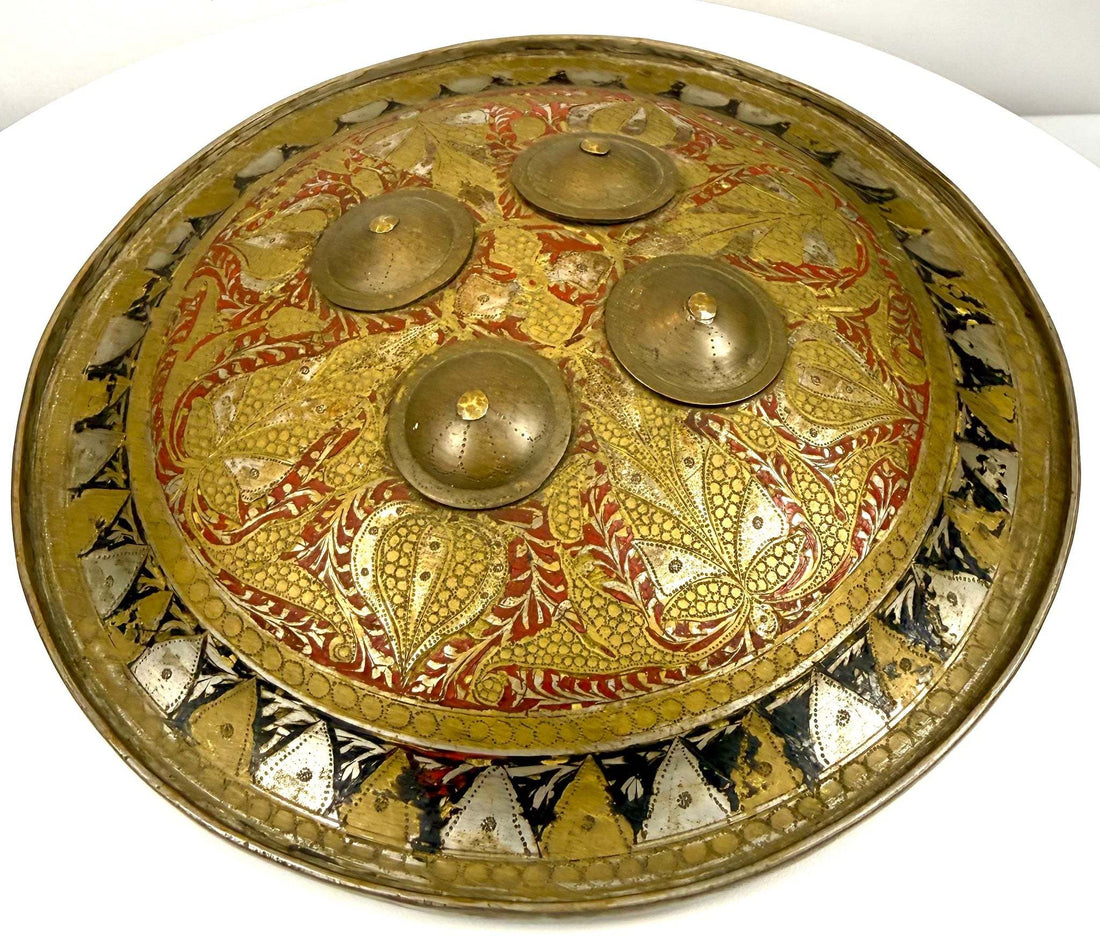
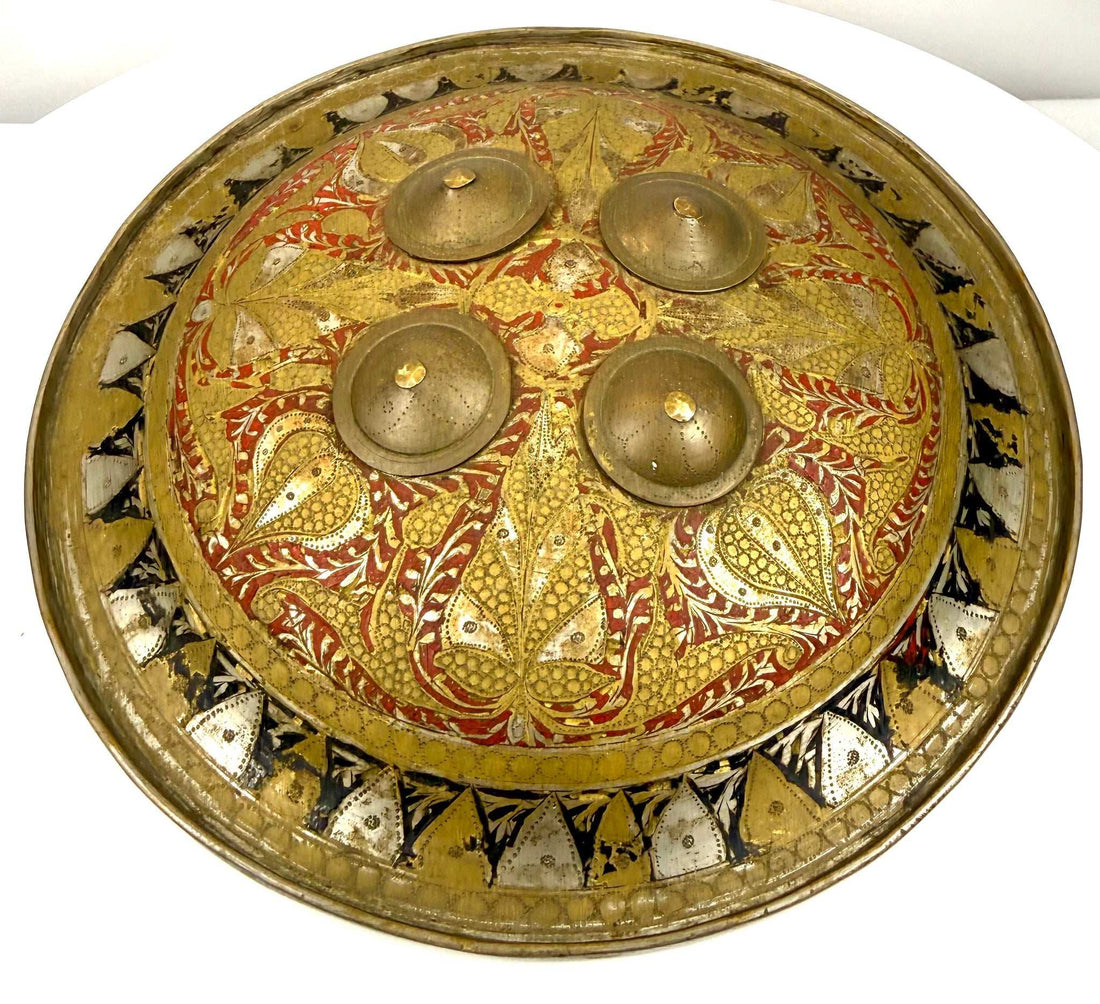
This highly decorative small Indo-Persian dhal shield features an elaborate arrangement of painted floral ornamentation, four prominent metal bosses, and a richly coloured surface incorporating gold, crimson red, black, and ivory-white tones. Traditionally attributed to the 19th century, the shield displays a shallow convex circular form with a gently raised outer rim. Its central decorative field features symmetrical arrangements of stylized leaves, flowering vines, and scrolling foliage, complemented by intricate dotted detailing and geometric patterns. A contrasting outer border of alternating gold and ivory motifs against a dark background completes the composition.
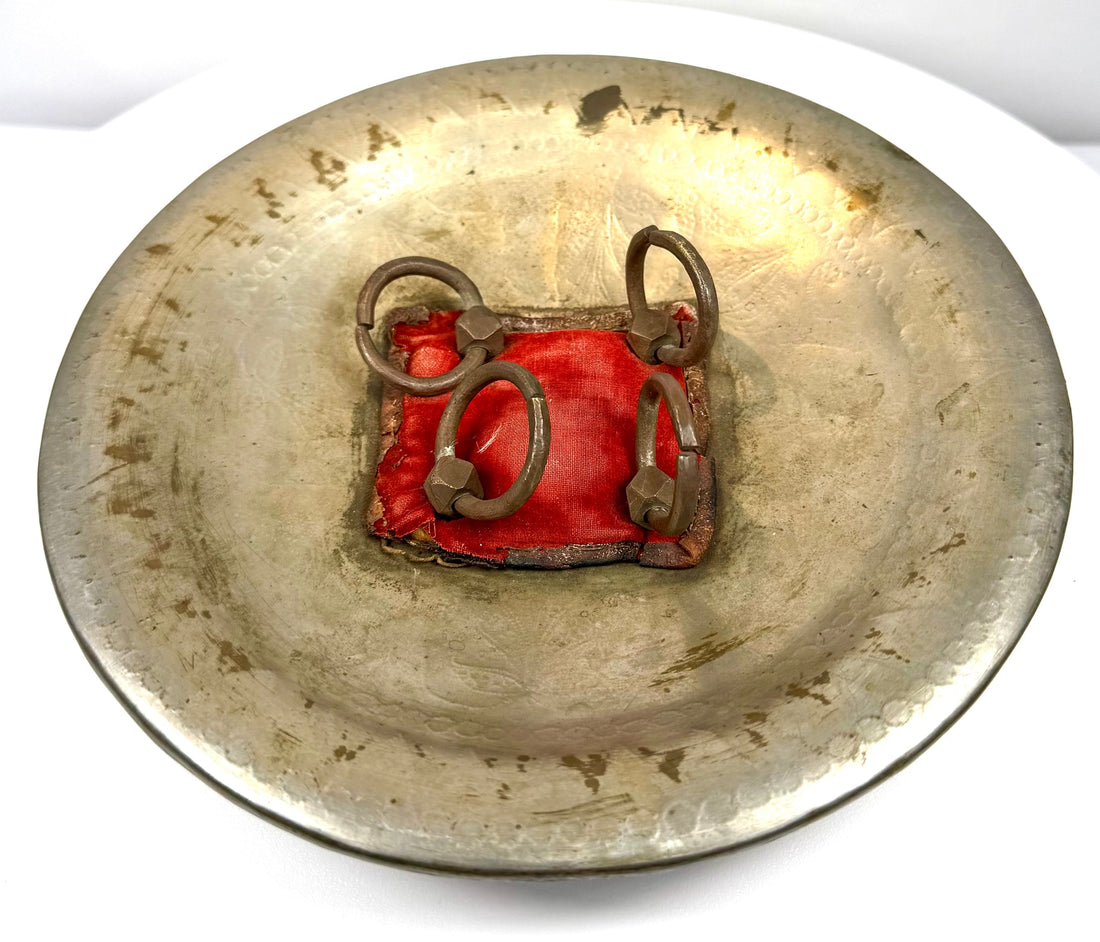
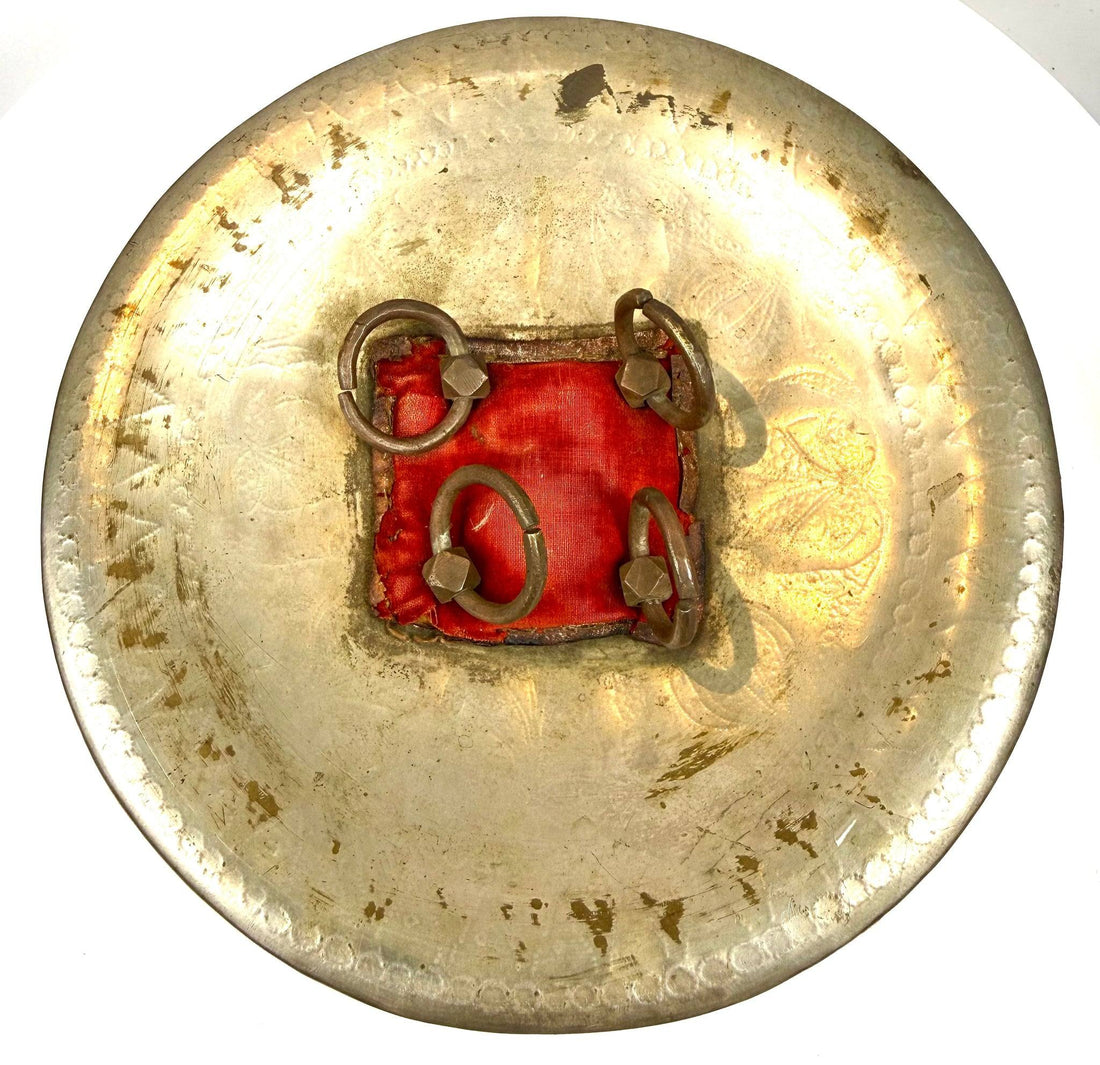
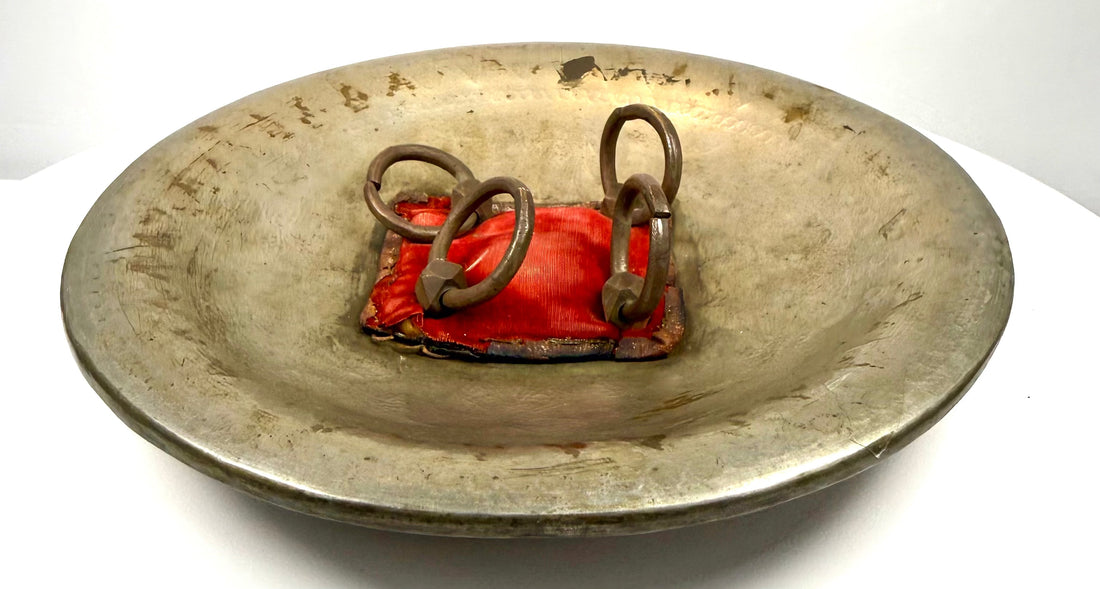
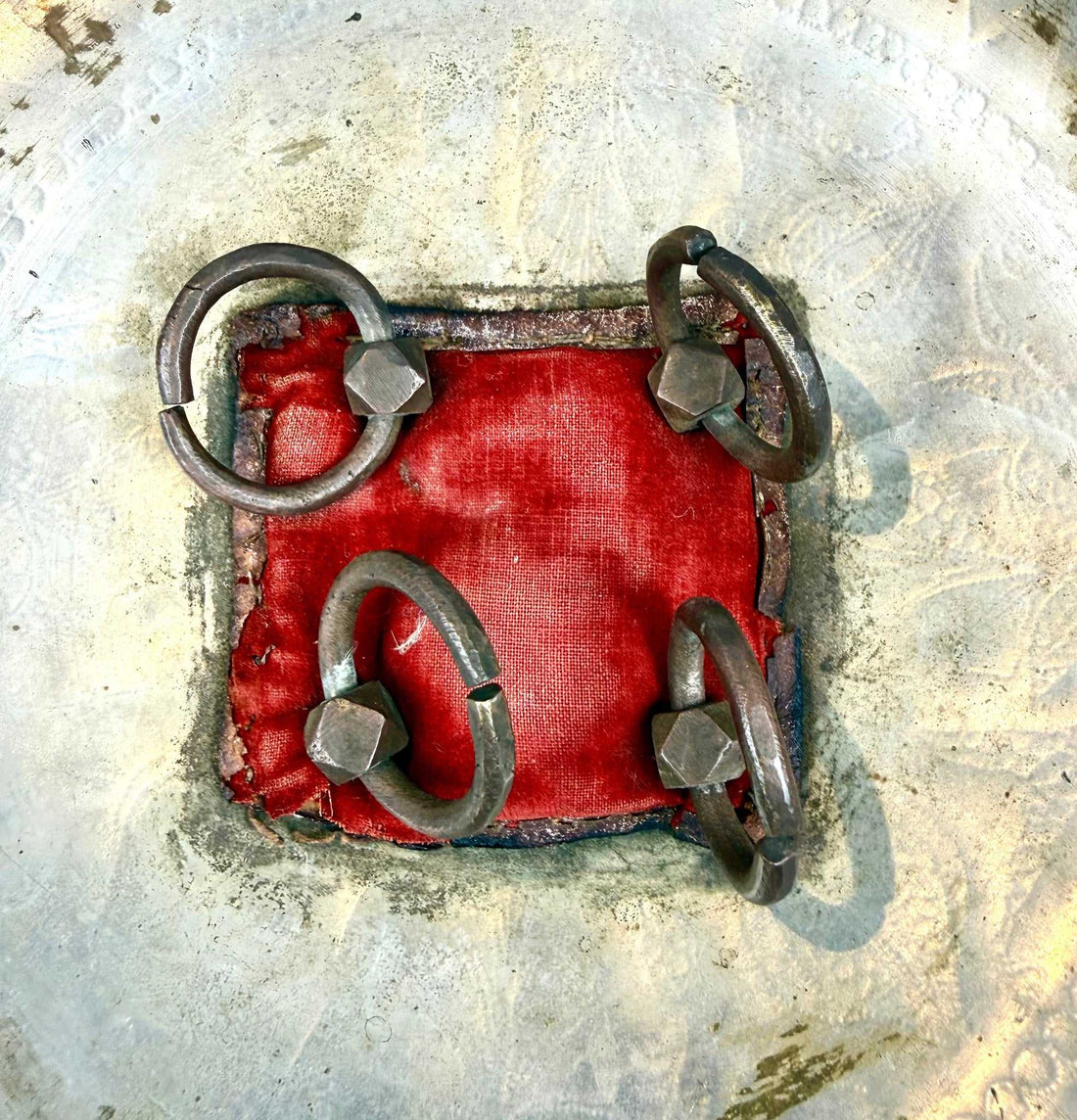
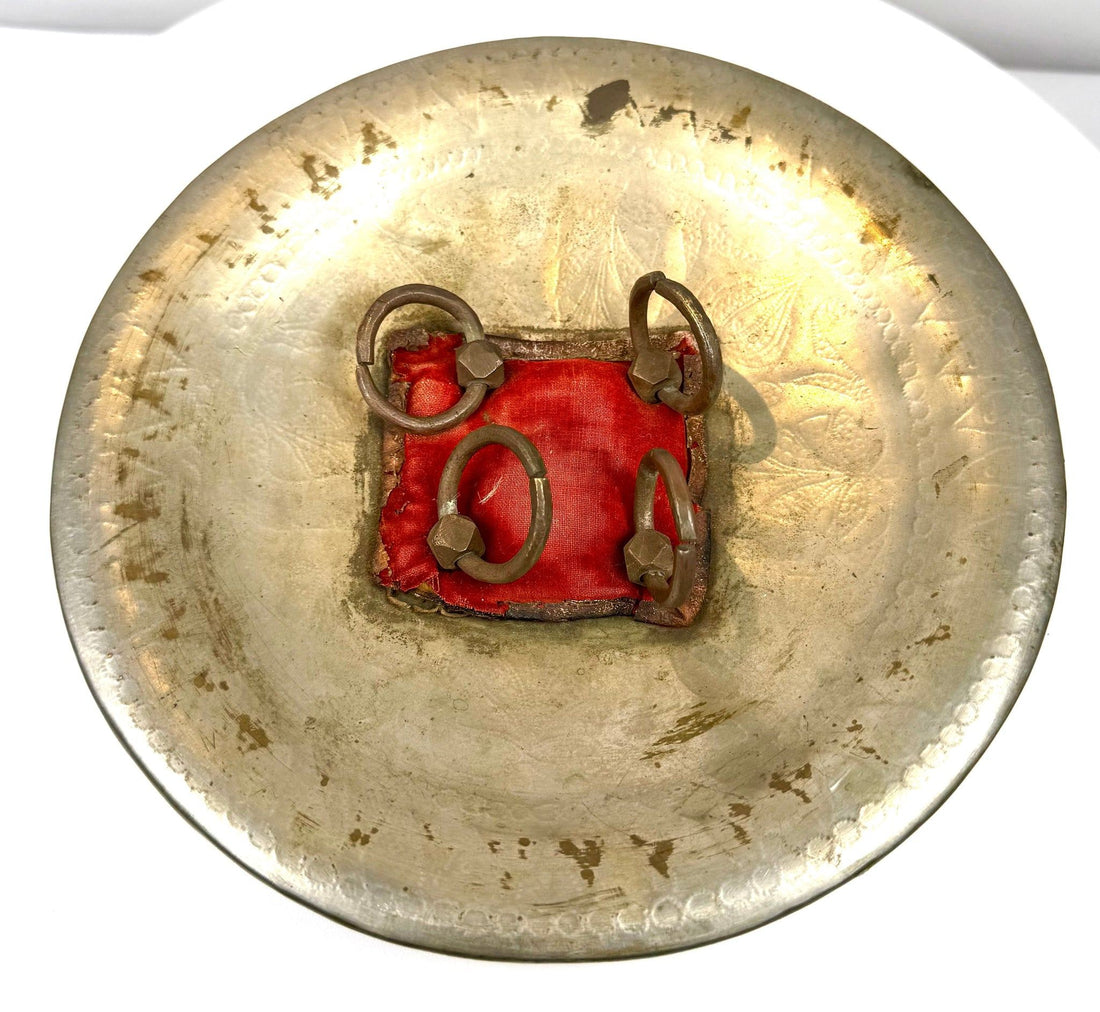
Four circular, slightly domed metal bosses are positioned symmetrically across the shield's central field, each featuring a raised fastening point and subtle concentric tooling marks. The reverse retains four substantial metal grip rings corresponding to the exterior bosses, together with a square panel of crimson-red textile padding. These traditional fittings illustrate the functional construction of the dhal, allowing the shield to be held or secured during use. The reverse also displays warm metallic coloration, surface patination, and visible signs of historical handling.
Measuring approximately 7.25 inches in diameter, this example is considerably smaller than many traditional full-sized Indian shields. Small dhals are documented in museum collections, including a late-19th-century metal example preserved by the Russell-Cotes Art Gallery & Museum, which has been interpreted as possibly intended for a child. Compact shields may also have served ceremonial, presentation, or decorative purposes, although the precise original function of this example remains undetermined. Its elaborate painted decoration, traditional construction, and unusually small proportions make it a distinctive example of Indo-Persian decorative arms and armour.
Features
- Small circular Indo-Persian dhal shield with shallow convex construction
- Elaborate gold, crimson red, ivory-white, and black polychrome decoration
- Four prominent domed metal bosses positioned symmetrically across the central field
- Intricate botanical ornamentation incorporating stylized leaves, flowering vines, and repeating floral patterns
- Contrasting outer border featuring alternating light and gold motifs against a dark background
- Gently raised circular rim with surviving decorative finishing
- Four substantial metal grip rings retained on the reverse
- Original-style crimson-red textile padding positioned beneath the rear fittings
- Visible surface patination, handling marks, and age-related wear
Cultural Significance
The dhal occupies an important place in the military and artistic history of the Indian subcontinent. Circular shields of this general form were used for centuries by warriors throughout India and surrounding regions, often in combination with swords, sabres, and other edged weapons. During the Mughal period and succeeding regional kingdoms, shield-making developed into a specialized craft combining metalworking, leather preparation, painting, lacquering, and decorative techniques. Shields were produced from various materials, including hardened animal hide, steel, brass, and other copper alloys.
The four raised bosses characteristic of traditional dhals served both structural and decorative purposes, commonly concealing or reinforcing attachment points for interior grips. By the 18th and 19th centuries, richly decorated shields had also become important objects of personal prestige and ceremonial presentation. Some continued to serve practical defensive purposes, while others were produced for courtly display, gifting, ceremonial occasions, or decorative collections.
Floral ornamentation was particularly prominent in Indo-Persian decorative arts, appearing across textiles, manuscripts, architecture, jewellery, and arms and armour. Stylized leaves, flowering branches, and symmetrical botanical compositions reflected the sophisticated artistic traditions of the Indian subcontinent. The intricate painted decoration of this small dhal demonstrates the importance of aesthetic craftsmanship alongside traditional shield construction, illustrating the relationship between functional equipment, personal status, and decorative art.
Condition
The shield displays visible age-related wear consistent with its reported historical period and previous handling. The decorated exterior retains substantial areas of its original-style polychrome ornamentation, including gold-coloured floral designs, a red background, contrasting ivory motifs, and a black outer border. Areas of paint and surface-finish loss, minor scratches, abrasions, and localized discolouration are visible, particularly around the outer perimeter. The four central metal bosses remain attached and display surface patination, minor abrasions, and natural variations in colour and finish. The reverse exhibits considerable surface scratching, patches of discolouration, localized oxidation, and areas of finish loss. All four metal grip rings remain present, with visible wear and slight irregularities to their surfaces and openings. The central red textile padding shows age-related deterioration, fraying, localized discolouration, and wear along its edges, while the surrounding attachment fittings retain patination and signs of historical handling.
Dimensions (Approximate)
Diameter: 7.25 in
Age (Approximate)
125–225 years old
Provenance
Formerly held in a private collection in New York, United States, where the shield formed part of a collection of historical and collectible objects.
Subsequently acquired by another private collector in Ottawa, ON Canada, who identified the piece in accompanying correspondence as a 19th-century Indo-Persian dhal shield and documented its earlier New York private-collection ownership.
Learn More
Explore a small late-19th-century Indian metal shield through the Russell-Cotes Art Gallery & Museum and compare traditional painted floral decoration with a circa 1875 Indian dhal preserved by The Metropolitan Museum of Art
Discover additional historical shields, traditional arms, and decorative military artifacts in our Historical Warfare & Exploration Collection
Descripción
Historical Context & Origin
Region: Indian Subcontinent, Indo-Persian tradition
Material: Brass-toned metal, painted and lacquered polychrome decoration, metal bosses and fittings, and red textile padding
Period: 19th Century CE, circa 1800–1900 CE
Description
This highly decorative small Indo-Persian dhal shield features an elaborate arrangement of painted floral ornamentation, four prominent metal bosses, and a richly coloured surface incorporating gold, crimson red, black, and ivory-white tones. Traditionally attributed to the 19th century, the shield displays a shallow convex circular form with a gently raised outer rim. Its central decorative field features symmetrical arrangements of stylized leaves, flowering vines, and scrolling foliage, complemented by intricate dotted detailing and geometric patterns. A contrasting outer border of alternating gold and ivory motifs against a dark background completes the composition.
Four circular, slightly domed metal bosses are positioned symmetrically across the shield's central field, each featuring a raised fastening point and subtle concentric tooling marks. The reverse retains four substantial metal grip rings corresponding to the exterior bosses, together with a square panel of crimson-red textile padding. These traditional fittings illustrate the functional construction of the dhal, allowing the shield to be held or secured during use. The reverse also displays warm metallic coloration, surface patination, and visible signs of historical handling.
Measuring approximately 7.25 inches in diameter, this example is considerably smaller than many traditional full-sized Indian shields. Small dhals are documented in museum collections, including a late-19th-century metal example preserved by the Russell-Cotes Art Gallery & Museum, which has been interpreted as possibly intended for a child. Compact shields may also have served ceremonial, presentation, or decorative purposes, although the precise original function of this example remains undetermined. Its elaborate painted decoration, traditional construction, and unusually small proportions make it a distinctive example of Indo-Persian decorative arms and armour.
Features
- Small circular Indo-Persian dhal shield with shallow convex construction
- Elaborate gold, crimson red, ivory-white, and black polychrome decoration
- Four prominent domed metal bosses positioned symmetrically across the central field
- Intricate botanical ornamentation incorporating stylized leaves, flowering vines, and repeating floral patterns
- Contrasting outer border featuring alternating light and gold motifs against a dark background
- Gently raised circular rim with surviving decorative finishing
- Four substantial metal grip rings retained on the reverse
- Original-style crimson-red textile padding positioned beneath the rear fittings
- Visible surface patination, handling marks, and age-related wear
Cultural Significance
The dhal occupies an important place in the military and artistic history of the Indian subcontinent. Circular shields of this general form were used for centuries by warriors throughout India and surrounding regions, often in combination with swords, sabres, and other edged weapons. During the Mughal period and succeeding regional kingdoms, shield-making developed into a specialized craft combining metalworking, leather preparation, painting, lacquering, and decorative techniques. Shields were produced from various materials, including hardened animal hide, steel, brass, and other copper alloys.
The four raised bosses characteristic of traditional dhals served both structural and decorative purposes, commonly concealing or reinforcing attachment points for interior grips. By the 18th and 19th centuries, richly decorated shields had also become important objects of personal prestige and ceremonial presentation. Some continued to serve practical defensive purposes, while others were produced for courtly display, gifting, ceremonial occasions, or decorative collections.
Floral ornamentation was particularly prominent in Indo-Persian decorative arts, appearing across textiles, manuscripts, architecture, jewellery, and arms and armour. Stylized leaves, flowering branches, and symmetrical botanical compositions reflected the sophisticated artistic traditions of the Indian subcontinent. The intricate painted decoration of this small dhal demonstrates the importance of aesthetic craftsmanship alongside traditional shield construction, illustrating the relationship between functional equipment, personal status, and decorative art.
Condition
The shield displays visible age-related wear consistent with its reported historical period and previous handling. The decorated exterior retains substantial areas of its original-style polychrome ornamentation, including gold-coloured floral designs, a red background, contrasting ivory motifs, and a black outer border. Areas of paint and surface-finish loss, minor scratches, abrasions, and localized discolouration are visible, particularly around the outer perimeter. The four central metal bosses remain attached and display surface patination, minor abrasions, and natural variations in colour and finish. The reverse exhibits considerable surface scratching, patches of discolouration, localized oxidation, and areas of finish loss. All four metal grip rings remain present, with visible wear and slight irregularities to their surfaces and openings. The central red textile padding shows age-related deterioration, fraying, localized discolouration, and wear along its edges, while the surrounding attachment fittings retain patination and signs of historical handling.
Dimensions (Approximate)
Diameter: 7.25 in
Age (Approximate)
125–225 years old
Provenance
Formerly held in a private collection in New York, United States, where the shield formed part of a collection of historical and collectible objects.
Subsequently acquired by another private collector in Ottawa, ON Canada, who identified the piece in accompanying correspondence as a 19th-century Indo-Persian dhal shield and documented its earlier New York private-collection ownership.
Learn More
Explore a small late-19th-century Indian metal shield through the Russell-Cotes Art Gallery & Museum and compare traditional painted floral decoration with a circa 1875 Indian dhal preserved by The Metropolitan Museum of Art
Discover additional historical shields, traditional arms, and decorative military artifacts in our Historical Warfare & Exploration Collection
También te puede interesar
