Campanas colgantes de bronce de Luristán | Cerca del siglo X-VII a. C.

Historial de procedencia y propiedad

Ofrecido por Waddington’s Auctioneers & Appraisers, Toronto, Ontario, Canadá, en su subasta de Gabinete de Curiosidadesel 19 de junio de 2019, como Lote 325. La pieza posteriormente entró en una destacada colección privada en Montreal, Quebec, Canadá.

Precio habitual
$1,000.00
Precio de venta
$1,000.00
Precio habitual
Envío calculado al finalizar la compra.

This is a one-of-a-kind historical object. Once sold, this exact piece will not be restocked.

Questions before acquiring? Additional photographs, condition details, documentation, shipping information or a private viewing are available upon request.
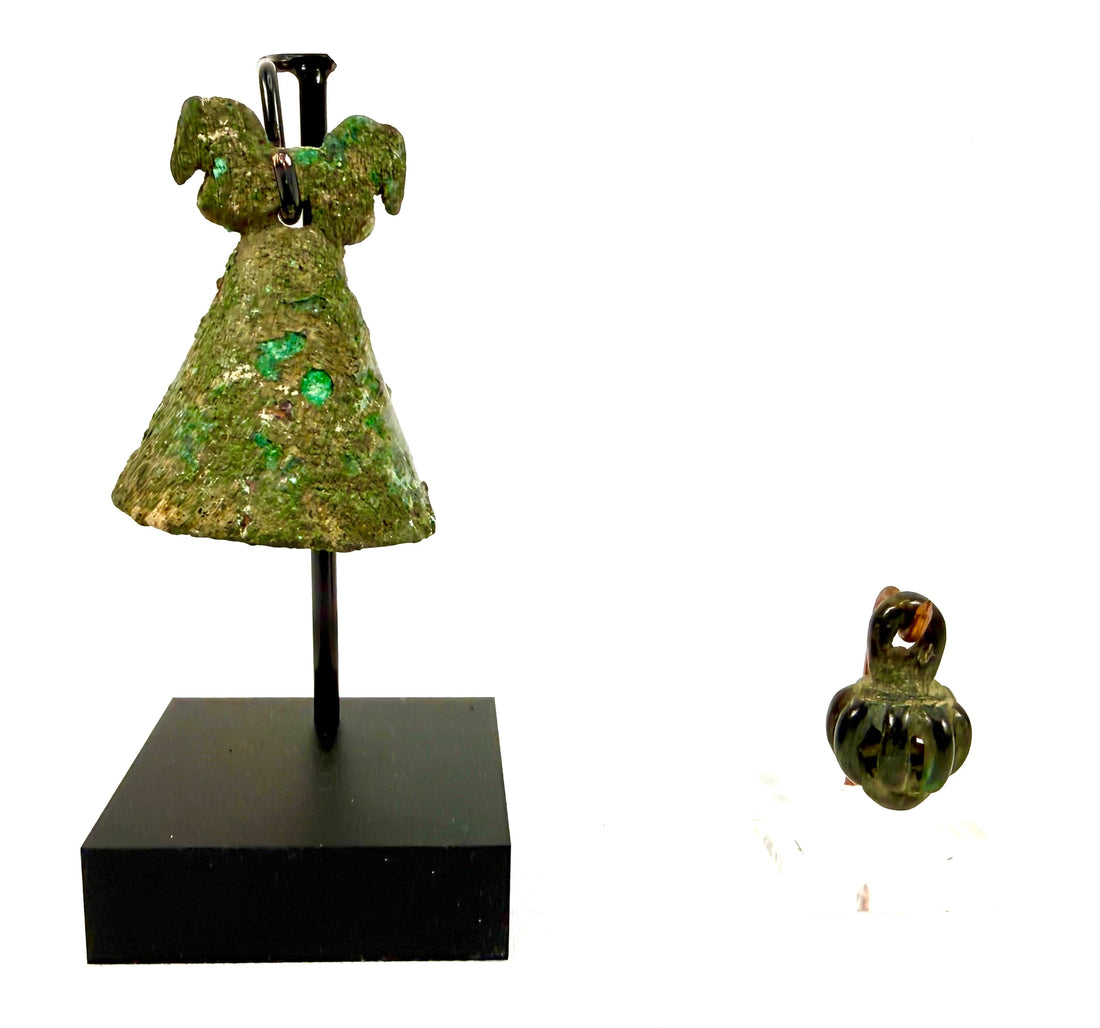
Pair of ancient Iranian bronze pendant bells featuring a Parthian horse-head bell and smaller Iron Age Luristan openwork rattle
360-degree rotating view of two ancient Iranian bronze pendant bells, including a Luristan Iron Age example dating to the 10th–7th century BCE. Features distinctive openwork bronze construction, suspension loops, decorative metalwork, and naturally aged green patina, showcasing ancient Persian craftsmanship and historical bell-making traditions.
Pair of ancient Iranian cast bronze pendant bells featuring an Iron Age Luristan openwork rattle and a Parthian horse-head bell, mounted together for display.
Ancient Persian bronze bell collection spanning the Iron Age to Parthian Period, featuring two distinct suspended bells with archaeological patina and decorative metalwork.
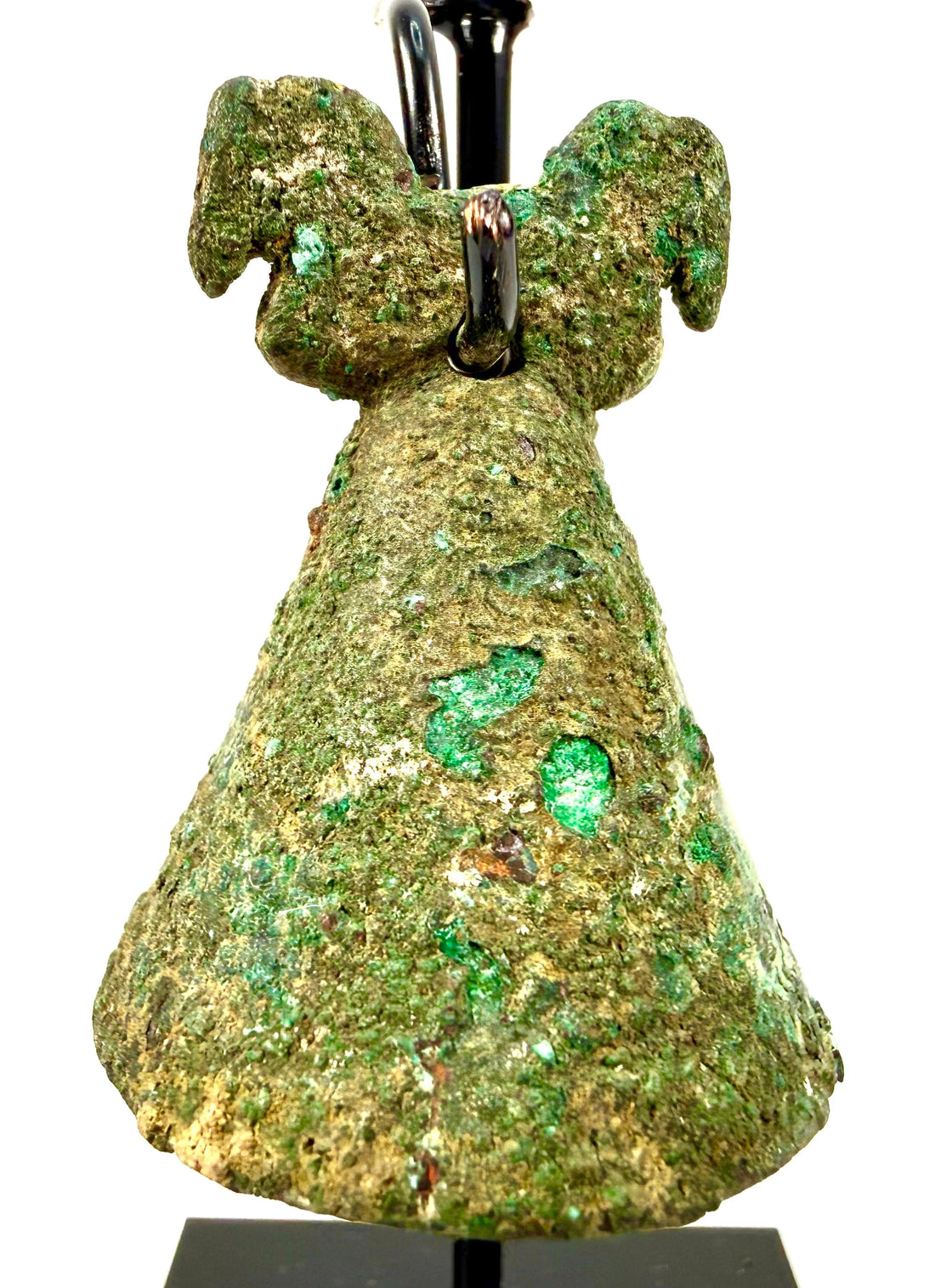
Ancient Parthian bronze pendant bell dating to the 3rd century BCE–3rd century CE, featuring a conical body and decorative horse-head protomes.
Parthian Period cast bronze bell from ancient Iran, displaying two sculpted horse heads flanking the suspension opening and a flared lower rim.
Ancient Persian bronze horse-head bell featuring zoomorphic decoration, a moulded rim band, and green archaeological patina with mineral deposits.
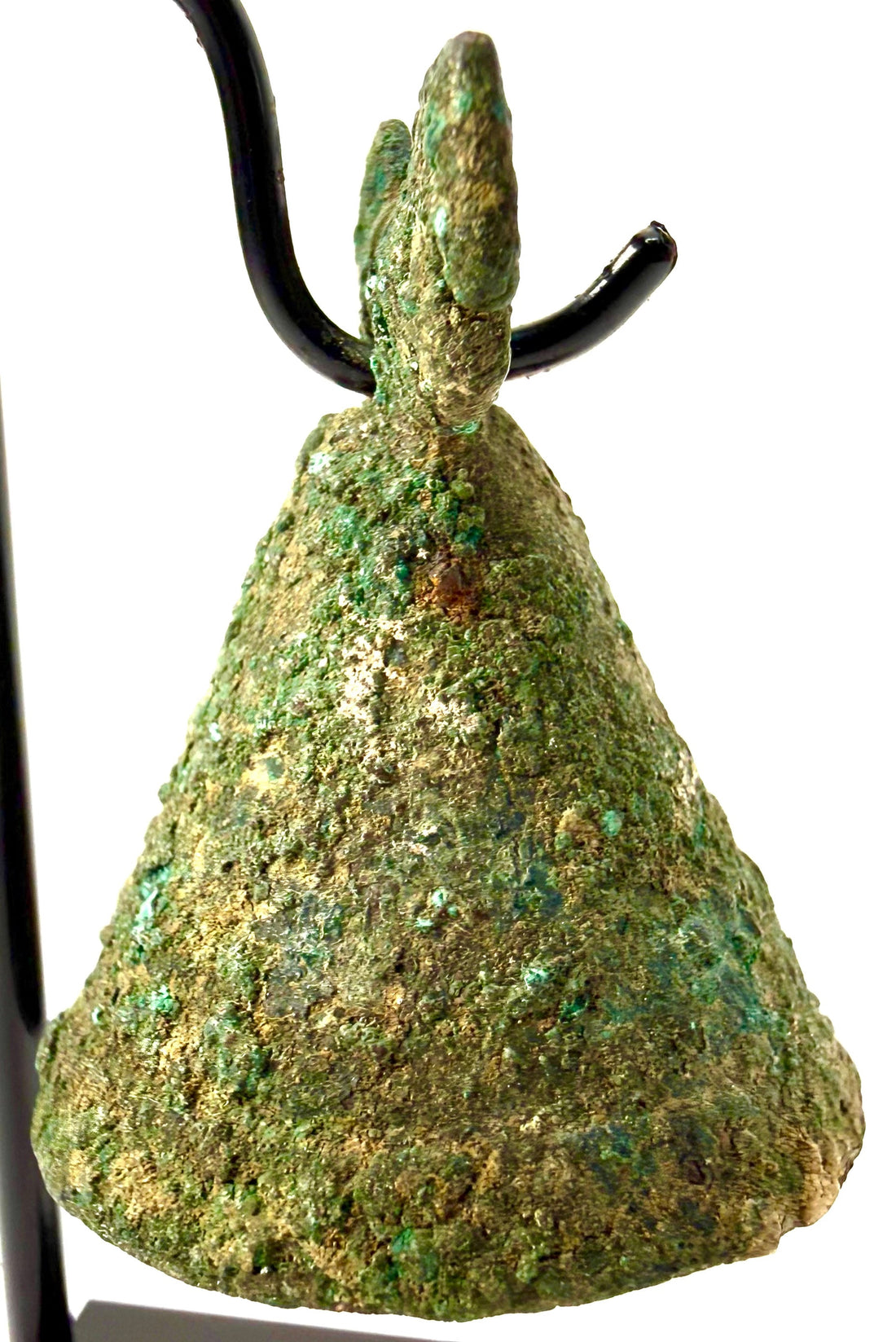
Parthian bronze pendant bell with a conical body, flaring base, and distinctive equine protomes, reflecting ancient Iranian metalworking traditions.
Archaeological Parthian bronze bell displaying malachite-green corrosion, surface oxidation, and sculpted horse-head ornaments surrounding its suspension opening.
Ancient Luristan bronze rattle bell from Western Iran, dating to the 10th–7th century BCE, featuring a globular openwork body and integral suspension loop.
Iron Age Persian bronze pendant bell with vertical openwork bars, rounded hollow construction, and dark green archaeological patina.
Ancient Iranian Luristan bronze rattle featuring an openwork cage-like structure, suspension loop, and traditional cast metalwork dating to circa 1000–700 BCE.
  • Pair of ancient Iranian bronze pendant bells featuring a Parthian horse-head bell and smaller Iron Age Luristan openwork rattle
  • 360-degree rotating view of two ancient Iranian bronze pendant bells, including a Luristan Iron Age example dating to the 10th–7th century BCE. Features distinctive openwork bronze construction, suspension loops, decorative metalwork, and naturally aged green patina, showcasing ancient Persian craftsmanship and historical bell-making traditions.
  • Pair of ancient Iranian cast bronze pendant bells featuring an Iron Age Luristan openwork rattle and a Parthian horse-head bell, mounted together for display.
  • Ancient Persian bronze bell collection spanning the Iron Age to Parthian Period, featuring two distinct suspended bells with archaeological patina and decorative metalwork.
  • Ancient Parthian bronze pendant bell dating to the 3rd century BCE–3rd century CE, featuring a conical body and decorative horse-head protomes.
  • Parthian Period cast bronze bell from ancient Iran, displaying two sculpted horse heads flanking the suspension opening and a flared lower rim.
  • Ancient Persian bronze horse-head bell featuring zoomorphic decoration, a moulded rim band, and green archaeological patina with mineral deposits.
  • Parthian bronze pendant bell with a conical body, flaring base, and distinctive equine protomes, reflecting ancient Iranian metalworking traditions.
  • Archaeological Parthian bronze bell displaying malachite-green corrosion, surface oxidation, and sculpted horse-head ornaments surrounding its suspension opening.
  • Ancient Luristan bronze rattle bell from Western Iran, dating to the 10th–7th century BCE, featuring a globular openwork body and integral suspension loop.
  • Iron Age Persian bronze pendant bell with vertical openwork bars, rounded hollow construction, and dark green archaeological patina.
  • Ancient Iranian Luristan bronze rattle featuring an openwork cage-like structure, suspension loop, and traditional cast metalwork dating to circa 1000–700 BCE.
Pair of ancient Iranian bronze pendant bells featuring a Parthian horse-head bell and smaller Iron Age Luristan openwork rattle
360-degree rotating view of two ancient Iranian bronze pendant bells, including a Luristan Iron Age example dating to the 10th–7th century BCE. Features distinctive openwork bronze construction, suspension loops, decorative metalwork, and naturally aged green patina, showcasing ancient Persian craftsmanship and historical bell-making traditions.
Pair of ancient Iranian cast bronze pendant bells featuring an Iron Age Luristan openwork rattle and a Parthian horse-head bell, mounted together for display.
Ancient Persian bronze bell collection spanning the Iron Age to Parthian Period, featuring two distinct suspended bells with archaeological patina and decorative metalwork.
Ancient Parthian bronze pendant bell dating to the 3rd century BCE–3rd century CE, featuring a conical body and decorative horse-head protomes.
Parthian Period cast bronze bell from ancient Iran, displaying two sculpted horse heads flanking the suspension opening and a flared lower rim.
Ancient Persian bronze horse-head bell featuring zoomorphic decoration, a moulded rim band, and green archaeological patina with mineral deposits.
Parthian bronze pendant bell with a conical body, flaring base, and distinctive equine protomes, reflecting ancient Iranian metalworking traditions.
Archaeological Parthian bronze bell displaying malachite-green corrosion, surface oxidation, and sculpted horse-head ornaments surrounding its suspension opening.
Ancient Luristan bronze rattle bell from Western Iran, dating to the 10th–7th century BCE, featuring a globular openwork body and integral suspension loop.
Iron Age Persian bronze pendant bell with vertical openwork bars, rounded hollow construction, and dark green archaeological patina.
Ancient Iranian Luristan bronze rattle featuring an openwork cage-like structure, suspension loop, and traditional cast metalwork dating to circa 1000–700 BCE.
Authenticity and secure checkout guarantee

Campanas colgantes de bronce de Luristán | Cerca del siglo X-VII a. C.

Descripción

Contexto histórico y origen

Región: Luristán (actual provincia de Lorestán, Irán)
Material: Aleación de bronce/hierro fundido
Período: Circa siglos X-VII a. C.

Descripción

Este antiguo colgante de Luristán en forma de campana presenta un diseño de globo calado formado por siete barras sin decorar, creando una estructura simple pero refinada. Rematada con un lazo de suspensión ligeramente irregular, la campana estaba diseñada para albergar bolitas de sonajero que habrían producido un sonido distintivo al agitarla. Su artesanía refleja las cualidades artísticas y funcionales de la metalurgia de Luristán de la Edad del Hierro.

Características

- Globo calado formado por siete barras

- Lazo de suspensión para sujetar a una cadena, prenda o arnés

- Diseñada para contener bolitas de sonajero internas para producir sonido

- Montada en un soporte personalizado para exhibición moderna

Significado cultural

Las campanas de este tipo están fuertemente asociadas con el Luristán de la Edad del Hierro, una cultura reconocida por su magistral trabajo en metal. Las campanas más grandes a menudo se usaban como atalajes para caballos, mientras que las campanas más pequeñas como esta probablemente servían como adornos personales o elementos de atuendos ceremoniales. Su sonido era tanto decorativo como simbólico, y se creía que proporcionaba protección o marcaba ocasiones rituales. Esta campana colgante encarna la intersección de adorno, utilidad y ritual en la antigua cultura iraní.

Estado

Excelente estado de excavación con pátina superficial consistente con la antigüedad. Las barras caladas permanecen intactas, y el lazo de suspensión muestra una irregularidad natural del moldeado a mano. Montada para estabilidad y presentación.

Dimensiones (aproximadas)

Alto: 3.5 pulg.
Ancho: 1.5 pulg.
Profundidad: 1.5 pulg.

Antigüedad (aproximada)

2,625–3,025 años

Procedencia 

Ofrecido por Waddington’s Auctioneers & Appraisers, Toronto, Ontario, Canadá, en su subasta Cabinet of Curiosities el 19 de junio de 2019, como Lote 325. La pieza posteriormente pasó a formar parte de una destacada colección privada en Montreal, Quebec, Canadá.

Más información

Estudie los Bronces de Luristán a través del Museo Nacional de Irlanda

Explore nuestra Colección de Antigüedades de Oriente Medio y Arte Antiguo

Descripción

Contexto histórico y origen

Región: Luristán (actual provincia de Lorestán, Irán)
Material: Aleación de bronce/hierro fundido
Período: Circa siglos X-VII a. C.

Descripción

Este antiguo colgante de Luristán en forma de campana presenta un diseño de globo calado formado por siete barras sin decorar, creando una estructura simple pero refinada. Rematada con un lazo de suspensión ligeramente irregular, la campana estaba diseñada para albergar bolitas de sonajero que habrían producido un sonido distintivo al agitarla. Su artesanía refleja las cualidades artísticas y funcionales de la metalurgia de Luristán de la Edad del Hierro.

Características

- Globo calado formado por siete barras

- Lazo de suspensión para sujetar a una cadena, prenda o arnés

- Diseñada para contener bolitas de sonajero internas para producir sonido

- Montada en un soporte personalizado para exhibición moderna

Significado cultural

Las campanas de este tipo están fuertemente asociadas con el Luristán de la Edad del Hierro, una cultura reconocida por su magistral trabajo en metal. Las campanas más grandes a menudo se usaban como atalajes para caballos, mientras que las campanas más pequeñas como esta probablemente servían como adornos personales o elementos de atuendos ceremoniales. Su sonido era tanto decorativo como simbólico, y se creía que proporcionaba protección o marcaba ocasiones rituales. Esta campana colgante encarna la intersección de adorno, utilidad y ritual en la antigua cultura iraní.

Estado

Excelente estado de excavación con pátina superficial consistente con la antigüedad. Las barras caladas permanecen intactas, y el lazo de suspensión muestra una irregularidad natural del moldeado a mano. Montada para estabilidad y presentación.

Dimensiones (aproximadas)

Alto: 3.5 pulg.
Ancho: 1.5 pulg.
Profundidad: 1.5 pulg.

Antigüedad (aproximada)

2,625–3,025 años

Procedencia 

Ofrecido por Waddington’s Auctioneers & Appraisers, Toronto, Ontario, Canadá, en su subasta Cabinet of Curiosities el 19 de junio de 2019, como Lote 325. La pieza posteriormente pasó a formar parte de una destacada colección privada en Montreal, Quebec, Canadá.

Más información

Estudie los Bronces de Luristán a través del Museo Nacional de Irlanda

Explore nuestra Colección de Antigüedades de Oriente Medio y Arte Antiguo

También te puede interesar