
Medieval Bronze Finger Ring with Punched Circular Bezel | Circa 12th–13th Century CE
- Precio habitual
- $325.00
- Precio de venta
- $325.00
- Precio habitual
No se pudo cargar la disponibilidad de retiro




Medieval Bronze Finger Ring with Punched Circular Bezel | Circa 12th–13th Century CE
Descripción
Más
Menos
Historical Context & Origin
Region: Medieval Europe
Material: Bronze (copper alloy)
Period: Medieval Period, circa 12th–13th Century CE
Description
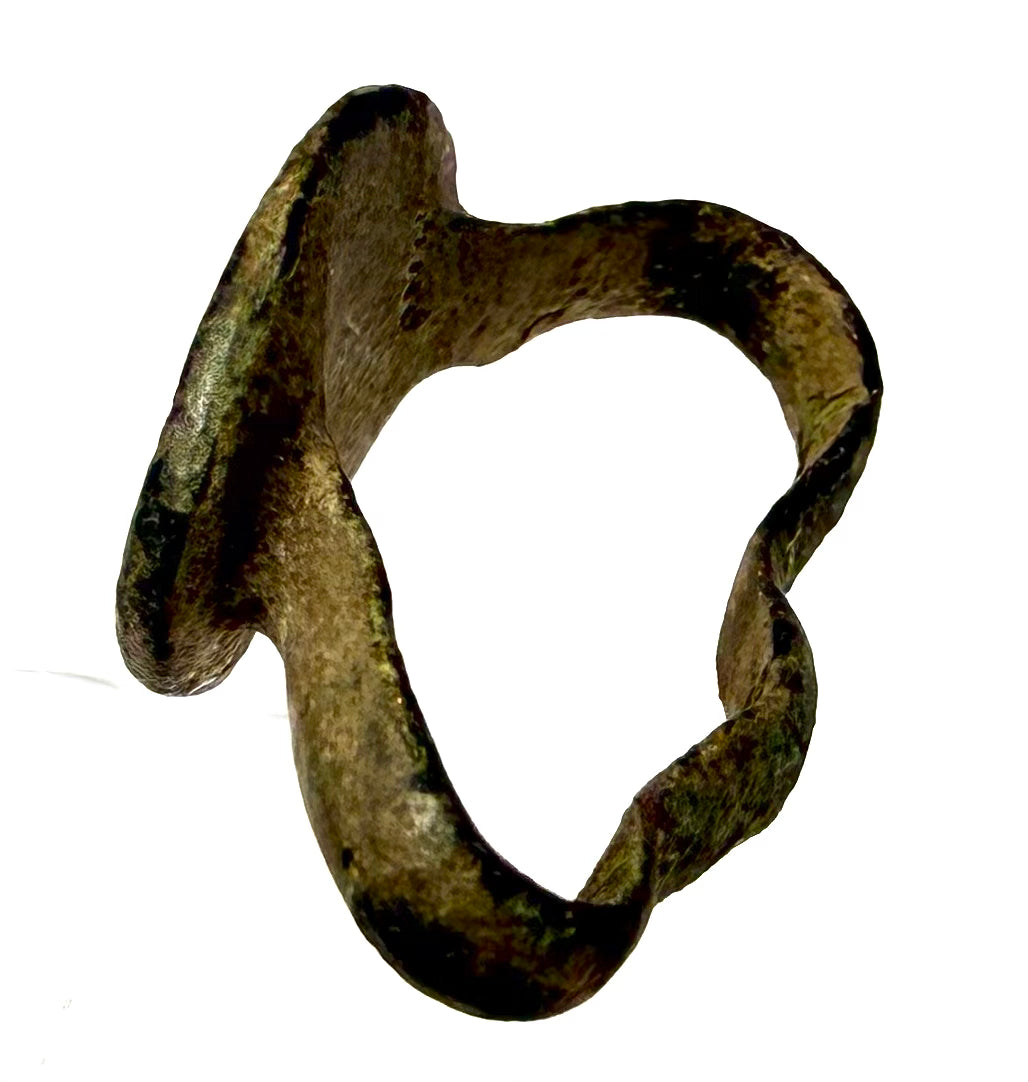
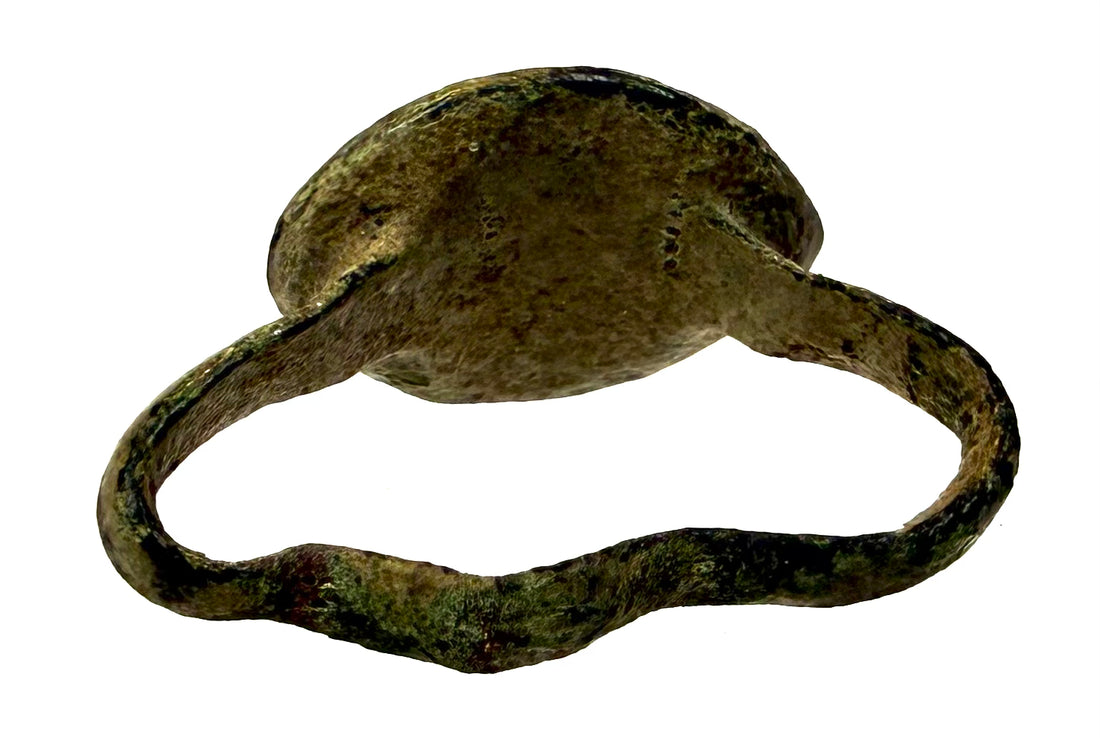
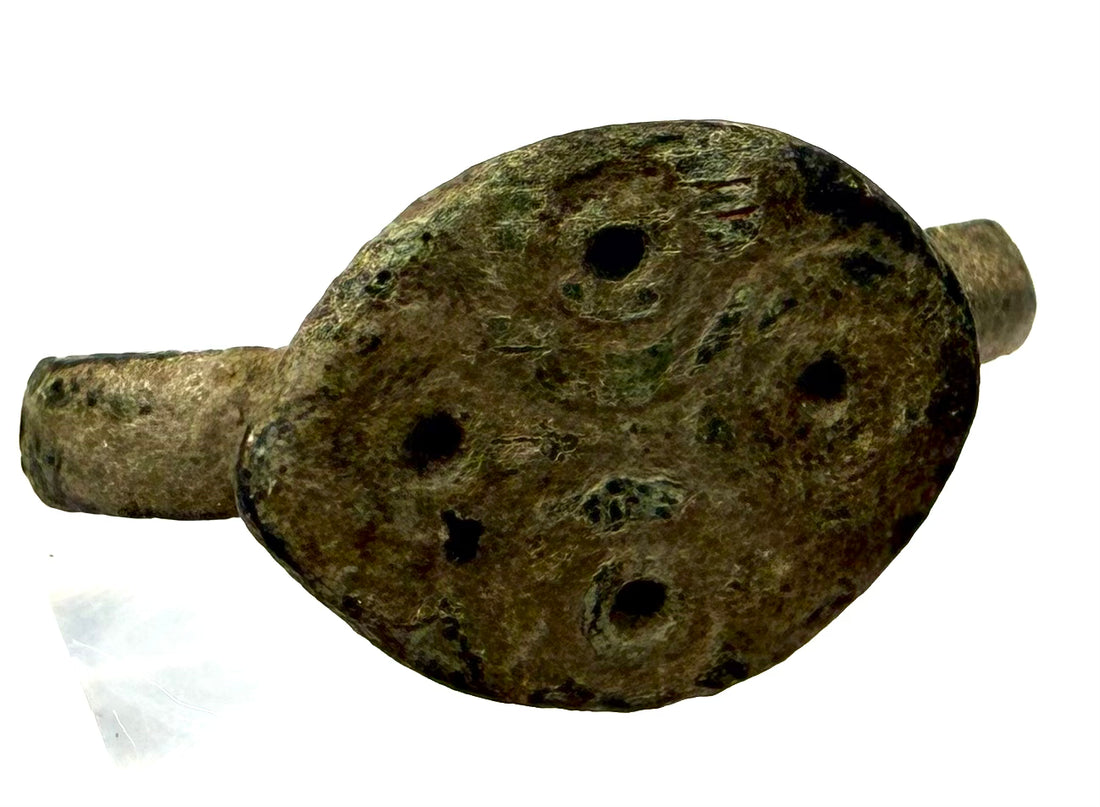
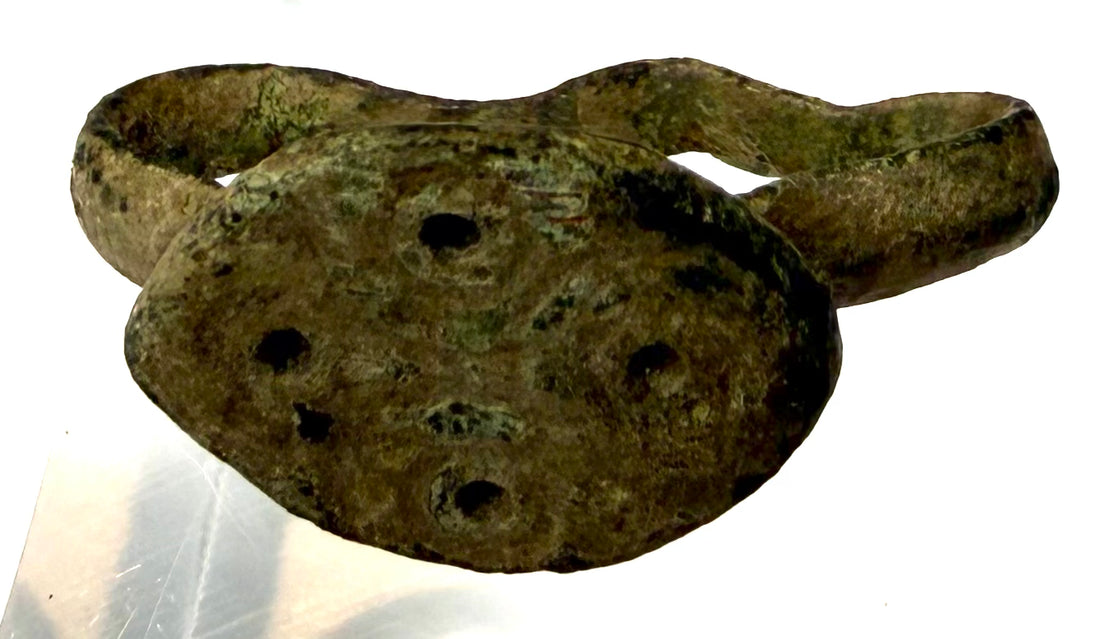
This distinctive medieval-style bronze finger ring features a prominent oval bezel decorated with multiple punched circular impressions, reflecting the geometric ornamental traditions associated with European medieval jewellery. Attributed to the 12th–13th century CE, the ring combines a substantial decorative face with a comparatively slender bronze hoop, illustrating the craftsmanship and simplicity of historical copper-alloy personal ornaments.
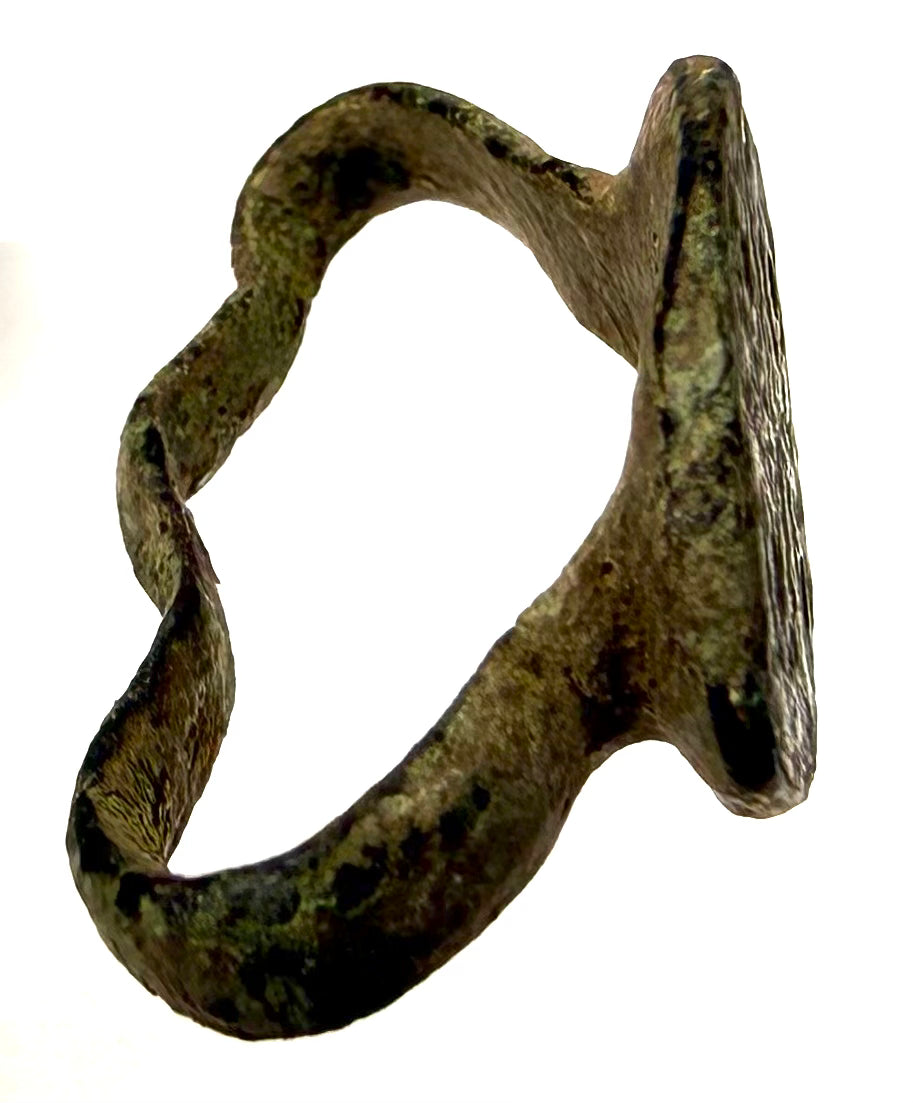
The ring features an enlarged, gently convex oval bezel supported by broad shoulders that gradually taper into a narrower band. Its surface displays several deeply recessed circular impressions of varying sizes, arranged in an irregular yet visually balanced composition. Some of these markings resemble traditional ring-and-dot decoration, a geometric ornamental technique encountered on jewellery and metalwork across different historical periods. Faint incised lines and additional surface irregularities contribute to the distinctive appearance of the bezel.
The bronze surface exhibits a rich combination of earthy brown, olive-green, and darker oxidation tones, with scattered pale mineral-like deposits and areas of surface wear. The recessed circular markings remain recognizable despite considerable weathering, while the broad shoulders retain their original general profile. The band displays an opening or separation along one section, potentially resulting from an old break or deformation. The ring's enlarged oval bezel, simple punched decoration, and tapered hoop bear close stylistic similarities to medieval copper-alloy finger rings documented in archaeological collections.
Features
- Prominent raised oval bezel with gently convex surface
- Multiple deeply recessed circular impressions across the decorative face
- Irregular geometric arrangement resembling traditional ring-and-dot ornamentation
- Subtle incised linear markings and additional surface detailing
- Broad shoulders gradually tapering into a comparatively narrow bronze hoop
- Rich olive-green and earthy brown patination with mineral-like deposits
- Visible opening or separation along one section of the band
Cultural Significance
Finger rings were important objects of personal adornment throughout medieval Europe, reflecting individual identity, decorative preferences, and, in certain contexts, social standing. Rings were fashioned from various materials, including gold, silver, iron, bronze, and other copper alloys. While precious-metal jewellery was often associated with wealth and prestige, bronze rings provided a more accessible form of personal ornamentation and were manufactured in numerous decorative styles.
Geometric decoration was a recognizable feature of medieval metalworking, appearing on finger rings, brooches, belt fittings, and other personal accessories. Punched circular impressions, commonly described as ring-and-dot motifs, were employed to create simple yet distinctive ornamental compositions. These designs could be produced using relatively straightforward metalworking techniques, allowing craftsmen to decorate bronze objects without elaborate gemstone settings or precious materials.
The use of circular and geometric ornamentation continued across different regions and historical periods, including Roman, early medieval, and later medieval traditions. Such patterns may have served decorative purposes, while certain designs could also have carried personal or symbolic associations. The original significance of the markings on this ring remains undetermined. Its prominent oval bezel, tapered shoulders, and recessed circular decoration illustrate the enduring appeal of geometric ornamentation in historical European jewellery.
Condition
The ring retains its prominent oval bezel, broad shoulders, and substantial portions of its original circular band. Extensive surface wear and oxidation are visible throughout, producing a mottled combination of earthy brown, olive-green, and darker discolouration. The bezel retains multiple distinguishable punched circular impressions, although some decorative details have softened through surface deterioration. Scattered abrasions, localized pitting, minor scratches, and mineral-like deposits are present across the decorative face and adjoining shoulders. The bronze hoop displays an opening or separation along one section, potentially representing an old break or deformation, together with areas of uneven surface texture and minor edge irregularities. Despite these condition characteristics, the ring retains its distinctive raised bezel and recognizable geometric decoration.
Dimensions (Approximate)
Length: 1 in
Width: 0.5 in
Age (Approximate)
725–925 years old
Provenance
Formerly part of the Moneta Collection, a Tucson-based numismatic dealership specializing in collectible coins. Moneta is listed among professional dealers on the VCoins marketplace and participated in the 2017 U.S. Mexican Numismatic Association convention.
Subsequently handled by Palmyra Heritage Gallery, a third-generation family business specializing in ancient coins, antiquities, and historical artifacts, with a New York gallery operating since 1995. The gallery deals in Egyptian, Greek, Roman, Byzantine, Islamic, and Pre-Columbian material and is affiliated with the American Numismatic Society and Florida Numismatic Association.
Learn More
Explore a comparable early medieval copper-alloy finger ring featuring a broad bezel decorated with five ring-and-dot motifs, documented in Lincolnshire, England, through the Portable Antiquities Scheme
Discover additional medieval bronze rings, historic jewellery, and decorative metalwork in our Ancient Rings & Jewelry Collection
Descripción
Historical Context & Origin
Region: Medieval Europe
Material: Bronze (copper alloy)
Period: Medieval Period, circa 12th–13th Century CE
Description
This distinctive medieval-style bronze finger ring features a prominent oval bezel decorated with multiple punched circular impressions, reflecting the geometric ornamental traditions associated with European medieval jewellery. Attributed to the 12th–13th century CE, the ring combines a substantial decorative face with a comparatively slender bronze hoop, illustrating the craftsmanship and simplicity of historical copper-alloy personal ornaments.
The ring features an enlarged, gently convex oval bezel supported by broad shoulders that gradually taper into a narrower band. Its surface displays several deeply recessed circular impressions of varying sizes, arranged in an irregular yet visually balanced composition. Some of these markings resemble traditional ring-and-dot decoration, a geometric ornamental technique encountered on jewellery and metalwork across different historical periods. Faint incised lines and additional surface irregularities contribute to the distinctive appearance of the bezel.
The bronze surface exhibits a rich combination of earthy brown, olive-green, and darker oxidation tones, with scattered pale mineral-like deposits and areas of surface wear. The recessed circular markings remain recognizable despite considerable weathering, while the broad shoulders retain their original general profile. The band displays an opening or separation along one section, potentially resulting from an old break or deformation. The ring's enlarged oval bezel, simple punched decoration, and tapered hoop bear close stylistic similarities to medieval copper-alloy finger rings documented in archaeological collections.
Features
- Prominent raised oval bezel with gently convex surface
- Multiple deeply recessed circular impressions across the decorative face
- Irregular geometric arrangement resembling traditional ring-and-dot ornamentation
- Subtle incised linear markings and additional surface detailing
- Broad shoulders gradually tapering into a comparatively narrow bronze hoop
- Rich olive-green and earthy brown patination with mineral-like deposits
- Visible opening or separation along one section of the band
Cultural Significance
Finger rings were important objects of personal adornment throughout medieval Europe, reflecting individual identity, decorative preferences, and, in certain contexts, social standing. Rings were fashioned from various materials, including gold, silver, iron, bronze, and other copper alloys. While precious-metal jewellery was often associated with wealth and prestige, bronze rings provided a more accessible form of personal ornamentation and were manufactured in numerous decorative styles.
Geometric decoration was a recognizable feature of medieval metalworking, appearing on finger rings, brooches, belt fittings, and other personal accessories. Punched circular impressions, commonly described as ring-and-dot motifs, were employed to create simple yet distinctive ornamental compositions. These designs could be produced using relatively straightforward metalworking techniques, allowing craftsmen to decorate bronze objects without elaborate gemstone settings or precious materials.
The use of circular and geometric ornamentation continued across different regions and historical periods, including Roman, early medieval, and later medieval traditions. Such patterns may have served decorative purposes, while certain designs could also have carried personal or symbolic associations. The original significance of the markings on this ring remains undetermined. Its prominent oval bezel, tapered shoulders, and recessed circular decoration illustrate the enduring appeal of geometric ornamentation in historical European jewellery.
Condition
The ring retains its prominent oval bezel, broad shoulders, and substantial portions of its original circular band. Extensive surface wear and oxidation are visible throughout, producing a mottled combination of earthy brown, olive-green, and darker discolouration. The bezel retains multiple distinguishable punched circular impressions, although some decorative details have softened through surface deterioration. Scattered abrasions, localized pitting, minor scratches, and mineral-like deposits are present across the decorative face and adjoining shoulders. The bronze hoop displays an opening or separation along one section, potentially representing an old break or deformation, together with areas of uneven surface texture and minor edge irregularities. Despite these condition characteristics, the ring retains its distinctive raised bezel and recognizable geometric decoration.
Dimensions (Approximate)
Length: 1 in
Width: 0.5 in
Age (Approximate)
725–925 years old
Provenance
Formerly part of the Moneta Collection, a Tucson-based numismatic dealership specializing in collectible coins. Moneta is listed among professional dealers on the VCoins marketplace and participated in the 2017 U.S. Mexican Numismatic Association convention.
Subsequently handled by Palmyra Heritage Gallery, a third-generation family business specializing in ancient coins, antiquities, and historical artifacts, with a New York gallery operating since 1995. The gallery deals in Egyptian, Greek, Roman, Byzantine, Islamic, and Pre-Columbian material and is affiliated with the American Numismatic Society and Florida Numismatic Association.
Learn More
Explore a comparable early medieval copper-alloy finger ring featuring a broad bezel decorated with five ring-and-dot motifs, documented in Lincolnshire, England, through the Portable Antiquities Scheme
Discover additional medieval bronze rings, historic jewellery, and decorative metalwork in our Ancient Rings & Jewelry Collection
También te puede interesar
