

Juego montado de tres puntas de armas arqueológicas de hierro | C. Siglos III-XIV
- Precio habitual
- $250.00
- Precio de venta
- $250.00
- Precio habitual
No se pudo cargar la disponibilidad de retiro


Juego montado de tres puntas de armas arqueológicas de hierro | C. Siglos III-XIV
Descripción
Más
Menos
Contexto histórico y origen
Región: Europa
Material: Hierro forjado a mano
Periodo: Del final del Imperio Romano a la Edad Media, circa siglo III-XIV d.C.
Descripción
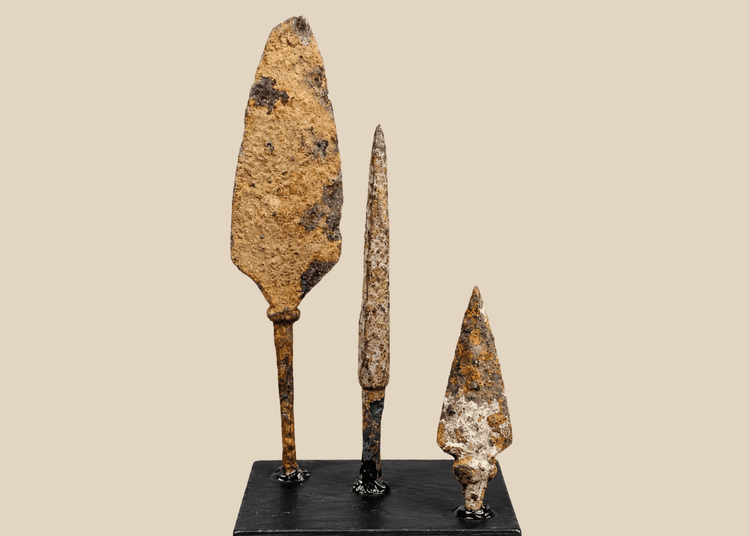
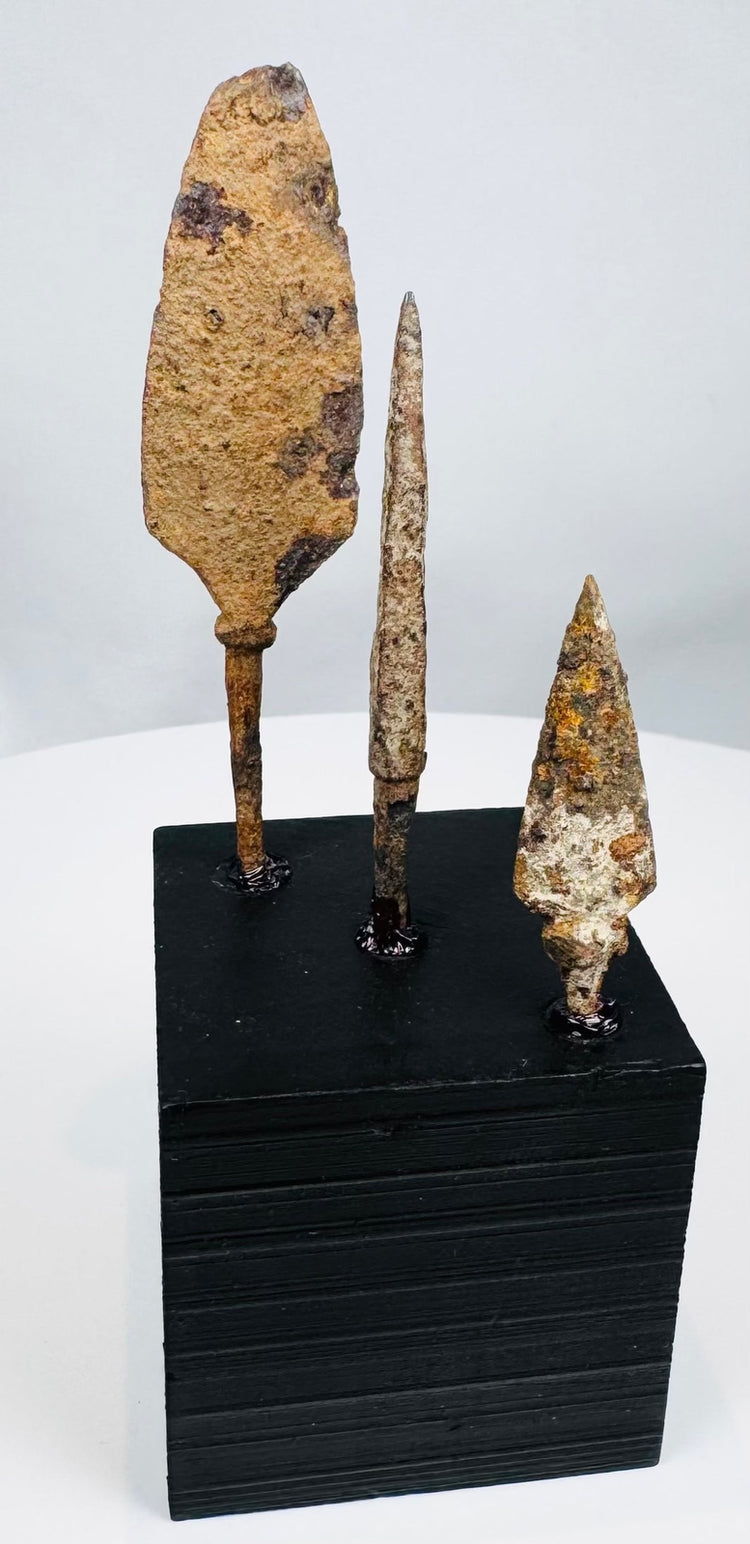
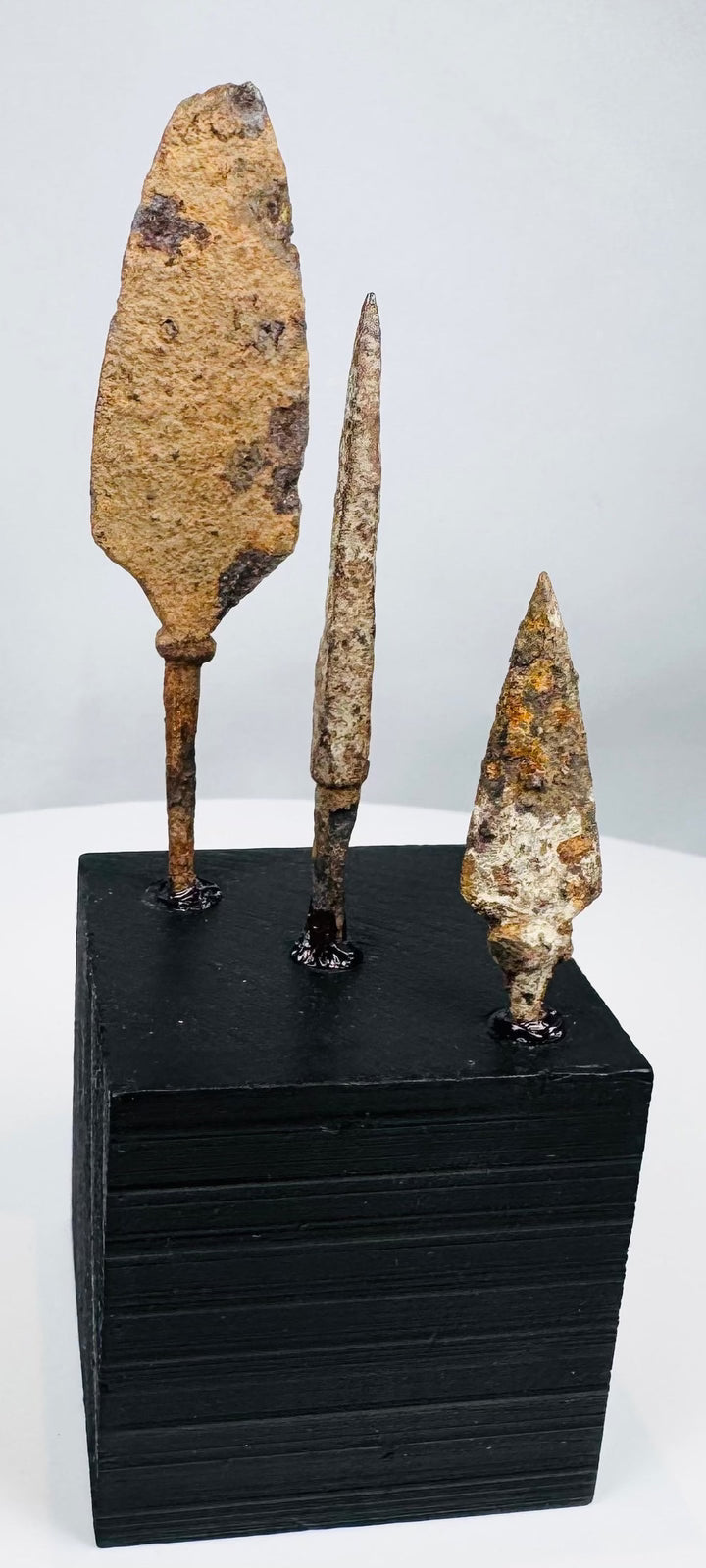
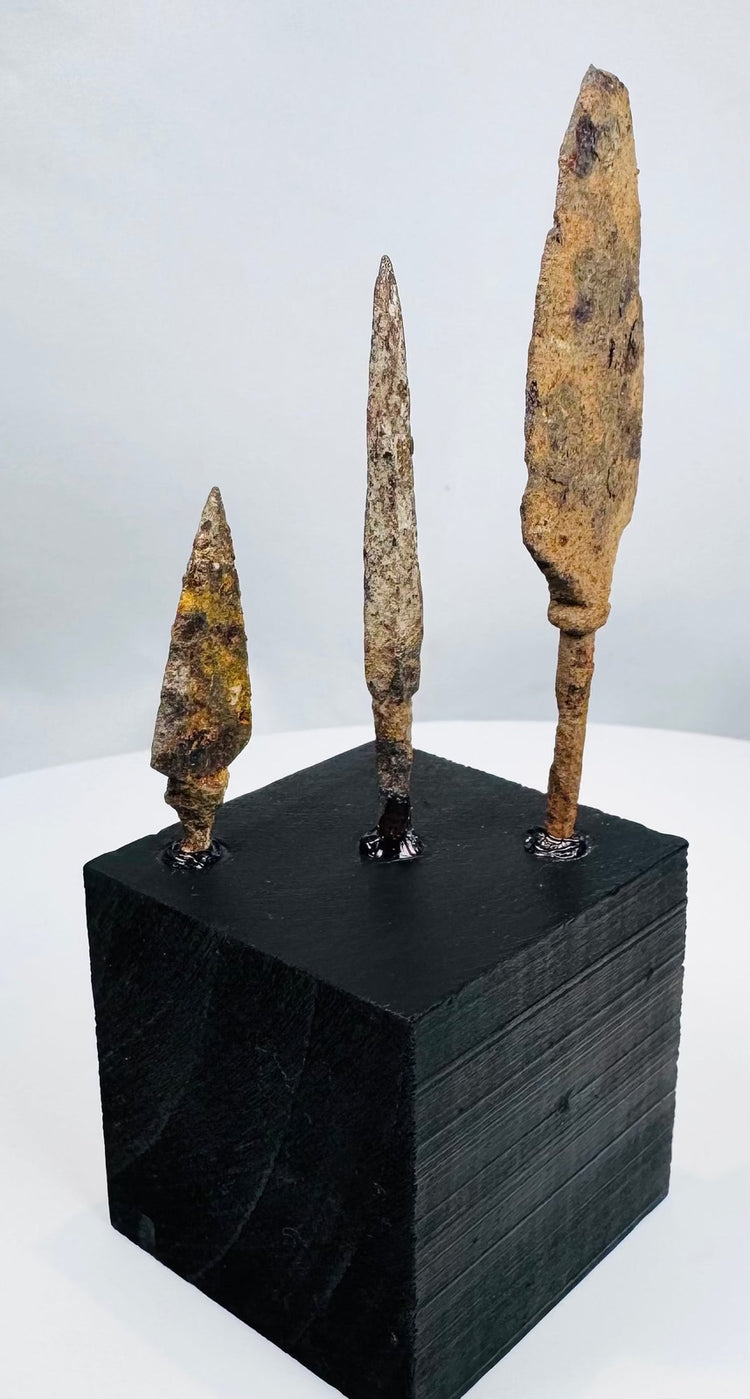
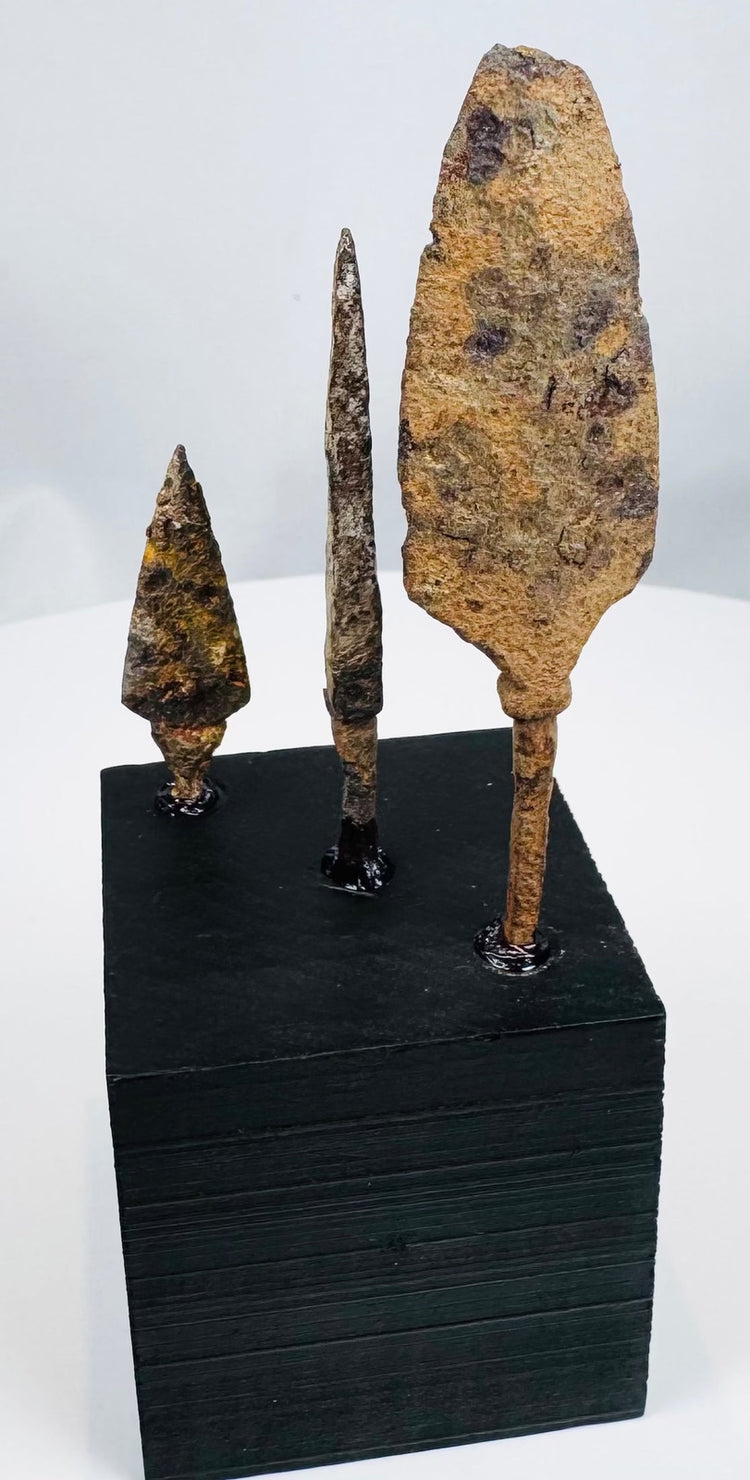
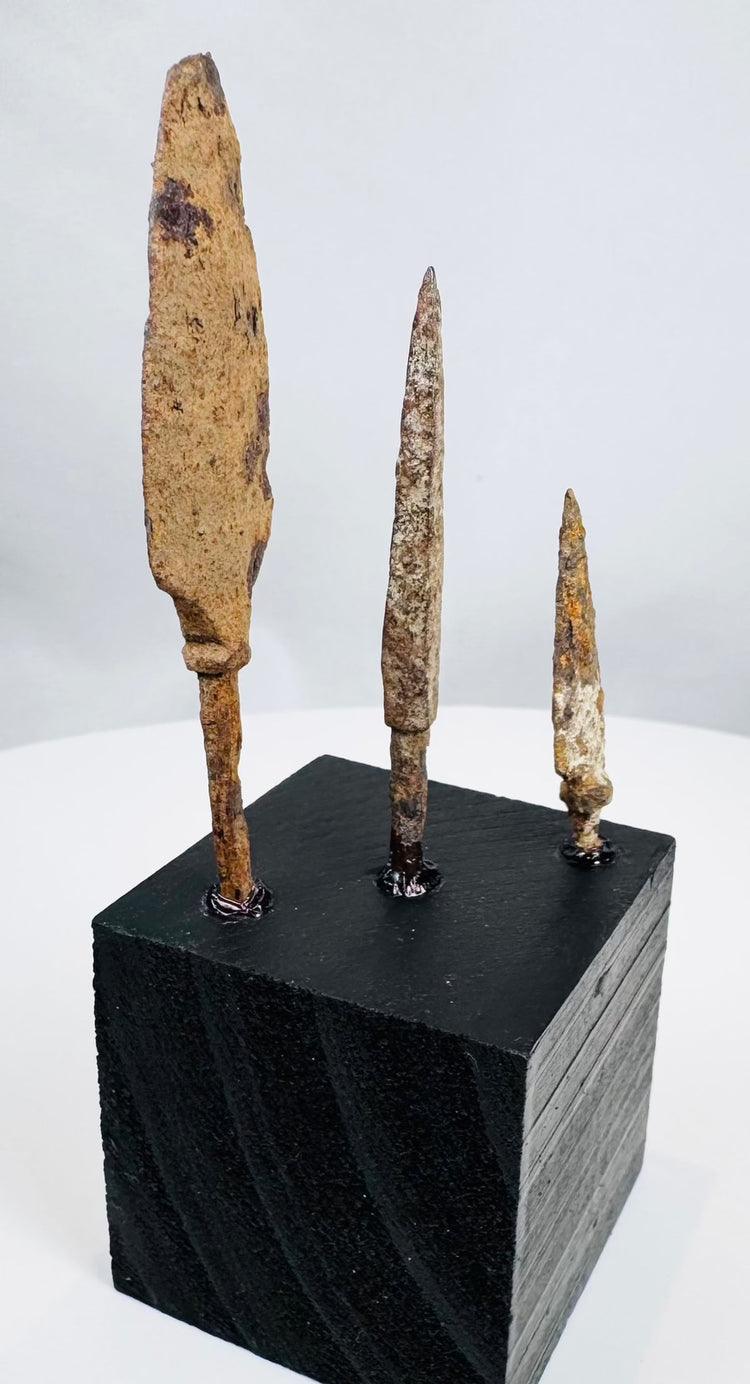
Este grupo montado de tres puntas de proyectil arqueológicas de hierro representa una variada selección de armas forjadas a mano que datan, en general, del final del Imperio Romano hasta el período medieval. El conjunto incluye una punta ancha en forma de hoja, una punta de estilo punzón larga y estrecha, y una punta triangular más pequeña, cada una conservando una porción de su espiga original y ahora presentadas juntas sobre una base de exhibición de madera negra moderna.
El ejemplo más grande está formado por una hoja ancha y alargada en forma de hoja que se estrecha hacia la base antes de continuar en una espiga larga. Su ancho sustancial y su perfil relativamente plano sugieren que pudo haber servido como una flecha de punta ancha, proyectil de caza, punta de lanza ligera o punta de jabalina. Las formas anchas de este tipo eran efectivas contra objetivos sin armadura y podían crear un canal de herida más ancho que las puntas estrechas perforadoras de armaduras.
El ejemplo central tiene un perfil largo, delgado y cónico estrechamente asociado con las cabezas de proyectil tipo punzón. Las puntas estrechas estaban diseñadas para concentrar la fuerza en un área pequeña y eran particularmente efectivas contra ropa gruesa, protección de cuero, cota de malla y los huecos entre el equipo defensivo. Su espiga sobreviviente se habría insertado originalmente en un mango de madera y se habría asegurado con ataduras o adhesivo.
La punta más pequeña muestra una hoja triangular o en forma de hoja compacta con un perfil central pronunciado y una espiga corta que sobrevive. Su forma equilibrada habría sido adecuada para su uso como punta de flecha o cabeza de dardo ligero. Las variadas formas dentro de este grupo reflejan la gama de formas de proyectil especializadas empleadas en toda Europa para la guerra, la caza y la defensa personal durante muchos siglos.
Características
- Forjado a mano en hierro
- Incluye formas anchas en forma de hoja, estrechas tipo punzón y triangulares compactas
- Las espigas sobrevivientes se usaban originalmente para unir las puntas a los mangos de madera
- Asociadas con la arquería histórica, la caza, la guerra y la defensa personal
- Muestra una extensa oxidación arqueológica e incrustación mineral
- Montadas individualmente en una base de exhibición de madera negra moderna
- Grupo tipológico variado que ilustra diferentes funciones de proyectiles
- Anteriormente en colecciones europeas establecidas
Significado cultural
Las puntas de proyectil de hierro fueron componentes esenciales de la tecnología militar antigua y medieval. Arqueros, guerreros montados, cazadores y ballesteros dependían de diseños de puntas especializados adaptados a diferentes propósitos. Las cabezas anchas en forma de hoja eran efectivas contra objetivos ligeramente protegidos y animales de caza, mientras que las puntas largas y estrechas tipo punzón concentraban el impacto y ofrecían una penetración mejorada contra la ropa defensiva, el cuero, la cota de malla y los huecos de la armadura.
Durante el período romano, los ejércitos emplearon numerosas formas de flechas, dardos, jabalinas y puntas de lanza ligeras. Estas tradiciones continuaron y evolucionaron a lo largo del Período de las Migraciones, la Era Vikinga, las Cruzadas y los siglos medievales posteriores. Los herreros locales producían cabezas de proyectil en grandes cantidades utilizando técnicas de forja establecidas, creando variaciones en forma, peso y construcción según los requisitos regionales y el objetivo previsto.
Condición
Las tres puntas de proyectil se mantienen estables en un estado arqueológico muy oxidado. Cada una muestra una corrosión extensa, incrustaciones minerales, picaduras, descamación, depósitos superficiales e irregularidades consistentes con un entierro prolongado y una antigüedad considerable.
La punta ancha en forma de hoja exhibe una acumulación mineral sustancial, pérdida de bordes, decoloración y áreas donde la superficie forjada original está oscurecida. La punta central larga permanece relativamente completa, pero muestra una fuerte oxidación, aspereza superficial y adelgazamiento localizado. La punta triangular más pequeña conserva un contorno reconocible, pero muestra corrosión, desgaste de los bordes y acreciones minerales en toda su extensión.
Las puntas se han fijado permanentemente a una base de exhibición de madera negra moderna con material de montaje visible. La base muestra pequeños rasguños, marcas superficiales e irregularidades.
Dimensiones (aproximadas)
Altura total de la exhibición: 5 pulgadas
Edad (aproximada)
625-1,725 años de antigüedad
Procedencia
Ofrecidas anteriormente a través del mercado de arte alemán durante la década de 2000, donde el grupo ingresó al comercio moderno de antigüedades europeas.
Posteriormente adquiridas de un coleccionista de la Unión Europea residente en Londres, Inglaterra, que mantenía una colección privada de artefactos antiguos y medievales.
Más tarde en la colección privada de un caballero en Surrey, Reino Unido.
Más información
Consulte una punta de flecha de hierro antigua relacionada en la colección de El Museo Metropolitano de Arte
Explore nuestra Colección de Armas, Armaduras y Armamento Histórico
Descripción
Contexto histórico y origen
Región: Europa
Material: Hierro forjado a mano
Periodo: Del final del Imperio Romano a la Edad Media, circa siglo III-XIV d.C.
Descripción
Este grupo montado de tres puntas de proyectil arqueológicas de hierro representa una variada selección de armas forjadas a mano que datan, en general, del final del Imperio Romano hasta el período medieval. El conjunto incluye una punta ancha en forma de hoja, una punta de estilo punzón larga y estrecha, y una punta triangular más pequeña, cada una conservando una porción de su espiga original y ahora presentadas juntas sobre una base de exhibición de madera negra moderna.
El ejemplo más grande está formado por una hoja ancha y alargada en forma de hoja que se estrecha hacia la base antes de continuar en una espiga larga. Su ancho sustancial y su perfil relativamente plano sugieren que pudo haber servido como una flecha de punta ancha, proyectil de caza, punta de lanza ligera o punta de jabalina. Las formas anchas de este tipo eran efectivas contra objetivos sin armadura y podían crear un canal de herida más ancho que las puntas estrechas perforadoras de armaduras.
El ejemplo central tiene un perfil largo, delgado y cónico estrechamente asociado con las cabezas de proyectil tipo punzón. Las puntas estrechas estaban diseñadas para concentrar la fuerza en un área pequeña y eran particularmente efectivas contra ropa gruesa, protección de cuero, cota de malla y los huecos entre el equipo defensivo. Su espiga sobreviviente se habría insertado originalmente en un mango de madera y se habría asegurado con ataduras o adhesivo.
La punta más pequeña muestra una hoja triangular o en forma de hoja compacta con un perfil central pronunciado y una espiga corta que sobrevive. Su forma equilibrada habría sido adecuada para su uso como punta de flecha o cabeza de dardo ligero. Las variadas formas dentro de este grupo reflejan la gama de formas de proyectil especializadas empleadas en toda Europa para la guerra, la caza y la defensa personal durante muchos siglos.
Características
- Forjado a mano en hierro
- Incluye formas anchas en forma de hoja, estrechas tipo punzón y triangulares compactas
- Las espigas sobrevivientes se usaban originalmente para unir las puntas a los mangos de madera
- Asociadas con la arquería histórica, la caza, la guerra y la defensa personal
- Muestra una extensa oxidación arqueológica e incrustación mineral
- Montadas individualmente en una base de exhibición de madera negra moderna
- Grupo tipológico variado que ilustra diferentes funciones de proyectiles
- Anteriormente en colecciones europeas establecidas
Significado cultural
Las puntas de proyectil de hierro fueron componentes esenciales de la tecnología militar antigua y medieval. Arqueros, guerreros montados, cazadores y ballesteros dependían de diseños de puntas especializados adaptados a diferentes propósitos. Las cabezas anchas en forma de hoja eran efectivas contra objetivos ligeramente protegidos y animales de caza, mientras que las puntas largas y estrechas tipo punzón concentraban el impacto y ofrecían una penetración mejorada contra la ropa defensiva, el cuero, la cota de malla y los huecos de la armadura.
Durante el período romano, los ejércitos emplearon numerosas formas de flechas, dardos, jabalinas y puntas de lanza ligeras. Estas tradiciones continuaron y evolucionaron a lo largo del Período de las Migraciones, la Era Vikinga, las Cruzadas y los siglos medievales posteriores. Los herreros locales producían cabezas de proyectil en grandes cantidades utilizando técnicas de forja establecidas, creando variaciones en forma, peso y construcción según los requisitos regionales y el objetivo previsto.
Condición
Las tres puntas de proyectil se mantienen estables en un estado arqueológico muy oxidado. Cada una muestra una corrosión extensa, incrustaciones minerales, picaduras, descamación, depósitos superficiales e irregularidades consistentes con un entierro prolongado y una antigüedad considerable.
La punta ancha en forma de hoja exhibe una acumulación mineral sustancial, pérdida de bordes, decoloración y áreas donde la superficie forjada original está oscurecida. La punta central larga permanece relativamente completa, pero muestra una fuerte oxidación, aspereza superficial y adelgazamiento localizado. La punta triangular más pequeña conserva un contorno reconocible, pero muestra corrosión, desgaste de los bordes y acreciones minerales en toda su extensión.
Las puntas se han fijado permanentemente a una base de exhibición de madera negra moderna con material de montaje visible. La base muestra pequeños rasguños, marcas superficiales e irregularidades.
Dimensiones (aproximadas)
Altura total de la exhibición: 5 pulgadas
Edad (aproximada)
625-1,725 años de antigüedad
Procedencia
Ofrecidas anteriormente a través del mercado de arte alemán durante la década de 2000, donde el grupo ingresó al comercio moderno de antigüedades europeas.
Posteriormente adquiridas de un coleccionista de la Unión Europea residente en Londres, Inglaterra, que mantenía una colección privada de artefactos antiguos y medievales.
Más tarde en la colección privada de un caballero en Surrey, Reino Unido.
Más información
Consulte una punta de flecha de hierro antigua relacionada en la colección de El Museo Metropolitano de Arte
Explore nuestra Colección de Armas, Armaduras y Armamento Histórico
También te puede interesar
