

Pair of Antique Chinese Carved & Lacquered Wood Guardian Lions | Circa 1850 – 1920
- Precio habitual
- $650.00
- Precio de venta
- $650.00
- Precio habitual
No se pudo cargar la disponibilidad de retiro


Pair of Antique Chinese Carved & Lacquered Wood Guardian Lions | Circa 1850 – 1920
Descripción
Más
Menos
Historical Context & Origin
Region: China, possibly southern China
Material: Hand-carved wood with dark lacquer, red polychrome pigment, and traces of ochre or gilt decoration
Period: Late Qing Dynasty to Early Republic Period, circa 1850–1920
Description
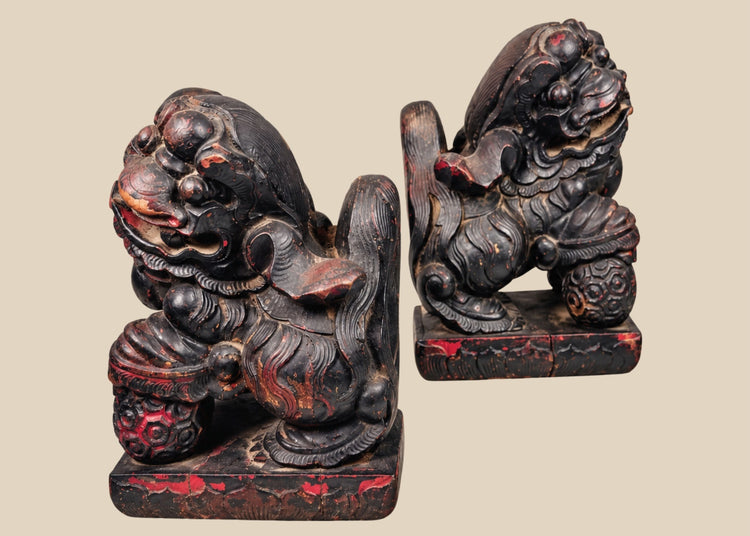
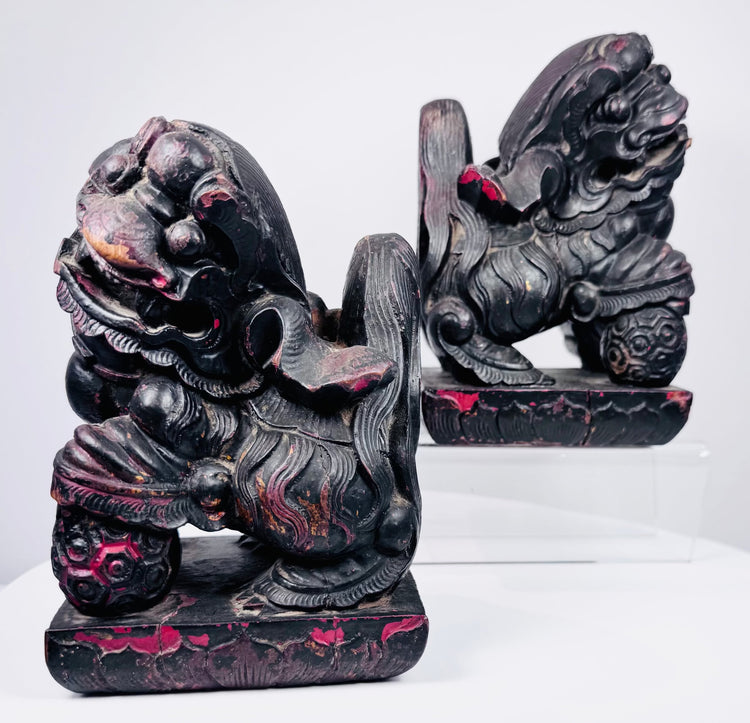
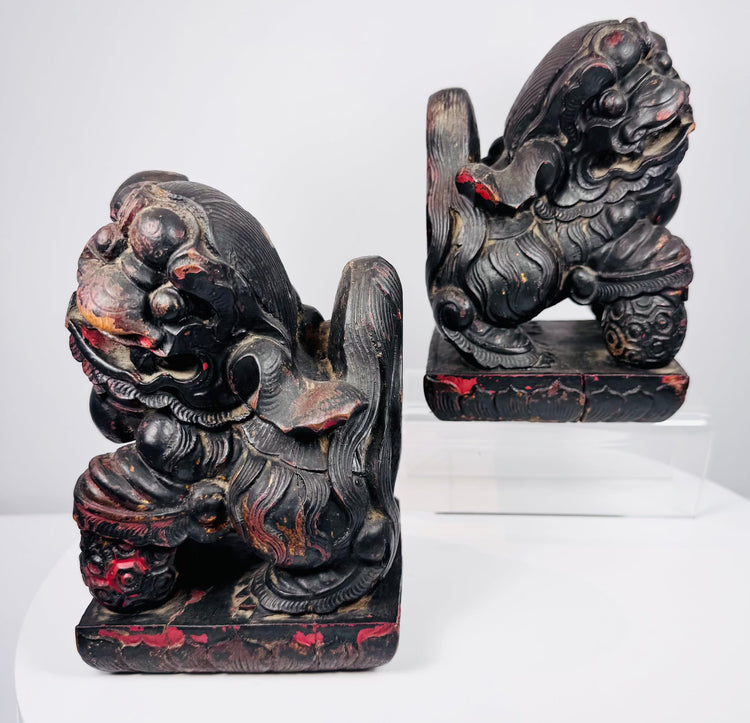
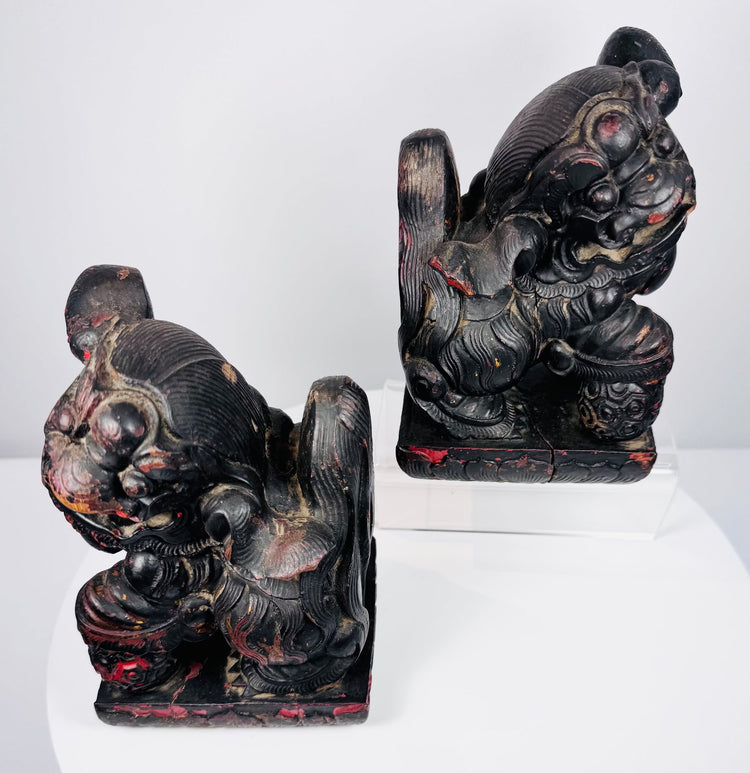
A striking matched pair of antique Chinese carved and lacquered wooden guardian lions, traditionally known as shishi or Buddhist lions and commonly referred to in the West as Foo or Fu dogs.
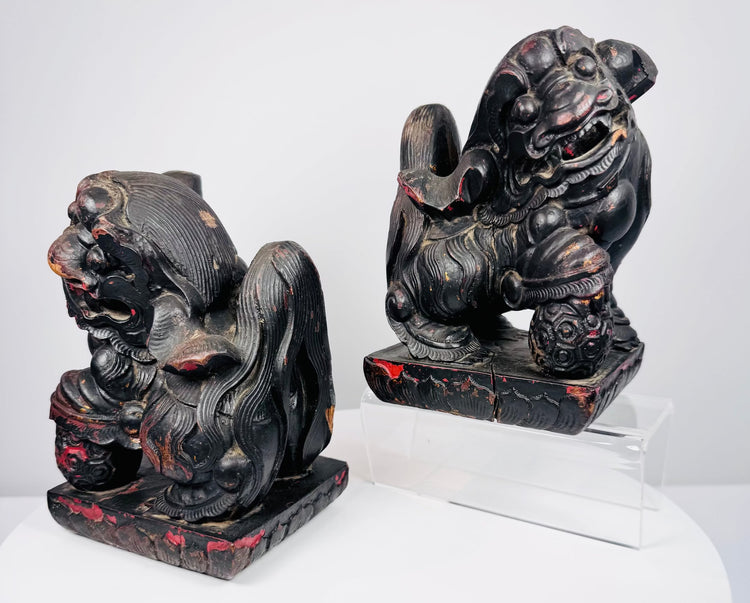
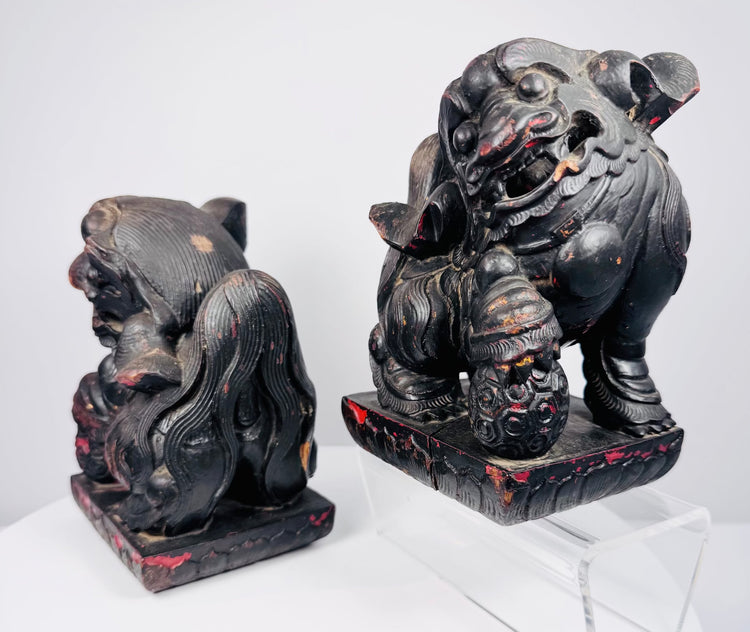
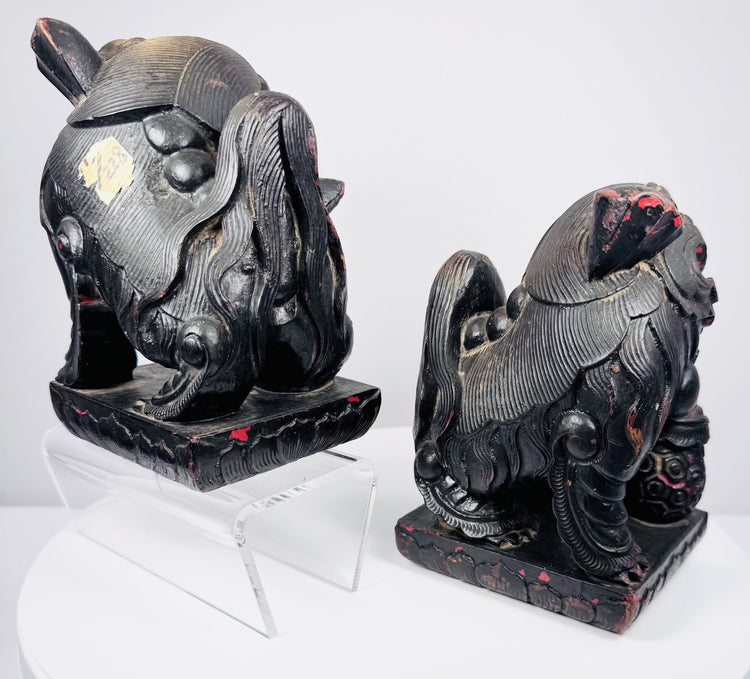
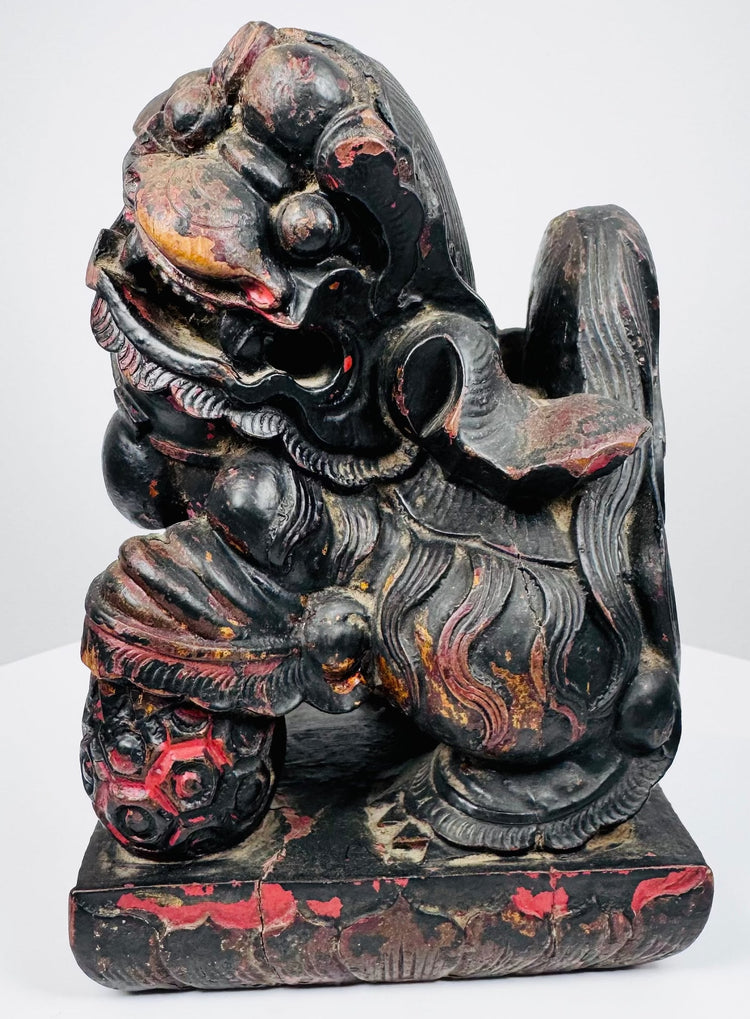
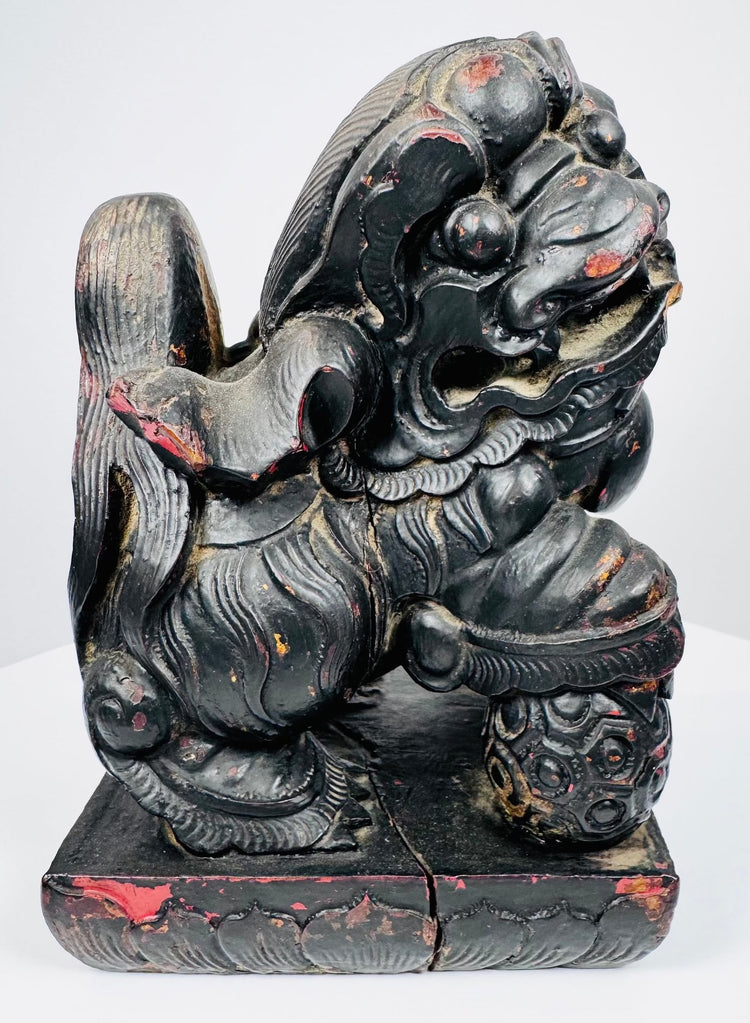
Each powerful creature is presented in a mirrored crouching stance with one raised forepaw resting upon a patterned brocade ball. The spherical objects are carved with repeating geometric and floral cells, while the lions wear ornamental collars incorporating rope-like borders and prominent rounded pendants.
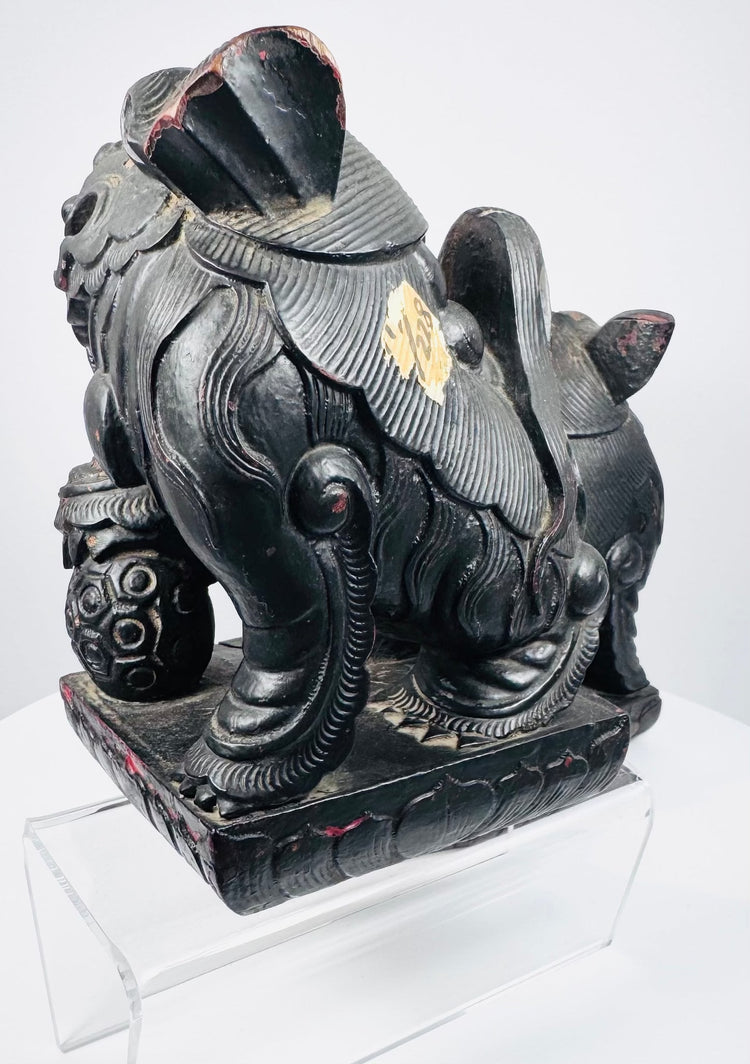
Their dramatically modeled heads feature bulging eyes, open mouths, exposed teeth, broad snouts, and flame-like manes. Deeply incised lines define the sweeping hair, muscular bodies, raised tails, and layered ornamental details. Each lion stands upon an integral rectangular platform bordered with a continuous lotus-petal design.
Unlike the more familiar male-and-female pairing in which one lion holds a ball and the other protects a cub, both members of this pair appear to hold similarly patterned brocade balls. Their reversed poses indicate that they were intended to be displayed together, possibly flanking a domestic altar, shrine, doorway, or ceremonial interior.
The surface retains an extensively aged dark lacquered finish with exposed areas of red pigment and scattered ochre or gilt-colored decoration. Natural wear has revealed the sculpture’s layered finish and hand-carved wooden construction, giving the pair a particularly evocative historic appearance.
One lion retains an old, partially preserved paper collection or inventory sticker bearing handwritten numerals.
Features
- Matched pair of Chinese guardian lions
- Mirrored protective poses
- Fierce open-mouthed expressions
- Bulging eyes and broad stylized snouts
- Deeply carved flame-like manes and raised tails
- Ornamental collars with rounded pendants
- Patterned brocade ball beneath one paw of each lion
- Continuous carved lotus-petal base borders
- Surviving dark lacquered finish
- Visible red, ochre, and gilt-colored pigment layers
- Deeply aged surface patina
- Old handwritten collection or inventory sticker
Cultural Significance
Guardian lions have protected Chinese temples, palaces, government buildings, tombs, ancestral halls, and important residences for centuries. Although their stylized appearance can resemble a dog, they represent powerful mythical lions introduced into Chinese artistic traditions through Buddhism.
Traditionally positioned in pairs, these figures symbolized protection, authority, prosperity, and balance. Their fierce expressions were intended to repel harmful spiritual influences, while their decorative collars and brocade balls emphasized their controlled strength and ceremonial status.
Smaller wooden examples could be placed within domestic shrines or ceremonial interiors, where they provided the same protective symbolism as monumental stone or bronze lions positioned outside important buildings.
Condition
Fair to good antique condition consistent with age and historical use. Both figures exhibit substantial age-related surface wear.
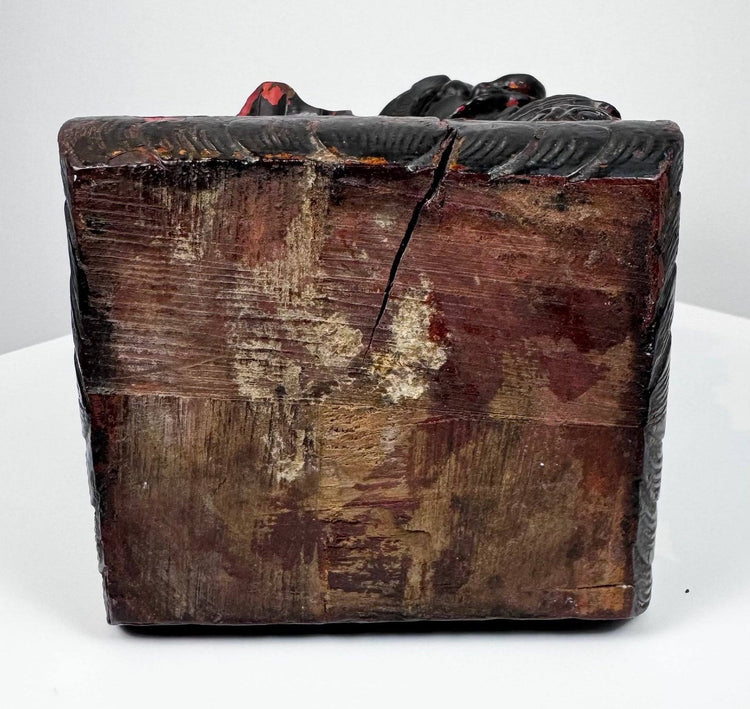
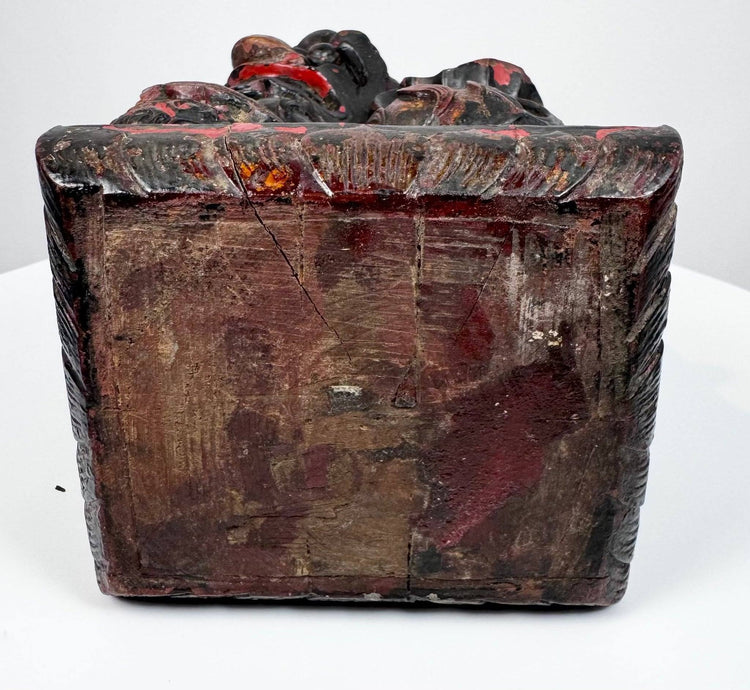
Both figures display natural shrinkage cracks, including prominent splits extending through portions of the integral bases. Additional fine cracks, separations, chips, abrasions, edge wear, and small losses are visible throughout the heads, ears, mouths, manes, paws, tails, brocade balls, and platforms.
The lacquer and polychrome decoration display extensive flaking, rubbing, scratches, darkening, and pigment loss. Red preparation or pigment layers and scattered ochre or gilt-colored decoration remain visible where the dark surface has worn away. Dust and accumulated deposits are present within recessed areas.
Dimensions (Approximate)
Each Figure:
Height: 6 in
Width: 3.8 in
Depth: 3.5 in
Age (Approximate)
106–176 years old
Provenance
From a private collection in Toronto, Ontario, Canada, assembled with a particular focus on Chinese and broader Asian sculpture and traditional decorative arts. One lion retains an old, partially preserved handwritten collection or inventory sticker associated with its earlier collecting history.
Subsequently sold through Waddington’s Auctioneers & Appraisers, Toronto, Ontario, Canada. Established in 1850, Waddington’s is a longstanding Canadian auction house with specialist departments devoted to Asian and international art.
Learn More
Discover a comparable Qing Dynasty pair of Chinese guardian lions in the collection of the Asian Art Museum
Explore our Collection of Ancient Chinese Artifacts & Imperial Relics
Descripción
Historical Context & Origin
Region: China, possibly southern China
Material: Hand-carved wood with dark lacquer, red polychrome pigment, and traces of ochre or gilt decoration
Period: Late Qing Dynasty to Early Republic Period, circa 1850–1920
Description
A striking matched pair of antique Chinese carved and lacquered wooden guardian lions, traditionally known as shishi or Buddhist lions and commonly referred to in the West as Foo or Fu dogs.
Each powerful creature is presented in a mirrored crouching stance with one raised forepaw resting upon a patterned brocade ball. The spherical objects are carved with repeating geometric and floral cells, while the lions wear ornamental collars incorporating rope-like borders and prominent rounded pendants.
Their dramatically modeled heads feature bulging eyes, open mouths, exposed teeth, broad snouts, and flame-like manes. Deeply incised lines define the sweeping hair, muscular bodies, raised tails, and layered ornamental details. Each lion stands upon an integral rectangular platform bordered with a continuous lotus-petal design.
Unlike the more familiar male-and-female pairing in which one lion holds a ball and the other protects a cub, both members of this pair appear to hold similarly patterned brocade balls. Their reversed poses indicate that they were intended to be displayed together, possibly flanking a domestic altar, shrine, doorway, or ceremonial interior.
The surface retains an extensively aged dark lacquered finish with exposed areas of red pigment and scattered ochre or gilt-colored decoration. Natural wear has revealed the sculpture’s layered finish and hand-carved wooden construction, giving the pair a particularly evocative historic appearance.
One lion retains an old, partially preserved paper collection or inventory sticker bearing handwritten numerals.
Features
- Matched pair of Chinese guardian lions
- Mirrored protective poses
- Fierce open-mouthed expressions
- Bulging eyes and broad stylized snouts
- Deeply carved flame-like manes and raised tails
- Ornamental collars with rounded pendants
- Patterned brocade ball beneath one paw of each lion
- Continuous carved lotus-petal base borders
- Surviving dark lacquered finish
- Visible red, ochre, and gilt-colored pigment layers
- Deeply aged surface patina
- Old handwritten collection or inventory sticker
Cultural Significance
Guardian lions have protected Chinese temples, palaces, government buildings, tombs, ancestral halls, and important residences for centuries. Although their stylized appearance can resemble a dog, they represent powerful mythical lions introduced into Chinese artistic traditions through Buddhism.
Traditionally positioned in pairs, these figures symbolized protection, authority, prosperity, and balance. Their fierce expressions were intended to repel harmful spiritual influences, while their decorative collars and brocade balls emphasized their controlled strength and ceremonial status.
Smaller wooden examples could be placed within domestic shrines or ceremonial interiors, where they provided the same protective symbolism as monumental stone or bronze lions positioned outside important buildings.
Condition
Fair to good antique condition consistent with age and historical use. Both figures exhibit substantial age-related surface wear.
Both figures display natural shrinkage cracks, including prominent splits extending through portions of the integral bases. Additional fine cracks, separations, chips, abrasions, edge wear, and small losses are visible throughout the heads, ears, mouths, manes, paws, tails, brocade balls, and platforms.
The lacquer and polychrome decoration display extensive flaking, rubbing, scratches, darkening, and pigment loss. Red preparation or pigment layers and scattered ochre or gilt-colored decoration remain visible where the dark surface has worn away. Dust and accumulated deposits are present within recessed areas.
Dimensions (Approximate)
Each Figure:
Height: 6 in
Width: 3.8 in
Depth: 3.5 in
Age (Approximate)
106–176 years old
Provenance
From a private collection in Toronto, Ontario, Canada, assembled with a particular focus on Chinese and broader Asian sculpture and traditional decorative arts. One lion retains an old, partially preserved handwritten collection or inventory sticker associated with its earlier collecting history.
Subsequently sold through Waddington’s Auctioneers & Appraisers, Toronto, Ontario, Canada. Established in 1850, Waddington’s is a longstanding Canadian auction house with specialist departments devoted to Asian and international art.
Learn More
Discover a comparable Qing Dynasty pair of Chinese guardian lions in the collection of the Asian Art Museum
Explore our Collection of Ancient Chinese Artifacts & Imperial Relics
También te puede interesar
