

Par de funcionarios de cerámica china con vidriado turquesa y berenjena | Dinastía Ming tardía a principios de la dinastía Qing | Circa 1600 – 1750 EC
- Precio habitual
- $1,250.00
- Precio de venta
- $1,250.00
- Precio habitual
No se pudo cargar la disponibilidad de retiro


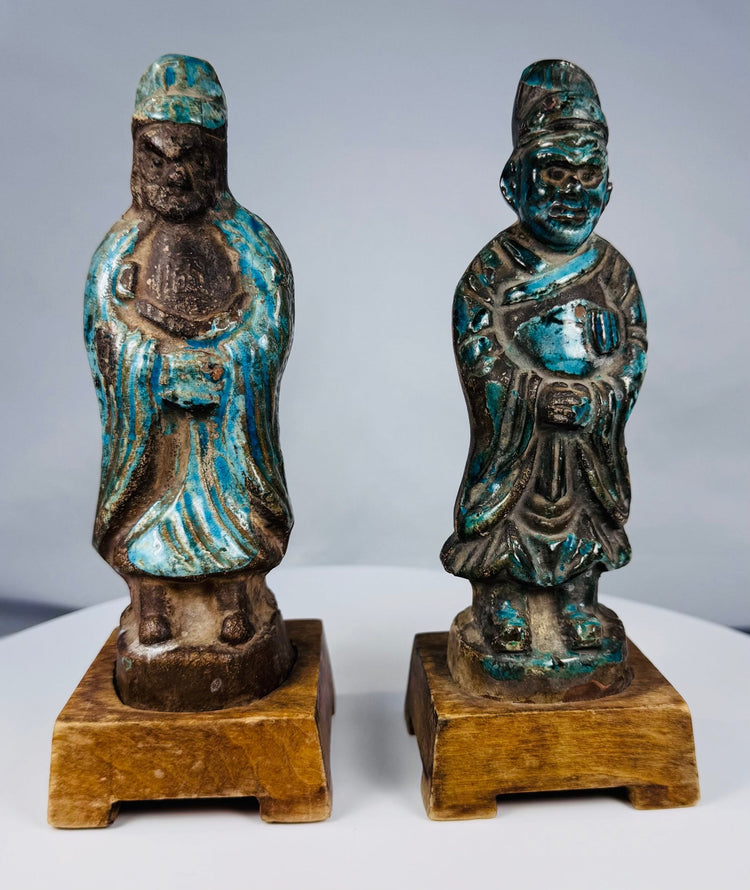
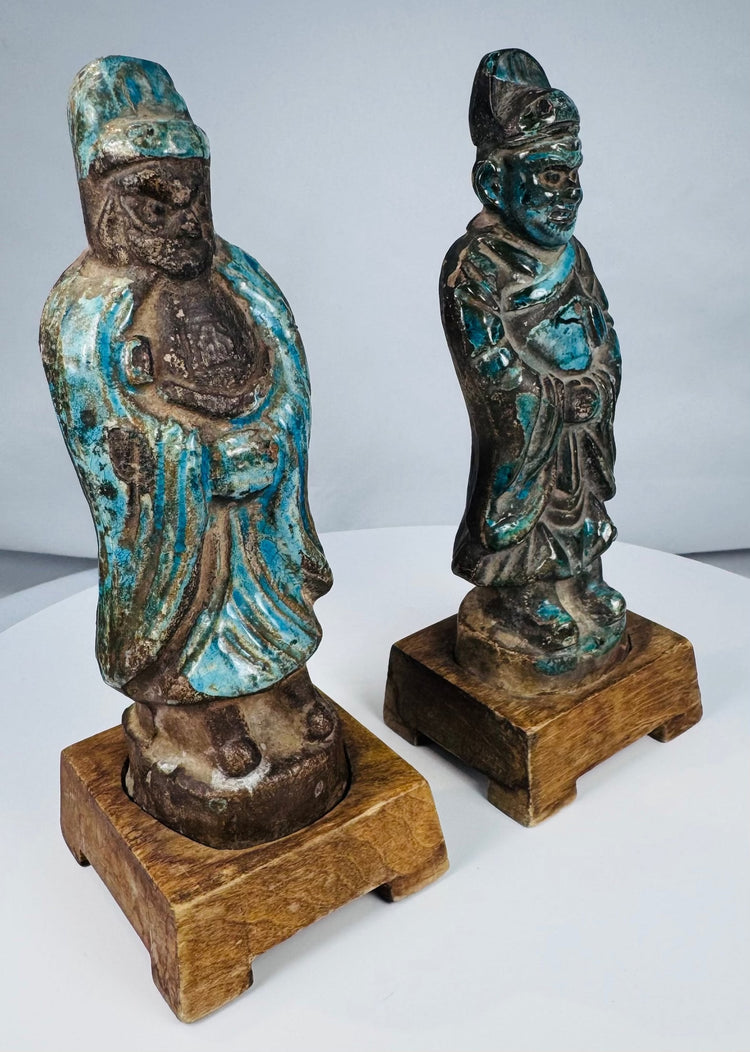
Par de funcionarios de cerámica china con vidriado turquesa y berenjena | Dinastía Ming tardía a principios de la dinastía Qing | Circa 1600 – 1750 EC
Descripción
Más
Menos
Contexto histórico y origen
Región: China
Material: Cerámica o gres esmaltado con esmaltes azul turquesa y marrón berenjena oscuro; posteriormente, bases de exposición de madera
Período: Probablemente de finales de la dinastía Ming a principios de la dinastía Qing, aproximadamente entre 1600 y 1750 d.C.
Descripción
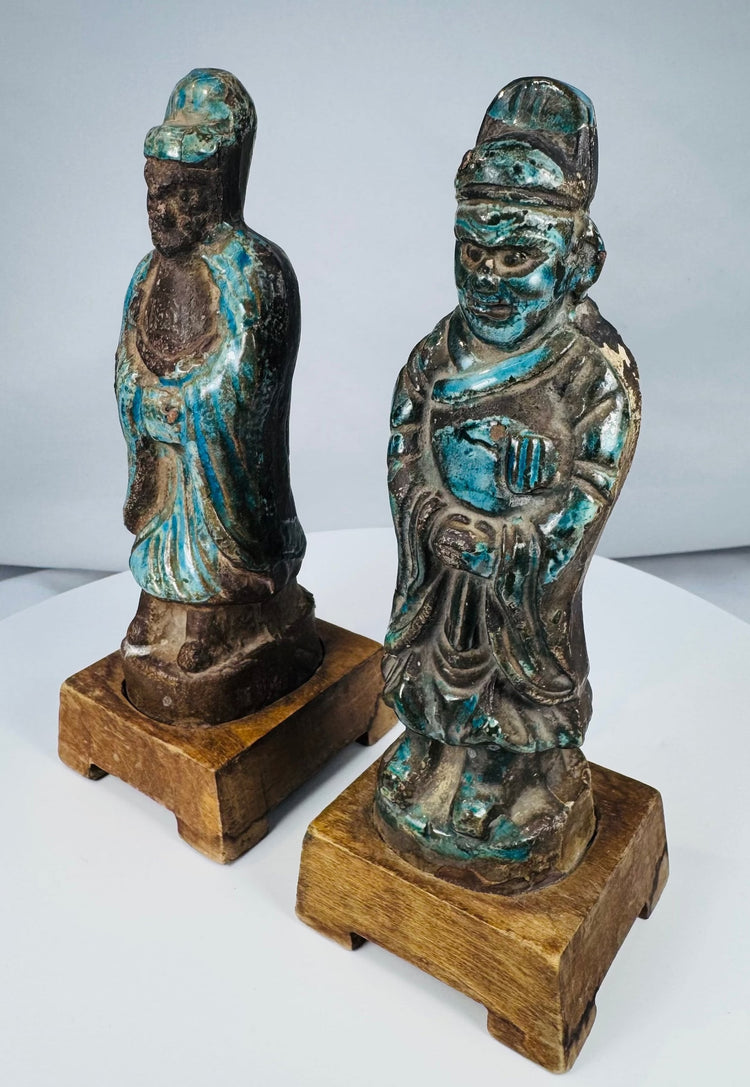
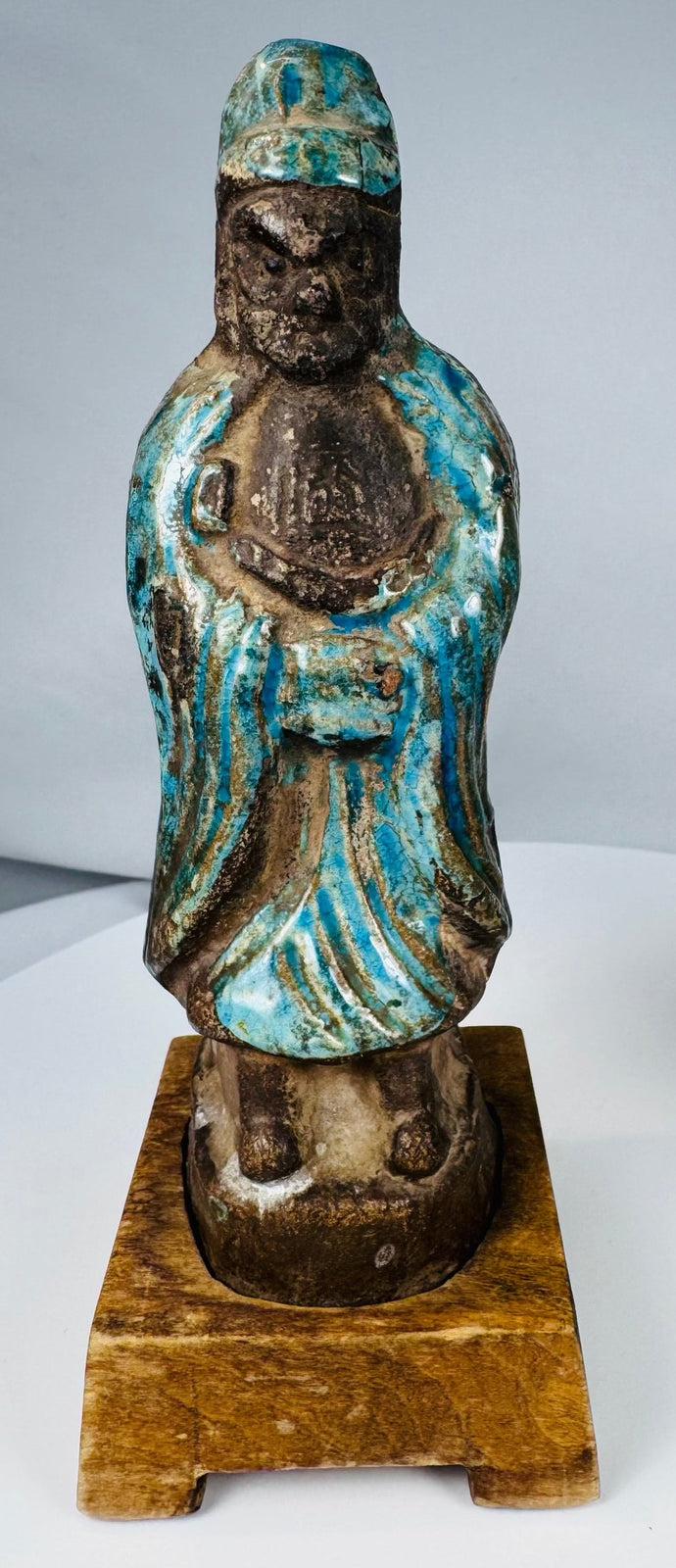
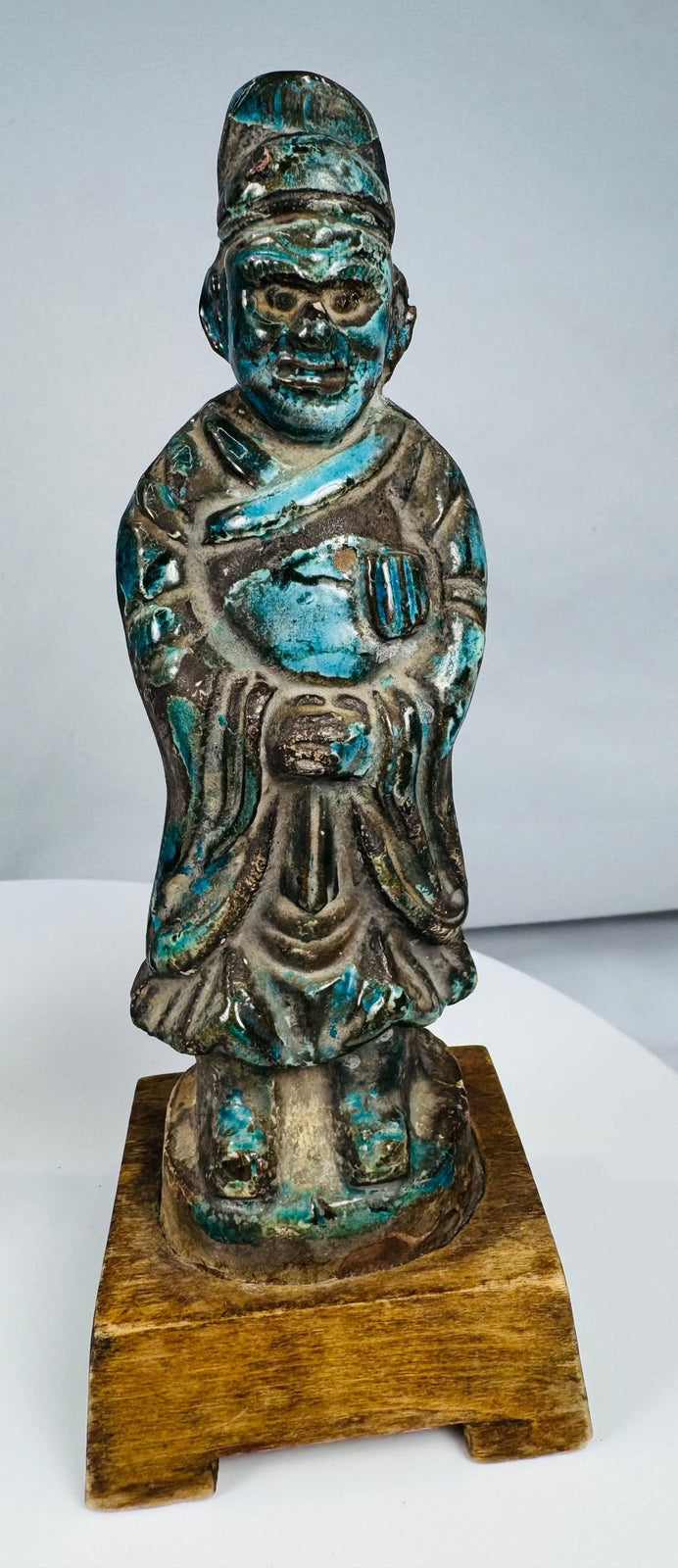
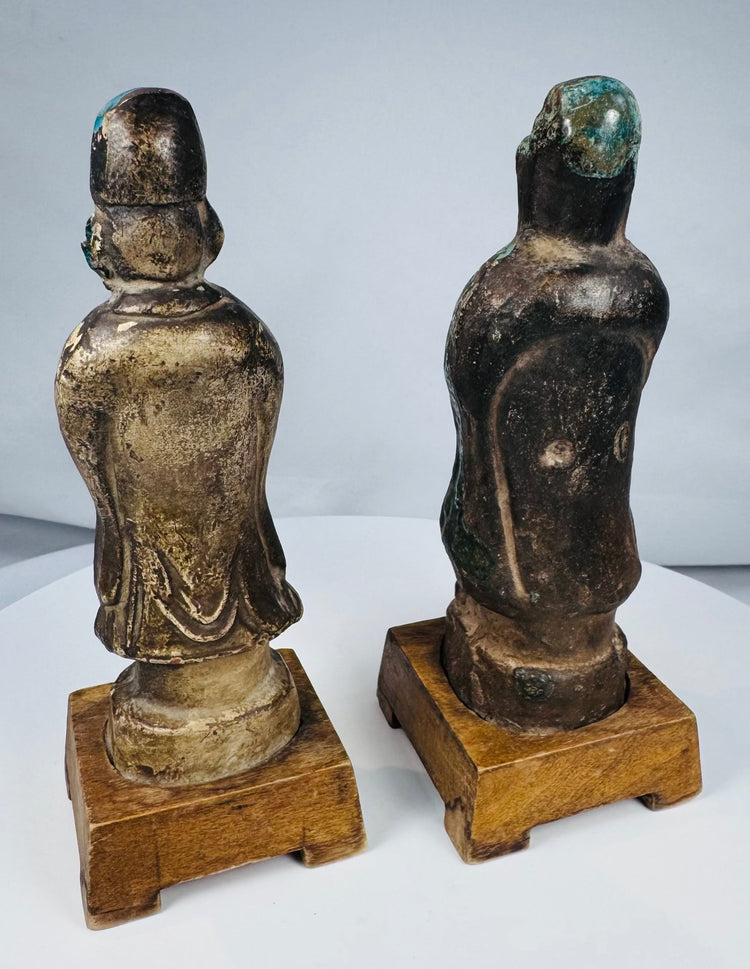
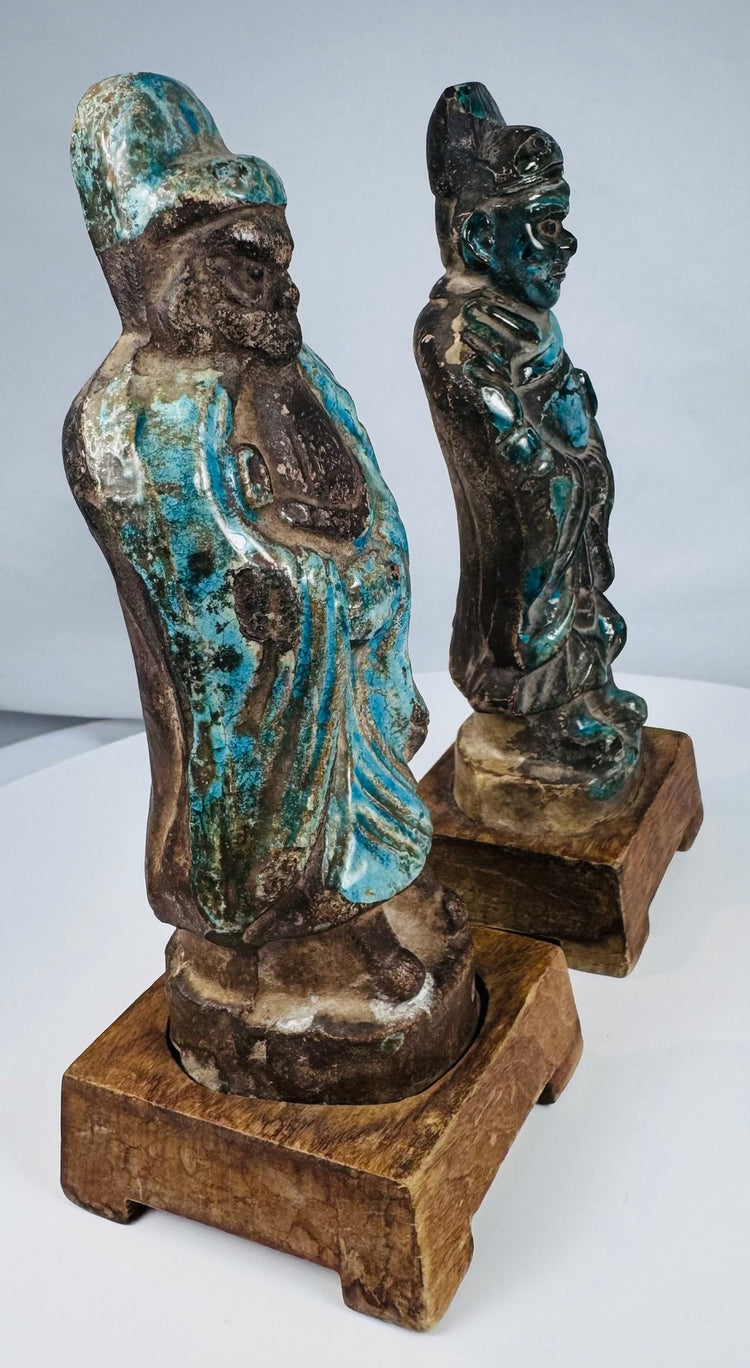
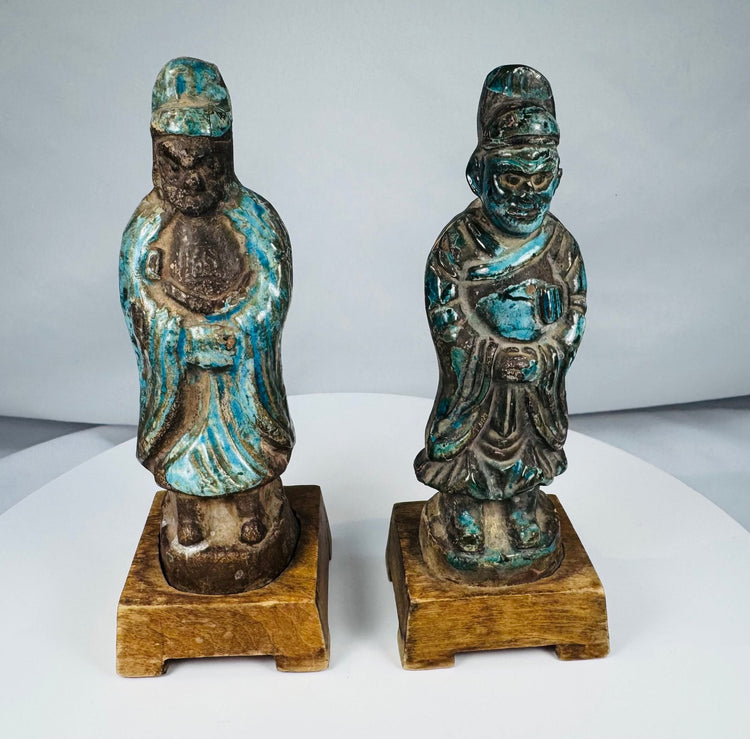
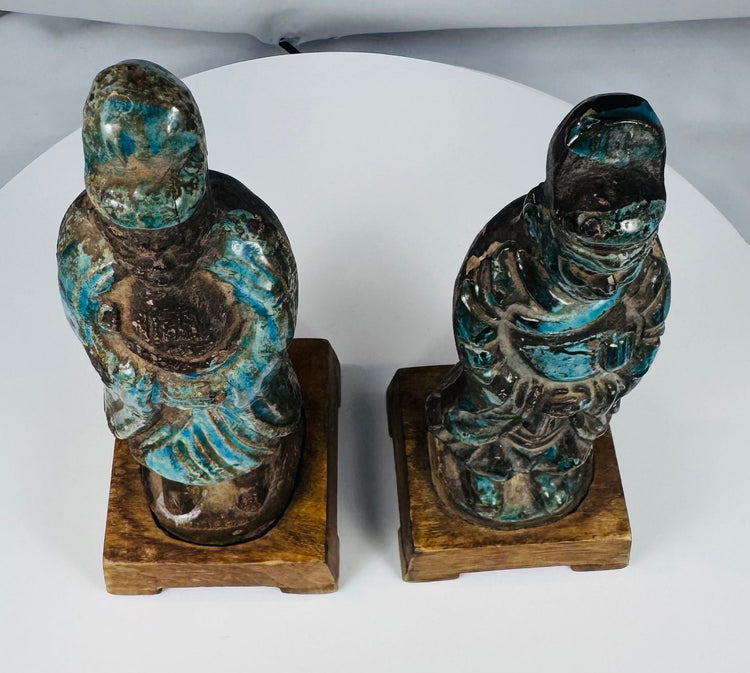
Este par de figuras chinas de cerámica esmaltada, visualmente impactantes, representan a dos asistentes o funcionarios masculinos de pie, vestidos con largas túnicas ceremoniales y altos tocados. Cada figura está modelada en bulto redondo con rasgos faciales individualizados, vestiduras plegadas y objetos sostenidos prominentemente frente al cuerpo. Sus posturas formales y su atuendo elaborado sugieren figuras asociadas con tradiciones cortesanas, religiosas, funerarias o protectoras domésticas.
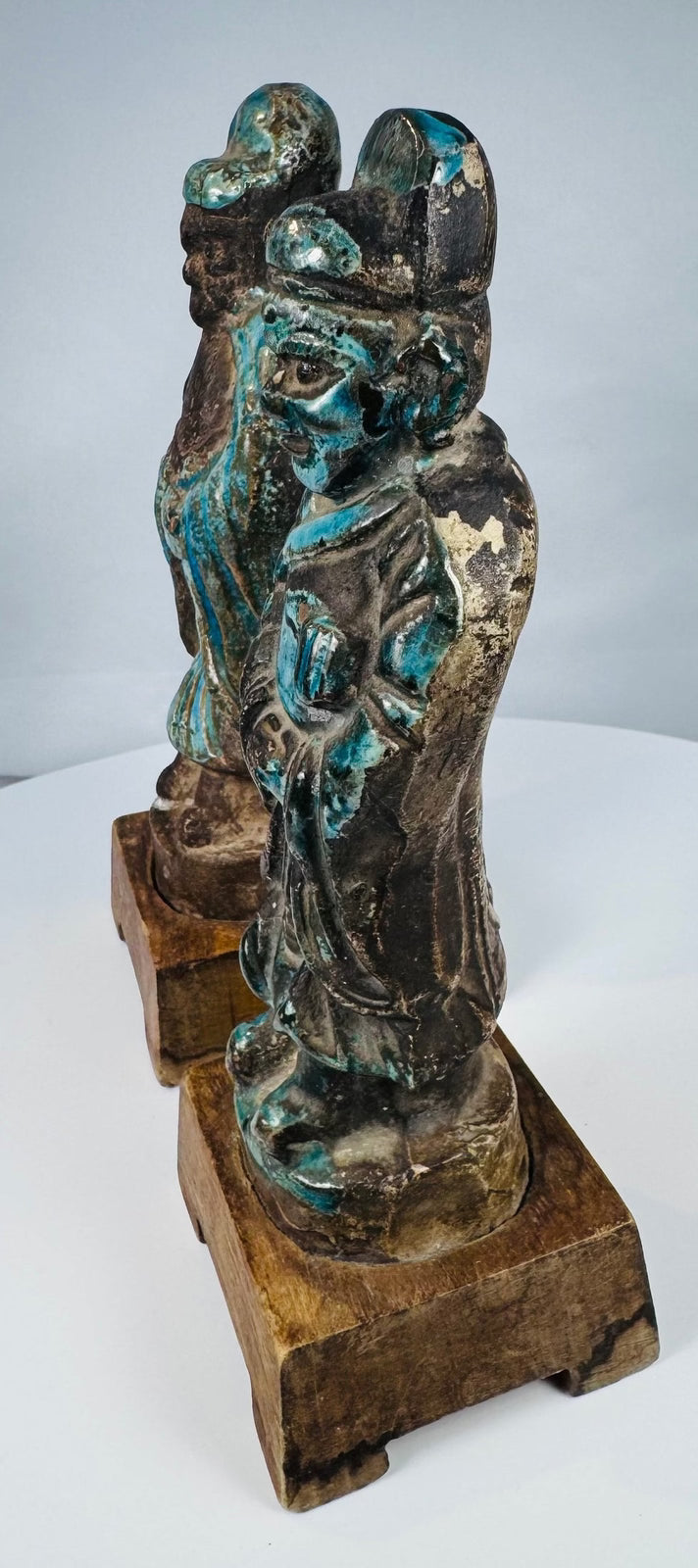
La figura más alta y corpulenta lleva un tocado alto y redondeado y una túnica larga articulada con pliegues verticales profundamente modelados. Sus manos están colocadas en el abdomen alrededor de un objeto rectangular o similar a una tablilla, que posiblemente representa un recipiente ceremonial, una tablilla de rango o una ofrenda. La segunda figura está más finamente detallada, con un rostro expresivo, un tocado alto de estilo oficial, túnicas en capas y un objeto redondeado sostenido contra el pecho. Este objeto puede representar una ofrenda, un implemento ritual o un emblema de oficio, aunque su identificación precisa sigue siendo incierta.
Ambas figuras están decoradas con áreas de esmalte azul turquesa vívido en contraste con superficies de color marrón oscuro a berenjena. La aplicación irregular, el empozamiento, las pérdidas y el desgaste del esmalte crean una apariencia arqueológica ricamente texturizada. Esta paleta está estrechamente relacionada con la tradición fahua, una técnica decorativa utilizada durante la dinastía Ming en la que se aplicaban esmaltes turquesa, púrpura, ámbar, azul y otros relacionados dentro de diseños en relieve o moldeados. Ejemplos comparables de cerámica fahua y de estilo fahua incluyen figuras religiosas, elementos arquitectónicos, vasijas y grupos escultóricos.
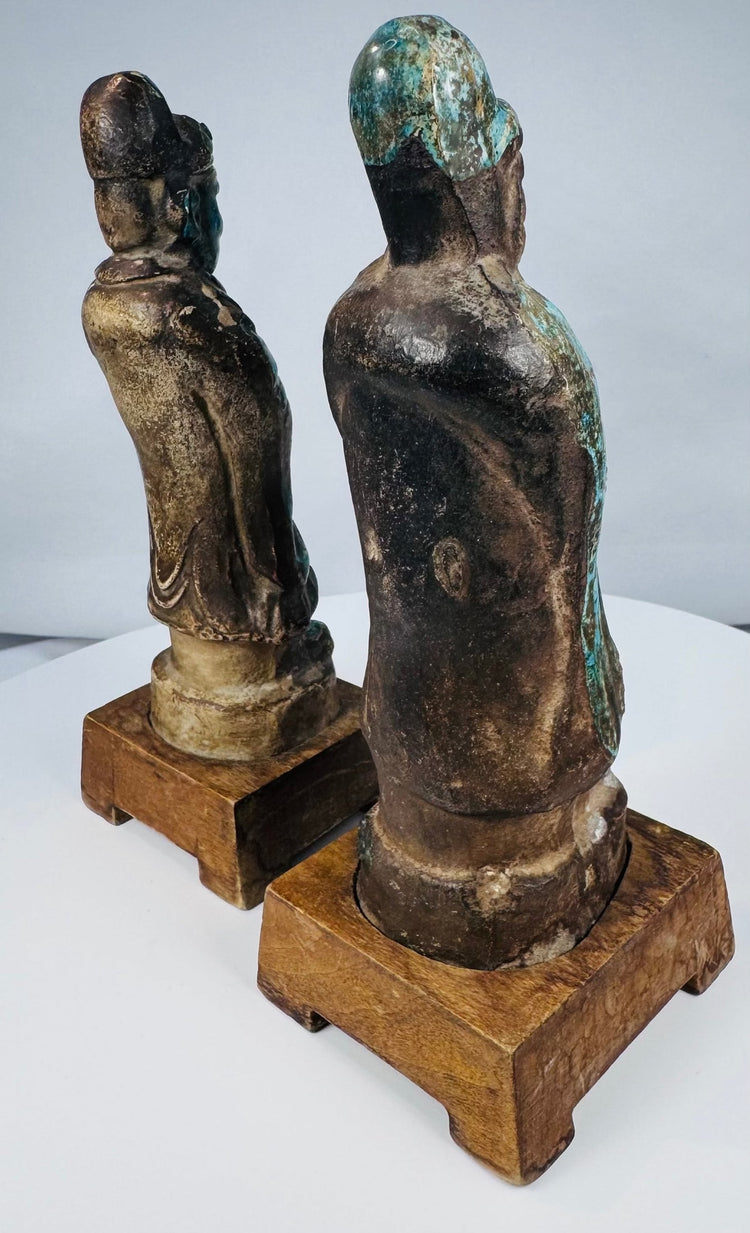
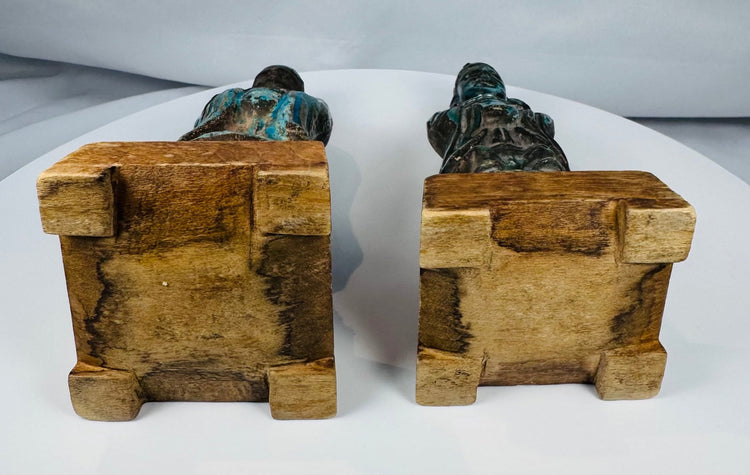
Las figuras están montadas en bases de madera hechas a medida con pies en forma de soporte, lo que permite exhibirlas como un par complementario. Aunque su paleta y presentación compartidas las unen visualmente, las diferencias en el modelado sugieren que quizás no fueron producidas originalmente como un par exactamente igual.
Características
- Modelado como asistentes masculinos de pie o funcionarios de la corte
- Gorros ceremoniales altos y túnicas largas y fluidas
- Expresiones faciales individualmente representadas
- Cada figura sostiene un objeto ritual, oficial o de ofrenda
- Paleta de esmalte azul turquesa y marrón berenjena oscuro
- Decoración asociada con la tradición fahua china
- Pliegues de las prendas y detalles escultóricos fuertemente modelados
- Atractivo desgaste del esmalte, empozamiento y pátina superficial
- Montado sobre bases de madera posteriores hechas a medida
- Probablemente de finales de la dinastía Ming a principios de la dinastía Qing
Significado cultural
Las figuras de cerámica esmaltada formaron una parte importante del arte religioso, arquitectónico y funerario chino. Dependiendo de su contexto original, las figuras de asistentes y funcionarios podían acompañar a deidades, representar a miembros de una jerarquía celestial o burocrática, decorar templos y edificios, o formar parte de conjuntos funerarios destinados a proporcionar protección y servicio en el más allá.
La paleta turquesa y berenjena que se ve aquí está estrechamente asociada con la tradición fahua y otras tradiciones cerámicas esmaltadas que florecieron durante la dinastía Ming y continuaron hasta principios del período Qing. Los ejemplos de museo demuestran que esta paleta se aplicaba a accesorios arquitectónicos, esculturas devocionales, figuras y vasijas elaboradamente decoradas.
Su postura formal, la vestimenta de estilo oficial y los atributos simbólicos reflejan la importancia de la jerarquía, la ceremonia y la tutela espiritual dentro de la cultura visual tradicional china.
Estado
Las figuras se mantienen estructuralmente estables y presentan un extenso desgaste relacionado con la edad en todas sus partes. Los esmaltes turquesa y marrón berenjena oscuro exhiben un roce generalizado, descascarillado, craquelado, depósitos superficiales, decoloración y áreas de pérdida que exponen el cuerpo cerámico subyacente. Hay astillas dispersas, abrasiones, irregularidades de cocción y pérdidas menores, particularmente a lo largo de las características proyectadas, los bordes de las prendas, las bases y los tocados.
Las figuras han sido montadas sobre bases de madera posteriores hechas a medida, que muestran un ligero desgaste, arañazos y variaciones superficiales. Los soportes de madera no son originales de las figuras de cerámica.
Dimensiones (aproximadas)
Altura incluyendo los soportes: 7 pulgadas cada uno
Edad (aproximada)
275–425 años
Procedencia
Anteriormente parte de una importante colección privada en Montreal, Quebec, Canadá, reunida por un coleccionista de antigüedades y obras de arte asiáticas de toda la vida durante un período superior a los cuarenta años.
Más información
Ver una figura de asistente masculino chino comparable en la colección del Museo de Arte de la Universidad de Michigan
Explore nuestra Colección curada de Artefactos chinos antiguos y reliquias imperiales
Descripción
Contexto histórico y origen
Región: China
Material: Cerámica o gres esmaltado con esmaltes azul turquesa y marrón berenjena oscuro; posteriormente, bases de exposición de madera
Período: Probablemente de finales de la dinastía Ming a principios de la dinastía Qing, aproximadamente entre 1600 y 1750 d.C.
Descripción
Este par de figuras chinas de cerámica esmaltada, visualmente impactantes, representan a dos asistentes o funcionarios masculinos de pie, vestidos con largas túnicas ceremoniales y altos tocados. Cada figura está modelada en bulto redondo con rasgos faciales individualizados, vestiduras plegadas y objetos sostenidos prominentemente frente al cuerpo. Sus posturas formales y su atuendo elaborado sugieren figuras asociadas con tradiciones cortesanas, religiosas, funerarias o protectoras domésticas.
La figura más alta y corpulenta lleva un tocado alto y redondeado y una túnica larga articulada con pliegues verticales profundamente modelados. Sus manos están colocadas en el abdomen alrededor de un objeto rectangular o similar a una tablilla, que posiblemente representa un recipiente ceremonial, una tablilla de rango o una ofrenda. La segunda figura está más finamente detallada, con un rostro expresivo, un tocado alto de estilo oficial, túnicas en capas y un objeto redondeado sostenido contra el pecho. Este objeto puede representar una ofrenda, un implemento ritual o un emblema de oficio, aunque su identificación precisa sigue siendo incierta.
Ambas figuras están decoradas con áreas de esmalte azul turquesa vívido en contraste con superficies de color marrón oscuro a berenjena. La aplicación irregular, el empozamiento, las pérdidas y el desgaste del esmalte crean una apariencia arqueológica ricamente texturizada. Esta paleta está estrechamente relacionada con la tradición fahua, una técnica decorativa utilizada durante la dinastía Ming en la que se aplicaban esmaltes turquesa, púrpura, ámbar, azul y otros relacionados dentro de diseños en relieve o moldeados. Ejemplos comparables de cerámica fahua y de estilo fahua incluyen figuras religiosas, elementos arquitectónicos, vasijas y grupos escultóricos.
Las figuras están montadas en bases de madera hechas a medida con pies en forma de soporte, lo que permite exhibirlas como un par complementario. Aunque su paleta y presentación compartidas las unen visualmente, las diferencias en el modelado sugieren que quizás no fueron producidas originalmente como un par exactamente igual.
Características
- Modelado como asistentes masculinos de pie o funcionarios de la corte
- Gorros ceremoniales altos y túnicas largas y fluidas
- Expresiones faciales individualmente representadas
- Cada figura sostiene un objeto ritual, oficial o de ofrenda
- Paleta de esmalte azul turquesa y marrón berenjena oscuro
- Decoración asociada con la tradición fahua china
- Pliegues de las prendas y detalles escultóricos fuertemente modelados
- Atractivo desgaste del esmalte, empozamiento y pátina superficial
- Montado sobre bases de madera posteriores hechas a medida
- Probablemente de finales de la dinastía Ming a principios de la dinastía Qing
Significado cultural
Las figuras de cerámica esmaltada formaron una parte importante del arte religioso, arquitectónico y funerario chino. Dependiendo de su contexto original, las figuras de asistentes y funcionarios podían acompañar a deidades, representar a miembros de una jerarquía celestial o burocrática, decorar templos y edificios, o formar parte de conjuntos funerarios destinados a proporcionar protección y servicio en el más allá.
La paleta turquesa y berenjena que se ve aquí está estrechamente asociada con la tradición fahua y otras tradiciones cerámicas esmaltadas que florecieron durante la dinastía Ming y continuaron hasta principios del período Qing. Los ejemplos de museo demuestran que esta paleta se aplicaba a accesorios arquitectónicos, esculturas devocionales, figuras y vasijas elaboradamente decoradas.
Su postura formal, la vestimenta de estilo oficial y los atributos simbólicos reflejan la importancia de la jerarquía, la ceremonia y la tutela espiritual dentro de la cultura visual tradicional china.
Estado
Las figuras se mantienen estructuralmente estables y presentan un extenso desgaste relacionado con la edad en todas sus partes. Los esmaltes turquesa y marrón berenjena oscuro exhiben un roce generalizado, descascarillado, craquelado, depósitos superficiales, decoloración y áreas de pérdida que exponen el cuerpo cerámico subyacente. Hay astillas dispersas, abrasiones, irregularidades de cocción y pérdidas menores, particularmente a lo largo de las características proyectadas, los bordes de las prendas, las bases y los tocados.
Las figuras han sido montadas sobre bases de madera posteriores hechas a medida, que muestran un ligero desgaste, arañazos y variaciones superficiales. Los soportes de madera no son originales de las figuras de cerámica.
Dimensiones (aproximadas)
Altura incluyendo los soportes: 7 pulgadas cada uno
Edad (aproximada)
275–425 años
Procedencia
Anteriormente parte de una importante colección privada en Montreal, Quebec, Canadá, reunida por un coleccionista de antigüedades y obras de arte asiáticas de toda la vida durante un período superior a los cuarenta años.
Más información
Ver una figura de asistente masculino chino comparable en la colección del Museo de Arte de la Universidad de Michigan
Explore nuestra Colección curada de Artefactos chinos antiguos y reliquias imperiales
También te puede interesar
