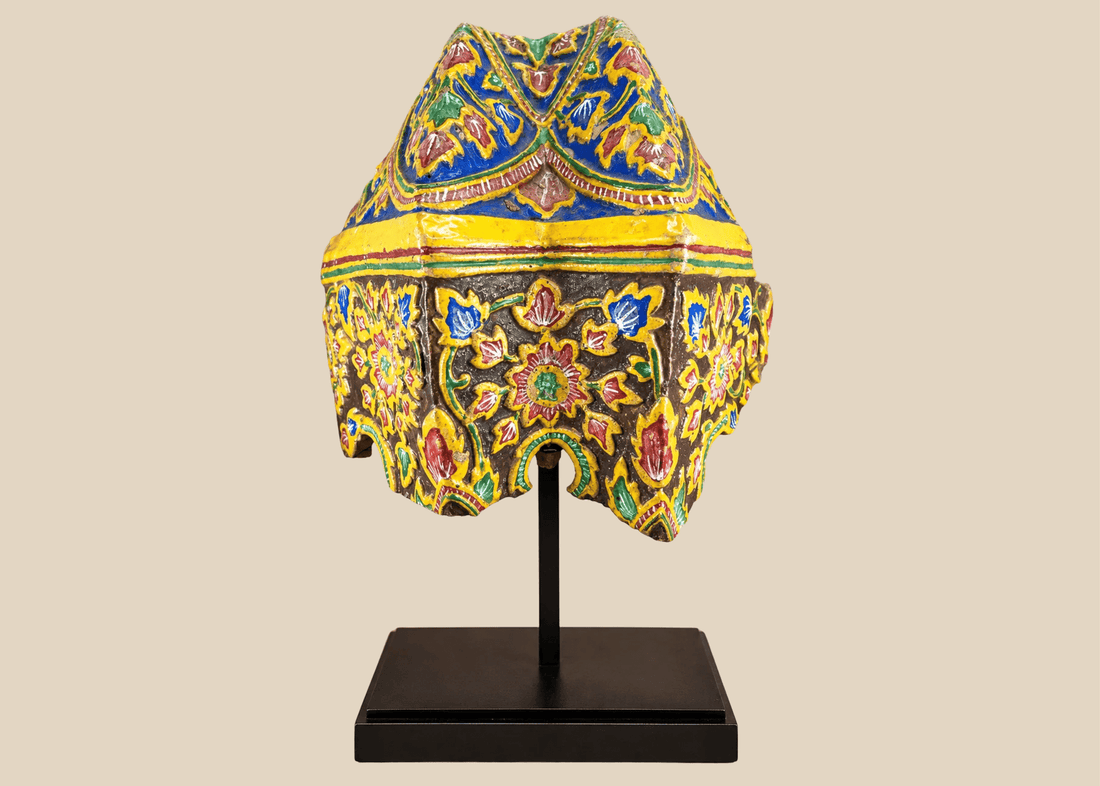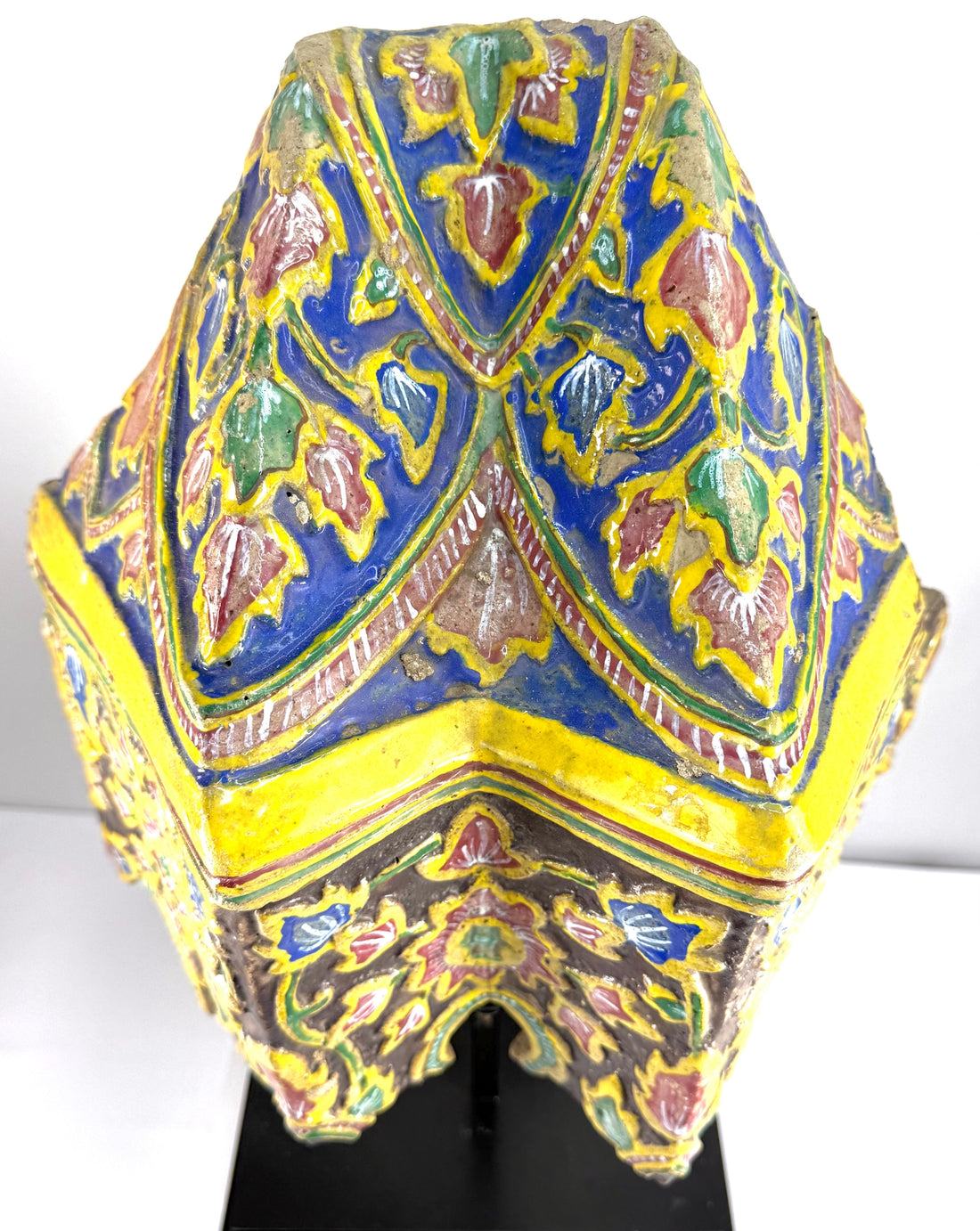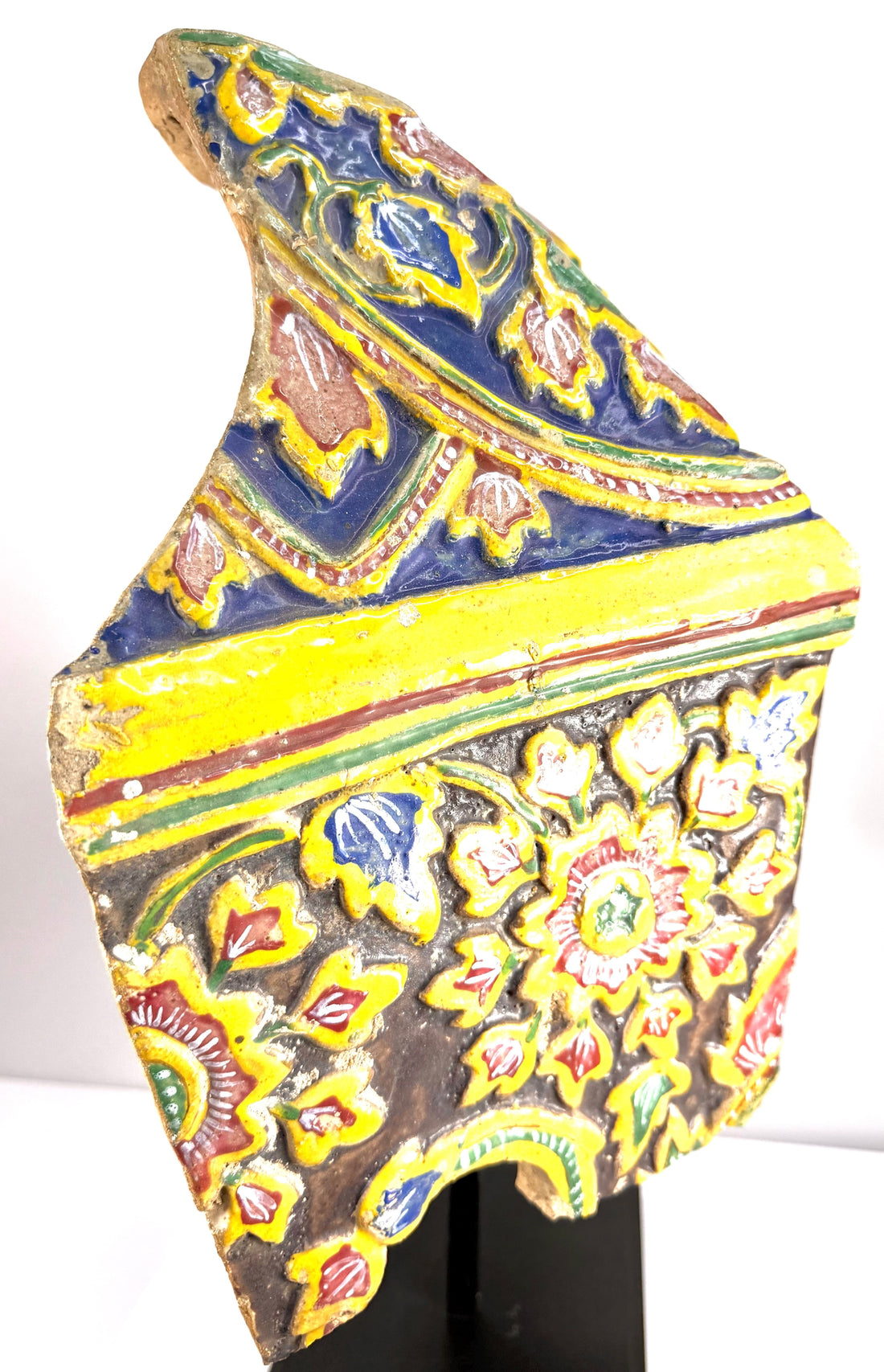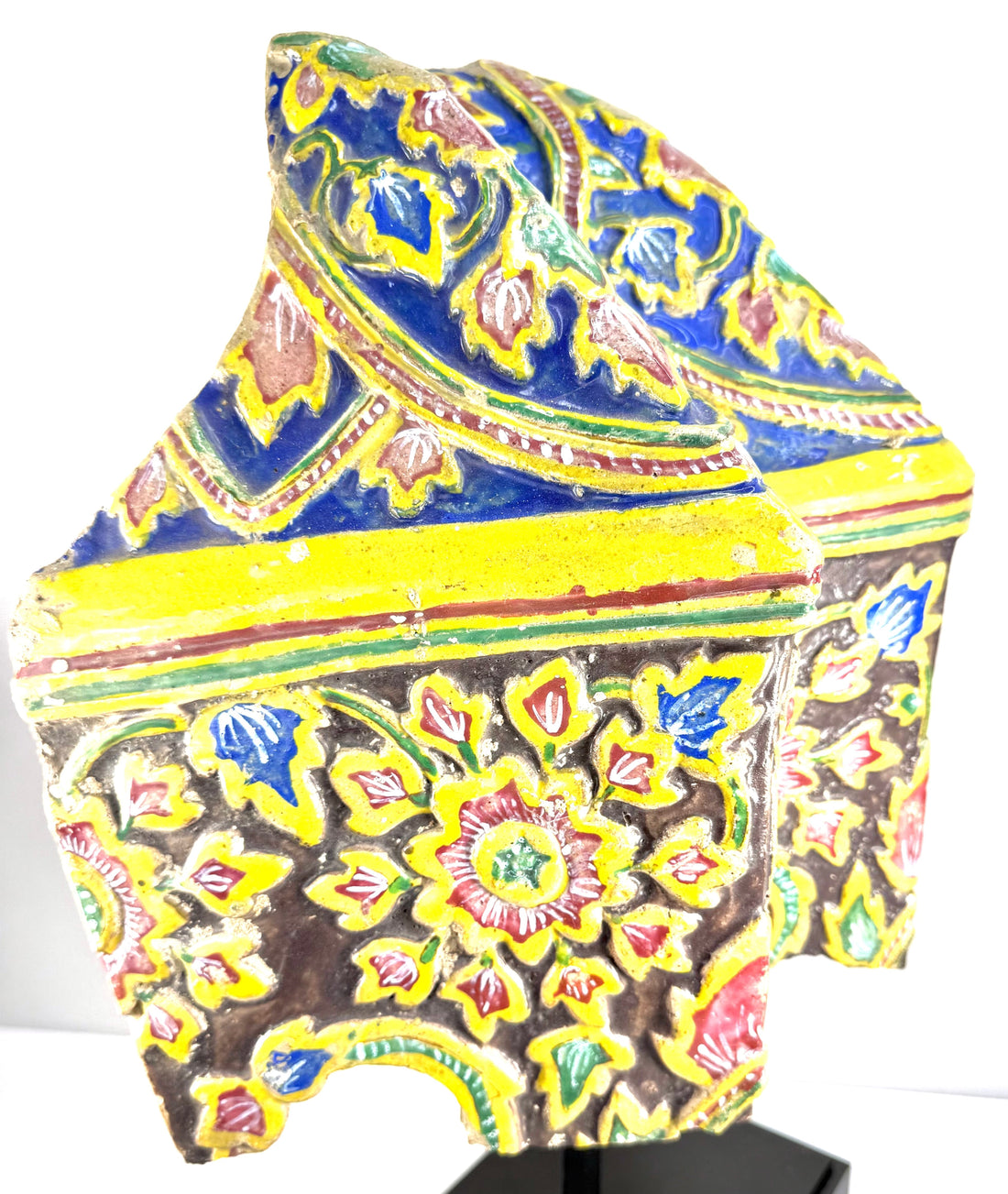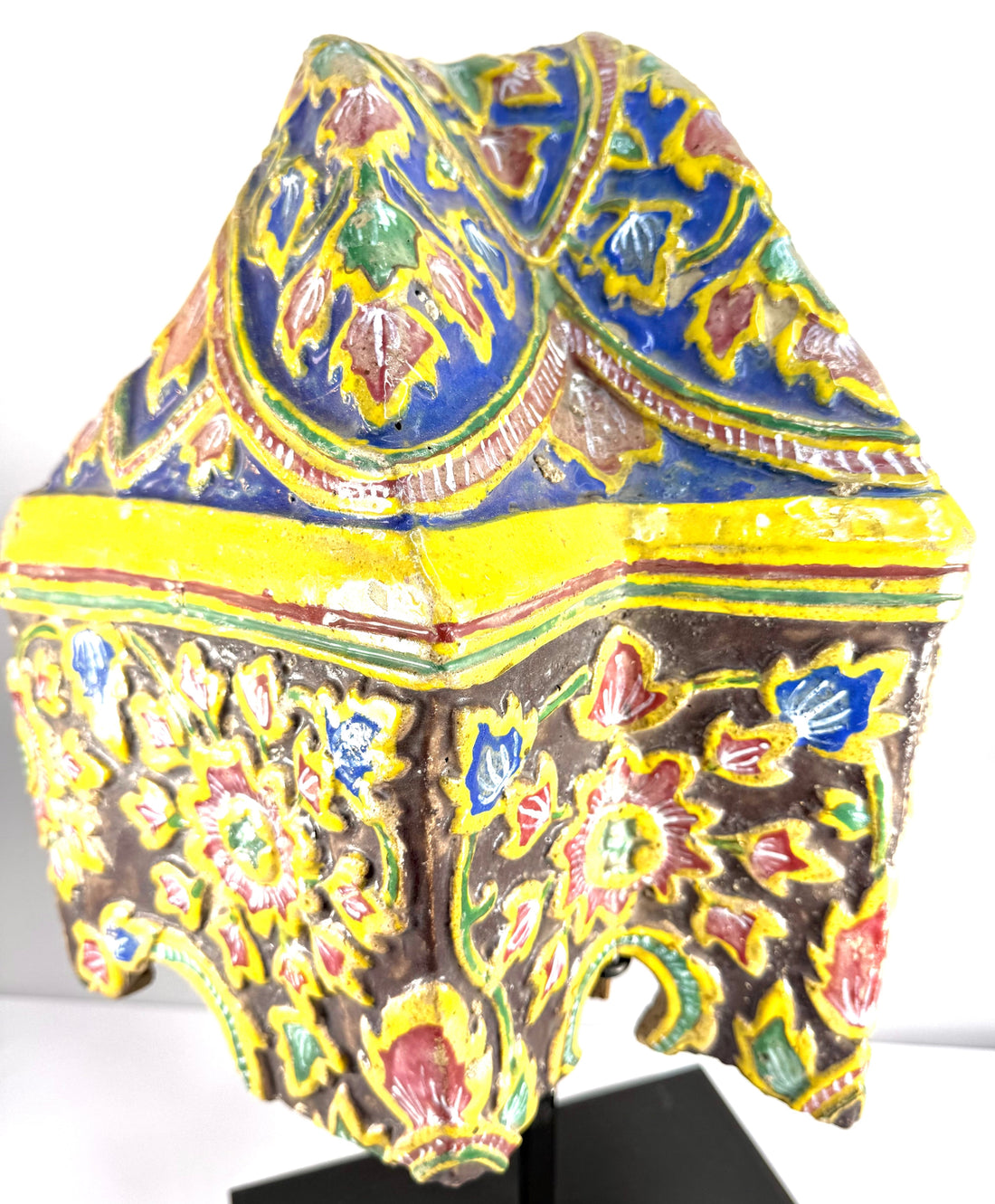


Azulejo de esquina de cerámica policromada del período Rattanakosin, Tailandia | Siglo XVIII aproximadamente

Historial de procedencia y propiedad

Anteriormente en una colección privada en Armadale, Victoria, Australia.

Precio habitual
$713.00
Precio de venta
$713.00
Precio habitual
Envío calculado al finalizar la compra.
Customers rate us 4.97/5 based on 119 reviews.

This is a one-of-a-kind historical object. Once sold, this exact piece will not be restocked.

Questions before acquiring? Additional photographs, condition details, documentation, shipping information or a private viewing are available upon request.
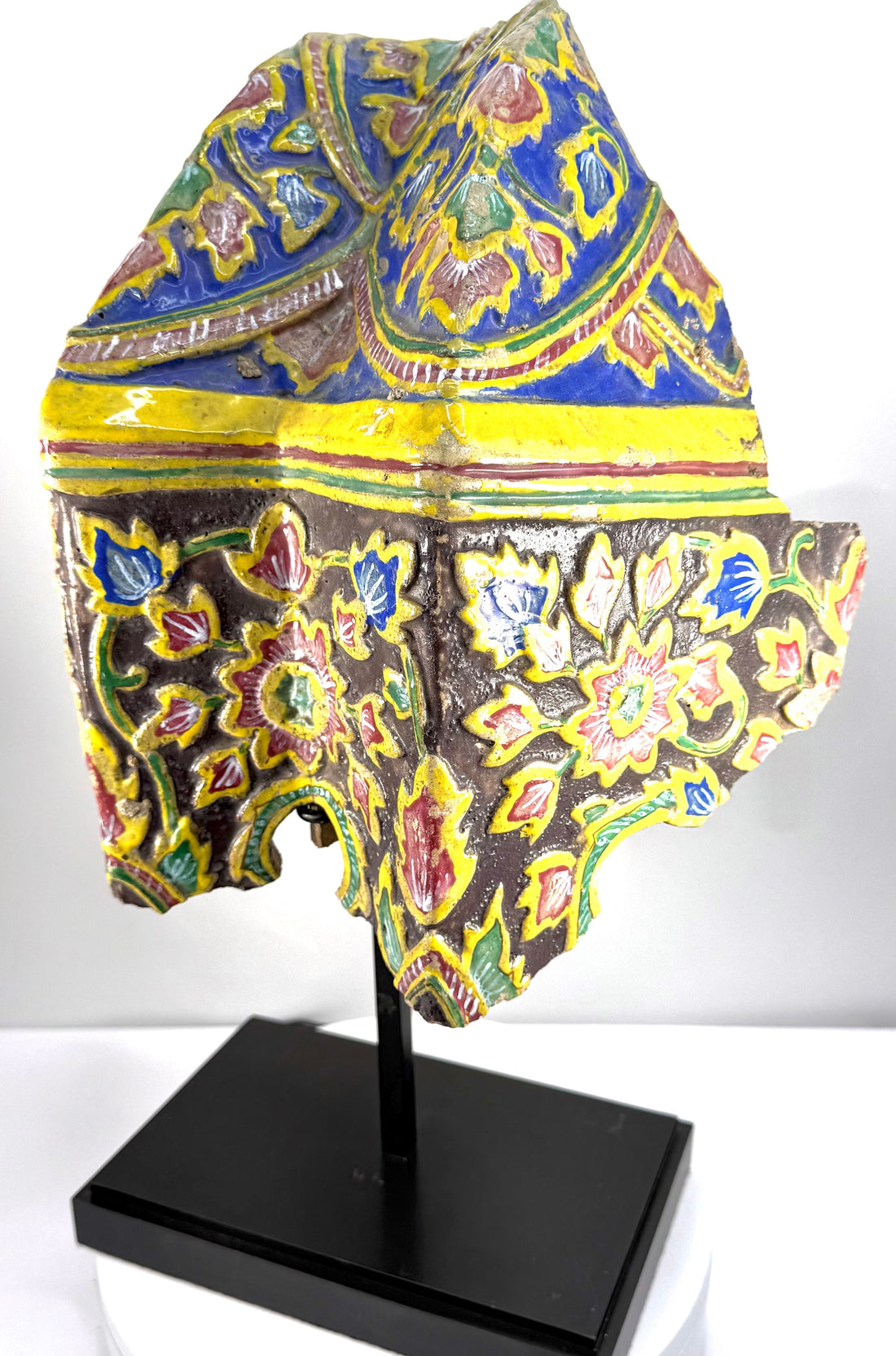
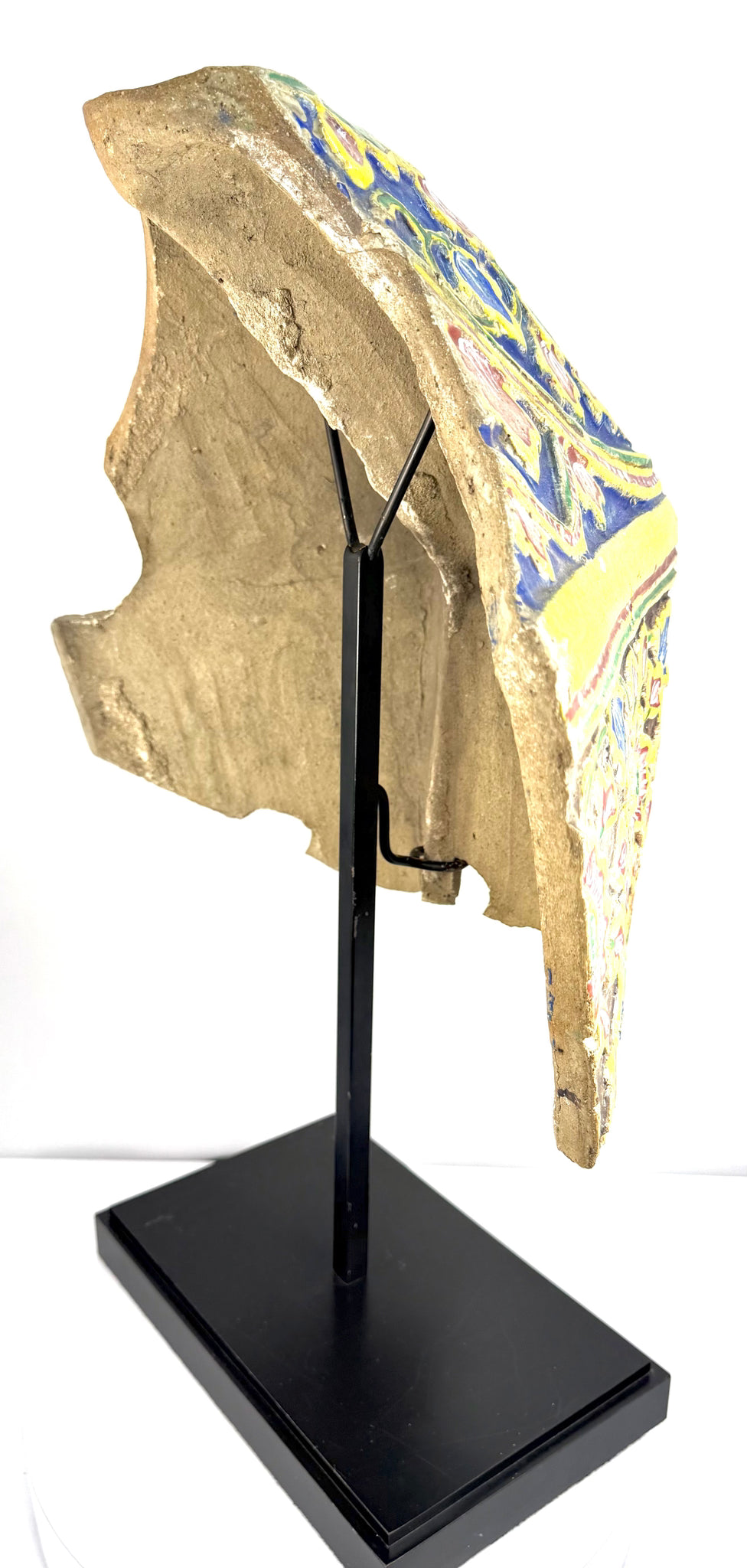
Antique Thai Rattanakosin period polychrome ceramic corner tile featuring elaborate raised floral motifs, vibrant cobalt blue, yellow, green, and red glazed decoration, and ornate architectural detailing. Front-facing museum-style photograph against a warm light-brown background, showcasing the tile's intricate craftsmanship and aged surface.
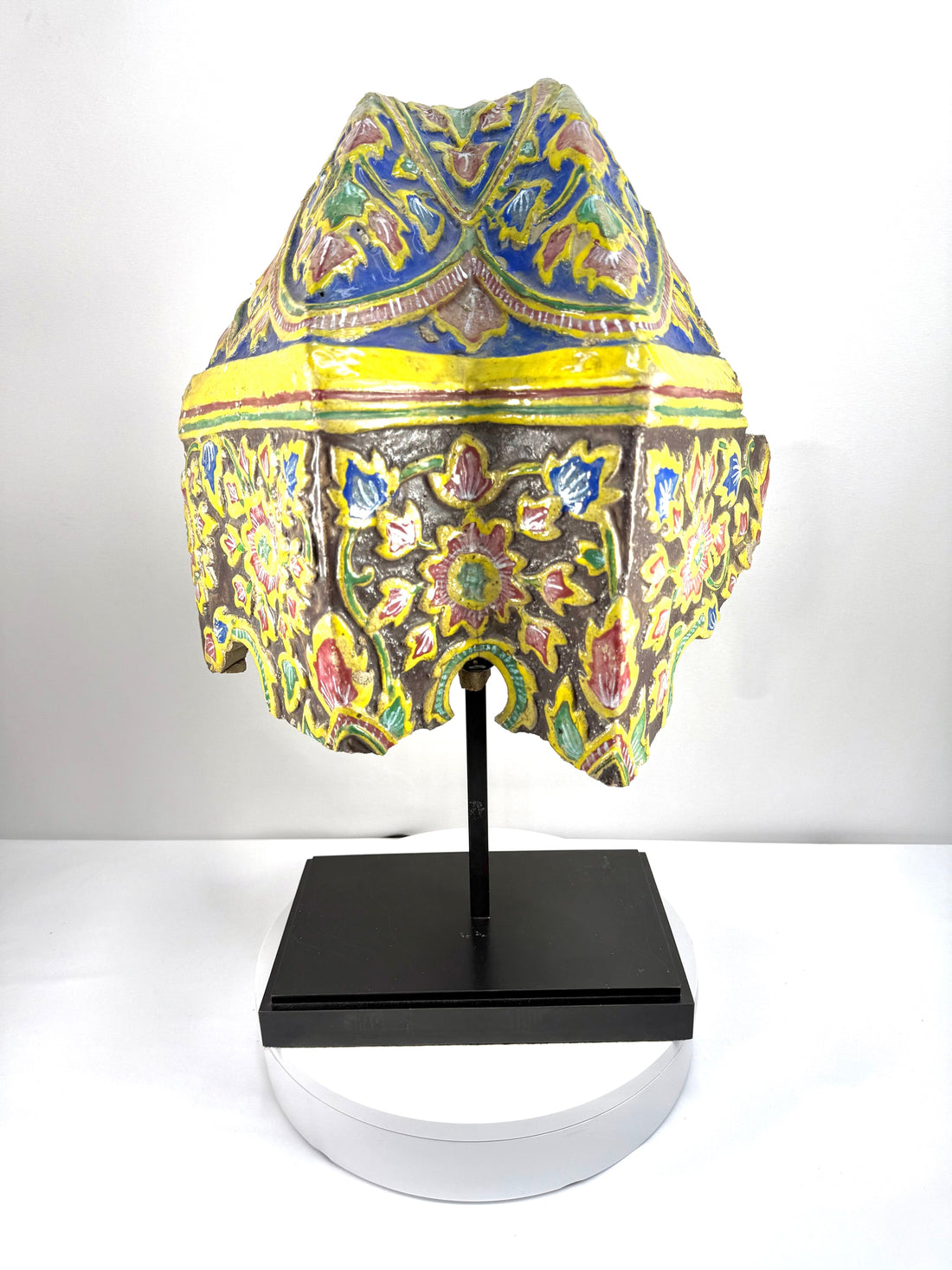
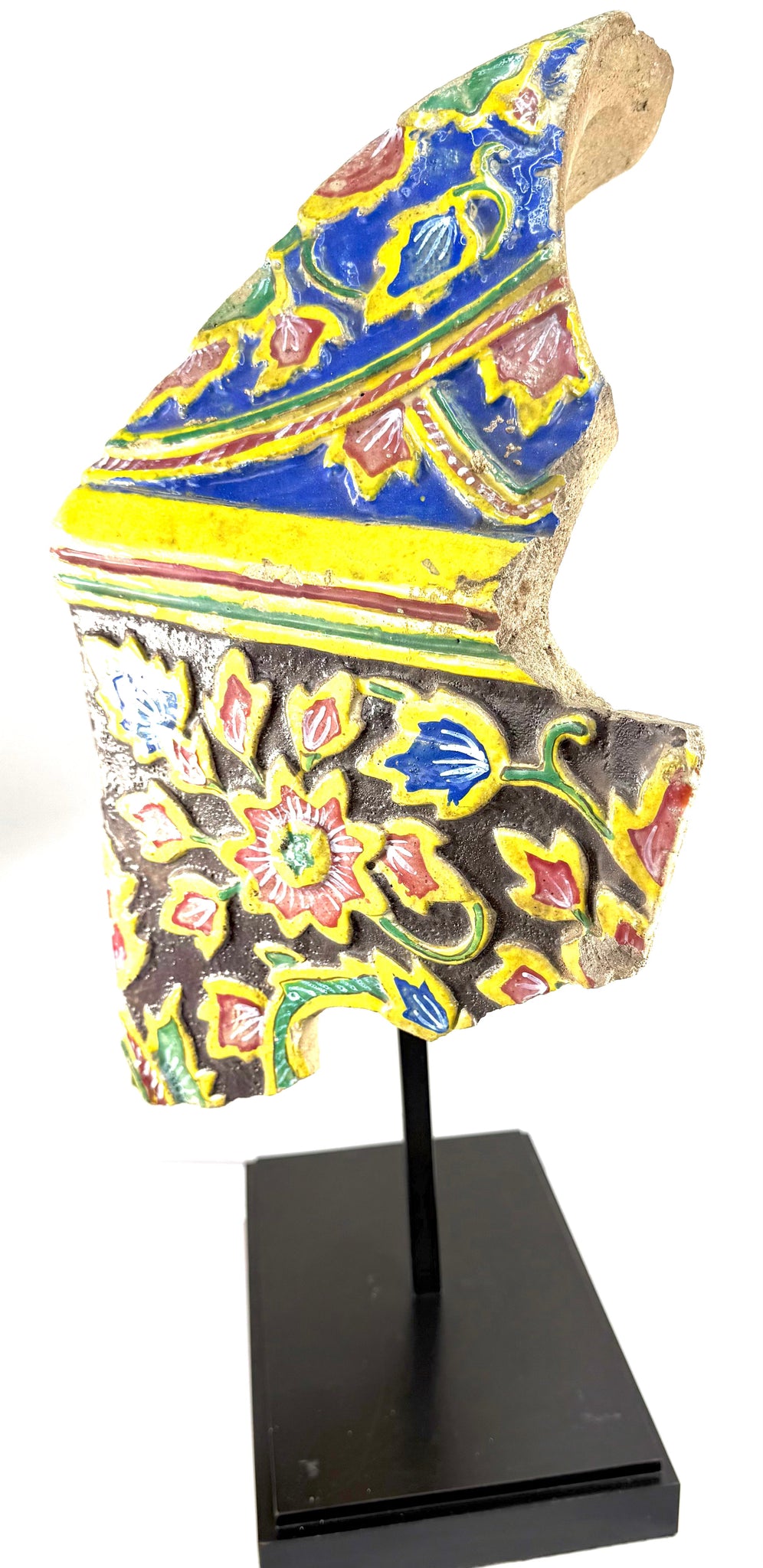
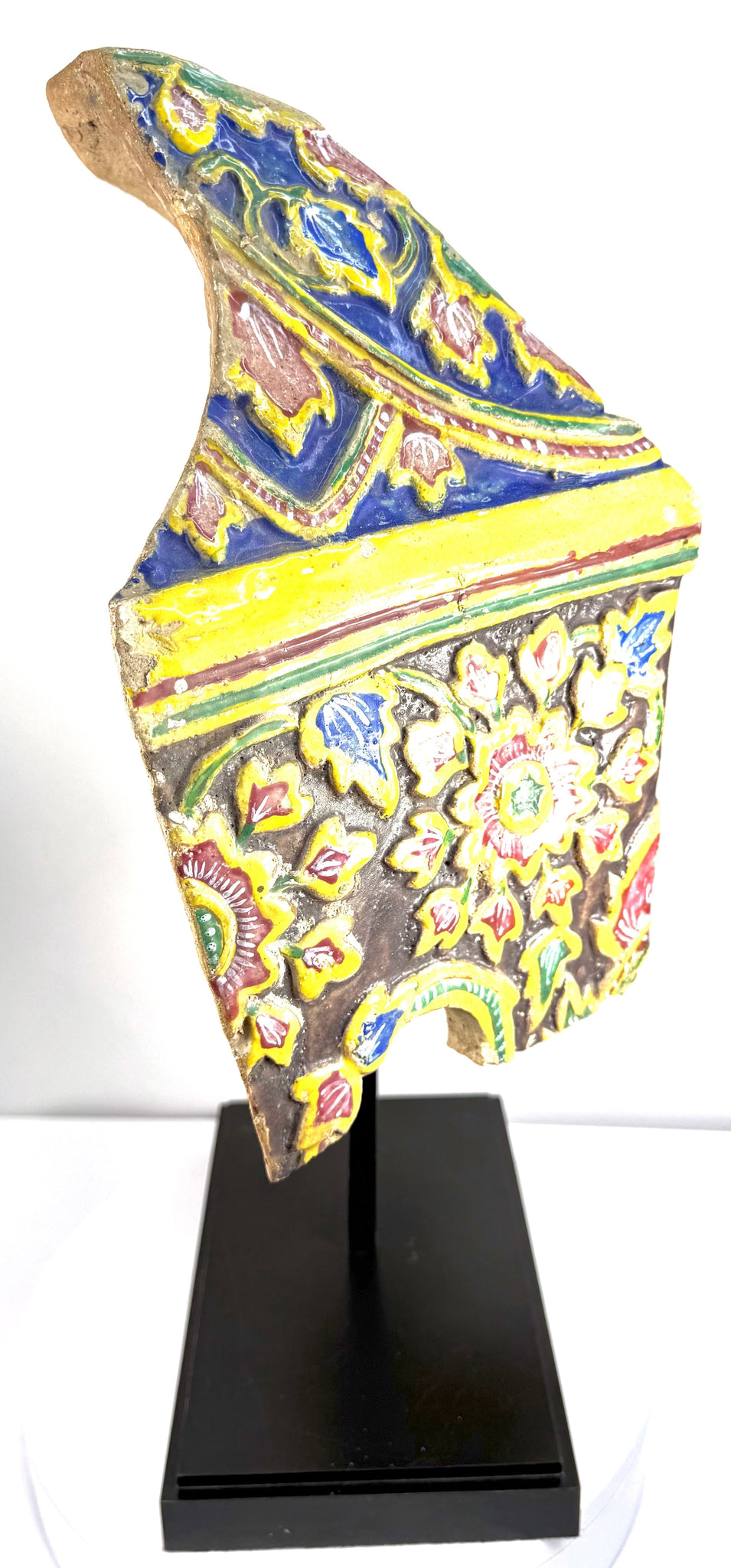
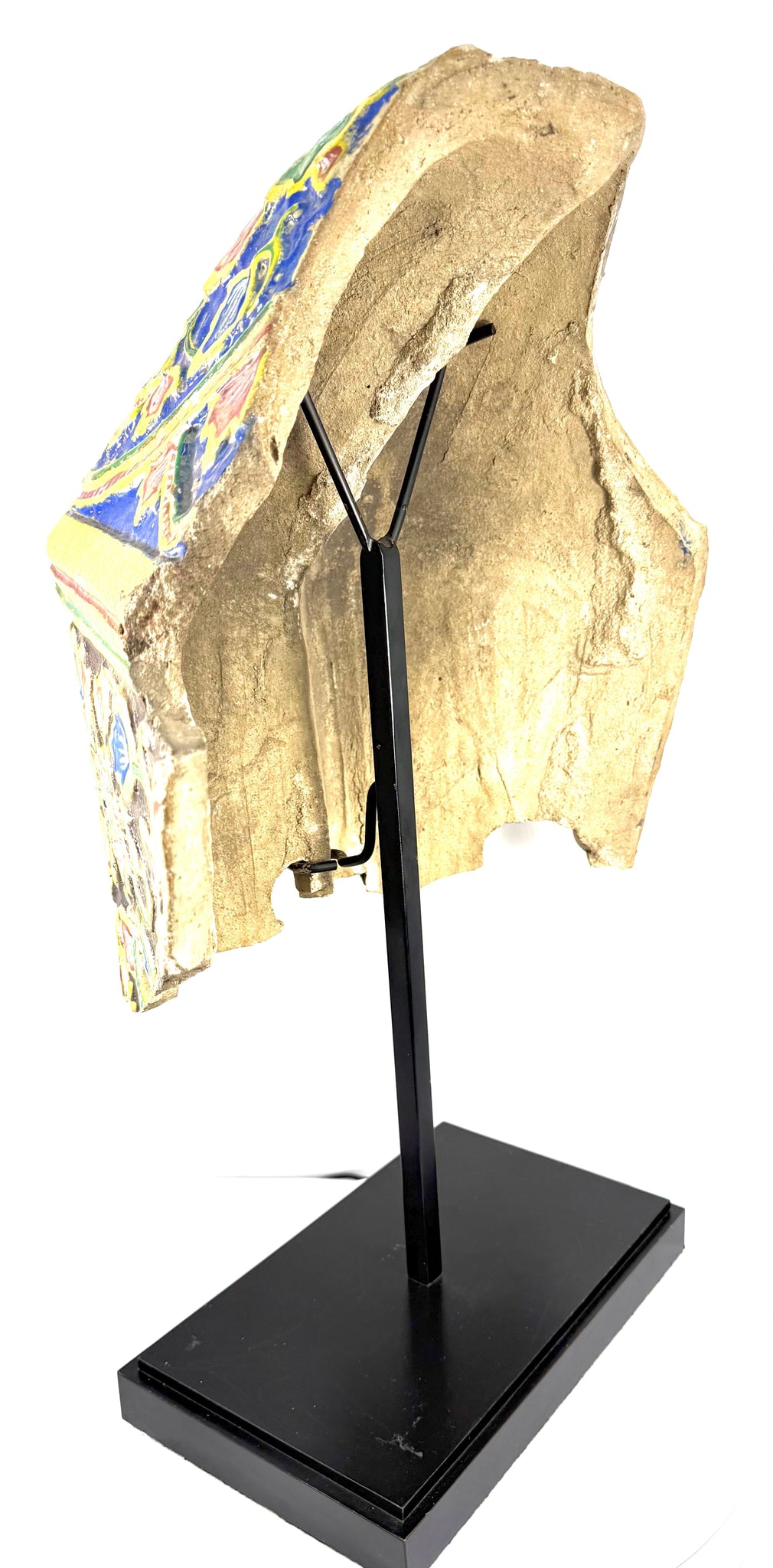
360-degree rotating view of an antique Thai Rattanakosin period polychrome ceramic corner tile featuring intricate raised floral motifs, ornate architectural detailing, and vibrant yellow, green, blue, and pink glazed decoration. The decorative tile is displayed on a black metal stand, showcasing its angular form, elaborate craftsmanship, and colourful surface from multiple angles.
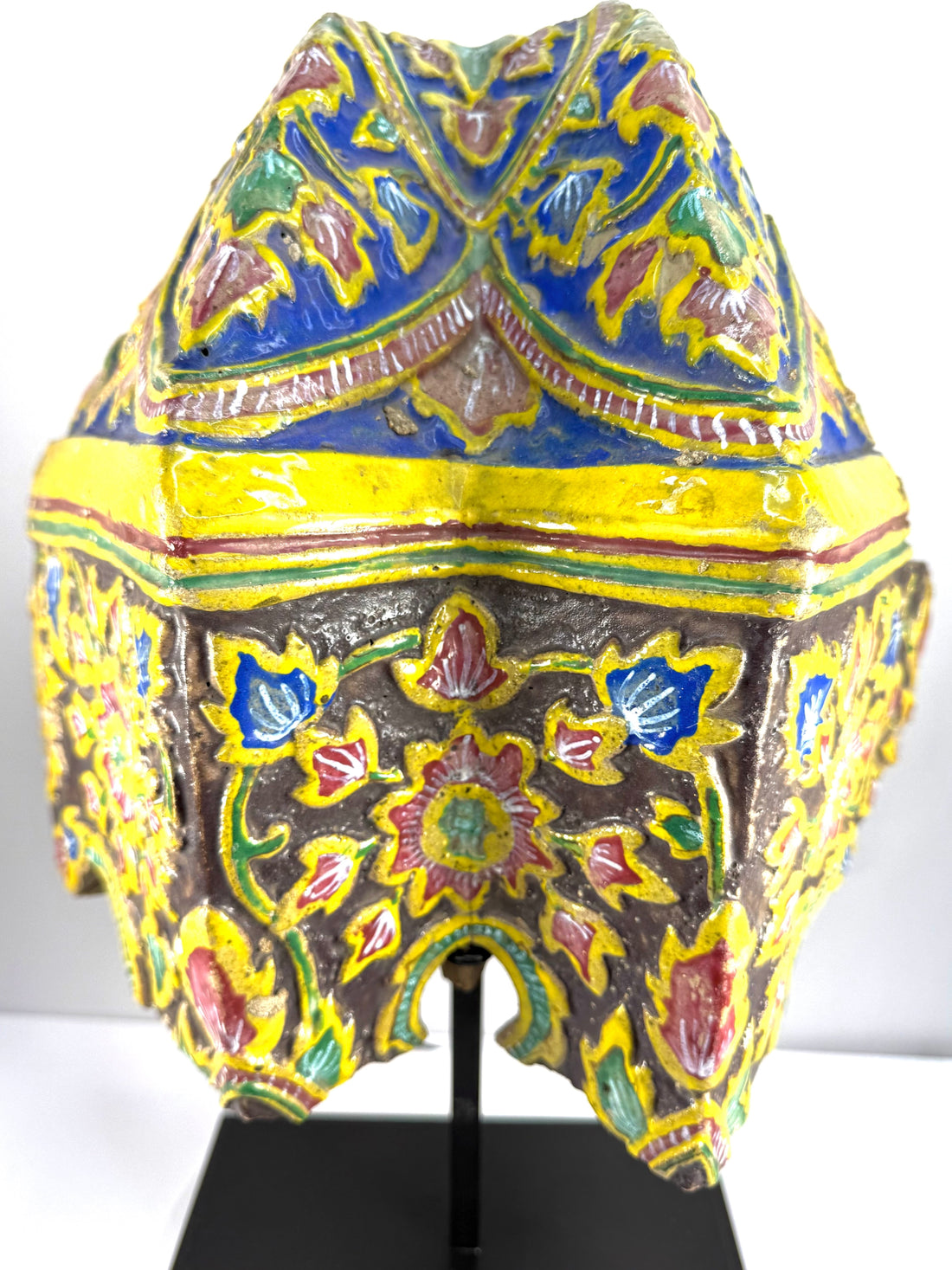
Antique Thai Rattanakosin polychrome ceramic corner tile with vibrant floral patterns, circa late 18th century
Traditional Thai architectural corner tile featuring yellow, blue, green, and pink glazed decoration over a black ground
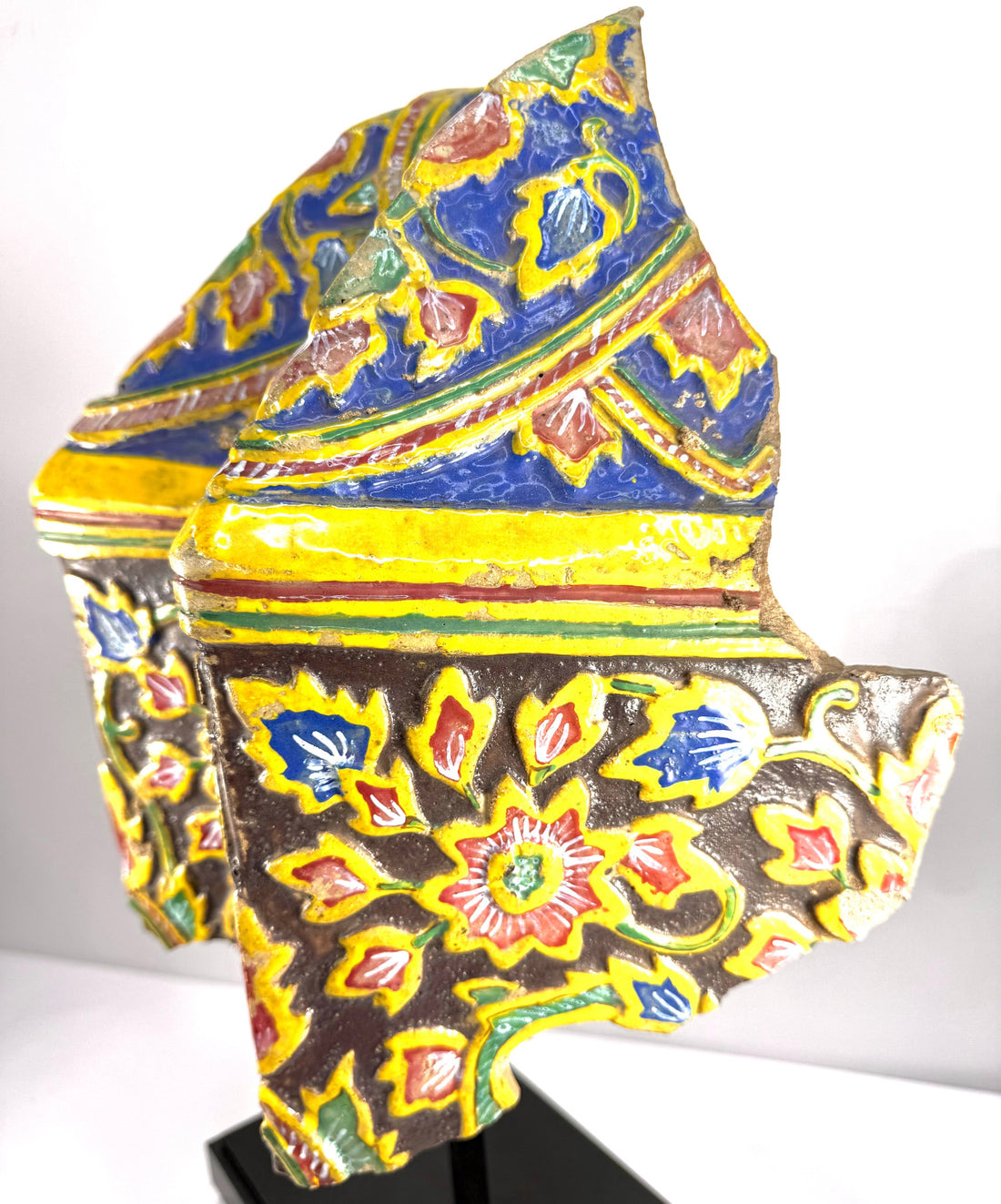
Late 18th-century Rattanakosin ceramic tile with intricate floral motifs and symmetrical geometric ornamentation
Antique Thailand polychrome architectural tile displaying elaborate hand-painted floral designs and raised decorative ridges
Thai Rattanakosin Kingdom ceramic corner tile featuring colourful botanical patterns and traditional ornamental detailing
Historic Thai decorative ceramic tile with vibrant multicoloured glazing and intricate raised floral embellishments
18th-century Thai polychrome corner tile reflecting the architectural and decorative traditions of the Rattanakosin period
Antique Rattanakosin architectural ceramic with bold black background, colourful floral ornamentation, and geometric patterns
Traditional Thailand hand-painted ceramic corner tile featuring intricate yellow, blue, green, and pink decorative elements
Thai Buddhist architectural-style corner tile with symmetrical floral compositions and richly coloured polychrome glaze
Antique Thai Rattanakosin ceramic ornament featuring raised geometric ridges and carefully arranged botanical motifs
Late 18th-century Thailand decorative corner tile showcasing vibrant glazed colours and traditional Thai floral artistry
Historic Rattanakosin polychrome ceramic corner tile with elaborate architectural ornamentation and preserved multicoloured glaze
  • Antique Thai Rattanakosin period polychrome ceramic corner tile featuring elaborate raised floral motifs, vibrant cobalt blue, yellow, green, and red glazed decoration, and ornate architectural detailing. Front-facing museum-style photograph against a warm light-brown background, showcasing the tile's intricate craftsmanship and aged surface.
  • 360-degree rotating view of an antique Thai Rattanakosin period polychrome ceramic corner tile featuring intricate raised floral motifs, ornate architectural detailing, and vibrant yellow, green, blue, and pink glazed decoration. The decorative tile is displayed on a black metal stand, showcasing its angular form, elaborate craftsmanship, and colourful surface from multiple angles.
  • Antique Thai Rattanakosin polychrome ceramic corner tile with vibrant floral patterns, circa late 18th century
  • Traditional Thai architectural corner tile featuring yellow, blue, green, and pink glazed decoration over a black ground
  • Late 18th-century Rattanakosin ceramic tile with intricate floral motifs and symmetrical geometric ornamentation
  • Antique Thailand polychrome architectural tile displaying elaborate hand-painted floral designs and raised decorative ridges
  • Thai Rattanakosin Kingdom ceramic corner tile featuring colourful botanical patterns and traditional ornamental detailing
  • Historic Thai decorative ceramic tile with vibrant multicoloured glazing and intricate raised floral embellishments
  • 18th-century Thai polychrome corner tile reflecting the architectural and decorative traditions of the Rattanakosin period
  • Antique Rattanakosin architectural ceramic with bold black background, colourful floral ornamentation, and geometric patterns
  • Traditional Thailand hand-painted ceramic corner tile featuring intricate yellow, blue, green, and pink decorative elements
  • Thai Buddhist architectural-style corner tile with symmetrical floral compositions and richly coloured polychrome glaze
  • Antique Thai Rattanakosin ceramic ornament featuring raised geometric ridges and carefully arranged botanical motifs
  • Late 18th-century Thailand decorative corner tile showcasing vibrant glazed colours and traditional Thai floral artistry
  • Historic Rattanakosin polychrome ceramic corner tile with elaborate architectural ornamentation and preserved multicoloured glaze
Antique Thai Rattanakosin period polychrome ceramic corner tile featuring elaborate raised floral motifs, vibrant cobalt blue, yellow, green, and red glazed decoration, and ornate architectural detailing. Front-facing museum-style photograph against a warm light-brown background, showcasing the tile's intricate craftsmanship and aged surface.
360-degree rotating view of an antique Thai Rattanakosin period polychrome ceramic corner tile featuring intricate raised floral motifs, ornate architectural detailing, and vibrant yellow, green, blue, and pink glazed decoration. The decorative tile is displayed on a black metal stand, showcasing its angular form, elaborate craftsmanship, and colourful surface from multiple angles.
Antique Thai Rattanakosin polychrome ceramic corner tile with vibrant floral patterns, circa late 18th century
Traditional Thai architectural corner tile featuring yellow, blue, green, and pink glazed decoration over a black ground
Late 18th-century Rattanakosin ceramic tile with intricate floral motifs and symmetrical geometric ornamentation
Antique Thailand polychrome architectural tile displaying elaborate hand-painted floral designs and raised decorative ridges
Thai Rattanakosin Kingdom ceramic corner tile featuring colourful botanical patterns and traditional ornamental detailing
Historic Thai decorative ceramic tile with vibrant multicoloured glazing and intricate raised floral embellishments
18th-century Thai polychrome corner tile reflecting the architectural and decorative traditions of the Rattanakosin period
Antique Rattanakosin architectural ceramic with bold black background, colourful floral ornamentation, and geometric patterns
Traditional Thailand hand-painted ceramic corner tile featuring intricate yellow, blue, green, and pink decorative elements
Thai Buddhist architectural-style corner tile with symmetrical floral compositions and richly coloured polychrome glaze
Antique Thai Rattanakosin ceramic ornament featuring raised geometric ridges and carefully arranged botanical motifs
Late 18th-century Thailand decorative corner tile showcasing vibrant glazed colours and traditional Thai floral artistry
Historic Rattanakosin polychrome ceramic corner tile with elaborate architectural ornamentation and preserved multicoloured glaze
Authenticity and secure checkout guarantee

Azulejo de esquina de cerámica policromada del período Rattanakosin, Tailandia | Siglo XVIII aproximadamente

Descripción

Contexto histórico y origen

Región: Tailandia (Reino de Rattanakosin)
Material: Cerámica pintada a mano con esmalte policromado
Periodo: Finales del siglo XVIII, Periodo Rattanakosin

Descripción

Este extraordinario azulejo de esquina policromado data del periodo Rattanakosin (establecido en 1782 bajo el rey Rama I), una época celebrada por el florecimiento del arte, la arquitectura y las tradiciones decorativas budistas tailandesas. Probablemente producido para su uso en templos o estructuras reales, el azulejo muestra la refinada elegancia y la armonía visual características de la artesanía tailandesa durante esta edad de oro.

Características

- Esmalte policromado audaz con vibrantes pigmentos amarillos, azules, verdes y rosas sobre un fondo negro

- Patrones florales y geométricos simétricos ejecutados con meticulosa precisión

- Crestas elevadas y adornos florales, lo que sugiere su uso como acento arquitectónico en entornos sagrados o reales

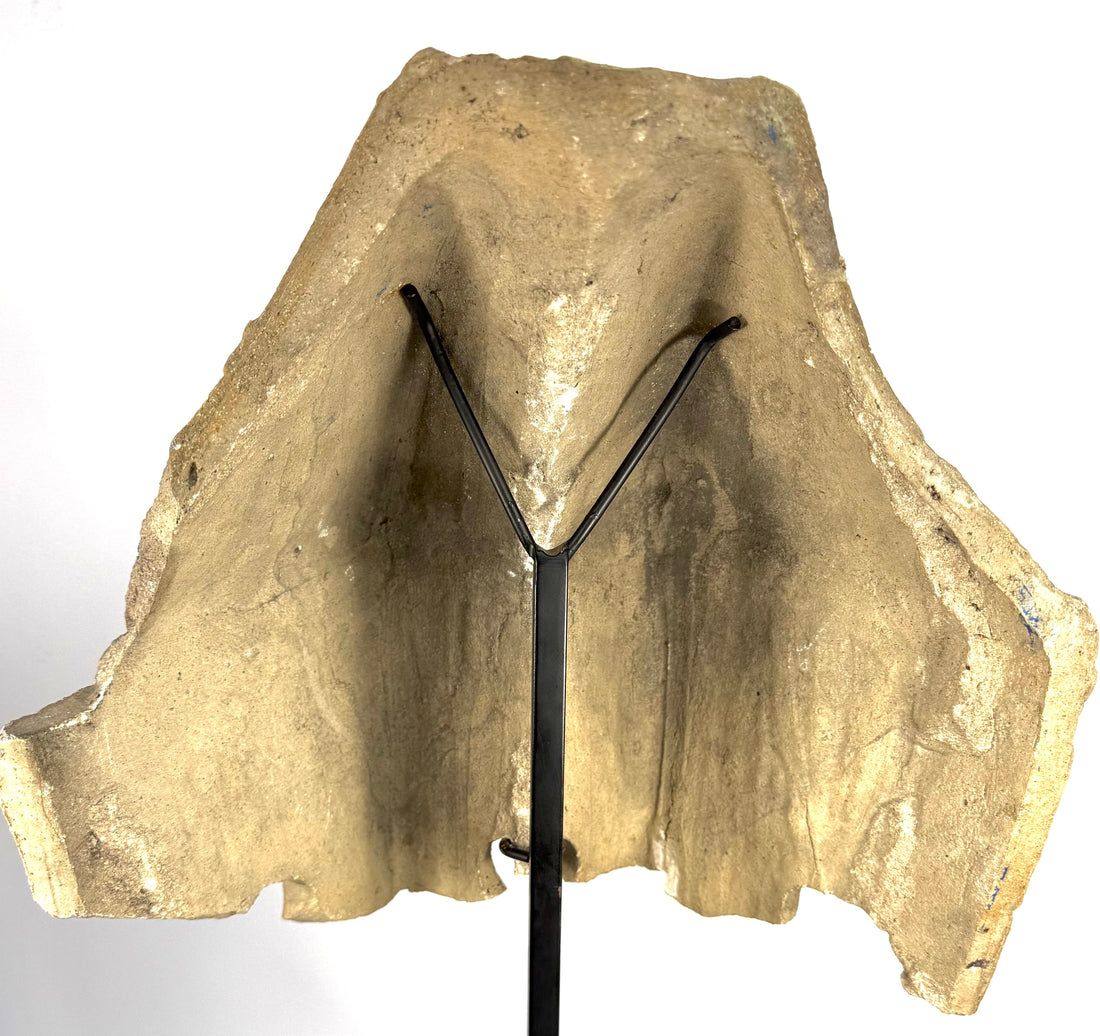
- Construcción cerámica robusta con esmalte conservado, que mantiene tanto la viveza del color como los intrincados detalles

Significado cultural

Los azulejos como este tenían un significado tanto decorativo como espiritual, reflejando la influencia artística budista e hindú durante el período Rattanakosin. Su integración en templos y palacios elevó la arquitectura a una experiencia visual sagrada, encarnando la armonía, la protección y la grandeza buscadas en el arte religioso tailandés.

Estado

El azulejo se mantiene en excelentes condiciones con colores de esmalte vibrantes, pátina natural y un desgaste menor consistente con la edad. La parte posterior revela el robusto cuerpo cerámico, lo que confirma los métodos de producción tradicionales y la autenticidad. Su buen estado de conservación lo convierte en un artefacto raro y coleccionable.

Dimensiones (aproximadas)

Altura: 19.25 in
Anchura: 14 in
Profundidad: 13 in

Antigüedad (aproximada)

220–240 años

Procedencia

Anteriormente en una colección privada en Armadale, Victoria, Australia.

Más información

Explore el Período Rattanakosin en el Museo Nacional de Bangkok

Explore nuestra Colección de artefactos culturales tailandeses

Descripción

Contexto histórico y origen

Región: Tailandia (Reino de Rattanakosin)
Material: Cerámica pintada a mano con esmalte policromado
Periodo: Finales del siglo XVIII, Periodo Rattanakosin

Descripción

Este extraordinario azulejo de esquina policromado data del periodo Rattanakosin (establecido en 1782 bajo el rey Rama I), una época celebrada por el florecimiento del arte, la arquitectura y las tradiciones decorativas budistas tailandesas. Probablemente producido para su uso en templos o estructuras reales, el azulejo muestra la refinada elegancia y la armonía visual características de la artesanía tailandesa durante esta edad de oro.

Características

- Esmalte policromado audaz con vibrantes pigmentos amarillos, azules, verdes y rosas sobre un fondo negro

- Patrones florales y geométricos simétricos ejecutados con meticulosa precisión

- Crestas elevadas y adornos florales, lo que sugiere su uso como acento arquitectónico en entornos sagrados o reales

- Construcción cerámica robusta con esmalte conservado, que mantiene tanto la viveza del color como los intrincados detalles

Significado cultural

Los azulejos como este tenían un significado tanto decorativo como espiritual, reflejando la influencia artística budista e hindú durante el período Rattanakosin. Su integración en templos y palacios elevó la arquitectura a una experiencia visual sagrada, encarnando la armonía, la protección y la grandeza buscadas en el arte religioso tailandés.

Estado

El azulejo se mantiene en excelentes condiciones con colores de esmalte vibrantes, pátina natural y un desgaste menor consistente con la edad. La parte posterior revela el robusto cuerpo cerámico, lo que confirma los métodos de producción tradicionales y la autenticidad. Su buen estado de conservación lo convierte en un artefacto raro y coleccionable.

Dimensiones (aproximadas)

Altura: 19.25 in
Anchura: 14 in
Profundidad: 13 in

Antigüedad (aproximada)

220–240 años

Procedencia

Anteriormente en una colección privada en Armadale, Victoria, Australia.

Más información

Explore el Período Rattanakosin en el Museo Nacional de Bangkok

Explore nuestra Colección de artefactos culturales tailandeses

También te puede interesar