

Pre-Columbian Maya Terracotta Figural Rattle | Late Classic | Circa 600 – 900 CE
- Precio habitual
- $550.00
- Precio de venta
- $550.00
- Precio habitual
No se pudo cargar la disponibilidad de retiro



Pre-Columbian Maya Terracotta Figural Rattle | Late Classic | Circa 600 – 900 CE
Descripción
Más
Menos
Historical Context & Origin
Region: Mesoamerica, Maya lowlands; likely southeastern Mexico, possibly Campeche or Tabasco
Material: Hollow terracotta with internal rattle pellets and natural mineral deposits
Period: Late Classic Period, circa 600–900 CE
Description
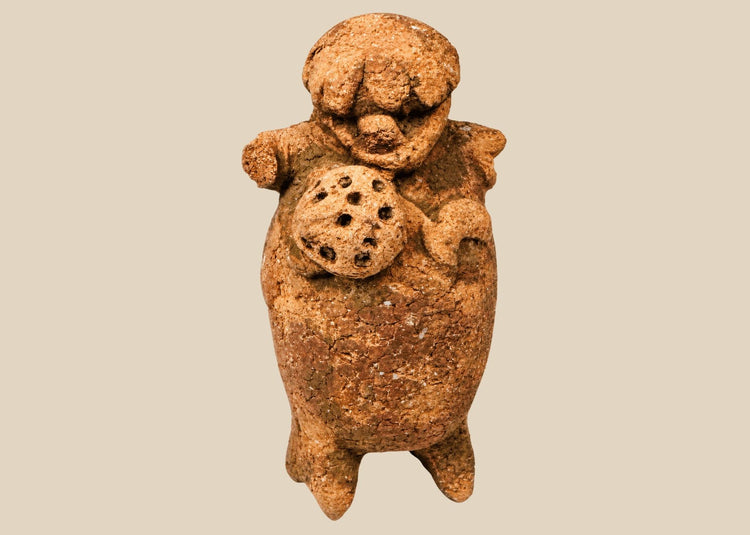
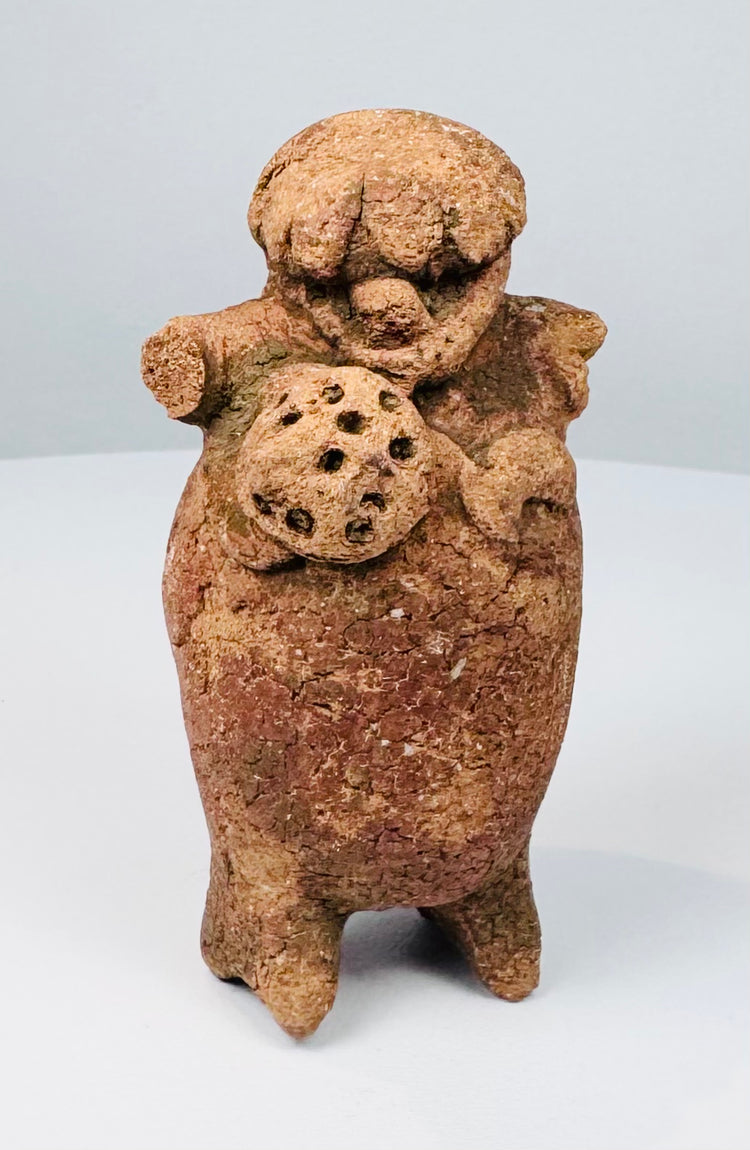
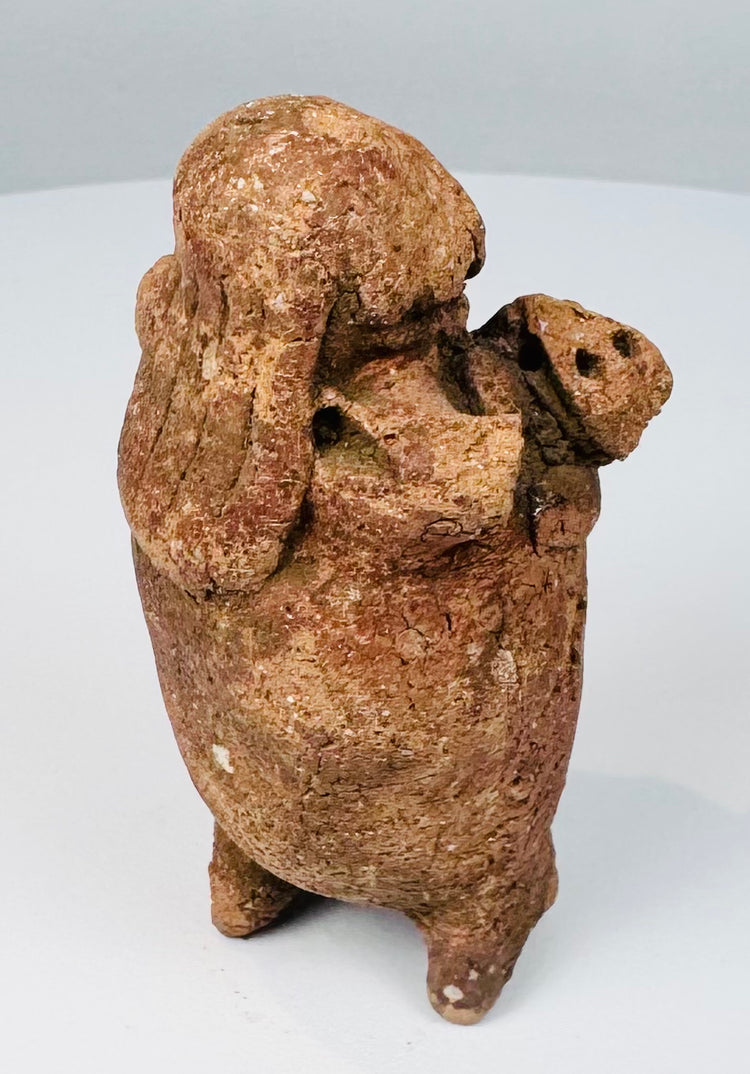
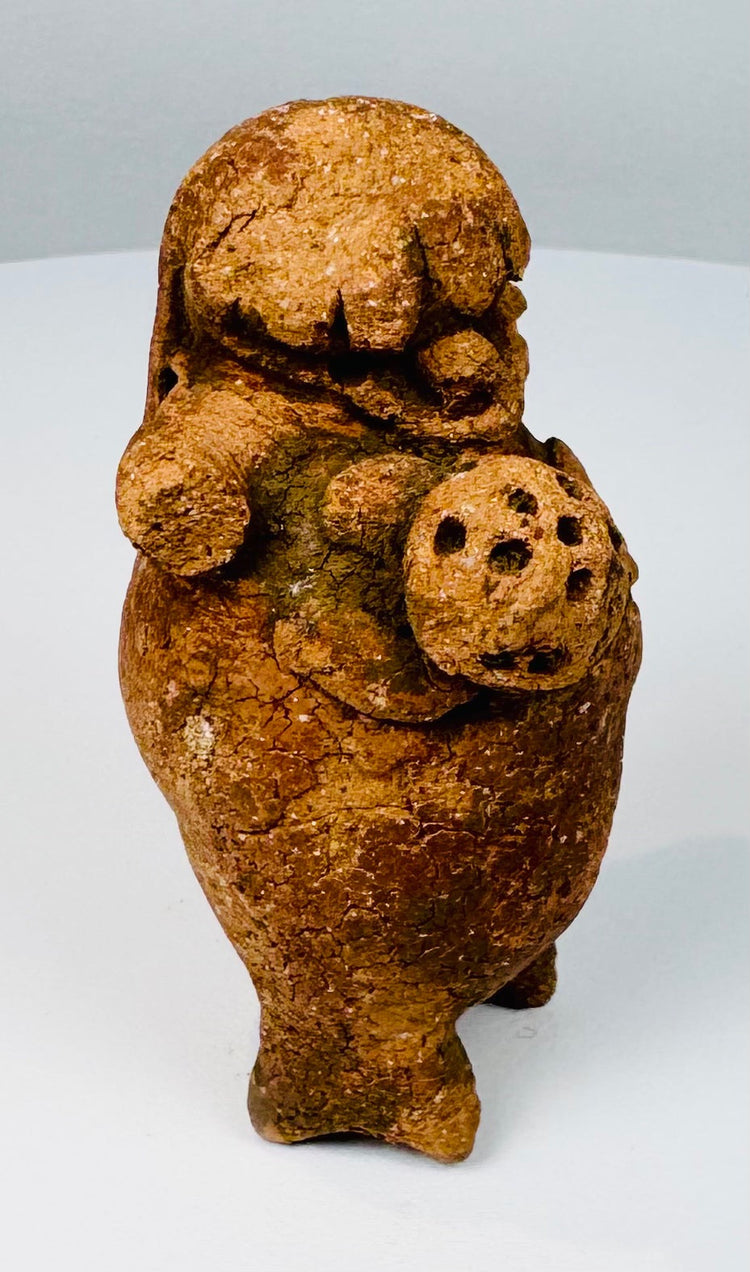
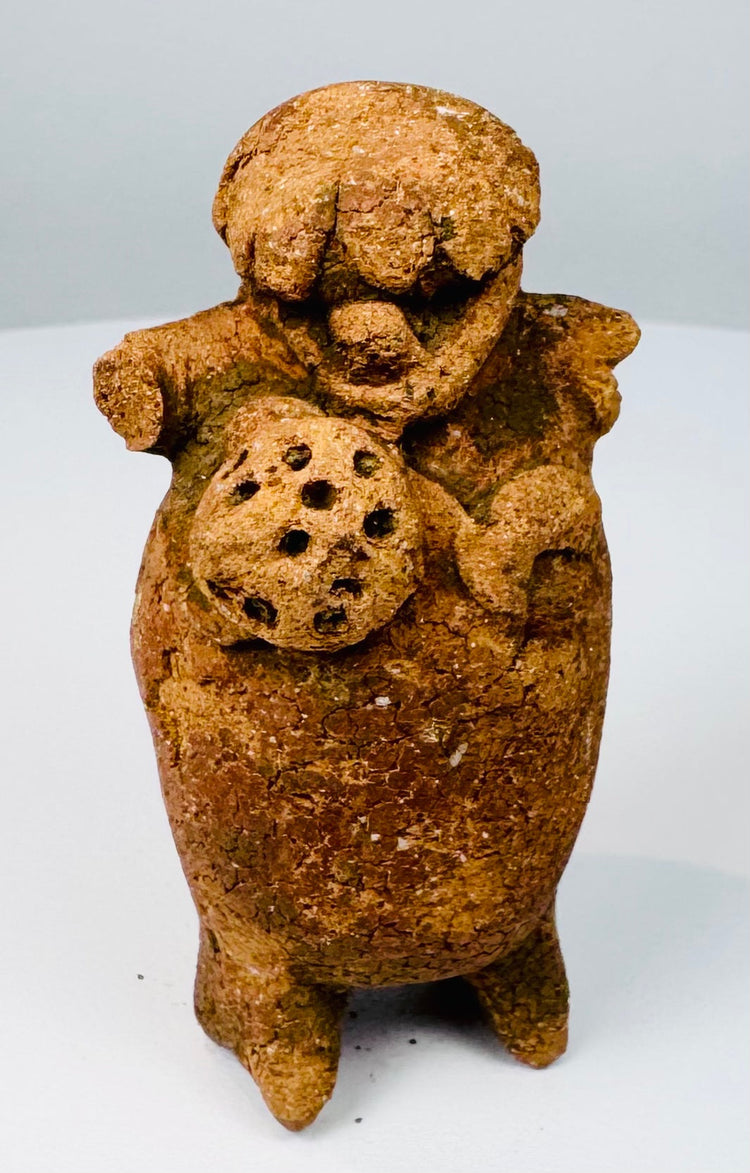
A particularly characterful Pre-Columbian terracotta figural rattle depicting a stylized standing human figure holding a prominently perforated object against the front of the body.
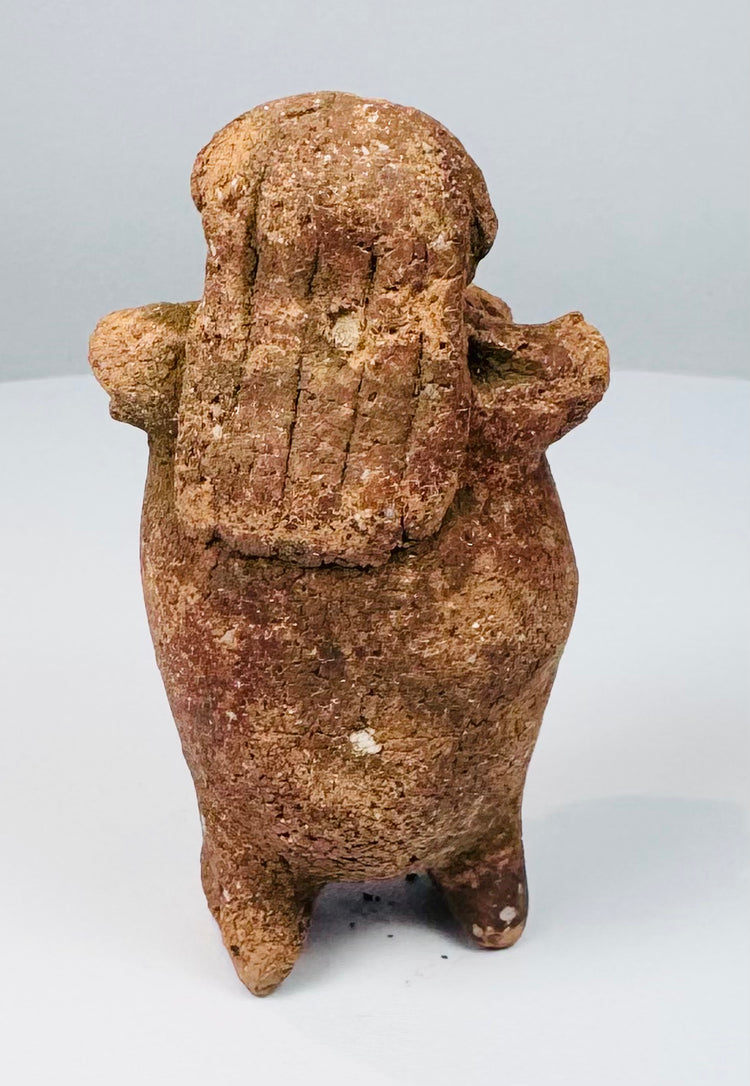
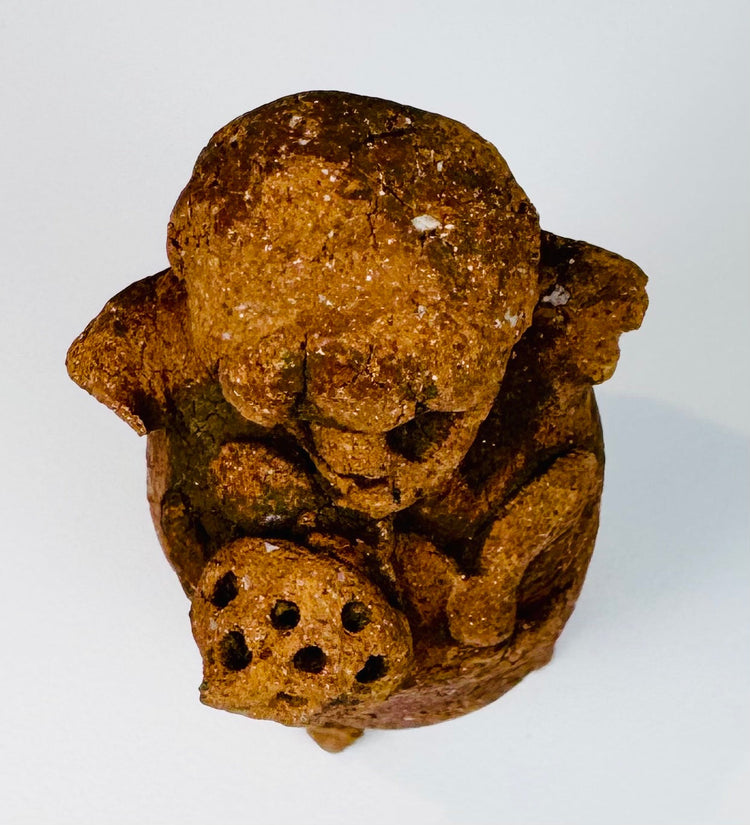
The figure is modeled with a broad, rounded head and an elaborate coiffure or headdress falling in thick segmented locks around the forehead and down the reverse. Beneath this arrangement is an expressive face defined by deeply recessed eyes, a prominent projecting nose, and a small modeled mouth.
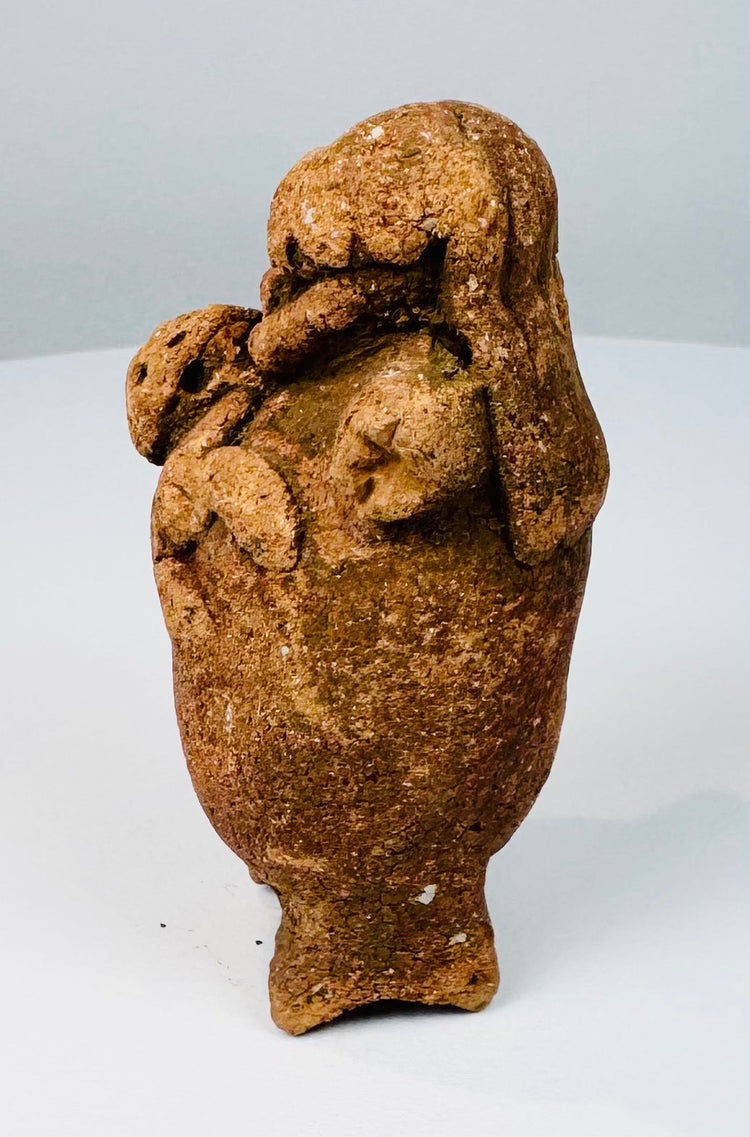
The compact body is broad through the torso and terminates in two short separated legs, allowing the figure to stand independently. Applied arms flank the upper body, with one drawn inward toward the central object.
Most distinctive is the oval or rounded element positioned across the abdomen. Its surface is pierced with numerous deliberately formed apertures. This may represent a ceremonial implement, musical instrument, perforated rattle, shield-like object, or other ritual accessory; its precise identification remains uncertain, and it is best not to assign a more specific function without a direct archaeological parallel.
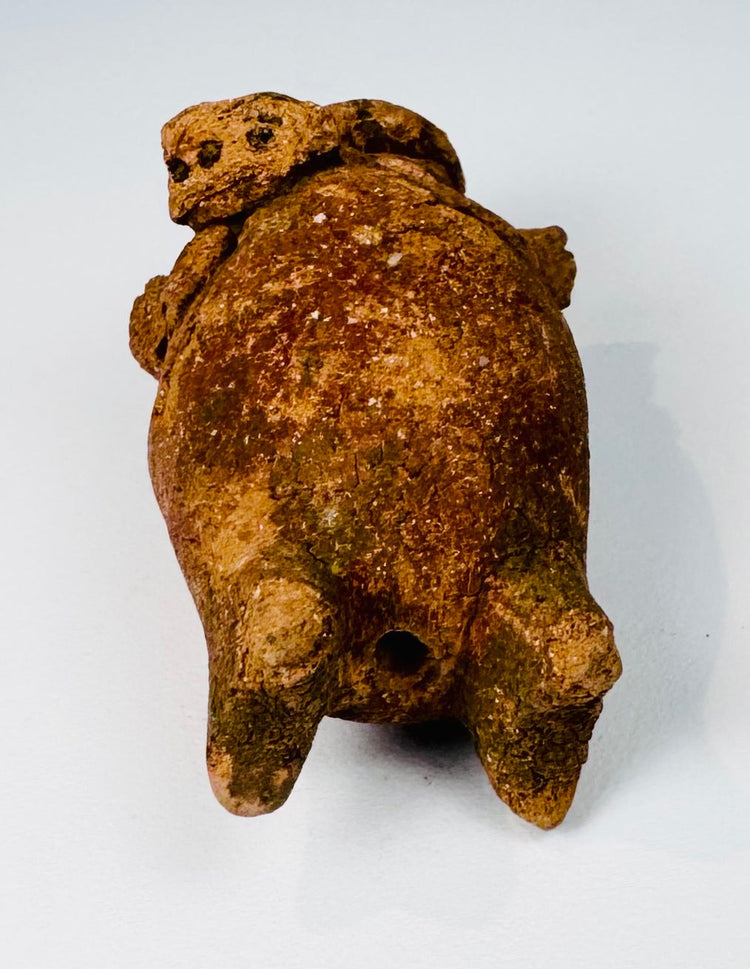
The figure itself is hollow and still audibly rattles when shaken, confirming the survival of loose pellets sealed within the body. A deliberate aperture visible toward the lower reverse likely functioned as a firing vent and may also have assisted the acoustic response of the rattle. Similar vented hollow Maya figurines are known from archaeological and museum collections.
The reverse is comparatively simply modeled, emphasizing the long vertical sections of the coiffure or headdress and the rounded body beneath.
Features
- Hollow figural construction
- Internal pellets remain present and produce an audible rattle
- Deliberate sound or firing aperture to the reverse
- Large rounded coiffure or headdress
- Deeply modeled facial features
- Applied arms and sculptural details
- Perforated oval ceremonial object held against the abdomen
- Short separated legs allowing freestanding display
- Warm reddish-brown earthenware surface
- Natural mineral deposits and archaeological patination
- Compact and unusually sculptural musical instrument
Cultural Significance
Maya figural rattles occupied an intriguing position between sculpture and musical instrument. Rather than decorating an otherwise ordinary instrument, Maya ceramic artists frequently made the entire human or animal figure function as the sound chamber.
The Cleveland Museum of Art preserves a Late Classic Maya rattle from Jaina Island dating to 600–900 CE that contains internal pellets, while Princeton University holds a Maya ceramic figural rattle dated 600–800 CE. The Metropolitan Museum of Art similarly records Maya figure rattles of the 7th–9th centuries as ceramic musical instruments.
Human-form rattles have also been excavated at Jonuta, Tabasco. Harvard's Peabody Museum records examples made with molded and applied bodies, elaborate heads and headdresses, perforations, and orange slips, demonstrating a well-established tradition of anthropomorphic sound-producing ceramics in the Maya lowlands.
Such objects may have participated in ritual performance, dance, household ceremonies, funerary practices, or other contexts in which sound and human imagery were deliberately combined. The precise role of this individual figure, however, cannot be determined from the surviving object alone.
Condition
Ancient archaeological condition with extensive age-related surface wear.
The terracotta exhibits mineral deposits, earthen encrustation, abrasions, pitting, small chips, firing irregularities, areas of surface loss, and fine age-related cracking throughout. There appears to be an old loss to one projecting arm or appendage. The modeled facial features, coiffure, perforated central object, body, and legs remain substantially preserved.
The rear aperture is intentional and associated with the object's hollow construction rather than representing accidental damage.
Importantly, the internal pellets remain loose and the rattle continues to produce sound when gently shaken.
Dimensions (Approximate)
Height: 2.75 in
Width: 1.5 in
Depth: 1.6 in
Age (Approximate)
1,100–1,400 years old
Provenance
From a private collection in New York, New York, USA.
Learn More
Discover a related Maya ceramic rattle in the collection of The Metropolitan Museum of Art
Explore more Ancient Pre-Columbian Artifacts & Relics
Descripción
Historical Context & Origin
Region: Mesoamerica, Maya lowlands; likely southeastern Mexico, possibly Campeche or Tabasco
Material: Hollow terracotta with internal rattle pellets and natural mineral deposits
Period: Late Classic Period, circa 600–900 CE
Description
A particularly characterful Pre-Columbian terracotta figural rattle depicting a stylized standing human figure holding a prominently perforated object against the front of the body.
The figure is modeled with a broad, rounded head and an elaborate coiffure or headdress falling in thick segmented locks around the forehead and down the reverse. Beneath this arrangement is an expressive face defined by deeply recessed eyes, a prominent projecting nose, and a small modeled mouth.
The compact body is broad through the torso and terminates in two short separated legs, allowing the figure to stand independently. Applied arms flank the upper body, with one drawn inward toward the central object.
Most distinctive is the oval or rounded element positioned across the abdomen. Its surface is pierced with numerous deliberately formed apertures. This may represent a ceremonial implement, musical instrument, perforated rattle, shield-like object, or other ritual accessory; its precise identification remains uncertain, and it is best not to assign a more specific function without a direct archaeological parallel.
The figure itself is hollow and still audibly rattles when shaken, confirming the survival of loose pellets sealed within the body. A deliberate aperture visible toward the lower reverse likely functioned as a firing vent and may also have assisted the acoustic response of the rattle. Similar vented hollow Maya figurines are known from archaeological and museum collections.
The reverse is comparatively simply modeled, emphasizing the long vertical sections of the coiffure or headdress and the rounded body beneath.
Features
- Hollow figural construction
- Internal pellets remain present and produce an audible rattle
- Deliberate sound or firing aperture to the reverse
- Large rounded coiffure or headdress
- Deeply modeled facial features
- Applied arms and sculptural details
- Perforated oval ceremonial object held against the abdomen
- Short separated legs allowing freestanding display
- Warm reddish-brown earthenware surface
- Natural mineral deposits and archaeological patination
- Compact and unusually sculptural musical instrument
Cultural Significance
Maya figural rattles occupied an intriguing position between sculpture and musical instrument. Rather than decorating an otherwise ordinary instrument, Maya ceramic artists frequently made the entire human or animal figure function as the sound chamber.
The Cleveland Museum of Art preserves a Late Classic Maya rattle from Jaina Island dating to 600–900 CE that contains internal pellets, while Princeton University holds a Maya ceramic figural rattle dated 600–800 CE. The Metropolitan Museum of Art similarly records Maya figure rattles of the 7th–9th centuries as ceramic musical instruments.
Human-form rattles have also been excavated at Jonuta, Tabasco. Harvard's Peabody Museum records examples made with molded and applied bodies, elaborate heads and headdresses, perforations, and orange slips, demonstrating a well-established tradition of anthropomorphic sound-producing ceramics in the Maya lowlands.
Such objects may have participated in ritual performance, dance, household ceremonies, funerary practices, or other contexts in which sound and human imagery were deliberately combined. The precise role of this individual figure, however, cannot be determined from the surviving object alone.
Condition
Ancient archaeological condition with extensive age-related surface wear.
The terracotta exhibits mineral deposits, earthen encrustation, abrasions, pitting, small chips, firing irregularities, areas of surface loss, and fine age-related cracking throughout. There appears to be an old loss to one projecting arm or appendage. The modeled facial features, coiffure, perforated central object, body, and legs remain substantially preserved.
The rear aperture is intentional and associated with the object's hollow construction rather than representing accidental damage.
Importantly, the internal pellets remain loose and the rattle continues to produce sound when gently shaken.
Dimensions (Approximate)
Height: 2.75 in
Width: 1.5 in
Depth: 1.6 in
Age (Approximate)
1,100–1,400 years old
Provenance
From a private collection in New York, New York, USA.
Learn More
Discover a related Maya ceramic rattle in the collection of The Metropolitan Museum of Art
Explore more Ancient Pre-Columbian Artifacts & Relics
También te puede interesar
