



Ancient Roman Bronze Cochlear Spoon with Pointed Handle | Circa 1st–3rd Century CE
- Precio habitual
- $350.00
- Precio de venta
- $350.00
- Precio habitual
No se pudo cargar la disponibilidad de retiro


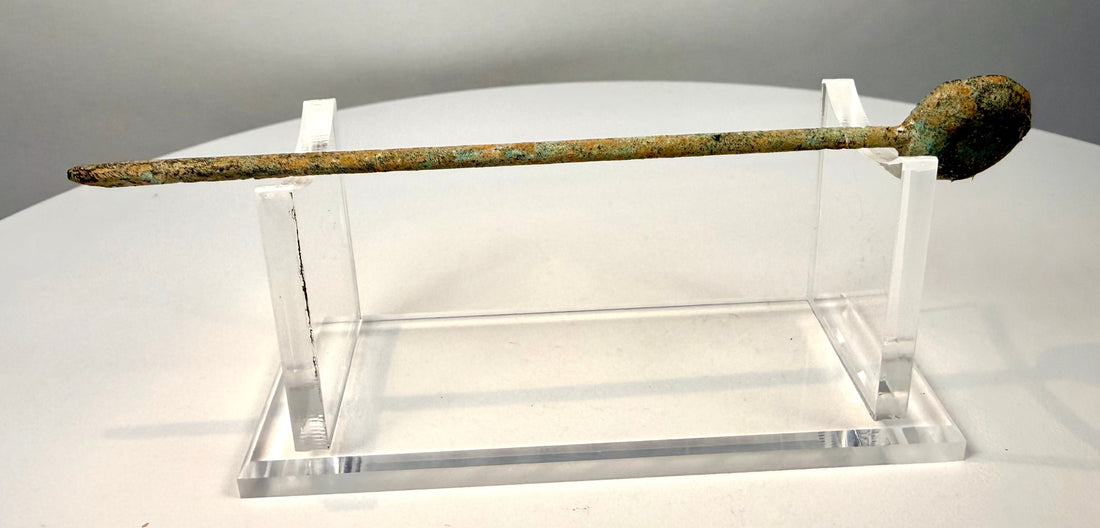
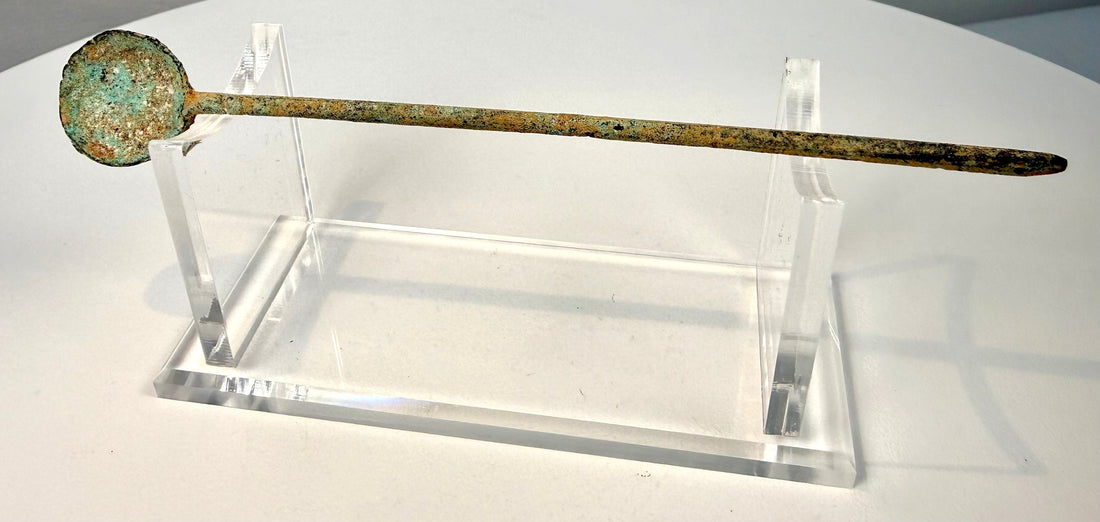
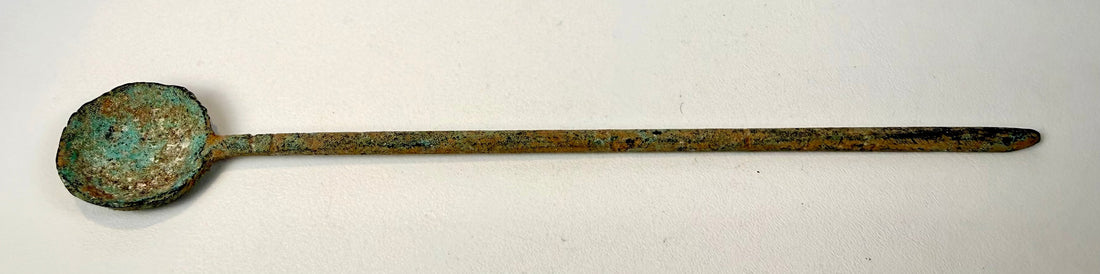

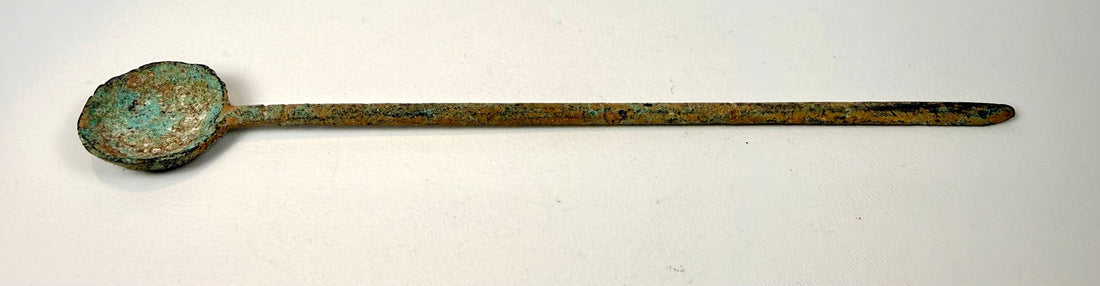
Ancient Roman Bronze Cochlear Spoon with Pointed Handle | Circa 1st–3rd Century CE
Descripción
Más
Menos
Historical Context & Origin
Region: Roman Empire, Mediterranean region
Material: Bronze (copper alloy)
Period: Roman Imperial Period, circa 1st–3rd Century CE
Description
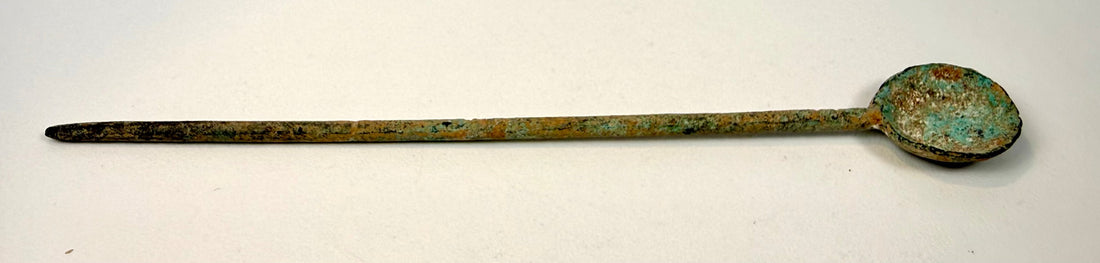
This ancient Roman cochlear-style bronze spoon features a shallow circular bowl, exceptionally slender elongated shaft, and distinctive pointed terminal. Traditionally attributed to the Roman Imperial Period, circa 1st–3rd century CE, the instrument reflects the practical craftsmanship and functional design of small bronze utensils used throughout the ancient Mediterranean world. Its characteristic form closely resembles Roman cochlearia, specialized spoons associated with dining and other everyday activities.
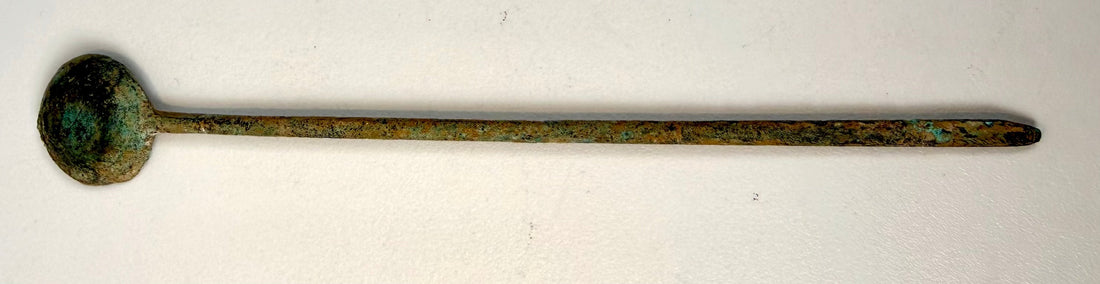
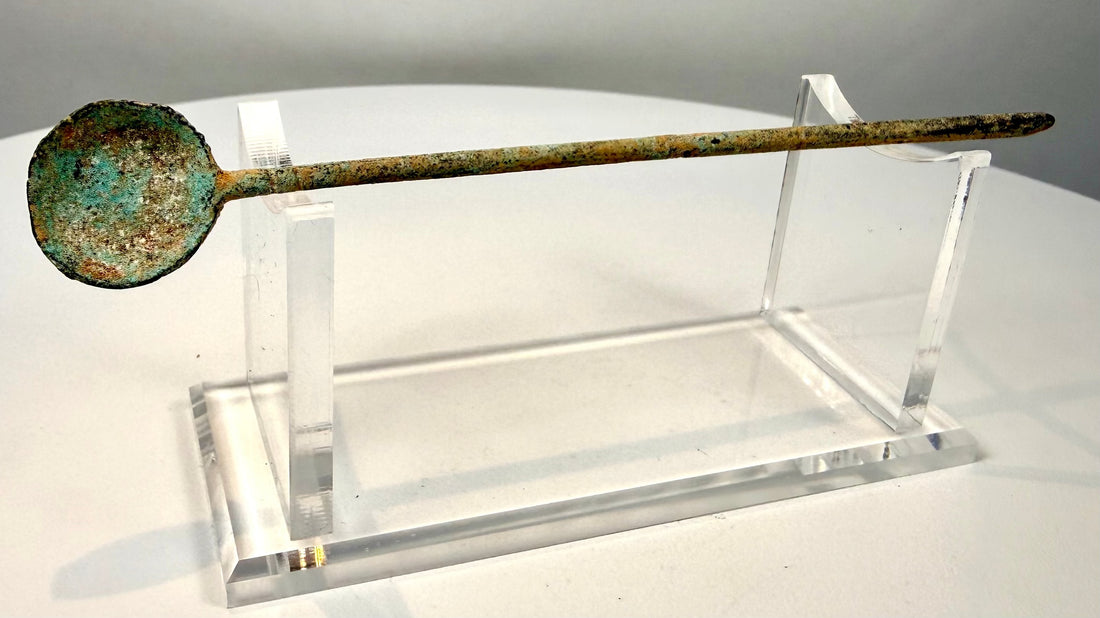
The spoon features a rounded, slightly concave bowl with a gently irregular perimeter, extending into a long, narrow cylindrical shaft of relatively uniform thickness. The handle gradually tapers toward a pointed terminal, creating a carefully proportioned design characteristic of Roman cochlear spoons. This distinctive construction provided a small spoon bowl at one end and a pointed implement at the other, allowing for versatile use. Comparable examples were employed for eating foods such as eggs, snails, and shellfish, with the pointed terminal assisting in extracting food from shells.
The bronze surface exhibits extensive turquoise-green, olive, and earthy brown patination, with scattered mineral-like deposits, oxidation, and areas of darker discolouration. The circular bowl retains a particularly striking concentration of blue-green corrosion products, contrasting with the warmer bronze-coloured deposits visible along the elongated shaft. Despite considerable surface weathering, the instrument retains its recognizable spoon-and-point construction, illustrating the enduring design of Roman bronze utensils.
Features
- Shallow circular bowl with gently irregular outer perimeter
- Exceptionally long and slender cylindrical shaft
- Distinctive tapered and pointed terminal
- Traditional Roman utensil design associated with dining and everyday use
- Rich turquoise-green, olive, and earthy brown surface patination
- Extensive oxidation, mineral-like deposits, and localized surface encrustation
Cultural Significance
Bronze utensils formed an important part of everyday life throughout the Roman Empire, reflecting the sophisticated metalworking traditions and practical innovations of ancient Mediterranean society. Roman craftsmen produced a wide variety of household implements, including spoons, ladles, strainers, probes, and other specialized tools designed for domestic, personal, and professional use.
The cochlear was a distinctive type of Roman spoon characterized by a relatively small bowl and an elongated, often pointed handle. These utensils were commonly associated with dining, particularly the consumption of eggs, snails, and shellfish. The pointed terminal could assist in extracting food from shells, while the spoon bowl provided a convenient means of handling small portions. Their versatile design reflects the relationship between Roman dining customs, craftsmanship, and functional innovation.
Similar small bronze implements could also serve cosmetic, pharmaceutical, or other domestic purposes, demonstrating the adaptability of simple metal utensils in Roman society. Comparable examples have been preserved in archaeological and museum collections throughout the former Roman world. The present spoon's circular bowl, slender shaft, and pointed terminal reflect the characteristic construction of this enduring Roman utensil tradition.
Condition
The instrument retains its complete overall form, including the circular spoon head, elongated shaft, and tapered terminal. Extensive surface oxidation and patination are present throughout, displaying a distinctive combination of turquoise-green, olive, brown, and earthy reddish tones. The spoon head exhibits concentrated corrosion products, mineral-like deposits, surface pitting, and areas of discolouration. Its edges are slightly irregular, with scattered areas of wear. The slender shaft displays additional oxidation and surface deposits along its length. The pointed terminal remains present, although its original sharpness appears diminished by wear. No obvious major structural breaks are visible in the supplied photographs.
Dimensions (Approximate)
Length: 5.25 in
Width (at Spoon Head): 0.75 in
Age (Approximate)
1,700–2,000 years old
Provenance
Previously held in a private collection in Indianapolis, Indiana, United States.
Learn More
Explore a comparable Roman bronze cochlear spoon dating to the 1st century CE, featuring a circular bowl and elongated pointed handle, through The Metropolitan Museum of Art
Discover additional ancient Roman utensils, bronze implements, and historical artifacts in our Roman & Greek Artifacts Collection
Descripción
Historical Context & Origin
Region: Roman Empire, Mediterranean region
Material: Bronze (copper alloy)
Period: Roman Imperial Period, circa 1st–3rd Century CE
Description
This ancient Roman cochlear-style bronze spoon features a shallow circular bowl, exceptionally slender elongated shaft, and distinctive pointed terminal. Traditionally attributed to the Roman Imperial Period, circa 1st–3rd century CE, the instrument reflects the practical craftsmanship and functional design of small bronze utensils used throughout the ancient Mediterranean world. Its characteristic form closely resembles Roman cochlearia, specialized spoons associated with dining and other everyday activities.
The spoon features a rounded, slightly concave bowl with a gently irregular perimeter, extending into a long, narrow cylindrical shaft of relatively uniform thickness. The handle gradually tapers toward a pointed terminal, creating a carefully proportioned design characteristic of Roman cochlear spoons. This distinctive construction provided a small spoon bowl at one end and a pointed implement at the other, allowing for versatile use. Comparable examples were employed for eating foods such as eggs, snails, and shellfish, with the pointed terminal assisting in extracting food from shells.
The bronze surface exhibits extensive turquoise-green, olive, and earthy brown patination, with scattered mineral-like deposits, oxidation, and areas of darker discolouration. The circular bowl retains a particularly striking concentration of blue-green corrosion products, contrasting with the warmer bronze-coloured deposits visible along the elongated shaft. Despite considerable surface weathering, the instrument retains its recognizable spoon-and-point construction, illustrating the enduring design of Roman bronze utensils.
Features
- Shallow circular bowl with gently irregular outer perimeter
- Exceptionally long and slender cylindrical shaft
- Distinctive tapered and pointed terminal
- Traditional Roman utensil design associated with dining and everyday use
- Rich turquoise-green, olive, and earthy brown surface patination
- Extensive oxidation, mineral-like deposits, and localized surface encrustation
Cultural Significance
Bronze utensils formed an important part of everyday life throughout the Roman Empire, reflecting the sophisticated metalworking traditions and practical innovations of ancient Mediterranean society. Roman craftsmen produced a wide variety of household implements, including spoons, ladles, strainers, probes, and other specialized tools designed for domestic, personal, and professional use.
The cochlear was a distinctive type of Roman spoon characterized by a relatively small bowl and an elongated, often pointed handle. These utensils were commonly associated with dining, particularly the consumption of eggs, snails, and shellfish. The pointed terminal could assist in extracting food from shells, while the spoon bowl provided a convenient means of handling small portions. Their versatile design reflects the relationship between Roman dining customs, craftsmanship, and functional innovation.
Similar small bronze implements could also serve cosmetic, pharmaceutical, or other domestic purposes, demonstrating the adaptability of simple metal utensils in Roman society. Comparable examples have been preserved in archaeological and museum collections throughout the former Roman world. The present spoon's circular bowl, slender shaft, and pointed terminal reflect the characteristic construction of this enduring Roman utensil tradition.
Condition
The instrument retains its complete overall form, including the circular spoon head, elongated shaft, and tapered terminal. Extensive surface oxidation and patination are present throughout, displaying a distinctive combination of turquoise-green, olive, brown, and earthy reddish tones. The spoon head exhibits concentrated corrosion products, mineral-like deposits, surface pitting, and areas of discolouration. Its edges are slightly irregular, with scattered areas of wear. The slender shaft displays additional oxidation and surface deposits along its length. The pointed terminal remains present, although its original sharpness appears diminished by wear. No obvious major structural breaks are visible in the supplied photographs.
Dimensions (Approximate)
Length: 5.25 in
Width (at Spoon Head): 0.75 in
Age (Approximate)
1,700–2,000 years old
Provenance
Previously held in a private collection in Indianapolis, Indiana, United States.
Learn More
Explore a comparable Roman bronze cochlear spoon dating to the 1st century CE, featuring a circular bowl and elongated pointed handle, through The Metropolitan Museum of Art
Discover additional ancient Roman utensils, bronze implements, and historical artifacts in our Roman & Greek Artifacts Collection
También te puede interesar
