



Frasco de vidrio romano de forma circular aplanada | Siglo I-III d.C.
- Precio habitual
- $900.00
- Precio de venta
- $900.00
- Precio habitual
No se pudo cargar la disponibilidad de retiro


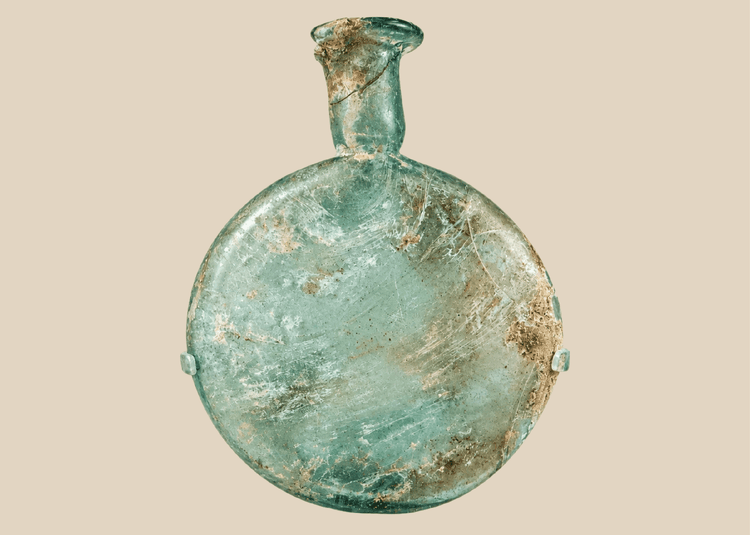
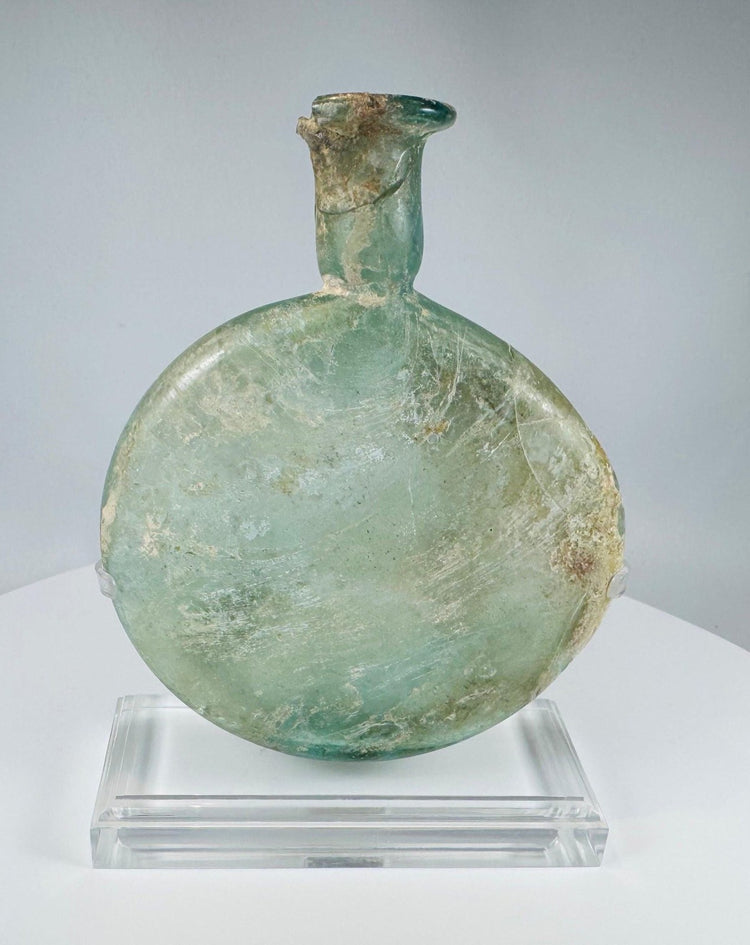
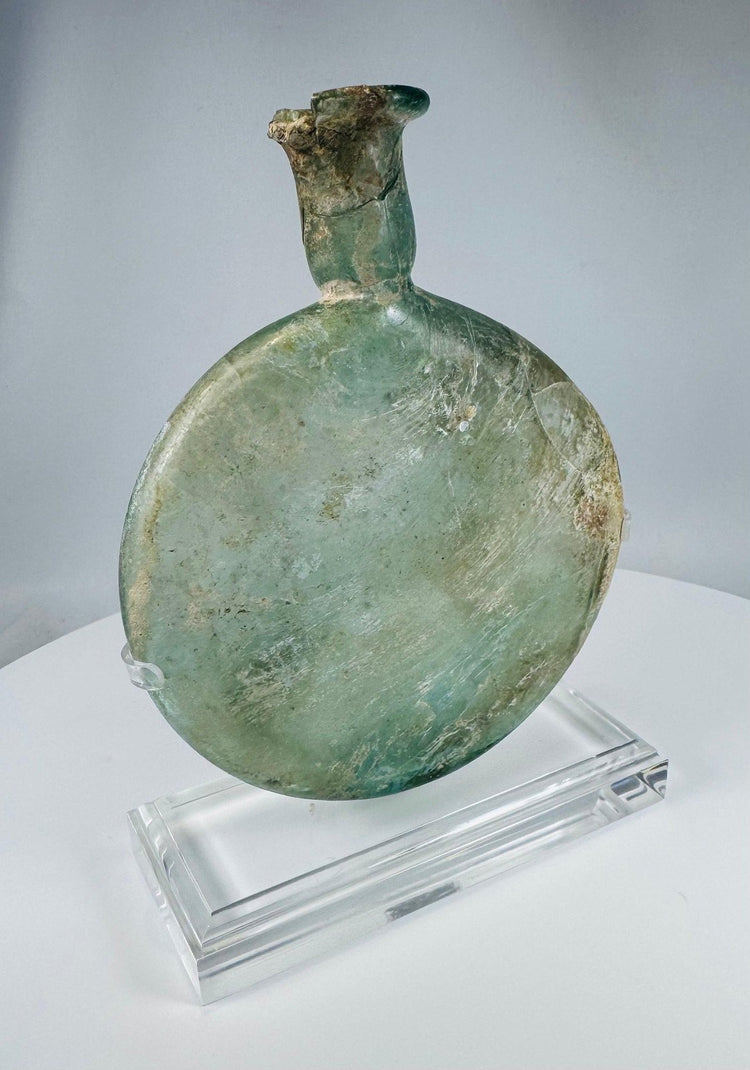
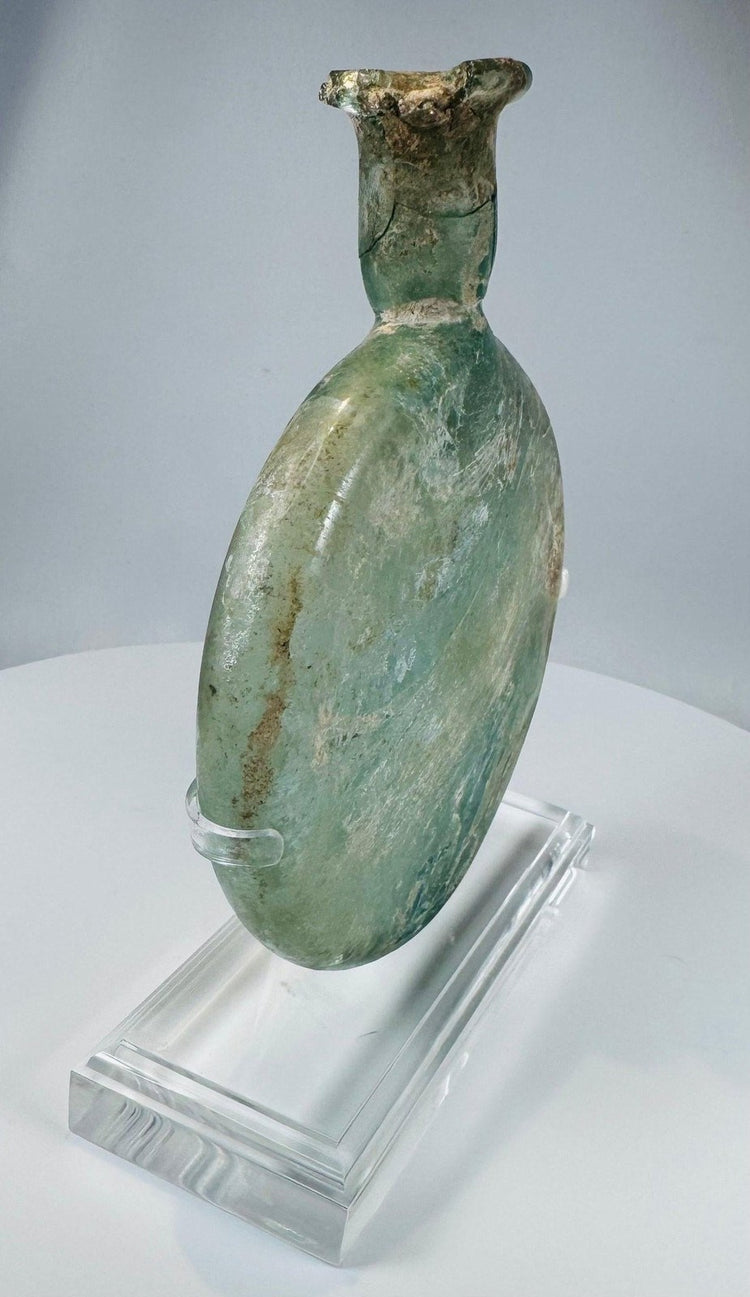
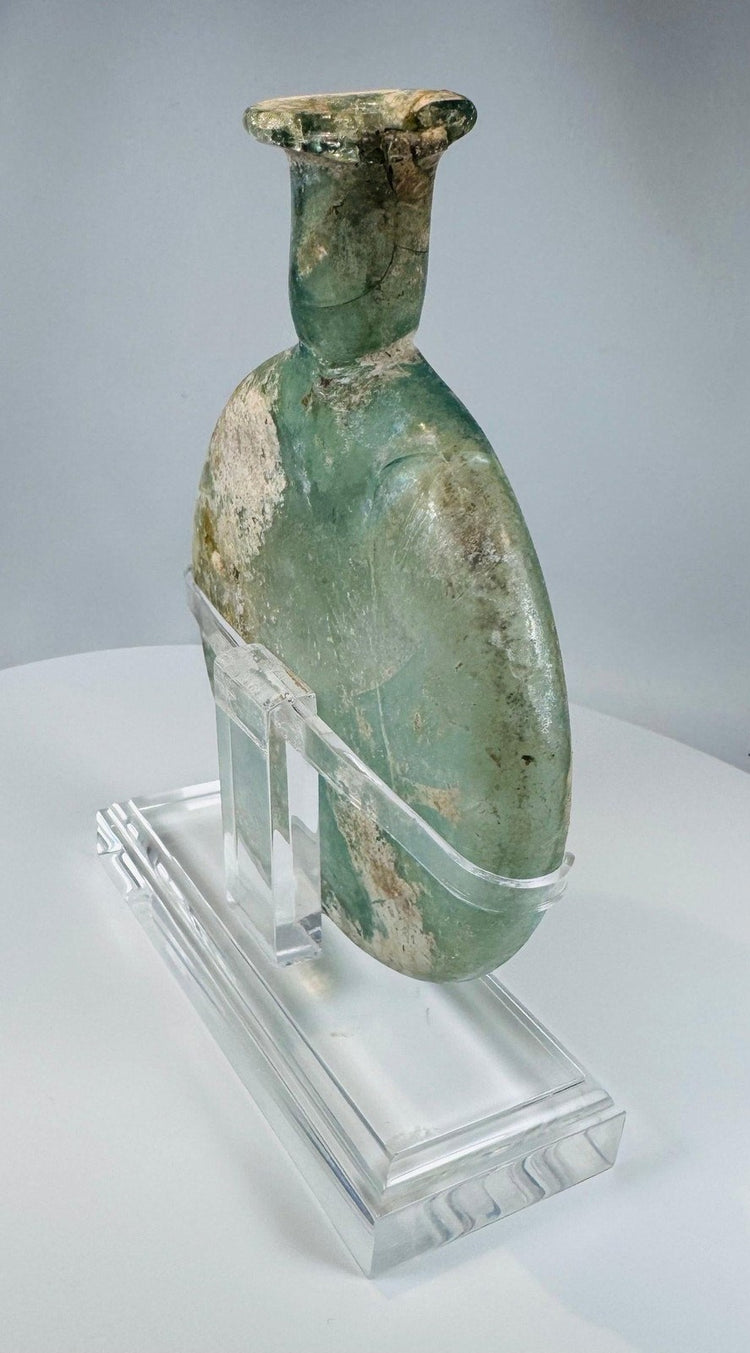
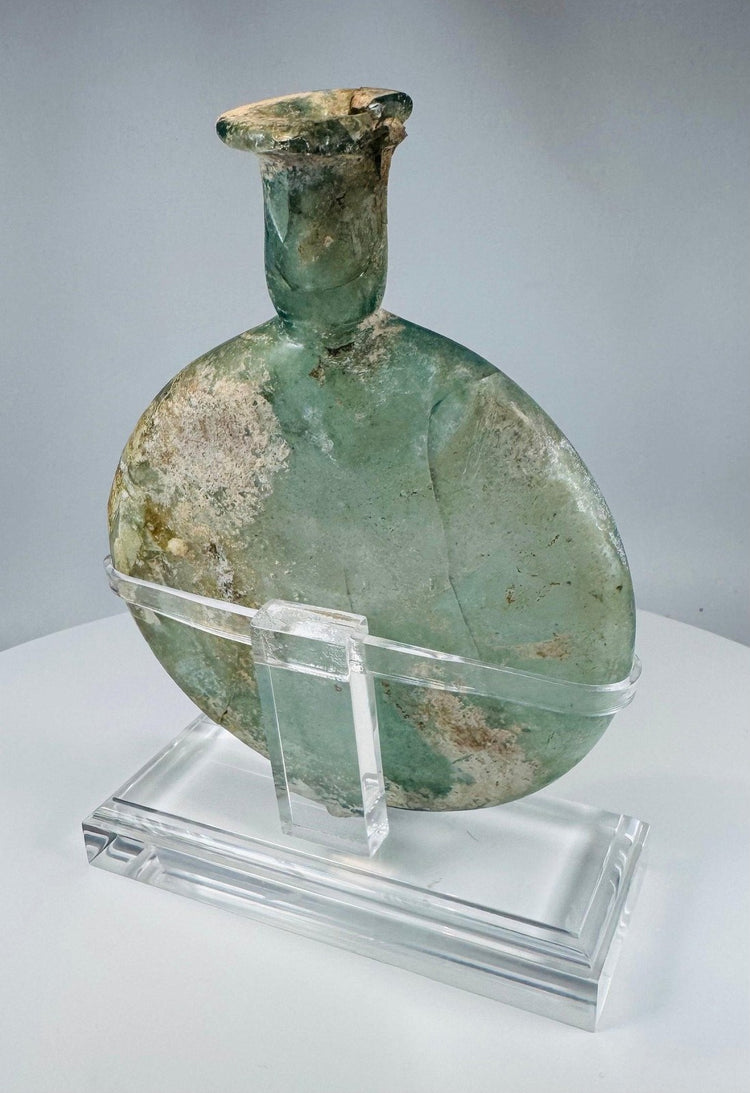
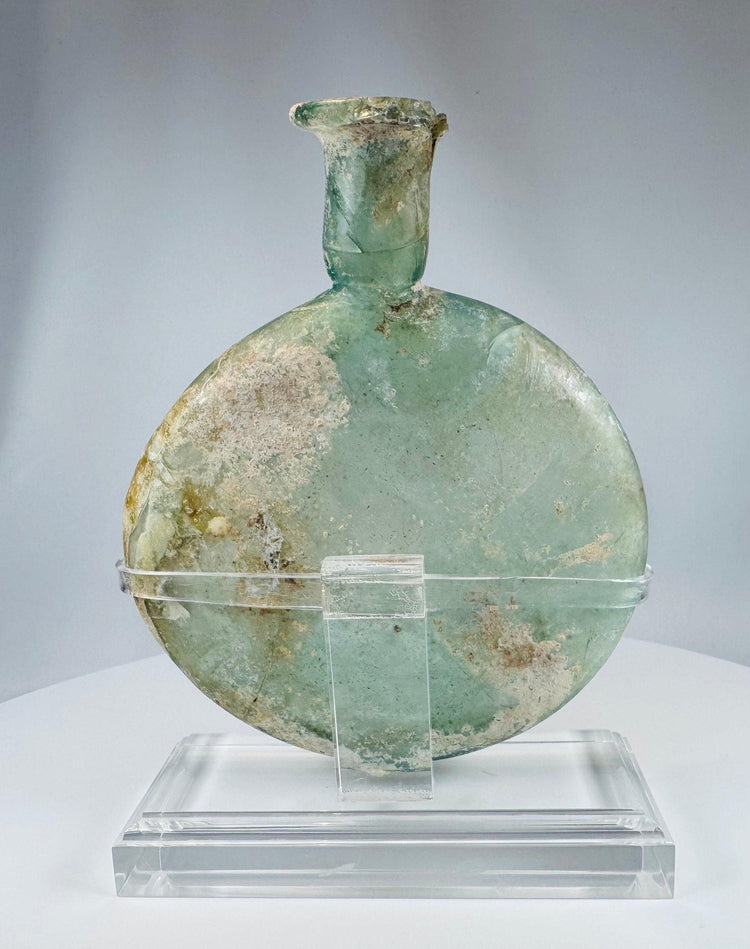
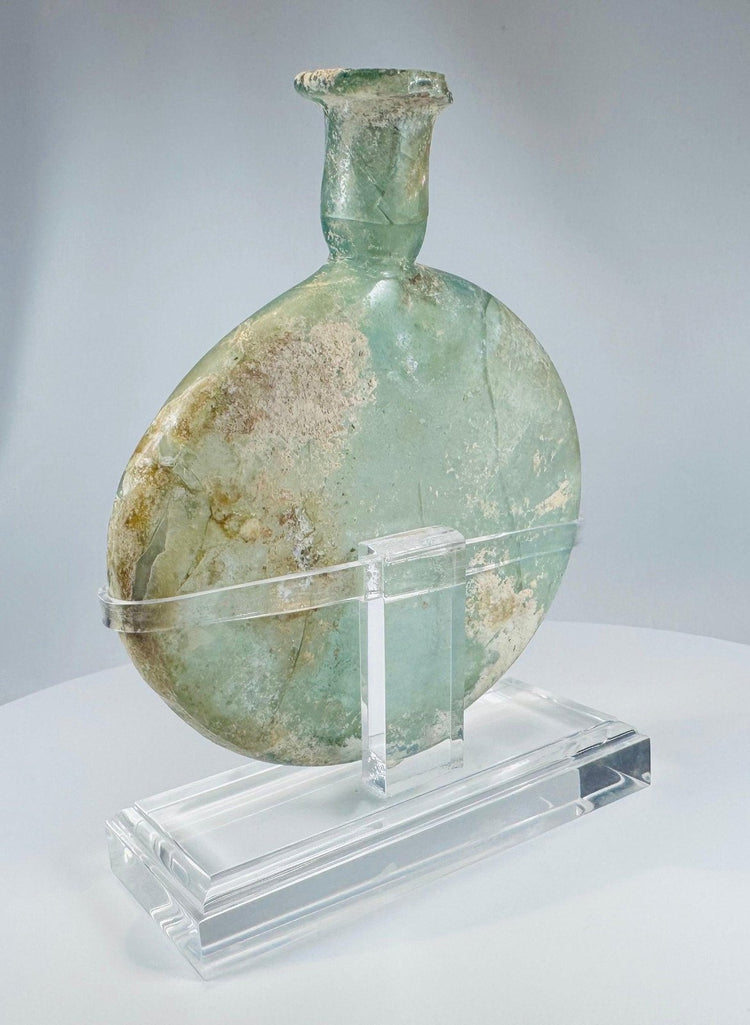
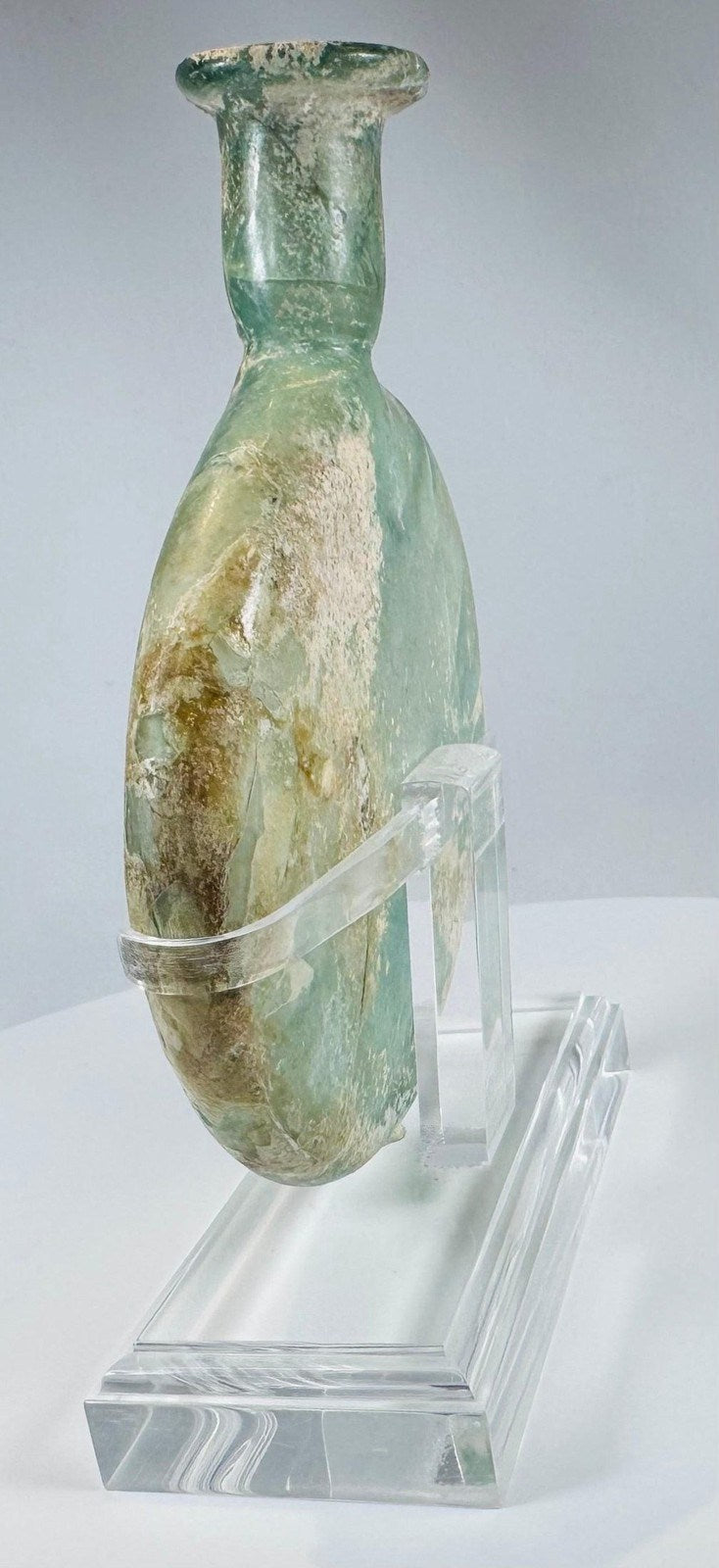
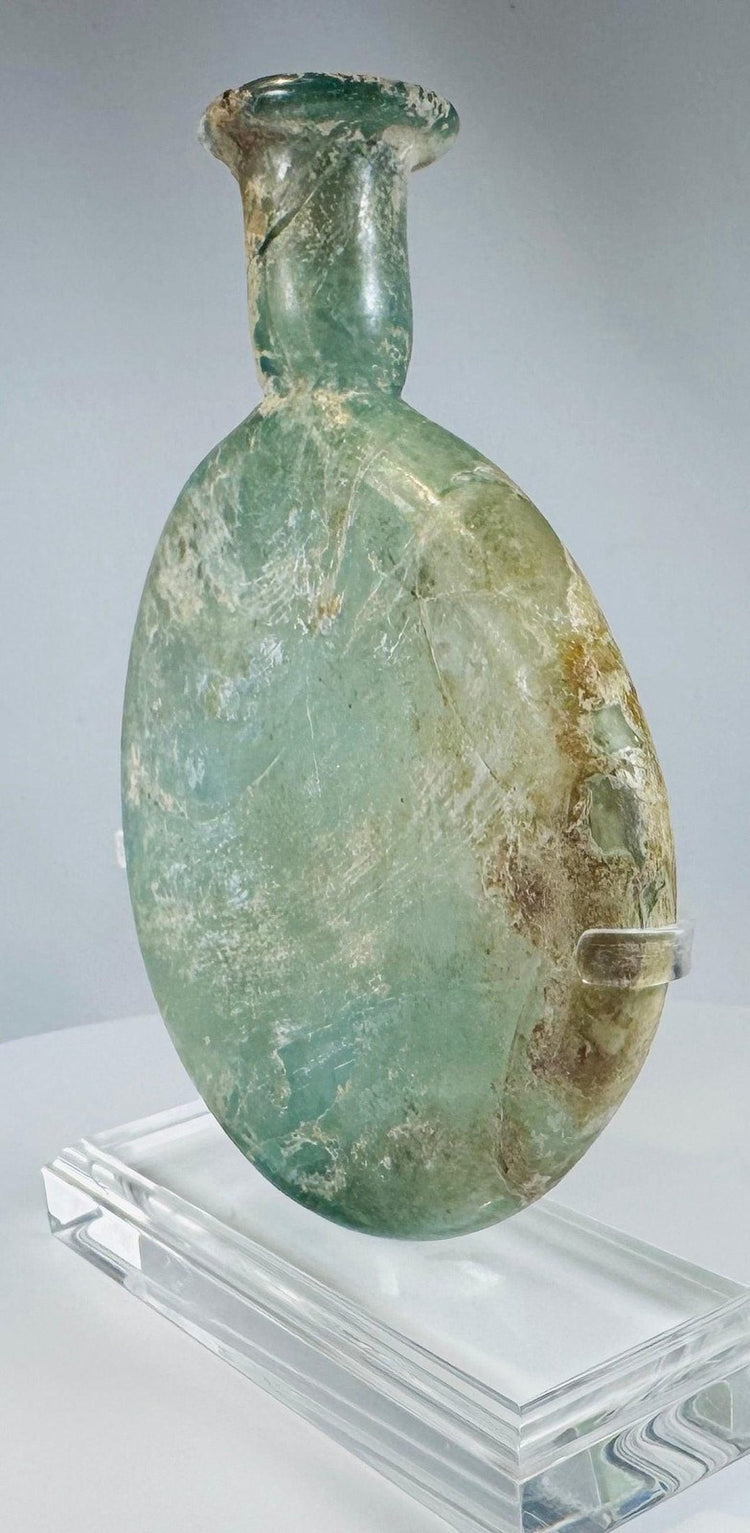
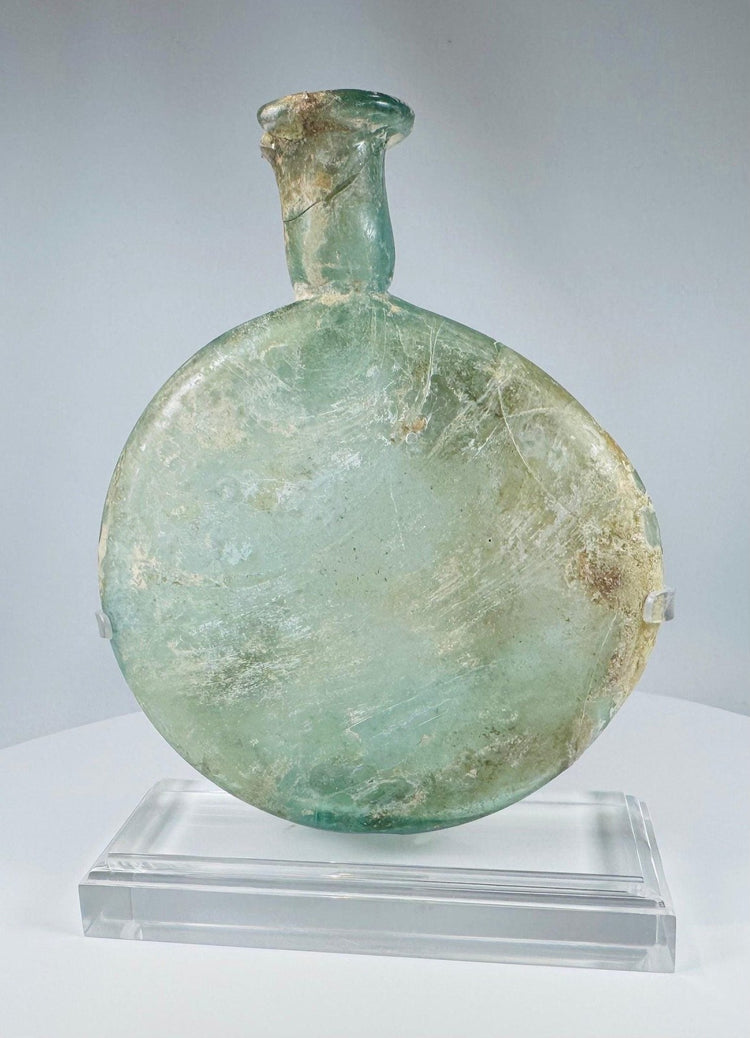
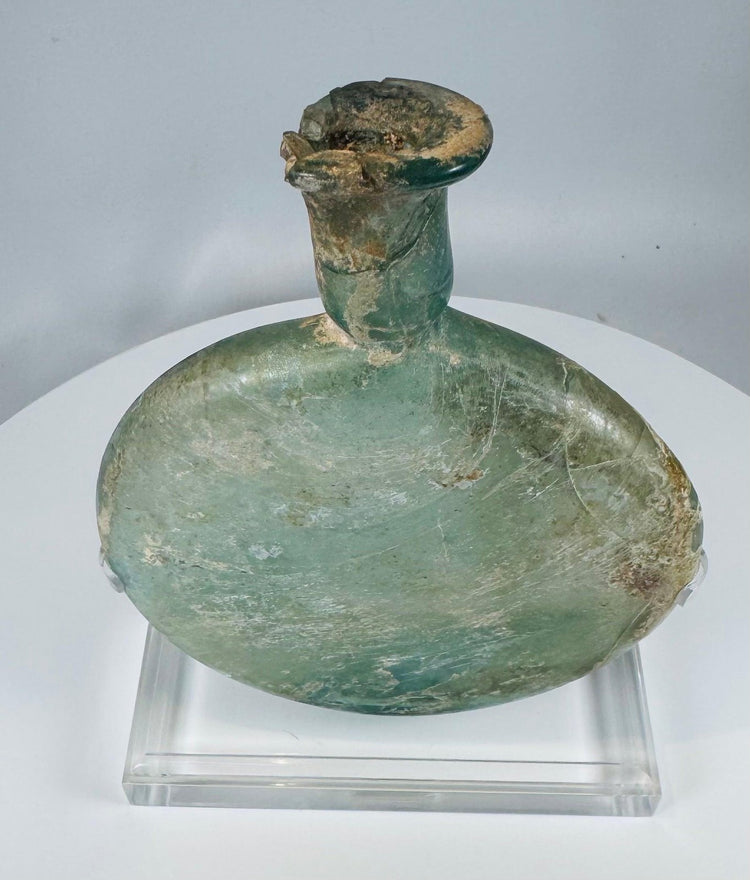
Frasco de vidrio romano de forma circular aplanada | Siglo I-III d.C.
Descripción
Más
Menos
Contexto Histórico y Origen
Región: Imperio Romano
Material: Vidrio soplado libre de color verde pálido
Período: Circa siglos I-III d.C.
Descripción
Esta antigua frasco de vidrio romano es un ejemplo sorprendente de la artesanía temprana del vidrio soplado libre, que presenta un cuerpo circular aplanado con un cuello largo cilíndrico y un borde ligeramente acampanado. Formado en vidrio translúcido de color verde pálido, la vasija muestra una iridiscencia sustancial, incrustaciones minerales y meteorización consistente con un entierro y edad prolongados.
El elegante perfil aplanado refleja una forma romana bien conocida utilizada para almacenar aceites, perfumes, líquidos medicinales o sustancias cosméticas preciosas. La vasija conserva evidencia visible de pontil y la asimetría característica asociada con las auténticas técnicas de producción antigua de vidrio soplado libre.
Las áreas de incrustación y meteorización superficial contribuyen a la apariencia arqueológica del artefacto, mientras que las reparaciones históricas visibles en el hombro y el cuello estabilizan la pieza para su exhibición. Presenta una pequeña pérdida en el borde, consistente con su edad e historial de excavación.
Montado en un soporte de exhibición de acrílico transparente hecho a medida, el frasco se presenta excepcionalmente bien como objeto de exhibición y ejemplo representativo de la tecnología de fabricación de vidrio romano.
Características
- Auténtica vasija de vidrio soplado libre romano
- Forma de frasco circular aplanado
- Vidrio translúcido de color verde pálido
- Evidencia visible de pontil
- Incrustaciones superficiales y meteorización por entierro
- Soporte de exhibición personalizado incluido
- Reparación histórica en el hombro y el cuello
- Elegante forma de frasco cosmético o de perfume del antiguo Imperio Romano
Significado Cultural
Las vasijas de vidrio romanas se extendieron cada vez más por todo el Imperio Romano tras la invención del soplado de vidrio en el siglo I a.C. Ligeras y visualmente refinadas, estas frascos se usaban comúnmente para perfumes, aceites, medicinas y líquidos de lujo, lo que reflejaba tanto el uso diario práctico como la sofisticación de la producción artesanal romana.
Ejemplos de frascos de vidrio aplanados como este son particularmente valorados hoy en día por sus cualidades escultóricas, su preservación arqueológica y la evidencia de las primeras técnicas de soplado de vidrio que revolucionaron la manufactura antigua.
Estado
Estado antiguo con el desgaste esperado por la edad, incrustaciones de entierro, depósitos minerales y meteorización en toda la pieza. Reparación visible en el área del cuello y el hombro. Pequeña pérdida en el borde. Estado general estable y exhibible.
Dimensiones (Aproximadas)
Altura: 5.75 in
Edad (Aproximada)
1,700–2,000 años de antigüedad
Procedencia
Ofrecida por Thomaston Place Auction Galleries, Thomaston, Maine, Estados Unidos, el 24 de agosto de 2013, como lote 487. Después de la subasta, la pieza entró en una colección privada en Windsor, Connecticut, Estados Unidos.
Más información
Examine una vasija de vidrio romano notablemente conservada en el Museo Abbey
Explore nuestra Colección de artefactos romanos y griegos
Descripción
Contexto Histórico y Origen
Región: Imperio Romano
Material: Vidrio soplado libre de color verde pálido
Período: Circa siglos I-III d.C.
Descripción
Esta antigua frasco de vidrio romano es un ejemplo sorprendente de la artesanía temprana del vidrio soplado libre, que presenta un cuerpo circular aplanado con un cuello largo cilíndrico y un borde ligeramente acampanado. Formado en vidrio translúcido de color verde pálido, la vasija muestra una iridiscencia sustancial, incrustaciones minerales y meteorización consistente con un entierro y edad prolongados.
El elegante perfil aplanado refleja una forma romana bien conocida utilizada para almacenar aceites, perfumes, líquidos medicinales o sustancias cosméticas preciosas. La vasija conserva evidencia visible de pontil y la asimetría característica asociada con las auténticas técnicas de producción antigua de vidrio soplado libre.
Las áreas de incrustación y meteorización superficial contribuyen a la apariencia arqueológica del artefacto, mientras que las reparaciones históricas visibles en el hombro y el cuello estabilizan la pieza para su exhibición. Presenta una pequeña pérdida en el borde, consistente con su edad e historial de excavación.
Montado en un soporte de exhibición de acrílico transparente hecho a medida, el frasco se presenta excepcionalmente bien como objeto de exhibición y ejemplo representativo de la tecnología de fabricación de vidrio romano.
Características
- Auténtica vasija de vidrio soplado libre romano
- Forma de frasco circular aplanado
- Vidrio translúcido de color verde pálido
- Evidencia visible de pontil
- Incrustaciones superficiales y meteorización por entierro
- Soporte de exhibición personalizado incluido
- Reparación histórica en el hombro y el cuello
- Elegante forma de frasco cosmético o de perfume del antiguo Imperio Romano
Significado Cultural
Las vasijas de vidrio romanas se extendieron cada vez más por todo el Imperio Romano tras la invención del soplado de vidrio en el siglo I a.C. Ligeras y visualmente refinadas, estas frascos se usaban comúnmente para perfumes, aceites, medicinas y líquidos de lujo, lo que reflejaba tanto el uso diario práctico como la sofisticación de la producción artesanal romana.
Ejemplos de frascos de vidrio aplanados como este son particularmente valorados hoy en día por sus cualidades escultóricas, su preservación arqueológica y la evidencia de las primeras técnicas de soplado de vidrio que revolucionaron la manufactura antigua.
Estado
Estado antiguo con el desgaste esperado por la edad, incrustaciones de entierro, depósitos minerales y meteorización en toda la pieza. Reparación visible en el área del cuello y el hombro. Pequeña pérdida en el borde. Estado general estable y exhibible.
Dimensiones (Aproximadas)
Altura: 5.75 in
Edad (Aproximada)
1,700–2,000 años de antigüedad
Procedencia
Ofrecida por Thomaston Place Auction Galleries, Thomaston, Maine, Estados Unidos, el 24 de agosto de 2013, como lote 487. Después de la subasta, la pieza entró en una colección privada en Windsor, Connecticut, Estados Unidos.
Más información
Examine una vasija de vidrio romano notablemente conservada en el Museo Abbey
Explore nuestra Colección de artefactos romanos y griegos
También te puede interesar
