



Set of 11 Medieval Crusader Bronze Coins | Levant | Circa 11th–13th Century CE
- Precio habitual
- $250.00
- Precio de venta
- $250.00
- Precio habitual
No se pudo cargar la disponibilidad de retiro


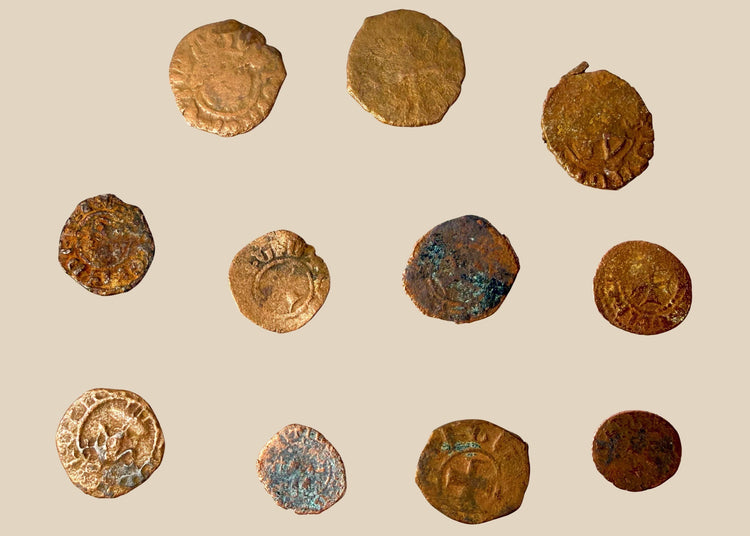
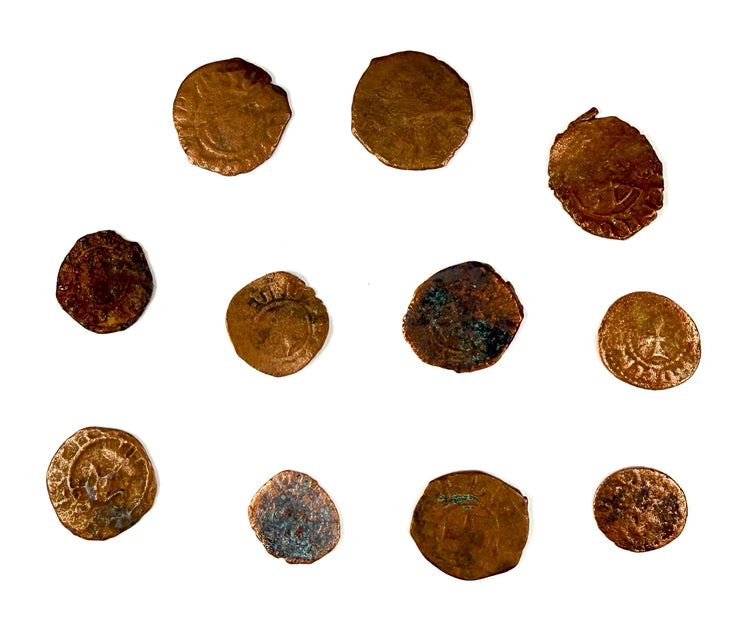
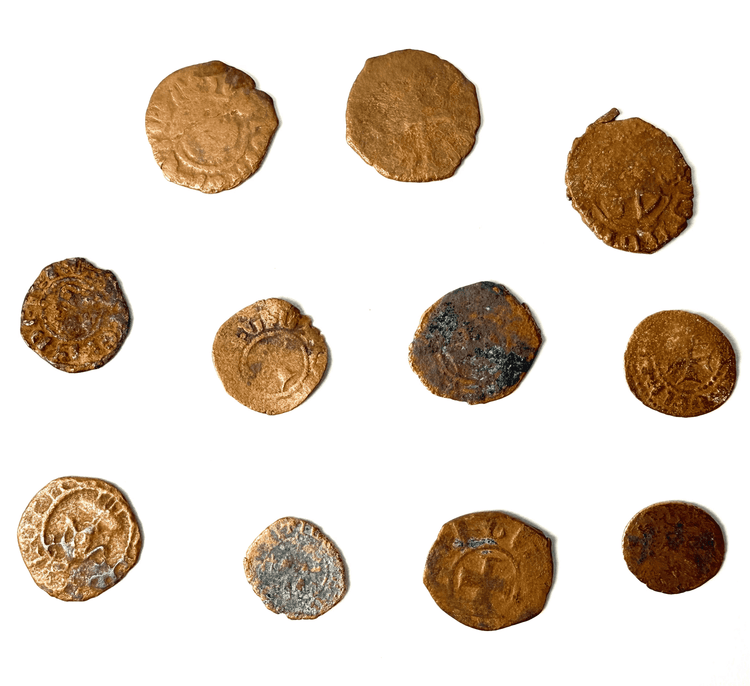
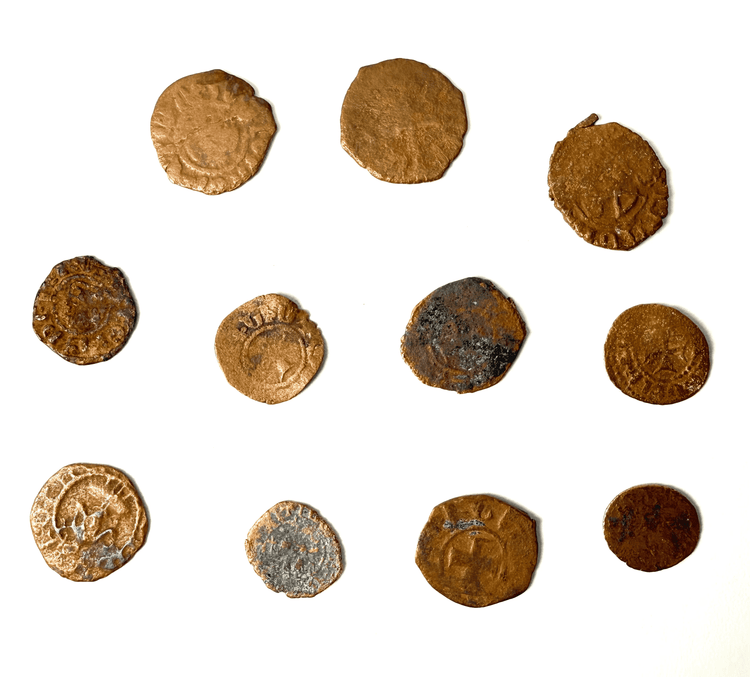
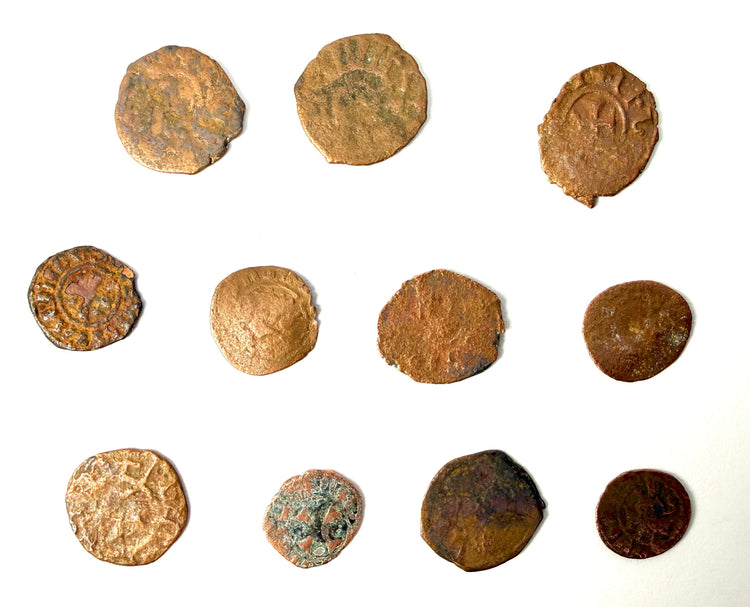
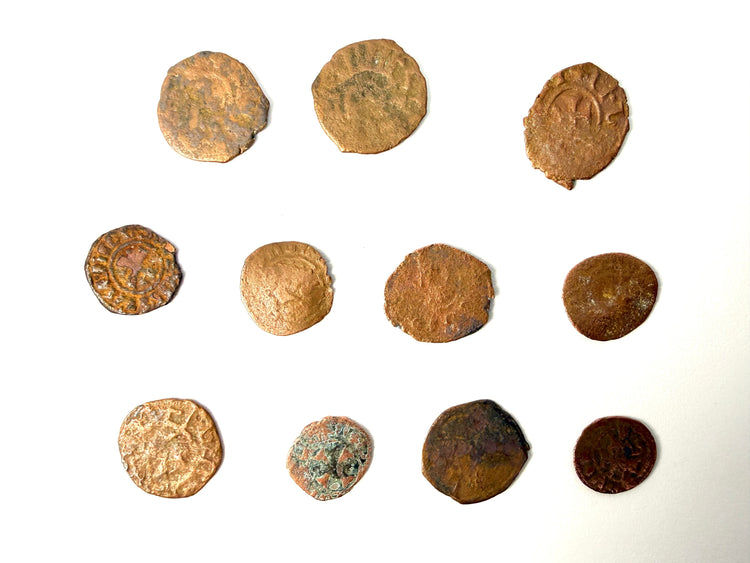
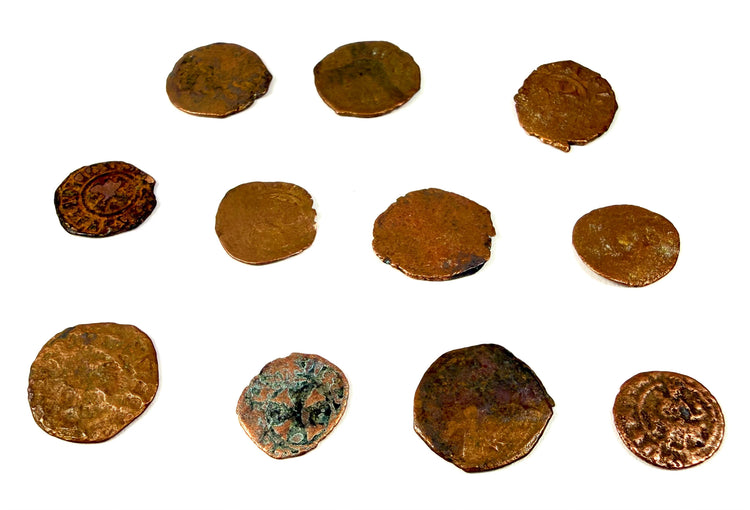
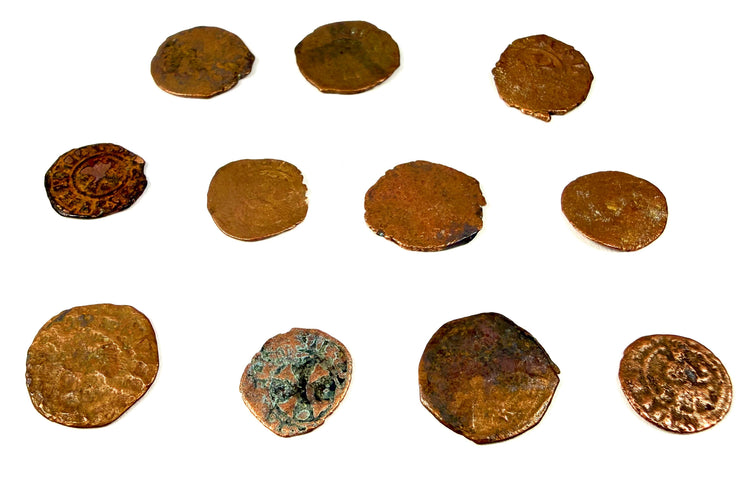
Set of 11 Medieval Crusader Bronze Coins | Levant | Circa 11th–13th Century CE
Descripción
Más
Menos
Historical Context & Origin
Region: Crusader States, Levant (attributed)
Material: Bronze and copper-alloy coinage (attributed)
Period: Medieval Crusader Period, circa 11th–13th Century CE
Description
This collection of eleven medieval copper-alloy coins, attributed to the Crusader period, offers a fascinating glimpse into the monetary traditions, political authority, and cultural exchanges of the medieval eastern Mediterranean. Displaying a variety of surviving designs, inscriptions, and surface characteristics, the group reflects the diversity of coinage associated with the Crusader States and the wider medieval world.
The coins vary in diameter, thickness, and overall shape, with irregularly formed flans characteristic of historical hammered coin production. Several retain partially visible circular inscriptions surrounding central devices, while others exhibit worn portrait-like impressions, geometric forms, and indistinct symbols. The surviving designs provide intriguing evidence of medieval minting practices, although individual rulers, mints, and denominations have not been conclusively identified.
A particularly interesting feature of the collection is the variation in preservation. Some examples retain relatively clear raised borders and partial lettering, while others have undergone extensive surface wear that has softened or obscured their original designs.
The surfaces display a rich assortment of coppery brown, reddish-gold, dark chocolate, and greenish-blue patination. Several coins exhibit localized verdigris and mineral deposits, creating visually distinctive contrasts between the surviving metal surfaces and areas of oxidation.
The group also illustrates the irregular nature of medieval coin production. Slightly off-centre impressions, uneven circumferences, and differences in the positioning of inscriptions are apparent across the collection. These characteristics reflect the practical challenges of producing coinage using individually prepared blanks and hand-operated striking techniques.
Features
- Attributed to the Crusader period of the 11th–13th centuries CE
- Varied coin diameters, thicknesses, and irregular flan shapes
- Several examples retaining partial inscriptions and circular legends
- Surviving raised devices, worn central impressions, and decorative borders
- Evidence of traditional hand-struck coin production
- Attractive copper-brown, reddish, and dark earthy patination
- Localized green and blue-green oxidation and mineral deposits
- Differences in preservation and surface texture throughout the group
- Historical association with medieval commerce, political authority, and cultural exchange
Cultural Significance
Coinage issued during the Crusader period played an essential role in the economic and political development of the eastern Mediterranean. Following the establishment of the Crusader States in the late 11th century, European rulers and their successors introduced monetary systems influenced by both Western European traditions and the established economies of the Byzantine and Islamic worlds.
The Kingdom of Jerusalem, Principality of Antioch, County of Tripoli, and County of Edessa produced various forms of coinage intended to facilitate commerce, support military expenditure, and reinforce political authority.
Coins frequently carried religious and political imagery, including crosses, architectural representations, portraits, and inscriptions identifying ruling authorities or places of issue. Such designs served as important expressions of legitimacy in territories characterized by shifting political boundaries and diverse religious communities.
Crusader-era coinage also demonstrates the remarkable interconnectedness of medieval economies. Christian, Muslim, and Jewish merchants participated in commercial networks extending across the Mediterranean and Near East, where different currencies circulated alongside one another.
The production of coins required specialized knowledge of metallurgy, die engraving, and striking techniques. Individual blanks were prepared and struck using engraved dies, a process that could result in variations in shape, thickness, impression depth, and alignment.
Condition
The eleven coins remain in varied numismatic condition, with extensive surface wear, oxidation, mineral deposits, discoloration, and irregularities consistent with their reported medieval age.
Several examples retain partially recognizable inscriptions, circular borders, and central devices, while others exhibit substantially worn or indistinct impressions.
The surfaces range from reddish and golden-brown copper tones to darker brown patination, with localized patches of blue-green and green oxidation. Some coins display heavier mineral accumulation, surface pitting, and corrosion.
The irregular flans exhibit varying degrees of edge wear, small chips, flattened areas, and minor losses. Differences in thickness, striking quality, and surviving relief are visible throughout the collection.
Dimensions (Approximate)
Largest Coin: 1 in diameter
Smallest Coin: 0.63 in diameter
Quantity: 11 individual coins
Age (Approximate)
725–1,025 years old
Provenance
Formerly held in a private numismatic collection in Brooklyn, New York, USA.
Learn More
Discover the history of medieval Crusader coinage through the Museum of the Order of St John.
Browse our collection of Ancient and Historical Coins.
Descripción
Historical Context & Origin
Region: Crusader States, Levant (attributed)
Material: Bronze and copper-alloy coinage (attributed)
Period: Medieval Crusader Period, circa 11th–13th Century CE
Description
This collection of eleven medieval copper-alloy coins, attributed to the Crusader period, offers a fascinating glimpse into the monetary traditions, political authority, and cultural exchanges of the medieval eastern Mediterranean. Displaying a variety of surviving designs, inscriptions, and surface characteristics, the group reflects the diversity of coinage associated with the Crusader States and the wider medieval world.
The coins vary in diameter, thickness, and overall shape, with irregularly formed flans characteristic of historical hammered coin production. Several retain partially visible circular inscriptions surrounding central devices, while others exhibit worn portrait-like impressions, geometric forms, and indistinct symbols. The surviving designs provide intriguing evidence of medieval minting practices, although individual rulers, mints, and denominations have not been conclusively identified.
A particularly interesting feature of the collection is the variation in preservation. Some examples retain relatively clear raised borders and partial lettering, while others have undergone extensive surface wear that has softened or obscured their original designs.
The surfaces display a rich assortment of coppery brown, reddish-gold, dark chocolate, and greenish-blue patination. Several coins exhibit localized verdigris and mineral deposits, creating visually distinctive contrasts between the surviving metal surfaces and areas of oxidation.
The group also illustrates the irregular nature of medieval coin production. Slightly off-centre impressions, uneven circumferences, and differences in the positioning of inscriptions are apparent across the collection. These characteristics reflect the practical challenges of producing coinage using individually prepared blanks and hand-operated striking techniques.
Features
- Attributed to the Crusader period of the 11th–13th centuries CE
- Varied coin diameters, thicknesses, and irregular flan shapes
- Several examples retaining partial inscriptions and circular legends
- Surviving raised devices, worn central impressions, and decorative borders
- Evidence of traditional hand-struck coin production
- Attractive copper-brown, reddish, and dark earthy patination
- Localized green and blue-green oxidation and mineral deposits
- Differences in preservation and surface texture throughout the group
- Historical association with medieval commerce, political authority, and cultural exchange
Cultural Significance
Coinage issued during the Crusader period played an essential role in the economic and political development of the eastern Mediterranean. Following the establishment of the Crusader States in the late 11th century, European rulers and their successors introduced monetary systems influenced by both Western European traditions and the established economies of the Byzantine and Islamic worlds.
The Kingdom of Jerusalem, Principality of Antioch, County of Tripoli, and County of Edessa produced various forms of coinage intended to facilitate commerce, support military expenditure, and reinforce political authority.
Coins frequently carried religious and political imagery, including crosses, architectural representations, portraits, and inscriptions identifying ruling authorities or places of issue. Such designs served as important expressions of legitimacy in territories characterized by shifting political boundaries and diverse religious communities.
Crusader-era coinage also demonstrates the remarkable interconnectedness of medieval economies. Christian, Muslim, and Jewish merchants participated in commercial networks extending across the Mediterranean and Near East, where different currencies circulated alongside one another.
The production of coins required specialized knowledge of metallurgy, die engraving, and striking techniques. Individual blanks were prepared and struck using engraved dies, a process that could result in variations in shape, thickness, impression depth, and alignment.
Condition
The eleven coins remain in varied numismatic condition, with extensive surface wear, oxidation, mineral deposits, discoloration, and irregularities consistent with their reported medieval age.
Several examples retain partially recognizable inscriptions, circular borders, and central devices, while others exhibit substantially worn or indistinct impressions.
The surfaces range from reddish and golden-brown copper tones to darker brown patination, with localized patches of blue-green and green oxidation. Some coins display heavier mineral accumulation, surface pitting, and corrosion.
The irregular flans exhibit varying degrees of edge wear, small chips, flattened areas, and minor losses. Differences in thickness, striking quality, and surviving relief are visible throughout the collection.
Dimensions (Approximate)
Largest Coin: 1 in diameter
Smallest Coin: 0.63 in diameter
Quantity: 11 individual coins
Age (Approximate)
725–1,025 years old
Provenance
Formerly held in a private numismatic collection in Brooklyn, New York, USA.
Learn More
Discover the history of medieval Crusader coinage through the Museum of the Order of St John.
Browse our collection of Ancient and Historical Coins.
También te puede interesar
