

South Indian Sandstone Ganesha Votive | Circa 18th – 19th Century
- Precio habitual
- $650.00
- Precio de venta
- $650.00
- Precio habitual
No se pudo cargar la disponibilidad de retiro


South Indian Sandstone Ganesha Votive | Circa 18th – 19th Century
Descripción
Más
Menos
Historical Context & Origin
Region: South India
Material: Carved sandstone with remnants of surface pigment
Period: 18th–19th Century
Description
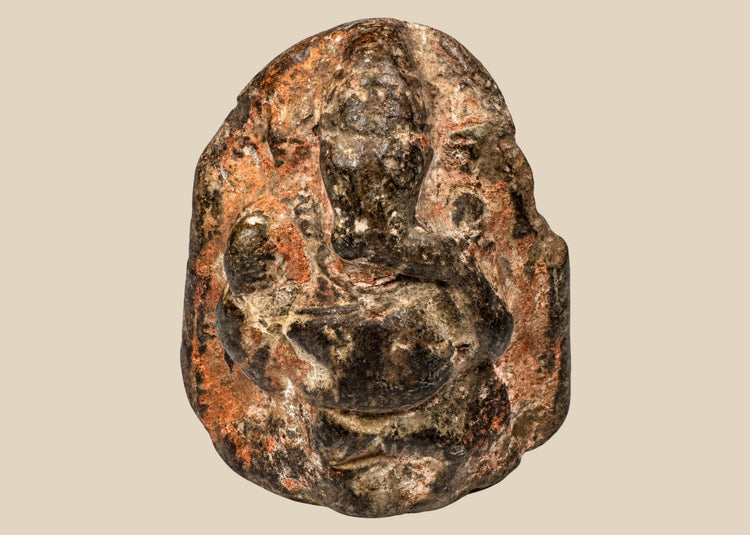
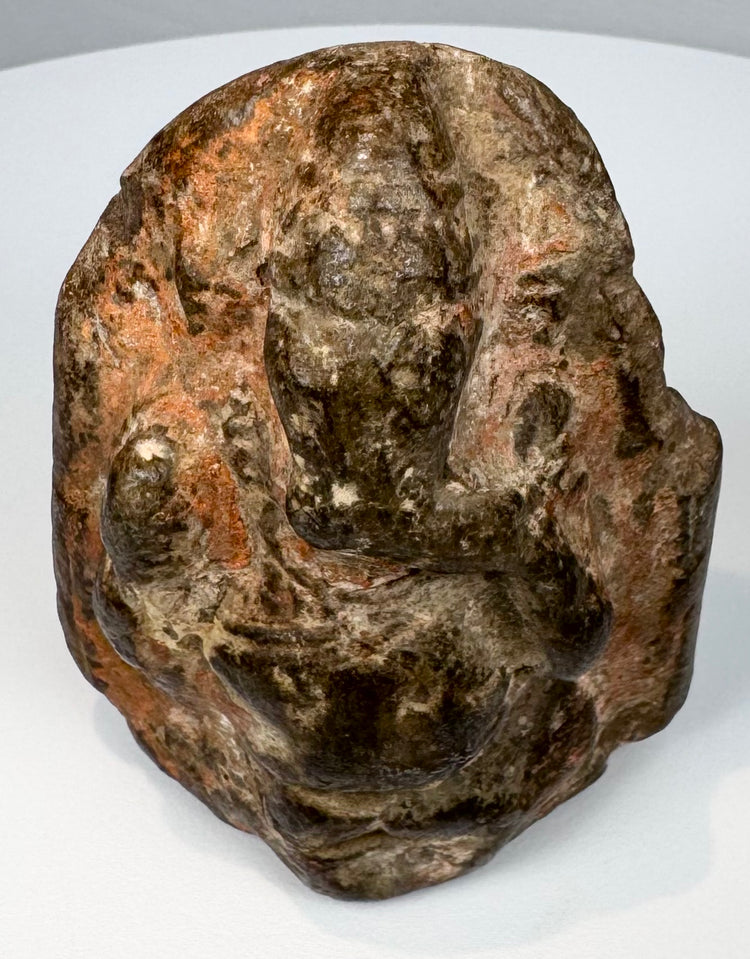
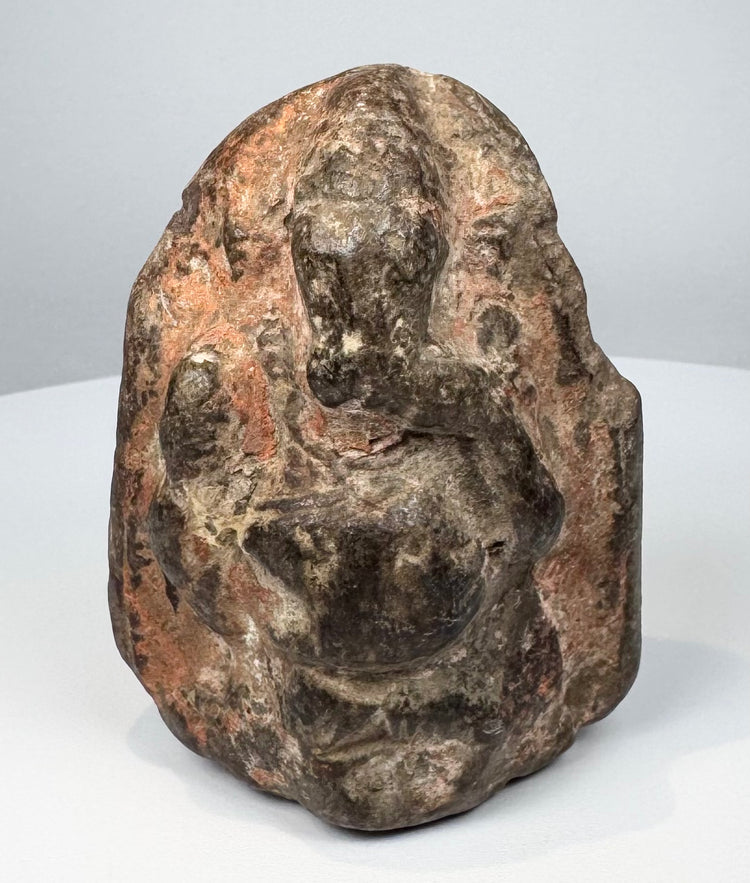
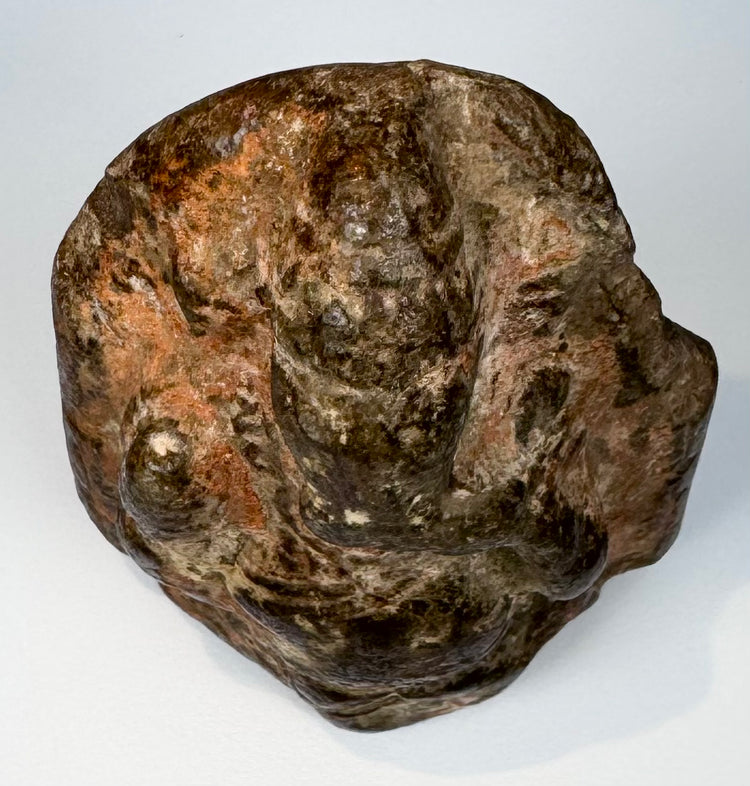
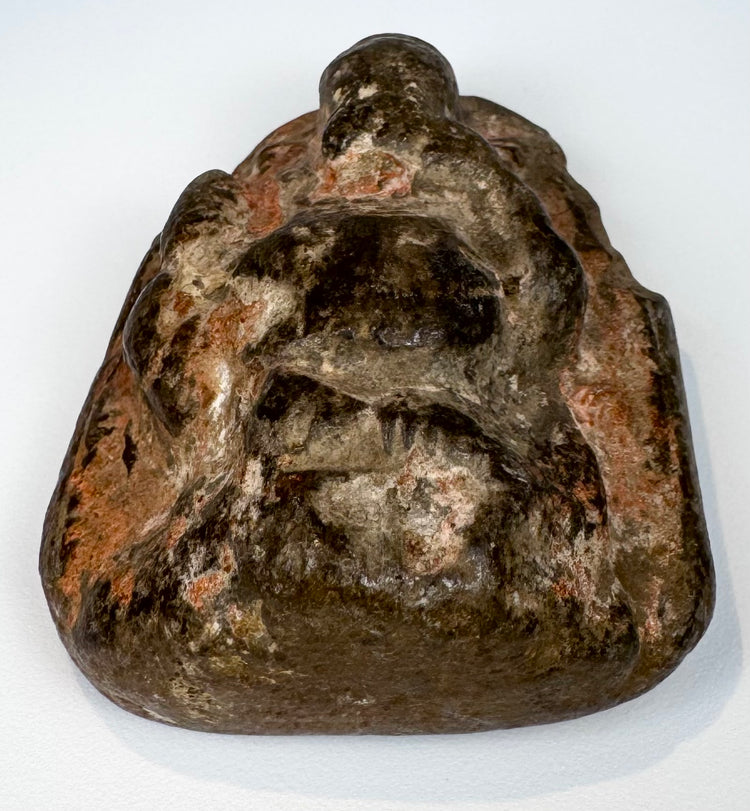
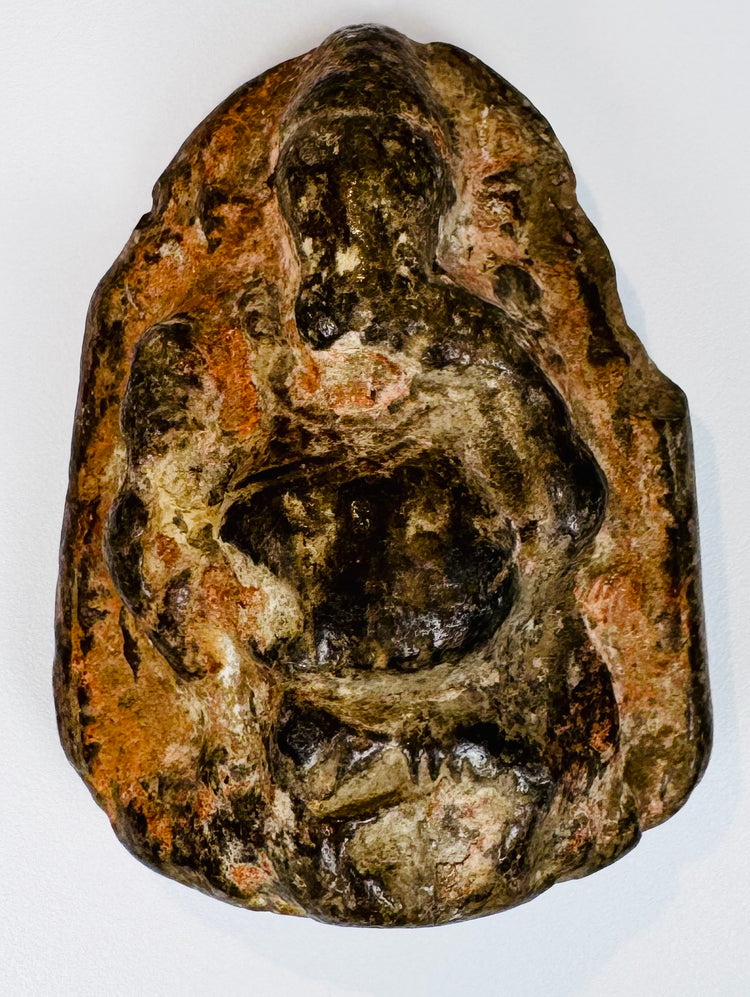
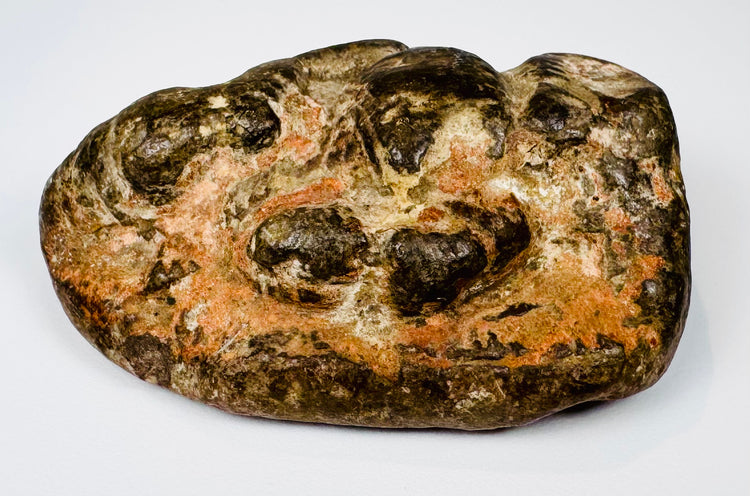
This intimate South Indian sandstone votive depicts Ganesha, one of the most recognizable and widely revered deities within the Hindu tradition. The compact devotional sculpture presents the elephant-headed deity seated within a deeply carved architectural or shrine-like surround.
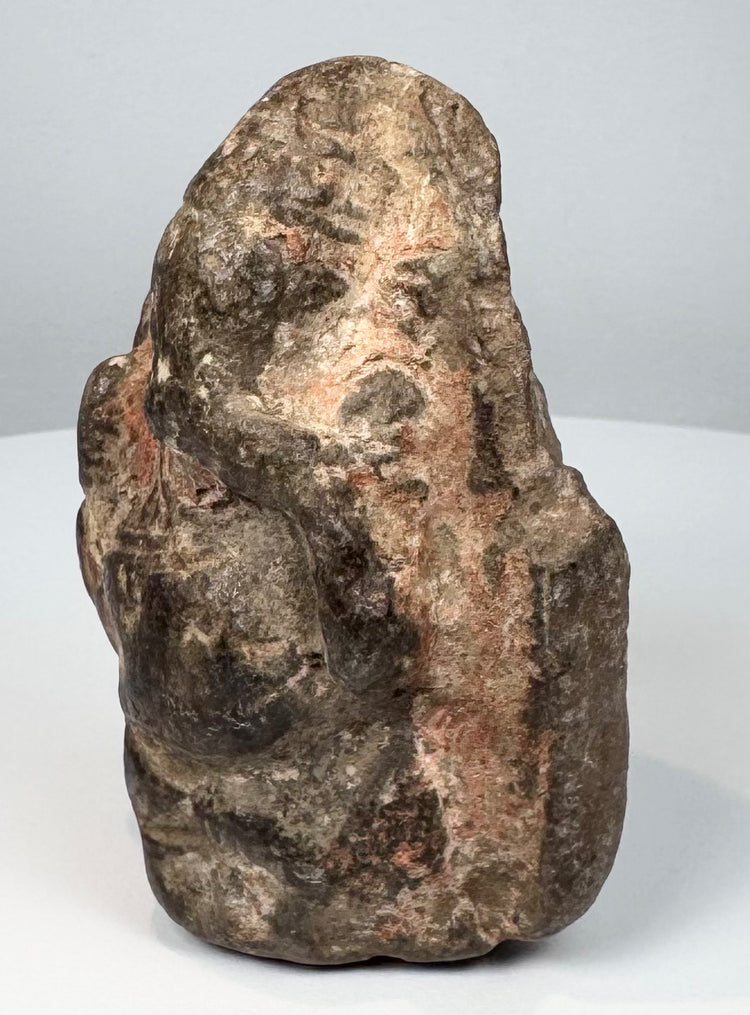
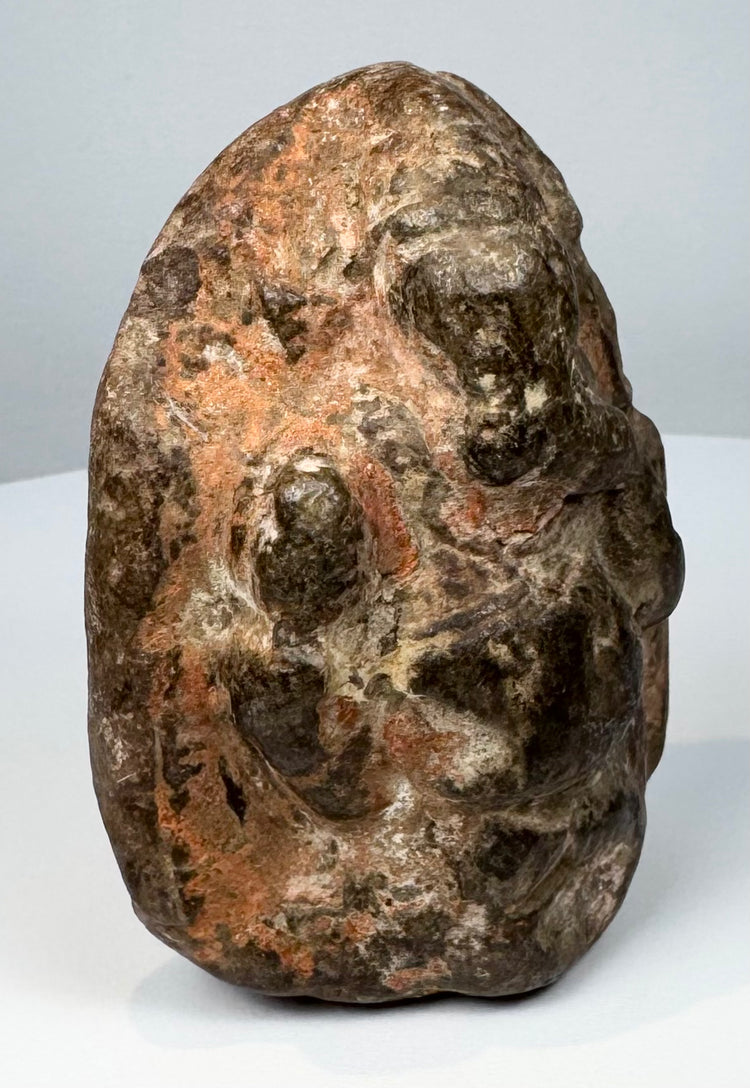
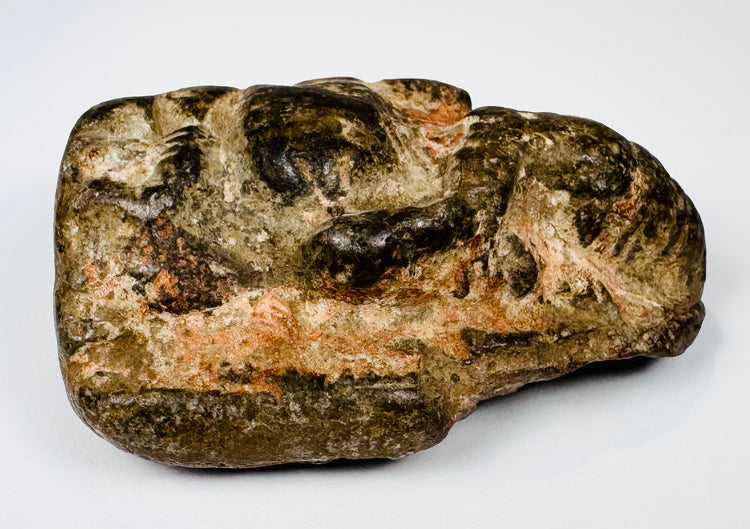
Despite centuries of surface wear, the characteristic form of Ganesha remains discernible, with the prominent elephantine head and trunk rising above a substantial seated body. The surrounding relief retains additional sculptural details now softened through age and handling, giving the piece the heavily worn and tactile character associated with an object that may have experienced prolonged devotional use.
Particularly notable are scattered remnants of pink to reddish surface pigment preserved across the sandstone. Such coloration adds an important dimension to the object, providing evidence of its formerly more vivid appearance and potentially reflecting either decorative pigmentation or devotional applications associated with ritual practice.
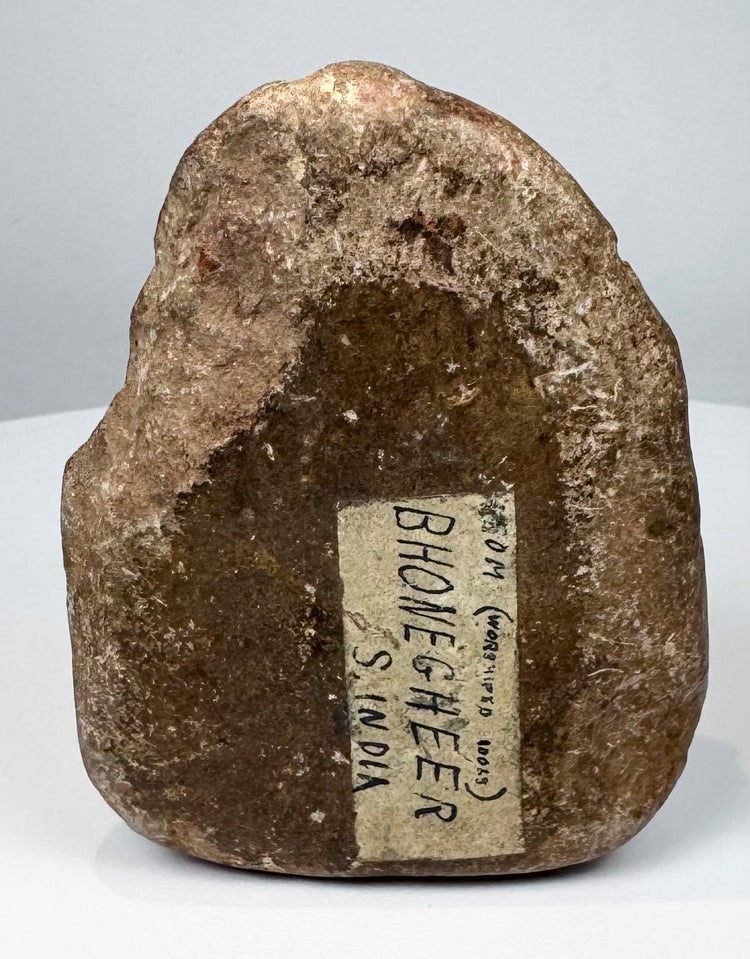
An old handwritten collection label remains affixed to the reverse and reads “Bhonegheer S. India,” preserving an important historic association with the object and providing additional evidence of its collecting history.
The small scale suggests that the sculpture was intended as a personal or localized devotional image rather than a monumental architectural carving, making it an evocative surviving example of vernacular South Indian religious art.
Features
- Depicts the Hindu deity Ganesha
- Compact seated devotional composition
- Elephant-headed form remains clearly identifiable despite extensive wear
- Deeply carved shrine-like surrounding elements
- Scattered surviving pink and reddish surface pigment
- Naturally developed darkened patina and mineral deposits
- Significant surface smoothing consistent with age and prolonged handling or devotional use
- Old handwritten collection label to reverse reading “Bhonegheer S. India”
Cultural Significance
Ganesha, the elephant-headed son of Shiva and Parvati, occupies an especially important position within Hindu religious tradition. Revered as the remover of obstacles, patron of beginnings, and deity associated with wisdom, prosperity, intellect, and good fortune, his image has traditionally been invoked before journeys, ceremonies, important undertakings, and significant life events.
Small stone images such as this were well suited to household shrines, localized places of worship, and personal devotional environments. Comparable 18th–19th century Indian stone Ganesha sculptures demonstrate the continuation of this deeply rooted devotional tradition into the late pre-modern period.
The surviving pigment and pronounced wear are particularly compelling, as they speak not only to the sculpture's manufacture but also to its history as a potentially active devotional object rather than one created solely for decorative display.
Condition
Good antique condition consistent with considerable age and devotional use. The surface exhibits extensive wear, smoothing, abrasions, mineral deposits, discoloration, pigment loss, and scattered small losses.
An old loss is present to the upper left portion of the carving, as also recorded in the prior auction condition report. Remnants of pink and reddish pigment remain visible throughout. The old handwritten collection label remains affixed to the reverse.
Dimensions (Approximate)
Height: 3 in
Width: 2.35 in
Depth: 1.2 in
Age (Approximate)
125–325 years old
Provenance
Long Island, New York private collection, where the piece was preserved within an established collection of Asian antiquities and historical objects.
Formerly in the collection of Nancy and John Hyde Devoe, New York City and New Jersey, active collectors during the 1950s–1970s. Their collection was assembled during a significant period of American interest in Asian, ancient, and ethnographic art.
An old handwritten label preserved on the reverse reads “Bhonegheer S. India,” providing a valuable historic geographic association that accompanied the sculpture through its earlier collecting history.
Subsequently handled by Artemis Fine Arts Gallery, a specialist dealer in ancient, classical, ethnographic, and culturally significant works of art.
Learn More
Learn about a South Indian stone sculpture of Ganesha from Tamil Nadu in the collection of the Los Angeles County Museum of Art (LACMA)
Discover our curated Buddhist and Hindu Relics: Sacred Statues Collection
Descripción
Historical Context & Origin
Region: South India
Material: Carved sandstone with remnants of surface pigment
Period: 18th–19th Century
Description
This intimate South Indian sandstone votive depicts Ganesha, one of the most recognizable and widely revered deities within the Hindu tradition. The compact devotional sculpture presents the elephant-headed deity seated within a deeply carved architectural or shrine-like surround.
Despite centuries of surface wear, the characteristic form of Ganesha remains discernible, with the prominent elephantine head and trunk rising above a substantial seated body. The surrounding relief retains additional sculptural details now softened through age and handling, giving the piece the heavily worn and tactile character associated with an object that may have experienced prolonged devotional use.
Particularly notable are scattered remnants of pink to reddish surface pigment preserved across the sandstone. Such coloration adds an important dimension to the object, providing evidence of its formerly more vivid appearance and potentially reflecting either decorative pigmentation or devotional applications associated with ritual practice.
An old handwritten collection label remains affixed to the reverse and reads “Bhonegheer S. India,” preserving an important historic association with the object and providing additional evidence of its collecting history.
The small scale suggests that the sculpture was intended as a personal or localized devotional image rather than a monumental architectural carving, making it an evocative surviving example of vernacular South Indian religious art.
Features
- Depicts the Hindu deity Ganesha
- Compact seated devotional composition
- Elephant-headed form remains clearly identifiable despite extensive wear
- Deeply carved shrine-like surrounding elements
- Scattered surviving pink and reddish surface pigment
- Naturally developed darkened patina and mineral deposits
- Significant surface smoothing consistent with age and prolonged handling or devotional use
- Old handwritten collection label to reverse reading “Bhonegheer S. India”
Cultural Significance
Ganesha, the elephant-headed son of Shiva and Parvati, occupies an especially important position within Hindu religious tradition. Revered as the remover of obstacles, patron of beginnings, and deity associated with wisdom, prosperity, intellect, and good fortune, his image has traditionally been invoked before journeys, ceremonies, important undertakings, and significant life events.
Small stone images such as this were well suited to household shrines, localized places of worship, and personal devotional environments. Comparable 18th–19th century Indian stone Ganesha sculptures demonstrate the continuation of this deeply rooted devotional tradition into the late pre-modern period.
The surviving pigment and pronounced wear are particularly compelling, as they speak not only to the sculpture's manufacture but also to its history as a potentially active devotional object rather than one created solely for decorative display.
Condition
Good antique condition consistent with considerable age and devotional use. The surface exhibits extensive wear, smoothing, abrasions, mineral deposits, discoloration, pigment loss, and scattered small losses.
An old loss is present to the upper left portion of the carving, as also recorded in the prior auction condition report. Remnants of pink and reddish pigment remain visible throughout. The old handwritten collection label remains affixed to the reverse.
Dimensions (Approximate)
Height: 3 in
Width: 2.35 in
Depth: 1.2 in
Age (Approximate)
125–325 years old
Provenance
Long Island, New York private collection, where the piece was preserved within an established collection of Asian antiquities and historical objects.
Formerly in the collection of Nancy and John Hyde Devoe, New York City and New Jersey, active collectors during the 1950s–1970s. Their collection was assembled during a significant period of American interest in Asian, ancient, and ethnographic art.
An old handwritten label preserved on the reverse reads “Bhonegheer S. India,” providing a valuable historic geographic association that accompanied the sculpture through its earlier collecting history.
Subsequently handled by Artemis Fine Arts Gallery, a specialist dealer in ancient, classical, ethnographic, and culturally significant works of art.
Learn More
Learn about a South Indian stone sculpture of Ganesha from Tamil Nadu in the collection of the Los Angeles County Museum of Art (LACMA)
Discover our curated Buddhist and Hindu Relics: Sacred Statues Collection
También te puede interesar
