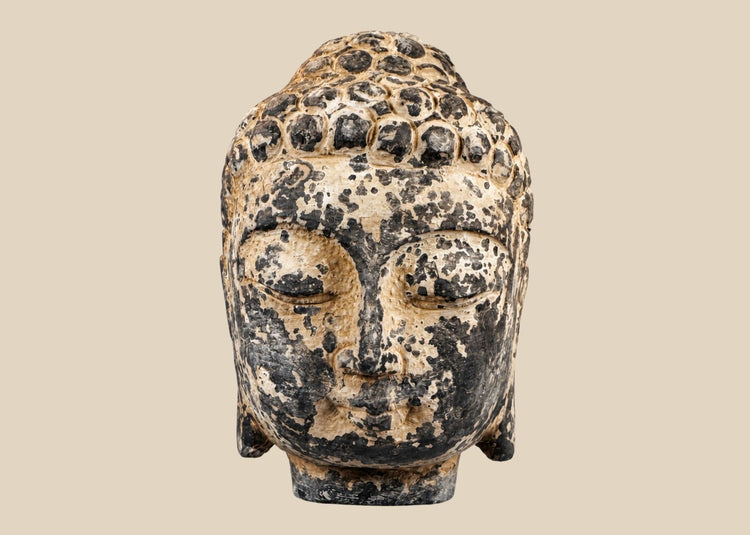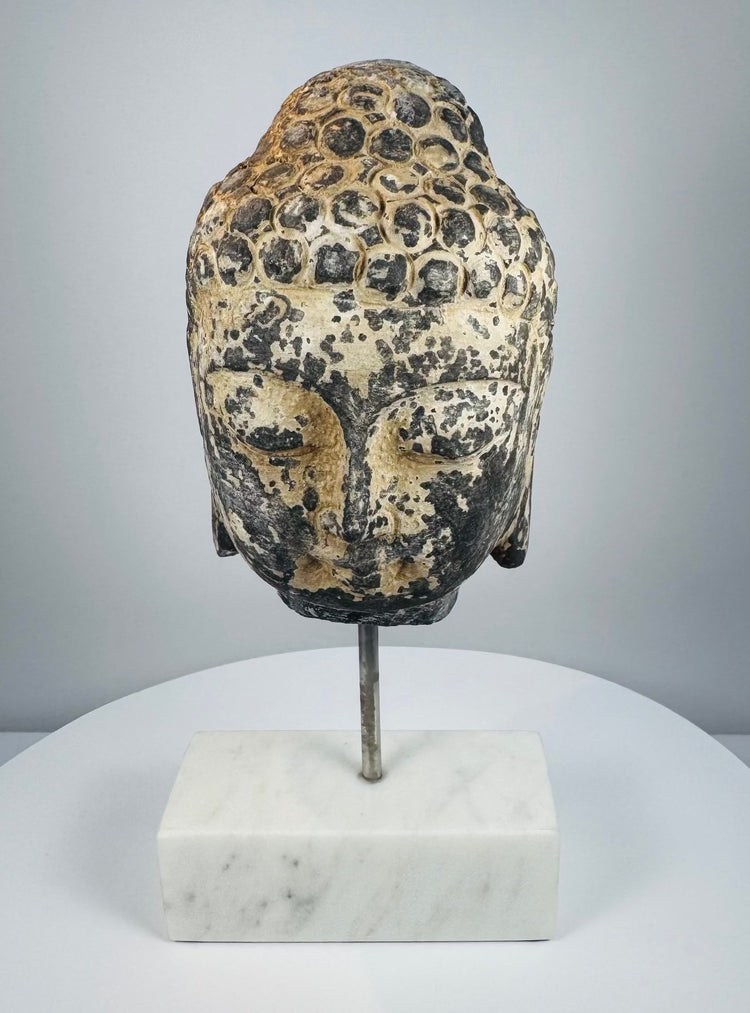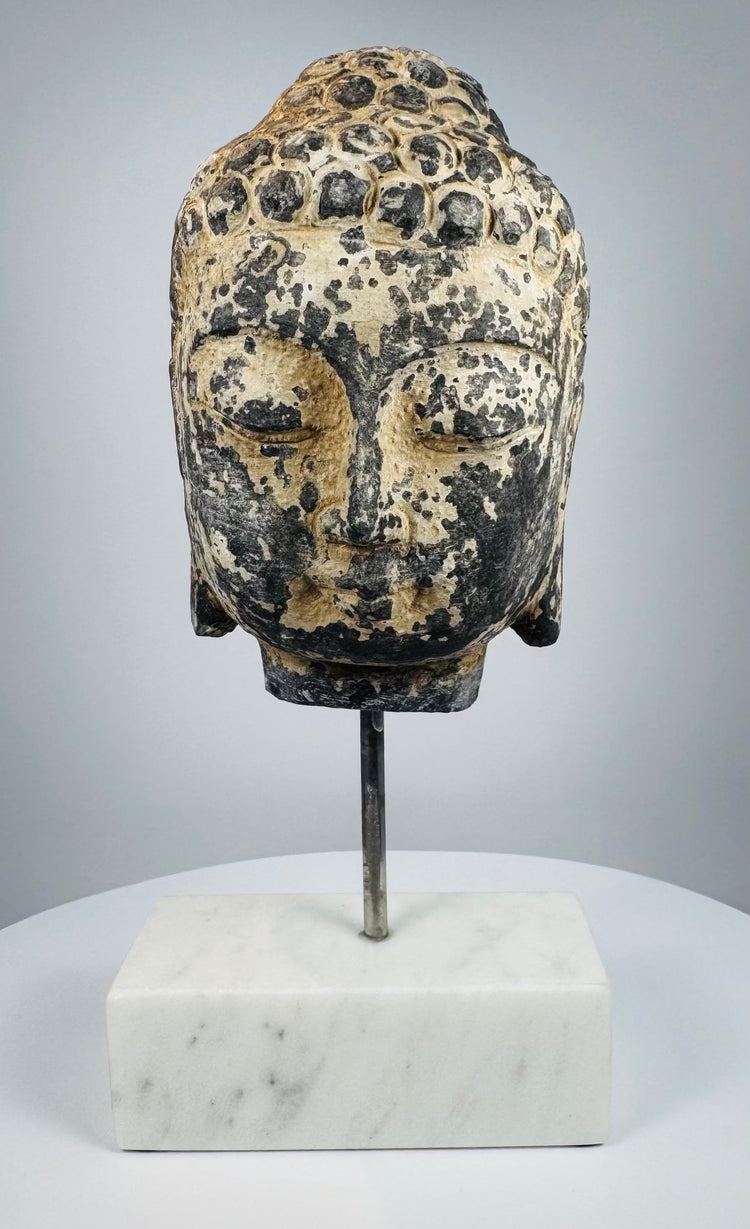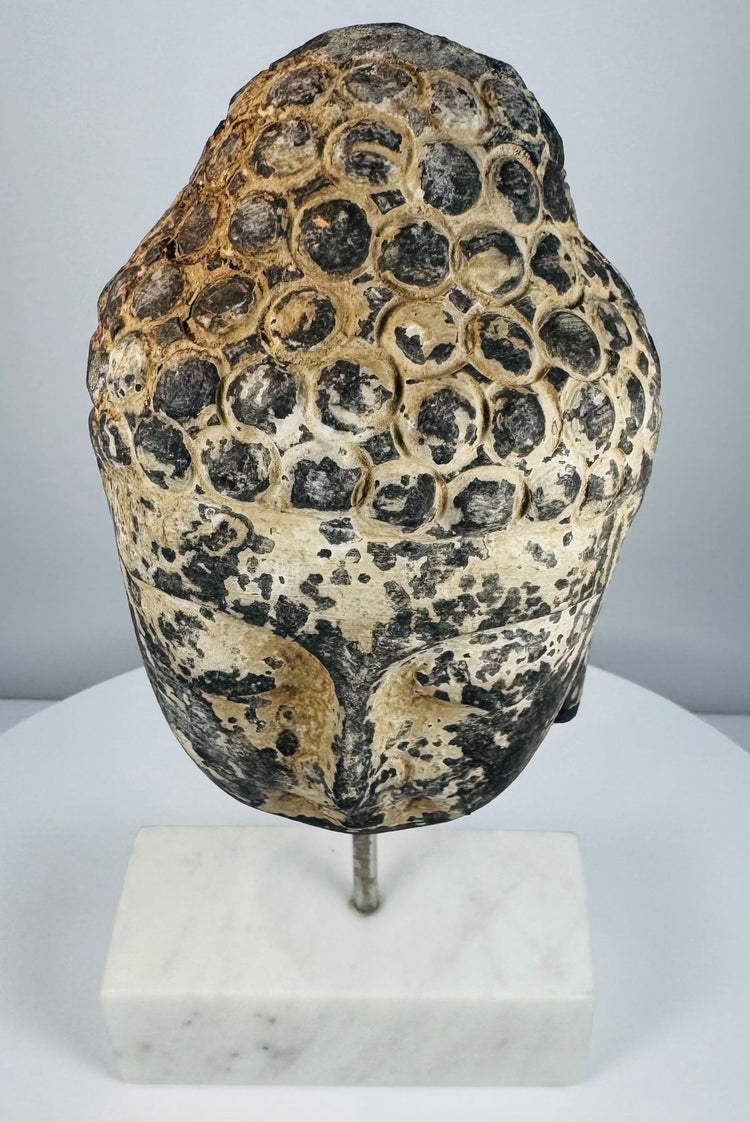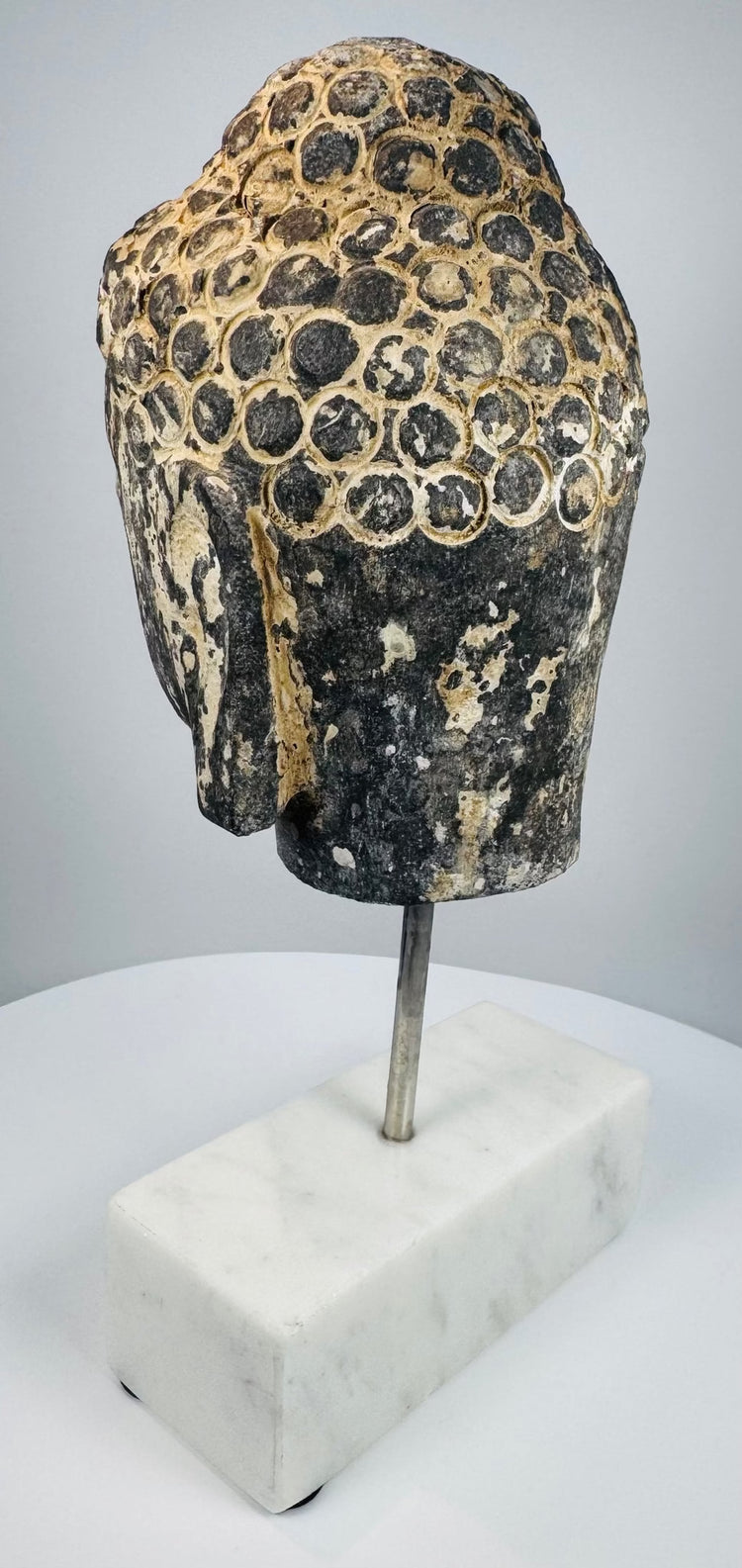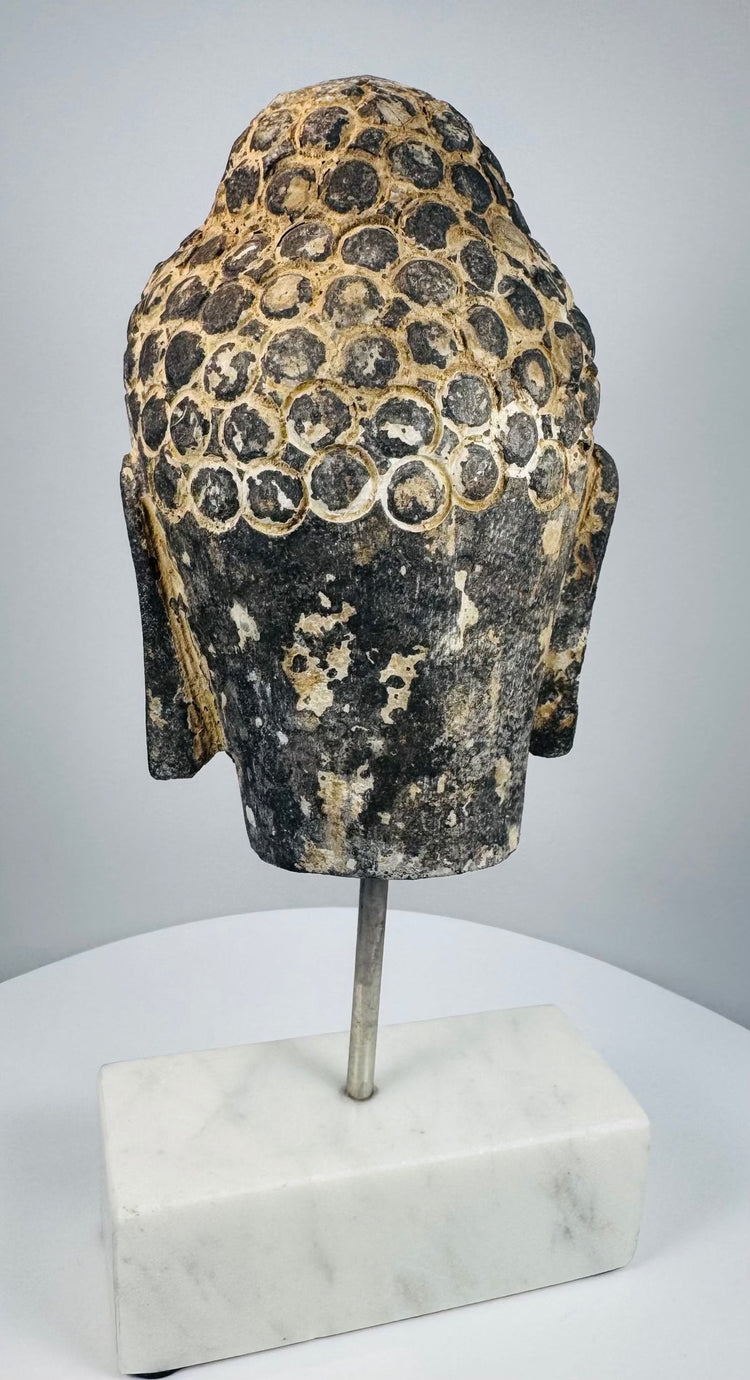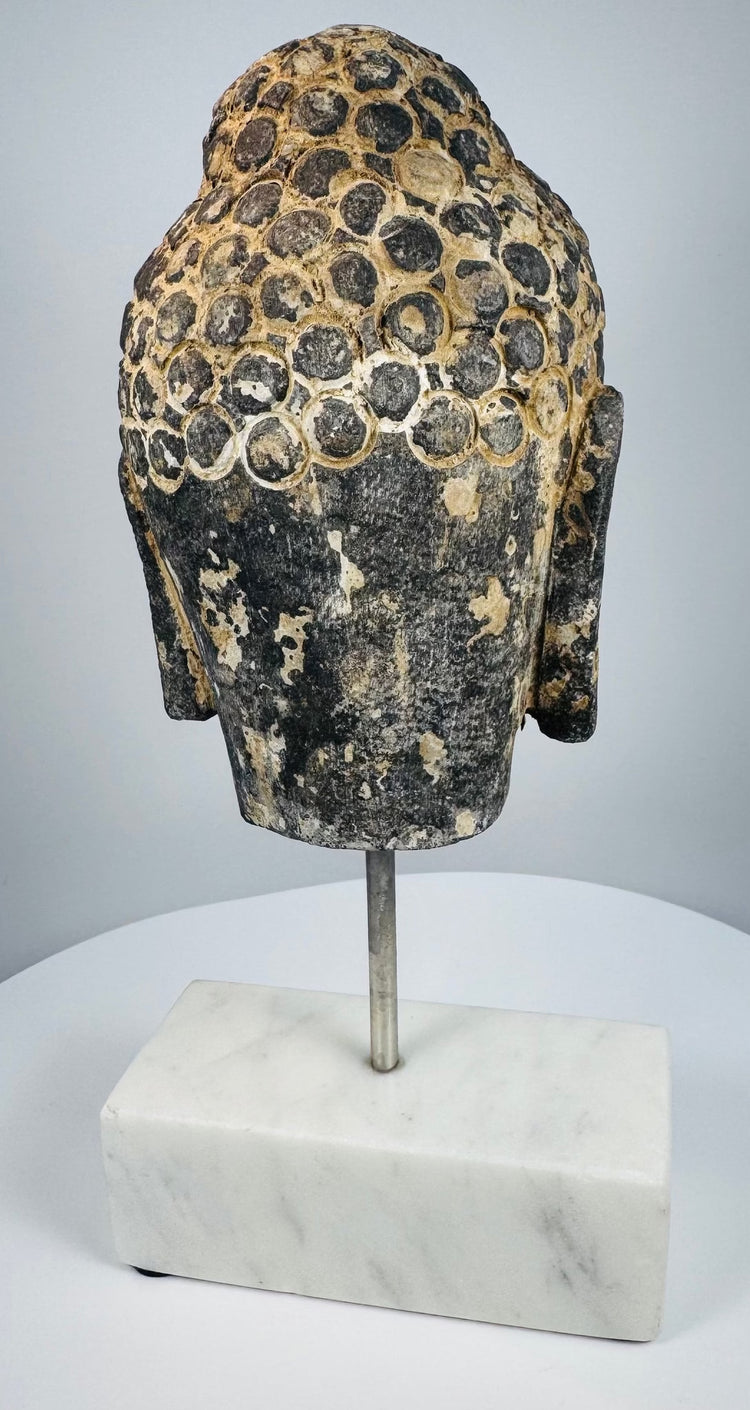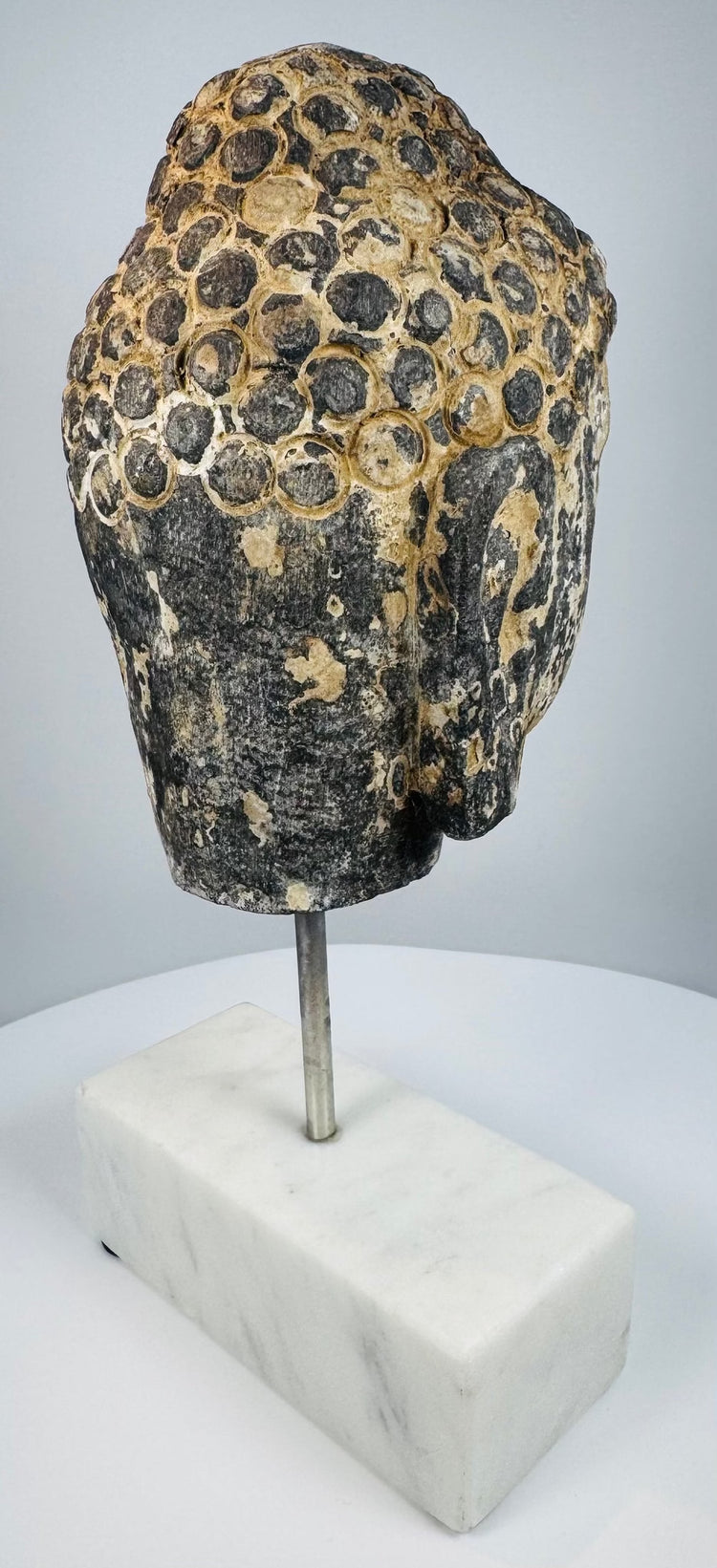
Cabeza de Buda tailandesa o camboyana | Escultura de piedra tallada sobre base de mármol | Siglos XVIII-XIX

Historial de procedencia y propiedad

Anteriormente en una colección privada en Toronto, Ontario, Canadá.

Precio habitual
$600.00
Precio de venta
$600.00
Precio habitual
Envío calculado al finalizar la compra.

This is a one-of-a-kind historical object. Once sold, this exact piece will not be restocked.

Questions before acquiring? Additional photographs, condition details, documentation, shipping information or a private viewing are available upon request.
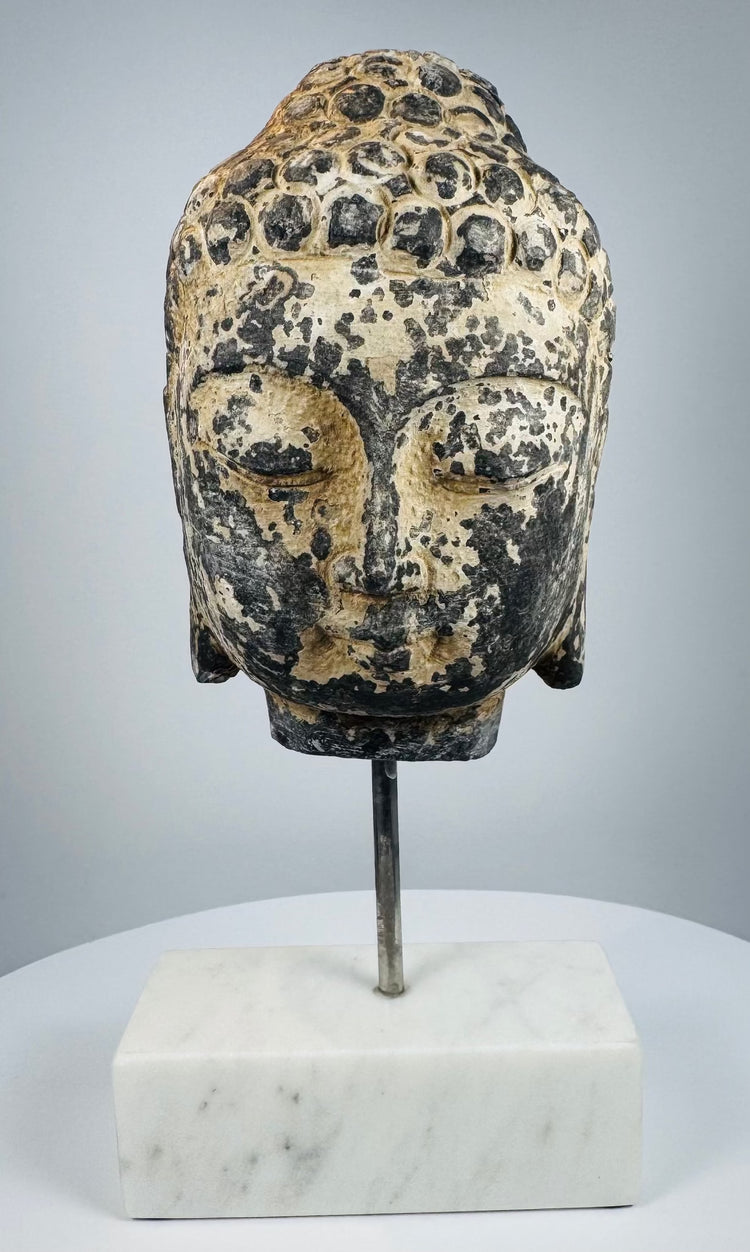
Antique carved stone Buddha head from Southeast Asia, likely Thailand or Cambodia, 18th–19th Century. Features serene meditative expression, curled hair, and traces of original pigments. Mounted on a marble base, reflecting Buddhist artistry, spiritual symbolism, and historical craftsmanship of the region.
Video showing multiple angles of an 18th–19th century Southeast Asian carved stone Buddha head with curled hair, traces of pigment and a modern marble display base
Antique Southeast Asian carved stone Buddha head with traces of pigment, 18th–19th century
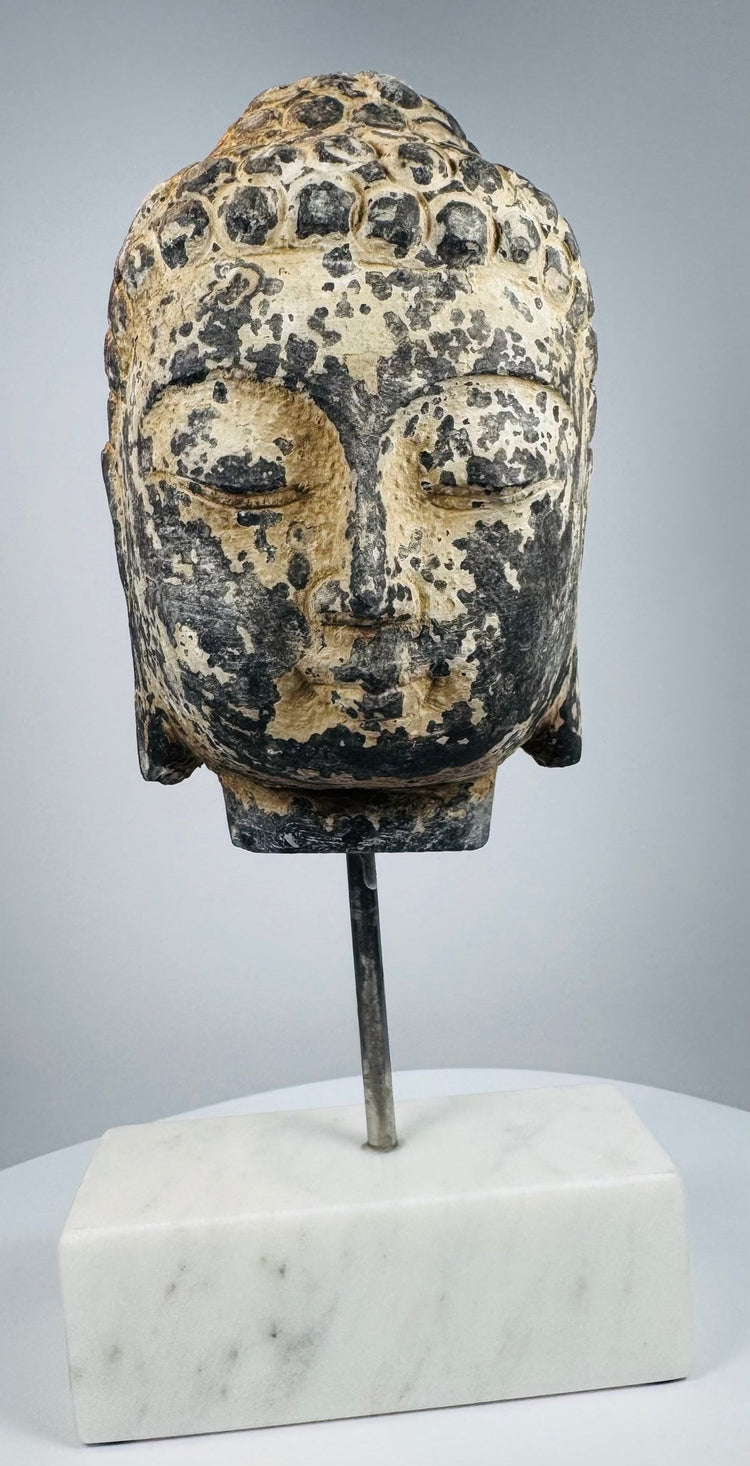
Front view of carved stone Buddha head with serene expression and tightly curled hair
Southeast Asian Buddha head sculpture showing aged stone surface and surviving pigment
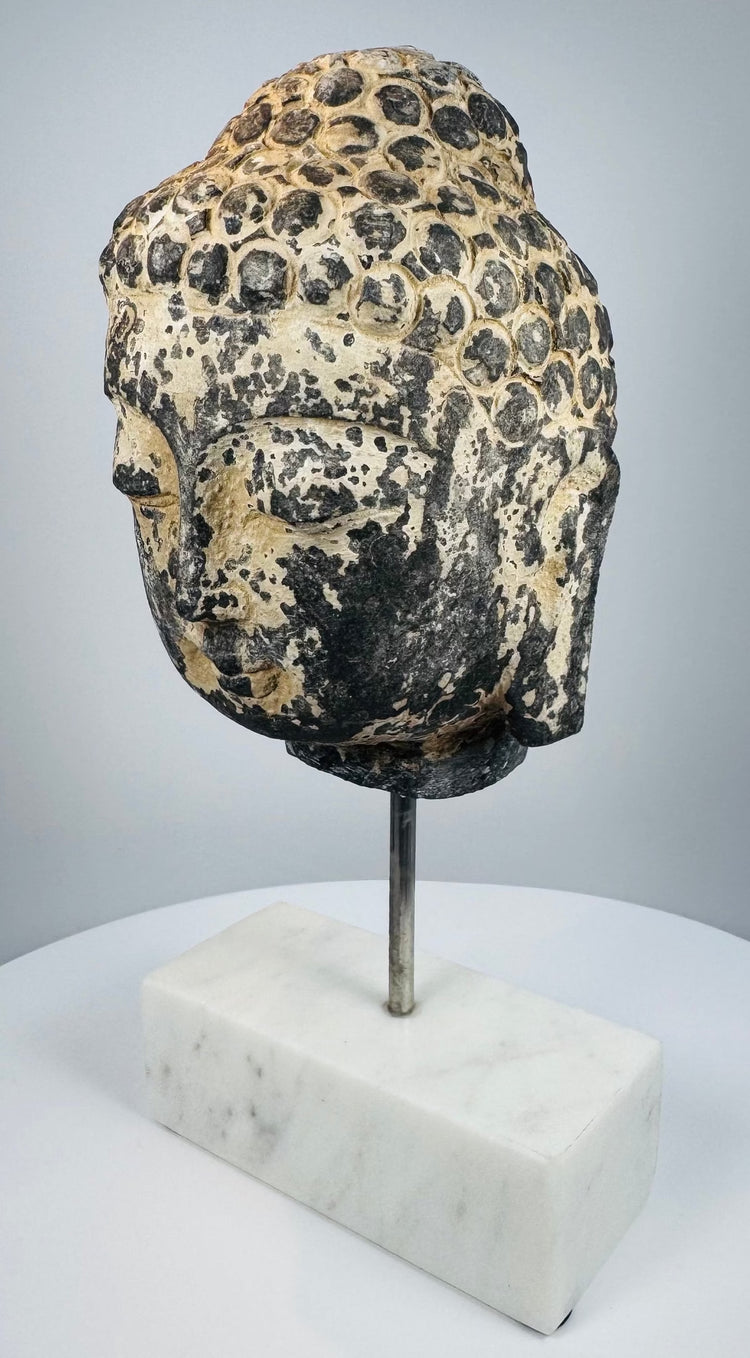
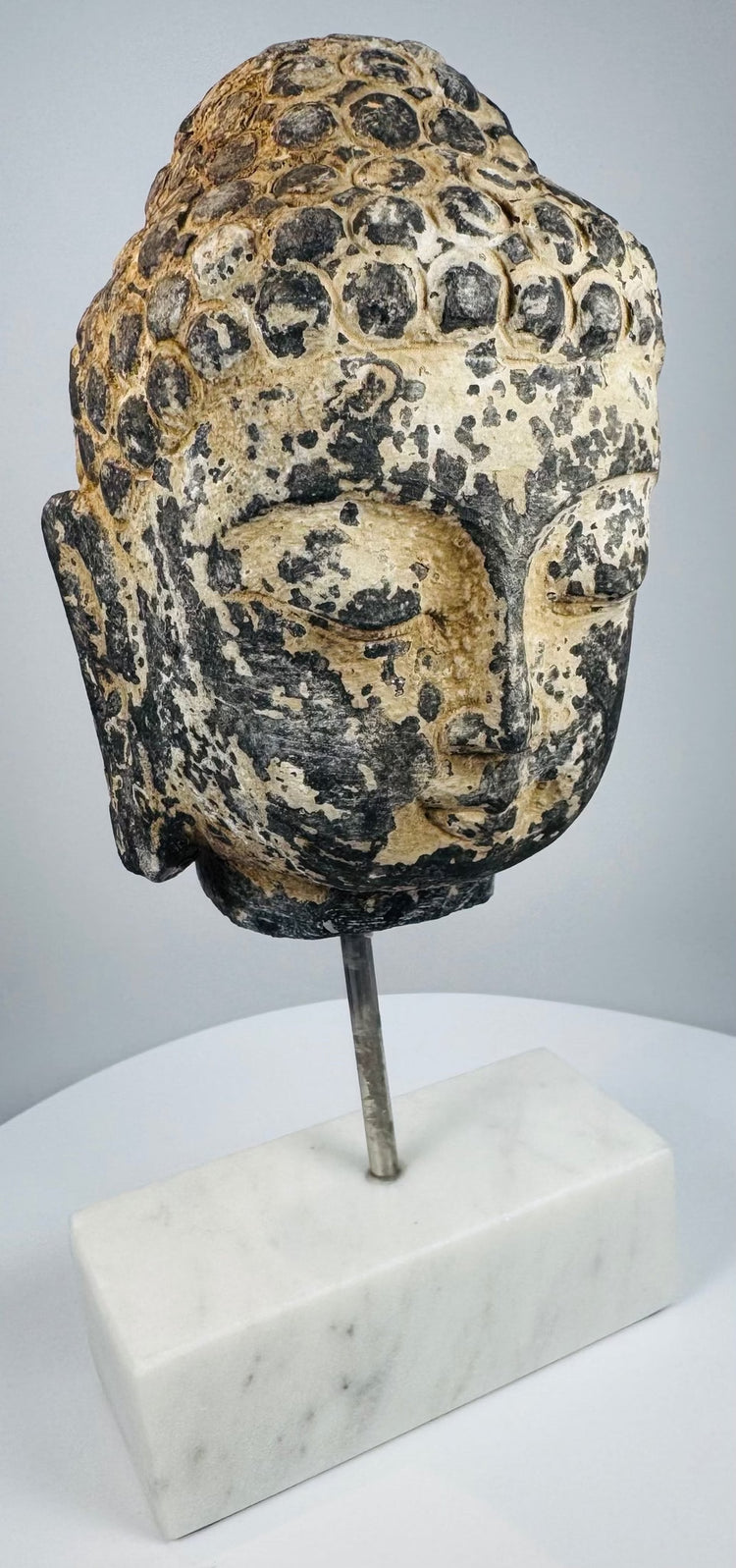
Three-quarter view of antique Buddha head with stylized facial features and curled hair
Historic carved stone Buddha head mounted on a modern marble display base
Close view of Southeast Asian Buddha sculpture with meditative expression and weathered patina
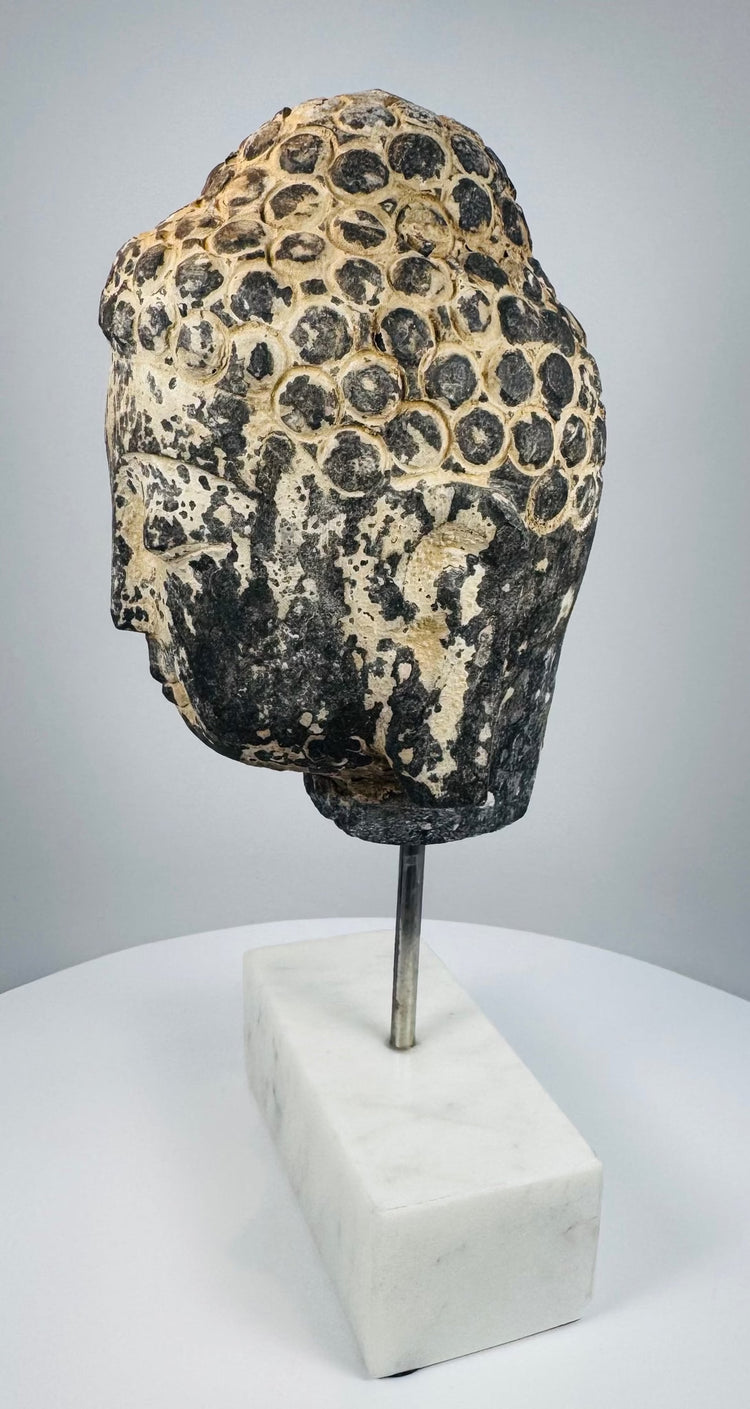
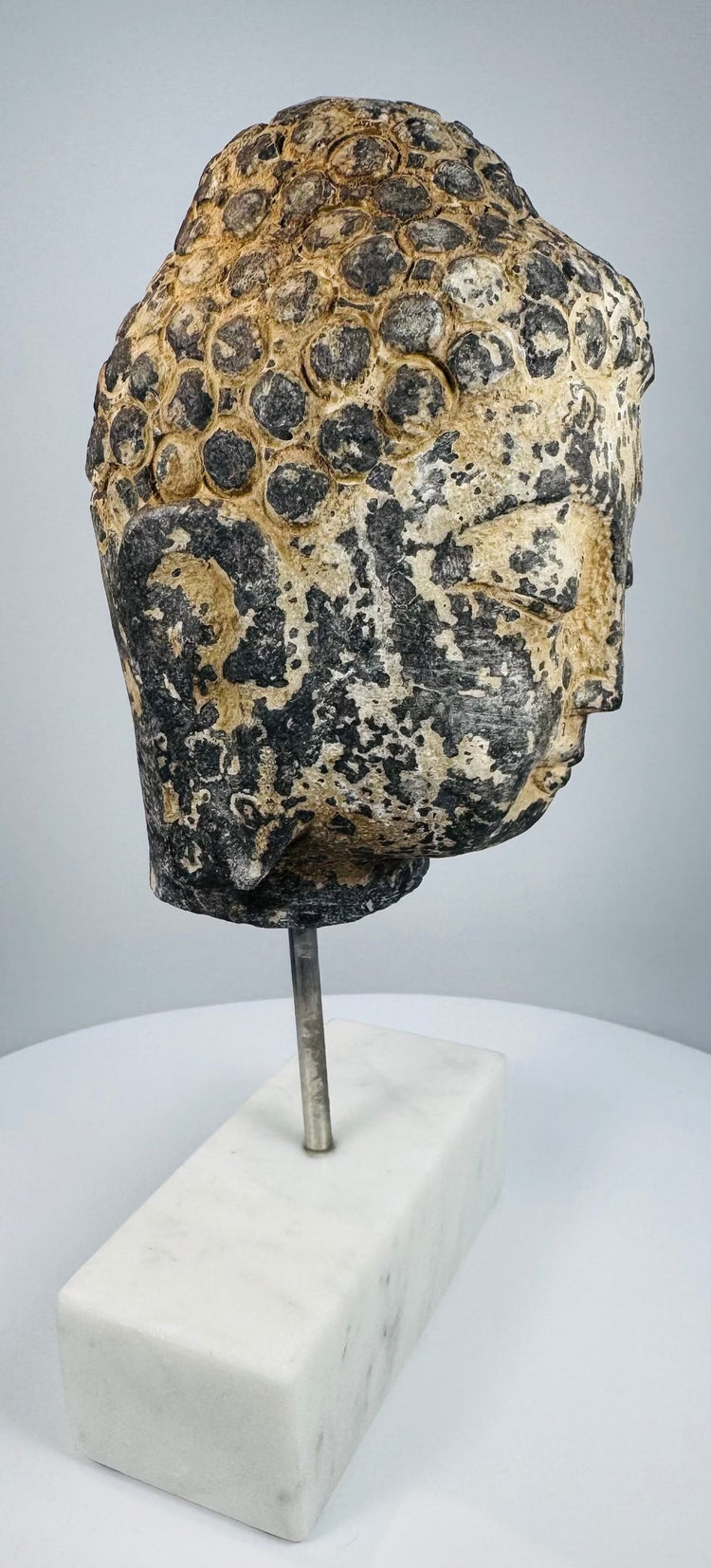
Side profile of antique stone Buddha head showing carved curls and aged surface texture
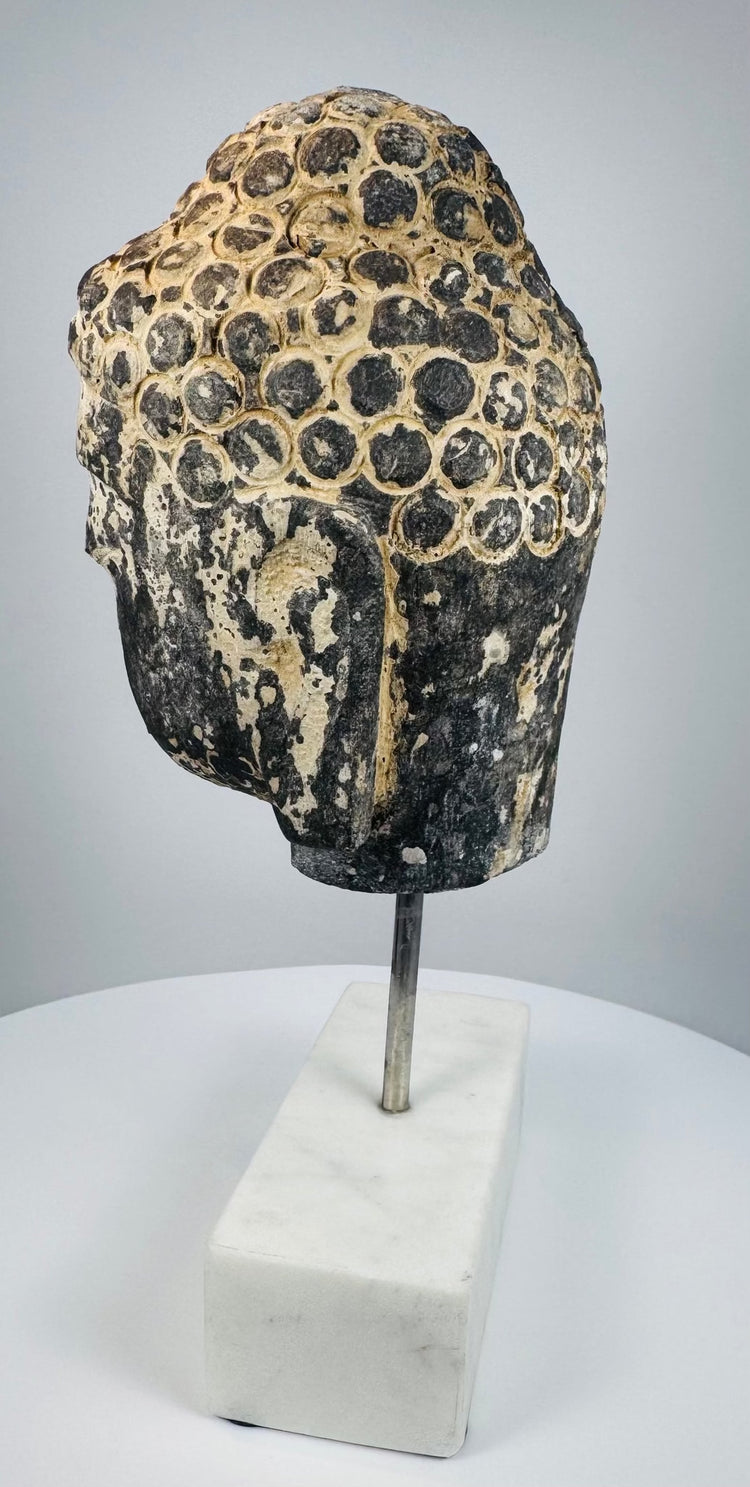
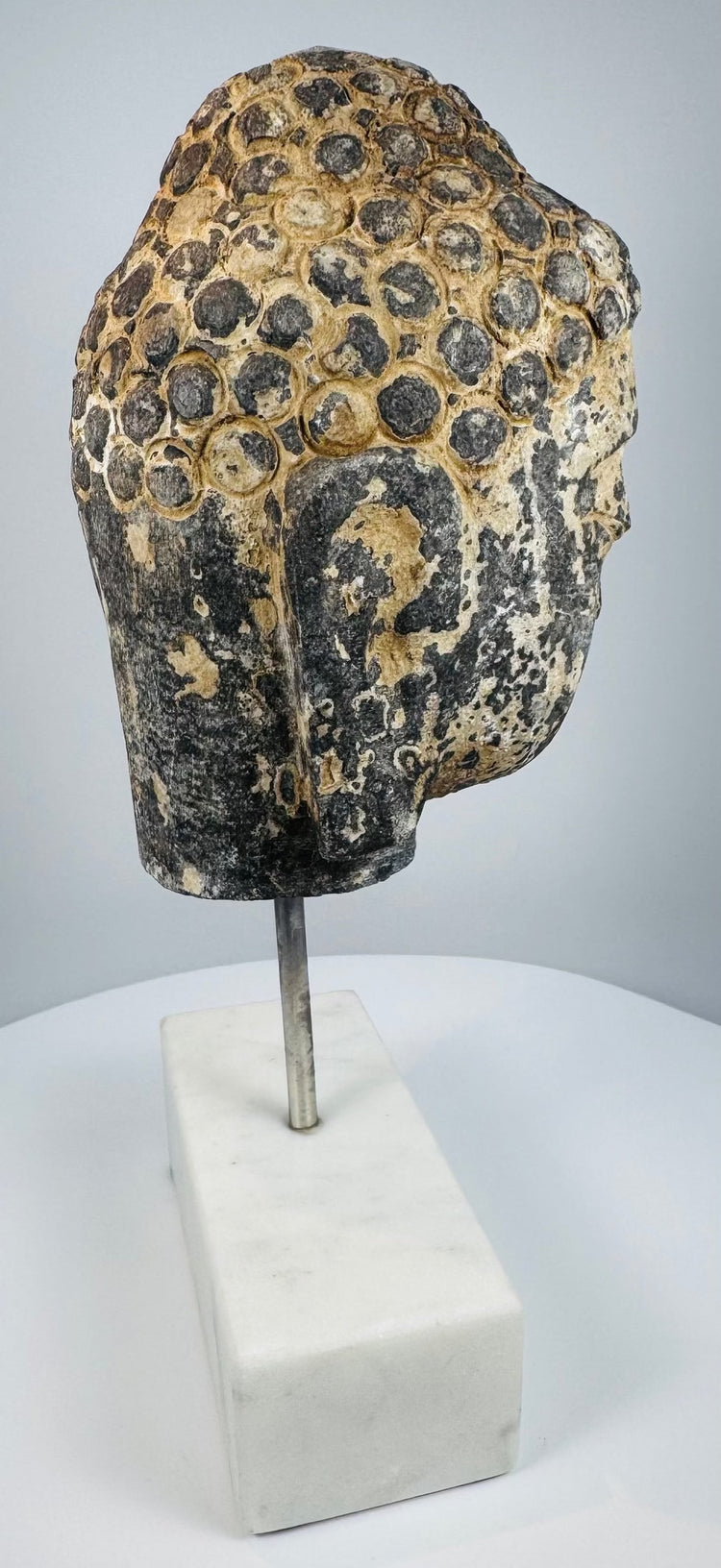
Rear view of carved Buddha head displaying detailed hair curls and natural stone wear
Antique Buddhist sculpture from Southeast Asia with remnants of dark and ochre pigment
Carved stone Buddha head from Thailand or Cambodia, dating to the 18th–19th century
Detailed view of antique Buddha head with symmetrical facial features and textured curls
Southeast Asian Buddhist stone sculpture with serene face, aged patina and pigment traces
Angled view of mounted Buddha head showing carved hair pattern and weathered stone surface
Historic Buddha head sculpture with peaceful expression mounted on a white marble base
Antique Southeast Asian religious sculpture featuring a hand-carved stone Buddha head
  • Antique carved stone Buddha head from Southeast Asia, likely Thailand or Cambodia, 18th–19th Century. Features serene meditative expression, curled hair, and traces of original pigments. Mounted on a marble base, reflecting Buddhist artistry, spiritual symbolism, and historical craftsmanship of the region.
  • Video showing multiple angles of an 18th–19th century Southeast Asian carved stone Buddha head with curled hair, traces of pigment and a modern marble display base
  • Antique Southeast Asian carved stone Buddha head with traces of pigment, 18th–19th century
  • Front view of carved stone Buddha head with serene expression and tightly curled hair
  • Southeast Asian Buddha head sculpture showing aged stone surface and surviving pigment
  • Three-quarter view of antique Buddha head with stylized facial features and curled hair
  • Historic carved stone Buddha head mounted on a modern marble display base
  • Close view of Southeast Asian Buddha sculpture with meditative expression and weathered patina
  • Side profile of antique stone Buddha head showing carved curls and aged surface texture
  • Rear view of carved Buddha head displaying detailed hair curls and natural stone wear
  • Antique Buddhist sculpture from Southeast Asia with remnants of dark and ochre pigment
  • Carved stone Buddha head from Thailand or Cambodia, dating to the 18th–19th century
  • Detailed view of antique Buddha head with symmetrical facial features and textured curls
  • Southeast Asian Buddhist stone sculpture with serene face, aged patina and pigment traces
  • Angled view of mounted Buddha head showing carved hair pattern and weathered stone surface
  • Historic Buddha head sculpture with peaceful expression mounted on a white marble base
  • Antique Southeast Asian religious sculpture featuring a hand-carved stone Buddha head
Antique carved stone Buddha head from Southeast Asia, likely Thailand or Cambodia, 18th–19th Century. Features serene meditative expression, curled hair, and traces of original pigments. Mounted on a marble base, reflecting Buddhist artistry, spiritual symbolism, and historical craftsmanship of the region.
Video showing multiple angles of an 18th–19th century Southeast Asian carved stone Buddha head with curled hair, traces of pigment and a modern marble display base
Antique Southeast Asian carved stone Buddha head with traces of pigment, 18th–19th century
Front view of carved stone Buddha head with serene expression and tightly curled hair
Southeast Asian Buddha head sculpture showing aged stone surface and surviving pigment
Three-quarter view of antique Buddha head with stylized facial features and curled hair
Historic carved stone Buddha head mounted on a modern marble display base
Close view of Southeast Asian Buddha sculpture with meditative expression and weathered patina
Side profile of antique stone Buddha head showing carved curls and aged surface texture
Rear view of carved Buddha head displaying detailed hair curls and natural stone wear
Antique Buddhist sculpture from Southeast Asia with remnants of dark and ochre pigment
Carved stone Buddha head from Thailand or Cambodia, dating to the 18th–19th century
Detailed view of antique Buddha head with symmetrical facial features and textured curls
Southeast Asian Buddhist stone sculpture with serene face, aged patina and pigment traces
Angled view of mounted Buddha head showing carved hair pattern and weathered stone surface
Historic Buddha head sculpture with peaceful expression mounted on a white marble base
Antique Southeast Asian religious sculpture featuring a hand-carved stone Buddha head
Authenticity and secure checkout guarantee

Cabeza de Buda tailandesa o camboyana | Escultura de piedra tallada sobre base de mármol | Siglos XVIII-XIX

Descripción

Contexto histórico y origen

Región: Sudeste Asiático (probablemente Tailandia o Camboya)
Material: Piedra tallada con restos de pigmentos
Período: Siglos XVIII–XIX

Descripción

Esta antigua escultura de la cabeza de Buda es un notable ejemplo del arte budista del sudeste asiático, tallada con gran detalle y montada sobre una base de mármol moderna para su exhibición. La expresión serena y meditativa de la figura transmite tranquilidad e iluminación, elementos centrales de la filosofía budista. El cabello rizado y los rasgos faciales estilizados son sellos distintivos de la artesanía regional, mientras que la superficie de piedra envejecida conserva rastros de pigmentos originales, lo que enriquece su autenticidad y valor estético.

Características

- Piedra tallada a mano con intrincados detalles de cabello rizado y expresión serena

- Rastros de pigmentos originales que realzan la profundidad histórica

- Rostro pacífico y meditativo que encarna los ideales budistas de iluminación y calma interior

- Montado sobre una elegante base de mármol para estabilidad y exhibición

Significado cultural

Las imágenes de Buda en el arte del sudeste asiático se crearon para encarnar ideales de compasión, sabiduría y paz, a menudo colocadas en templos, santuarios o espacios privados para la devoción. Esta cabeza ejemplifica las tradiciones espirituales y artísticas de Tailandia y Camboya, regiones donde el budismo floreció como religión y fundamento cultural. Su artesanía refinada y su presencia simbólica la convierten no solo en una obra maestra visual, sino también en un objeto meditativo que inspira reflexión y armonía interior.

Condición

Muy buen estado antiguo con desgaste superficial natural, abrasiones menores y una pátina desarrollada consistente con la edad. Los rastros del pigmento original permanecen visibles, añadiendo mayor autenticidad y resonancia histórica.

Dimensiones (aproximadas)

Altura: 9.75 pulgadas
Ancho: 4.5 pulgadas

Antigüedad (aproximada)

125–325 años

Procedencia

Anteriormente en una colección privada en Toronto, Ontario, Canadá.

Más información

Explore la Escultura hindú y budista del sudeste asiático temprano a través del Museo Metropolitano de Arte

Explore nuestra Colección de Reliquias Budistas e Hindúes y Estatuas Sagradas

Descripción

Contexto histórico y origen

Región: Sudeste Asiático (probablemente Tailandia o Camboya)
Material: Piedra tallada con restos de pigmentos
Período: Siglos XVIII–XIX

Descripción

Esta antigua escultura de la cabeza de Buda es un notable ejemplo del arte budista del sudeste asiático, tallada con gran detalle y montada sobre una base de mármol moderna para su exhibición. La expresión serena y meditativa de la figura transmite tranquilidad e iluminación, elementos centrales de la filosofía budista. El cabello rizado y los rasgos faciales estilizados son sellos distintivos de la artesanía regional, mientras que la superficie de piedra envejecida conserva rastros de pigmentos originales, lo que enriquece su autenticidad y valor estético.

Características

- Piedra tallada a mano con intrincados detalles de cabello rizado y expresión serena

- Rastros de pigmentos originales que realzan la profundidad histórica

- Rostro pacífico y meditativo que encarna los ideales budistas de iluminación y calma interior

- Montado sobre una elegante base de mármol para estabilidad y exhibición

Significado cultural

Las imágenes de Buda en el arte del sudeste asiático se crearon para encarnar ideales de compasión, sabiduría y paz, a menudo colocadas en templos, santuarios o espacios privados para la devoción. Esta cabeza ejemplifica las tradiciones espirituales y artísticas de Tailandia y Camboya, regiones donde el budismo floreció como religión y fundamento cultural. Su artesanía refinada y su presencia simbólica la convierten no solo en una obra maestra visual, sino también en un objeto meditativo que inspira reflexión y armonía interior.

Condición

Muy buen estado antiguo con desgaste superficial natural, abrasiones menores y una pátina desarrollada consistente con la edad. Los rastros del pigmento original permanecen visibles, añadiendo mayor autenticidad y resonancia histórica.

Dimensiones (aproximadas)

Altura: 9.75 pulgadas
Ancho: 4.5 pulgadas

Antigüedad (aproximada)

125–325 años

Procedencia

Anteriormente en una colección privada en Toronto, Ontario, Canadá.

Más información

Explore la Escultura hindú y budista del sudeste asiático temprano a través del Museo Metropolitano de Arte

Explore nuestra Colección de Reliquias Budistas e Hindúes y Estatuas Sagradas

También te puede interesar