


Panel de puerta de carga trasera de Boeing 737 de la USAF de época con insignias militares | Alrededor de 1970-1980
- Precio habitual
- $7,500.00
- Precio de venta
- $7,500.00
- Precio habitual
No se pudo cargar la disponibilidad de retiro






Panel de puerta de carga trasera de Boeing 737 de la USAF de época con insignias militares | Alrededor de 1970-1980
Descripción
Más
Menos
Contexto histórico y origen
Región: Estados Unidos, fabricado para la plataforma del avión Boeing 737
Material: Aluminio de calidad aeronáutica remachado, herrajes mecánicos de acero y imprimación anticorrosión de cromato de zinc
Periodo: Guerra Fría hasta finales del siglo XX, alrededor de 1970-1980
Tipo de aeronave: Serie Boeing 737-200 / 200C / 300 / 400
Componente: Puerta del compartimiento de carga de popa
Marcas del fabricante: Los sellos estructurales internos incluyen la secuencia de producción de Boeing 65-47952, con los números de subconjunto 505 y 521. El pestillo empotrado exterior incorpora un conjunto de manija Hartwell H414 fabricado en Los Ángeles bajo la patente de los Estados Unidos 2,833,588.
Descripción
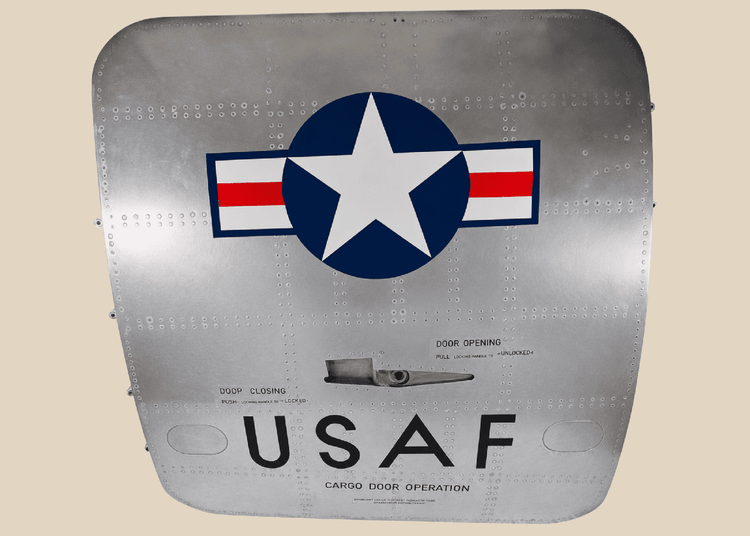
Esta sustancial puerta de carga de avión con marca de la USAF es un impresionante ejemplo superviviente de la ingeniería aeronáutica de finales del siglo XX. Fabricado para la plataforma del Boeing 737, el panel presenta la insignia de la Fuerza Aérea de los Estados Unidos (Star and Bars) exhibida prominentemente en su exterior de aluminio pulido, junto con grandes marcas de la USAF en letras mayúsculas.
La puerta está construida con aluminio de calidad aeronáutica de gran calibre, asegurado por extensas filas de remaches de fábrica. Su exterior conserva las marcas de instrucciones asociadas con el mecanismo de bloqueo original, incluyendo "DOOR OPENING / PULL LOCKING HANDLE TO UNLOCKED" (APERTURA DE PUERTA / TIRAR DE LA MANIJA DE BLOQUEO PARA DESBLOQUEAR) y "DOOR CLOSING / PUSH LOCKING HANDLE TO LOCKED" (CIERRE DE PUERTA / EMPUJAR LA MANIJA DE BLOQUEO PARA BLOQUEAR).
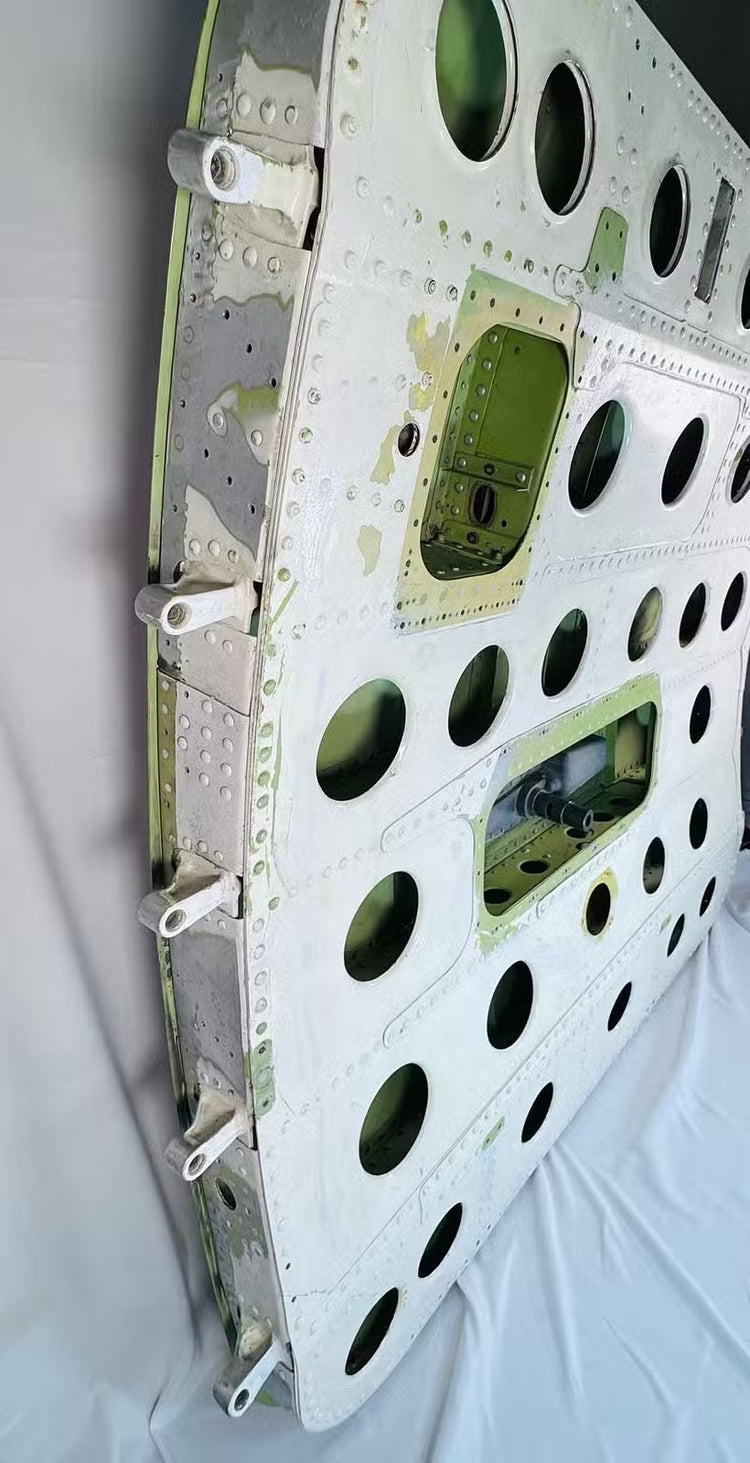
El reverso revela la compleja estructura interna necesaria para proporcionar resistencia minimizando el peso. Se incorporan orificios de aligeramiento circulares en todo el marco, que conserva su distintivo revestimiento anticorrosión verde de cromato de zinc. El conjunto original del pestillo mecánico Hartwell empotrado también permanece en su lugar.
Contexto histórico
Desarrollado durante la década de 1960 e introducido en el servicio comercial en 1968, el Boeing 737 se convirtió en una de las plataformas de aeronaves más utilizadas a finales del siglo XX. Su fuselaje adaptable se empleó para el transporte de pasajeros, operaciones de carga, entrenamiento y una variedad de propósitos gubernamentales y de apoyo militar.
Las puertas de carga como esta fueron diseñadas para soportar ciclos repetidos de presurización, vibraciones, cambios de temperatura y las exigencias físicas de carga y descarga de mercancías. Su construcción de aluminio ligero, su estructura interna reforzada y sus sistemas de bloqueo mecánicos reflejan el equilibrio entre resistencia, seguridad y reducción de peso que definió la ingeniería aeroespacial de la era de la Guerra Fría.
Las marcas de la USAF conectan visualmente el panel con la historia de la aviación militar estadounidense y el transporte logístico. Ya sea exhibida desde el exterior pulido o desde el reverso estructural expuesto, la puerta ofrece una sorprendente representación de la construcción de aeronaves y el diseño industrial del siglo XX.
Características
- Marcas estructurales de Boeing numeradas 65-47952-505 y 65-47952-521
- Insignia de la Fuerza Aérea de los Estados Unidos (Star and Bars) con letras prominentes de la USAF
- Construcción de aluminio remachado de alta resistencia de calidad aeronáutica
- Conjunto original de pestillo de puerta de carga empotrado Hartwell H414
- Instrucciones operativas de apertura y cierre de la puerta exterior
- Estructura interna con orificios de aligeramiento circulares para reducir el peso
- Imprimación original anticorrosión de cromato de zinc verde en el reverso
- Potencial de exhibición a doble cara que combina aviación militar y diseño industrial
Significado cultural
Los componentes de aeronaves de esta escala conservan la historia física de la aviación moderna de una manera que los instrumentos y recuerdos más pequeños no pueden. La extensa construcción remachada, el marco reforzado y el conjunto de bloqueo mecánico demuestran la ingeniería de precisión necesaria para crear una aeronave presurizada capaz de un servicio sostenido.
La insignia Star and Bars ha servido como marca de identificación reconocible en las aeronaves militares de los Estados Unidos desde el siglo XX. Exhibida en la piel de aluminio pulido de esta puerta de carga, crea una imponente conexión visual con la aviación estadounidense, la logística militar y la tecnología aeroespacial de la era de la Guerra Fría.
Estado
La puerta presenta una auténtica pátina relacionada con el servicio, que incluye pequeños arañazos en la superficie, rozaduras operativas y zonas de oxidación ligera, coherentes con la antigüedad, la manipulación y el uso aeronáutico. La estructura sigue siendo sólida, con los remaches de fábrica, los soportes internos y los componentes mecánicos firmemente intactos.
Procedencia
De una colección privada en Niagara Falls, Ontario, especializada en artefactos militares.
Más información
Obtenga más información sobre el servicio militar del Boeing 737 a través de la aula voladora T-43 Boeing 737 de la USAF.
Explore más objetos de la misma época en nuestra Colección de artefactos históricos del siglo XX.
Descripción
Contexto histórico y origen
Región: Estados Unidos, fabricado para la plataforma del avión Boeing 737
Material: Aluminio de calidad aeronáutica remachado, herrajes mecánicos de acero y imprimación anticorrosión de cromato de zinc
Periodo: Guerra Fría hasta finales del siglo XX, alrededor de 1970-1980
Tipo de aeronave: Serie Boeing 737-200 / 200C / 300 / 400
Componente: Puerta del compartimiento de carga de popa
Marcas del fabricante: Los sellos estructurales internos incluyen la secuencia de producción de Boeing 65-47952, con los números de subconjunto 505 y 521. El pestillo empotrado exterior incorpora un conjunto de manija Hartwell H414 fabricado en Los Ángeles bajo la patente de los Estados Unidos 2,833,588.
Descripción
Esta sustancial puerta de carga de avión con marca de la USAF es un impresionante ejemplo superviviente de la ingeniería aeronáutica de finales del siglo XX. Fabricado para la plataforma del Boeing 737, el panel presenta la insignia de la Fuerza Aérea de los Estados Unidos (Star and Bars) exhibida prominentemente en su exterior de aluminio pulido, junto con grandes marcas de la USAF en letras mayúsculas.
La puerta está construida con aluminio de calidad aeronáutica de gran calibre, asegurado por extensas filas de remaches de fábrica. Su exterior conserva las marcas de instrucciones asociadas con el mecanismo de bloqueo original, incluyendo "DOOR OPENING / PULL LOCKING HANDLE TO UNLOCKED" (APERTURA DE PUERTA / TIRAR DE LA MANIJA DE BLOQUEO PARA DESBLOQUEAR) y "DOOR CLOSING / PUSH LOCKING HANDLE TO LOCKED" (CIERRE DE PUERTA / EMPUJAR LA MANIJA DE BLOQUEO PARA BLOQUEAR).
El reverso revela la compleja estructura interna necesaria para proporcionar resistencia minimizando el peso. Se incorporan orificios de aligeramiento circulares en todo el marco, que conserva su distintivo revestimiento anticorrosión verde de cromato de zinc. El conjunto original del pestillo mecánico Hartwell empotrado también permanece en su lugar.
Contexto histórico
Desarrollado durante la década de 1960 e introducido en el servicio comercial en 1968, el Boeing 737 se convirtió en una de las plataformas de aeronaves más utilizadas a finales del siglo XX. Su fuselaje adaptable se empleó para el transporte de pasajeros, operaciones de carga, entrenamiento y una variedad de propósitos gubernamentales y de apoyo militar.
Las puertas de carga como esta fueron diseñadas para soportar ciclos repetidos de presurización, vibraciones, cambios de temperatura y las exigencias físicas de carga y descarga de mercancías. Su construcción de aluminio ligero, su estructura interna reforzada y sus sistemas de bloqueo mecánicos reflejan el equilibrio entre resistencia, seguridad y reducción de peso que definió la ingeniería aeroespacial de la era de la Guerra Fría.
Las marcas de la USAF conectan visualmente el panel con la historia de la aviación militar estadounidense y el transporte logístico. Ya sea exhibida desde el exterior pulido o desde el reverso estructural expuesto, la puerta ofrece una sorprendente representación de la construcción de aeronaves y el diseño industrial del siglo XX.
Características
- Marcas estructurales de Boeing numeradas 65-47952-505 y 65-47952-521
- Insignia de la Fuerza Aérea de los Estados Unidos (Star and Bars) con letras prominentes de la USAF
- Construcción de aluminio remachado de alta resistencia de calidad aeronáutica
- Conjunto original de pestillo de puerta de carga empotrado Hartwell H414
- Instrucciones operativas de apertura y cierre de la puerta exterior
- Estructura interna con orificios de aligeramiento circulares para reducir el peso
- Imprimación original anticorrosión de cromato de zinc verde en el reverso
- Potencial de exhibición a doble cara que combina aviación militar y diseño industrial
Significado cultural
Los componentes de aeronaves de esta escala conservan la historia física de la aviación moderna de una manera que los instrumentos y recuerdos más pequeños no pueden. La extensa construcción remachada, el marco reforzado y el conjunto de bloqueo mecánico demuestran la ingeniería de precisión necesaria para crear una aeronave presurizada capaz de un servicio sostenido.
La insignia Star and Bars ha servido como marca de identificación reconocible en las aeronaves militares de los Estados Unidos desde el siglo XX. Exhibida en la piel de aluminio pulido de esta puerta de carga, crea una imponente conexión visual con la aviación estadounidense, la logística militar y la tecnología aeroespacial de la era de la Guerra Fría.
Estado
La puerta presenta una auténtica pátina relacionada con el servicio, que incluye pequeños arañazos en la superficie, rozaduras operativas y zonas de oxidación ligera, coherentes con la antigüedad, la manipulación y el uso aeronáutico. La estructura sigue siendo sólida, con los remaches de fábrica, los soportes internos y los componentes mecánicos firmemente intactos.
Procedencia
De una colección privada en Niagara Falls, Ontario, especializada en artefactos militares.
Más información
Obtenga más información sobre el servicio militar del Boeing 737 a través de la aula voladora T-43 Boeing 737 de la USAF.
Explore más objetos de la misma época en nuestra Colección de artefactos históricos del siglo XX.
También te puede interesar
