


Ancient Bronze Age Terracotta Double-Handled Globular Jarlet | Circa 3000–1200 BCE
- Prix habituel
- $500.00
- Prix soldé
- $500.00
- Prix habituel
Impossible de charger la disponibilité du service de retrait


Ancient Bronze Age Terracotta Double-Handled Globular Jarlet | Circa 3000–1200 BCE
Description
Plus
Moins
Historical Context & Origin
Region: Eastern Mediterranean or Ancient Near East
Material: Terracotta (unglazed earthenware)
Period: Bronze Age, circa 3000–1200 BCE
Description
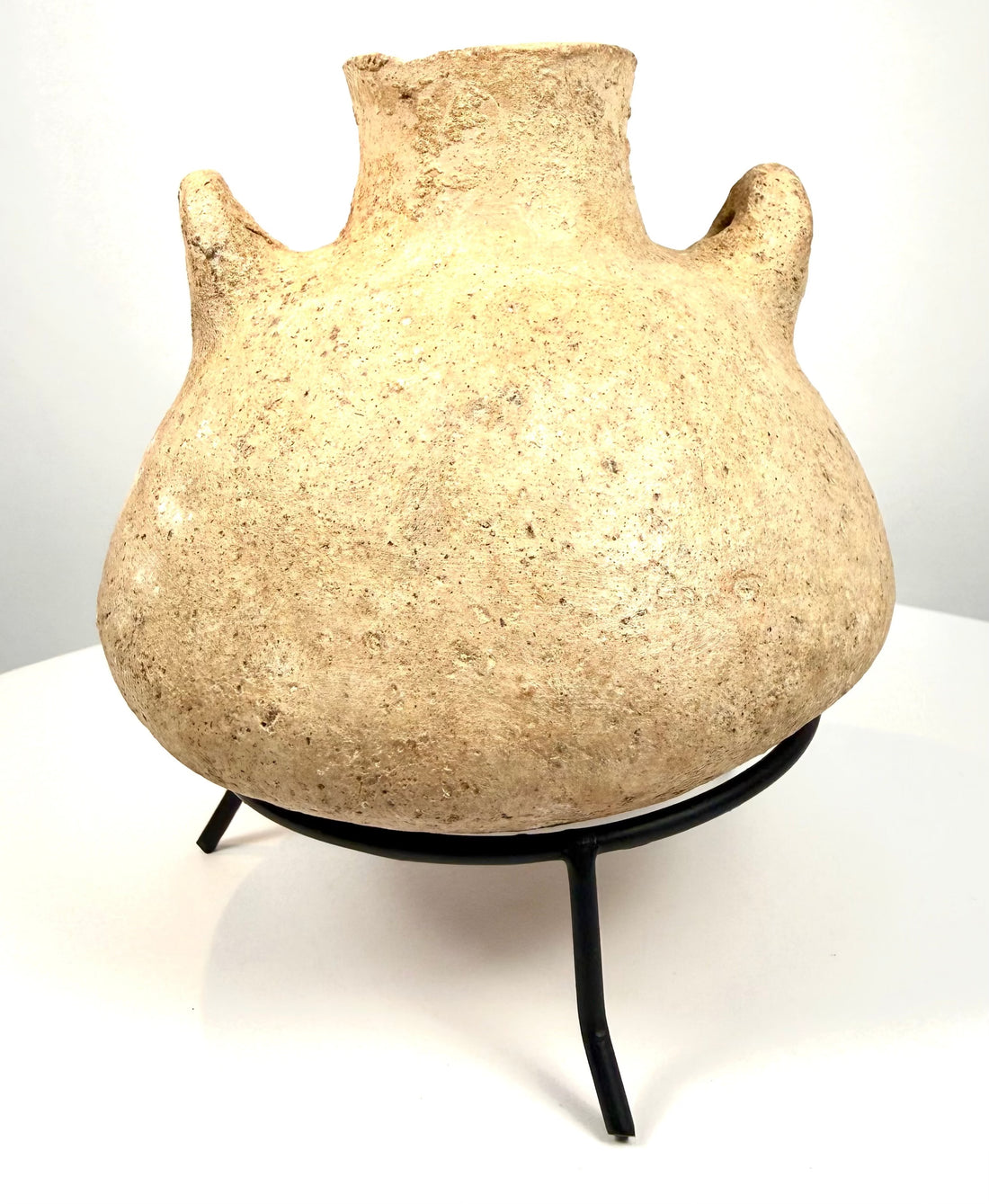
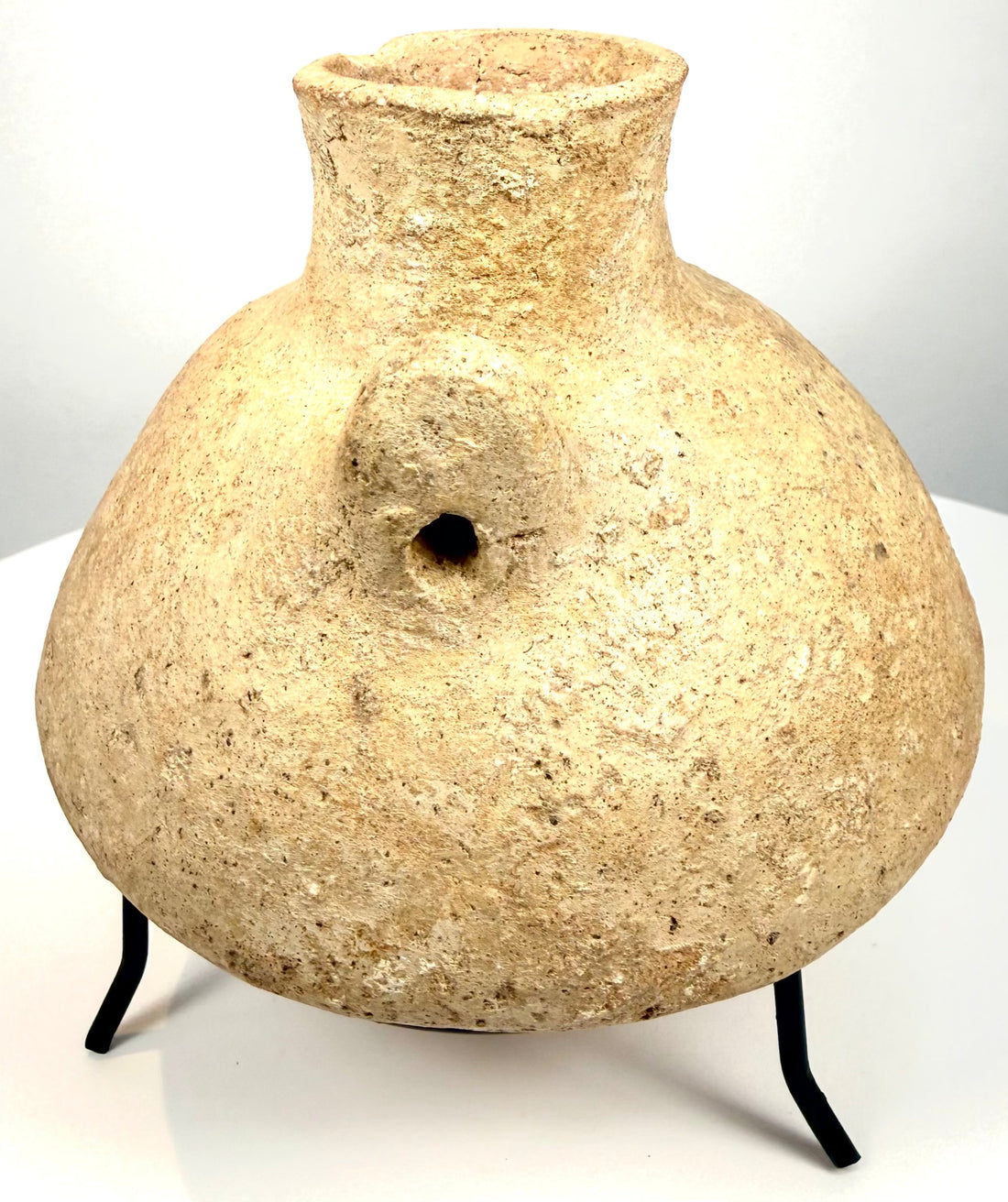
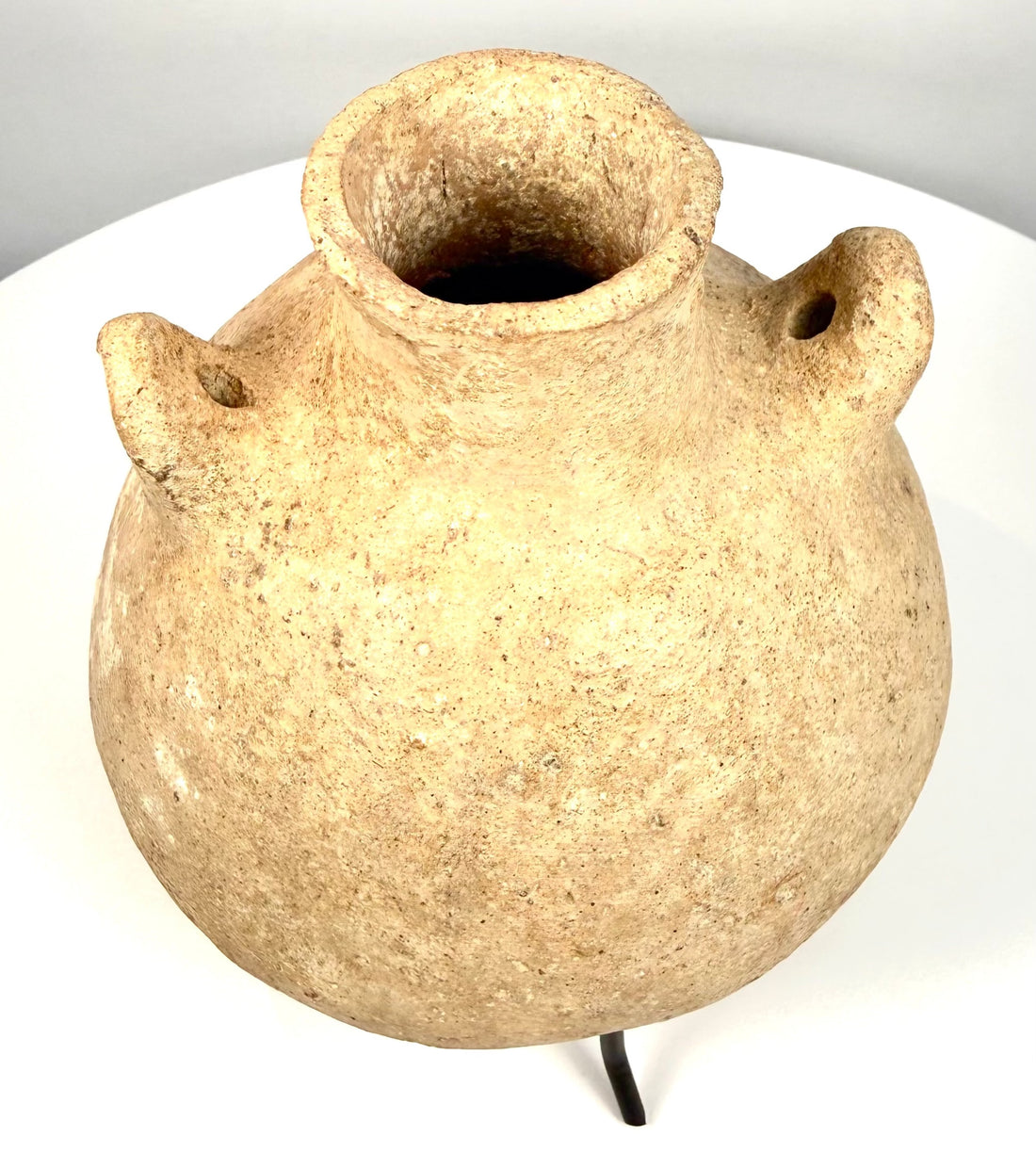
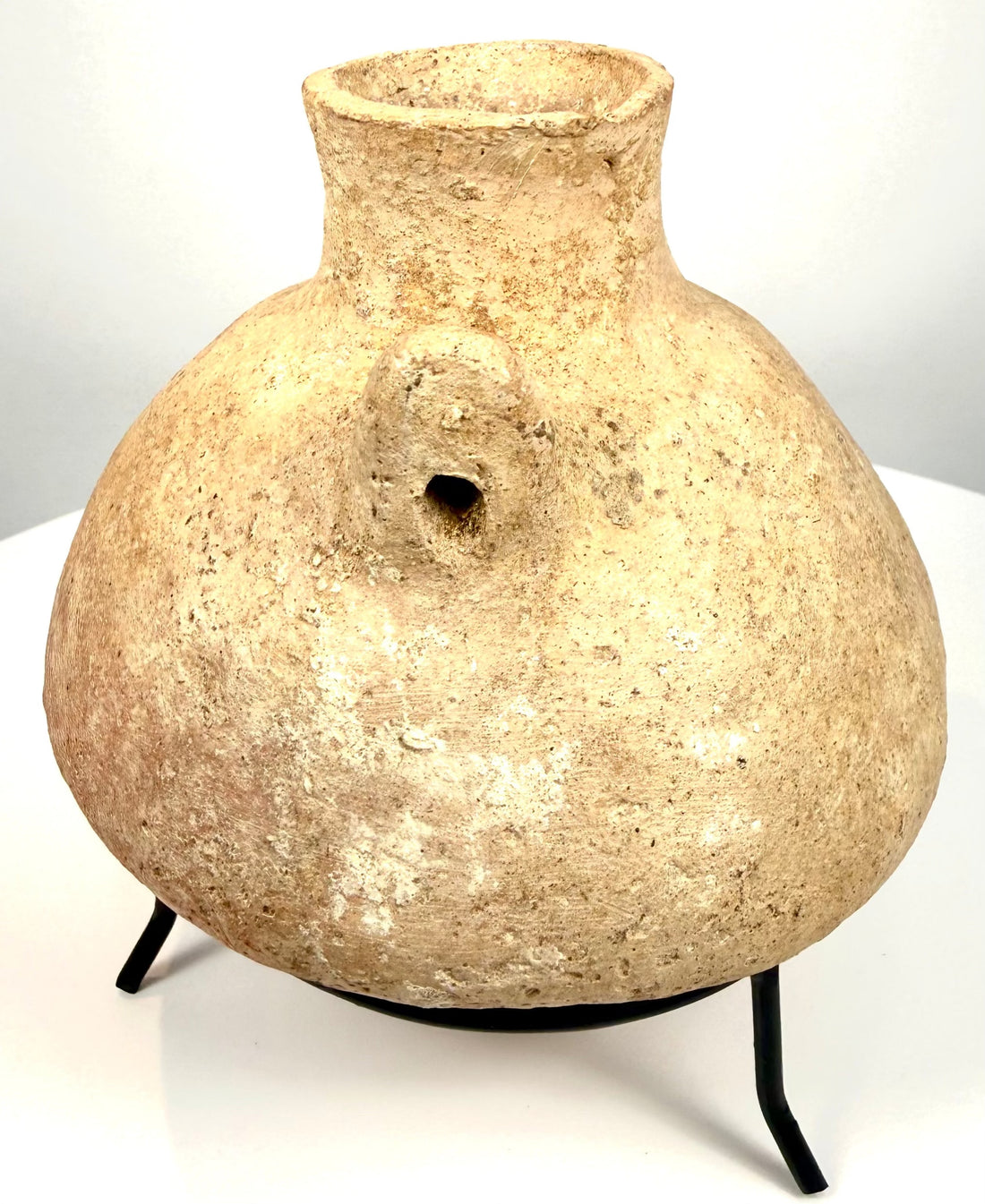
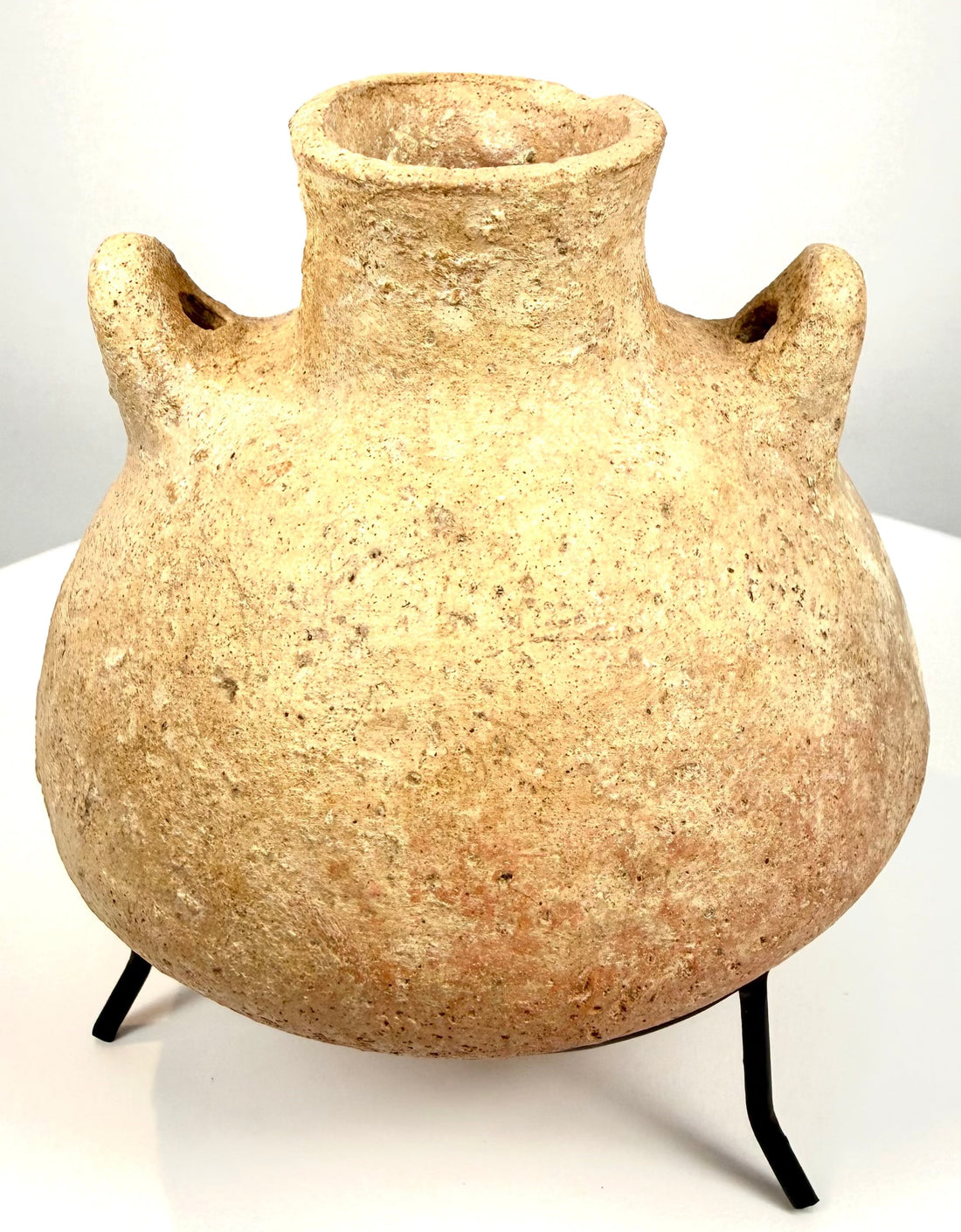
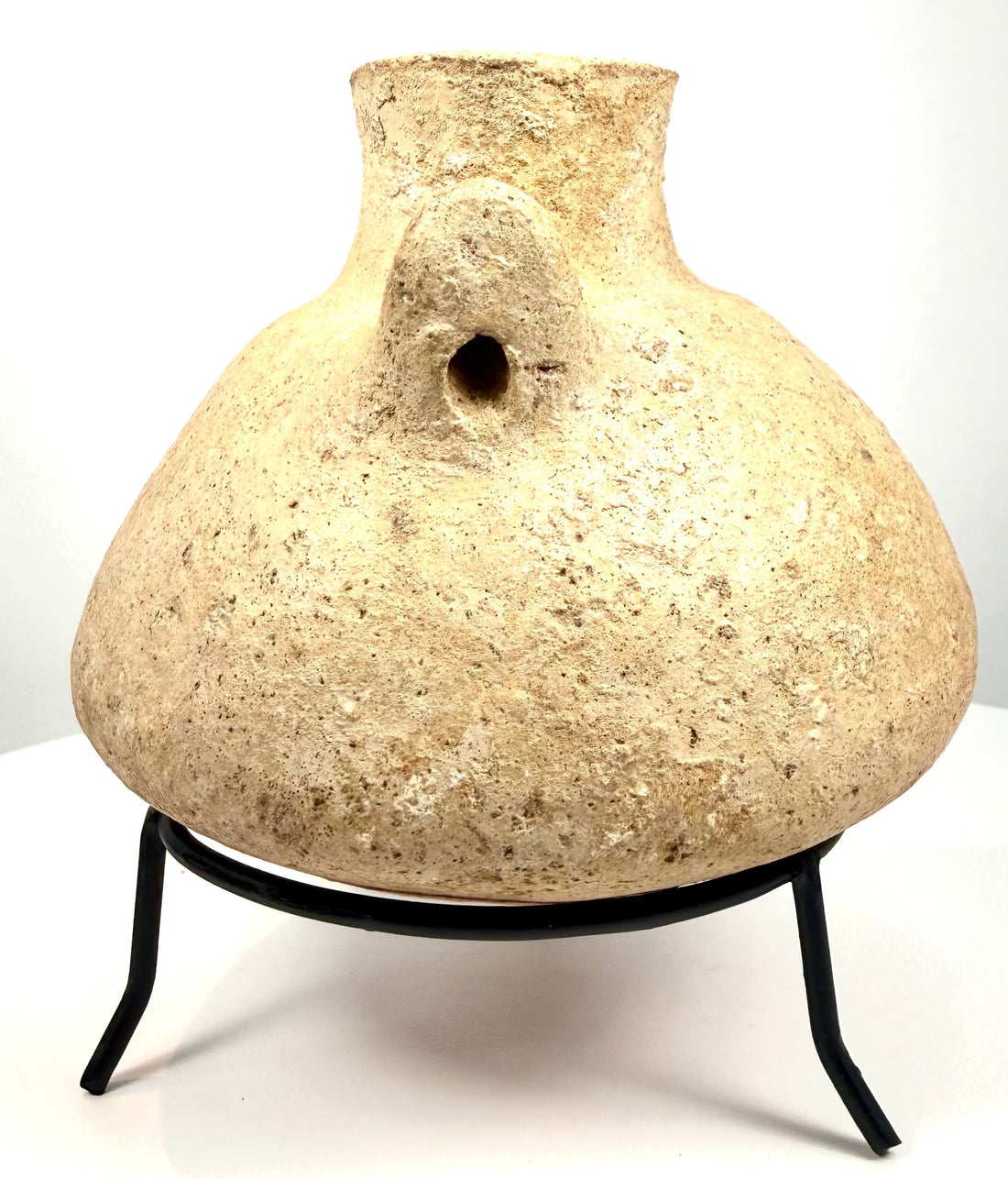
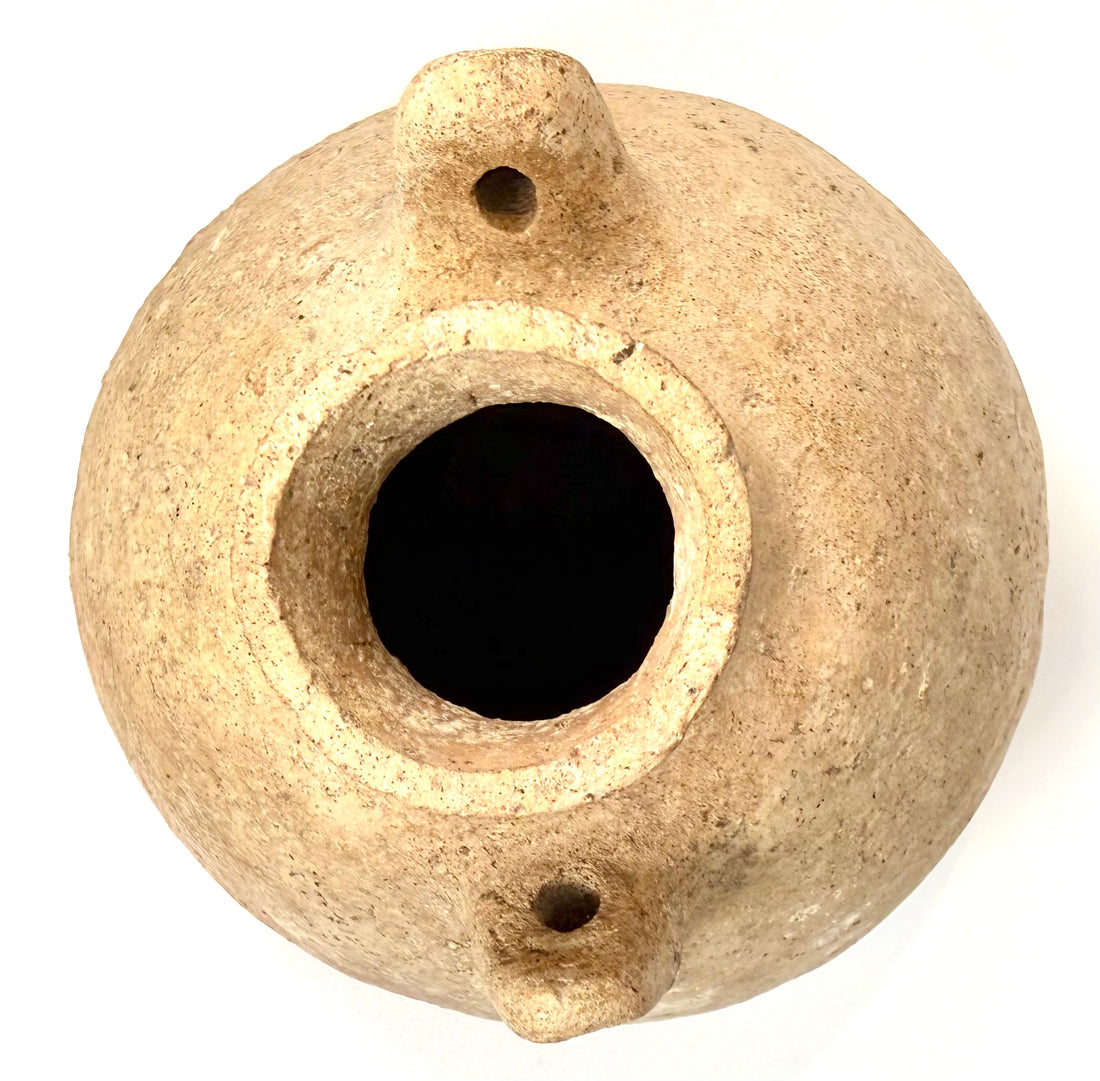
A distinctive Bronze Age-style terracotta vessel featuring a generously rounded globular body, narrow cylindrical neck, slightly flared rim, and two prominent upright handles positioned symmetrically along the upper shoulders. Its balanced proportions, earthy coloration, and functional design reflect ceramic traditions found throughout the ancient Eastern Mediterranean and Near East.
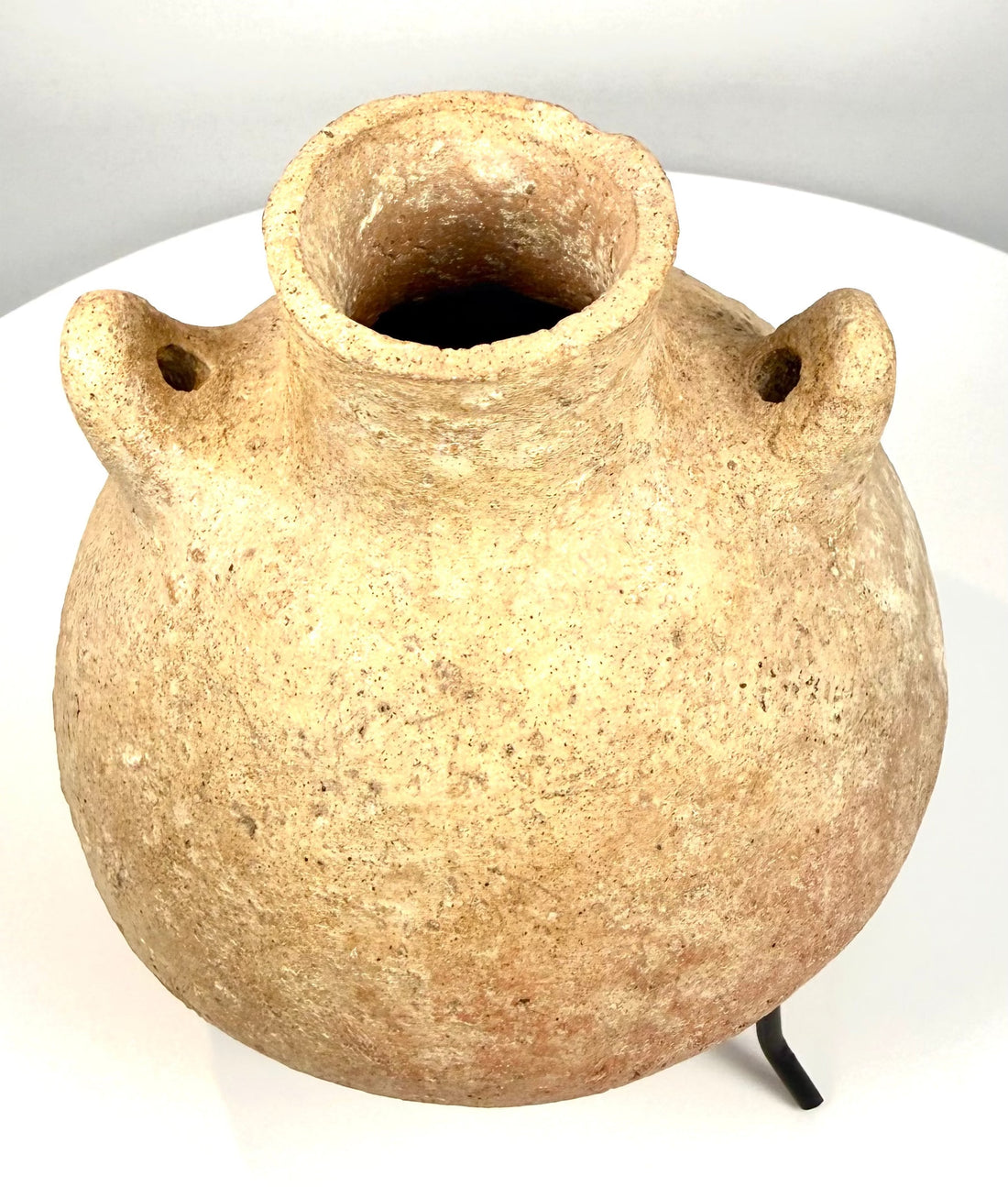
The vessel displays a broad, rounded body that gradually narrows toward the shoulder and neck, creating a compact yet substantial silhouette. The short cylindrical neck rises from the upper centre of the vessel, terminating in a gently expanded opening with an irregular rim.
Particularly notable are the two applied handles extending upward from opposite sides of the shoulders. Their curved profiles create distinctive openings between the handles and neck, contributing to the vessel's recognizable form. Such handle arrangements were employed in ancient pottery to facilitate handling, carrying, or securing ceramic containers.
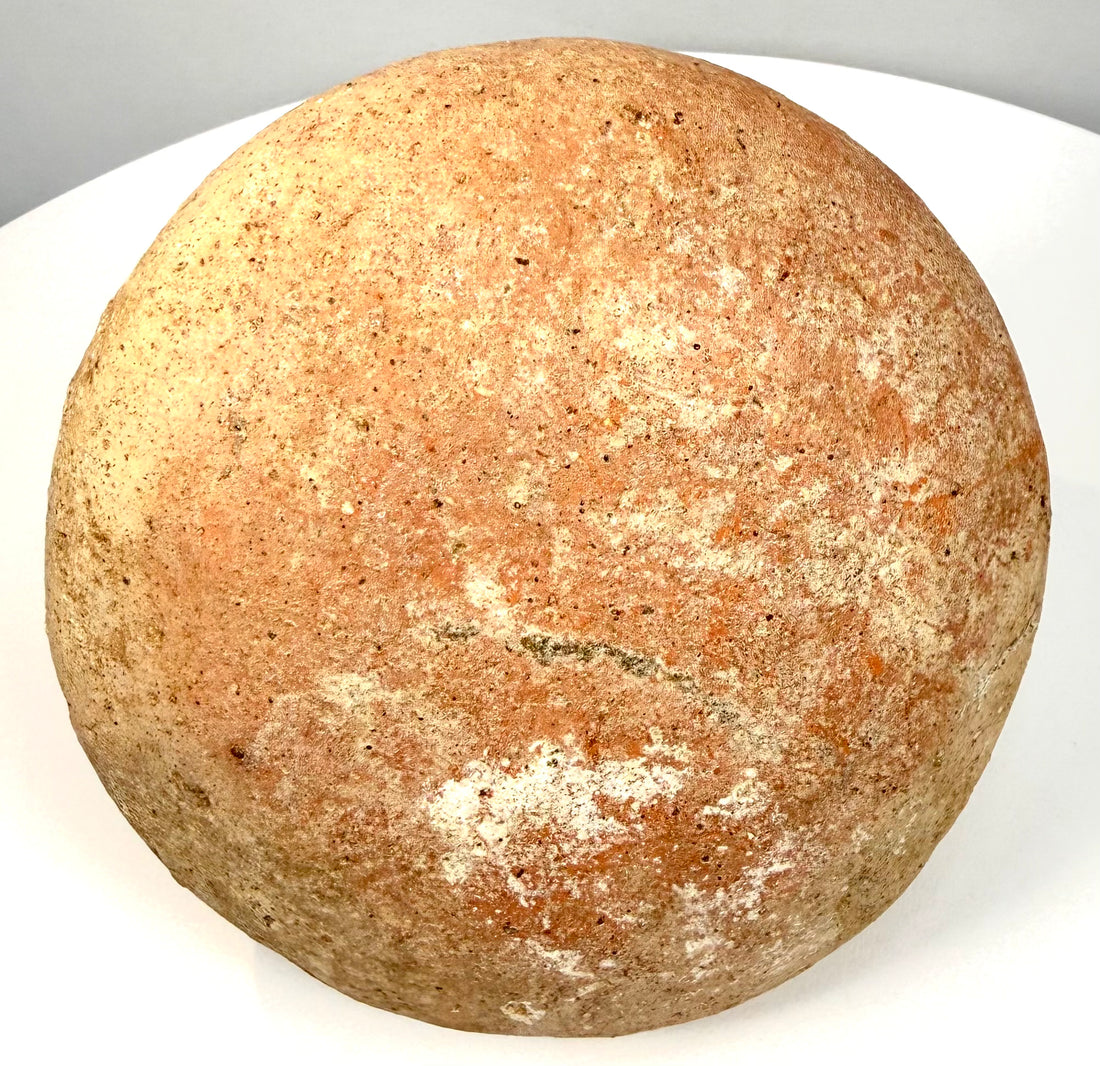
The exterior exhibits a warm sandy beige coloration with subtle tan, ochre, and reddish-brown undertones. Scattered mineral deposits, granular textures, and localized areas of discoloration are distributed across the surface, emphasizing the natural characteristics of the earthenware.
The ceramic body displays subtle variations in thickness, surface texture, and overall symmetry, reflecting traditional pottery production techniques. The gently rounded underside continues the vessel's globular form, while the neck and shoulder junctions retain visible irregularities associated with its construction.
Unlike more elaborate ancient vessels decorated with painted motifs, incised designs, or applied ornamentation, this example emphasizes simplicity, balanced proportions, and practical craftsmanship. Its restrained design highlights the importance of functional ceramic production in early societies.
Comparable globular vessels with paired handles are documented in Bronze Age pottery traditions throughout the Levant and surrounding regions. These objects were produced in various sizes and forms to accommodate the storage, handling, and transportation of everyday materials.
The present vessel illustrates this broader ceramic tradition through its rounded body, upright shoulder handles, compact neck, and unglazed earthenware construction. Its original contents and specific function remain unknown.
Features
- Distinctive globular body with broad, rounded proportions
- Two prominent upright handles positioned symmetrically along the upper shoulders
- Short cylindrical neck with a gently flared opening
- Unglazed terracotta construction with a coarse, granular surface texture
- Warm sandy beige coloration with subtle ochre and reddish-brown undertones
- Rounded underside preserving the vessel's compact silhouette
- Subtle irregularities in form and surface associated with traditional ceramic craftsmanship
- Scattered mineral deposits, localized discoloration, and areas of surface encrustation
- Simple, functional design comparable to Bronze Age ceramic traditions of the Eastern Mediterranean and Ancient Near East
Cultural Significance
The Bronze Age marked a transformative period in the development of ancient civilizations throughout the Eastern Mediterranean and Near East. Advancements in agriculture, metallurgy, trade, settlement organization, and specialized craftsmanship contributed to increasingly complex societies and expanding networks of cultural exchange.
Pottery remained one of the most essential technologies of everyday life. Ceramic vessels were widely employed for the preparation, storage, transportation, and distribution of food, water, oils, grains, and other commodities. Their production reflected practical requirements while also demonstrating the technical knowledge and artistic traditions of individual communities.
Throughout the ancient Levant, ceramic workshops developed a diverse range of vessel forms, including globular jars, jugs, storage containers, bowls, and small handled vessels. Their shapes evolved in response to changing household practices, regional preferences, and developments in pottery manufacture.
Globular vessels were particularly well suited to containing and storing materials, while the addition of handles provided greater convenience during handling and transportation. Paired shoulder handles became an established feature of numerous ancient ceramic traditions, appearing in both utilitarian and more elaborately decorated pottery.
The production of these vessels required an understanding of clay preparation, vessel shaping, surface treatment, drying, and firing. Variations in ceramic fabric, handle construction, proportions, and finishing techniques provide archaeologists with valuable evidence of regional craftsmanship and technological development.
Ancient pottery also offers important insight into patterns of trade and cultural interaction. Similar vessel forms appear across different regions of the Eastern Mediterranean, reflecting the movement of goods, exchange of technological knowledge, and shared practical requirements of ancient communities.
Early double-handled vessels from the Levant are represented in major museum collections, including The Metropolitan Museum of Art, where a pottery jug dating to circa 3500–3300 BCE demonstrates the long history of paired-handle vessel construction in the region.
The present terracotta vessel reflects this enduring ceramic tradition through its balanced globular form, paired upright handles, and restrained decorative treatment. Its surviving features illustrate the practical craftsmanship and functional design characteristic of early Mediterranean and Near Eastern pottery.
Condition
The vessel exhibits visible surface wear, scattered abrasions, granular irregularities, mineral deposits, and areas of discoloration. The exterior retains its warm sandy beige coloration, accompanied by localized reddish-brown undertones and uneven surface textures.
The upper rim displays small chips, minor losses, and irregularities along its edge. Additional surface wear is visible around the neck and shoulder junctions, including areas of softened detail and scattered deposits.
Both upright handles remain present, preserving the vessel's distinctive symmetrical arrangement. Their surfaces exhibit localized abrasions, minor irregularities, and areas of discoloration.
The globular body retains its recognizable form, with scattered pitting, minor surface imperfections, and variations in texture. The rounded underside displays additional deposits and areas of reddish-brown coloration.
The interior opening exhibits visible wear and irregularities consistent with the overall surface condition of the vessel.
Dimensions (Approximate)
Height: 4 in
Diameter: 4.5 in
Age (Approximate)
3,200–5,000 years old
Provenance
Formerly part of a well-known private collection in Newark, New Jersey, United States. The vessel was preserved within this private collection before subsequently entering the antiquities market.
Learn More
Explore an early double-handled pottery jug from the Levant, dating to circa 3500–3300 BCE, in the collection of The Metropolitan Museum of Art
Discover more ancient pottery and historical artifacts from the region in our Middle Eastern Antiquities & Ancient Art Collection
Description
Historical Context & Origin
Region: Eastern Mediterranean or Ancient Near East
Material: Terracotta (unglazed earthenware)
Period: Bronze Age, circa 3000–1200 BCE
Description
A distinctive Bronze Age-style terracotta vessel featuring a generously rounded globular body, narrow cylindrical neck, slightly flared rim, and two prominent upright handles positioned symmetrically along the upper shoulders. Its balanced proportions, earthy coloration, and functional design reflect ceramic traditions found throughout the ancient Eastern Mediterranean and Near East.
The vessel displays a broad, rounded body that gradually narrows toward the shoulder and neck, creating a compact yet substantial silhouette. The short cylindrical neck rises from the upper centre of the vessel, terminating in a gently expanded opening with an irregular rim.
Particularly notable are the two applied handles extending upward from opposite sides of the shoulders. Their curved profiles create distinctive openings between the handles and neck, contributing to the vessel's recognizable form. Such handle arrangements were employed in ancient pottery to facilitate handling, carrying, or securing ceramic containers.
The exterior exhibits a warm sandy beige coloration with subtle tan, ochre, and reddish-brown undertones. Scattered mineral deposits, granular textures, and localized areas of discoloration are distributed across the surface, emphasizing the natural characteristics of the earthenware.
The ceramic body displays subtle variations in thickness, surface texture, and overall symmetry, reflecting traditional pottery production techniques. The gently rounded underside continues the vessel's globular form, while the neck and shoulder junctions retain visible irregularities associated with its construction.
Unlike more elaborate ancient vessels decorated with painted motifs, incised designs, or applied ornamentation, this example emphasizes simplicity, balanced proportions, and practical craftsmanship. Its restrained design highlights the importance of functional ceramic production in early societies.
Comparable globular vessels with paired handles are documented in Bronze Age pottery traditions throughout the Levant and surrounding regions. These objects were produced in various sizes and forms to accommodate the storage, handling, and transportation of everyday materials.
The present vessel illustrates this broader ceramic tradition through its rounded body, upright shoulder handles, compact neck, and unglazed earthenware construction. Its original contents and specific function remain unknown.
Features
- Distinctive globular body with broad, rounded proportions
- Two prominent upright handles positioned symmetrically along the upper shoulders
- Short cylindrical neck with a gently flared opening
- Unglazed terracotta construction with a coarse, granular surface texture
- Warm sandy beige coloration with subtle ochre and reddish-brown undertones
- Rounded underside preserving the vessel's compact silhouette
- Subtle irregularities in form and surface associated with traditional ceramic craftsmanship
- Scattered mineral deposits, localized discoloration, and areas of surface encrustation
- Simple, functional design comparable to Bronze Age ceramic traditions of the Eastern Mediterranean and Ancient Near East
Cultural Significance
The Bronze Age marked a transformative period in the development of ancient civilizations throughout the Eastern Mediterranean and Near East. Advancements in agriculture, metallurgy, trade, settlement organization, and specialized craftsmanship contributed to increasingly complex societies and expanding networks of cultural exchange.
Pottery remained one of the most essential technologies of everyday life. Ceramic vessels were widely employed for the preparation, storage, transportation, and distribution of food, water, oils, grains, and other commodities. Their production reflected practical requirements while also demonstrating the technical knowledge and artistic traditions of individual communities.
Throughout the ancient Levant, ceramic workshops developed a diverse range of vessel forms, including globular jars, jugs, storage containers, bowls, and small handled vessels. Their shapes evolved in response to changing household practices, regional preferences, and developments in pottery manufacture.
Globular vessels were particularly well suited to containing and storing materials, while the addition of handles provided greater convenience during handling and transportation. Paired shoulder handles became an established feature of numerous ancient ceramic traditions, appearing in both utilitarian and more elaborately decorated pottery.
The production of these vessels required an understanding of clay preparation, vessel shaping, surface treatment, drying, and firing. Variations in ceramic fabric, handle construction, proportions, and finishing techniques provide archaeologists with valuable evidence of regional craftsmanship and technological development.
Ancient pottery also offers important insight into patterns of trade and cultural interaction. Similar vessel forms appear across different regions of the Eastern Mediterranean, reflecting the movement of goods, exchange of technological knowledge, and shared practical requirements of ancient communities.
Early double-handled vessels from the Levant are represented in major museum collections, including The Metropolitan Museum of Art, where a pottery jug dating to circa 3500–3300 BCE demonstrates the long history of paired-handle vessel construction in the region.
The present terracotta vessel reflects this enduring ceramic tradition through its balanced globular form, paired upright handles, and restrained decorative treatment. Its surviving features illustrate the practical craftsmanship and functional design characteristic of early Mediterranean and Near Eastern pottery.
Condition
The vessel exhibits visible surface wear, scattered abrasions, granular irregularities, mineral deposits, and areas of discoloration. The exterior retains its warm sandy beige coloration, accompanied by localized reddish-brown undertones and uneven surface textures.
The upper rim displays small chips, minor losses, and irregularities along its edge. Additional surface wear is visible around the neck and shoulder junctions, including areas of softened detail and scattered deposits.
Both upright handles remain present, preserving the vessel's distinctive symmetrical arrangement. Their surfaces exhibit localized abrasions, minor irregularities, and areas of discoloration.
The globular body retains its recognizable form, with scattered pitting, minor surface imperfections, and variations in texture. The rounded underside displays additional deposits and areas of reddish-brown coloration.
The interior opening exhibits visible wear and irregularities consistent with the overall surface condition of the vessel.
Dimensions (Approximate)
Height: 4 in
Diameter: 4.5 in
Age (Approximate)
3,200–5,000 years old
Provenance
Formerly part of a well-known private collection in Newark, New Jersey, United States. The vessel was preserved within this private collection before subsequently entering the antiquities market.
Learn More
Explore an early double-handled pottery jug from the Levant, dating to circa 3500–3300 BCE, in the collection of The Metropolitan Museum of Art
Discover more ancient pottery and historical artifacts from the region in our Middle Eastern Antiquities & Ancient Art Collection
Vous aimerez peut-être aussi
