



Ancient Eastern Mediterranean Ribbed Glass Jug | 4th–5th Century CE
- Prix habituel
- $1,750.00
- Prix soldé
- $1,750.00
- Prix habituel
Impossible de charger la disponibilité du service de retrait


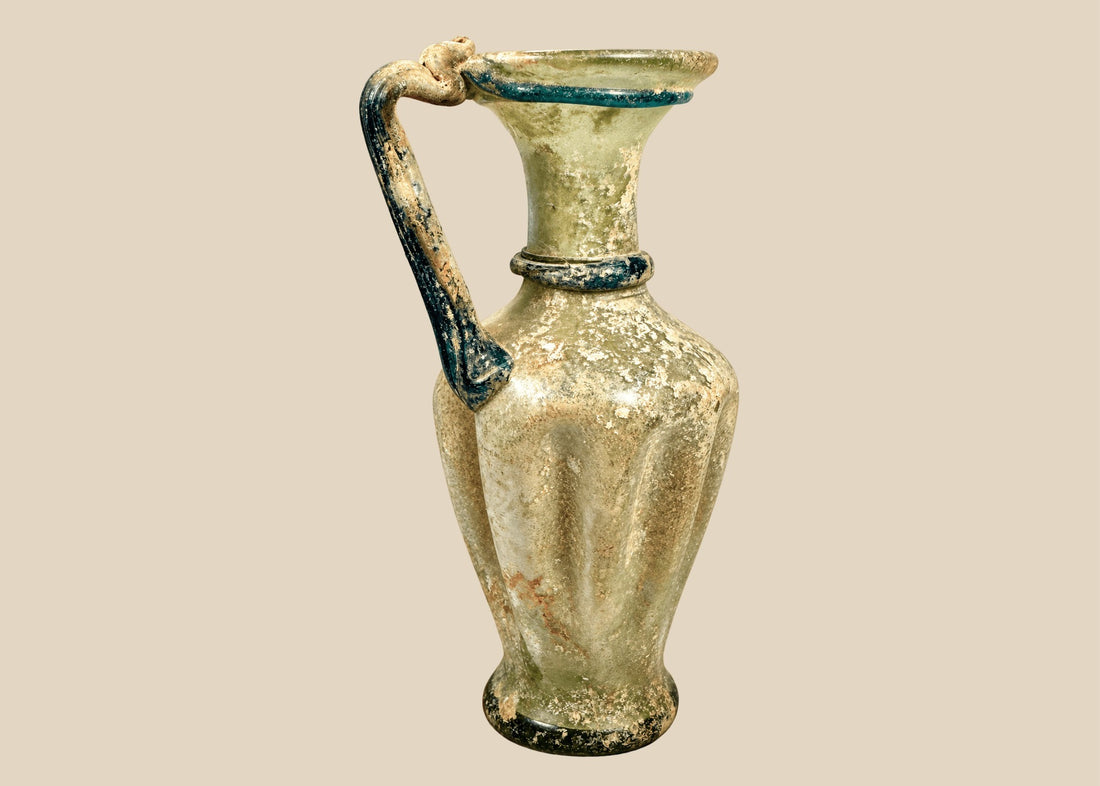
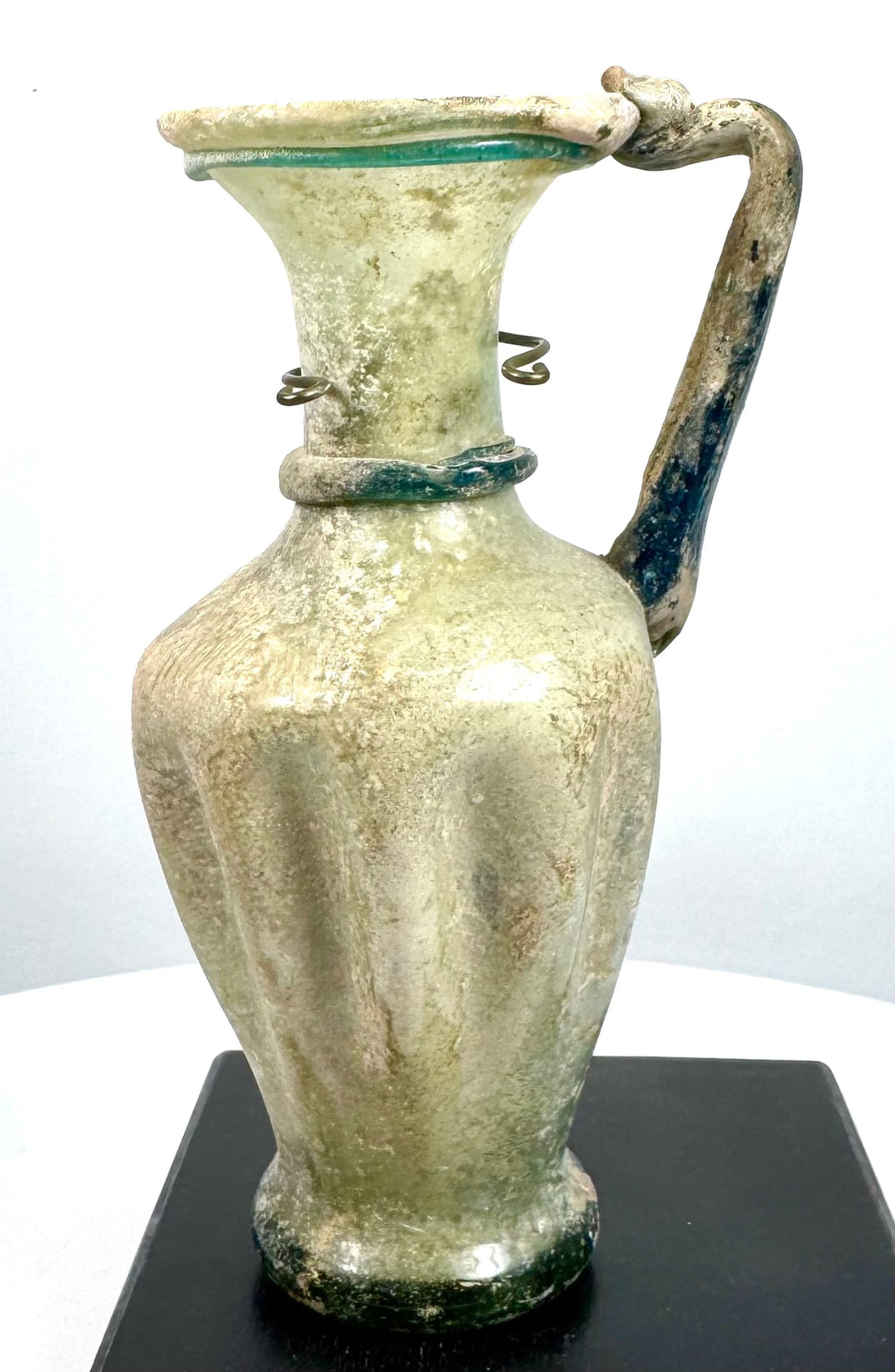
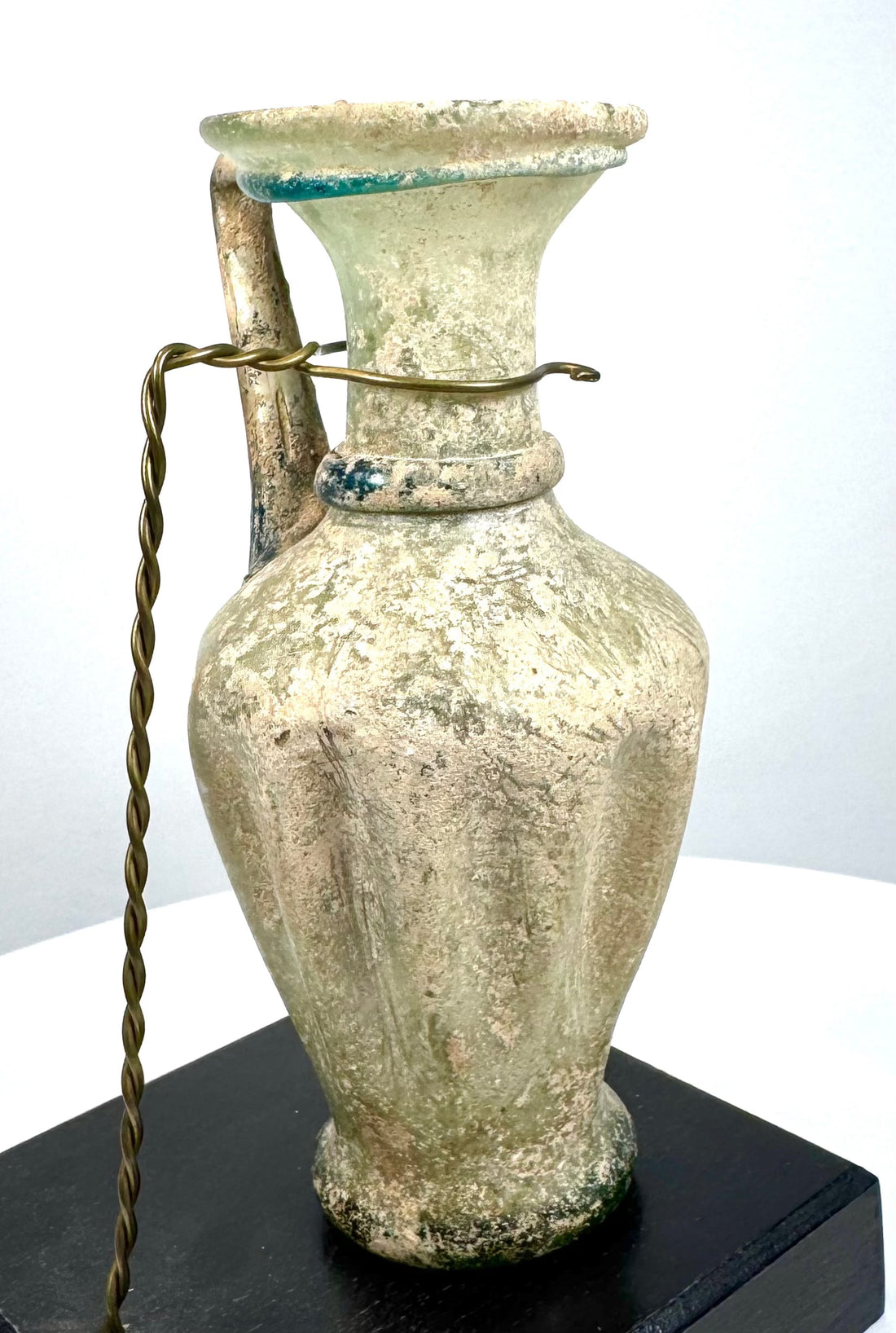

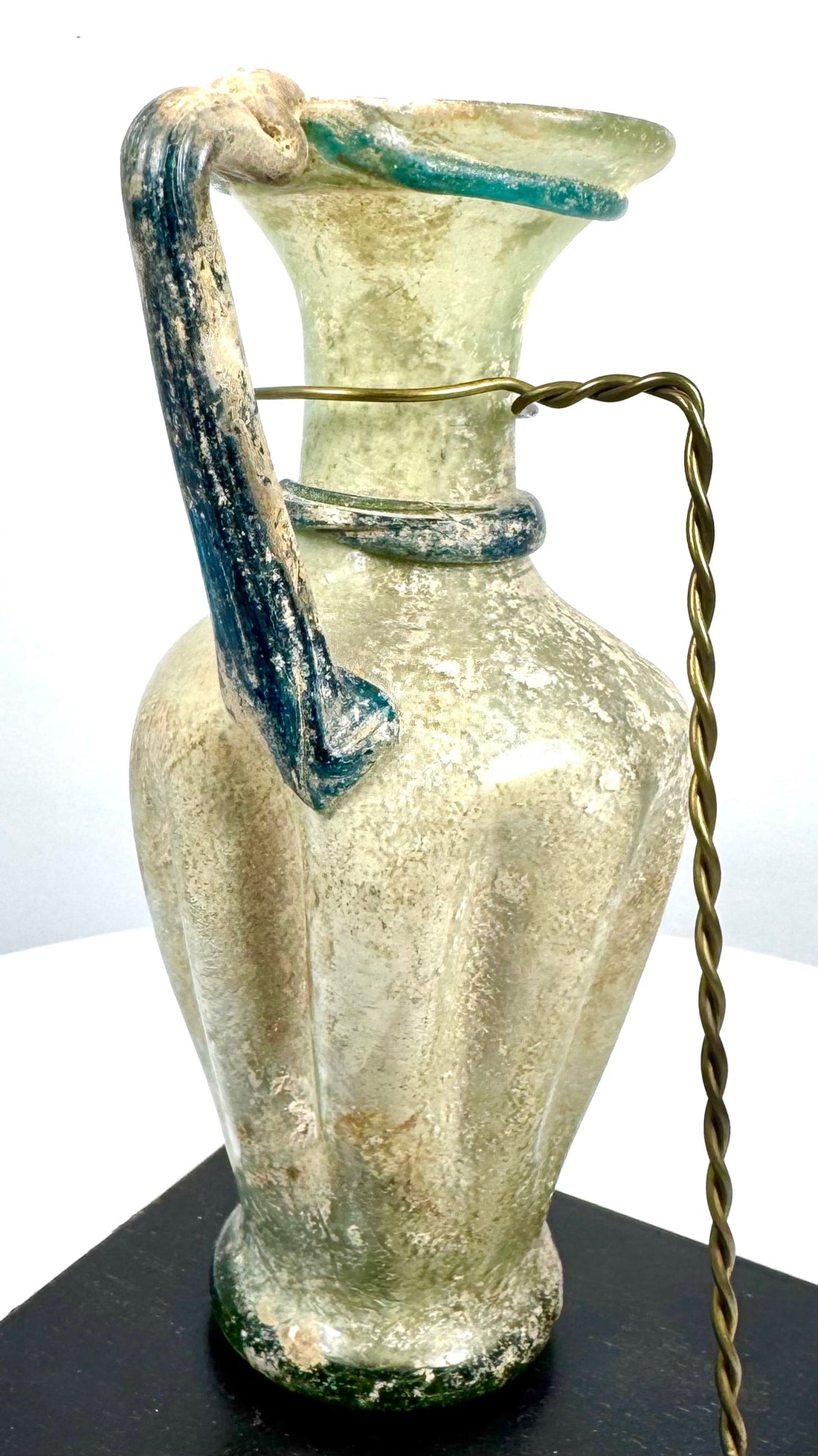

Ancient Eastern Mediterranean Ribbed Glass Jug | 4th–5th Century CE
Description
Plus
Moins
Historical Context & Origin
Region: Eastern Mediterranean
Material: Blown Pale Green Glass with Applied Decorative Glass Trails
Period: Circa 4th–5th Century CE, Late Antiquity
Description
This remarkable ancient Eastern Mediterranean glass jug dates to the 4th–5th century CE, representing the sophisticated glassmaking traditions that flourished throughout the Mediterranean during Late Antiquity.
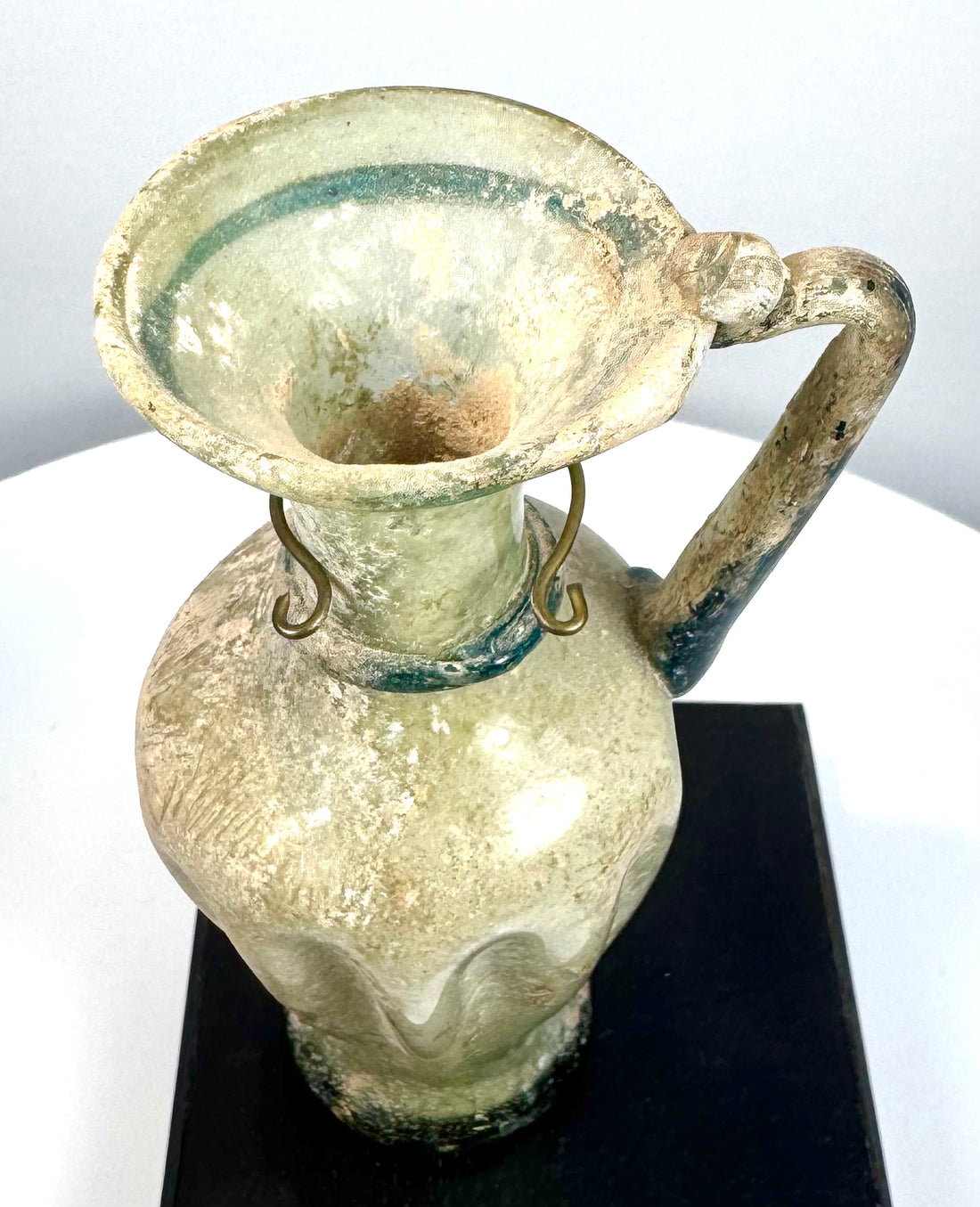
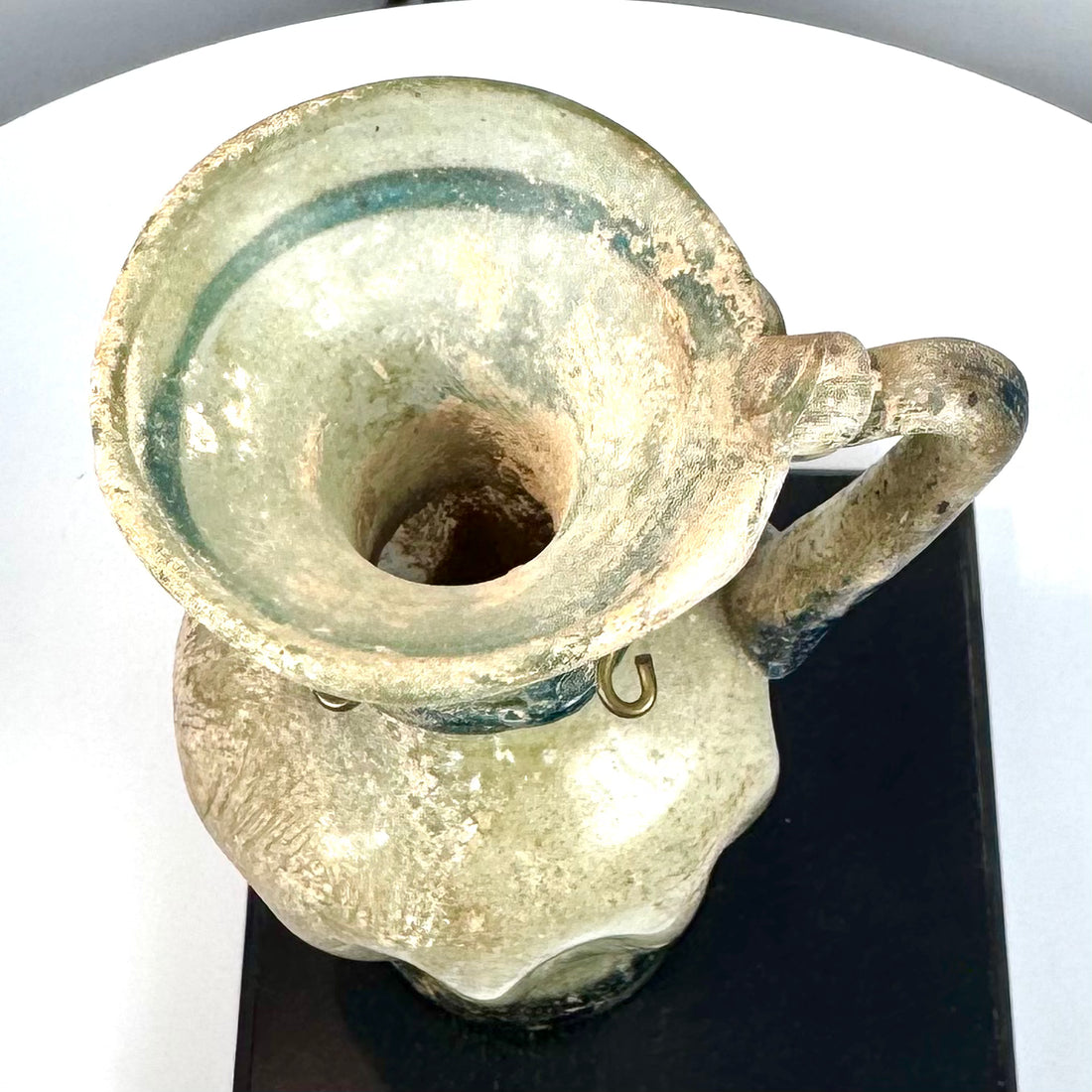
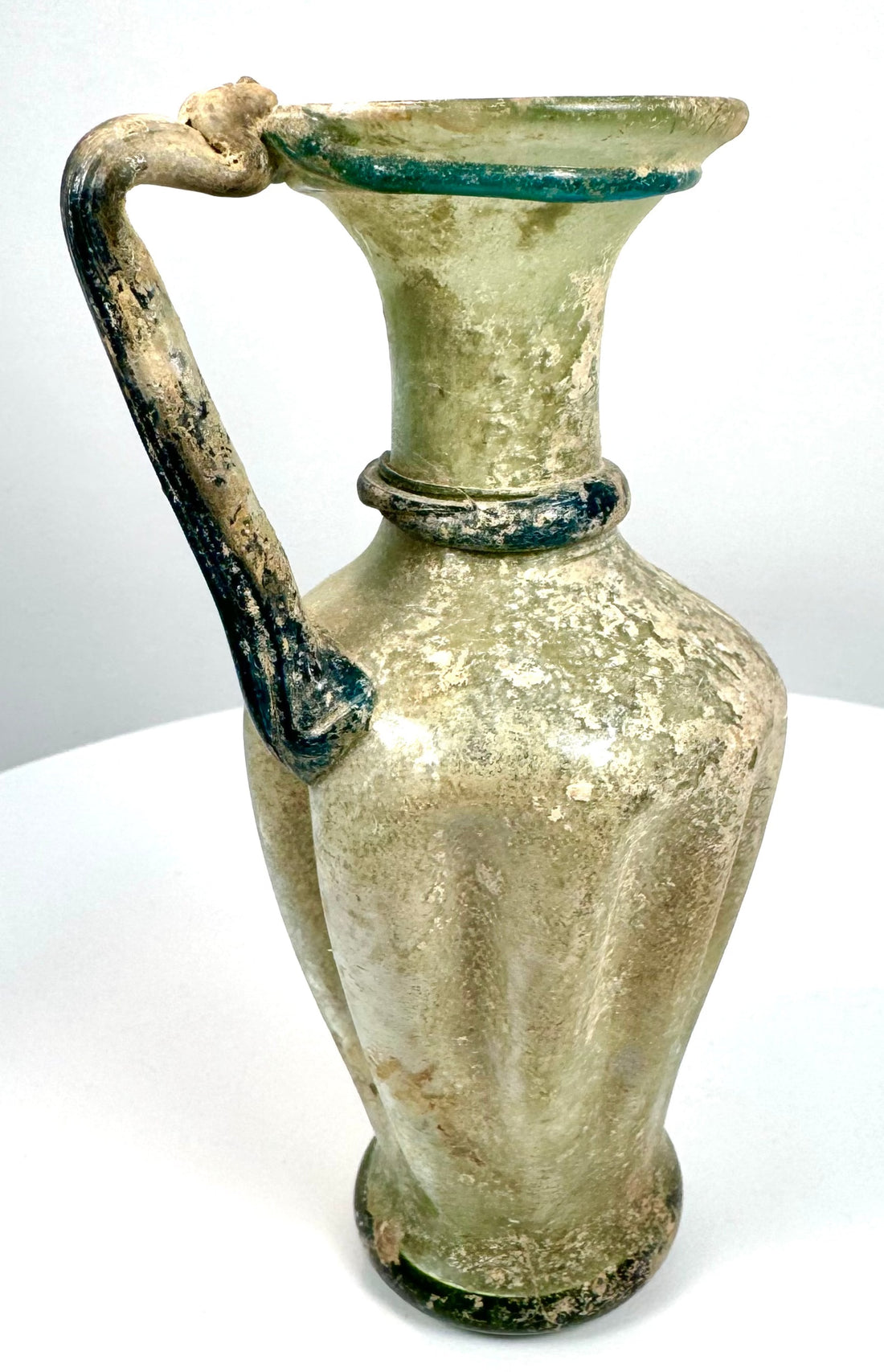
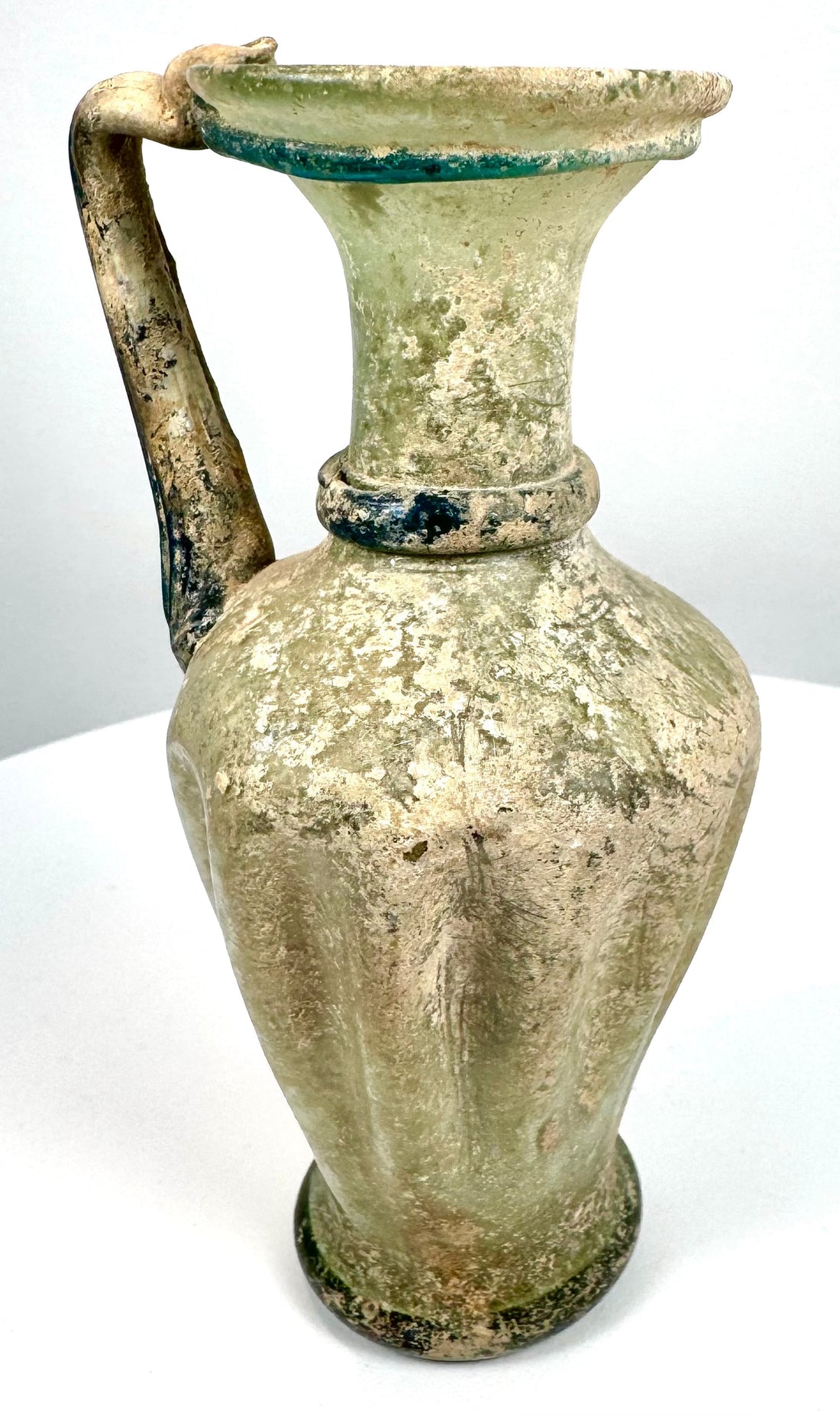
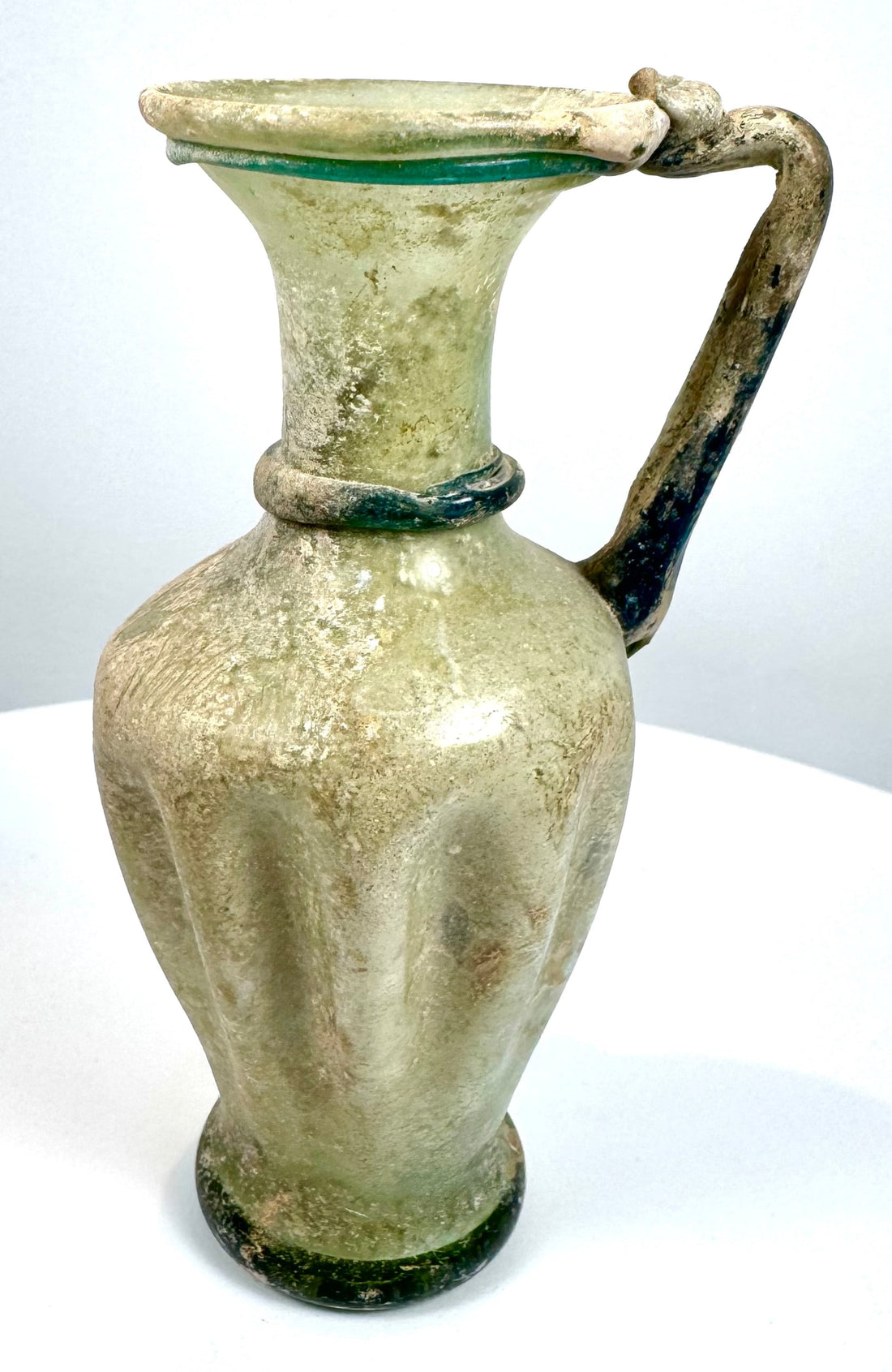
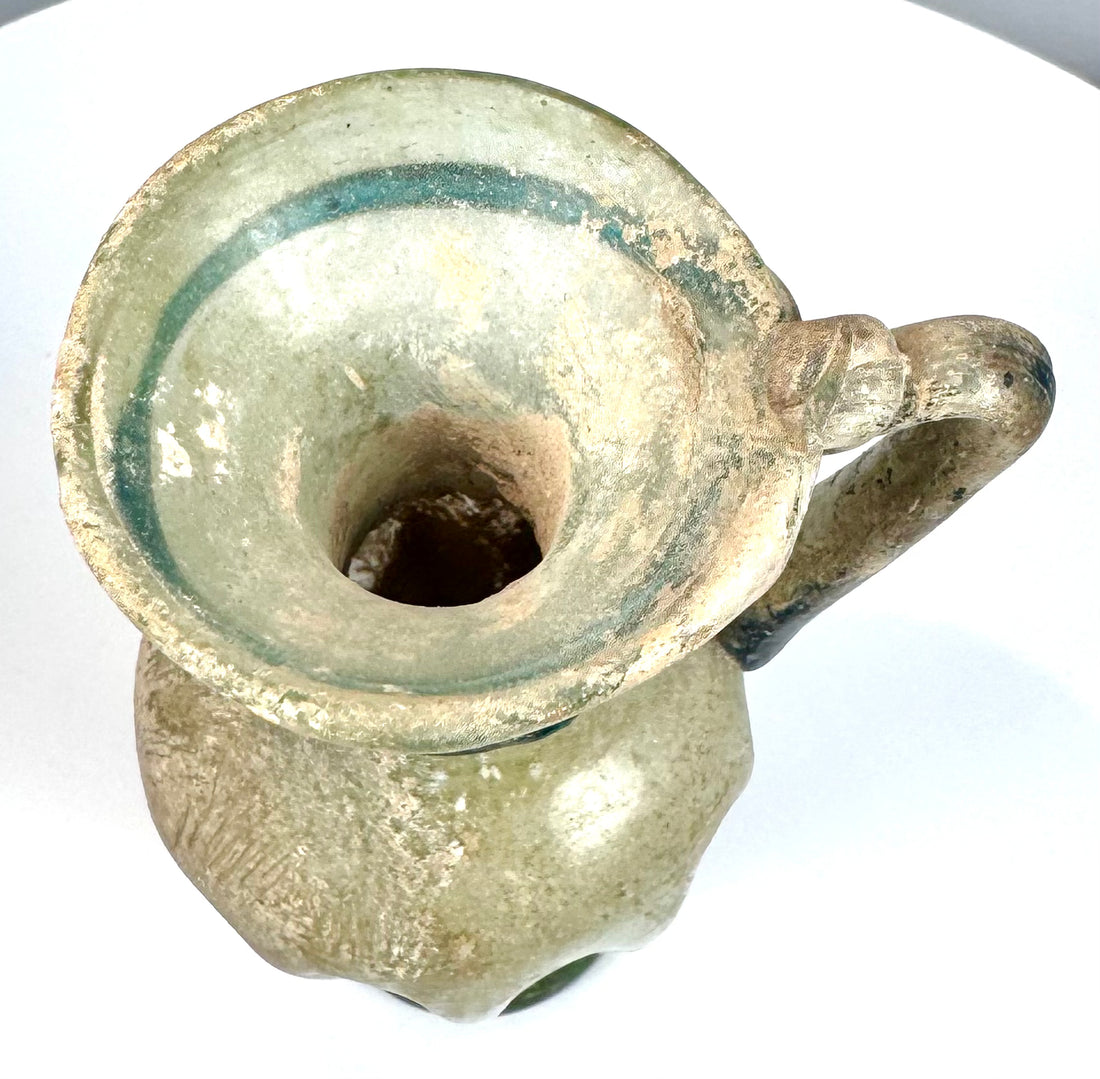
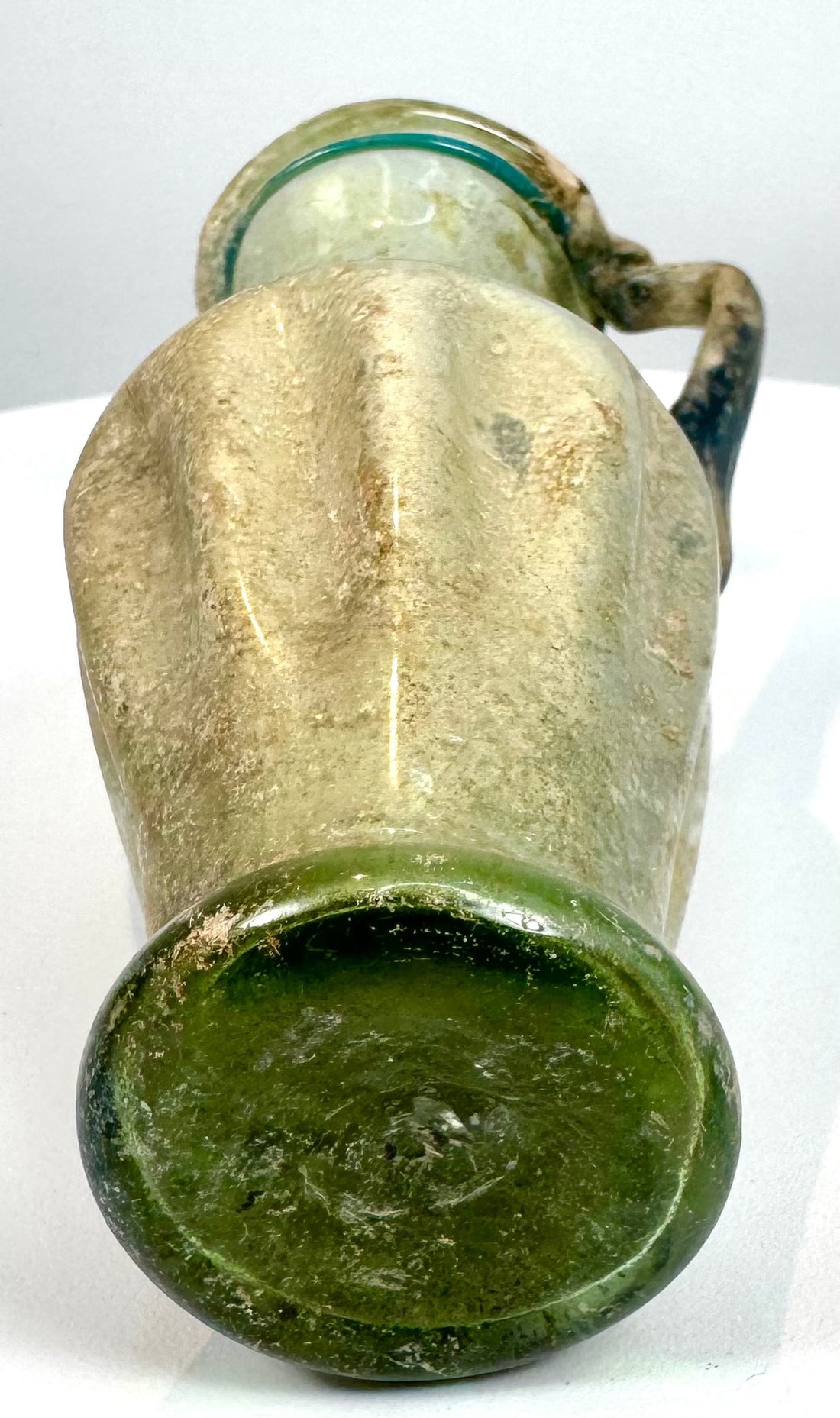
The vessel features an elegant ovoid body with pronounced vertical ribbing, tapering toward a rounded, slightly flared base. Its slender cylindrical neck rises into a dramatically flaring, trumpet-shaped mouth, finished with a thickened, rounded rim.
An especially distinctive feature is the surviving blue-green glass trailing applied beneath the mouth and encircling the lower neck. A raised glass collar further accentuates the transition between the neck and body. A gracefully curved handle extends from the shoulder to the upper rim, displaying pulled and folded glasswork characteristic of ancient glassmaking techniques.
Originally fashioned from pale green blown glass, the vessel exhibits extensive surface weathering, mineral encrustations, and areas of pale beige and blue-green patination. These surface characteristics create a richly textured appearance, with the surviving decorative elements remaining identifiable beneath the accumulated deposits.
The combination of pronounced vertical ribbing, applied glass decoration, and elegantly proportioned form demonstrates the technical skill and decorative traditions associated with Eastern Mediterranean glass production during the 4th–5th century CE.
Features
-
Ancient blown pale green glass construction
-
Elegant ovoid body with pronounced vertical ribbing
-
Wide, trumpet-shaped mouth with thickened, rounded rim
-
Applied blue-green decorative glass trailing beneath the mouth
-
Raised glass collar encircling the lower neck
-
Single gracefully curved handle extending from the shoulder to the rim
-
Rounded, slightly flared base retaining ancient manufacturing characteristics
-
Extensive surface weathering, mineral encrustations, and pale beige and blue-green patination
Cultural Significance
Glass vessels produced throughout the Eastern Mediterranean during Late Antiquity provide important insight into the technological achievements, artistic traditions, and commercial networks of the ancient world.
By the 4th–5th century CE, glassblowing had become a well-established craft, with workshops throughout the Mediterranean producing a remarkable variety of functional and decorative objects. Eastern Mediterranean glassmakers continued to develop techniques inherited from earlier Roman traditions, incorporating applied glass trails, ribbed surfaces, carefully formed handles, and distinctive vessel profiles.
The combination of decorative ribbing, applied glass threads, and a carefully shaped pouring mouth reflects the technical sophistication of glass production during this period. Such features demonstrate how ancient craftsmen balanced practical considerations with ornamental design.
Glass jugs and pouring vessels were used in domestic and social settings for serving and dispensing liquids, including water, wine, and other preparations. Their varied forms and decorative treatments reflect evolving regional preferences and established manufacturing traditions.
The Eastern Mediterranean remained an important centre of glass production and exchange during Late Antiquity. Its workshops contributed to the circulation of glass vessels across extensive commercial networks, linking communities throughout the Mediterranean and neighbouring regions.
The present example, with its pronounced vertical ribbing, elegantly flared mouth, applied blue-green decoration, and surviving curved handle, reflects these established vessel-making traditions.
Condition
The vessel exhibits extensive surface weathering, mineral encrustations, and areas of pale beige and blue-green patination.
The ovoid body retains its pronounced vertical ribbing, while the slender cylindrical neck, raised collar, trumpet-shaped mouth, and thickened rounded rim remain identifiable.
The applied decorative glass trailing survives beneath the mouth and around the lower neck, and the single curved handle remains attached between the shoulder and rim.
Surface abrasions, minor irregularities, discoloration, and accumulated mineral deposits are visible throughout.
The overall condition reflects the vessel's present state of preservation. The presence of fine cracks or historical repairs cannot be conclusively determined from photographic examination alone.
Dimensions (Approximate)
Height: 5 inches
Age (Approximate)
Approximately 1,500–1,725 years old
Provenance
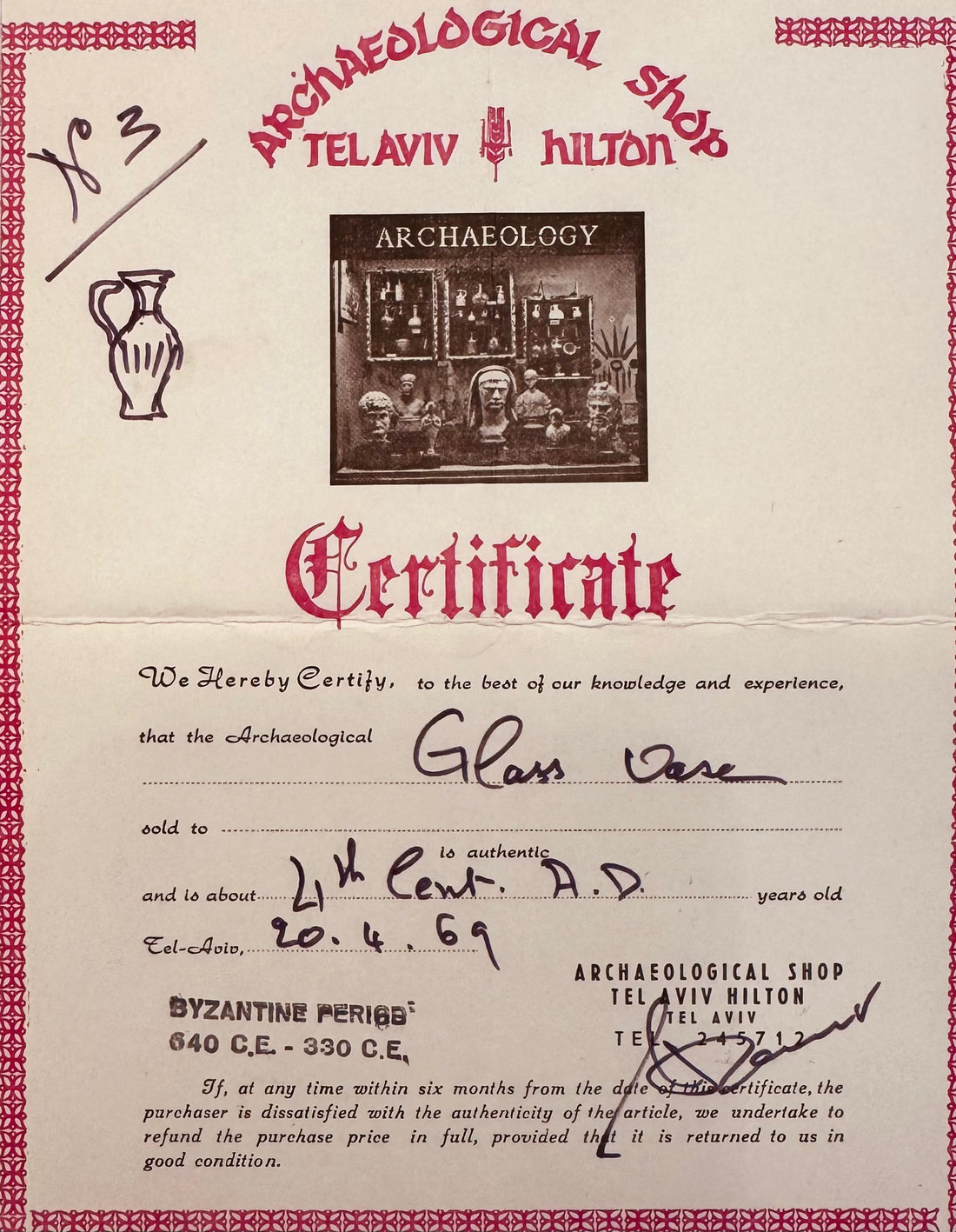
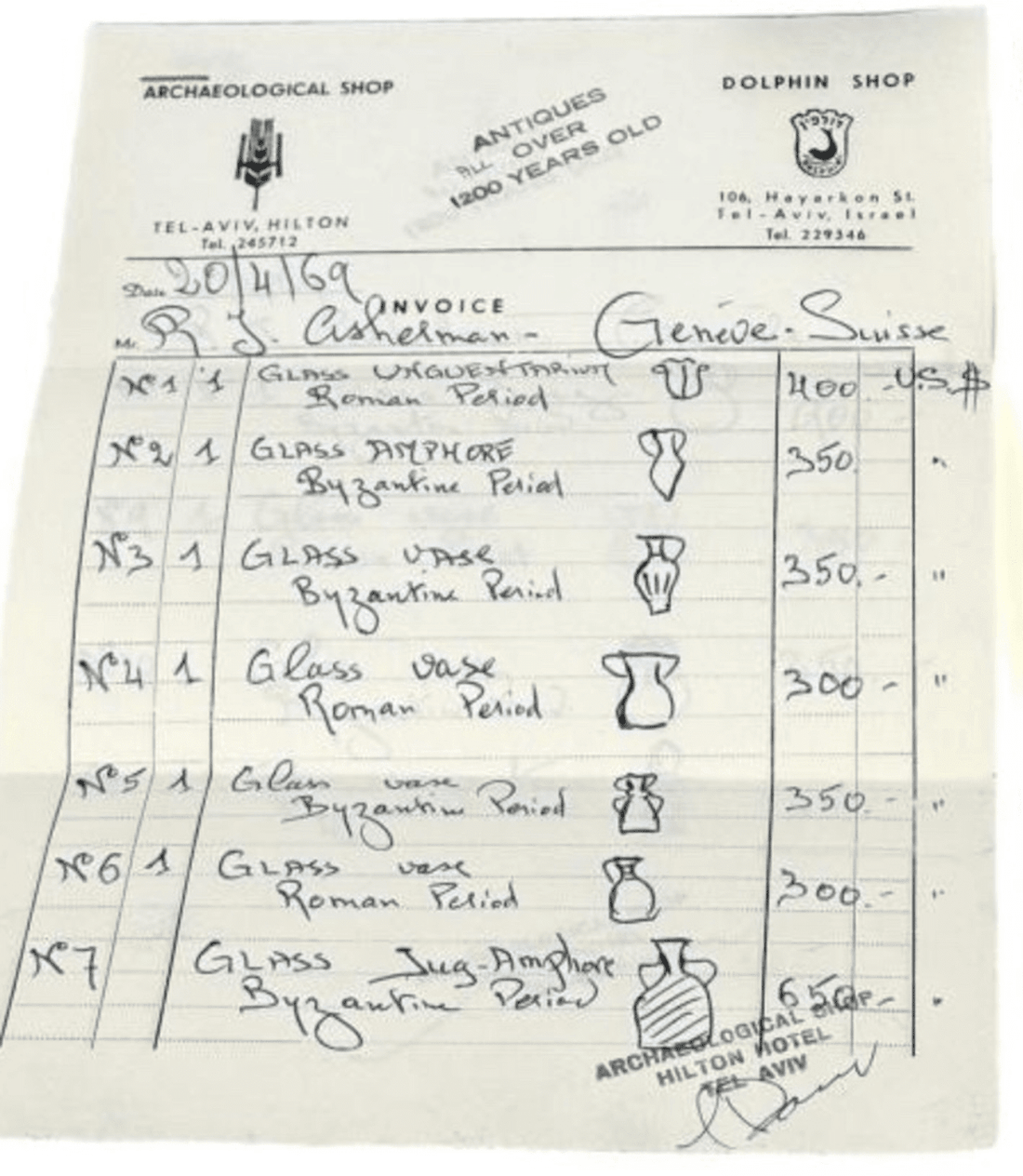
Archaeological Shop, Tel Aviv Hilton, Tel Aviv, Israel — April 20, 1969.
Accompanied by a historical archaeological certificate issued by the Archaeological Shop at the Tel Aviv Hilton, dated April 20, 1969. The signed document identifies the object as an archaeological glass vase and attributes it to the 4th century AD.
The Archaeological Shop operated within the Tel Aviv Hilton, serving international visitors and collectors interested in ancient artifacts and archaeological objects.
According to a copy of the original invoice, the vessel was purchased for US$350 on April 20, 1969. The original invoice was reportedly jointly headed with the Dolphin Shop, 106 Hayarkon Street, Tel Aviv, and recorded a purchaser's address in Geneva, Switzerland.
Expert Assessment: Examined by Luca Salvaggio, an Italian archaeologist specializing in ancient Mediterranean material, with a Postgraduate Diploma from the Italian Archaeological School at Athens (IASA) and accreditation for preventive archaeology from the Italian Ministry of Culture (MiC). He identified the vessel as an Eastern Mediterranean glass jug dating to the 4th–5th century CE, refining its previous classification as a Roman–Byzantine ribbed glass jug. His assessment considered its pale green blown-glass construction, ovoid body with pronounced vertical ribbing, slender cylindrical neck, raised collar, wide trumpet-shaped mouth with thickened rim, applied blue-green glass trailing, and single pulled and folded handle extending from the shoulder to the rim.
Learn More
Discover a comparable Late Roman glass jug featuring vertical ribbing and applied glass decoration at The Metropolitan Museum of Art
Browse Our Collection of Roman & Greek Artifacts
Description
Historical Context & Origin
Region: Eastern Mediterranean
Material: Blown Pale Green Glass with Applied Decorative Glass Trails
Period: Circa 4th–5th Century CE, Late Antiquity
Description
This remarkable ancient Eastern Mediterranean glass jug dates to the 4th–5th century CE, representing the sophisticated glassmaking traditions that flourished throughout the Mediterranean during Late Antiquity.
The vessel features an elegant ovoid body with pronounced vertical ribbing, tapering toward a rounded, slightly flared base. Its slender cylindrical neck rises into a dramatically flaring, trumpet-shaped mouth, finished with a thickened, rounded rim.
An especially distinctive feature is the surviving blue-green glass trailing applied beneath the mouth and encircling the lower neck. A raised glass collar further accentuates the transition between the neck and body. A gracefully curved handle extends from the shoulder to the upper rim, displaying pulled and folded glasswork characteristic of ancient glassmaking techniques.
Originally fashioned from pale green blown glass, the vessel exhibits extensive surface weathering, mineral encrustations, and areas of pale beige and blue-green patination. These surface characteristics create a richly textured appearance, with the surviving decorative elements remaining identifiable beneath the accumulated deposits.
The combination of pronounced vertical ribbing, applied glass decoration, and elegantly proportioned form demonstrates the technical skill and decorative traditions associated with Eastern Mediterranean glass production during the 4th–5th century CE.
Features
-
Ancient blown pale green glass construction
-
Elegant ovoid body with pronounced vertical ribbing
-
Wide, trumpet-shaped mouth with thickened, rounded rim
-
Applied blue-green decorative glass trailing beneath the mouth
-
Raised glass collar encircling the lower neck
-
Single gracefully curved handle extending from the shoulder to the rim
-
Rounded, slightly flared base retaining ancient manufacturing characteristics
-
Extensive surface weathering, mineral encrustations, and pale beige and blue-green patination
Cultural Significance
Glass vessels produced throughout the Eastern Mediterranean during Late Antiquity provide important insight into the technological achievements, artistic traditions, and commercial networks of the ancient world.
By the 4th–5th century CE, glassblowing had become a well-established craft, with workshops throughout the Mediterranean producing a remarkable variety of functional and decorative objects. Eastern Mediterranean glassmakers continued to develop techniques inherited from earlier Roman traditions, incorporating applied glass trails, ribbed surfaces, carefully formed handles, and distinctive vessel profiles.
The combination of decorative ribbing, applied glass threads, and a carefully shaped pouring mouth reflects the technical sophistication of glass production during this period. Such features demonstrate how ancient craftsmen balanced practical considerations with ornamental design.
Glass jugs and pouring vessels were used in domestic and social settings for serving and dispensing liquids, including water, wine, and other preparations. Their varied forms and decorative treatments reflect evolving regional preferences and established manufacturing traditions.
The Eastern Mediterranean remained an important centre of glass production and exchange during Late Antiquity. Its workshops contributed to the circulation of glass vessels across extensive commercial networks, linking communities throughout the Mediterranean and neighbouring regions.
The present example, with its pronounced vertical ribbing, elegantly flared mouth, applied blue-green decoration, and surviving curved handle, reflects these established vessel-making traditions.
Condition
The vessel exhibits extensive surface weathering, mineral encrustations, and areas of pale beige and blue-green patination.
The ovoid body retains its pronounced vertical ribbing, while the slender cylindrical neck, raised collar, trumpet-shaped mouth, and thickened rounded rim remain identifiable.
The applied decorative glass trailing survives beneath the mouth and around the lower neck, and the single curved handle remains attached between the shoulder and rim.
Surface abrasions, minor irregularities, discoloration, and accumulated mineral deposits are visible throughout.
The overall condition reflects the vessel's present state of preservation. The presence of fine cracks or historical repairs cannot be conclusively determined from photographic examination alone.
Dimensions (Approximate)
Height: 5 inches
Age (Approximate)
Approximately 1,500–1,725 years old
Provenance
Archaeological Shop, Tel Aviv Hilton, Tel Aviv, Israel — April 20, 1969.
Accompanied by a historical archaeological certificate issued by the Archaeological Shop at the Tel Aviv Hilton, dated April 20, 1969. The signed document identifies the object as an archaeological glass vase and attributes it to the 4th century AD.
The Archaeological Shop operated within the Tel Aviv Hilton, serving international visitors and collectors interested in ancient artifacts and archaeological objects.
According to a copy of the original invoice, the vessel was purchased for US$350 on April 20, 1969. The original invoice was reportedly jointly headed with the Dolphin Shop, 106 Hayarkon Street, Tel Aviv, and recorded a purchaser's address in Geneva, Switzerland.
Expert Assessment: Examined by Luca Salvaggio, an Italian archaeologist specializing in ancient Mediterranean material, with a Postgraduate Diploma from the Italian Archaeological School at Athens (IASA) and accreditation for preventive archaeology from the Italian Ministry of Culture (MiC). He identified the vessel as an Eastern Mediterranean glass jug dating to the 4th–5th century CE, refining its previous classification as a Roman–Byzantine ribbed glass jug. His assessment considered its pale green blown-glass construction, ovoid body with pronounced vertical ribbing, slender cylindrical neck, raised collar, wide trumpet-shaped mouth with thickened rim, applied blue-green glass trailing, and single pulled and folded handle extending from the shoulder to the rim.
Learn More
Discover a comparable Late Roman glass jug featuring vertical ribbing and applied glass decoration at The Metropolitan Museum of Art
Browse Our Collection of Roman & Greek Artifacts
Vous aimerez peut-être aussi
