

Bouteille en terre cuite de la Méditerranée orientale antique | Fiole ovoïde d'époque romaine-byzantine | Vers IIIe – VIIe siècle apr. J.-C.
- Prix habituel
- $525.00
- Prix soldé
- $525.00
- Prix habituel
Impossible de charger la disponibilité du service de retrait


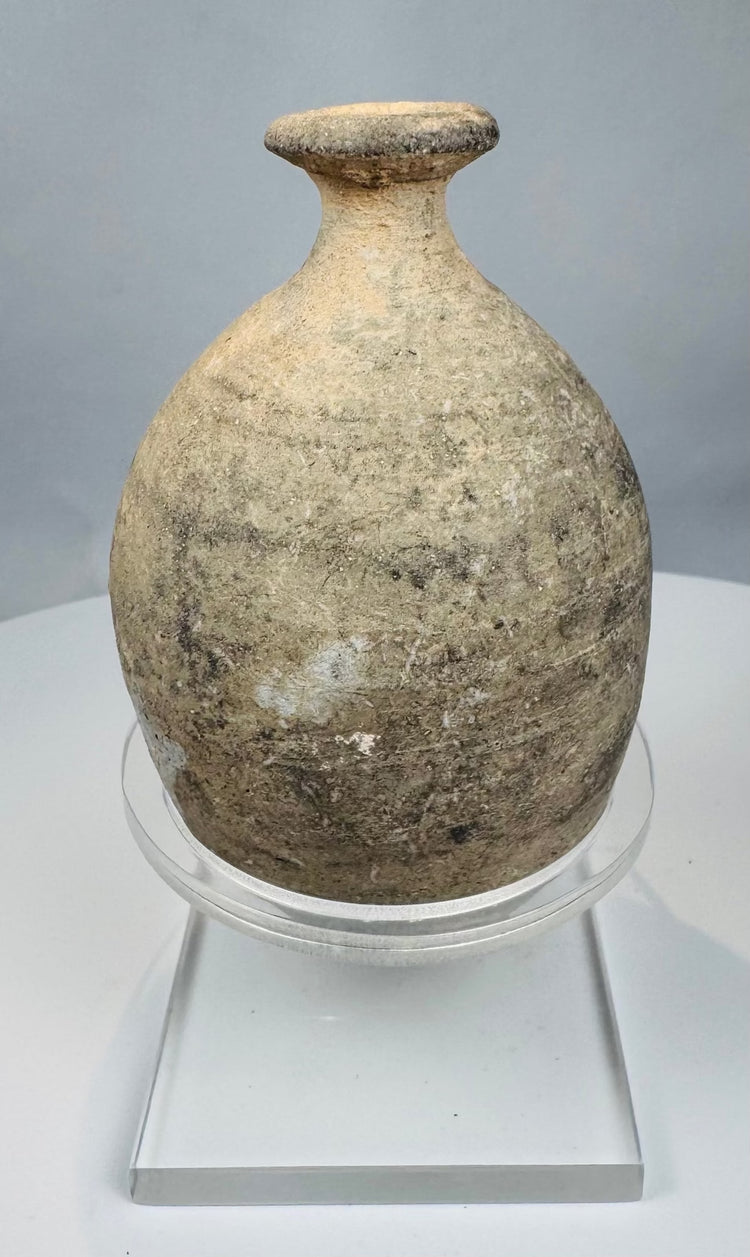
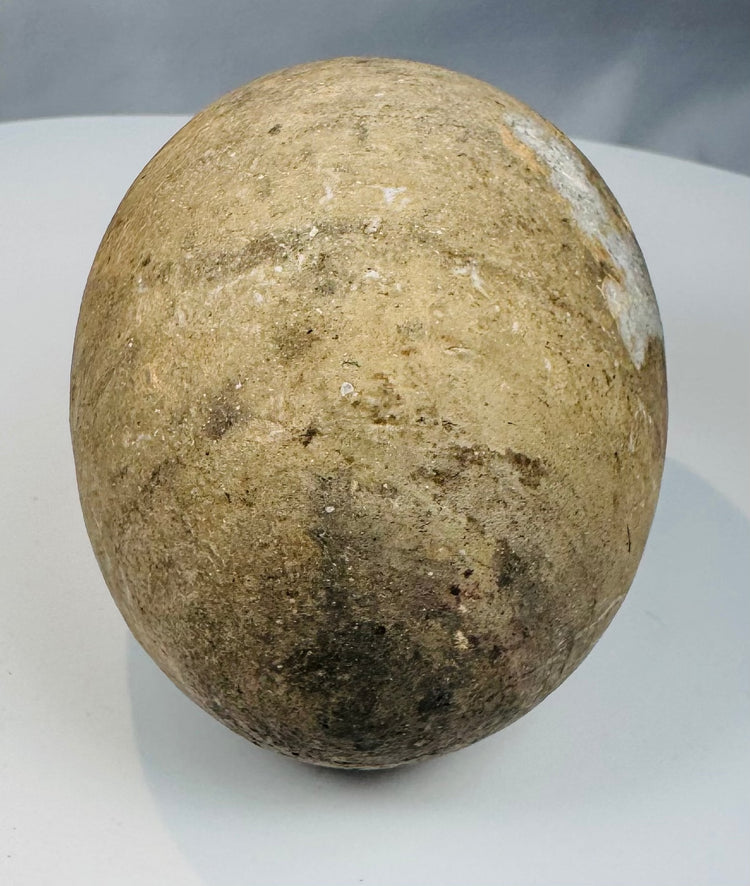
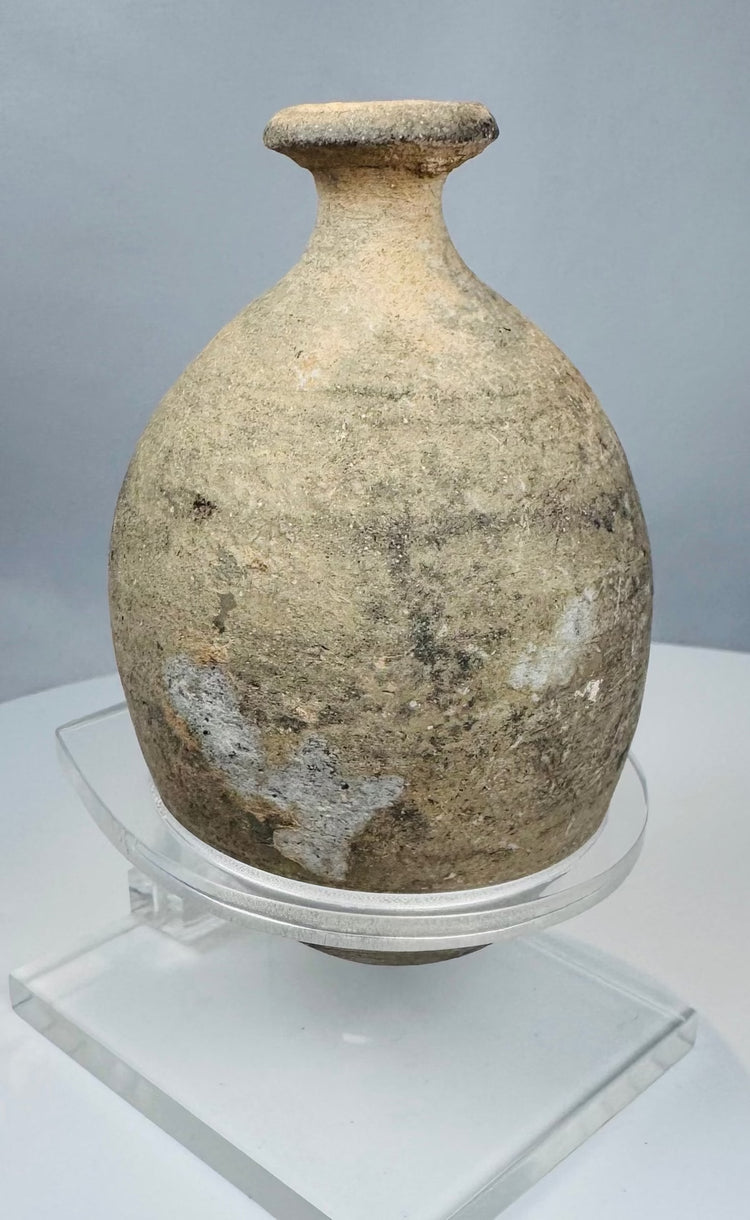
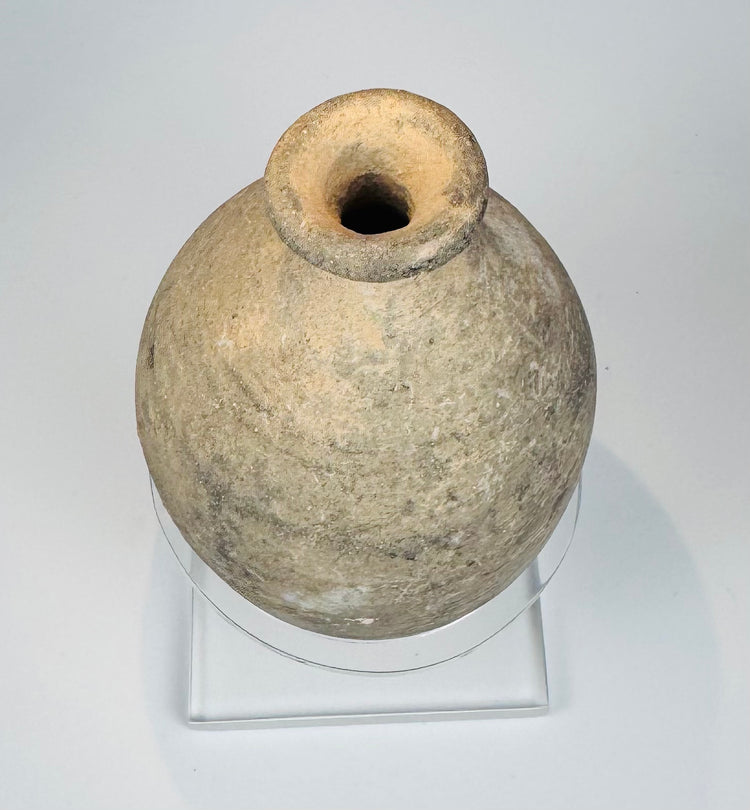
Bouteille en terre cuite de la Méditerranée orientale antique | Fiole ovoïde d'époque romaine-byzantine | Vers IIIe – VIIe siècle apr. J.-C.
Description
Plus
Moins
Contexte historique et origine
Région : Méditerranée orientale, probablement le Levant
Matériau : Terre cuite tournée avec engobe pâle et concrétions minérales
Période : Période romano-byzantine, vers les IIIe-VIIe siècles de notre ère
Description
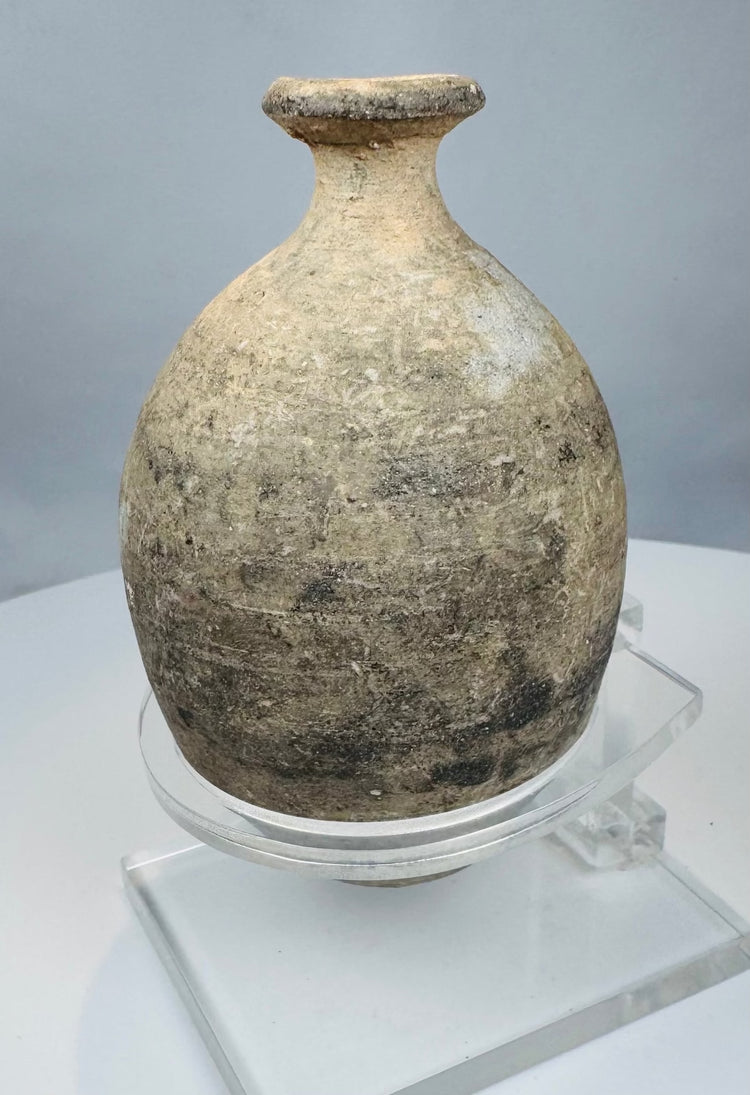
Cette ancienne bouteille en terre cuite est un exemple bien conservé des petits récipients en céramique produits dans toute la Méditerranée orientale pendant les périodes romaine et byzantine.
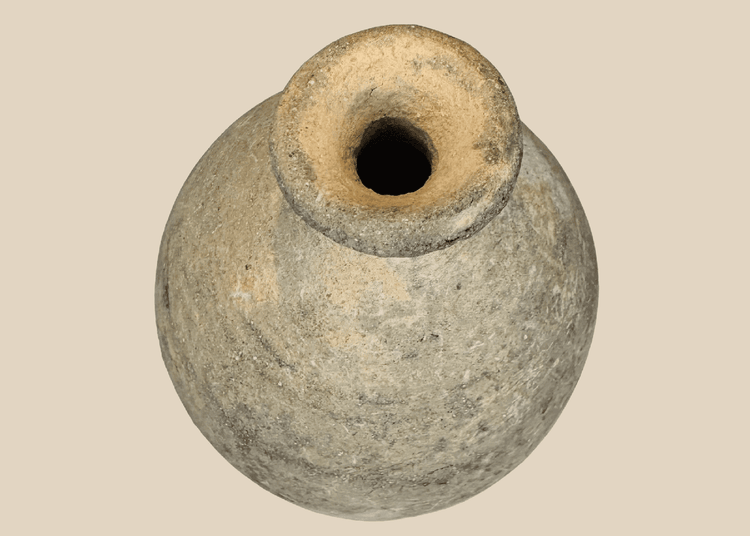
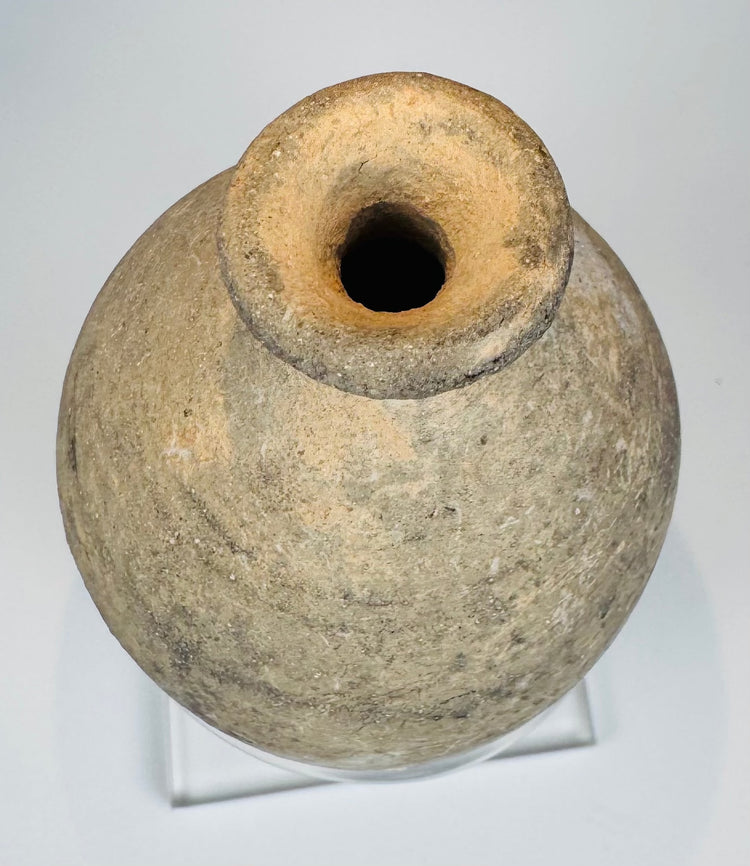
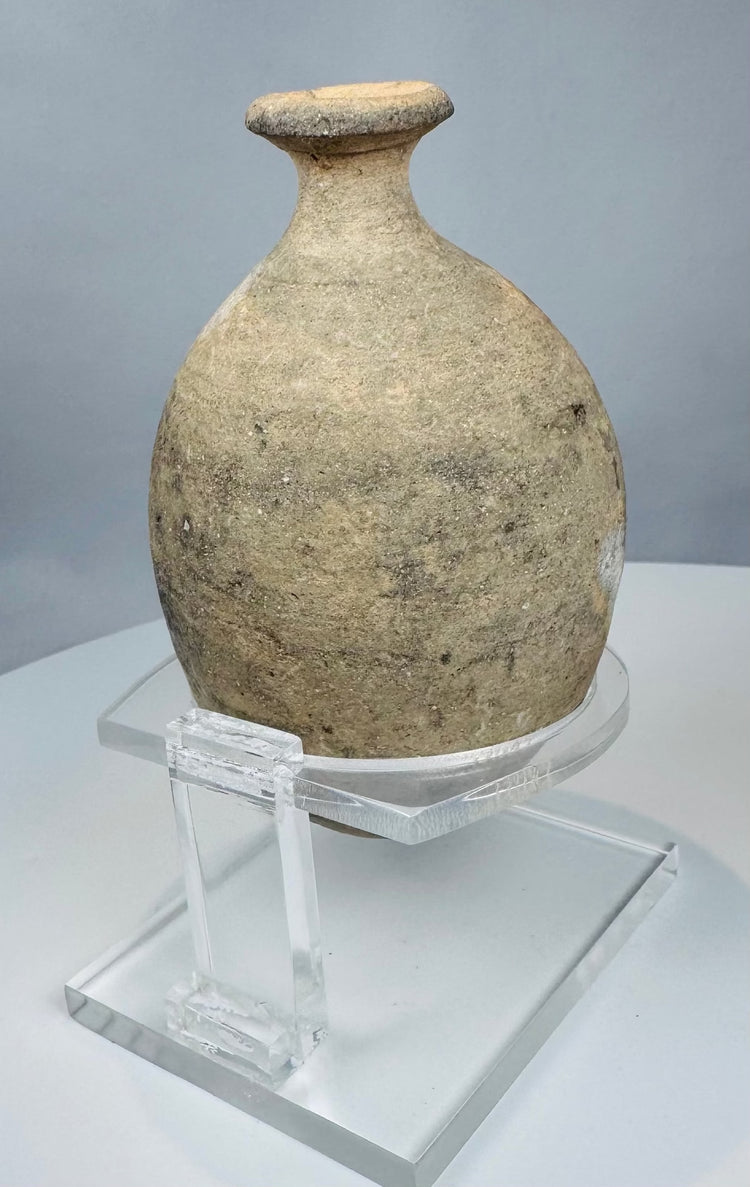
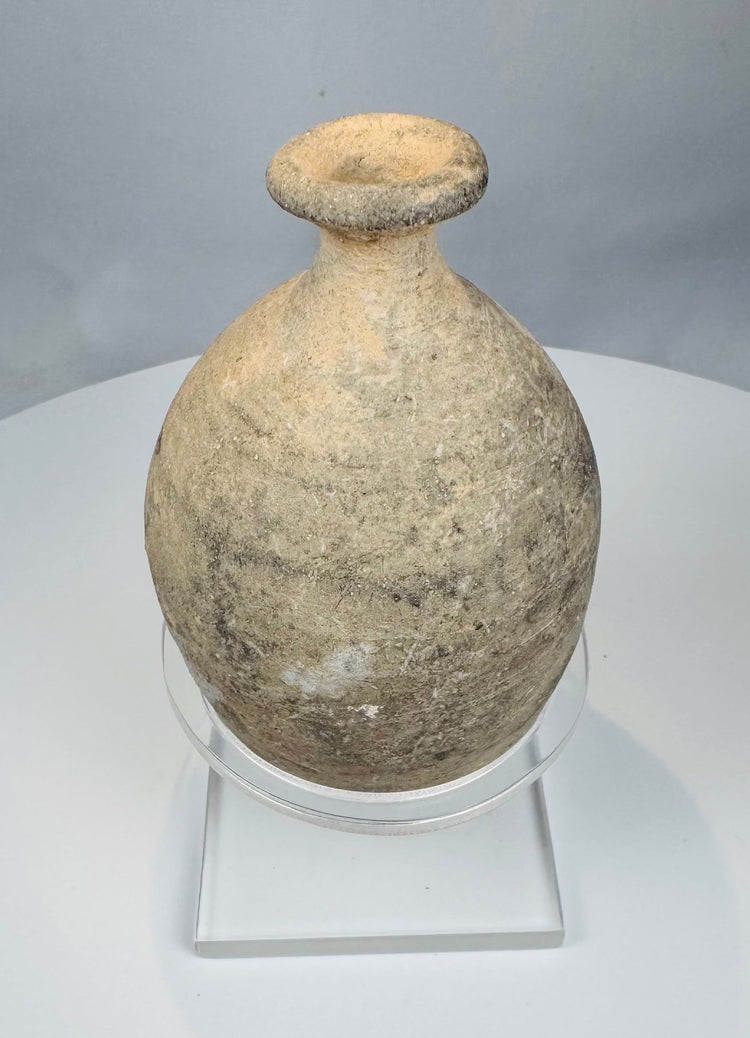
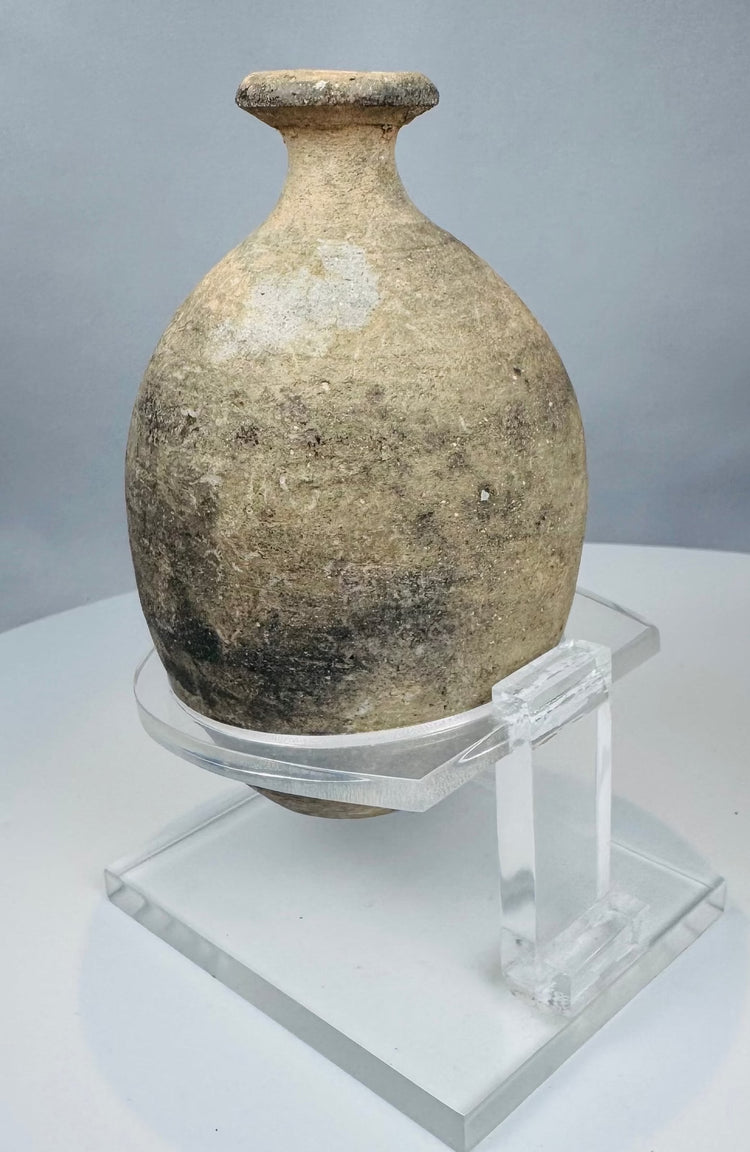
Le récipient présente un corps ovoïde compact s'élevant vers des épaules légèrement inclinées, un col court et resserré, et un large rebord éversé et épaissi entourant une ouverture centrale étroite.
Le récipient a été tourné à partir d'une fine argile de couleur chamois et semble conserver des traces d'un traitement de surface pâle sous d'importants dépôts d'enfouissement et d'altération. De subtiles lignes de tournage horizontales restent visibles autour du corps, reflétant le processus de façonnage au tour utilisé par l'ancien potier.
Le corps inférieur arrondi se termine par une petite base, permettant au récipient d'être exposé en toute sécurité dans son support en acrylique transparent sur mesure.
L'ouverture étroite a été conçue pour restreindre et contrôler le flux de son contenu. Les bouteilles de cette forme générale étaient couramment utilisées pour contenir des huiles, des parfums, des préparations médicinales, des cosmétiques ou d'autres liquides précieux.
Bien que les récipients destinés à de telles substances soient parfois globalement décrits comme des unguentaria, le corps ovoïde plus large de cet exemple est plus approprié pour être classé comme une petite bouteille ou fiole plutôt qu'un unguentarium conventionnel en forme de fuseau.
La forme simple et non décorée reflète les traditions céramiques pratiques de la Méditerranée orientale romaine et byzantine, où des récipients compacts étaient produits pour un usage domestique, commercial, funéraire et éventuellement religieux.
Caractéristiques
- Corps ovoïde tourné
- Épaules légèrement inclinées
- Col court et resserré
- Large rebord éversé et épaissi
- Ouverture étroite pour une distribution contrôlée
- Surface chamois pâle avec concrétions d'enfouissement
- Subtiles lignes de tournage horizontales
- Comprend un support d'exposition en acrylique transparent sur mesure
Signification culturelle
Les petites bouteilles en céramique étaient des objets courants mais importants dans tout l'ancien bassin méditerranéen et le Proche-Orient. Leurs ouvertures restreintes les rendaient particulièrement adaptées au stockage de liquides précieux qui devaient être distribués avec précaution, y compris les huiles parfumées, les médicaments, les cosmétiques et les préparations rituelles.
Ces récipients offrent un lien direct avec les pratiques domestiques et personnelles antiques. Tandis que les récipients de stockage plus grands illustrent le commerce et la production agricole, les petites bouteilles reflètent des aspects plus intimes de la vie quotidienne, y compris la toilette, les soins de santé, la préparation des aliments et les coutumes funéraires.
La surface non décorée et la forme pratique du récipient sont caractéristiques de la poterie utilitaire, tandis que son état substantiellement complet offre une représentation attrayante de la production céramique de la Méditerranée orientale durant l'Antiquité tardive.
État
Le récipient reste substantiellement intact et structurellement stable. D'importants dépôts minéraux, concrétions d'enfouissement, décolorations, abrasions de surface et altérations sont présents partout.
Le rebord présente une usure des bords et une irrégularité mineure attendues, tandis que des éclats épars, des imperfections de cuisson et des zones de perte de surface sont visibles sur le corps.
Le support d'exposition en acrylique transparent sur mesure est inclus.
Dimensions (approximatives)
Hauteur : 5 pouces
Diamètre : 2,5 pouces
Âge (approximatif)
1 300 à 1 800 ans
Provenance
Anciennement détenue dans une collection privée à Rhode Island, USA, constituée par un collectionneur ayant un intérêt de longue date pour les artefacts de la Méditerranée antique et les céramiques anciennes.
En savoir plus
Découvrez une bouteille en céramique ancienne similaire dans la collection du Musée des Antiquités de la Bibliotheca Alexandrina
Explorez notre Collection de Céramiques, Poteries et Art du Patrimoine Ancien
Description
Contexte historique et origine
Région : Méditerranée orientale, probablement le Levant
Matériau : Terre cuite tournée avec engobe pâle et concrétions minérales
Période : Période romano-byzantine, vers les IIIe-VIIe siècles de notre ère
Description
Cette ancienne bouteille en terre cuite est un exemple bien conservé des petits récipients en céramique produits dans toute la Méditerranée orientale pendant les périodes romaine et byzantine.
Le récipient présente un corps ovoïde compact s'élevant vers des épaules légèrement inclinées, un col court et resserré, et un large rebord éversé et épaissi entourant une ouverture centrale étroite.
Le récipient a été tourné à partir d'une fine argile de couleur chamois et semble conserver des traces d'un traitement de surface pâle sous d'importants dépôts d'enfouissement et d'altération. De subtiles lignes de tournage horizontales restent visibles autour du corps, reflétant le processus de façonnage au tour utilisé par l'ancien potier.
Le corps inférieur arrondi se termine par une petite base, permettant au récipient d'être exposé en toute sécurité dans son support en acrylique transparent sur mesure.
L'ouverture étroite a été conçue pour restreindre et contrôler le flux de son contenu. Les bouteilles de cette forme générale étaient couramment utilisées pour contenir des huiles, des parfums, des préparations médicinales, des cosmétiques ou d'autres liquides précieux.
Bien que les récipients destinés à de telles substances soient parfois globalement décrits comme des unguentaria, le corps ovoïde plus large de cet exemple est plus approprié pour être classé comme une petite bouteille ou fiole plutôt qu'un unguentarium conventionnel en forme de fuseau.
La forme simple et non décorée reflète les traditions céramiques pratiques de la Méditerranée orientale romaine et byzantine, où des récipients compacts étaient produits pour un usage domestique, commercial, funéraire et éventuellement religieux.
Caractéristiques
- Corps ovoïde tourné
- Épaules légèrement inclinées
- Col court et resserré
- Large rebord éversé et épaissi
- Ouverture étroite pour une distribution contrôlée
- Surface chamois pâle avec concrétions d'enfouissement
- Subtiles lignes de tournage horizontales
- Comprend un support d'exposition en acrylique transparent sur mesure
Signification culturelle
Les petites bouteilles en céramique étaient des objets courants mais importants dans tout l'ancien bassin méditerranéen et le Proche-Orient. Leurs ouvertures restreintes les rendaient particulièrement adaptées au stockage de liquides précieux qui devaient être distribués avec précaution, y compris les huiles parfumées, les médicaments, les cosmétiques et les préparations rituelles.
Ces récipients offrent un lien direct avec les pratiques domestiques et personnelles antiques. Tandis que les récipients de stockage plus grands illustrent le commerce et la production agricole, les petites bouteilles reflètent des aspects plus intimes de la vie quotidienne, y compris la toilette, les soins de santé, la préparation des aliments et les coutumes funéraires.
La surface non décorée et la forme pratique du récipient sont caractéristiques de la poterie utilitaire, tandis que son état substantiellement complet offre une représentation attrayante de la production céramique de la Méditerranée orientale durant l'Antiquité tardive.
État
Le récipient reste substantiellement intact et structurellement stable. D'importants dépôts minéraux, concrétions d'enfouissement, décolorations, abrasions de surface et altérations sont présents partout.
Le rebord présente une usure des bords et une irrégularité mineure attendues, tandis que des éclats épars, des imperfections de cuisson et des zones de perte de surface sont visibles sur le corps.
Le support d'exposition en acrylique transparent sur mesure est inclus.
Dimensions (approximatives)
Hauteur : 5 pouces
Diamètre : 2,5 pouces
Âge (approximatif)
1 300 à 1 800 ans
Provenance
Anciennement détenue dans une collection privée à Rhode Island, USA, constituée par un collectionneur ayant un intérêt de longue date pour les artefacts de la Méditerranée antique et les céramiques anciennes.
En savoir plus
Découvrez une bouteille en céramique ancienne similaire dans la collection du Musée des Antiquités de la Bibliotheca Alexandrina
Explorez notre Collection de Céramiques, Poteries et Art du Patrimoine Ancien
Vous aimerez peut-être aussi
