



Pichet en terre cuite de l'ancienne Méditerranée orientale | Récipient verseur de la période romano-byzantine | Environ IIe – VIIe siècle de notre ère
- Prix habituel
- $425.00
- Prix soldé
- $425.00
- Prix habituel
Impossible de charger la disponibilité du service de retrait


Pichet en terre cuite de l'ancienne Méditerranée orientale | Récipient verseur de la période romano-byzantine | Environ IIe – VIIe siècle de notre ère
Description
Plus
Moins
Contexte historique et origine
Région : Méditerranée orientale, probablement le Levant ou la région environnante du Moyen-Orient
Matériau : Terre cuite avec des incrustations de surface pâles
Période : Période romaine à byzantine, entre le IIe et le VIIe siècle de notre ère
Description
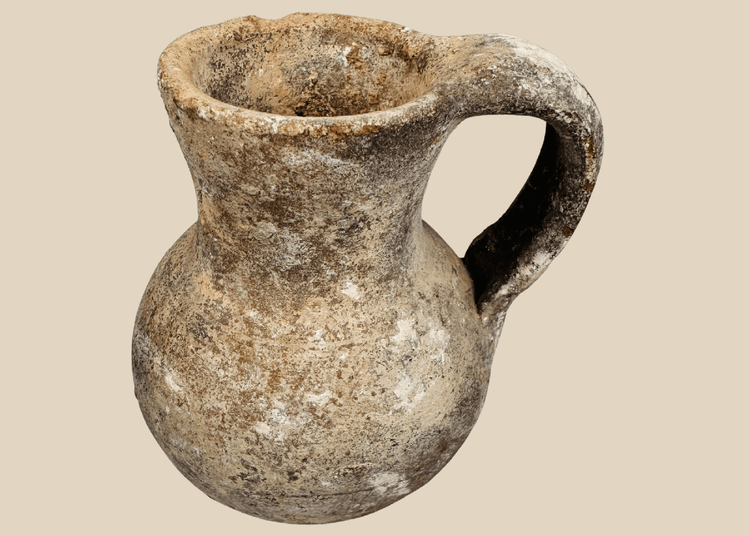
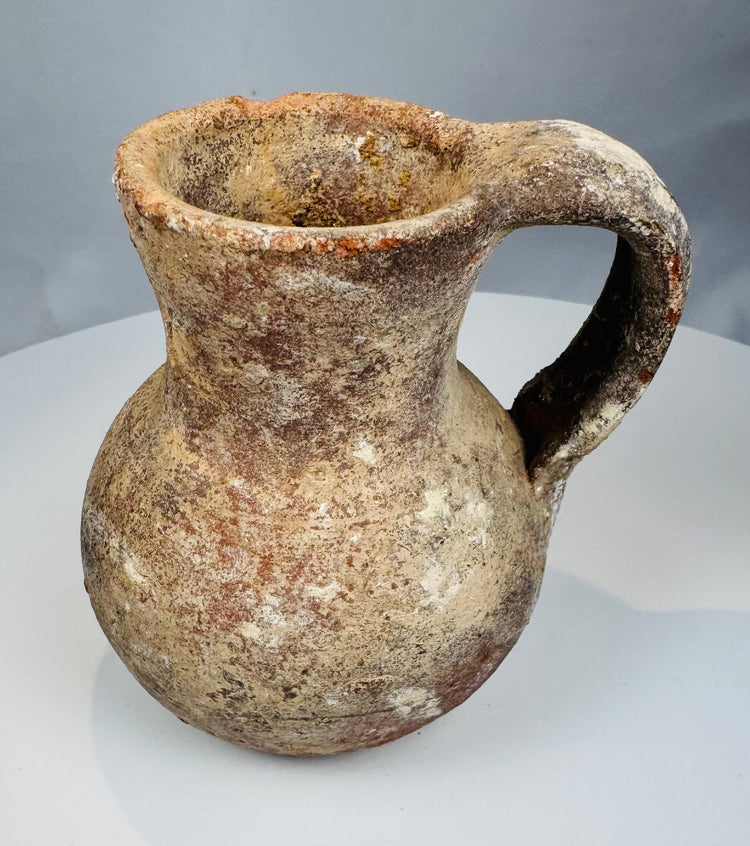
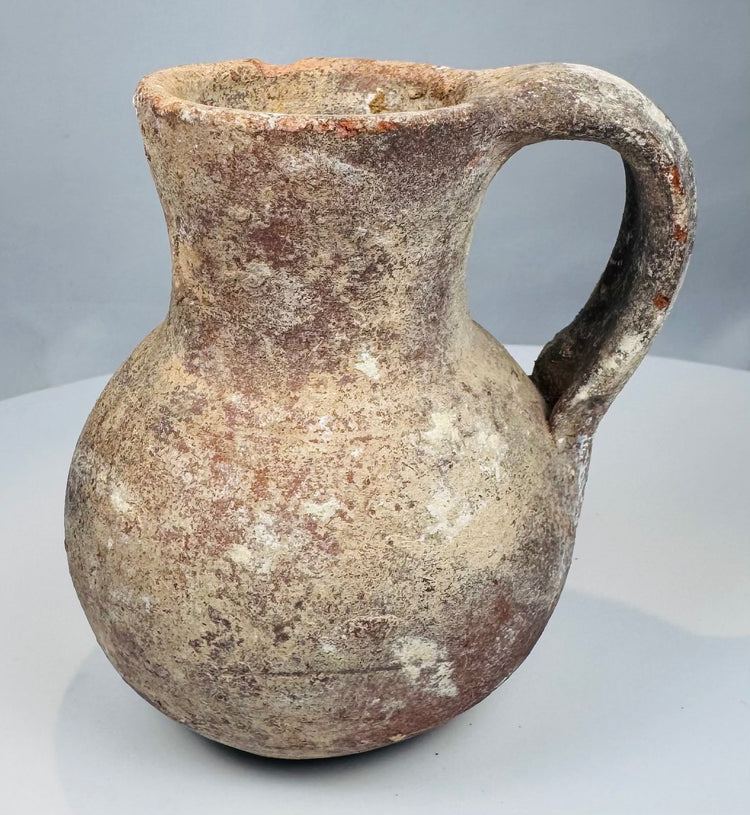
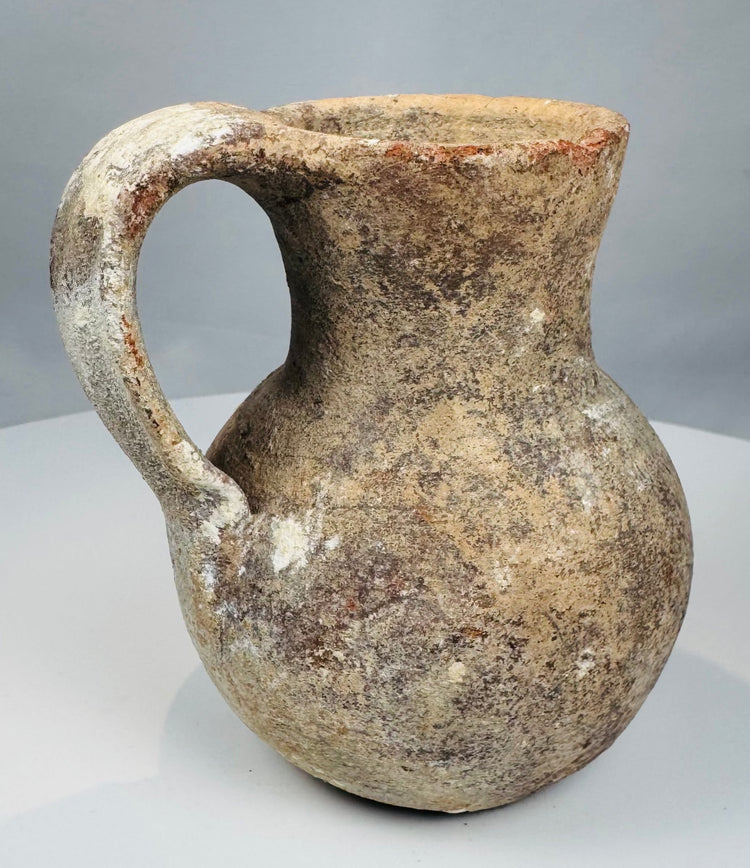
Ce pichet verseur compact en terre cuite est un exemple bien conservé de poterie utilitaire associée à la Méditerranée orientale romaine et du début de l'ère byzantine.
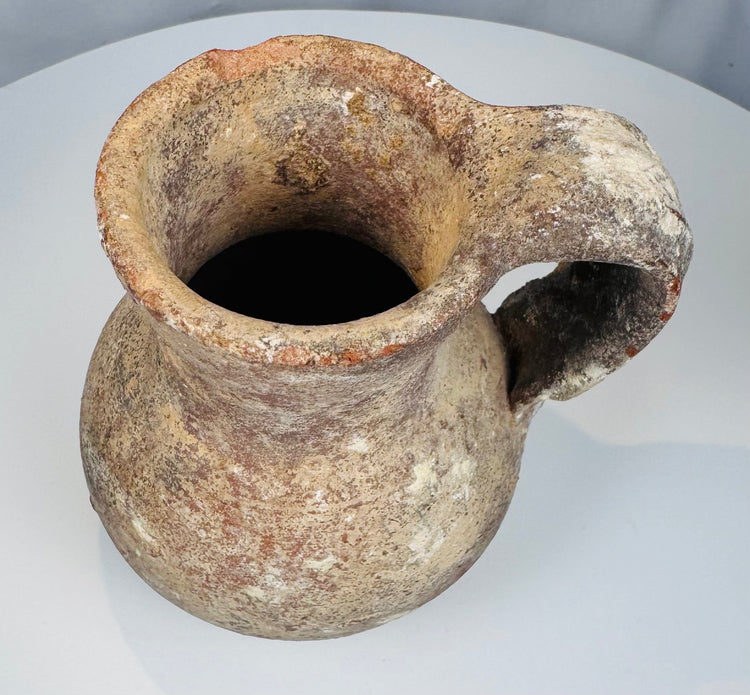
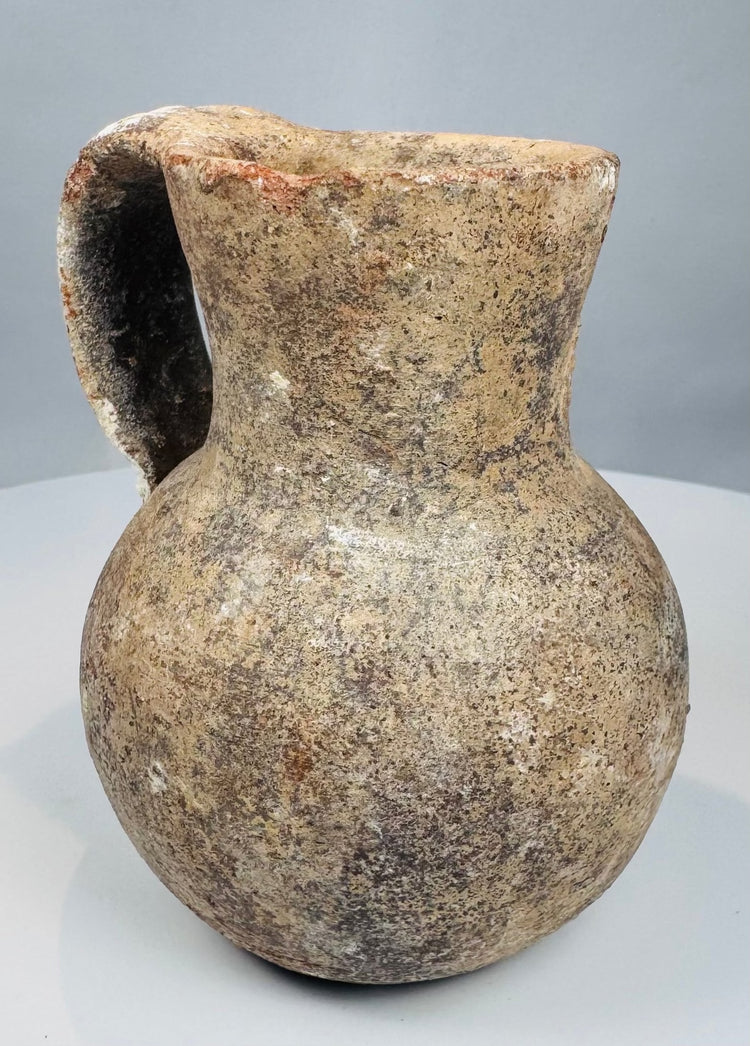
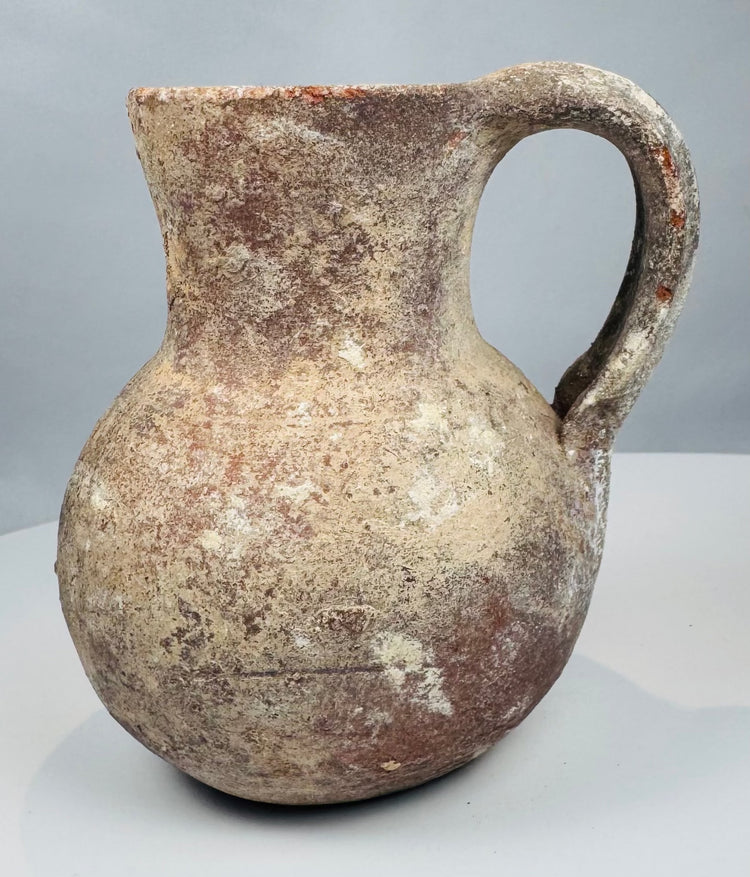
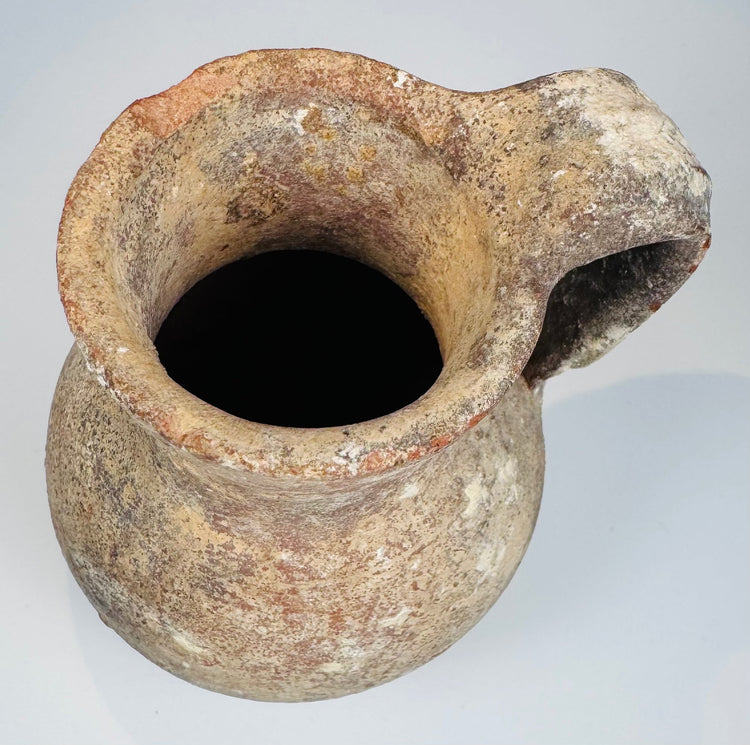
Le récipient présente un corps globulaire arrondi, un col haut et étroit, un rebord évasé vers l'extérieur en forme de bec verseur et une anse en boucle substantielle s'étendant du rebord à l'épaule.
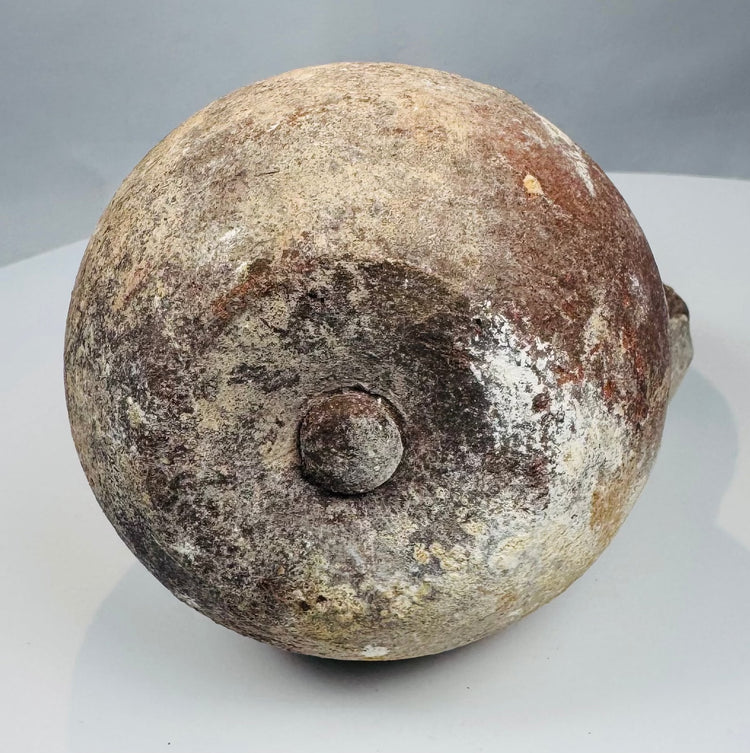
Le corps, fabriqué au tour, s'élève à partir d'un petit pied circulaire ou d'une projection de base centrale visible sur le dessous. Son ventre large aurait offert une capacité utile malgré les dimensions compactes du récipient, tandis que le col resserré et l'embouchure façonnée permettaient de verser des liquides avec un plus grand contrôle.
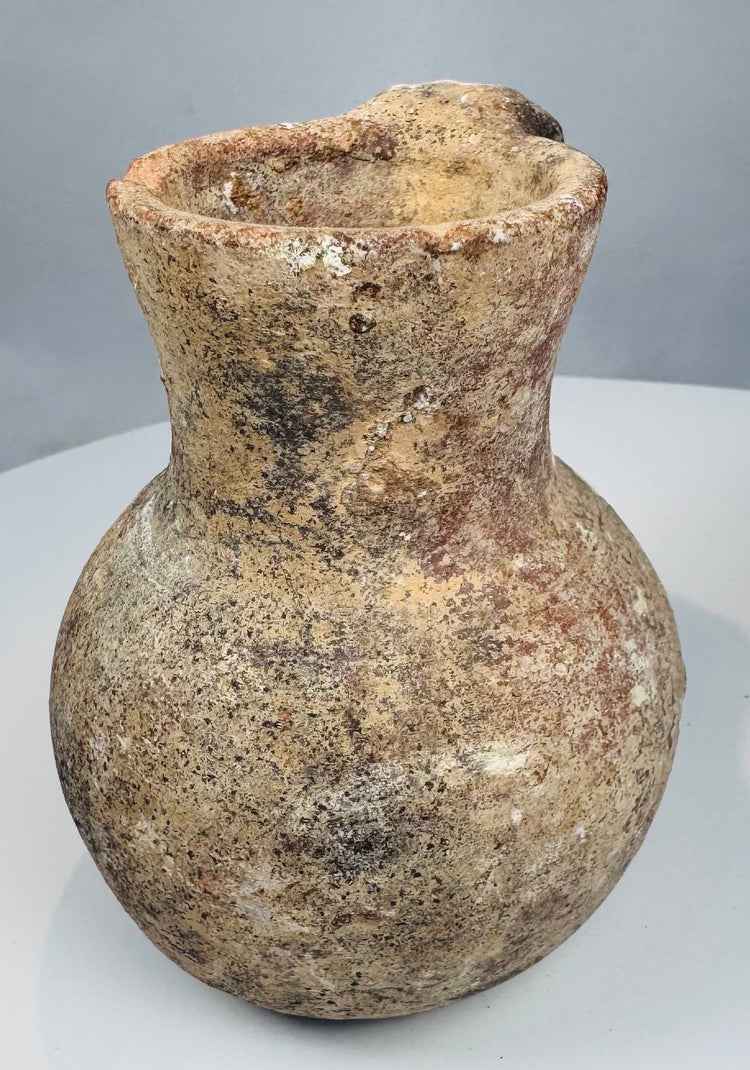
La lourde poignée en sangle est suffisamment grande pour permettre une prise sûre et confère au récipient un profil équilibré et pratique. La bouche semble légèrement pincée ou façonnée d'un côté, créant un bec verseur fonctionnel.
Cette forme appartient à la grande famille des cruches et pichets anciens couramment utilisés dans toute la Méditerranée et le Proche-Orient pour servir de l'eau, du vin, des huiles ou d'autres liquides. Son contenu original précis ne peut être déterminé.
La terre cuite conserve des taches de sa pâte brun-rougeâtre sous de vastes dépôts minéraux pâles et des incrustations d'enfouissement.
Caractéristiques
- Corps globulaire tourné
- Col haut, légèrement évasé
- Bec verseur pincé ou façonné
- Grande anse en boucle appliquée
- Petite projection de base circulaire
- Incrustations minérales et d'enfouissement étendues
- Forme utilitaire compacte
Signification culturelle
Les petites cruches en poterie étaient des objets ménagers essentiels dans toute la Méditerranée orientale romaine et byzantine. Elles étaient utilisées pour les repas domestiques, la préparation des aliments, le commerce, les activités religieuses et les contextes funéraires, les ateliers régionaux produisant de nombreuses variantes adaptées aux besoins locaux.
La forme de ce récipient reflète la continuité des traditions céramiques pratiques à travers la Méditerranée et le Proche-Orient. Son corps arrondi, son col étroit, son bec verseur et sa poignée unique représentent un design efficace qui est resté en usage pendant des siècles.
Contrairement aux poteries cérémonielles richement décorées, les récipients de ce type offrent un lien direct avec la vie quotidienne ordinaire dans le monde antique.
État
Le récipient est largement intact et structurellement stable. Des dépôts minéraux étendus, des incrustations d'enfouissement, des abrasions de surface, une décoloration et une altération sont présents partout.
Le rebord est irrégulier et présente des pertes de bordure éparses et des ébréchures mineures. D'autres petits éclats, des imperfections de cuisson et des pertes de surface sont visibles autour de l'anse, du corps et de la base.
Dimensions (approximatives)
Hauteur : 10,2 cm
Diamètre : 8,9 cm
Âge (approximatif)
1 300–1 900 ans
Provenance
Anciennement détenu dans une collection privée à Rhode Island, États-Unis, constituée par un collectionneur ayant un intérêt de longue date pour les artefacts anciens de la Méditerranée et les céramiques anciennes.
En savoir plus
Voir une cruche en terre cuite antique similaire dans la collection du Metropolitan Museum of Art
Explorez notre Collection d'artefacts romains et grecs et de reliques antiques
Description
Contexte historique et origine
Région : Méditerranée orientale, probablement le Levant ou la région environnante du Moyen-Orient
Matériau : Terre cuite avec des incrustations de surface pâles
Période : Période romaine à byzantine, entre le IIe et le VIIe siècle de notre ère
Description
Ce pichet verseur compact en terre cuite est un exemple bien conservé de poterie utilitaire associée à la Méditerranée orientale romaine et du début de l'ère byzantine.
Le récipient présente un corps globulaire arrondi, un col haut et étroit, un rebord évasé vers l'extérieur en forme de bec verseur et une anse en boucle substantielle s'étendant du rebord à l'épaule.
Le corps, fabriqué au tour, s'élève à partir d'un petit pied circulaire ou d'une projection de base centrale visible sur le dessous. Son ventre large aurait offert une capacité utile malgré les dimensions compactes du récipient, tandis que le col resserré et l'embouchure façonnée permettaient de verser des liquides avec un plus grand contrôle.
La lourde poignée en sangle est suffisamment grande pour permettre une prise sûre et confère au récipient un profil équilibré et pratique. La bouche semble légèrement pincée ou façonnée d'un côté, créant un bec verseur fonctionnel.
Cette forme appartient à la grande famille des cruches et pichets anciens couramment utilisés dans toute la Méditerranée et le Proche-Orient pour servir de l'eau, du vin, des huiles ou d'autres liquides. Son contenu original précis ne peut être déterminé.
La terre cuite conserve des taches de sa pâte brun-rougeâtre sous de vastes dépôts minéraux pâles et des incrustations d'enfouissement.
Caractéristiques
- Corps globulaire tourné
- Col haut, légèrement évasé
- Bec verseur pincé ou façonné
- Grande anse en boucle appliquée
- Petite projection de base circulaire
- Incrustations minérales et d'enfouissement étendues
- Forme utilitaire compacte
Signification culturelle
Les petites cruches en poterie étaient des objets ménagers essentiels dans toute la Méditerranée orientale romaine et byzantine. Elles étaient utilisées pour les repas domestiques, la préparation des aliments, le commerce, les activités religieuses et les contextes funéraires, les ateliers régionaux produisant de nombreuses variantes adaptées aux besoins locaux.
La forme de ce récipient reflète la continuité des traditions céramiques pratiques à travers la Méditerranée et le Proche-Orient. Son corps arrondi, son col étroit, son bec verseur et sa poignée unique représentent un design efficace qui est resté en usage pendant des siècles.
Contrairement aux poteries cérémonielles richement décorées, les récipients de ce type offrent un lien direct avec la vie quotidienne ordinaire dans le monde antique.
État
Le récipient est largement intact et structurellement stable. Des dépôts minéraux étendus, des incrustations d'enfouissement, des abrasions de surface, une décoloration et une altération sont présents partout.
Le rebord est irrégulier et présente des pertes de bordure éparses et des ébréchures mineures. D'autres petits éclats, des imperfections de cuisson et des pertes de surface sont visibles autour de l'anse, du corps et de la base.
Dimensions (approximatives)
Hauteur : 10,2 cm
Diamètre : 8,9 cm
Âge (approximatif)
1 300–1 900 ans
Provenance
Anciennement détenu dans une collection privée à Rhode Island, États-Unis, constituée par un collectionneur ayant un intérêt de longue date pour les artefacts anciens de la Méditerranée et les céramiques anciennes.
En savoir plus
Voir une cruche en terre cuite antique similaire dans la collection du Metropolitan Museum of Art
Explorez notre Collection d'artefacts romains et grecs et de reliques antiques
Vous aimerez peut-être aussi
