



Ancient Egyptian Blue Scarab Amulet | Late Period | Circa 664–332 BCE
- Prix habituel
- $400.00
- Prix soldé
- $400.00
- Prix habituel
Impossible de charger la disponibilité du service de retrait





Ancient Egyptian Blue Scarab Amulet | Late Period | Circa 664–332 BCE
Description
Plus
Moins
Historical Context & Origin
Region: Ancient Egypt
Material: Deep-blue stone or glazed composition, possibly lapis lazuli or faience
Period: Late Period, 26th–30th Dynasties, circa 664–332 BCE (attributed)
Description
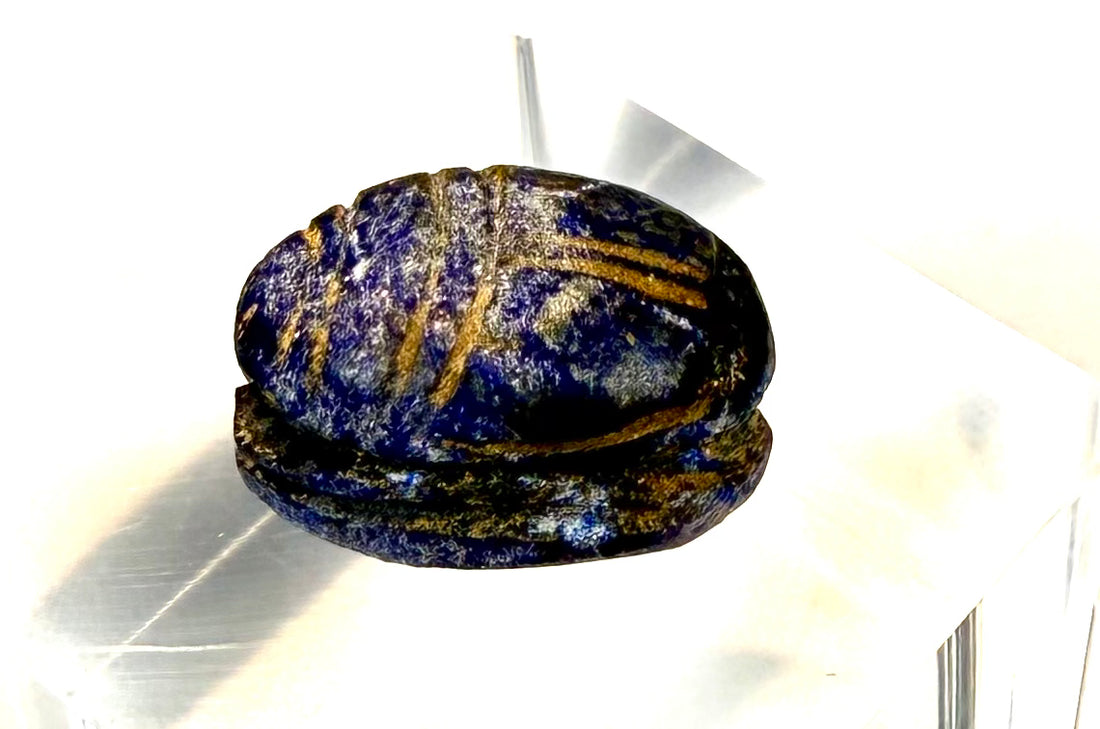
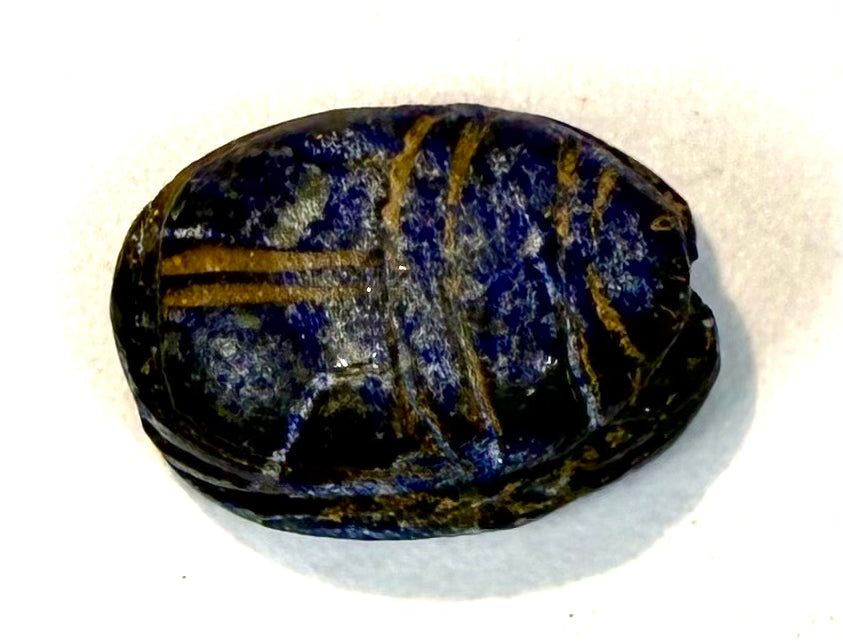
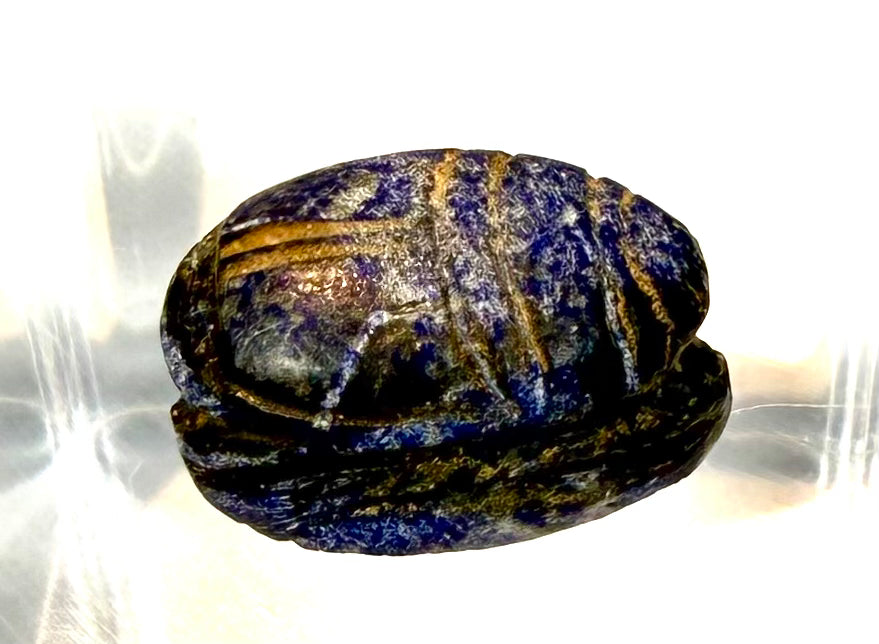
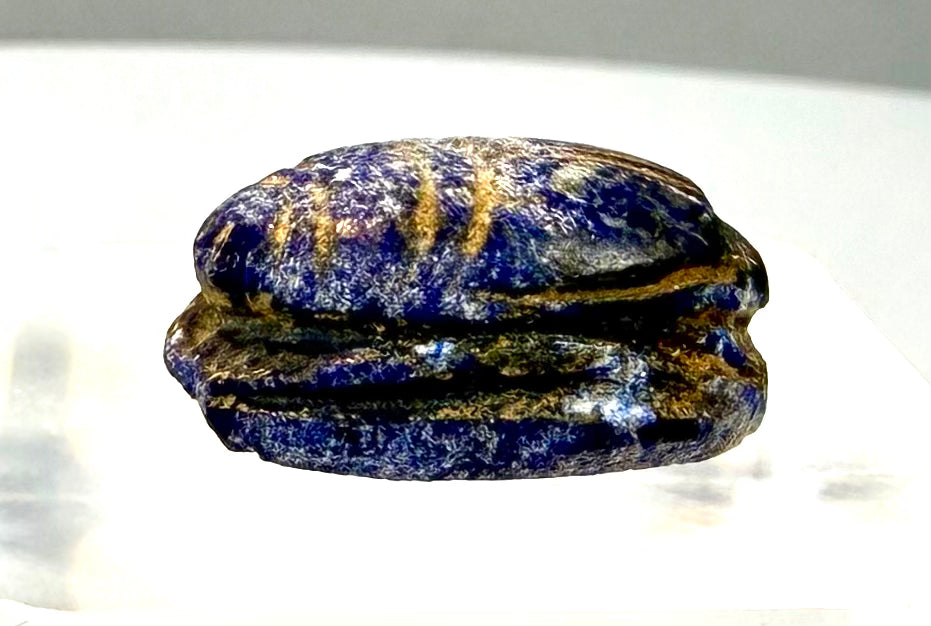
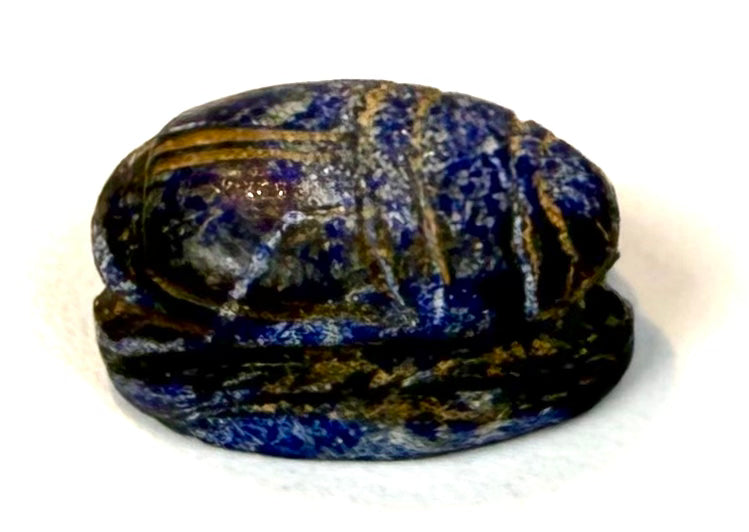
This beautifully coloured miniature Egyptian scarab amulet features a rich cobalt-blue surface, contrasting golden-brown incised details, and a carefully modelled beetle form. Traditionally attributed to the Late Period of ancient Egypt, circa 664–332 BCE, this compact ornament reflects the artistic craftsmanship and religious symbolism associated with the sacred scarab beetle, one of the most enduring protective symbols of ancient Egyptian civilization.
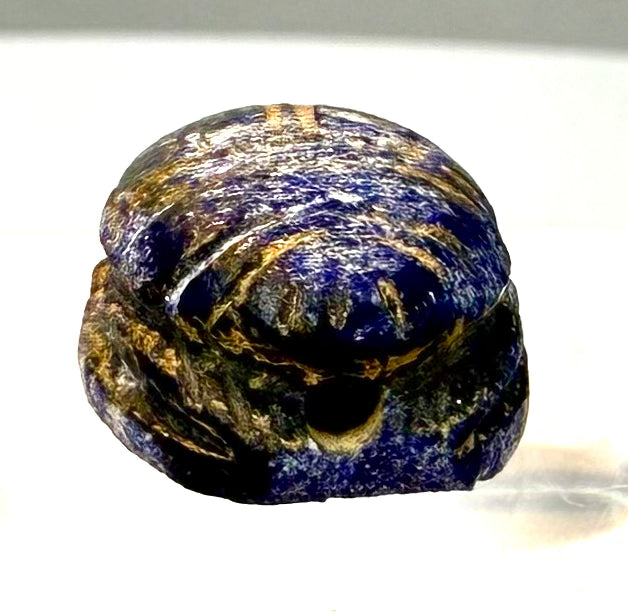
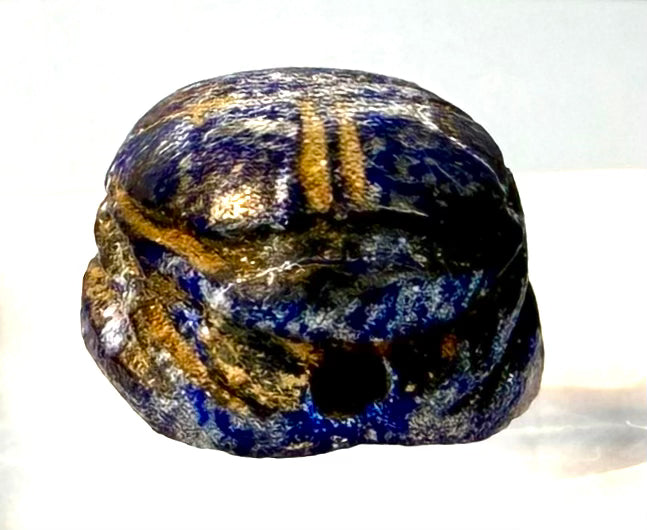
The amulet displays an elongated oval body with a gently domed upper surface, decorated with incised linear markings delineating the beetle's wing cases (elytra) and thoracic sections. The carved grooves retain contrasting golden-brown coloration, creating a striking visual effect against the deep-blue surface. Along the sides, layered sculptural details represent the beetle's folded legs, while the rounded profile and carefully arranged incisions emphasize its recognizable anatomical form.
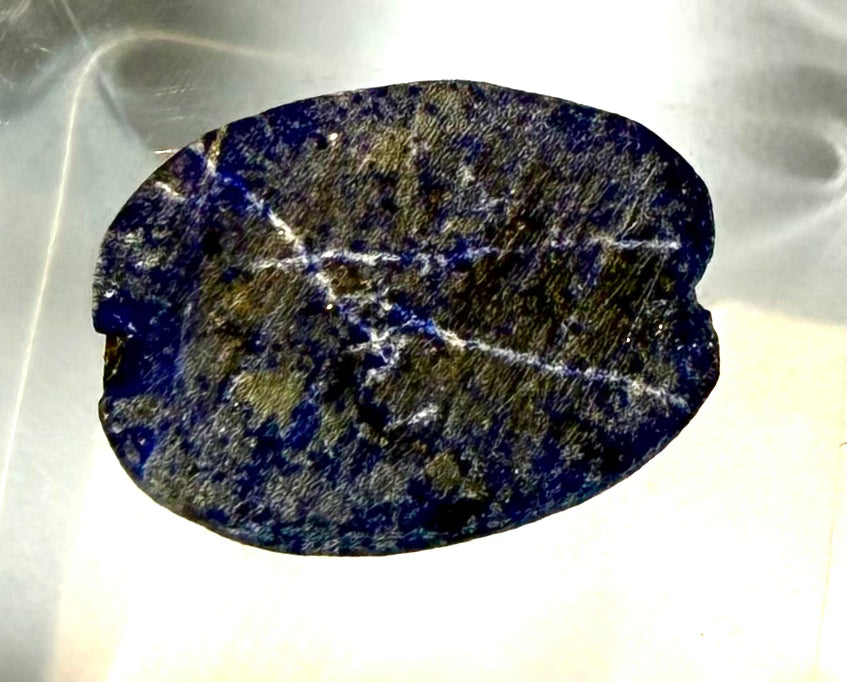
A small perforation at one end suggests that the scarab was intended for suspension as a pendant, bead, or personal protective amulet. The underside is comparatively flat and uninscribed, displaying areas of pale mineral-like deposits, fine scratches, and surface irregularities. Its compact proportions, distinctive blue coloration, and traditional carved details are comparable to Egyptian scarabs preserved in museum collections, including examples fashioned from lapis lazuli and blue-glazed materials.
Features
- Miniature Egyptian scarab amulet with traditional beetle-shaped construction
- Rich cobalt-blue surface with contrasting golden-brown decorative markings
- Elongated oval body with gently rounded, domed upper surface
- Incised wing-case and thoracic details across the upper body
- Sculpted side elements representing the beetle's folded legs
- Small perforation at one end for possible suspension
- Relatively flat, uninscribed underside with visible surface irregularities
- Areas of natural-looking patination, pale deposits, and age-related surface wear
Cultural Significance
The scarab beetle was among the most important symbols in ancient Egyptian religion, closely associated with creation, renewal, protection, and rebirth. Its significance developed from the observation of dung beetles rolling spherical balls across the ground, a behaviour that the ancient Egyptians associated with the daily movement of the sun. This connection linked the scarab with Khepri, the divine manifestation of the rising sun and a powerful symbol of regeneration.
Scarab amulets were produced throughout ancient Egyptian history and served important religious and protective functions. They were worn as personal talismans, incorporated into jewellery, and placed within funerary contexts to symbolize renewal and continued existence in the afterlife. During the Late Period (664–332 BCE), scarabs remained an established part of Egyptian religious traditions, appearing in various materials, colours, and decorative forms.
Blue held particular symbolic importance in Egyptian art, representing the heavens, the Nile, fertility, and regeneration. Materials such as lapis lazuli, blue-glazed steatite, faience, and coloured glass were used to create protective amulets and ornamental objects. The striking blue appearance of this scarab reflects the broader artistic tradition in which colour, material, and sacred imagery combined to express religious meaning.
Condition
The scarab retains its complete overall form, with the domed upper body, incised decorations, and sculpted side details remaining clearly visible. The deep-blue surface exhibits scattered abrasions, small chips, pale mineral-like deposits, discolouration, and fine irregularities throughout. The contrasting golden-brown recessed areas display accumulated material or exposed underlying surfaces, accentuating portions of the carved decoration. The relatively flat underside exhibits visible scratches, lighter patches, and localized surface wear, while minor irregularities are present around the perforation and outer edges. Despite these areas of wear, the scarab's distinctive form and decorative details remain recognizable.
Dimensions (Approximate)
Length: 0.7 in
Width: 0.5 in
Age (Approximate)
2,350–2,690 years old
Provenance
Previously held in a private collection in Indianapolis, Indiana, United States.
Learn More
Explore a comparable ancient Egyptian lapis lazuli scarab dating to the Late Period, circa 664–332 BCE, preserved in the collection of The Metropolitan Museum of Art
Discover additional Egyptian amulets, funerary objects, and historical artifacts in our Ancient Egyptian Mummies & Artifacts Collection
Description
Historical Context & Origin
Region: Ancient Egypt
Material: Deep-blue stone or glazed composition, possibly lapis lazuli or faience
Period: Late Period, 26th–30th Dynasties, circa 664–332 BCE (attributed)
Description
This beautifully coloured miniature Egyptian scarab amulet features a rich cobalt-blue surface, contrasting golden-brown incised details, and a carefully modelled beetle form. Traditionally attributed to the Late Period of ancient Egypt, circa 664–332 BCE, this compact ornament reflects the artistic craftsmanship and religious symbolism associated with the sacred scarab beetle, one of the most enduring protective symbols of ancient Egyptian civilization.
The amulet displays an elongated oval body with a gently domed upper surface, decorated with incised linear markings delineating the beetle's wing cases (elytra) and thoracic sections. The carved grooves retain contrasting golden-brown coloration, creating a striking visual effect against the deep-blue surface. Along the sides, layered sculptural details represent the beetle's folded legs, while the rounded profile and carefully arranged incisions emphasize its recognizable anatomical form.
A small perforation at one end suggests that the scarab was intended for suspension as a pendant, bead, or personal protective amulet. The underside is comparatively flat and uninscribed, displaying areas of pale mineral-like deposits, fine scratches, and surface irregularities. Its compact proportions, distinctive blue coloration, and traditional carved details are comparable to Egyptian scarabs preserved in museum collections, including examples fashioned from lapis lazuli and blue-glazed materials.
Features
- Miniature Egyptian scarab amulet with traditional beetle-shaped construction
- Rich cobalt-blue surface with contrasting golden-brown decorative markings
- Elongated oval body with gently rounded, domed upper surface
- Incised wing-case and thoracic details across the upper body
- Sculpted side elements representing the beetle's folded legs
- Small perforation at one end for possible suspension
- Relatively flat, uninscribed underside with visible surface irregularities
- Areas of natural-looking patination, pale deposits, and age-related surface wear
Cultural Significance
The scarab beetle was among the most important symbols in ancient Egyptian religion, closely associated with creation, renewal, protection, and rebirth. Its significance developed from the observation of dung beetles rolling spherical balls across the ground, a behaviour that the ancient Egyptians associated with the daily movement of the sun. This connection linked the scarab with Khepri, the divine manifestation of the rising sun and a powerful symbol of regeneration.
Scarab amulets were produced throughout ancient Egyptian history and served important religious and protective functions. They were worn as personal talismans, incorporated into jewellery, and placed within funerary contexts to symbolize renewal and continued existence in the afterlife. During the Late Period (664–332 BCE), scarabs remained an established part of Egyptian religious traditions, appearing in various materials, colours, and decorative forms.
Blue held particular symbolic importance in Egyptian art, representing the heavens, the Nile, fertility, and regeneration. Materials such as lapis lazuli, blue-glazed steatite, faience, and coloured glass were used to create protective amulets and ornamental objects. The striking blue appearance of this scarab reflects the broader artistic tradition in which colour, material, and sacred imagery combined to express religious meaning.
Condition
The scarab retains its complete overall form, with the domed upper body, incised decorations, and sculpted side details remaining clearly visible. The deep-blue surface exhibits scattered abrasions, small chips, pale mineral-like deposits, discolouration, and fine irregularities throughout. The contrasting golden-brown recessed areas display accumulated material or exposed underlying surfaces, accentuating portions of the carved decoration. The relatively flat underside exhibits visible scratches, lighter patches, and localized surface wear, while minor irregularities are present around the perforation and outer edges. Despite these areas of wear, the scarab's distinctive form and decorative details remain recognizable.
Dimensions (Approximate)
Length: 0.7 in
Width: 0.5 in
Age (Approximate)
2,350–2,690 years old
Provenance
Previously held in a private collection in Indianapolis, Indiana, United States.
Learn More
Explore a comparable ancient Egyptian lapis lazuli scarab dating to the Late Period, circa 664–332 BCE, preserved in the collection of The Metropolitan Museum of Art
Discover additional Egyptian amulets, funerary objects, and historical artifacts in our Ancient Egyptian Mummies & Artifacts Collection
Vous aimerez peut-être aussi
